.jpg)

Getting someone to buy from your store once is an achievement. Getting them to come back is what separates growing e-commerce brands from those constantly chasing new customers. If every sale depends on another ad campaign, discount, or promotional push, growth becomes harder to sustain and far more expensive.
Brand loyalty changes that dynamic. When customers choose your brand over competitors, they're more likely to buy again, spend more over time, and recommend your business to others. Instead of relying on continuous customer acquisition, you build a stronger base of repeat buyers who generate predictable revenue and improve long-term profitability.
In this guide, you'll learn what brand loyalty means in e-commerce, why customers stay loyal to certain brands, and the strategies that encourage repeat purchases without depending on constant discounts. We'll also explore real-world brand loyalty examples, common mistakes that weaken customer loyalty, and how Shopify merchants can build lasting customer relationships that support sustainable growth.
Brand loyalty in e-commerce is when customers consistently choose your brand over competitors because they trust the value, quality, and experience you deliver. Instead of comparing every purchase, they return with confidence because your brand has already earned its place in their buying decisions.
Online shoppers have more choices than ever, making loyalty harder to earn and easier to lose. A customer who keeps coming back despite countless alternatives isn't just making another purchase. They're choosing a brand they believe will deliver the same positive experience every time. That's because brand loyalty is both emotional and behavioural. Customers develop an emotional connection to your brand, then reinforce it through repeat purchasing decisions.
For e-commerce businesses, brand loyalty creates a competitive advantage that discounts alone can't match. Loyal customers are less likely to switch over small price differences, more willing to try new products, and more likely to recommend your brand to others. As those relationships grow, so do customer lifetime value, retention, and predictable revenue.
A customer can buy from your store more than once without being loyal. Repeat purchases often reflect convenience or timing, while brand loyalty reflects a deeper preference that keeps customers returning even when alternatives are available.
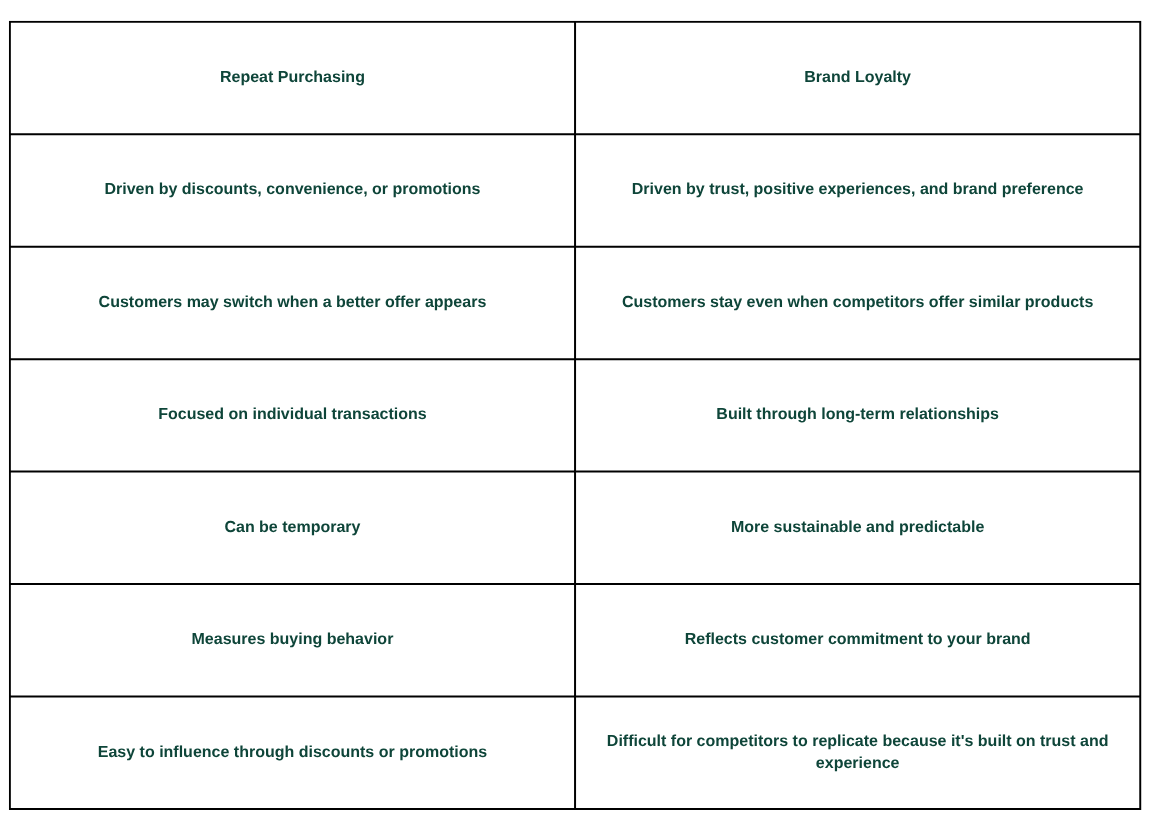
For e-commerce businesses, this distinction matters because repeat purchases tell you what customers did, while brand loyalty explains why they continue choosing your brand. The stronger that loyalty becomes, the less your business depends on constant discounts and paid acquisition to drive future sales.
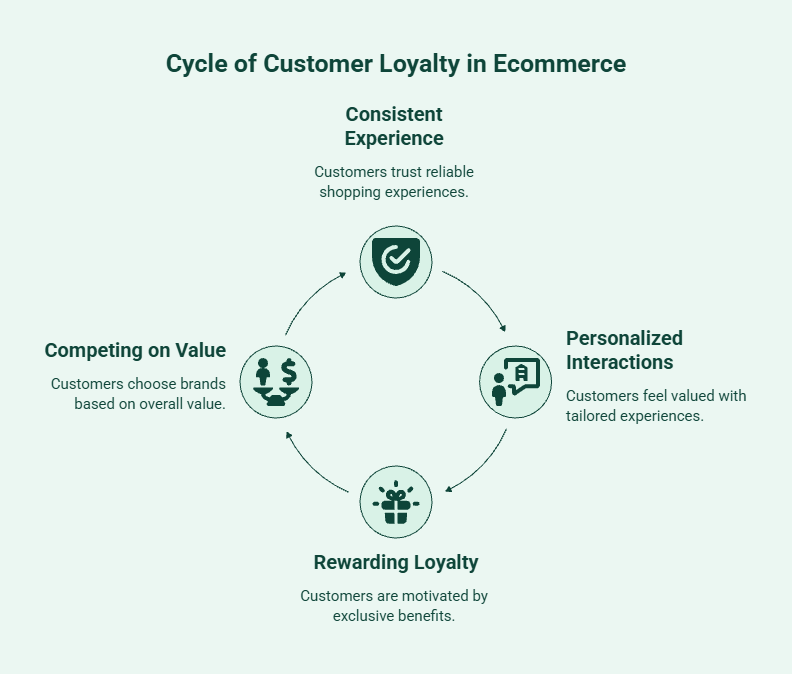
Customers keep returning when every purchase reinforces the trust they built during the last one. The strongest ecommerce brands don't depend on constant discounts to drive repeat sales. They create shopping experiences that feel reliable, rewarding, and consistently worth returning to.
A great first order creates interest. Consistently great experiences create loyalty. Every positive interaction reinforces the customer's decision to buy from you again instead of exploring other options.
According to PwC, 73% of consumers say customer experience influences their purchasing decisions. That means every touchpoint, from browsing your store to receiving an order, shapes whether customers return or look elsewhere.
Customers expect consistency in every interaction, including:
When customers know what to expect every time they shop, trust becomes a reason to return instead of a question they need to answer before every purchase.
Customers quickly notice when every email, recommendation, and offer feels identical. Personalization works because it removes friction instead of adding more marketing noise.
McKinsey found that 71% of consumers expect personalized interactions, and 76% become frustrated when brands don't deliver them.
Simple improvements often have the biggest impact:
The goal isn't to collect more customer data. It's to make every interaction feel more relevant and useful.
Winning a first-time customer is only the beginning. Without meaningful reasons to return, even satisfied shoppers can drift toward competitors over time.
The brands with the strongest customer retention make loyalty feel worthwhile by recognizing and rewarding repeat customers with benefits they genuinely value.
Effective loyalty incentives include:
The most effective loyalty programs don't simply reward purchases. They give customers a reason to keep choosing your brand, even when similar products are available elsewhere.
Competing on price attracts shoppers. Competing on value keeps them.
Customers are less likely to compare alternatives when they consistently receive:
Price will always influence buying decisions, but it rarely builds lasting loyalty. The brands that earn repeat purchases give customers reasons to stay that competitors can't easily copy.
The brands that earn lasting loyalty don't rely on a single tactic. They combine consistency, personalization, meaningful rewards, and customer-first experiences to create relationships that continue delivering value long after the first purchase.
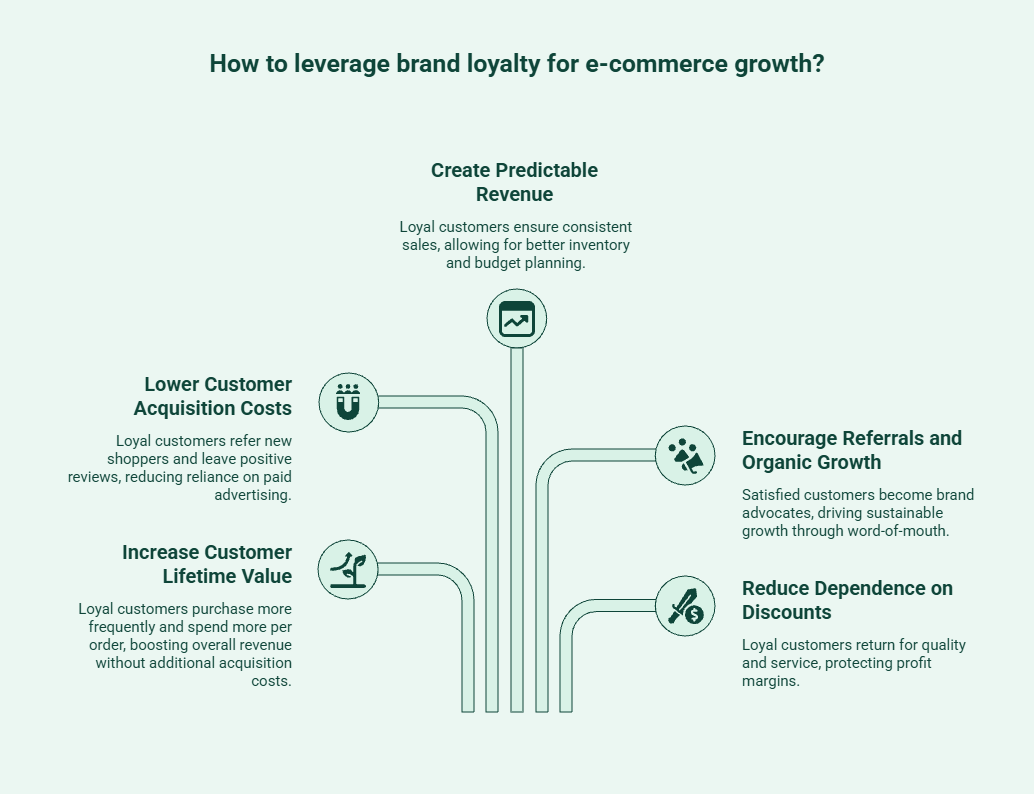
Brand loyalty strengthens e-commerce growth because it creates a customer base that continues generating revenue long after the first purchase. Instead of replacing lost customers every month, merchants build lasting relationships that increase customer lifetime value, improve customer retention, and reduce the cost of acquiring future sales.
Every repeat purchase increases the value of an existing customer without requiring another acquisition campaign. Instead of starting from scratch with every sale, you're building on a relationship that's already established.
Loyal customers typically:
Over time, higher purchase frequency and larger order values significantly increase customer lifetime value. That gives you more room to invest in growth instead of constantly replacing lost buyers.
Winning a new customer is almost always more expensive than keeping an existing one. As loyal customers return on their own, your business relies less on paid advertising to generate revenue.
Loyal customers also help reduce acquisition costs by:
Rather than funding every new sale through advertising, you build a customer base that attracts new shoppers through referrals, reviews, and authentic customer advocacy.
Acquiring a new customer can cost 5–7 times more than retaining an existing one, making customer retention one of the most cost-effective growth strategies for e-commerce businesses.
Revenue becomes easier to forecast when you know a portion of your customers will return regardless of your next promotion.
A loyal customer base helps merchants:
That stability gives businesses greater confidence to plan inventory, manage cash flow, and invest in future growth instead of depending on a constant stream of new customers.
Satisfied customers often become your most effective marketing channel. Recommendations from existing customers carry far more credibility than paid advertisements because they're built on real experiences.
You can encourage advocacy by:
When customers actively recommend your business, growth becomes more sustainable because new buyers arrive with built-in trust.
Businesses that rely heavily on discounts often train customers to wait for the next sale. Over time, price becomes the only reason people buy.
Brand loyalty changes that behavior because customers return for reasons that competitors can't easily copy.
Instead of competing only on price, loyal customers return because they value:
That shift protects profit margins while creating a healthier, more sustainable growth strategy than relying on promotions throughout the year.
These advantages rarely appear overnight. They're the result of consistently earning customer trust, rewarding repeat purchases, and delivering experiences that people genuinely want to come back to. The next step is understanding which loyalty-building strategies create those outcomes most effectively.
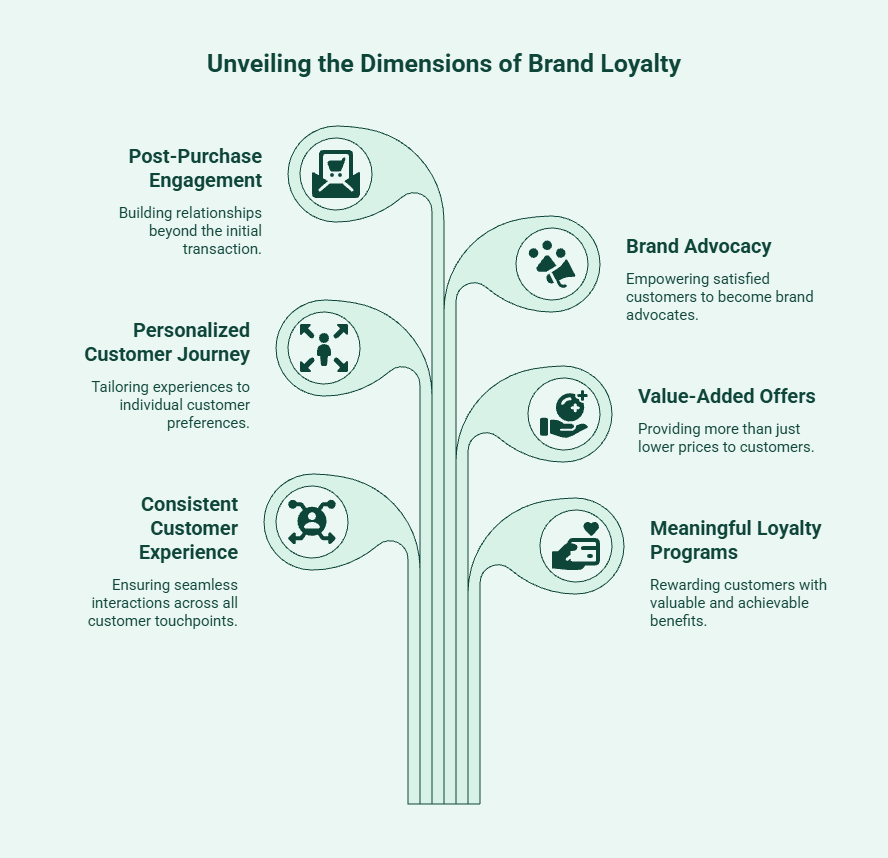
Building brand loyalty doesn't require a complete customer experience overhaul. It comes from consistently improving the moments that influence whether someone buys again. The most effective strategies make shopping easier, reward repeat customers, and give people reasons to choose your brand even when competitors offer similar products.
Customers remember inconsistency more than perfection. A delayed delivery, confusing return policy, or slow support response can undo the trust you've built through several successful orders.
Focus on creating a consistent experience across every customer touchpoint:
Customers should recognize your brand whether they're browsing your website, opening an email, or contacting support. That consistency builds familiarity, strengthens trust, and makes choosing your store feel like the safest decision every time.
A loyalty program should make customers feel appreciated, not challenged to earn rewards they'll never use. The strongest programs encourage repeat purchases by offering benefits customers actually value while making progress feel visible and achievable.
Consider rewarding customers with:
Simple progress indicators, such as "You're 80% of the way to Gold," create a sense of achievement and encourage customers to complete the next purchase. The easier customers understand both the rewards and their progress, the more likely they'll stay engaged.
Customers expect brands to remember what they've bought, browsed, and shown interest in. Personalization isn't about sending more emails. It's about making every interaction more relevant.
Simple improvements can have a significant impact:
McKinsey reports that 71% of consumers expect personalized interactions, making relevance an expectation rather than a competitive advantage.
Customers don't always want lower prices. Often, they want better value.
Bundling complementary products or offering exclusive benefits helps customers feel they're getting more from every purchase while increasing average order value.
Examples include:
For Shopify merchants, platforms like Kefi Commerce make it easier to build these experiences with product bundles, volume discounts, Buy More, Save More offers, and loyalty-focused promotions from a single platform. Instead of relying on one promotion type, merchants can combine multiple strategies to increase repeat purchases and customer lifetime value.
The customer journey doesn't end at checkout. In many cases, the post-purchase experience determines whether someone returns or starts looking elsewhere.
Stay connected in ways that genuinely help customers, not just sell to them. Focus on communication that adds value, such as:
Every positive interaction after the sale reinforces trust. When customers feel supported instead of forgotten, they're far more likely to choose your store again.
The most credible marketing doesn't come from your brand. It comes from customers who genuinely enjoy buying from you. Their recommendations carry more weight because they're built on real experiences, not advertising.
Make it easy for loyal customers to share their experience by:
Advocacy often results from consistently delivering great experiences. When customers feel valued long after their purchase, they're more likely to recommend your brand and help bring in new shoppers naturally.
The right strategies create loyal customers, but not every customer stays loyal for the same reason. Understanding what motivates different types of brand loyalty helps you invest in the approaches that deliver the greatest long-term impact.
Not every loyal customer comes back for the same reason. Some return because they trust your brand, others because shopping feels effortless, while some stay for exclusive rewards or a sense of belonging. Understanding what motivates your customers helps you invest in loyalty strategies that create lasting business value instead of short-term repeat purchases.
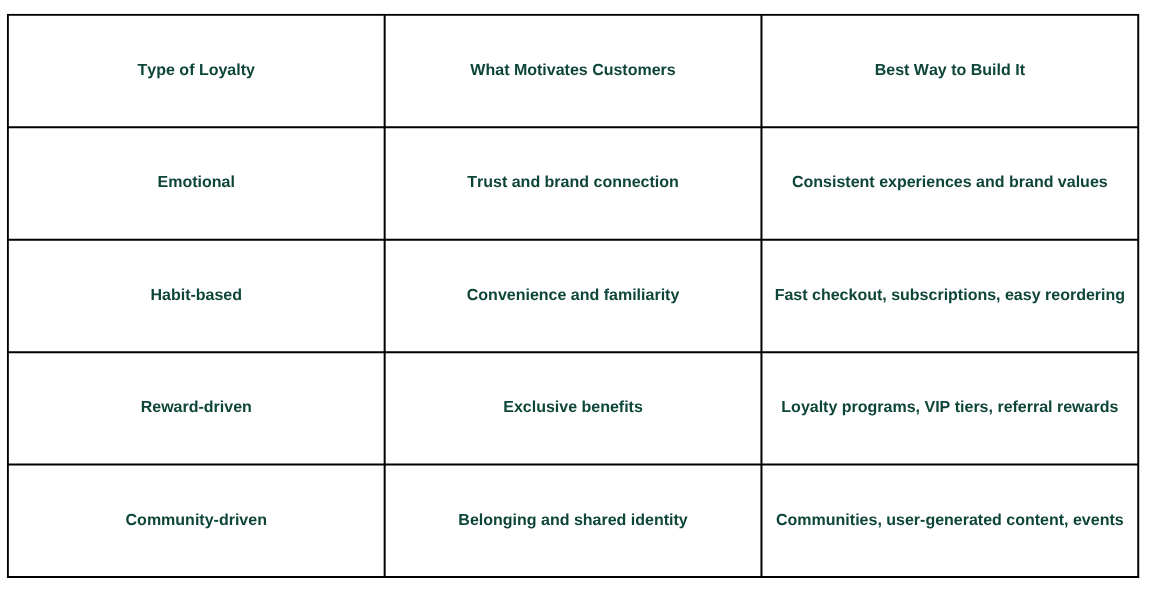
Emotional loyalty is the strongest form of customer loyalty because it isn't easily influenced by competitors. Customers return because they trust your brand, relate to your values, and believe they'll receive the same positive experience every time.
Build emotional loyalty by:
When customers feel connected to your brand, they're less likely to switch because of small price differences or competing promotions.
Sometimes customers return simply because buying from your store feels easy. The fewer decisions they need to make, the more likely your brand becomes their default choice.
Habit-based loyalty grows when you:
Convenience creates repeat purchases, but it should eventually be reinforced with stronger emotional connections and customer relationships.
Rewards encourage customers to return by giving them additional value beyond the purchase itself. They work best when they reinforce an existing relationship rather than becoming the only reason someone shops with your brand.
Effective rewards include:
It's also important to distinguish reward-driven loyalty from price-based loyalty. Customers who only return for discounts are often quick to switch when another brand offers a better deal. Rewards are most effective when they strengthen trust and customer experience rather than becoming the only reason people buy.
Community-driven loyalty develops when customers feel they're part of something bigger than a transaction. Instead of simply buying products, they participate in conversations, share experiences, and recommend your brand to others.
You can strengthen community by:
Communities build trust at scale because customers often trust other customers before they trust brands.
Brand affinity and brand loyalty are closely related, but they're not the same. Brand affinity reflects how customers feel about your brand, while brand loyalty is reflected in the choices they make. A customer may admire your brand and still buy from a competitor. Loyal customers continue choosing your brand because they've built trust through consistent positive experiences.
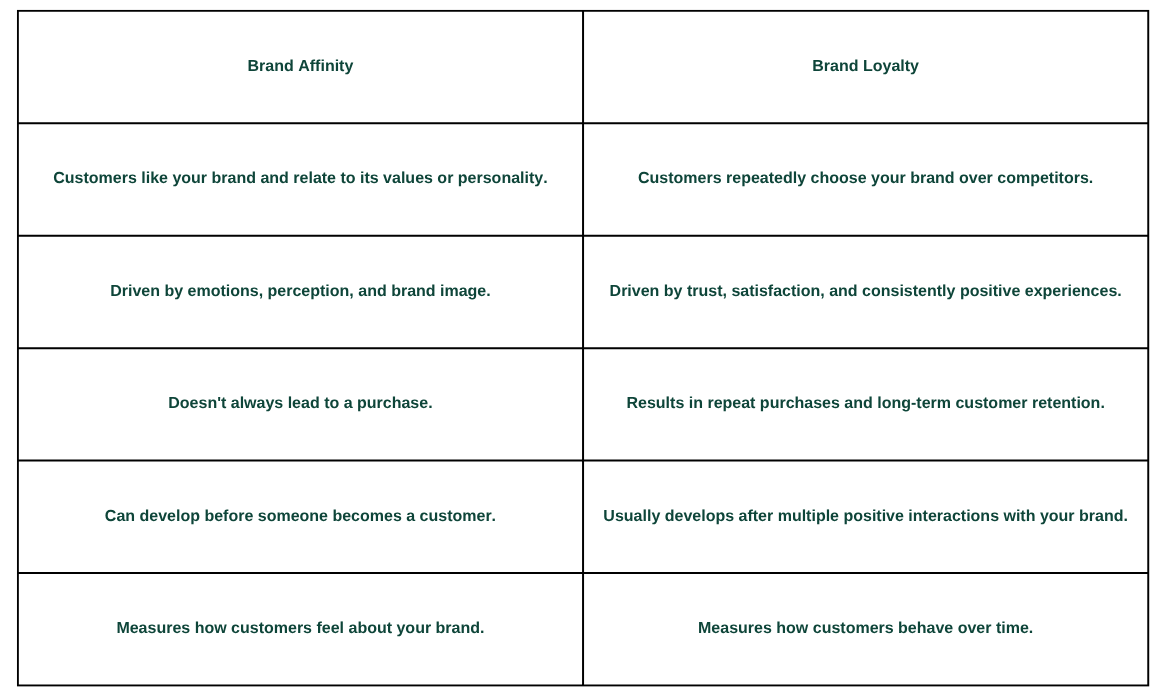
For e-commerce businesses, both matter, but they serve different purposes. Brand affinity attracts customers to your business, while brand loyalty keeps them coming back. The strongest brands build both, creating an emotional connection that eventually turns into consistent purchasing behavior.
The best loyalty strategies aren't limited to global brands with massive budgets. They're built on simple principles that any ecommerce business can adapt. Whether it's rewarding repeat purchases, creating a stronger community, or making shopping more convenient, these brands show that loyalty grows when customers have consistent reasons to come back.
Sephora's Beauty Insider program goes beyond points and coupons. Members receive exclusive product launches, birthday gifts, personalized recommendations, and access to special events, making every purchase feel more rewarding.
What ecommerce merchants can learn:
Key takeaway: Customers stay engaged when loyalty programs offer experiences they can't get from occasional promotions alone.
Nike keeps customers connected even when they aren't shopping. Through fitness apps, training content, and member-exclusive experiences, the brand creates ongoing engagement that extends well beyond individual purchases.
What ecommerce merchants can learn:
Key takeaway: Customers are more likely to stay loyal when they feel they're part of a community instead of simply buying products.
Starbucks combines personalization with convenience through its mobile app. Customers can reorder their favorite drinks, collect rewards, and receive personalized offers without adding extra steps to the buying process.
What ecommerce merchants can learn:
Key takeaway: The easier it is for customers to buy again, the more naturally repeat purchases become part of their routine.
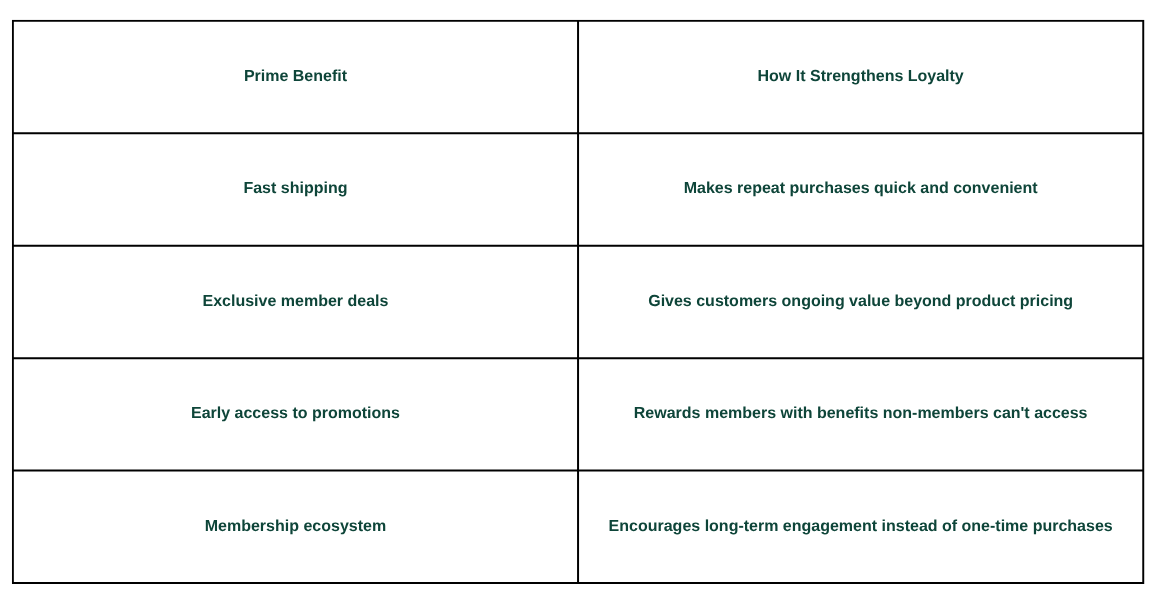
Amazon Prime encourages loyalty by making membership valuable beyond fast shipping. Exclusive deals, early access to promotions, and additional digital benefits give customers continuous reasons to stay within the Amazon ecosystem.
The brands that build lasting loyalty don't succeed because of one standout campaign. They consistently reinforce customer trust through every interaction while avoiding the mistakes that quietly push customers away.
Customer loyalty is built over time, but it can disappear after just a few disappointing experiences. Most customers don't leave because of a single mistake. They leave when small frustrations keep happening and the experience no longer matches their expectations.
Some of the most common loyalty killers include:
The good news is that most of these mistakes are preventable. Fixing small friction points often has a greater impact on customer loyalty than launching another promotion, because customers remember how consistently your brand delivers on its promises.
Building brand loyalty becomes more challenging as your store grows. Running separate apps for loyalty programs, product bundles, discounts, and personalized promotions often creates disconnected customer experiences that are harder to manage and optimize.
Kefi Commerce helps Shopify merchants bring those experiences together through one connected platform. Instead of treating every purchase as a separate transaction, merchants can create loyalty-driven campaigns that encourage customers to return, spend more, and stay engaged over time.
With Kefi Commerce, Shopify merchants can:
The result is a loyalty strategy that extends beyond points and rewards. By combining personalized promotions, value-driven offers, and customer retention tools in one place, Kefi Commerce helps merchants create experiences that keep customers coming back while supporting sustainable long-term growth.
Brand loyalty isn't something customers give after a single great purchase. It's earned through consistently delivering experiences that make your brand the obvious choice the next time they need your products. When customers trust your quality, value your service, and feel recognized throughout their journey, repeat purchases become a natural outcome instead of something driven by constant discounts or promotions.
For Shopify merchants, building that level of loyalty requires more than a rewards program alone. It takes a connected strategy that combines personalized experiences, meaningful offers, and consistent customer engagement. As your store grows, platforms like Kefi Commerce can help bring those efforts together, making it easier to strengthen customer relationships, increase repeat purchases, and build sustainable ecommerce growth.
Brand loyalty in ecommerce means customers consistently choose your brand over competitors because they trust the value, quality, and experience you deliver. Instead of buying only when discounts appear, they return because they prefer your brand and the relationship they've built with it.
Measure brand loyalty using metrics like repeat purchase rate, customer lifetime value (CLV), retention rate, referral rate, Net Promoter Score (NPS), and loyalty program engagement. Together, they show how likely customers are to keep choosing your brand.
Yes. Well-designed brand loyalty programs help small ecommerce stores increase repeat purchases, improve customer retention, and grow customer lifetime value. The key is offering simple, meaningful rewards that encourage customers to return without relying on constant discounts
Well-known brands with strong customer loyalty include Sephora, Nike, Starbucks, and Amazon Prime. They retain customers by combining personalized experiences, meaningful rewards, convenience, and consistent value that encourage repeat purchases over time
Customer loyalty is driven by convenience, price, or rewards, while brand loyalty is driven by trust, emotional connection, and consistent positive experiences. Brand-loyal customers continue choosing your business even when competitors offer similar products or lower prices.
Brand loyalty drives long-term business growth by increasing repeat purchases, customer lifetime value, and referrals while reducing customer acquisition costs. Loyal customers are also less likely to switch to competitors, creating more predictable revenue and stronger profitability.
.svg)
