

If you are trying to increase revenue without constantly spending more on customer acquisition, improving average order value is usually one of the smartest places to start. Rising ad costs and increasing competition make it harder for e-commerce brands to rely only on new customer growth for revenue.
That is one reason product bundling continues to work so well. Bundles help shoppers spend more naturally without making the experience feel overly sales-focused.
And when you combine bundles with loyalty programs, personalized offers, and retention tools, they become even more effective for driving long-term customer value.
In this guide, you will learn which types of product bundles work best for increasing average order value, why certain bundle strategies convert better than others, and how to build offers that feel genuinely useful instead of forced.
Average order value, or AOV, is the average amount customers spend whenever they place an order on your store. It helps e-commerce businesses understand buying behavior and improve overall store profitability over time.
For e-commerce stores, this metric matters because increasing AOV often grows revenue faster than constantly trying to bring in new customers. Even a small increase in order size can make a noticeable difference over time.
AOV Formula:
Average Order Value (AOV) = Total Revenue ÷ Number of Orders
For example, if your store generates $10,000 from 200 orders, your average order value would be $50.
Brands commonly increase AOV through:
The goal is not just getting more orders. It is getting more value from every customer who already wants to buy from your store.
Trying to manage product bundles without overselling inventory? Read our guide on the best Shopify bundle apps with inventory tracking to learn which apps help sync stock levels, prevent inventory issues, and make bundle management much easier as your store grows.
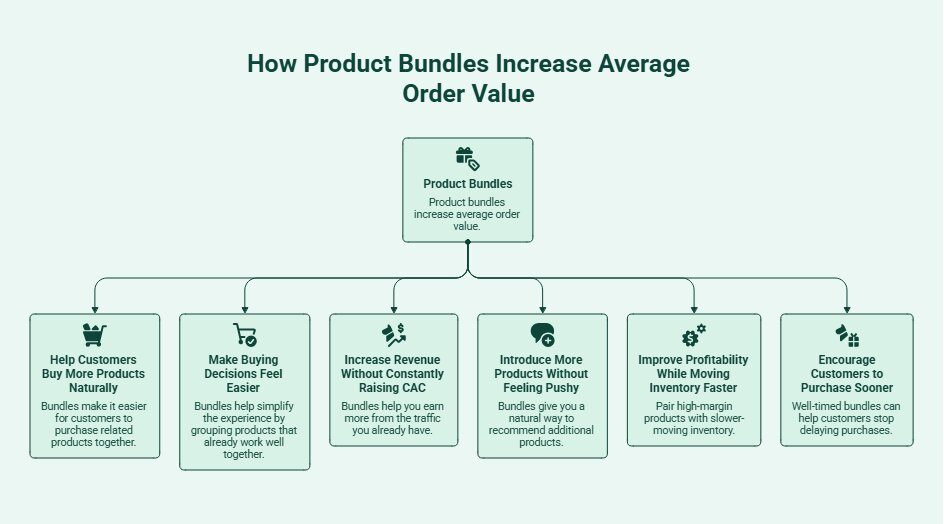
Product bundles increase average order value because they make customers feel like they are getting a more complete purchase instead of buying products one by one. And honestly, the benefit is not just bigger carts. Bundles can also help you improve profitability, reduce CAC pressure, and move inventory faster without relying heavily on discounts.
Bundles make it easier for customers to purchase related products together instead of stopping at just one item. Since the products already fit together logically, shoppers usually feel more comfortable increasing their cart size.
Example scenario:
A company buying office desks also adds bundled monitor arms, storage cabinets, and ergonomic accessories instead of purchasing desks alone.
Too many choices can slow customers down. Bundles help simplify the experience by grouping products that already work well together, so shoppers spend less time comparing products and more time actually checking out.
Example scenario:
A business setting up remote employees chooses a ready-made workstation bundle instead of sourcing laptops, webcams, chairs, and accessories separately.
One of the biggest advantages of bundles is that they help you earn more from the traffic you already have. Instead of relying only on new customer acquisition, you increase the value of shoppers already visiting your store.
Example scenario:
A Shopify electronics store recommends gaming accessory bundles alongside high-ticket laptop purchases instead of depending entirely on higher advertising spend.
Bundles give you a natural way to recommend additional products that customers may actually need. Because the suggestions feel relevant, shoppers are usually far more open to adding them to their purchase.
Example scenario:
A photography retailer bundles lighting kits, tripods, and memory cards alongside professional camera purchases for creators and studio teams.
This is where bundles become especially valuable from a business perspective. You can pair high-margin products with slower-moving inventory to improve profitability while clearing stock more efficiently. That means fewer heavy discounts and healthier margins overall.
Example scenario:
A tech retailer bundles older phone accessories with bestselling smartphones, helping move aging inventory without hurting overall pricing perception.
Well-timed bundles can help customers stop delaying purchases. Seasonal launches, exclusive offers, and limited-edition bundles usually work much better than constantly pushing aggressive countdown timers or flash sales.
Example scenario:
A fitness brand launches a New Year wellness bundle featuring supplements, workout equipment, and meal-planning resources for customers starting new health goals.
Want to give customers more flexibility while increasing cart value at the same time? Check out our guide: Build Your Own Bundle on Shopify to learn how customizable bundles, mix-and-match offers, and smarter bundle strategies can create a more engaging shopping experience for your customers.
Different bundle strategies influence customer behavior in different ways. Choosing the right structure helps increase average order value naturally while making shoppers feel they are getting better convenience and value.
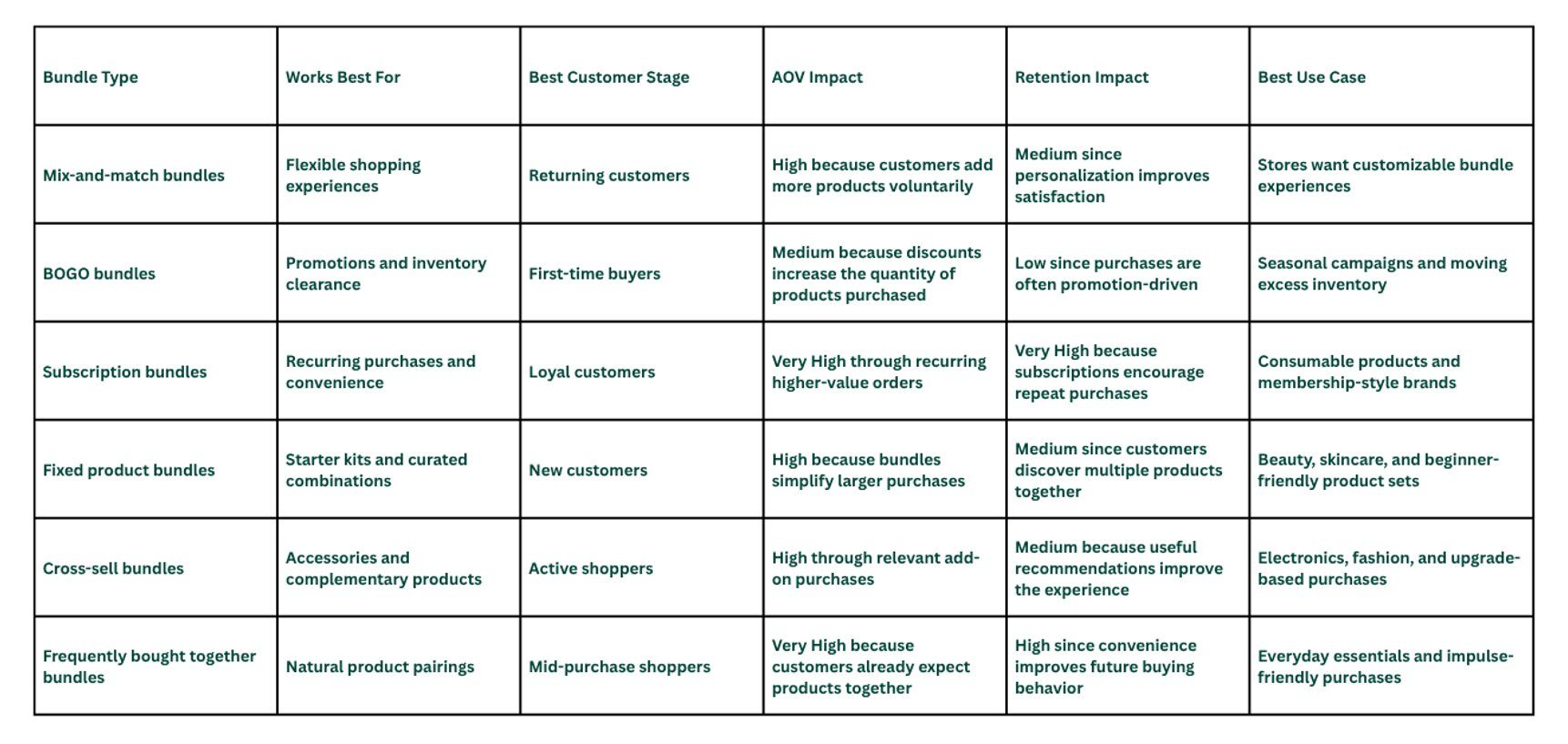
Mix-and-match bundles work well because customers like flexibility and control over what they buy. Stores can also use Kefi Commerce to reward shoppers with loyalty points for building larger custom bundles.
They are especially useful for beauty, apparel, snacks, and gifting brands. However, they are less suitable for technical or compatibility-based products where incorrect combinations may confuse shoppers.
BOGO bundles are effective because shoppers instantly understand the value. They help stores increase order quantities and move inventory faster.
This strategy works best for consumables, apparel basics, and seasonal products, but may not suit luxury or lower-margin items where discounts reduce profitability too heavily.
Subscription bundles help stores generate repeat purchases through recurring orders and long-term customer retention. That is why they are often considered very high for AOV and lifetime value.
Kefi Commerce works especially well here by helping stores reward loyal subscribers with points, perks, and VIP-style benefits that encourage customers to keep coming back. They work best for refill products, memberships, skincare, and supplements, but are less useful for one-time purchase categories.
Pure bundles combine products into one fixed package that customers cannot customize.
They work especially well for starter kits, routines, and complementary product systems. Stores can also use Kefi Commerce to reward customers who purchase premium bundle sets or unlock VIP-style incentives.
But, they may not perform as well for stores where shoppers expect personalization or prefer building their own product combinations.
Cross-sell bundles encourage customers to add related products alongside their main purchase. They work best for accessories, upgrades, and add-ons that naturally complement the original item.
However, irrelevant recommendations can make the shopping experience feel overly promotional and reduce conversion rates instead.
Frequently bought together bundles perform well because they use real customer buying patterns to recommend products that shoppers already expect to purchase together.
That is why they are often considered very high for AOV. Kefi Commerce can further support these strategies through loyalty incentives that encourage customers to purchase complete product combinations more often.
The best bundle strategy usually depends on what your customers actually respond to most. Testing different bundle formats over time helps you understand which combinations increase cart value naturally while still feeling useful and easy to buy.
Looking for more ways to grow cart value and improve Shopify conversions? Explore our guide on how to bundle products on Shopify for practical bundle ideas, setup tips, pricing strategies, and proven ways to create offers customers are more likely to purchase.
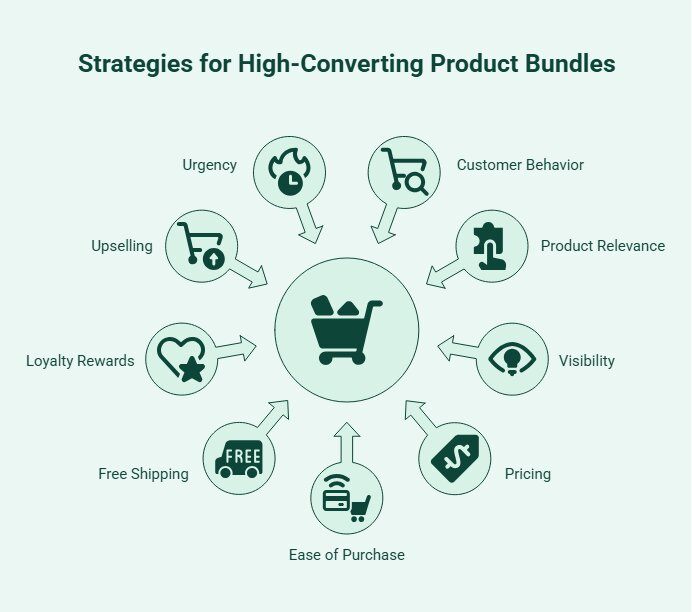
Throwing random products into a bundle rarely works. The bundles that actually increase average order value are the ones that feel useful, relevant, and easy to buy. When done well, bundles help customers spend more naturally without making the experience feel overly salesy.
Here are some bundle strategies that consistently work well for e-commerce stores.
The easiest bundles to sell are the ones that already make sense to shoppers. When products naturally go together, customers spend less time thinking and more time checking out.
Helpful approaches include:
A lot of stores create good bundles but barely show them properly. If customers do not notice the offer while browsing, they are far less likely to add it to their cart.
Helpful approaches include:
Your customers already tell you what they want to buy together. Looking at browsing patterns and past purchases usually gives better bundle ideas than guessing randomly.
Helpful approaches include:
Sometimes, even small pricing changes can improve conversions noticeably. Testing helps you understand what customers respond to without hurting profitability long-term.
Helpful approaches include:
If a bundle page feels confusing, customers will leave quickly. The goal is to make everything feel simple, clear, and easy to understand from the start.
Helpful approaches include:
Most shoppers would rather add another item than pay shipping fees. That is why free shipping thresholds work so well for increasing average order value naturally.
Helpful approaches include:
Customers love feeling rewarded for coming back. Exclusive bundles for loyalty members or repeat buyers can increase retention while making shoppers feel more connected to your brand.
This is also where tools like Kefi Commerce fit naturally into the customer experience.
Helpful approaches include:
Bundles create natural upsell opportunities because customers are already buying related products together. Loyalty rewards can make upsells feel even better by giving shoppers extra value instead of making the experience feel overly promotional.
Helpful approaches include:
Limited-time bundles can encourage faster purchases, but too many countdown timers or constant flash sales can start feeling gimmicky. Customers respond better when urgency feels genuine and tied to something real.
Helpful approaches include:
Want to build subscription bundles that customers actually stay subscribed to long-term? Check out our guide on subscription bundle best practices to learn how smarter bundle combinations, flexible pricing, and personalized offers can improve retention, reduce churn, and increase recurring ecommerce revenue.
Product bundles can increase cart size quickly, but the real opportunity starts after the purchase. Customers who already buy bundles are often more open to trying new products, joining loyalty programs, and returning for future purchases.
That is where Kefi Commerce can become especially useful for Shopify stores.
Instead of only focusing on one-time conversions, Kefi Commerce helps brands build stronger long-term customer relationships through rewards, referrals, VIP experiences, and personalized engagement campaigns. This works really well alongside bundling because shoppers already purchasing multiple products usually have higher buying intent.
With Kefi Commerce, Shopify merchants can:
For ecommerce brands trying to increase both average order value and customer retention together, Kefi Commerce helps turn first-time bundle shoppers into long-term repeat customers without making the experience feel complicated or overly sales-focused.
Ready to build stronger customer loyalty alongside your product bundling strategy? Explore Kefi Commerce on the Shopify App Store and start creating rewards, referrals, and VIP experiences designed for long-term ecommerce growth.
Product bundles are a powerful strategy for boosting average order value in e-commerce. By encouraging customers to purchase multiple items at once and highlighting cost savings, you simplify their buying decision while increasing perceived value. Additionally, well-crafted bundles can enhance customer loyalty and help manage inventory effectively.
As you implement these strategies, remember to personalize offers based on customer preferences and continuously test bundle pricing for optimal results. Ultimately, product bundling not only maximizes revenue but also enriches the shopping experience.
Digital stores can analyze browsing behavior and purchase history instantly, helping merchants build personalized bundles for different shoppers. That level of targeting improves user experience, supports revenue growth, reduces customer acquisition costs, and helps ecommerce business owners increase higher AOV through smarter digital marketing strategies.
Yes, many e-commerce business brands have increased average order size through strategic product bundles. Stores combining complementary products, starter kits, or larger quantities inside a single package often improve sales volume, encourage repeat purchases, and support long-term revenue increase through stronger customer relationships.
Many shoppers prefer bundles because they simplify decisions and create a better deal during checkout. Well-designed bundles help customers purchase a useful product mix at a discounted price while improving user experience and increasing the amount of money spent during a single transaction.
Yes. One of the best ways to boost AOV is through convenience and curated offers instead of relying only on discounts. Many e-commerce business brands improve their AOV by combining relevant products at the right moment without aggressively reducing pricing across product pages.
Bundles usually fail when the product mix feels unrelated or the offer lacks clarity. Poor layouts, weak customer reviews, and confusing product pages often reduce buyer trust. If customers cannot quickly understand the value, sales volume, and average order size typically decline over a specific period.
Upselling encourages customers to purchase premium product versions, while product bundling combines complementary products inside a single package. Both are effective marketing strategies for increasing the amount of money customers spend during a single transaction while supporting long-term revenue growth and customer retention.
Bundles improve perceived value because shoppers focus more on convenience and savings instead of individual pricing. Limited-time offers and discounted price strategies also create urgency, encouraging customers to purchase larger quantities and increasing AOV across ecommerce websites during a specific period of time.
Most e-commerce business brands monitor sales volume, average order size, repeat purchases, and revenue increase before and after launching bundles. Many stores also use A/B testing to compare layouts, pricing, and product recommendations to refine their AOV strategy over a specific period.
Yes. Mobile shoppers usually prefer faster browsing, cleaner product pages, and a smoother mobile experience. Complex bundle customization can reduce conversions, while simplified navigation and better customer service often improve user experience and help boost AOV more effectively across mobile devices.
Limited-time bundles often create urgency and encourage customers to purchase faster during a specific period of time. Permanent bundles, however, support steady revenue growth and long-term customer retention. Many e-commerce business brands combine both strategies to maintain consistent sales volume and improve AOV over time.
.svg)
