
Acquiring new customers has become more expensive for e-commerce brands, making it harder to grow profitably through acquisition alone. As advertising costs rise and competition increases, many brands are focusing on generating more revenue from existing customers rather than constantly chasing new ones.
Customer retention plays a major role in that shift. When customers return to make additional purchases, brands can increase customer lifetime value, improve profitability, and build more predictable revenue streams. Strong retention also helps businesses reduce their dependence on discounts and expensive acquisition campaigns.
Rather than focusing only on retention theory, this guide examines how leading e-commerce brands build customer loyalty, encourage repeat purchases, and create long-term customer relationships. You'll discover practical customer retention examples, the strategies behind their success, and lessons that Shopify merchants can adapt to strengthen retention and drive sustainable growth.
Customer retention measures how effectively a business keeps customers returning over time. In e-commerce, strong retention means shoppers continue buying from the same brand instead of switching to competitors after their first purchase.
For merchants, retention is often one of the most important growth indicators because repeat customers typically generate more long-term value than one-time buyers. Higher retention can improve customer lifetime value, create more predictable revenue, and reduce dependence on constantly acquiring new customers.
This is why many e-commerce brands invest in loyalty programs, personalised experiences, subscriptions, and post-purchase engagement strategies designed to keep customers coming back.
Customer acquisition brings new shoppers into your business, while customer retention increases the long-term value of your loyal customer base. Both are essential for sustainable e-commerce growth. Acquisition expands your customer base, and retention helps you generate more revenue from the customers you've already earned.
As acquisition costs continue to rise, many brands see retention as a larger growth opportunity because it builds on existing customer relationships rather than starting from zero with every sale. Repeat customers already know your brand, trust your products, and are more likely to make additional purchases when presented with relevant offers, loyalty rewards, or personalised experiences.
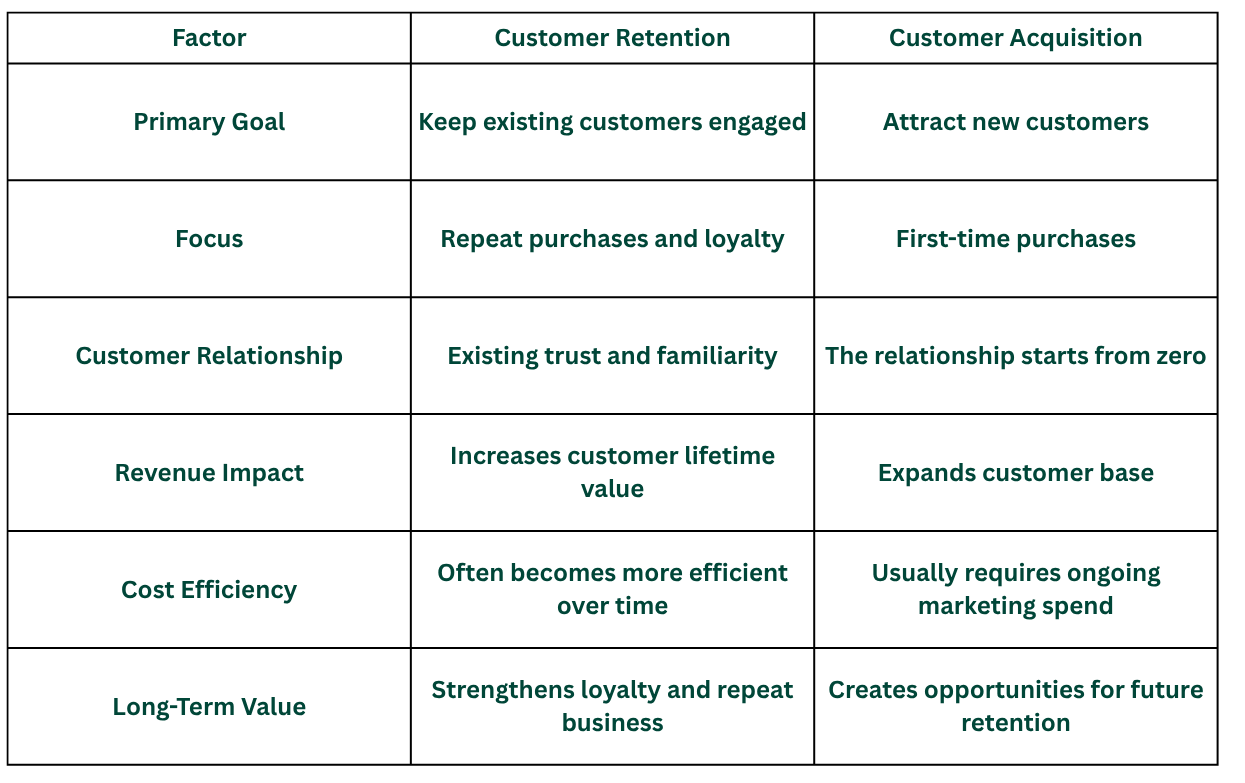
This does not mean customer acquisition should be ignored. E-commerce growth depends on both attracting new customers and keeping existing ones engaged. However, many brands discover that improving retention delivers a greater return on investment because it increases the value of customers they have already worked hard to acquire.
That is why successful ecommerce brands invest in loyalty programs, personalised experiences, subscriptions, and post-purchase engagement strategies that encourage customers to return. The following examples show how leading brands turn first-time buyers into long-term customers.
There is no single approach to customer retention. Some brands keep customers through loyalty programs, while others focus on convenience, personalisation, good customer service, or the effective use of customer data and exclusive member benefits. The most effective strategy depends on customer behaviour, purchase frequency, and the value customers receive after their first order.
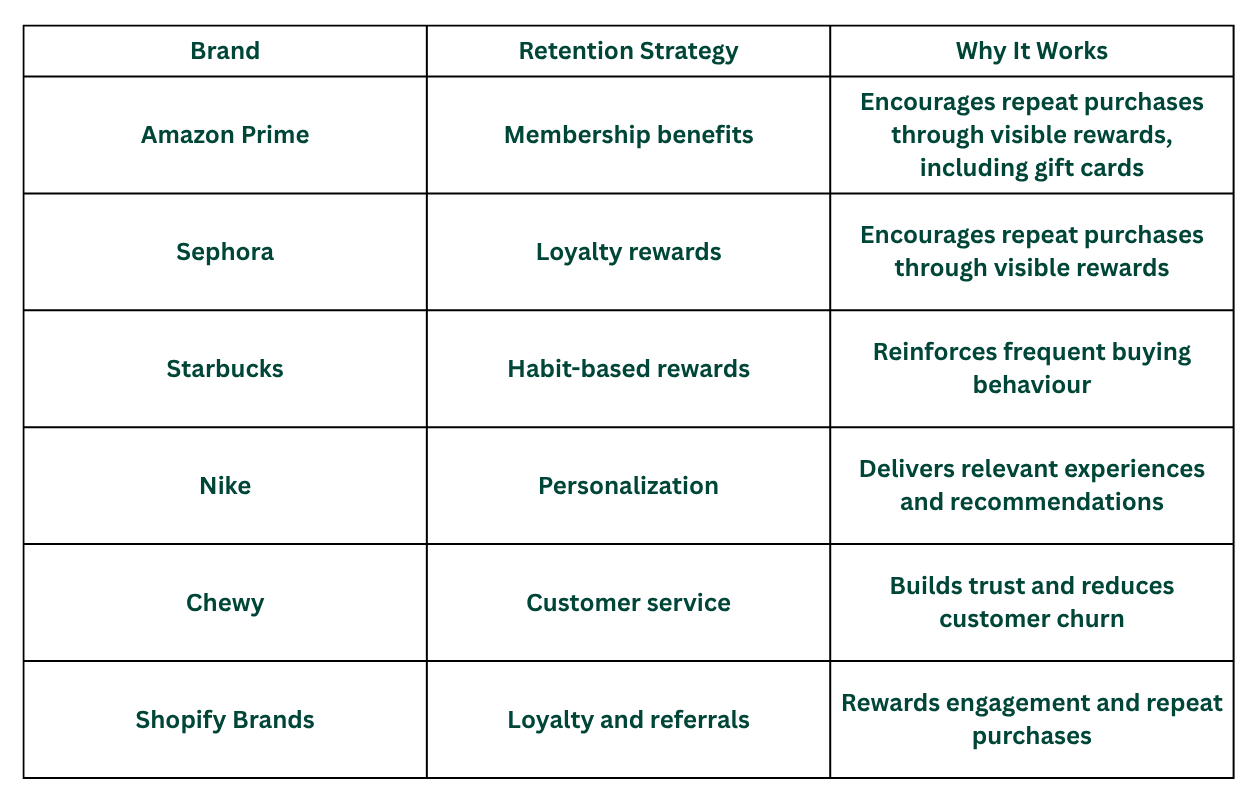
Amazon Prime is one of the strongest examples of membership-driven retention. Customers pay an annual fee in exchange for benefits such as faster shipping, exclusive deals, and additional services.
The model works because value is delivered repeatedly rather than through a one-time incentive. Each purchase reinforces the benefits of staying within the ecosystem.
Merchant takeaway: Retention improves when customers receive ongoing value that makes returning feel more beneficial than switching to a competitor.
Sephora's Beauty Insider program rewards customers with points, exclusive offers, and tier-based benefits that increase as spending grows.
The program succeeds because customers can clearly see the connection between purchases and rewards. Every order contributes to future value, making repeat purchases feel more rewarding.
Merchant takeaway: Loyalty programs work best when rewards are simple to understand and consistently reinforce customer behaviour.
Starbucks has built retention around routine purchasing behaviour. Customers earn rewards through everyday transactions, creating a cycle of repeat engagement.
Instead of relying solely on discounts, Starbucks turns frequent purchases into progress toward future benefits. This keeps customers engaged without constantly reducing prices.
Merchant takeaway: Brands whose customers buy regularly can strengthen retention by rewarding consistency rather than occasional large purchases.
Nike uses personalisation across its digital channels to create more relevant customer experiences. Product recommendations, content, and communications are tailored to customer interests and behaviors.
This approach increases engagement because customers receive information that matches their needs rather than generic promotional messages.
Effective personalisation strategies often include:
Merchant takeaway: Personalisation becomes more effective when it is based on customer behaviour rather than broad audience segments.
Chewy demonstrates how customer service can become a retention strategy. Fast support, easy issue resolution, and customer-first policies help build long-term trust.
When customers know problems will be handled quickly, they are more likely to continue purchasing and less likely to leave after a negative experience.
Merchant takeaway: Customer service is not just a support function. It directly influences retention, loyalty, and repeat purchase behaviour.
Glossier has built customer retention by creating a community around its brand rather than relying solely on traditional rewards. Customer feedback, user-generated content, referral programs, and exclusive product launches encourage shoppers to stay engaged long after their first purchase.
Instead of treating customers as one-time buyers, Glossier creates opportunities for them to participate in the brand experience. This strengthens emotional connections, encourages repeat purchases, and turns loyal customers into brand advocates.
Common elements of Glossier's retention strategy include:
Merchant takeaway: Customers are more likely to return when they feel connected to your brand, not just your products. Building a community alongside loyalty and referral programs can strengthen long-term customer retention and advocacy.
The strongest customer retention strategies encourage customers to return by providing ongoing value after the first purchase. Loyalty programs, personalisation, subscriptions for subscription businesses, referrals, and community-building initiatives consistently help ecommerce brands diversify their product offerings, increase repeat purchases, and enhance long-term customer value.
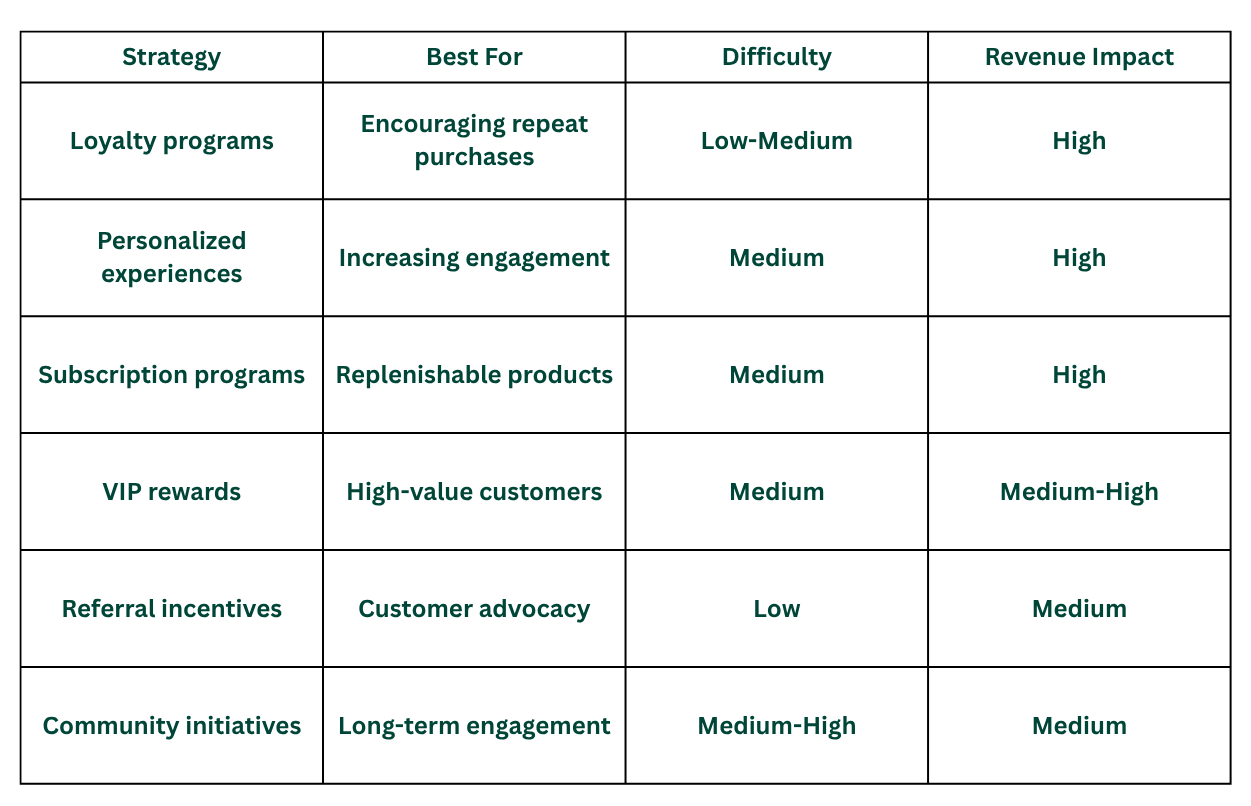
Loyalty and rewards programs remain one of the most effective ways to encourage repeat purchases. They give customers a clear reason to stay engaged by rewarding actions such as purchasing, referring friends, or participating in brand activities, including early access to new products.
The strongest programs keep earning and redemption simple. Customers should quickly understand how rewards are earned, what benefits are available, and why continuing to shop provides additional value, making this a great example of effective loyalty strategies.
Common loyalty program features include:
Retention often depends on what happens after checkout. Personalised post-purchase experiences help brands remain relevant between purchases by delivering messages, recommendations, and offers based on customer behaviour.
For example, replenishment reminders can encourage timely reorders, while product recommendations can help customers discover complementary items. When personalisation reflects actual customer needs, engagement feels helpful rather than promotional.
Effective personalisation strategies often include:
Subscription programs work particularly well for products that customers buy repeatedly. By reducing the effort required to place future orders, subscriptions create a more convenient buying experience while supporting consistent revenue.
Successful programs focus on flexibility as much as convenience. Customers are more likely to remain subscribed when they can pause, modify, or adjust deliveries without friction.
Subscription retention strategies often include:
Tiered programs motivate customers by rewarding continued engagement with increasingly valuable benefits. As customers move through different levels, they gain access to perks that make remaining active more rewarding.
This approach works especially well for brands with a wide range of customer spending levels because it encourages progression without treating every customer the same.
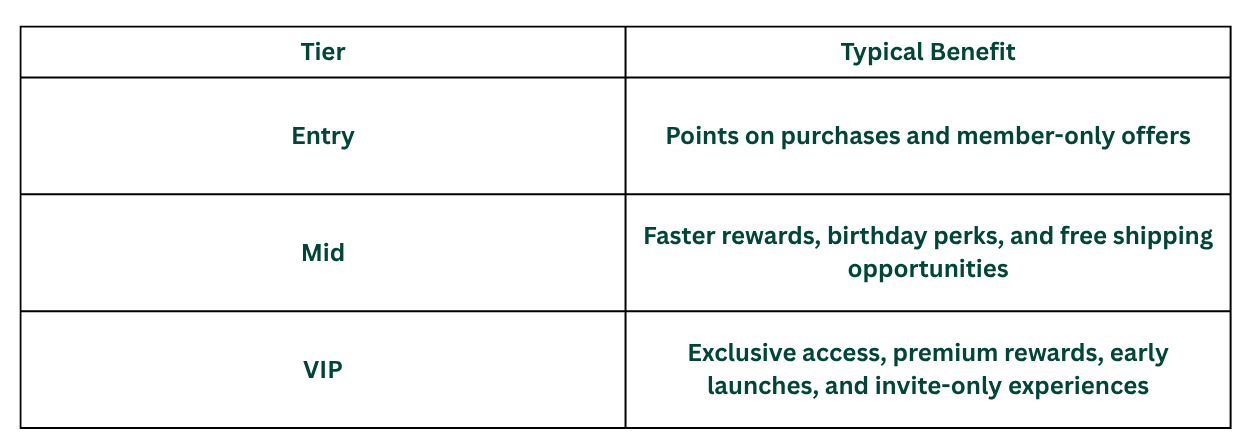
The clearer the distinction between tiers, the stronger the incentive to remain engaged.
Referral programs strengthen retention by encouraging satisfied customers to become advocates. When customers actively recommend a brand, they often deepen their own relationship with it at the same time.
The best referral programs make participation simple and provide rewards that feel meaningful to both the referrer and the new customer.
Popular referral incentives include:
Communities create value beyond products by giving customers opportunities to connect, learn, and participate. This can strengthen customer loyalty because the relationship extends beyond individual transactions.
Community-building can take many forms, including customer groups, social media engagement, user-generated content campaigns, and educational events. These initiatives help brands remain part of customers' lives between purchases.
Common community-building tactics include:
While these strategies can improve retention individually, many successful brands combine several approaches into a structured retention program. The next examples show how loyalty, referrals, subscriptions, and rewards programs are often packaged into long-term systems that encourage customers to stay engaged.
There is no single retention strategy that works for every e-commerce business. The right approach depends on why customers are not returning. Before launching loyalty programs or referral campaigns, identify the biggest gap in your customer journey and choose the strategy that solves it.
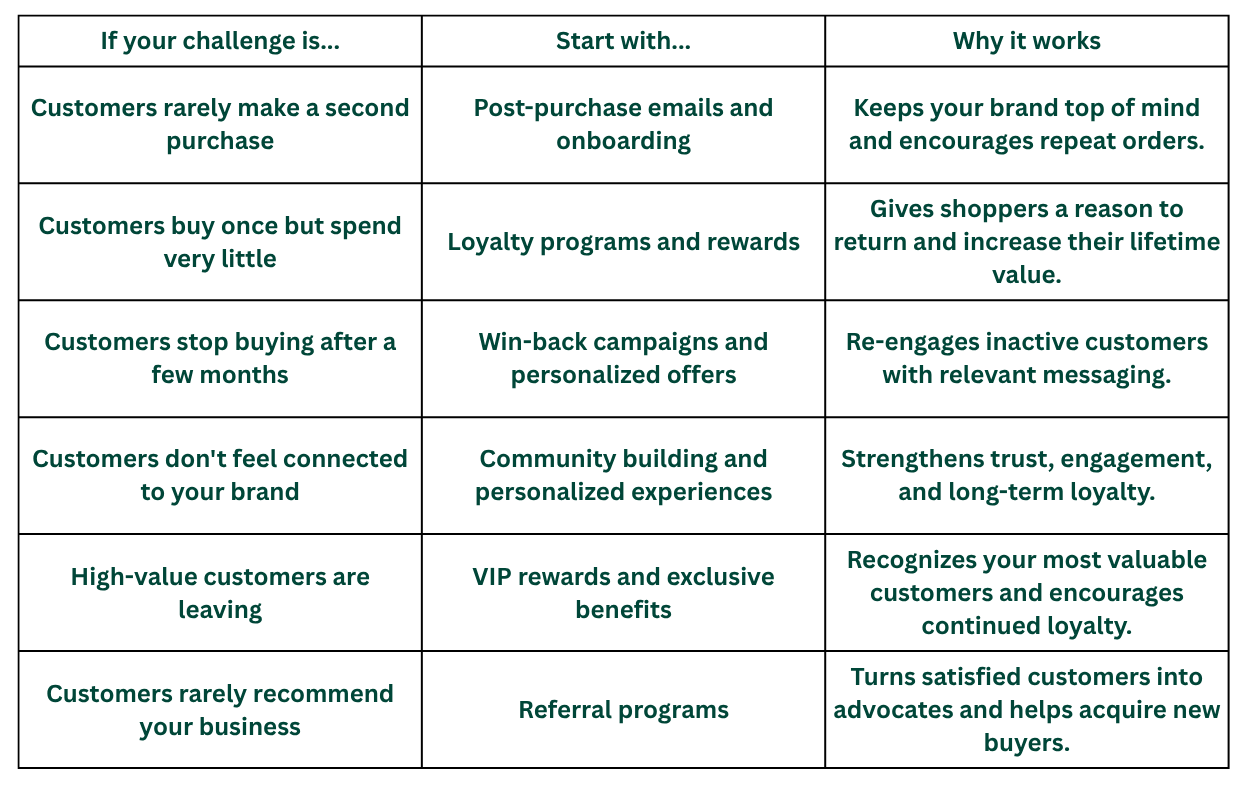
No retention strategy succeeds on its own. The strongest ecommerce brands continuously measure customer behaviour, identify where customers drop off, and refine their approach over time. Start by solving your biggest retention challenge, then expand your strategy as your business and customer relationships grow.

A customer retention program gives shoppers an ongoing reason to return after their first purchase. While every program aims to increase repeat purchases, the right choice depends on your products, customer behaviour, and long-term business goals.
Points-based loyalty programs work best when customers purchase regularly and can earn rewards through repeated interactions.
Best suited for:
When to choose this program:
Choose a points-based program if your customers buy multiple times throughout the year, and small, achievable rewards are enough to encourage another purchase.
Tiered rewards programs encourage customers to spend more over time by unlocking additional benefits as they reach higher levels.
Best suited for:
When to choose this program:
Use tiered rewards when your goal is to encourage customers to continue purchasing in order to access exclusive benefits and premium experiences.
Paid membership programs provide exclusive benefits in exchange for a recurring or annual fee.
Best suited for:
When to choose this program:
Membership programs work best when customers receive ongoing value through benefits such as free shipping, exclusive pricing, or early access to products.
Referral programs encourage satisfied customers to refer new shoppers and reward both parties for participating.
Best suited for:
When to choose this program:
Choose referral programs when word-of-mouth is already driving new customers, and you want to encourage more customer advocacy.
Subscription programs automate repeat purchases by delivering products on a recurring schedule.
Best suited for:
When to choose this program:
Subscriptions are most effective when customers regularly need to reorder the same products and value convenience over manual repeat purchases.
The strongest retention programs match how customers naturally buy rather than forcing new behaviours. Start with the program that fits your products and customer journey, then expand your retention strategy as your business grows.
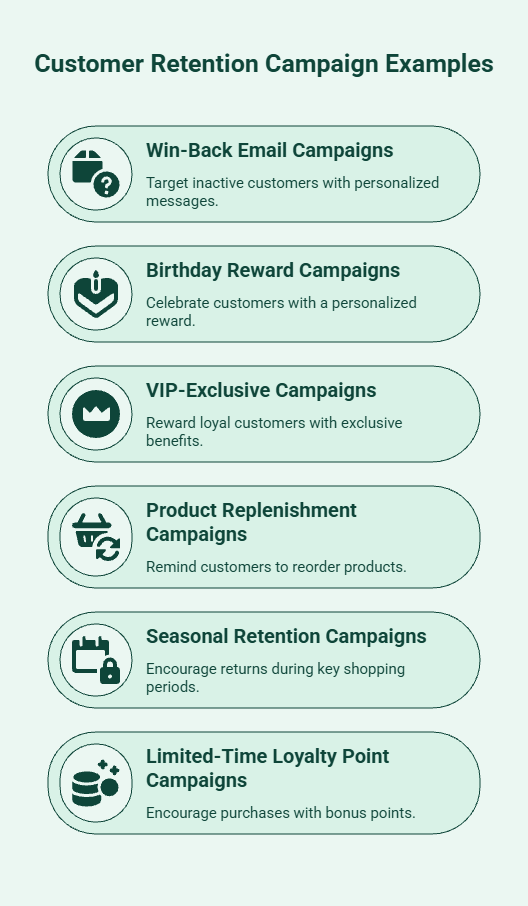
Customer retention campaigns are time-bound initiatives that encourage repeat purchases, re-engage inactive customers, or reward loyal shoppers. Unlike always-on retention programs, campaigns are designed around a specific objective or event.
Win-back campaigns target customers who have stopped purchasing before they become inactive for good.
Why it works:
Merchant takeaway: Focus on relevant timing and personalised messaging before relying on discounts.
Birthday campaigns celebrate customers with a personalised reward or exclusive offer.
Why it works:
Merchant takeaway: Keep rewards easy to redeem and genuinely valuable.
VIP campaigns reward your most loyal customers with benefits unavailable to everyone else.
Common examples:
Merchant takeaway: Exclusivity should feel meaningful, not like another discount.
Replenishment campaigns remind customers to reorder products when they're likely to run out.
Why it works:
Merchant takeaway: Send reminders when customers are most likely to need a refill or replacement.
Seasonal campaigns encourage existing customers to return during key shopping periods instead of focusing only on new customer acquisition.
Common examples:
Merchant takeaway: Reward loyal customers before promoting seasonal offers to new shoppers.
Bonus-point campaigns encourage customers to make another purchase within a limited timeframe.
Why it works:
Merchant takeaway: Reserve bonus-point campaigns for selected periods to maintain their effectiveness.
Retention programs build long-term loyalty, while campaigns create timely reasons for customers to return. Combining both approaches helps keep customers engaged throughout their lifecycle.
A customer retention plan maps out how you'll keep customers engaged after their first purchase. Rather than relying on occasional promotions, it creates a structured journey that encourages repeat purchases, builds loyalty, and increases customer lifetime value.
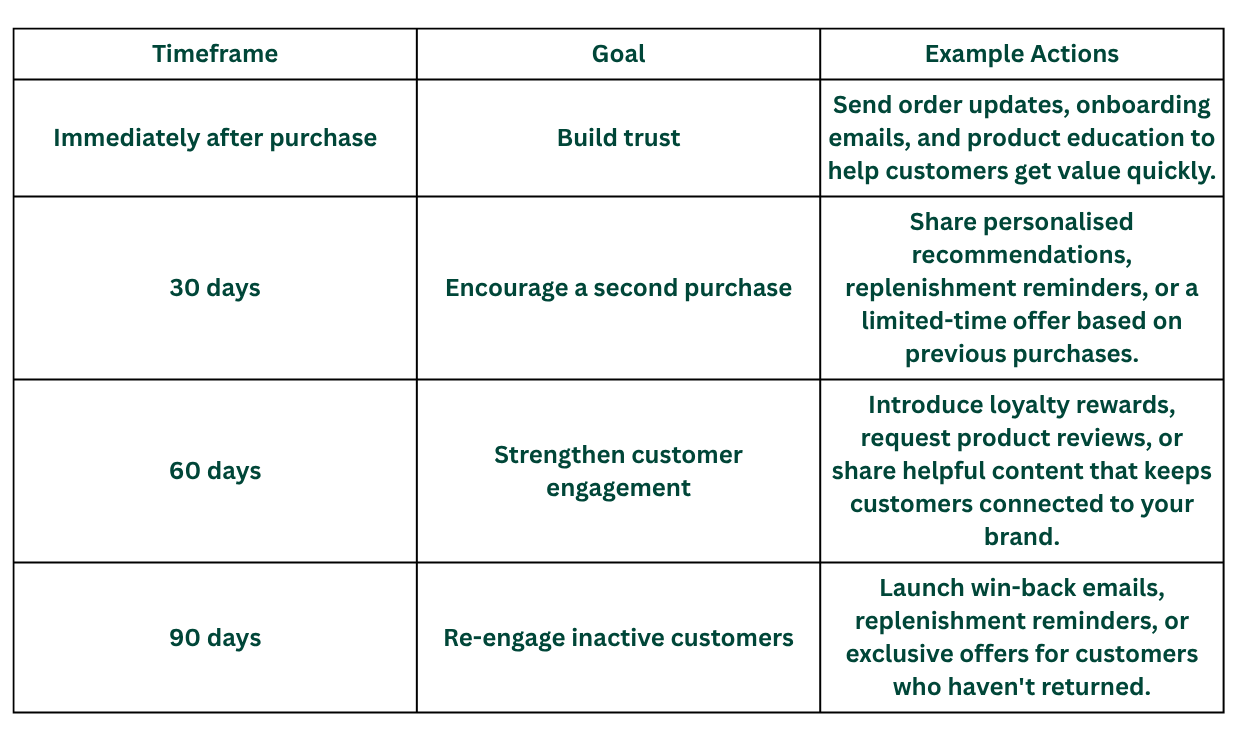
As your customer base grows, your retention plan should become more personalised. Customer segmentation, automated journeys, loyalty programs, and regular tracking of repeat purchase rate, customer retention rate, and customer lifetime value help you refine your strategy and improve long-term results.
You cannot improve retention without measuring it consistently. While revenue shows overall business performance, retention metrics reveal whether customers continue engaging with your brand over time. Tracking the right indicators helps identify what is working, where customers are dropping off, and which retention efforts deliver the strongest results.
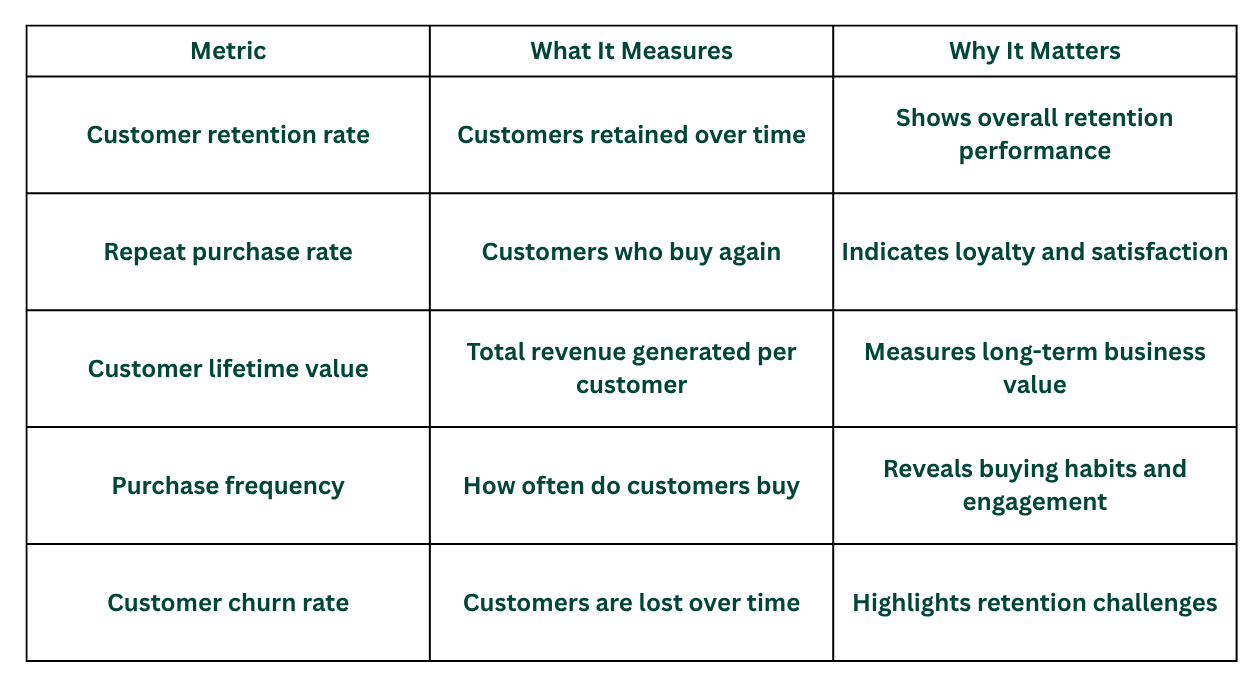
Customer retention rate measures the percentage of customers who continue buying from your brand over a specific period.
Why it matters:
Repeat purchase rate measures how many customers return after their first order to make another purchase.
Why it matters:
Customer lifetime value estimates the total revenue a customer generates throughout their relationship with your business.
Why it matters:
Purchase frequency tracks how often customers buy from your brand within a specific timeframe.
Why it matters:
Customer churn rate measures the percentage of customers who stop purchasing or engaging with your brand during a given period.
Why it matters:
No single metric provides a complete picture of retention performance. The most successful ecommerce brands track several metrics together to understand not only how many customers they retain, but also how often those customers return and the value they generate over time.
Customer retention becomes easier to scale when repetitive tasks are automated. Instead of manually following up with every customer, Shopify merchants can automate key touchpoints while keeping the experience relevant and personalised.
Automate repeat purchases by:
Prioritise automation that:
The goal isn't to automate every interaction. It's to automate repetitive tasks so your team can focus on building stronger customer relationships while customers receive timely, relevant experiences.
Building customer retention programs manually becomes more difficult as a Shopify store grows. Managing loyalty rewards, promotions, customer segments, and repeat purchase campaigns across multiple tools can create unnecessary complexity and make it harder to deliver a consistent customer experience.
Kefi Commerce helps Shopify merchants bring these retention efforts together through promotion, loyalty, and personalisation tools designed to encourage repeat purchases and long-term customer engagement. Instead of relying heavily on blanket discounts, merchants can create targeted incentives that reward customer behaviours and support sustainable growth.
With Kefi Commerce, merchants can:
When combined with a broader retention strategy, these tools help merchants create stronger customer experiences, improve customer retention rates, and generate more value from existing customers.
The most successful ecommerce brands combine loyalty programs, personalised offers, and targeted promotions to keep customers engaged long after their first purchase. If you're ready to simplify your retention strategy, explore how Kefi Commerce can help you launch, manage, and optimise loyalty and promotional campaigns from a single platform.
Many retention problems stem from avoidable mistakes rather than poor products. Brands often focus on acquiring new customers while overlooking the experiences that encourage existing customers to return, sometimes failing to address their pain points. Common mistakes include:
The strongest retention strategies combine customer understanding, ongoing engagement, and continuous measurement. Brands that avoid these common mistakes are better positioned to increase repeat purchases, strengthen customer loyalty, and generate more long-term value from their customer base.
The customer retention examples in this guide show that keeping customers is not about relying on a single tactic. Amazon Prime uses membership benefits, Sephora rewards loyalty, Starbucks builds purchasing habits, Nike personalises the customer experience, and Chewy focuses on exceptional customer service. Each brand gives customers a reason to return after their first purchase.
As you build your own retention strategy, focus on the approaches that match your customers' needs and buying behaviour. Whether you use loyalty programs, personalised experiences, referrals, subscriptions, or targeted campaigns, the goal is to continue delivering value after the initial sale. Offering a great way to give customers a compelling reason to come back creates stronger relationships, increases repeat purchases, and generates more long-term value from every customer you acquire.
A successful customer retention strategy combines loyalty rewards, personalised experiences, and post-purchase engagement. For example, customer retention strategies like Amazon Prime increase retention by offering ongoing membership benefits that encourage customers to return and purchase more frequently.
Loyalty programmes encourage repeat purchases by rewarding customers for continued engagement, similar to strategies used by a body shop. They increase customer retention by giving shoppers clear incentives to return, earn rewards, unlock benefits, and build a stronger relationship with the brand over time.
Automation helps e-commerce brands maintain consistent customer engagement without manual effort. It enables personalised emails, loyalty rewards, replenishment reminders, win-back campaigns, and post-purchase communication to reach customers at the right time, improving retention and encouraging repeat purchases.
Digital businesses often use creative retention tactics such as personalised product recommendations, loyalty rewards, referral incentives, replenishment reminders, birthday offers, VIP access, gamified challenges, and exclusive communities to keep customers engaged and encourage repeat interactions.
The best strategy depends on your customers. Most Shopify stores see stronger retention by combining loyalty programs, personalised communication, post-purchase engagement, and targeted campaigns instead of relying on a single tactic.
.svg)
