Let's get a deep dive into this
Getting customers to place their first order is already expensive. Getting them to come back is where many e-commerce brands struggle. Rising acquisition costs, increasing competition, and shorter customer attention spans have made retention one of the biggest growth challenges for online stores.
That's why loyalty programs are receiving more attention in 2026. Instead of relying on frequent discounts or constantly increasing ad spend, brands are creating rewards experiences that encourage customers to return, engage, and spend more over time. A well-designed loyalty program can turn occasional shoppers into repeat customers and strengthen relationships long after the first purchase.
Some of the most successful e-commerce brands have built loyalty programs that customers actively want to participate in. Looking at how these programs work reveals common patterns, customer behaviors, and reward strategies that Shopify merchants can apply to improve retention, increase customer lifetime value, and create more predictable revenue growth.
Loyalty programs have become more important as customer acquisition becomes more expensive and retention becomes a larger growth priority.
Several trends are driving this shift:
As a result, loyalty programs are evolving from simple reward systems into long-term retention and customer relationship strategies.
Most loyalty programs follow a simple customer journey:
Customer joins → Earns rewards → Redeems rewards → Returns to purchase again → Increases lifetime value
For example, a customer signs up for a loyalty program, earns points after a purchase, accumulates additional rewards through referrals or reviews, and later redeems them for discounts, products, or exclusive perks. Each interaction creates another reason to return.
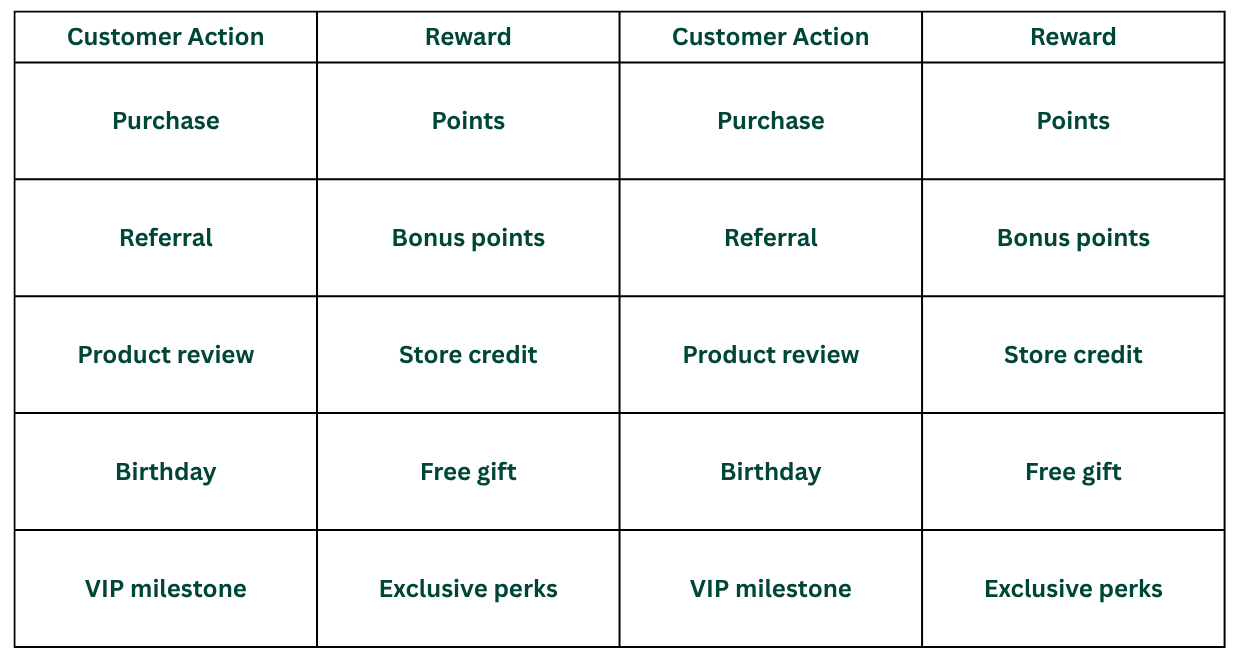
The goal is not simply to distribute rewards. It's to create a cycle of engagement that turns one-time buyers into repeat customers and increases customer lifetime value over time.
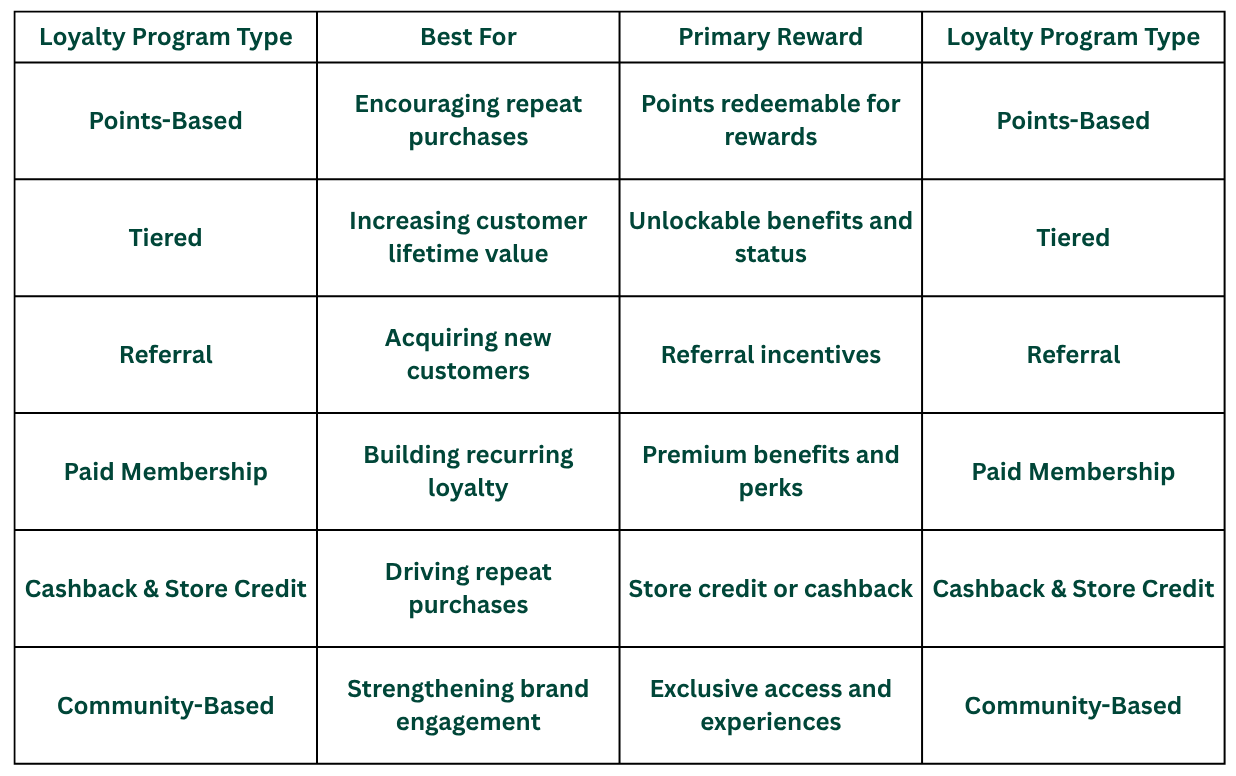
Different loyalty program models are designed to influence different customer behaviors. Some focus on repeat purchases, while others encourage referrals, long-term engagement, or premium memberships.
Points-based programs reward customers for purchases and engagement activities such as referrals, reviews, or social interactions. Customers accumulate points and redeem them for discounts, products, or other rewards.
Tiered programs unlock better benefits as customers spend more or engage more frequently. Instead of offering the same rewards to everyone, they create a sense of progression by rewarding customers with increasingly valuable perks.
Referral programs reward customers for introducing new shoppers to a brand. Typically, both the referrer and the new customer receive a benefit, creating value for both sides and encouraging customer acquisition.
Paid memberships charge an upfront fee in exchange for premium benefits such as free shipping, exclusive deals, priority support, or member-only offers. The value of the program increases as customers use more of the included benefits.
Cashback programs return a portion of customer spending as store credit, rewards, or future discounts. Because the value is easy to understand, these programs are often effective at encouraging repeat purchases.
Community-based programs focus on participation and brand engagement rather than transactions alone. Customers gain value through exclusive content, events, challenges, discussions, or member-only experiences that strengthen their connection to the brand.
Different loyalty programs are designed to achieve different goals. Before choosing a model, it helps to understand which approach aligns with your business objectives. Platforms like Kefi Commerce help merchants support these strategies through personalized offers, bundles, free gifts, and other revenue-driving promotions that encourage repeat purchases.

The following examples show how leading brands use different loyalty models to encourage customer retention and repeat purchases.
Starbucks has made loyalty part of the customer journey. Customers can order, pay, earn rewards, and redeem benefits through the same mobile app, making participation feel effortless.
Loyalty model: Points-based loyalty program
Why it works: Customers always know how close they are to their next reward, which encourages repeat purchases and app engagement.
Merchant takeaway: Make rewards easy to earn, track, and redeem. Visibility increases participation.
Popular member benefits include:
Sephora has built one of the most successful loyalty programs in retail by combining rewards, exclusivity, and community. Instead of relying solely on points, the program gives customers multiple reasons to stay engaged throughout the year.
Loyalty model: Tiered loyalty program
Why it works: Members unlock increasingly valuable perks as they move through spending tiers, creating strong incentives to stay engaged.
Merchant takeaway: Give customers something to work toward. Progression can motivate repeat purchases and higher spending.
Popular member benefits include:
Nike focuses on creating value beyond discounts. Members gain access to exclusive products, experiences, and content that strengthen their connection to the brand.
Loyalty model: Membership-based loyalty program
Why it works: Customers feel like insiders through early access and member-only experiences that are unavailable to the general public.
Merchant takeaway: If your brand has a strong identity, exclusive access can be more valuable than discounts.
Popular member benefits include:
Amazon Prime is one of the strongest examples of a paid loyalty program because customers regularly use the benefits they receive. The value becomes more apparent with every order.
Loyalty model: Paid membership program
Why it works: Members save time and money through shipping benefits, exclusive deals, and special offers with additional services.
Merchant takeaway: Paid loyalty programs work best when customers experience the value frequently.
Popular member benefits include:
Target Circle succeeds by keeping rewards simple and practical. Customers can quickly understand how the program works and immediately benefit from joining.
Loyalty model: Rewards and savings program
Why it works: Personalized discounts and offers make rewards feel relevant to individual shopping habits.
Merchant takeaway: Simplicity often drives higher participation than complicated reward structures.
Popular member benefits include:
Rewards model: Cashback rewards program
Why it works: Instead of points, tiers, or memberships, Rakuten gives customers a percentage of eligible purchases back as cashback. The reward is straightforward, easy to understand, and provides immediate value.
Merchant takeaway: Cashback programs work best when customers can clearly see the value they're earning and understand how to redeem it.
Popular member benefits include:
LEGO extends loyalty beyond purchases by creating opportunities for members to engage with the brand and its community. The program appeals to both collectors and casual fans.
Loyalty model: Community-based loyalty program
Why it works: Members receive rewards while feeling connected to a larger community built around shared interests.
Merchant takeaway: Community can be a powerful retention driver for brands with passionate audiences.
Popular member benefits include:
Adidas combines rewards, status, and exclusive access into a single loyalty ecosystem. Members can earn valuable rewards and benefits through both purchases and brand engagement.
Loyalty model: Tiered loyalty program
Why it works: Customers receive value from multiple touchpoints rather than relying solely on discounts.
Merchant takeaway: Give customers several ways to engage with your loyalty program beyond spending.
Popular member benefits include:
Ulta designed its loyalty program around the repeat purchasing habits common in the beauty industry. Customers can earn and redeem rewards frequently, reinforcing engagement.
Loyalty model: Points-based loyalty program
Why it works: Frequent purchases make it easy for customers to accumulate meaningful rewards.
Merchant takeaway: Align rewards with existing customer behavior rather than trying to change it.
Popular member benefits include:
Choose a loyalty model based on the customer behavior you want to encourage:
The most effective loyalty programs focus on a specific business goal rather than trying to improve every metric at once.
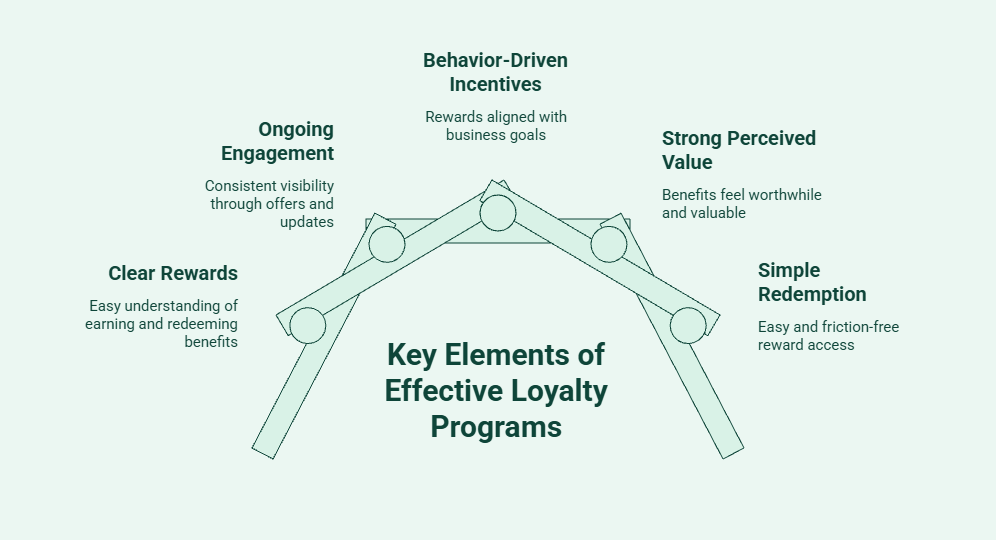
While the loyalty models differ, the strongest programs share a few characteristics. They are designed to encourage specific customer behaviors and make participation feel worthwhile.
For Shopify merchants, the same principles apply. Tools like Kefi Commerce help create loyalty-driven experiences through personalized promotions, free gifts, bundles, and other incentives that encourage customers to return and spend more over time. The most effective loyalty programs do not simply reward customers. They reinforce the behaviors that drive long-term retention and customer lifetime value.
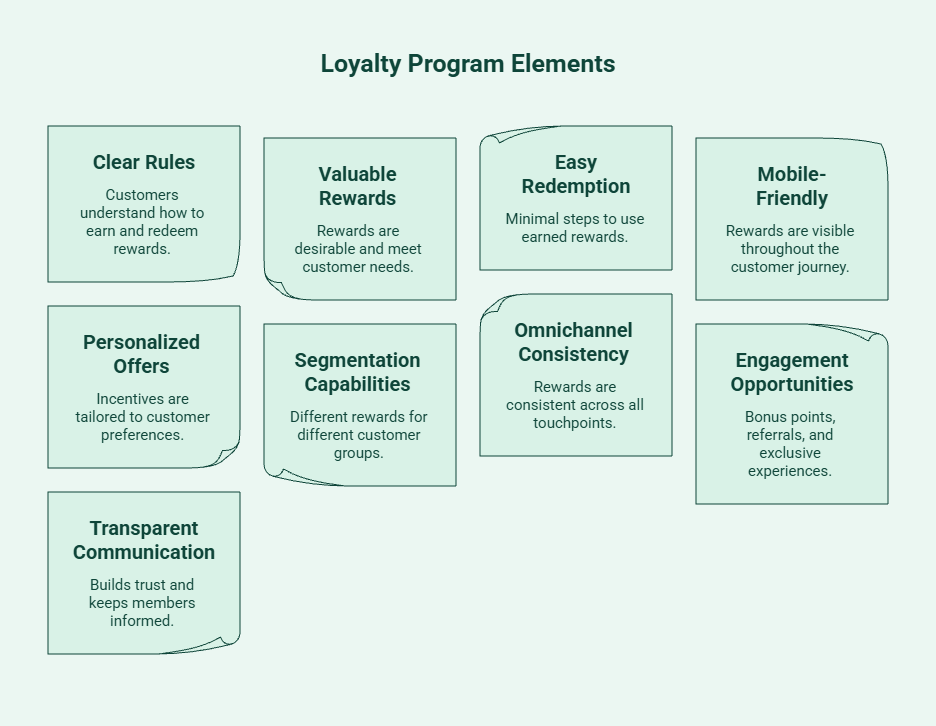
The most successful loyalty programs make participation simple, valuable, and rewarding. While the rewards structure may vary, high-performing programs typically share these characteristics:
The simpler the experience, the more likely customers are to join, participate, and continue engaging with your loyalty program over time.
A loyalty program should do more than increase membership signups. The real goal is to influence customer behavior and drive long-term revenue growth. To measure performance, track metrics that show whether members are purchasing more often, spending more, and staying engaged over time.
Key loyalty program metrics include:
Tracking these metrics helps identify which rewards and incentives drive the strongest results. Loyalty platforms, CRM systems, and e-commerce analytics tools can provide the customer data needed to optimize performance and improve retention over time.
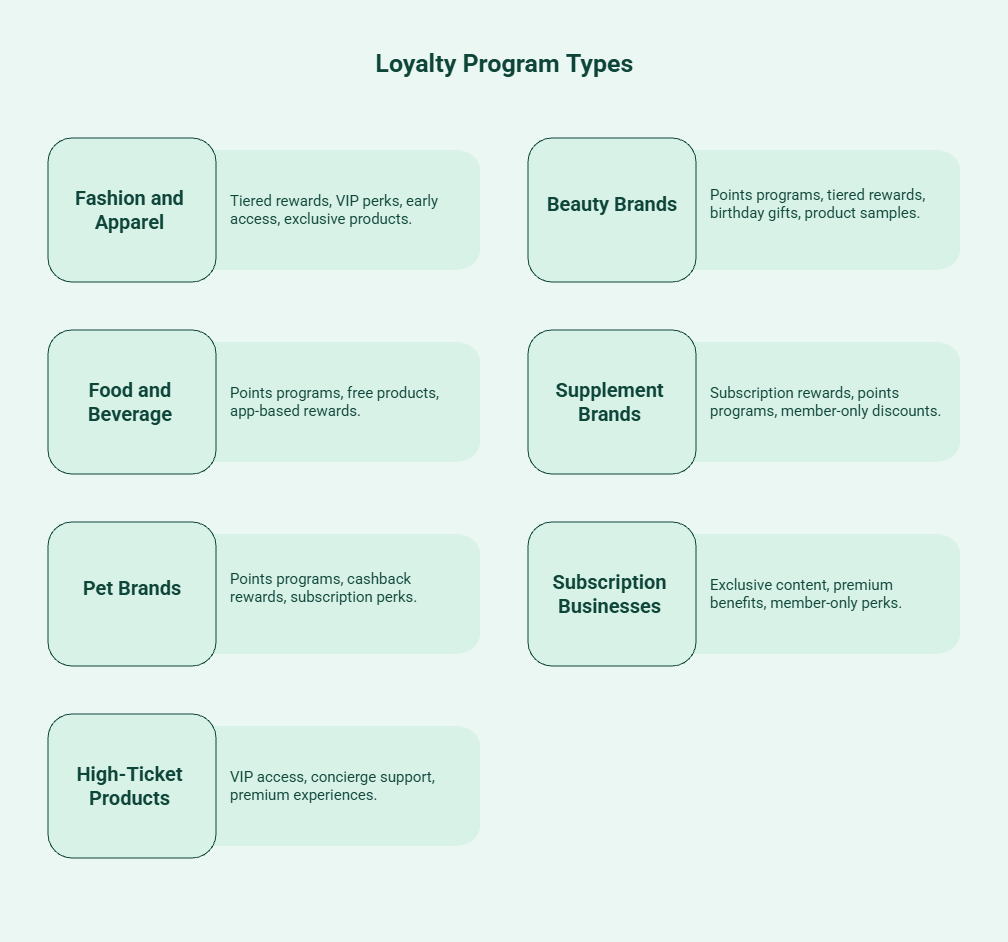
The best loyalty program aligns rewards with customer behavior. Start by identifying the action you want more of: repeat purchases, higher spending, referrals, or retention- then choose a model that supports it.
The best loyalty program aligns rewards with customer behavior. Start by identifying the action you want more of: repeat purchases, higher spending, referrals, or retention- then choose a model that supports it.
Fashion brands often have a mix of occasional shoppers and high-value customers. Tiered programs can encourage larger purchases while rewarding long-term loyalty.
Best fit: Tiered rewards, VIP perks, early access, exclusive products
Beauty customers often purchase repeatedly and enjoy discovering new products. Loyalty programs can reward both spending and engagement while encouraging product exploration.
Best fit: Points programs, tiered rewards, birthday gifts, product samples
Frequent purchase cycles make simple rewards highly effective. Small, achievable incentives can help build repeat purchasing habits.
Best fit: Points programs, free products, app-based rewards
Supplements rely heavily on repeat purchases and retention. Loyalty programs can encourage customers to stay consistent with their routines while increasing lifetime value.
Best fit: Subscription rewards, points programs, member-only discounts
Pet owners often make recurring purchases for food, treats, and supplies. Loyalty programs can reward repeat orders and strengthen long-term customer relationships.
Best fit: Points programs, cashback rewards, subscription perks
The biggest challenge is retention. Loyalty programs should increase the perceived value of membership and give customers additional reasons to stay subscribed.
Best fit: Exclusive content, premium benefits, member-only perks
With longer buying cycles, loyalty often comes from trust, service, and exclusivity rather than frequent rewards.
Best fit: VIP access, concierge support, premium experiences
The right loyalty model should reward behaviors that support growth, whether that's increasing repeat purchases, boosting average order value, encouraging referrals, or improving customer retention.
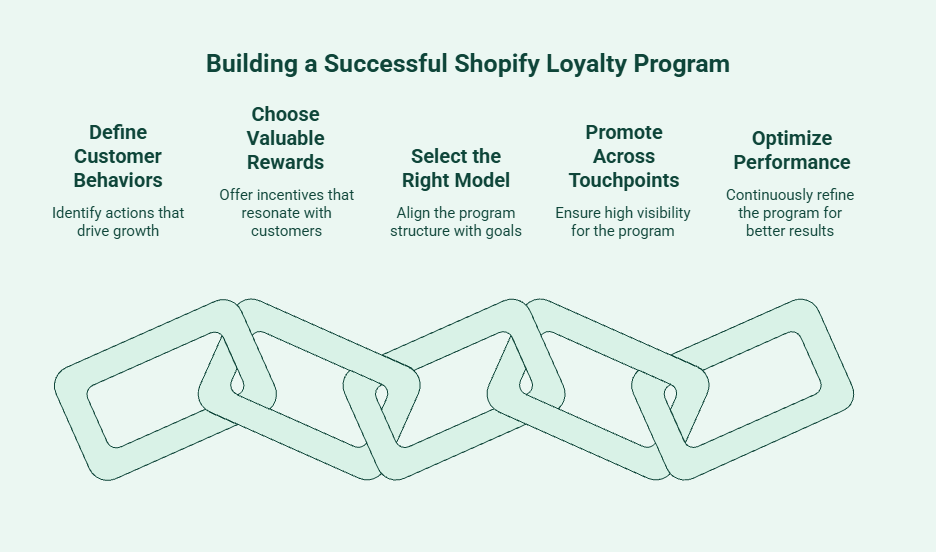
You don't need the budget of Starbucks, Sephora, or Amazon to build an effective loyalty program. What matters is creating rewards that encourage profitable customer behavior and make shoppers want to come back.
Many loyalty programs fail because they reward activity instead of outcomes. Before choosing rewards, identify the behaviors that contribute most to growth.
Common examples include:
The most effective programs reward actions that create long-term value for both the customer and the business.
The most common loyalty mistake is assuming every customer wants a discount. In many cases, free shipping, early access, exclusive products, or VIP perks can be more compelling.
Popular rewards include:
If the reward doesn't feel valuable, participation will remain low regardless of how well the program is designed.
The loyalty model should support the behavior you want to encourage.
Start with one model that aligns with your goals rather than trying to launch a complex system from day one.
Even a strong loyalty program can underperform if customers rarely see it. Visibility plays a major role in participation.
Promote your program across:
The easier it is to discover the program, the easier it is to drive signups and engagement.
A loyalty program should evolve alongside your customers. What drives engagement today may not deliver the same results six months from now.
Regularly review:
The strongest programs use customer data to refine rewards, improve participation, and increase long-term revenue over time.
Many loyalty programs fail because they create friction instead of value. Common mistakes include:
The strongest loyalty programs keep rewards simple, achievable, and easy to redeem. Customers should quickly understand how the program works, what they can earn, and why participating is worthwhile.
The cost of launching a loyalty program depends on the rewards you offer, the software you use, and how much customization you need. Many Shopify merchants can start with a basic loyalty program for less than $100 per month, while larger brands may invest several hundred dollars per month in advanced features, automation, and personalization.
Common loyalty program costs include:
Rather than focusing on the lowest possible cost, focus on return on investment. A successful loyalty program should generate enough repeat purchases, retention, and customer lifetime value to justify the investment.
The right loyalty platform should make it easier to launch, manage, and optimize customer retention programs as your business grows. Instead of focusing only on rewards, evaluate how well the platform supports customer experience, operational efficiency, and long-term program performance.
Look for:
For Shopify merchants, the best platform is one that balances flexibility with ease of management. A loyalty program should be simple for customers to use, easy for teams to operate, and capable of supporting long-term retention goals.
The best loyalty programs do more than reward customers. They encourage behaviors that increase repeat purchases, average order value, and long-term customer value. That's where Kefi Commerce can help.
Kefi Commerce provides Shopify merchants with tools to create promotions that keep customers engaged and encourage repeat purchases. Instead of relying on blanket discounts, merchants can use targeted incentives that reward valuable customer actions and drive incremental revenue.
With Kefi Commerce, merchants can:
Combined with a loyalty strategy, these tools help merchants create stronger shopping experiences, increase customer retention, and generate more revenue from existing customers.
The most successful brands don't rely on a single tactic. They combine loyalty, promotions, personalization, and customer experience to keep shoppers coming back. Ready to turn one-time buyers into repeat customers? Explore Kefi Commerce's loyalty, promotion, and personalization tools to build a retention strategy that supports long-term growth.
The best e-commerce loyalty programs are not built around rewards alone. They are designed to encourage behaviors that increase retention, repeat purchases, and long-term customer value through exceptional customer service. Whether it's a points program, referral strategy, or membership model, success comes from making the value clear and easy to access.
For Shopify merchants, the goal is to choose a loyalty program model that fits how customers shop, then continuously improve it based on performance data, especially for loyalty program members. When done well, a loyalty program can become a reliable driver of customer retention, higher spending, and sustainable revenue growth.
An e-commerce loyalty program helps increase customer retention, encourage repeat purchases, boost customer lifetime value, and strengthen brand loyalty by rewarding shoppers for ongoing engagement and purchases.
Features that improve customer retention include easy-to-earn rewards, tiered benefits, referral incentives, personalized offers, exclusive member perks, simple reward redemption, and exceptional customer support, all of which add a personal touch to the customer experience. These features give customers ongoing reasons to stay engaged and continue purchasing.
Yes. Examples include LEGO Insiders, which combines rewards with community engagement, Nike Membership, which focuses on exclusive access and experiences, and Dropbox's referral program, which rewards customers for bringing in new users rather than making purchases, with a membership fee structure for access to premium features.
E-commerce loyalty programs boost customer retention by rewarding repeat purchases and customer engagement, particularly through a good loyalty program. Points, exclusive perks, referrals, and tiered benefits, especially for higher tiers, give shoppers ongoing reasons to return, increasing purchase frequency and long-term customer value.
Popular loyalty program ideas include points-based rewards, VIP tier programs, referral incentives, paid memberships, cashback rewards, birthday gifts, early access to product launches, and community-based programs that reward engagement beyond purchases, including a rewards program for loyal customers that offers double points.
.svg)
