
Now, let's deep dive into this.
Many Shopify brands focus heavily on acquiring new customers, but long-term growth often depends on keeping existing customers coming back. As acquisition costs continue to rise, increasing retention and repeat purchases can be a more cost-effective way to grow revenue than constantly replacing customers who never return.
That's why rewarding loyal customers matters. The right incentives give shoppers a reason to buy again, return more often, and choose your brand over competitors. Whether it's loyalty points, referral rewards, exclusive perks, or early access to new products, effective rewards can encourage repeat purchases without relying heavily on discounts.
The challenge is choosing rewards that customers actually value. The most successful loyalty programs match rewards to customer behavior rather than relying on a one-size-fits-all approach. Understanding which rewards work best can help increase retention and long-term customer value.
Rewarding loyal customers helps turn one-time purchases into ongoing customer relationships. When shoppers have a clear reason to return, businesses can increase purchase frequency, encourage larger orders, and generate more value from existing customers over time.
Rewards also create differentiation beyond price. A customer who earns loyalty points, receives early access to new products, or unlocks exclusive perks has an additional reason to choose your brand over a competitor. Over time, these experiences can strengthen customer loyalty, increase referrals, and support more consistent revenue growth.
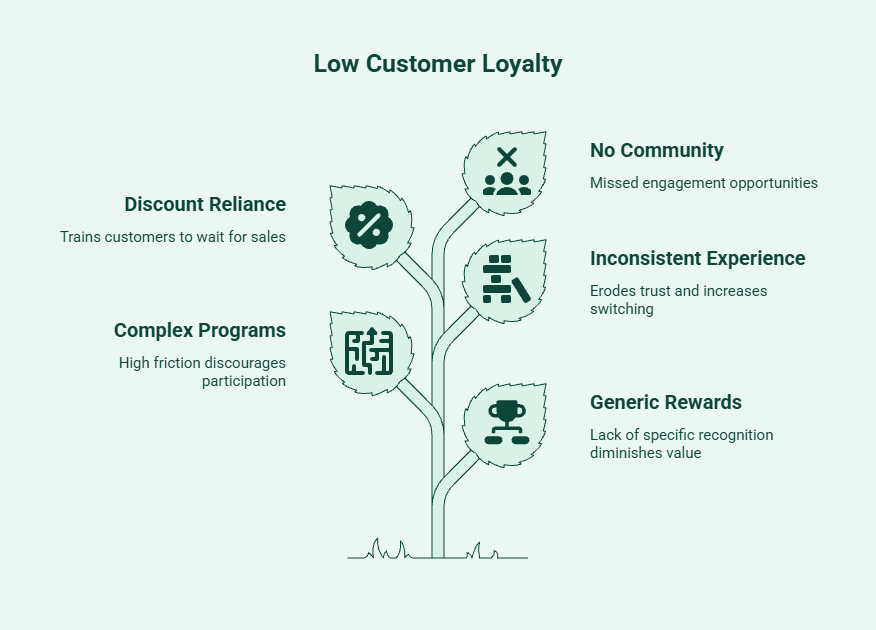
Customers stay loyal when a brand consistently delivers value beyond the initial purchase. While rewards can encourage repeat buying behavior, long-term loyalty is often shaped by recognition, convenience, trust, ongoing value, and a sense of belonging. Understanding these factors helps businesses create rewards that strengthen retention rather than generate short-term engagement.
Recognition reinforces customer behavior. When customers receive acknowledgment for referrals, reviews, milestones, or repeat purchases, they can clearly see the value of staying engaged with your brand. Recognition works best when it's tied to specific actions rather than generic rewards, making the experience feel more meaningful.
For Shopify merchants, delivering this type of personalized recognition at scale can be challenging. Platforms like Kefi Commerce help brands automate loyalty rewards, milestone recognition, and referral incentives, making it easier to reward customers based on their unique interactions and strengthen long-term engagement.
Complex loyalty programs often see lower participation rates, even when the rewards are valuable. Customers are more likely to stay engaged when earning and redeeming rewards feel simple and transparent. Reducing friction across the customer journey makes it easier for shoppers to continue buying from your brand instead of exploring alternatives.
Consistency is one of the strongest drivers of loyalty. Customers who repeatedly receive the same product quality, service standards, and overall experience are less likely to switch brands based on price alone. Over time, trust becomes a stronger retention driver than promotions or one-time incentives.
Loyalty is difficult to sustain when rewards rely entirely on promotions. Benefits such as free shipping, priority support, exclusive access, or member perks can provide ongoing value without reducing margins. This approach encourages retention while helping businesses avoid training customers to wait for discounts.
Community gives customers a reason to engage even when they are not actively shopping. Members-only groups, exclusive content, VIP access, and limited-release opportunities help keep your brand top of mind while creating a stronger sense of belonging. These experiences can increase engagement and strengthen long-term customer relationships.
Understanding why customers stay loyal makes it easier to choose rewards that align with their motivations. Next, let's explore practical ways to reward loyal customers and keep them coming back.
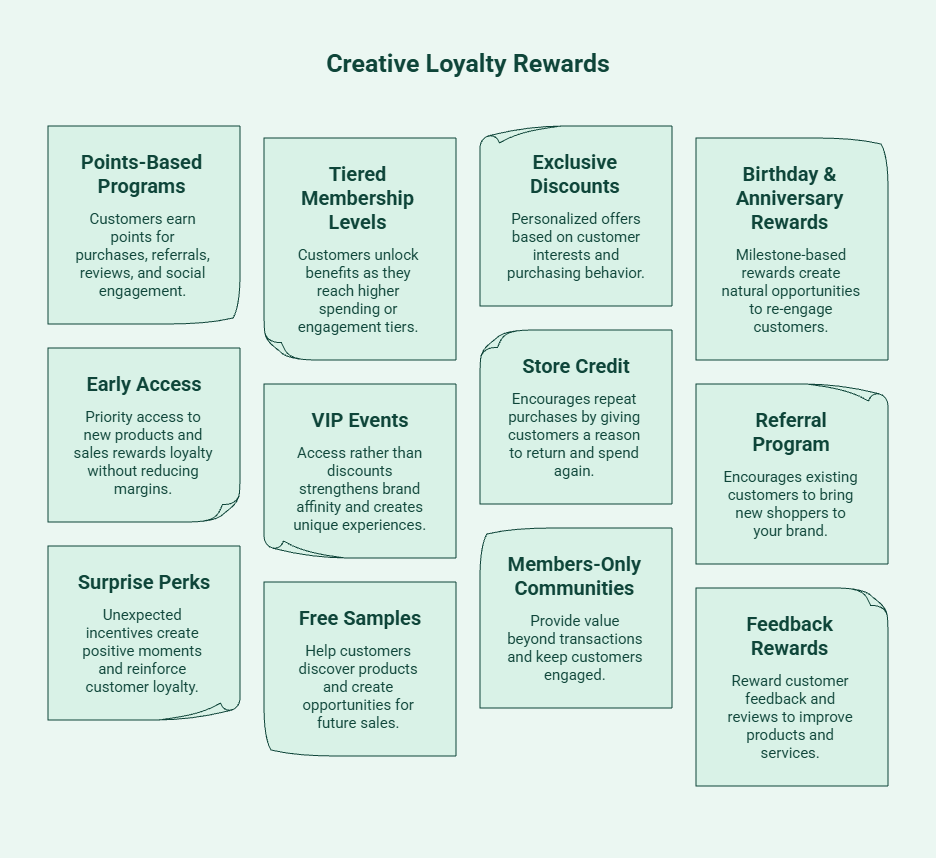
The most effective loyalty rewards reinforce specific customer behaviors. Different rewards influence different actions. Referral incentives can support customer acquisition, while loyalty points and store credit are often more effective for increasing repeat purchases. Rather than offering more rewards, focus on incentives that align with customer motivations and support measurable business outcomes.
Points programs work because they make progress visible. Customers can see how close they are to earning a reward, which encourages repeat purchases and ongoing engagement. Brands can also reward actions beyond purchases, such as referrals, reviews, and social engagement.
Common ways customers can earn points include:
The simpler the earning and redemption process, the more likely customers are to participate consistently.
Tiered loyalty programs reward customers based on spending, purchase frequency, or engagement. As customers move into higher tiers, they unlock additional benefits, creating a clear incentive to continue buying from your brand.
This approach can increase average order value by encouraging customers to reach the next tier. It also allows businesses to reserve premium rewards for their most valuable customers rather than offering the same incentives to everyone.
Examples of tier-based rewards include:
Tiered programs are particularly effective for businesses with strong repeat-purchase behavior because they reward long-term customer value.
Personalized rewards often outperform sitewide discounts because they align with customer interests and purchasing behavior. Instead of offering the same promotion to everyone, brands can use customer data to deliver more relevant incentives.
Examples include:
More relevant rewards can improve conversion rates, increase repeat purchases, and reduce unnecessary discounting. They also help strengthen customer brand loyalty by making shoppers feel understood and valued, encouraging them to continue choosing your business over competitors.
Milestone-based rewards create natural opportunities to re-engage customers. Birthday offers, loyalty anniversaries, or purchase milestones allow brands to reward customers at meaningful moments without running broad promotional campaigns.
A small store credit, bonus points, or a personalized offer can encourage another purchase while reinforcing customer loyalty. Because these rewards are triggered for individual customers rather than entire audiences, they can deliver engagement without significantly impacting margins.
Early access rewards loyalty without reducing margins. Giving customers priority access to product launches, seasonal collections, or limited inventory creates value beyond discounts while rewarding continued engagement.
This strategy works particularly well for brands that regularly release new products. Early access can increase demand, improve launch performance, and give loyal customers a reason to stay connected even when no promotions are running.
VIP experiences reward loyal customers through access rather than discounts. These rewards can strengthen brand affinity while creating benefits that competitors cannot easily replicate.
Examples include:
These rewards are particularly effective for high-value customers because they emphasize exclusivity, recognition, and access instead of price reductions.
Store credit encourages repeat purchases by giving customers a reason to return and spend again. Unlike traditional discounts, it keeps future spending within your business while reinforcing customer loyalty.
Common ways to use store credit include:
Because store credit is simple to understand and redeem, it can be an effective way to increase retention without relying on ongoing discounts.
Referral rewards encourage existing customers to bring new shoppers to your brand. Unlike many acquisition channels, referrals leverage trust that already exists between customers and their networks.
Common referral rewards include:
Programs that reward both the referrer and the new customer often perform best because they create value for both parties and reduce barriers to participation.
Surprise rewards can help prevent loyalty programs from becoming predictable. Unexpected incentives create positive moments that reinforce customer loyalty without requiring a major promotional campaign.
Examples include:
Because customers do not expect these rewards, they often generate stronger engagement than scheduled promotions while helping brands maintain interest in their loyalty programs over time.
Free samples and bonus gifts help customers discover products they may not have considered purchasing. This can increase product adoption while creating opportunities for future sales.
These rewards are particularly effective when tied to loyalty milestones, spending thresholds, or tier achievements. Matching gifts to customer preferences can further improve results.
Members-only communities provide value beyond transactions. Private groups, exclusive content, educational resources, or early announcements can keep customers engaged even when they are not actively shopping.
Community-based rewards are particularly effective for lifestyle, hobby, subscription, and enthusiast brands that benefit from ongoing engagement between purchases. They help brands maintain visibility, gather customer feedback, and strengthen long-term relationships without relying on discounts.
Customer feedback helps businesses improve products, services, and the overall customer experience. Rewarding reviews, surveys, or feedback submissions encourages participation while generating valuable insights that can guide future decisions.
It also increases customer-generated content, which can strengthen social proof and influence purchasing decisions. The strongest loyalty programs use feedback not only as a reward opportunity but also as a way to continuously improve the customer experience and keep rewards relevant over time.
For brands using membership rewards programs, feedback incentives can become an additional engagement touchpoint by rewarding members with points, exclusive perks, or tier progression opportunities for sharing reviews and opinions.
The most effective loyalty programs match rewards to customer behavior rather than offering the same incentive to everyone. Purchase frequency, spending patterns, and engagement levels can help identify which rewards are most likely to drive action. Different customer segments respond to different incentives, making personalization an important part of any loyalty strategy.
Matching rewards to customer needs helps businesses increase engagement, improve retention, and deliver more relevant loyalty experiences across the customer lifecycle.
Retention improves when customers see ongoing value in staying engaged with your brand. The most effective rewards create repeat interactions rather than one-time transactions, giving customers a reason to return beyond their initial purchase.
The right reward depends on your customers and business model. Points programs may work best for frequent shoppers, while early access and VIP benefits can be more effective for high-value customers. The table below compares common reward types and the retention goals they support.
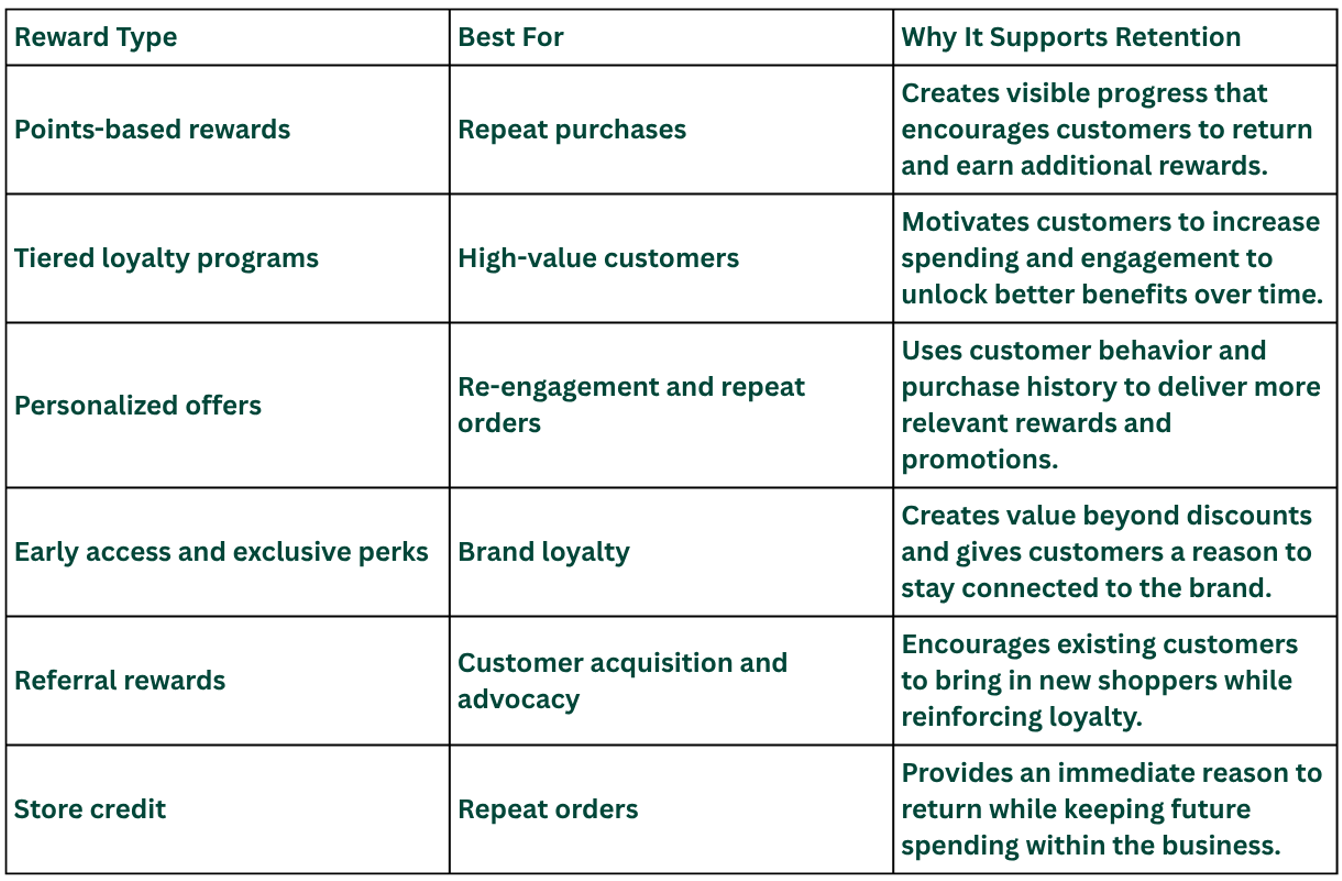
Retention rarely improves because of a single reward. The strongest loyalty programs combine multiple incentives that support different customer behaviors throughout the customer lifecycle. By matching rewards to customer needs and business goals, brands can create a loyalty strategy that remains effective as customer relationships evolve.
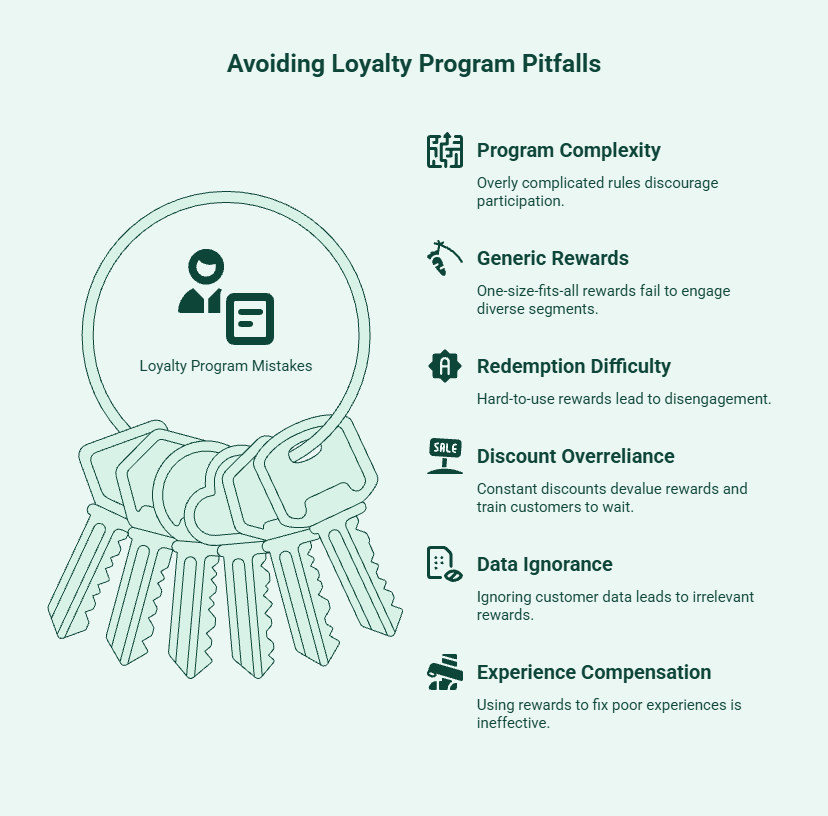
Even valuable rewards can underperform if the loyalty program creates unnecessary friction. The most common mistakes often reduce participation, weaken engagement, and limit the long-term impact of your rewards strategy.
Common mistakes to avoid include:
The most successful loyalty programs keep rewards simple, relevant, and easy to achieve. When customers understand the value and can see clear progress, they are more likely to stay engaged and continue purchasing from your brand.
A successful loyalty rewards program starts with a clear understanding of the customer behaviors you want to encourage. Some businesses focus on increasing repeat purchases, while others prioritize referrals, customer retention, or higher average order values. The reward structure should directly support those goals rather than rewarding every action equally.
The most effective programs balance customer value with business profitability. Points, store credit, VIP perks, and early access can all drive engagement, but rewards must feel attainable without becoming expensive to maintain. Programs that create visible progress and deliver meaningful benefits tend to generate stronger participation over time.
Purchase behavior, redemption activity, and customer feedback should shape how the program evolves. Tracking which rewards customers use, ignore, or actively engage with can help identify opportunities for improvement. Regular optimization keeps rewards relevant, improves participation, and ensures the program continues to support long-term retention and revenue growth.
Rewarding loyal customers becomes much easier when loyalty rewards, referral incentives, VIP perks, and personalized promotions work together instead of being managed across multiple tools. The challenge for many Shopify brands is creating a loyalty experience that encourages repeat purchases while supporting long-term retention and revenue growth.
Kefi Commerce helps merchants bring these strategies together in a single platform, making it easier to create rewards that keep customers engaged throughout their journey.
With Kefi Commerce, merchants can:
Many Shopify merchants use these strategies alongside bundles, upsells, and promotional campaigns to create stronger retention programs.
As PATOLA By Prakash Bhai shared on the Shopify App Store:
"Our repeat buyers now feel more appreciated, whether it's through birthday rewards or exclusive previews of new launches. It builds deeper brand value."
Similarly, Tara Thakur Label noted:
"Setup was effortless and the integration looks clean on-site. It helped us boost engagement and foster long-term relationships with our fashion-forward clientele."
By bringing loyalty rewards, promotions, and customer incentives together, merchants can create more reasons for customers to return while supporting long-term retention and sustainable revenue growth.
Looking to reward loyal customers more effectively? Explore Kefi Commerce on the Shopify App Store and discover how loyalty, retention, and promotional campaigns can work together to drive sustainable growth.
Rewarding loyal customers is about creating ongoing reasons for customers to choose your brand again. Whether through loyalty points, VIP perks, referral incentives, personalized offers, or exclusive access, the most effective rewards encourage repeat purchases while strengthening long-term customer relationships.
The strongest loyalty programs align rewards with customer behavior and business goals. When rewards are relevant, attainable, and integrated into a broader retention strategy, they can help increase customer lifetime value, improve retention, and support sustainable revenue growth.
Reward programs increase customer loyalty and retention by rewarding repeat purchases and engagement. They give customers a reason to return, strengthen long-term relationships, and encourage continued spending through meaningful incentives and exclusive benefits.
Unique rewards can include early access to new products, VIP experiences, members-only perks, personalized offers, birthday rewards, and surprise gifts. These incentives provide additional value beyond discounts and encourage ongoing engagement.
Businesses should align rewards with customer behavior, business goals, and profitability to resonate with their target audience. The most effective programs offer relevant, attainable rewards, make redemption simple, and use customer data to continuously improve engagement and retention.
Brands such as Starbucks, Sephora, Amazon Prime, and Nike are often recognized for strong loyalty programs. They combine rewards, personalized offers, exclusive perks, and member benefits to encourage repeat purchases, increase engagement, and strengthen long-term customer retention.
Customer rewards increase loyalty and retention by giving customers a reason to return beyond their initial purchase. Relevant rewards encourage repeat buying behavior, strengthen customer relationships, and help increase the repeat purchase rate and customer lifetime value over time.
Common mistakes include creating overly complicated loyalty programs, offering generic rewards to all customers, making rewards difficult to redeem, relying too heavily on discounts, and failing to use customer data to personalize rewards and improve program performance.
The most effective ways to reward loyal customers include loyalty points, tiered VIP programs, personalized offers, referral rewards, store credit, early access to new products, and exclusive member perks, all of which enhance customer satisfaction. The best rewards align with customer behavior, encourage repeat purchases, and support long-term customer retention.
Rewarding loyal customers helps businesses increase retention, encourage repeat purchases, and grow customer lifetime value. It also strengthens customer relationships, reduces reliance on new customer acquisition, and creates additional opportunities that are part of the equation for referrals and long-term revenue growth.
.svg)
