Most Father’s Day campaigns fail to drive strong results because brands often rely on the same generic discounts, basic gift guides, and repetitive promotional posts. At the same time, shoppers now expect faster delivery, personalized recommendations, easy bundle offers, and smoother shopping experiences across email, social media, and e-commerce stores.
For e-commerce brands, this creates a major opportunity to increase conversions before the seasonal rush peaks. The right Father's Day marketing ideas can help businesses boost AOV, improve customer retention, speed up purchase decisions, and create more engaging shopping experiences without relying on multiple disconnected apps.
This guide covers 28 Father's Day marketing ideas for 2026, including bundle offers, upsells, loyalty rewards, email campaigns, social media tactics, website optimization strategies, and conversion-focused ideas that help brands drive more sales and customer engagement.
Modern Father’s Day shoppers usually focus on four things: convenience, value, personalization, and urgency. Brands that understand these shopping behaviors can create smoother buying experiences and improve conversions during seasonal campaigns.
Many shoppers want fast, low-friction gifting experiences, especially closer to Father’s Day. Brands usually perform better when they offer:
Brands that make gift discovery easier usually see higher conversion rates during seasonal shopping periods.
Customers actively compare deals before purchasing. Popular value-driven offers include:
These promotions often help increase both conversions and order value.
Shoppers respond better to relevant and curated experiences than generic promotions. Effective strategies include:
Brands that personalize the shopping experience often improve engagement and customer retention.
Many Father’s Day purchases happen late in the buying cycle, making urgency-focused campaigns highly effective. Common tactics include:
Strong urgency messaging can help reduce hesitation and increase checkout completion rates.
Brands that simplify gift discovery, reduce purchase friction, and create faster shopping experiences usually perform better during Father’s Day campaigns. They also tend to increase AOV, improve conversions, and encourage repeat purchases after the seasonal rush ends.
Most successful brands begin planning their Father's Day marketing campaign around 6–8 weeks before the holiday. Early planning allows enough time to prepare inventory, design creative assets, test email flows, and launch awareness campaigns.
Here is a simple campaign timeline:
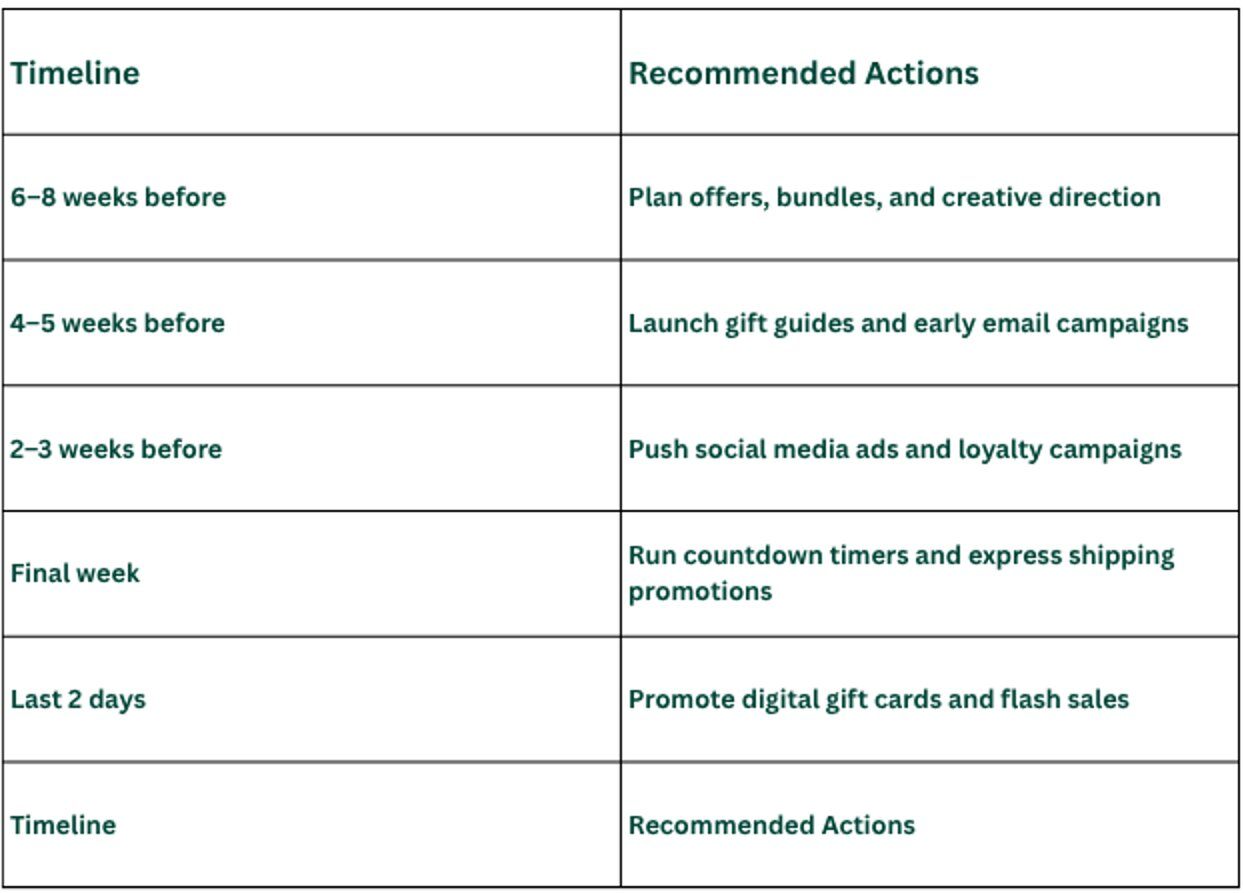
Brands that start planning early usually create stronger campaigns, smoother shopping experiences, and better-performing promotions during Father’s Day. Early preparation also gives teams more time to optimize offers, reduce last-minute issues, and improve overall campaign performance across every channel.
Father’s Day shoppers expect more than basic discounts and generic campaigns in 2026. These 28 marketing ideas can help brands increase engagement, boost conversions, attract new customers, and create memorable shopping experiences before the seasonal rush begins.
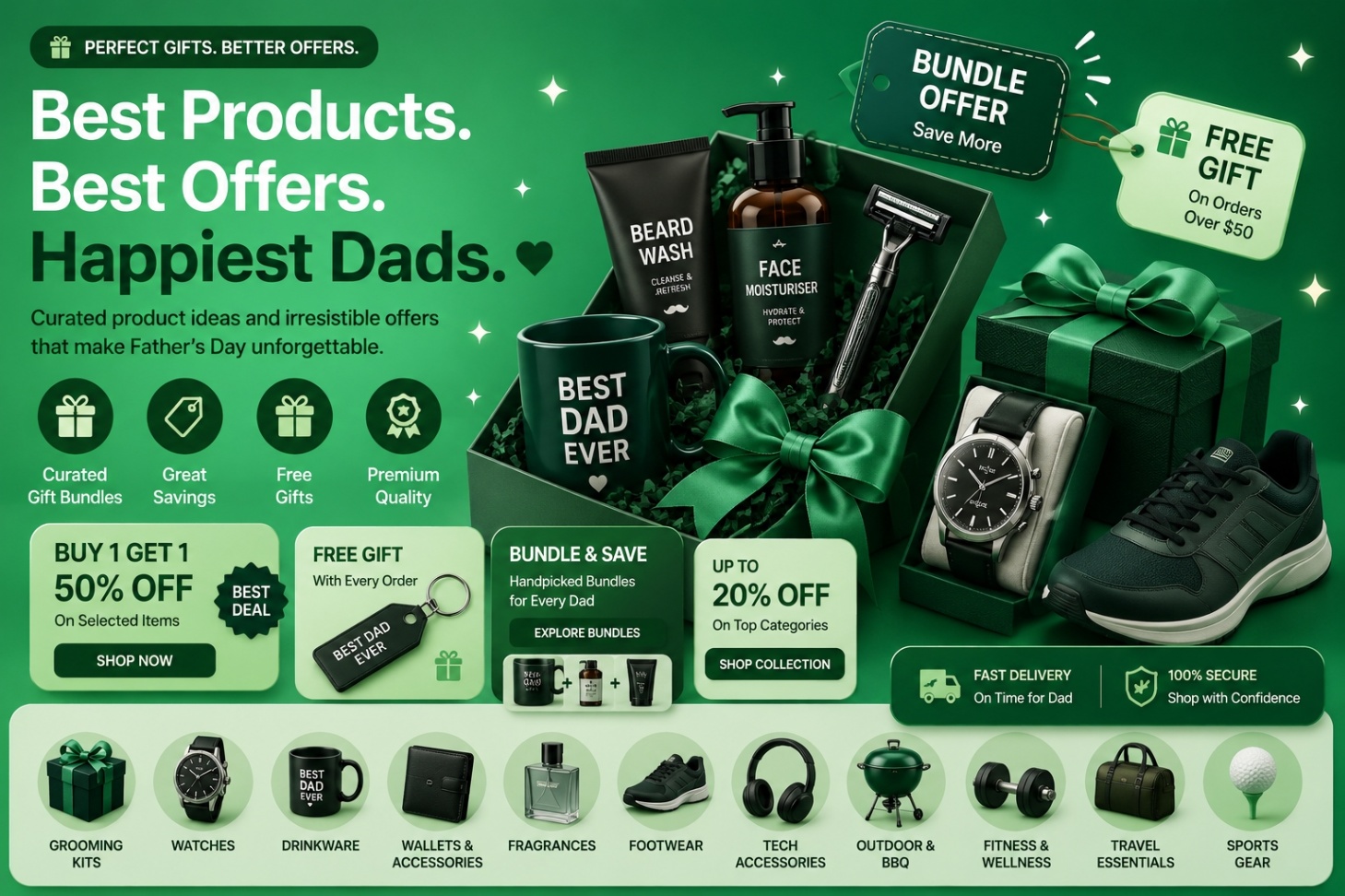
The strongest Father's Day marketing ideas often focus on convenience and perceived value. Shoppers want help choosing gifts quickly, especially during the final week before the holiday.
Bundle campaigns continue to perform well because they make shopping easier while encouraging customers to purchase multiple products together. Instead of asking shoppers to build their own gifts from scratch, brands can group complementary items into ready-made collections designed around specific interests or lifestyles.
Examples include:
This type of Father's Day promotion can increase AOV by encouraging customers to purchase multiple products in a single transaction rather than adding items individually.
Bundles can also help brands move slower-selling inventory alongside best-selling products without relying on aggressive markdowns. Many e-commerce stores use bundle pricing to create stronger perceived value while maintaining healthier profit margins compared to large sitewide discounts.
Shopify brands using Kefi Commerce can create mix-and-match bundles without relying on multiple separate apps.
Custom bundle campaigns are becoming increasingly popular as shoppers seek flexibility and more personalized gifting experiences. Instead of purchasing fixed gift sets, customers can choose products based on preferences, budget, or interests.
For example, a grooming brand could allow shoppers to select:
This strategy works especially well for beauty, wellness, fashion, and snack brands because customers feel more involved in the shopping experience.
Build-your-own bundles can also help brands improve inventory distribution across multiple product categories, rather than overloading demand on a small number of best sellers. This reduces fulfillment pressure while creating a more balanced seasonal sales performance.
A free add-on can encourage shoppers to spend more without directly discounting products. Instead of reducing prices storewide, brands can increase perceived value through smaller complementary gifts.
Common examples include:
These offers usually work best when tied to a minimum order threshold, as they encourage customers to increase their cart value before checkout.
Free gift campaigns can also help brands protect margins more effectively than large percentage discounts, especially when lower-cost promotional items are used strategically.
Buy-one-get-one offers remain one of the most effective promotional strategies for Father’s Day campaigns because they create immediate value while helping brands move inventory faster.
Examples include:
These campaigns perform particularly well for fashion, skincare, food, and lifestyle brands.
However, brands should structure BOGO promotions carefully to avoid margin loss. Pairing high-margin products with lower-cost add-ons or limiting discounts to selected collections usually helps maintain profitability while still increasing conversions.
Customers often need help finding matching products during seasonal shopping periods. Frequently bought together recommendations simplify decision-making by suggesting complementary products directly on product pages or inside the cart.
Examples include:
This strategy helps increase cart size naturally without making the shopping experience feel overly promotional.
For e-commerce brands, these recommendations can also improve merchandising efficiency by increasing exposure to related products that customers may not have discovered on their own.
Not every customer shops early. Many Father’s Day shoppers still purchase gifts during the final 48 hours before the holiday.
Digital gift cards solve this problem because they are instant, flexible, and easy to deliver through email or mobile devices.
Brands can also pair gift cards with additional incentives like:
Gift cards are especially valuable during high-pressure shopping windows because they create revenue without adding fulfillment complexity or shipping risks.
Curated collections simplify Father's Day shopping by organizing products by personality, hobby, or interest rather than broad product categories.
Examples include:
This approach improves product discovery while helping shoppers find relevant products faster.
For e-commerce brands, curated collections also create stronger merchandising opportunities by grouping related products, increasing bundle potential, and improving conversion rates across seasonal landing pages.
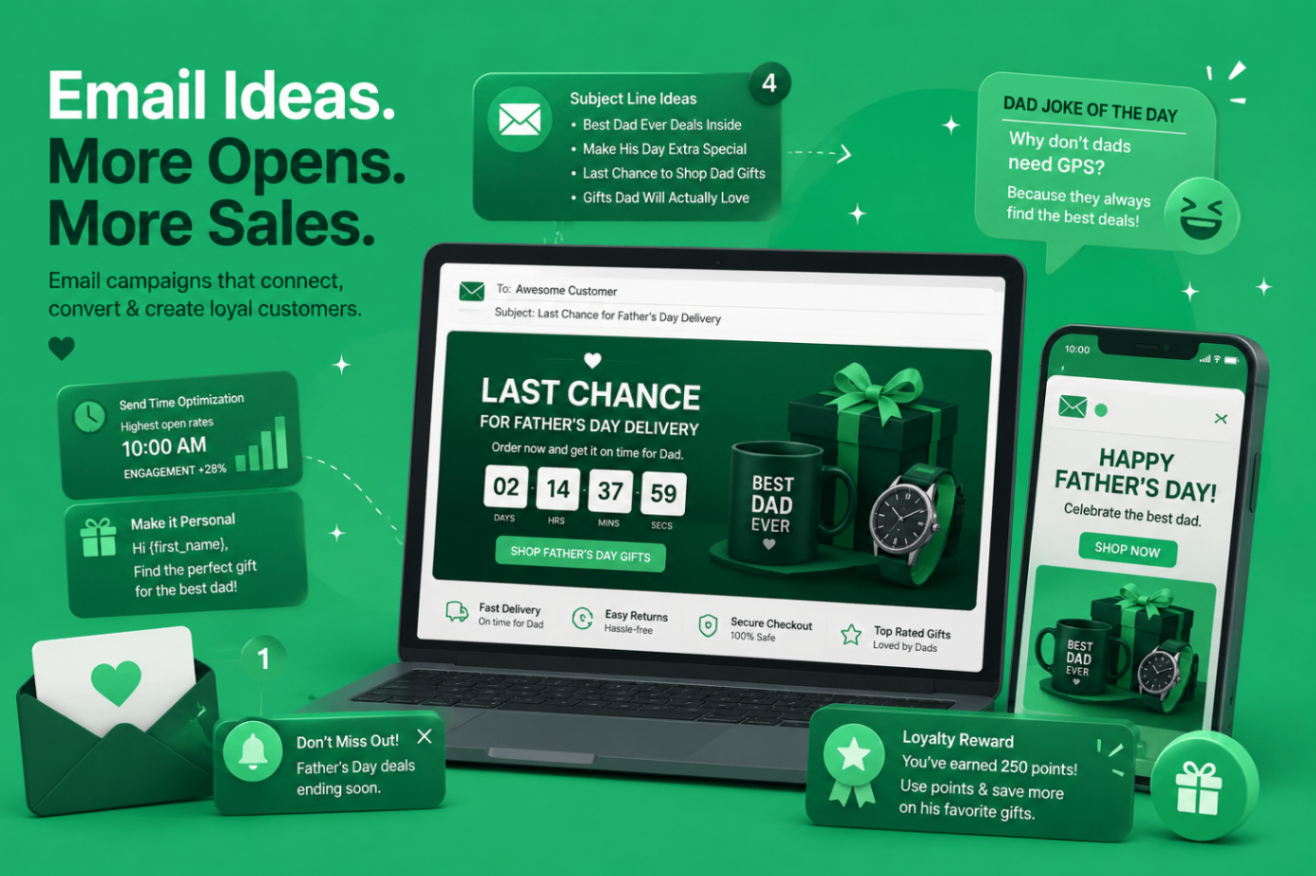
Email marketing continues to be one of the most effective channels for Father’s Day campaigns because it reaches shoppers directly during decision-making moments.
The best Father's Day email marketing ideas focus on urgency, storytelling, humour, and personalized recommendations.
Funny email campaigns often perform well during Father’s Day because they feel more relatable and less aggressively promotional. Humor can help brands stand out in crowded inboxes where shoppers are already receiving multiple seasonal offers every day.
Brands can experiment with:
Humor works especially well for lifestyle, apparel, grooming, and food brands because it encourages higher engagement and stronger brand recall during seasonal campaigns.
For many e-commerce brands, humor also improves email open rates because shoppers are more likely to engage with campaigns that feel entertaining rather than overly sales-focused.
Many successful Father’s Day email campaigns focus on storytelling instead of direct product promotion. Emotional campaigns often help brands create stronger customer connections during gifting-focused shopping periods.
Brands can highlight:
Story-driven emails can improve engagement by making campaigns feel more authentic and memorable. They also help retain customers by helping brands build emotional trust beyond seasonal discounts.
For e-commerce brands competing in crowded product categories, storytelling can help differentiate campaigns without relying entirely on price reductions.
A large number of Father’s Day shoppers wait until the final week before purchasing gifts. Because of this, last-minute reminder emails often become some of the highest-converting campaigns during the seasonal sales window.
Reminder campaigns can include:
Brands should also clearly highlight shipping cutoff dates in both email subject lines and body copy to reduce hesitation at checkout.
Examples include:
Resending campaigns can also improve performance during this stage. Many brands resend high-performing emails to non-openers using updated subject lines or stronger urgency messaging.
VIP campaigns help brands reward loyal customers while generating early Father’s Day sales before peak promotional competition begins.
Instead of sending the same promotion to every subscriber, brands can segment:
Examples of VIP offers include:
These campaigns help customers feel valued while also helping brands spread order volume earlier across the campaign period, reducing fulfillment pressure closer to Father’s Day.
Loyalty campaigns work particularly well during Father’s Day because shoppers are already planning to spend on gifts. Instead of offering large discounts, many brands use bonus rewards to encourage higher cart values while protecting margins.
Offering double points on selected collections can:
Brands can also segment loyalty campaigns for:
Brands using Kefi Commerce can automate loyalty rewards directly through Shopify.
Countdown campaigns are especially effective during the final days before Father’s Day because they create urgency without feeling overly aggressive.
These emails help shoppers act faster by emphasizing:
Subject line examples include:
Adding countdown timers inside emails or landing pages can improve click-through rates and reduce purchase hesitation during high-intent shopping periods.
For e-commerce brands, countdown campaigns often perform best when combined with abandoned cart flows, gift card promotions, and express shipping reminders during the final campaign window.
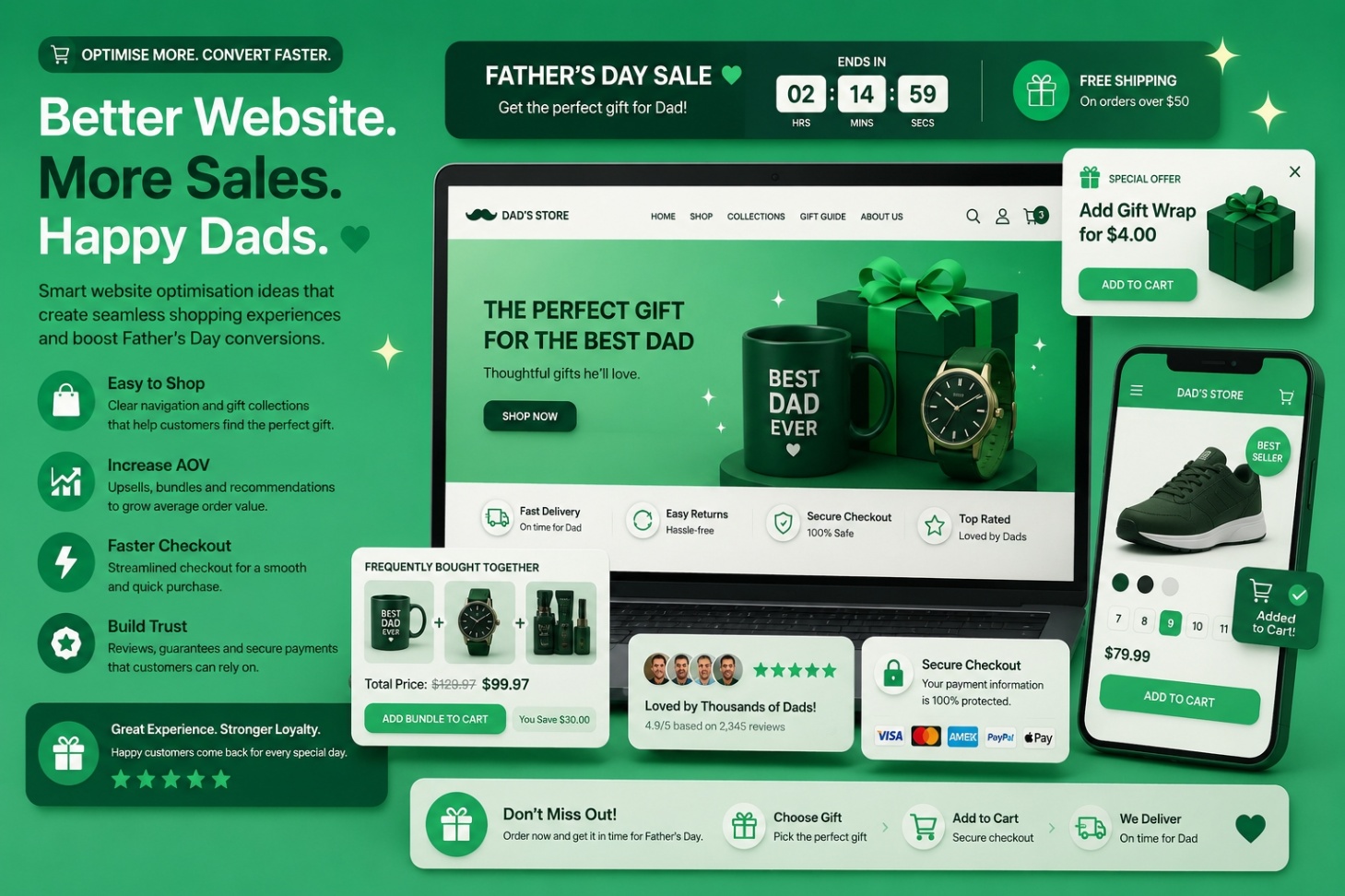
For e-commerce brands, website optimization is not only about design improvements. It also plays a major role in reducing purchase friction, improving mobile shopping experiences, increasing AOV, and helping customers discover products faster during high-intent shopping periods.
Slide-cart upsells appear while customers review their cart before checkout. Because shoppers are already close to purchasing, this is often one of the highest-converting stages for additional offers.
Brands can suggest:
These upsells feel natural because they appear during the buying process instead of interrupting browsing sessions.
For e-commerce brands, slide-cart offers can help increase AOV without relying heavily on discounts. They also improve product discovery by exposing customers to complementary items they may not have viewed earlier.
On mobile devices, slide-cart experiences are especially useful because they reduce extra navigation steps and keep customers inside the shopping flow.
Traditional dropdown menus can slow down product selection, particularly on mobile screens where shoppers want faster browsing experiences.
Visual swatches make it easier for customers to compare:
This works particularly well for:
Swatches reduce friction because customers can preview options instantly without repeatedly opening dropdown menus.
For Shopify brands, faster product selection often leads to better engagement, lower bounce rates, and improved conversion performance during seasonal campaigns.
A dedicated Father’s Day landing page gives shoppers a single, focused destination instead of forcing them to browse multiple product categories.
A strong landing page should include:
This approach improves product discovery while reducing decision fatigue during seasonal shopping periods.
For e-commerce brands, dedicated landing pages also create stronger merchandising opportunities by grouping high-converting products, bundles, and promotional campaigns into a single location.
Mobile optimization is especially important here because many shoppers discover Father’s Day promotions through email or social media and land directly on these pages from their phones.
Gift finder quizzes help shoppers discover products faster by guiding them toward relevant recommendations based on preferences, interests, or budget.
Questions might include:
Interactive experiences often improve engagement because they feel more personalized and less overwhelming than browsing large product catalogs.
For Shopify merchants, quizzes can also help reduce bounce rates, improve product discovery, and increase AOV by recommending bundles or complementary products during the quiz flow.
Countdown timers create urgency during the final stages of Father’s Day campaigns by reminding shoppers about shipping deadlines, limited-time offers, or promotion end dates.
They can appear on:
Countdown campaigns often work particularly well during the final shopping window when customers are making faster purchase decisions.
For e-commerce brands, countdown timers can help reduce hesitation, improve conversion rates, and encourage earlier checkout completion before delivery cutoffs expire.
Brands using Kefi Commerce can add countdown timers directly inside Shopify stores without requiring extensive development work or multiple separate urgency apps.
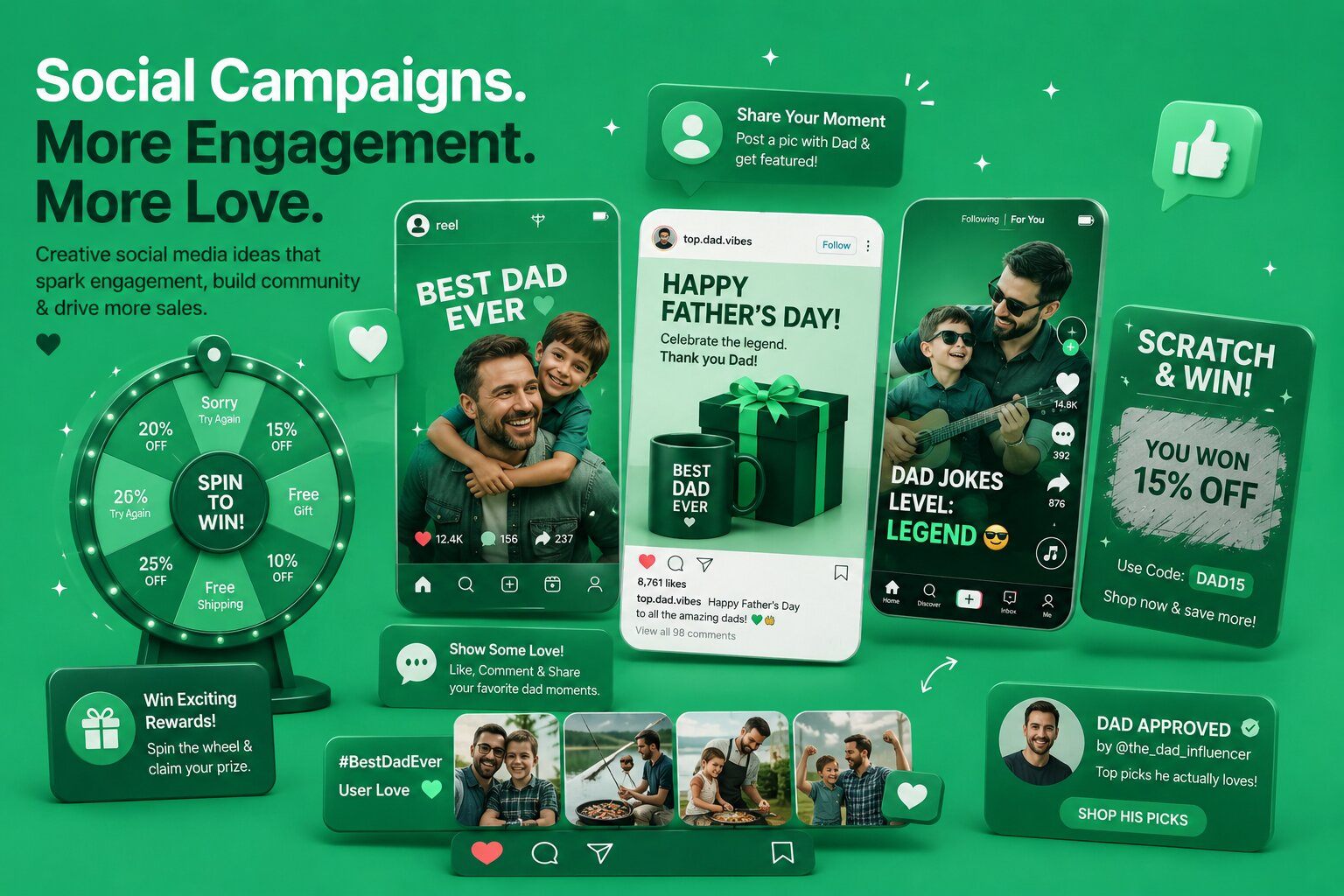
For Shopify brands, social campaigns usually perform best when connected directly to landing pages, bundle offers, gift guides, loyalty campaigns, or email capture flows, rather than functioning as standalone content.
User-generated content campaigns encourage customers to create and share content connected to the brand. During Father’s Day, these campaigns often feel more authentic because they focus on personal stories, humor, and emotional moments.
Brands can ask customers to share:
UGC campaigns often build trust because shoppers see real customers interacting with products rather than polished advertisements.
For e-commerce brands, these campaigns can also generate reusable marketing content for:
To improve conversions, brands should connect contest campaigns directly to product collections, Father’s Day bundles, or email sign-up pages, rather than focusing solely on engagement metrics.
Gamified campaigns, such as spin-to-win pop-ups, can increase engagement, email captures, and conversion rates during seasonal shopping periods.
Possible rewards include:
These campaigns usually perform especially well on mobile devices because they create interactive shopping experiences with minimal friction.
However, brands should structure rewards carefully to avoid unnecessary discounting or margin loss. Instead of offering large sitewide discounts, many e-commerce stores limit rewards to:
This helps brands maintain profitability while still encouraging conversions and email sign-ups.
Scratch-card campaigns make promotions feel more interactive by turning discounts into gamified experiences instead of standard coupon offers.
Instead of displaying codes immediately, brands can allow users to reveal surprise rewards through:
These campaigns often increase engagement by piquing curiosity and encouraging shoppers to participate before browsing products.
For better commercial performance, scratch-card campaigns should connect directly to:
Brands should also monitor discount structures carefully to avoid over-discounting during high-traffic shopping periods.
Short-form video continues to dominate social media platforms because it helps brands quickly communicate offers, products, and seasonal messaging.
Brands can create:
Authentic videos often perform better than highly polished advertisements because they feel more relatable and easier to engage with on platforms like TikTok, Instagram Reels, and YouTube Shorts.
For e-commerce brands, short-form videos also create strong opportunities to direct traffic toward:
Mobile-first video content is especially important because many Father’s Day shoppers discover products through social platforms before visiting the online store.
Influencer partnerships help brands reach targeted audiences faster during seasonal shopping campaigns.
Micro-creators often generate stronger engagement than large influencers because their audiences tend to view their recommendations as more authentic and trustworthy.
This strategy works particularly well for:
For stronger campaign tracking, brands should provide creators with:
This makes it easier to measure traffic, conversions, AOV, and campaign performance across different creators.
Many e-commerce brands also combine influencer campaigns with retargeting ads and email flows to increase conversion opportunities after social traffic reaches the website.
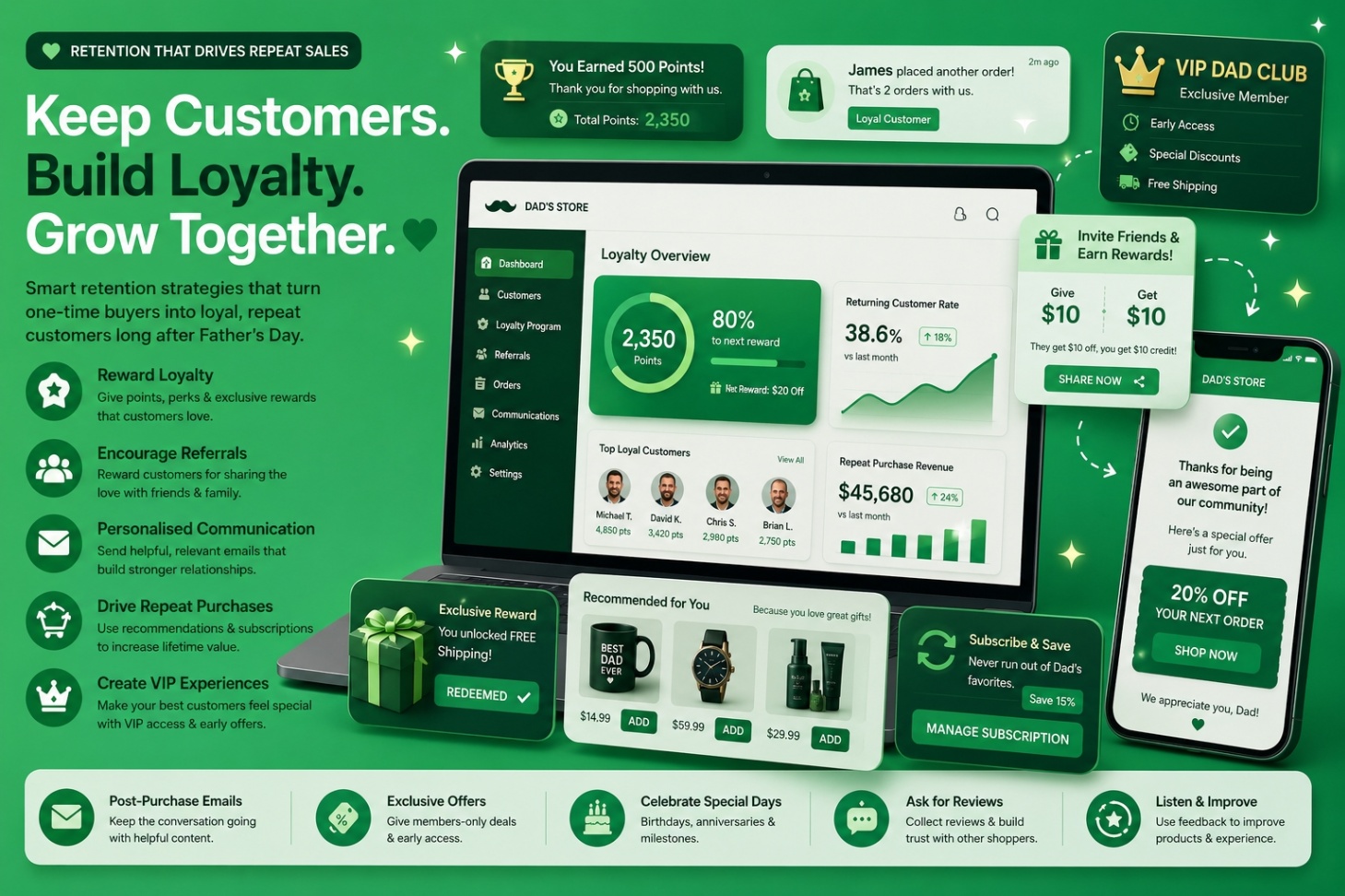
Many businesses focus only on immediate Father’s Day sales, but long-term customer retention often delivers higher value than a single seasonal purchase.
A strong Father’s Day campaign should continue driving repeat purchases, loyalty, and customer engagement even after the holiday ends.
Referral campaigns help brands attract new customers through existing buyers while encouraging repeat orders after Father’s Day promotions end.
Examples include:
Referral campaigns often work particularly well after gifting holidays because satisfied customers are more likely to recommend products they recently purchased.
For e-commerce brands, referral programs can also lower customer acquisition costs compared to relying entirely on paid advertising.
Post-purchase campaigns help brands sustain customer engagement after checkout, rather than ending communication immediately after the order is delivered.
Brands can send:
These flows often improve repeat purchase rates by keeping customers connected to the brand after the initial seasonal campaign ends.
For Shopify merchants, automated post-purchase flows also create opportunities to promote subscriptions, accessories, or related products without requiring additional acquisition spending.
Review requests are one of the simplest ways to extend engagement after Father’s Day purchases while also improving future conversion rates.
Brands can encourage customers to leave:
Customer-generated reviews help increase trust because future shoppers can see real experiences connected to products and gifting campaigns.
For e-commerce brands, review collection also strengthens product pages, paid ads, and seasonal landing pages before future promotional periods begin.
Many brands lose momentum after seasonal campaigns end. Loyalty reactivation campaigns help bring customers back before engagement drops completely.
Brands can re-engage customers through:
These campaigns help sustain customer activity while increasing repeat-purchase opportunities during slower sales periods.
Platforms like Kefi Commerce help Shopify merchants automate loyalty rewards, upsells, bundles, and retention-focused shopping experiences from a single platform, rather than relying on multiple tools.
Retention campaigns perform best when brands continuously monitor customer behavior and campaign performance after Father’s Day promotions end.
Important metrics include:
Analytics help brands identify which campaigns, products, and retention strategies are actually driving long-term revenue rather than just short-term seasonal spikes.
Many Father’s Day campaigns underperform because of poor timing, weak mobile experiences, generic promotions, or complicated checkout flows. During high-competition shopping periods, even small friction points can reduce conversions.
Late launches limit visibility and reduce time for testing, email flows, merchandising, and fulfillment planning. Early campaigns usually perform better and create more opportunities for customer engagement.
Heavy discounts can reduce margins and product value perception. Many brands now focus more on:
These strategies often improve AOV without hurting profitability.
Most Father’s Day shoppers browse on mobile. Slow pages, cluttered layouts, or difficult navigation can quickly increase bounce rates and cart abandonment.
Brands should prioritize:
Unclear shipping timelines often create hesitation. Brands should clearly display:
Many seasonal campaigns look identical. Generic discounts and repetitive messaging often reduce engagement.
Personalized campaigns, curated gift collections, humor, and storytelling usually perform better.
Long checkout processes increase friction and abandoned carts. Common issues include:
Simpler checkout experiences usually improve conversions.
Shoppers convert faster when products are easier to find. Brands can improve discovery through:
Brands that reduce friction and simplify shopping experiences usually see stronger Father’s Day campaign performance.
Brands that simplify shopping experiences, improve merchandising, and reduce purchase friction are usually more successful at increasing conversions, AOV, and customer engagement during Father’s Day campaigns.
Running a successful Father’s Day campaign often requires more than launching discounts or publishing gift guides. Shopify brands also need better product discovery, higher AOV, smoother mobile shopping experiences, and faster campaign execution during high-traffic shopping periods.
That is where Kefi Commerce helps Shopify merchants simplify campaign execution by providing a single conversion-focused platform rather than relying on multiple disconnected apps.
With Kefi Commerce, Shopify stores can:
Looking to improve your Father’s Day marketing campaign in 2026? Explore Kefi Commerce on the Shopify App Store and create smarter seasonal campaigns that help boost sales and customer retention.
The most successful Father’s Day campaigns in 2026 focus on convenience, personalisation, and timing rather than relying only on discounts. Shoppers want faster gift discovery, better recommendations, and smoother online experiences across every channel.
The good news is that brands do not need massive budgets to stand out. Small improvements like curated gift guides, loyalty rewards, upsells, countdown timers, and engaging email marketing can make a noticeable impact. The key is to start early, create urgency, and build campaigns that feel useful instead of overly promotional.
The best e-commerce Father’s Day campaigns usually include product bundles, upsells, loyalty rewards, countdown timers, gift guides, and engaging email marketing. Brands that simplify shopping and personalize recommendations often attract more customers and improve conversions during seasonal shopping periods.
Most businesses should start planning Father’s Day promotions around 6–8 weeks before the holiday. Early preparation gives brands enough time to create landing pages, launch email campaigns, prepare inventory, test offers, and promote campaigns across social media and paid channels.
Bundles make Father’s Day shopping easier by grouping complementary products into one offer. They help customers choose gifts faster while increasing AOV. Shoppers also see bundles as a better value compared to purchasing individual products separately during seasonal promotions.
Yes. Countdown timers create urgency by showing shoppers that offers or shipping deadlines are about to expire. They work especially well in the final week before Father’s Day, encouraging customers to complete purchases more quickly and reducing hesitation at checkout.
Yes. Loyalty rewards encourage repeat purchases and help brands build stronger, long-term customer relationships after Father’s Day. Seasonal reward campaigns, bonus points, and VIP perks can also increase customer retention while motivating shoppers to spend more during promotional periods.
Many brands have run successful Father’s Day campaigns by focusing on humor, storytelling, or personalized offers. For example, Dollar Shave Club used funny “dad bod” campaigns, while grooming and apparel brands often combined bundle offers, countdown deals, and relatable social media content to increase engagement and sales.
Food and service-based businesses can create limited-time menus, family meal bundles, reservation discounts, gift cards, or experience-based offers for Father’s Day. Restaurants, gyms, salons, and entertainment brands can also promote last-minute booking campaigns via email marketing and social media.
Popular Father’s Day creatives often include funny dad jokes, retro family photos, bold countdown graphics, gift bundle visuals, and “types of dads” themed designs. Short-form videos, personalized product mockups, and lifestyle-focused images also perform well across social media and email campaigns.
.svg)
