
If you have ever shopped online, you have likely encountered product bundling, a powerful sales tactic in which businesses group multiple items into a single package, often at a discounted price. This product bundling strategy is designed to boost sales by offering customers a convenient way to purchase complementary items together. By enhancing the perceived value of an offer, companies can increase their average order value and improve customer satisfaction, making it a cornerstone of growth across industries.
Product bundle pricing is a strategy in which several individual goods are sold together as a package for a single price. This approach is often more attractive to customers than selling the items separately. The core idea is to create an offer that addresses specific customer needs, simplifies their purchasing decision, and encourages them to spend more, thereby increasing the overall order value. For instance, a beach kit containing sunscreen, a towel, and sunglasses is a classic example.
The main advantage of using product bundle pricing is its ability to increase perceived value for customers while boosting revenue for the business. There are two primary types: pure bundling, where products are available only as a bundle (like the Microsoft Office Suite), and mixed bundling, where items can be bought separately or as a package deal (like a fast-food value meal). This flexibility allows businesses to cater to different customer preferences and maximize sales opportunities.
For an e-commerce business, bundle pricing can be a transformative strategy. By offering multiple products together at a lower price, you create compelling deals that attract a wider customer base, including shoppers who may not have intended to make a purchase initially. This product bundling approach not only enhances the value of your offerings but also encourages customers to make larger purchases, directly boosting your overall sales. When done right, it can be a great way to grow your business.
Beyond immediate revenue gains, bundling improves customer satisfaction. Shoppers appreciate stores that offer convenient, valuable options, such as item bundles. This positive experience can turn one-time buyers into repeat customers who recommend your business to others. Furthermore, bundling can help you clear out less popular items by pairing them with best-sellers, leading to more efficient inventory management and reduced storage costs.
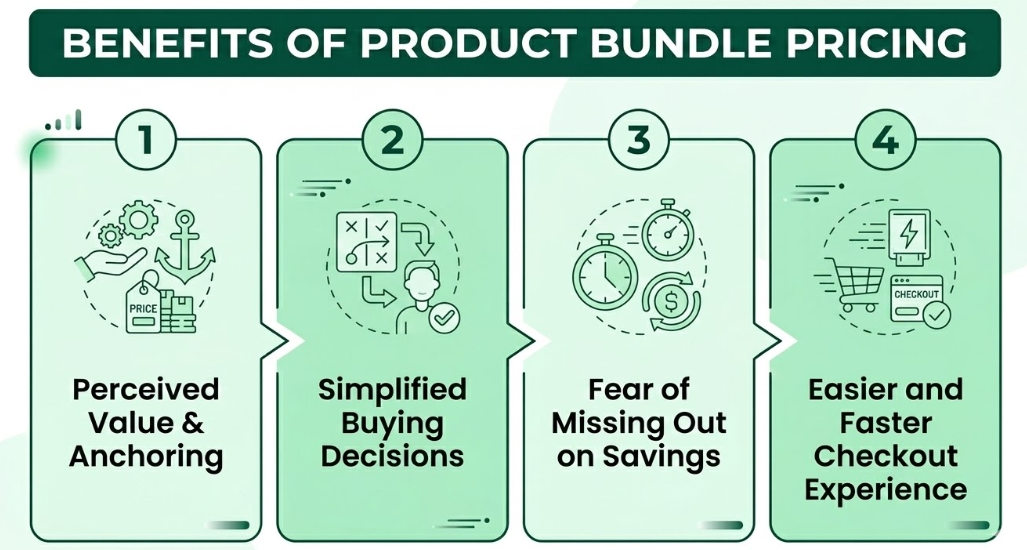
A well-executed product bundle pricing strategy can drive significant sales growth, but it's important to approach it with realistic expectations. The following sections will explore the primary benefits, including a higher average order value, better inventory optimization, increased conversions, and improved product visibility.
Bundle pricing increases perceived value by using the psychological principle of anchoring. Customers naturally compare the bundle price to the total cost of buying items separately, creating a high-value reference point. When the bundle appears cheaper than the combined price, it feels like a smart and cost-effective purchase, even if the savings are moderate. This framing positions the offer as a valuable opportunity and makes the package more appealing than individual purchases.
Too many choices can overwhelm customers, leading to decision fatigue. Bundles simplify the buying process by presenting a curated package that meets a specific need, reducing the number of decisions shoppers must make. This streamlined approach reduces friction, speeds up the purchase process, and minimizes cart abandonment. As a result, customers feel more confident and satisfied with their purchase.
Bundle pricing effectively triggers loss aversion and fear of missing out. When customers see clear savings in a bundle, they feel motivated to act rather than risk paying more later. Highlighting the discount frames the offer as a valuable opportunity not to be missed. This urgency encourages quicker decisions and increases the likelihood of conversion.
Bundles make the checkout process faster by allowing customers to add multiple related items to their cart in one step. This reduces friction and simplifies the path to purchase, especially for mobile shoppers who prefer quick transactions. The convenience of buying everything together encourages completion and supports higher-order values.
Also Read: How Lifetime Technologies went from a Single Additive to System Kits.
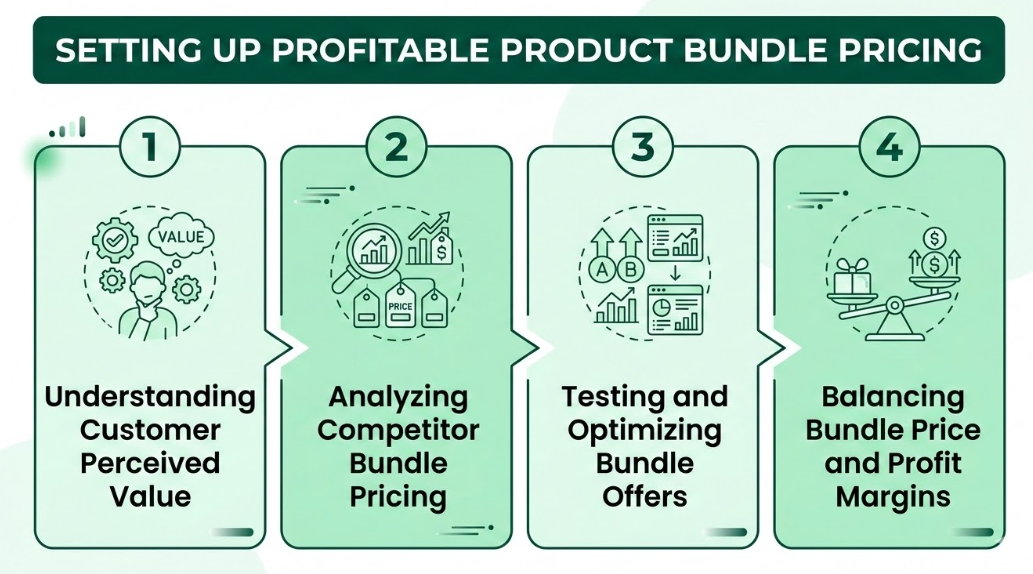
Setting the right bundle price is crucial for success. Your goal is to create an offer that feels like a great deal to customers while still protecting your profit margins. This requires a balanced marketing strategy that considers production costs, competitor pricing, and what your customers are willing to pay. Let's examine the steps to setting profitable bundle prices.
A company’s journey to deciding bundle prices begins with understanding customer-perceived value. This goes beyond the price of individual items and focuses on the convenience, benefits, and experience customers get from buying the bundle. To understand this, analyze customer data and buying patterns. Identify which products are commonly purchased together and what problems the bundle solves.
For example, a coffee machine, grinder, and premium beans bundle delivers the complete experience of making café-style coffee at home. When you focus on the overall customer experience, you can price bundles based on the value they deliver. The offer should feel like a smart purchase, not just a collection of discounted products.
Your bundling strategy should also consider how competitors price and package their bundles. Studying similar brands helps you understand industry pricing trends and customer expectations. Review their bundle combinations, price points, and discount structures. For example, a software company may bundle different service tiers, while a beauty brand might create curated product kits.
This analysis helps you position your bundles more effectively. You can match competitor pricing, offer better value, or create unique bundle combinations that stand out in the market.
Continuous testing is one of the most effective ways to refine bundle pricing. Customer preferences and buying behavior can change, so regular optimization helps keep your offers competitive. Experiment with different bundle combinations, discount levels, and promotional messages. For instance, you might test a percentage discount against a Buy 2 Get 1 offer to see which drives higher conversions.
By tracking metrics like conversion rate, average order value, and revenue, you can identify what works best. Over time, this process helps create bundle offers that consistently perform well.
Balancing bundle pricing with profit margins is essential for a sustainable bundling strategy. While large discounts can attract buyers, they should not significantly reduce your overall profitability. Start by calculating the cost of each item in the bundle and comparing it with its individual selling prices. This helps determine the discount range you can safely offer.
For example, if individual products sell for $100 and cost $40 to produce, you have room to offer a bundle discount while still maintaining profit. Regularly monitoring margins ensures your bundle strategy supports long-term growth.
Also Read: How to Bundle Products on Shopify to Boost Sales?
Looking at real-world bundle pricing examples is one of the best ways to understand the power of this strategy. From fast food to high tech, successful brands masterfully use product combinations to boost sales and enhance customer value. These examples showcase how grouping related products can dramatically increase sales volume.
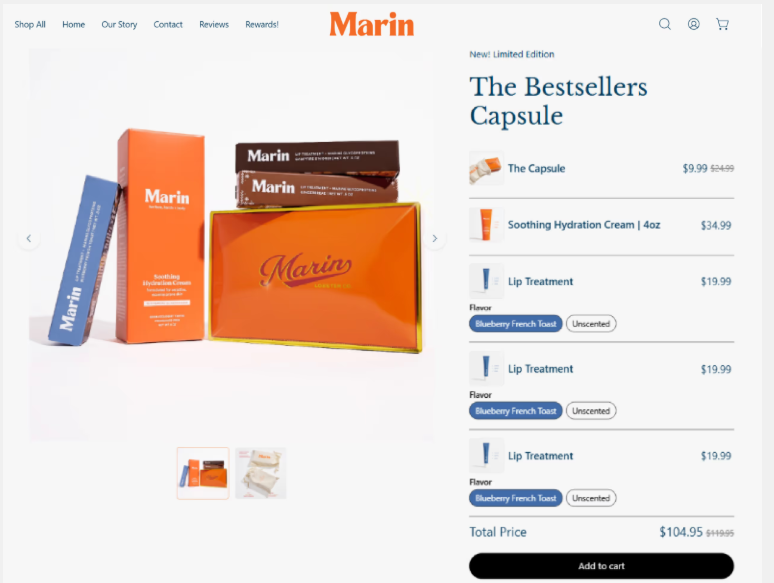
Source: Marin Skincare
Marin Skincare created a premium bundle called “The Bestsellers Capsule,” which combines several of its most popular skincare products into one curated set. By packaging customer favorites together with default scent and flavor selections, the brand simplifies the buying decision while elevating the perceived value of the bundle. The elegant capsule-style presentation also positions the product as a premium gift option. This strategy helps increase average order value by encouraging customers to purchase multiple best-selling skincare products in a single order.
Source: G Bub Blooms
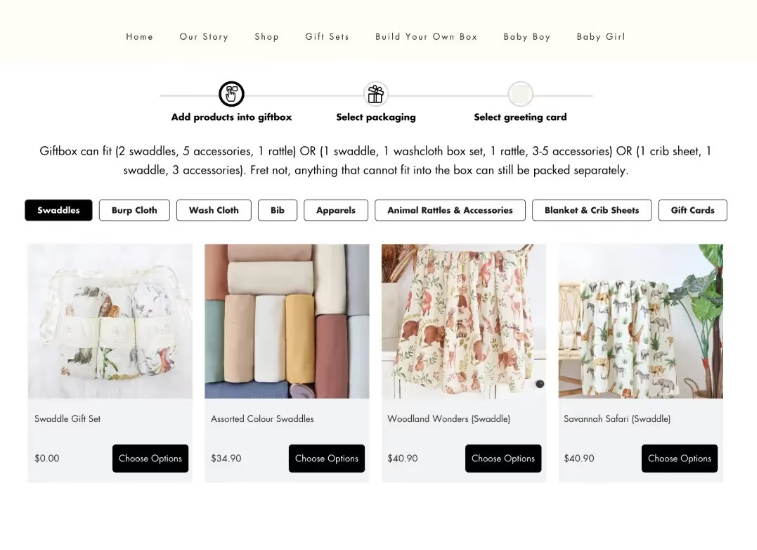
G Bub Blooms offers a personalized gift bundle of baby essentials, allowing customers to customize the products within it. Shoppers can add personalization options such as a baby’s name or choose specific colors for certain items, creating a more meaningful gift experience. This customization is offered as an optional add-on, which increases the overall bundle value. By combining personalization with a curated selection of baby products, the brand enhances the gifting experience and increases average order value.
Source: McDonald’s
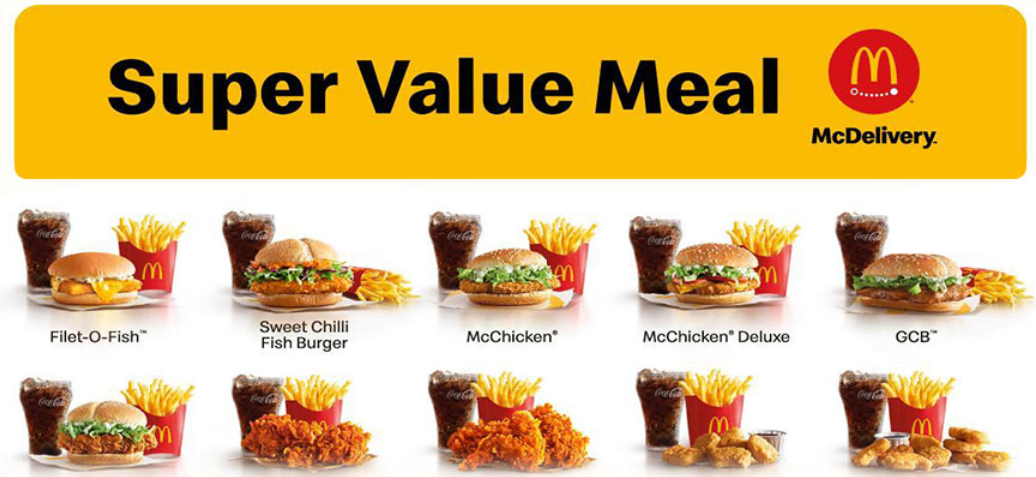
McDonald’s iconic Value Meals are a prime example of a successful mixed bundle pricing strategy. By combining a burger, fries, and a drink at a lower price than if purchased separately, the fast-food giant simplifies the ordering process and offers undeniable convenience. This strategy taps into the customer's desire for a complete, easy meal. This approach significantly impacts sales volume, as it encourages customers to upgrade from a single item to a full meal, thereby increasing the average transaction value. It creates a win-win: the customer gets a good deal, and McDonald’s boosts its revenue and streamlines kitchen operations.
Source: Apple
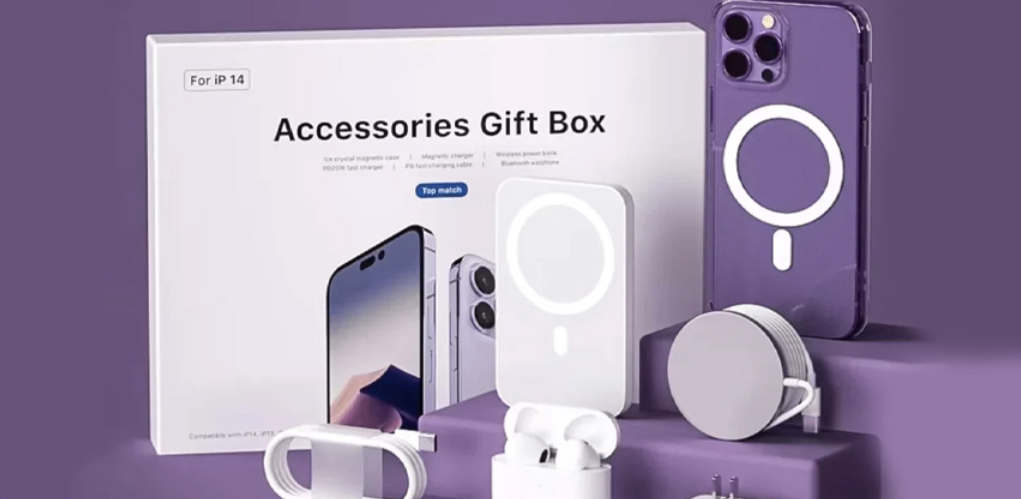
Apple demonstrates how tech companies can use product bundling to improve revenue by pairing its high-value devices with complementary products. When you buy an iPhone, you are often prompted to add accessories like AirPods or a charger, sometimes with bundle discounts. This strategy encourages larger purchases and seamlessly integrates customers into the Apple ecosystem.
This approach enhances the customer experience by providing a complete solution right from the start. Customers get everything they need for their new device in one transaction, reinforcing the brand's reputation for quality and convenience. This not only boosts immediate revenue but also strengthens long-term customer loyalty.

Source: Amazon
Amazon’s “Frequently Bought Together” feature is a brilliant example of dynamic, data-driven bundling in ecommerce. Instead of pre-defining bundles, Amazon uses sophisticated algorithms to analyze customer data and suggest related products that are often purchased together. For example, a customer buying a camera might see a recommendation to add a memory card and a case.
This automated approach to creating bundle products is highly effective because it’s personalized and contextually relevant. By anticipating the customer’s needs, Amazon simplifies the shopping process and significantly increases the chances of an upsell. This leads directly to a larger cart size and a higher average order value (AOV).
Source: Moms Home
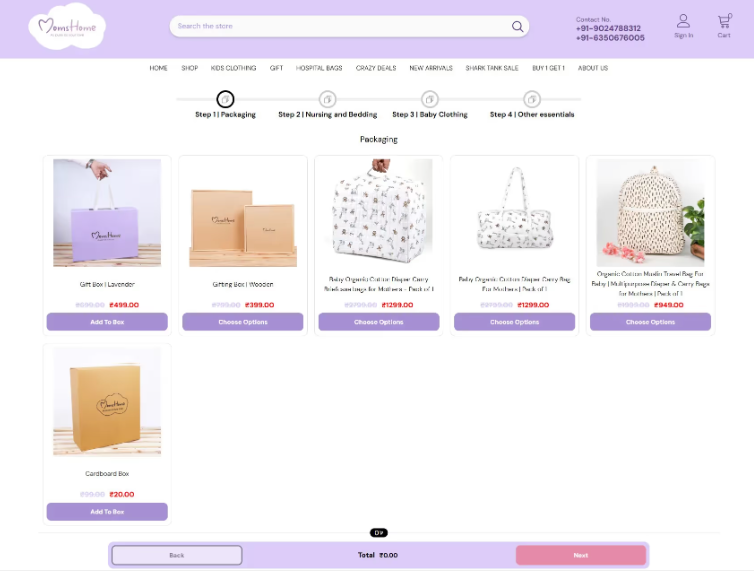
Moms Home developed a “Build Your Own Gift” bundle that allows customers to create personalized gift packages for new mothers. The bundle follows a multi-step selection process, allowing shoppers to choose packaging, nursing and bedding items, baby clothing, and other essentials. This guided experience helps customers easily assemble a thoughtful gift while maintaining flexibility in product choices. By offering customizable bundles designed specifically for gifting occasions, the brand increases perceived value and encourages customers to add more products to their order.
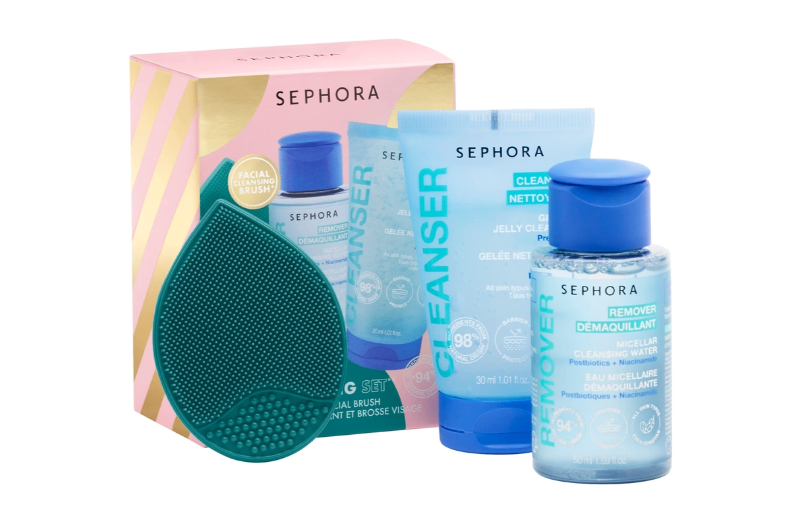
Source: Sephora
Sephora masterfully uses product bundling to drive sales and foster customer loyalty in the competitive beauty industry. The brand curates bundles featuring a mix of popular products, often around a theme or a specific skincare routine. These sets allow customers to discover new items at a value, increasing basket size and encouraging experimentation.
A key part of Sephora’s strategy involves seasonal promotions and limited-edition bundles. These create a sense of urgency and excitement, making them highly effective during holidays. One challenge businesses face with this model is managing inventory for limited-time offers, but when done right, it can significantly boost revenue and brand engagement.
Source: Whitley’s Peanut Factory
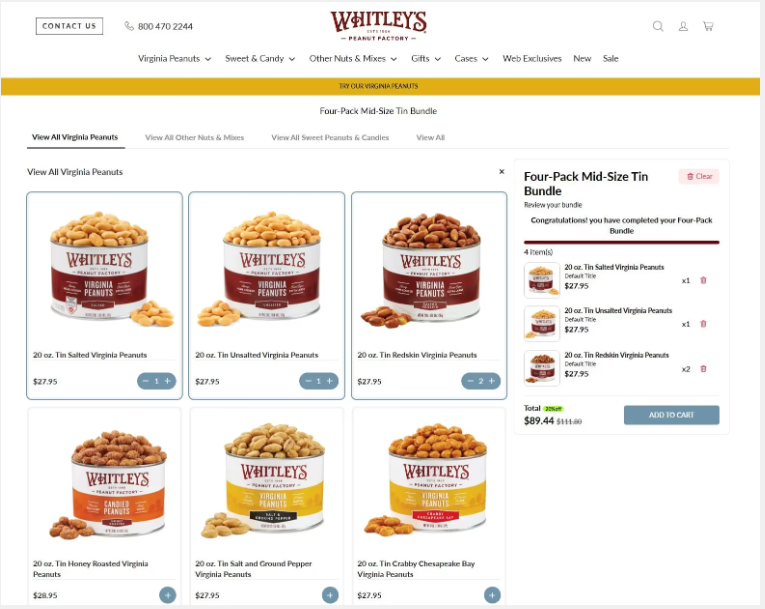
Whitley’s Peanut Factory introduced a “Four-Pack Mid-Size Tin Bundle” that allows customers to explore different peanut and nut varieties in one purchase. The bundle uses a category-based selection system that helps shoppers easily browse options such as classic peanuts, flavored nuts, and sweet peanut varieties. This structure not only simplifies navigation but also improves product discovery across multiple product categories. By offering variety in a single bundle, the brand encourages larger purchases and increases the likelihood that customers will try new products.
Source: Microsoft Office
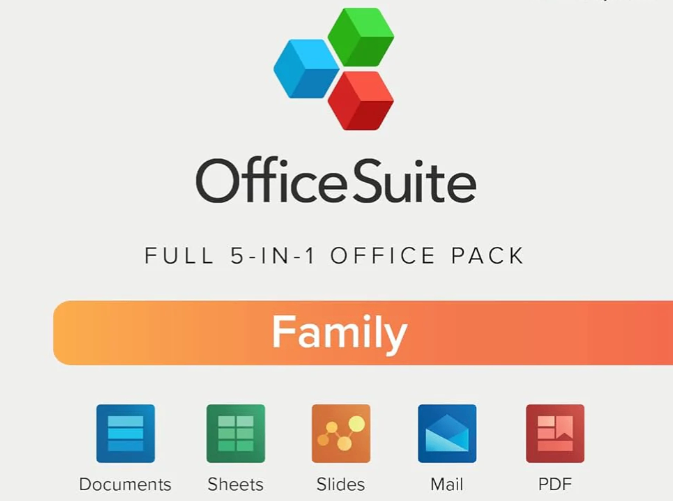
Microsoft Office Suite is a classic example of mixed bundling that has generated overwhelmingly positive results. By bundling essential software like Word, Excel, and PowerPoint, Microsoft offers significant added value at a discounted price compared to purchasing each application individually. This makes the suite an indispensable tool for both professionals and students.
The move toward subscription bundles with Microsoft 365 has further solidified its market dominance. This model ensures recurring revenue and provides customers with continuous updates and additional features, such as cloud storage. The bundle pricing is so compelling that most users opt for the full suite rather than individual programs.
Source: Seranova
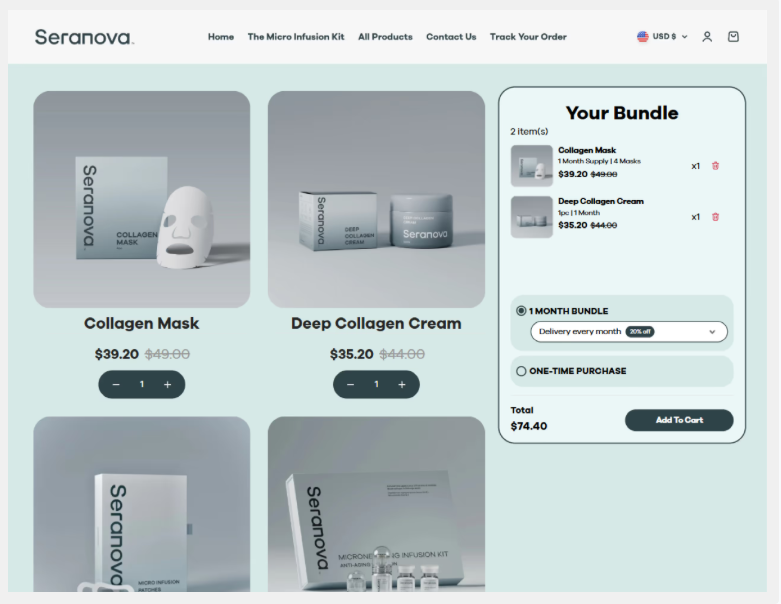
Seranova uses a subscription-based bundle model that allows customers to build their own skincare sets based on their preferences. Shoppers can select multiple products to create a personalized routine and choose between a one-time purchase or recurring delivery. By offering additional savings for subscription orders, the brand encourages customers to commit to regular skincare replenishment. This strategy improves customer retention while making repeat purchases more convenient and cost-effective for buyers.
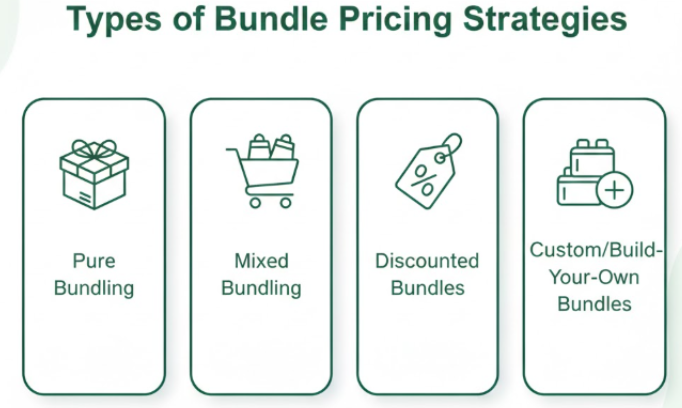
Not all bundles are created equal. Businesses can use different bundle pricing strategies depending on their goals, product types, and customer needs. Understanding these variations allows you to tailor your approach for maximum impact, whether you're selling on Shopify or another platform. Let's examine the definitions and key features of each strategy to see how they can be applied to your business.
Pure bundling is a strategy where products are sold only as part of a package and cannot be purchased separately. It is commonly used for software suites, subscription services, or exclusive sets with closely integrated components.
A classic example is Microsoft Office, where programs like Word, Excel, and PowerPoint were traditionally sold together. This approach simplifies the buying decision by offering a single package and can help move slow-selling items by pairing them with popular ones. However, it may feel restrictive for customers who do not need every product in the bundle, so it works best when the items are truly complementary.
Mixed bundling offers customers the flexibility to buy products either as a bundle or individually. This strategy provides the best of both worlds: it encourages larger purchases with a discounted bundle price while still allowing customers to buy individual items if they prefer. This approach is ideal for e-commerce because it caters to different customer segments.
Some shoppers will be drawn to the bundle's value, while others may only need one specific product. By offering both options, you protect your standalone sales and avoid alienating customers who prefer it. Mixed bundling is a powerful way to increase average order value without forcing a purchase. It gives customers control over their shopping experience, which can lead to greater satisfaction and loyalty.
Also Read: Mixed Bundling vs Pure Bundling: Which Strategy Wins?
Discounted bundles are one of the most common and effective bundling strategies. This approach offers a direct price incentive on a group of products, such as a percentage discount, fixed amount off, or tiered pricing based on quantity. The clear and immediate savings make the value proposition highly compelling. When customers see they can pay less by purchasing the bundle rather than buying items separately, they are more likely to complete the purchase.
Discounted bundles are a great way to boost sales volume for both popular and less popular items. By carefully selecting the products and the discount level, you can drive significant revenue while maintaining healthy profit margins.
Custom or build-your-own bundles allow customers to create personalized package deals from a selected range of products. This customer-focused approach gives shoppers control and ensures they only pay for items they truly want, increasing perceived value.
Because customers curate their own bundles, they often feel more invested, which can lead to a higher average order value. Setting clear rules, such as choosing any three items for a fixed price, keeps the offer simple and effective. This flexibility not only boosts sales but also provides insights into popular product combinations among your audience.
Also Read: How Metalbird drove consistent growth across 8 stores.
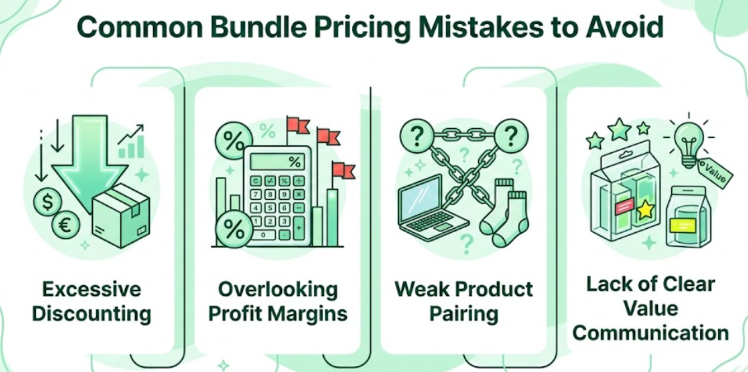
While product bundling can be a powerful strategy, certain mistakes can undermine its effectiveness and even harm your business. It's important to be aware of these common pitfalls so you can avoid them.
One of the most tempting yet risky mistakes in bundle pricing is offering discounts that are too deep. While lower prices may boost short term conversions, they can harm your brand’s perceived value and long term profitability. If customers start associating your products with constant heavy discounts, it becomes difficult to sell at regular prices. The key is to strike a balance between an attractive offer and maintaining healthy profit margins to protect your financial sustainability.
Creating bundles without carefully calculating profit margins is a costly error. Increasing sales volume means little if each package deal delivers minimal or negative returns. Before launching any bundle, analyze the costs of the included products and ensure the final price still contributes positively to your bottom line. Bundling should increase both sales and profitability, not quietly erode your earnings.
The effectiveness of a bundle depends on how well the products complement each other. Pairing unrelated or low-demand items reduces the offer’s appeal and weakens customer interest. Successful bundles solve a complete problem or enhance the user experience, such as combining a camera with useful accessories. Strategic product pairing based on customer behavior and purchase data ensures the bundle delivers genuine value.
Even a well-designed bundle can fail if its value is not clearly explained. Customers need to see exactly why the offer is worthwhile, beyond just a discounted price. Highlight the total individual cost alongside the bundle price and clearly communicate the savings and benefits. Strong value communication builds trust, improves conversions, and increases overall customer satisfaction.
Also Read: How Calitron Boosted Revenue and AOV with Smart Bundling.
Product bundle pricing is a powerful strategy for increasing sales and average order value, but managing bundle prices manually can quickly become complicated. The Kefi Product Bundle Builder helps simplify this process by allowing store owners to easily create and price product bundles that feel valuable to customers while maintaining healthy profit margins.
With Kefi, you can set custom bundle prices, apply automatic discounts, and experiment with different pricing structures, such as mix and match bundles or fixed product kits. This flexibility allows businesses to test pricing strategies, highlight value-driven offers, and optimize bundles based on customer behavior. By streamlining bundle pricing management, Kefi helps merchants create compelling deals that drive higher conversions and increase overall revenue.
Book a Demo to see how Kefi Product Bundle Builder works.
Implementing effective product bundle pricing can dramatically enhance your e-commerce sales and improve customer satisfaction. By understanding your products' unique value propositions and strategically combining them into compelling offers, you can simplify purchasing decisions and create a sense of urgency among customers. The examples we've explored highlight how leading brands utilize various bundling strategies to maximize perceived value and drive conversions. Avoid common pitfalls such as excessive discounting or weak product pairings to ensure your bundles resonate with your audience. If you're ready to elevate your sales strategy, consider using Kefi’s Product Bundle Builder to create tailored bundles that captivate your customers.
A common product-bundle pricing example is selling shampoo, conditioner, and hair serum together at a slightly discounted price compared to buying each item separately. This encourages customers to purchase multiple products at once while increasing the store’s average order value.
Some popular product bundling pricing strategies include pure bundling, mixed bundling, and tiered bundling. For instance, brands often offer basic, premium, and deluxe bundles so customers can choose based on their budget and needs.
Product bundling examples include skincare kits, gaming consoles sold with controllers and games, or meal kits that include multiple ingredients in one package. These bundles work well because they combine complementary products that customers often need.
A mixed bundling example is when a brand sells a phone and wireless earbuds both individually and as a discounted bundle. Customers can choose to buy products separately or together, making the bundle option more appealing due to the price advantage.
A pure bundling example is a software suite that includes multiple tools, available only as a package rather than individually. Customers must buy the entire bundle, which helps companies sell complementary products together.
.svg)
