
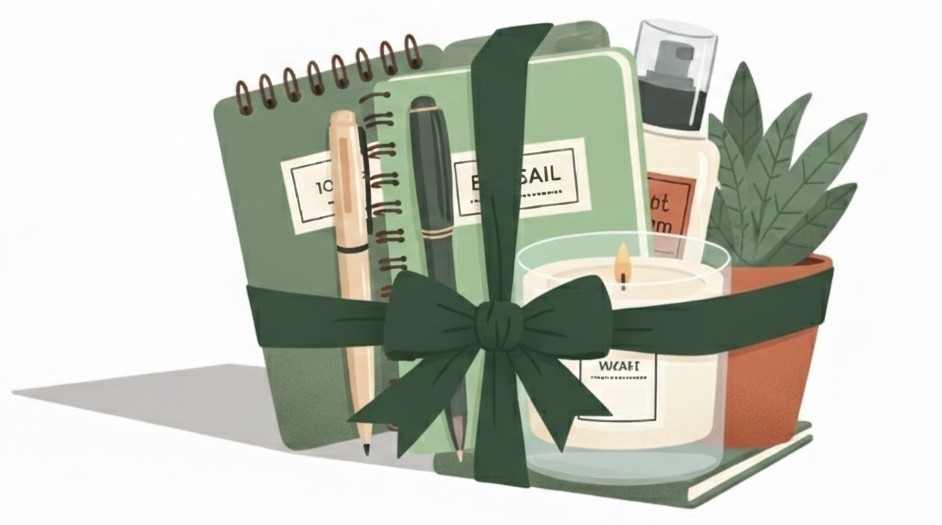
Product bundling is a smart and simple sales strategy where you package multiple items together, often at a special price. Think of it like a "starter kit" with essentials for beginners or a perfectly paired shampoo and conditioner set. It is a powerful technique that can transform your business by increasing your average order value and enhancing the customer shopping journey. When executed correctly, this strategy creates a win-win: customers receive more value, you sell more products, and loyalty and revenue growth follow.
At its core, product bundling is the practice of combining several individual products into a single, enticing package sold at a single bundle price. Imagine selling a camera, a memory card, and a protective case as a complete photography starter kit. This sales strategy isn't just about pushing more units; it's about creating convenience and exceptional value for your customers. By offering curated collections, you encourage larger purchases while making the shopping process easier and more appealing.
This approach transforms how customers perceive your offerings. Instead of just selling individual items, you are providing a comprehensive solution. Whether you pair seasonal items for a holiday promotion or create "essentials" packs for daily use, bundling is a versatile strategy that can be adapted to any store. Done right, it enhances the overall shopping experience and encourages customers to see your brand as a thoughtful curator of products that meet their specific needs.
In today's competitive retail landscape, customers expect more than just products; they seek value, convenience, and a seamless shopping experience. A product bundling strategy directly addresses these expectations by packaging complementary items together, often at a better price. This approach simplifies your customers' decision-making, saving them time and effort while encouraging them to increase their order value. Tools like Kefi Product Bundle Builder make it easy to create, manage, and promote these bundles, helping retailers stand out while meeting modern consumer demands.
Furthermore, product bundling is not a standalone tactic but a versatile part of a broader marketing strategy. It can be used to introduce new products, clear out slow-moving inventory, and create compelling seasonal promotions.

Bundling products is more than just a sales tactic; it is a strategic move that delivers significant advantages for both merchants and shoppers. When you bundle products effectively, you can turn casual browsers into committed buyers and one-time purchasers into loyal advocates for your brand. Let's explore the specific benefits this strategy can bring to your ecommerce store.
One of the most significant advantages of product bundling is its direct impact on your average order value (AOV). By grouping complementary products, you naturally encourage customers to purchase more in a single transaction. This strategy effectively upsells customers by presenting them with a compelling package, boosting the total order value without feeling like a pushy sales tactic.
When customers see the added value in a bundle, they are more likely to spend more than they initially intended. For example, a customer looking for a single skincare item might be tempted by a complete routine bundle that includes a cleanser, serum, and moisturizer. These additional items contribute directly to a higher AOV. This leads to a substantial increase in overall revenue.
Product bundling significantly enhances customer convenience by simplifying decision-making. Instead of researching and selecting multiple related items separately, shoppers can get everything they need in one go. A well-curated bundle saves them time and mental effort, creating a more streamlined and enjoyable shopping experience.
Consider a customer setting up a home office. A bundle that includes a desk lamp, a charging station, and an organizer provides a complete solution. This curated approach removes the guesswork and reassures them they have all the necessary components, boosting customer satisfaction.
An effective product bundling strategy can be a powerful tool for inventory management, especially for clearing slow-moving inventory. Every business has products that don't sell as quickly as others. Instead of letting this stock become obsolete, you can pair it with popular, fast-selling items. This makes the less popular product more appealing and helps you move it off the shelves.
This technique is a strategic approach to inventory clearance. For instance, you could bundle last season's accessories with a new bestselling apparel item. The appeal of the main product encourages the purchase of the entire package, helping you reduce holding costs and free up valuable warehouse space for new arrivals.
Product bundling is highly effective at increasing the perceived value of your offerings. When customers see multiple items grouped together for a single, often discounted price, they feel like they are getting a good deal. This value proposition is compelling and can be the deciding factor that encourages a purchase.
The secret lies in framing the bundle as more than just a collection of products. It should be presented as a complete solution or a special offer. Even if the discount is modest, the convenience and curation add a layer of value that goes beyond the price tag. This feeling of getting more for their money enhances customer satisfaction. This positive perception not only drives the initial sale but also builds a lasting impression of your brand as one that provides excellent value.
Product bundling is a natural and effective way to execute a cross-sell strategy. Instead of simply suggesting related products at checkout, bundling integrates them directly into the offer. You can pair a main product with complementary items that enhance its use, encouraging customers to purchase additional products they might not have considered otherwise.
For example, when a customer buys a new laptop, a bundle that includes a wireless mouse, a laptop sleeve, and software creates a perfect cross-sell opportunity. The customer gets a complete package, and you successfully sell multiple items. This approach feels helpful rather than salesy because you anticipate their needs. It is a seamless way to increase the number of items per transaction while adding genuine value to the customer's purchase.
Also Read: How a Premier Portuguese Winery Cultivated a +16.80% AOV Lift.
Product bundling is a proven strategy to increase average order value, conversions, and customer satisfaction in e-commerce. Different types of bundles help stores offer better value while encouraging customers to buy more.
Here’s a quick overview of popular product bundle types that can improve sales and enhance the shopping experience.
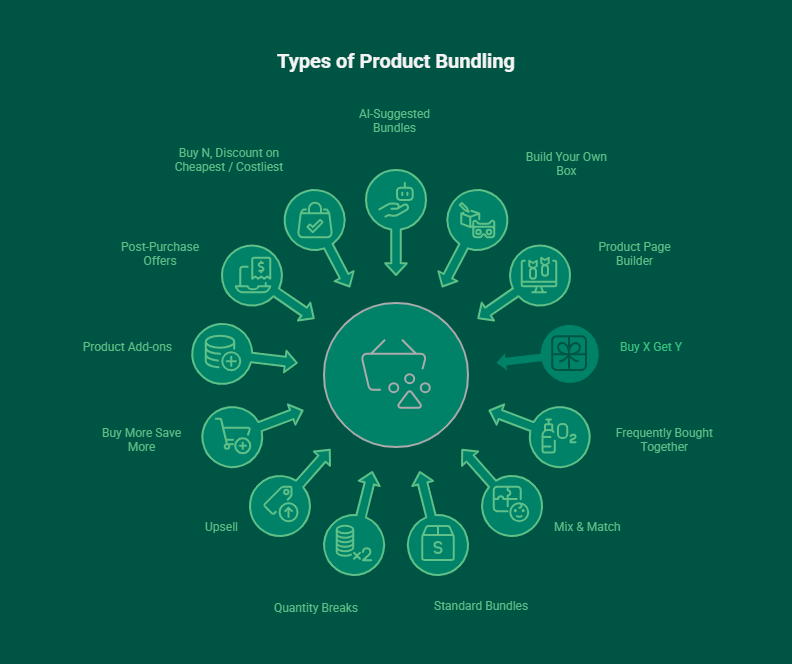
AI-suggested product bundles use customer data and shopping behavior to automatically recommend relevant products. Among different types of bundles, AI-driven recommendations improve personalization, increase conversions, and help customers discover complementary items, boosting average order value.
On Shopify, stores commonly use fixed bundles, mix-and-match offers, and AI-suggested recommendations. While fixed options include preset products, mix-and-match allows customers to choose, and AI suggestions automatically adapt to user behavior, helping automate upselling and cross-selling over time.
Example: Amazon – AI-Powered Personalized Recommendations

Source: Amazon
Amazon automatically suggests bundles like a laptop, mouse, and laptop sleeve based on browsing history and past purchases. The system analyzes millions of transactions to identify patterns and show dynamic recommendations such as “Customers who bought this also bought.” These bundles are not fixed — they change for every user. This helps increase conversions and average order value through intelligent automation.
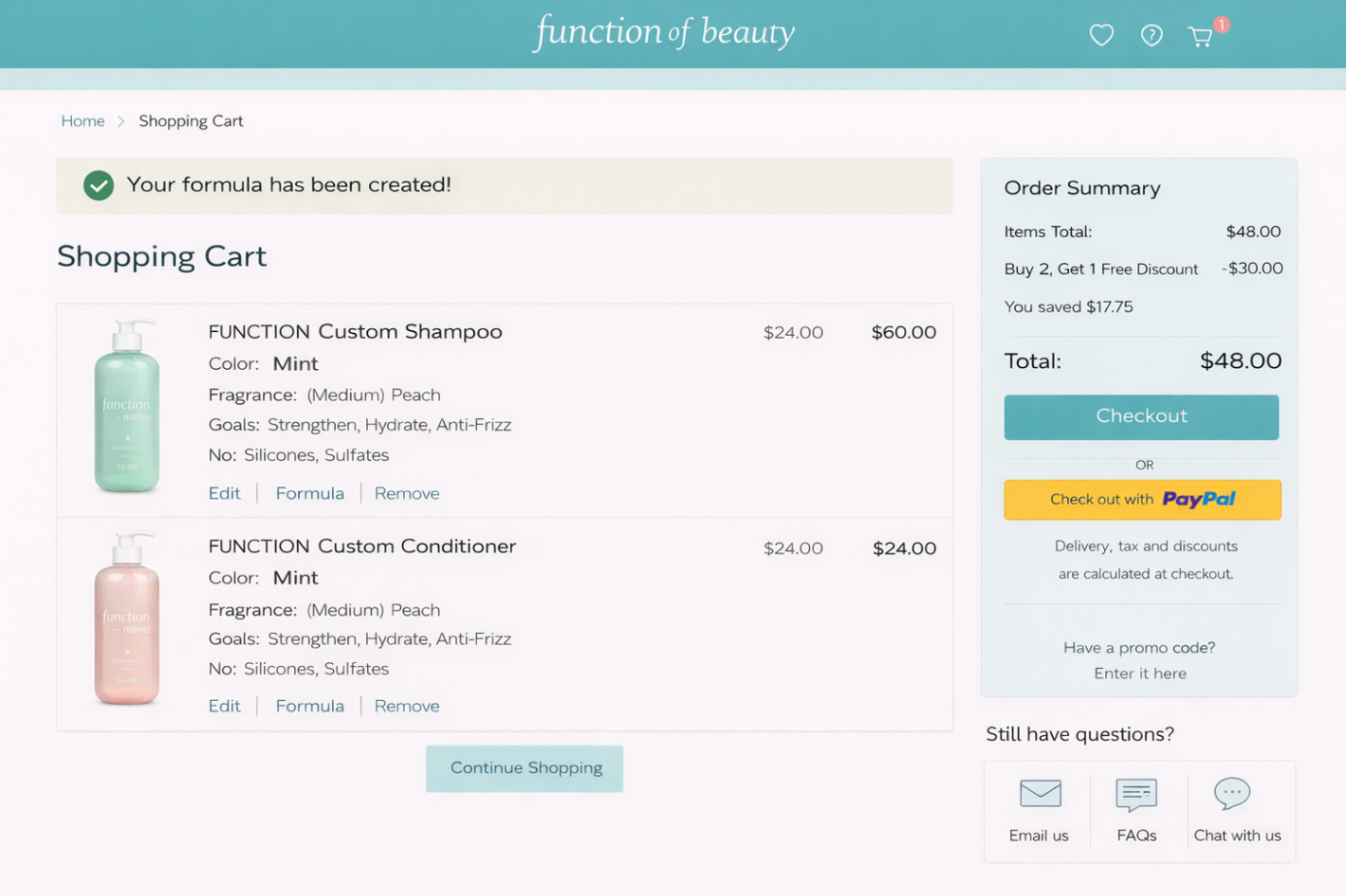
Build-your-own-box bundles allow customers to create custom product bundles based on their preferences. This personalized shopping experience increases engagement and encourages customers to purchase more items. Custom bundle types are effective for improving conversions and increasing average order value. This bundling strategy gives customers greater control over their purchases, thereby improving satisfaction and loyalty. Build-your-own bundles are especially popular for gift boxes, subscription boxes, and specialty product stores.
Example: Function of Beauty – Custom Haircare Bundle
Source: Function of Beauty
Function of Beauty allows customers to complete a hair quiz and build a personalized shampoo and conditioner set. Shoppers choose fragrance, hair goals, and ingredients before checkout. The final bundle is uniquely customized for each customer. This increases engagement and improves customer loyalty through personalization.
Product page bundle builders allow customers to select multiple related products directly from a product page. This bundling method simplifies the buying process and encourages customers to purchase complementary items. Product page bundles help improve conversions and increase average order value.
Showing bundle types on a product page reduces decision friction and helps customers complete their purchase faster. This approach works especially well for electronics, fashion, and beauty ecommerce stores. In e-commerce, a bundle typically refers to a group of related products offered together at a combined price, unlike dictionary definitions, which define a bundle as any collection of items or things grouped together for a purpose. Example: Sephora – “Complete the Routine” Builder.
Example: Sephora – “Complete the Routine” Builder

Source: Sephora
On a moisturizer product page, Sephora displays matching cleanser, toner, and serum options under “Complete the Routine.” Customers can add all items to their cart from one place. This reduces friction and encourages buying a full skincare routine rather than a single product. It improves both convenience and order value.
Buy X Get Y bundles encourage customers to purchase specific products to receive an additional item at a discount or for free. This type of product bundling increases order size and motivates customers to explore more products. It is a proven strategy for boosting sales and improving customer retention.
These types of bundles create a strong sense of value, encouraging customers to buy more than they originally planned. Buy X Get Y offers are commonly used during promotions and seasonal sales campaigns.
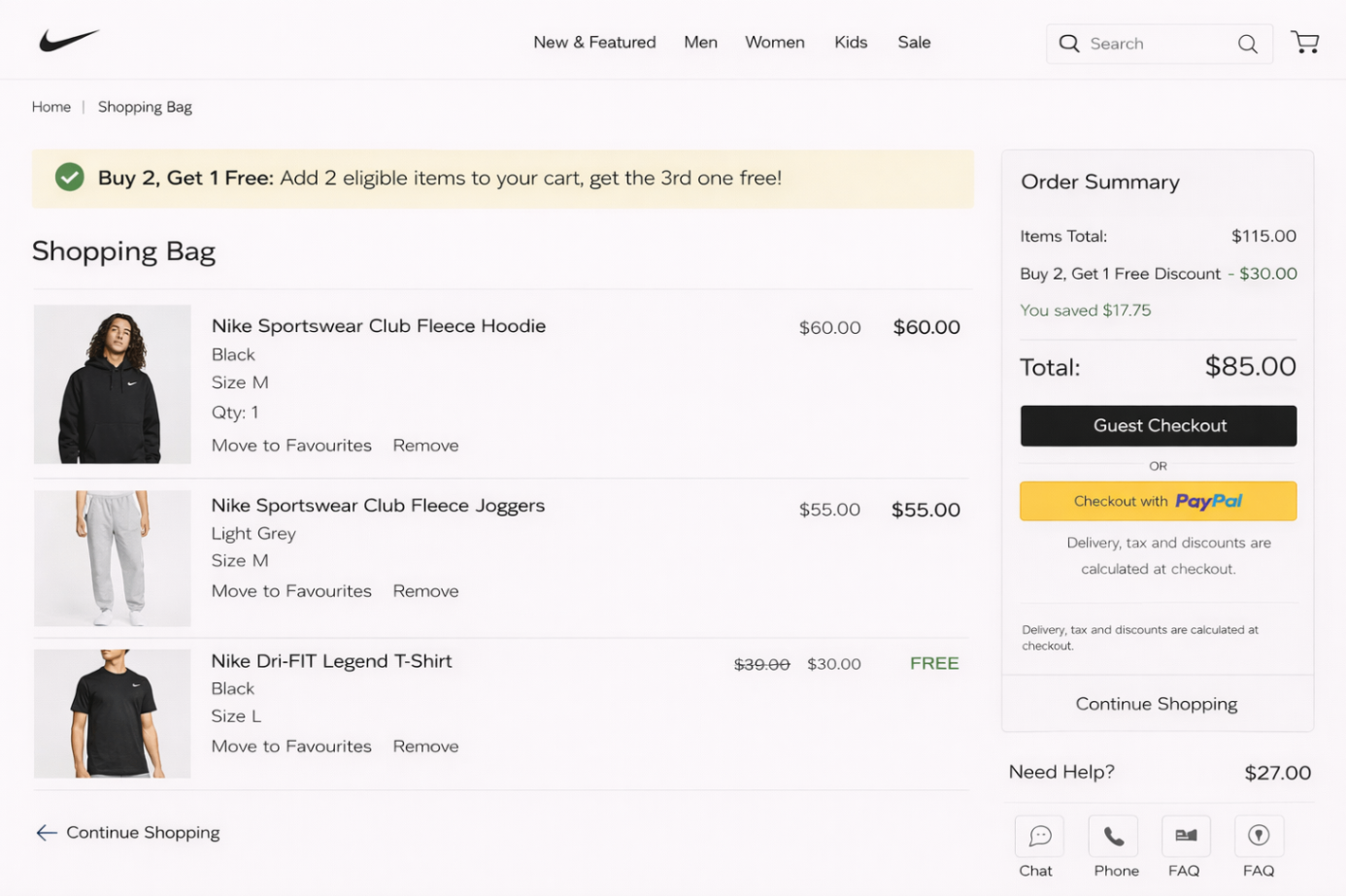
Example: Nike – Buy 2 Get 1 Free Campaign
Source: Nike
Nike runs promotions where customers who add two eligible products receive a third item free. The discount automatically applies at checkout. This motivates shoppers to add extra products to unlock savings. It increases cart size while creating a strong value perception.
Frequently bought together bundles recommend products that customers commonly purchase together, making it easier to find complementary items and complete purchases faster. This approach helps improve conversions and increase average order value.
Data-driven recommendations help customers feel more confident in their decisions. It is widely used in e-commerce stores to improve product discovery and grow revenue.
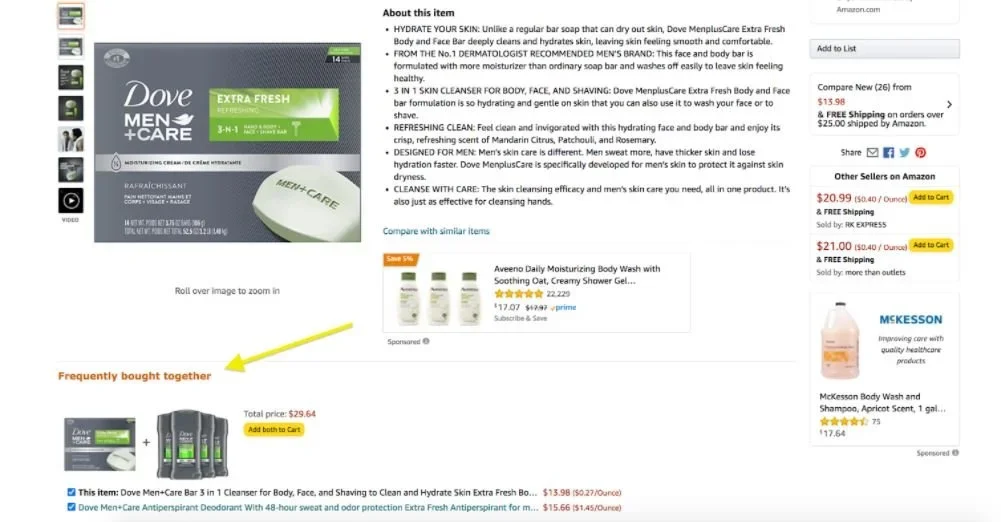
Example: Amazon - Frequently Bought Together Section
Source: Amazon
When viewing a camera, Amazon suggests a tripod and memory card under “Frequently Bought Together.” Customers can add all items with one click. These bundles are based on real customer purchase data. It simplifies product discovery and increases customer confidence in buying complementary items.
Mix-and-match bundles let customers choose different products within a single offer, helping them create personalized combinations that meet their needs. This flexible approach improves customer satisfaction and encourages larger purchases.
Customers appreciate the freedom to choose items rather than buy fixed sets. It works especially well for clothing, cosmetics, food products, and lifestyle items.
Example: Bath & Body Works – Choose Any 5 for $X

Source: Batch & Body Works
Bath & Body Works allows customers to pick any five items from selected categories at a special price. Shoppers can mix different fragrances and product types. The flexibility increases personalization and perceived value. It encourages bulk purchases without restricting choice.
Also Read: Mica: Painting Stories on Nursery Walls through Mix & Match Magic.
Standard bundles combine multiple complementary products into one discounted package, simplifying the shopping experience and providing better value to customers. This approach helps increase average order value and improve overall sales performance.
Predefined sets reduce decision-making time and make shopping more convenient. They are commonly used for starter kits, gift sets, and product collections.
Example: Apple - MacBook + AirPods Back-to-School Bundle

Source: Apple
Apple offers fixed bundles during promotional seasons, such as a MacBook paired with free or discounted AirPods. Customers purchase a ready-made package instead of separate products. This simplifies decision-making and enhances perceived savings. It works well for starter kits and ecosystem-based products.
Quantity break bundles offer discounts when customers purchase products in larger quantities, encouraging bulk buying and helping increase average order value. This approach is especially effective for repeat customers and wholesale buyers.
Customers are more motivated to buy when they see clear savings per unit. Quantity discounts work particularly well for consumable products such as supplements, groceries, and office supplies.
Example: Costco – Bulk Pack Discounts

Source: Costco
Costco offers lower per-unit pricing when customers buy products in bulk packs. The more units purchased, the better the value per item. This motivates customers to stock up on frequently used goods. It increases overall purchase volume and average order value.
Upsell bundles offer additional or upgraded products related to a customer's main purchase, encouraging customers to spend more by highlighting useful complementary items. This approach improves revenue while enhancing the overall shopping experience.
Strategic upselling helps customers discover premium options and useful accessories. It is one of the most effective ways to increase revenue without increasing traffic.
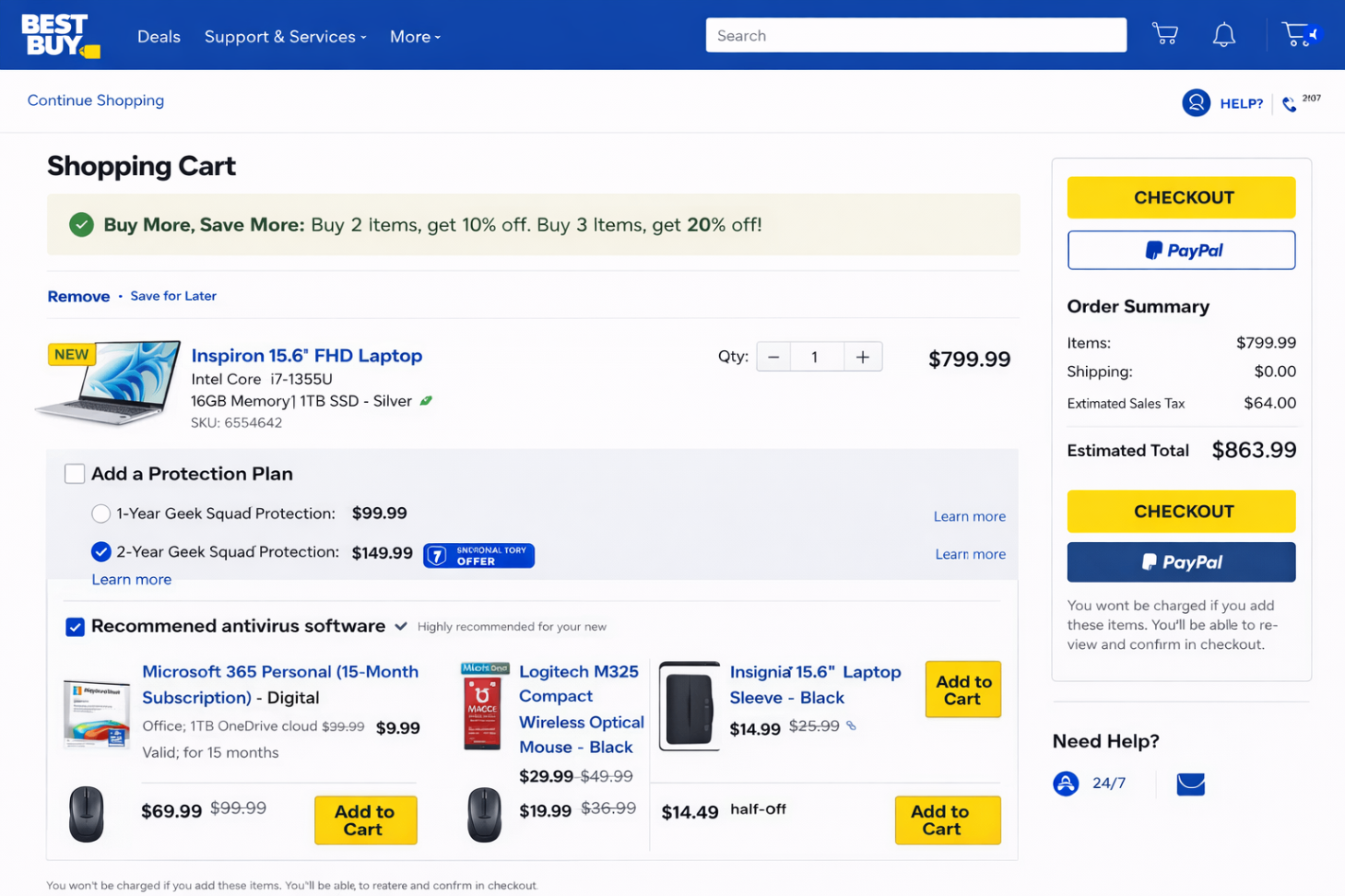
Example: Best Buy – Add Protection Plan & Accessories
Source: Best Buy
When purchasing a laptop, Best Buy suggests adding an extended warranty, antivirus software, or accessories. These upsell bundles appear before checkout. They encourage customers to enhance their main purchase. This increases revenue while improving the overall product experience.
Also Read: How Minimal Home Redefined Interior Elegance through Strategic Upselling.
Buy more, save more bundles offer tiered discounts based on the number of items purchased, giving customers better pricing as they add more products to their cart. This approach encourages larger orders and helps increase average order value.
Clear pricing tiers motivate customers to reach the next discount level. It is commonly used to increase cart value and improve conversion rates.
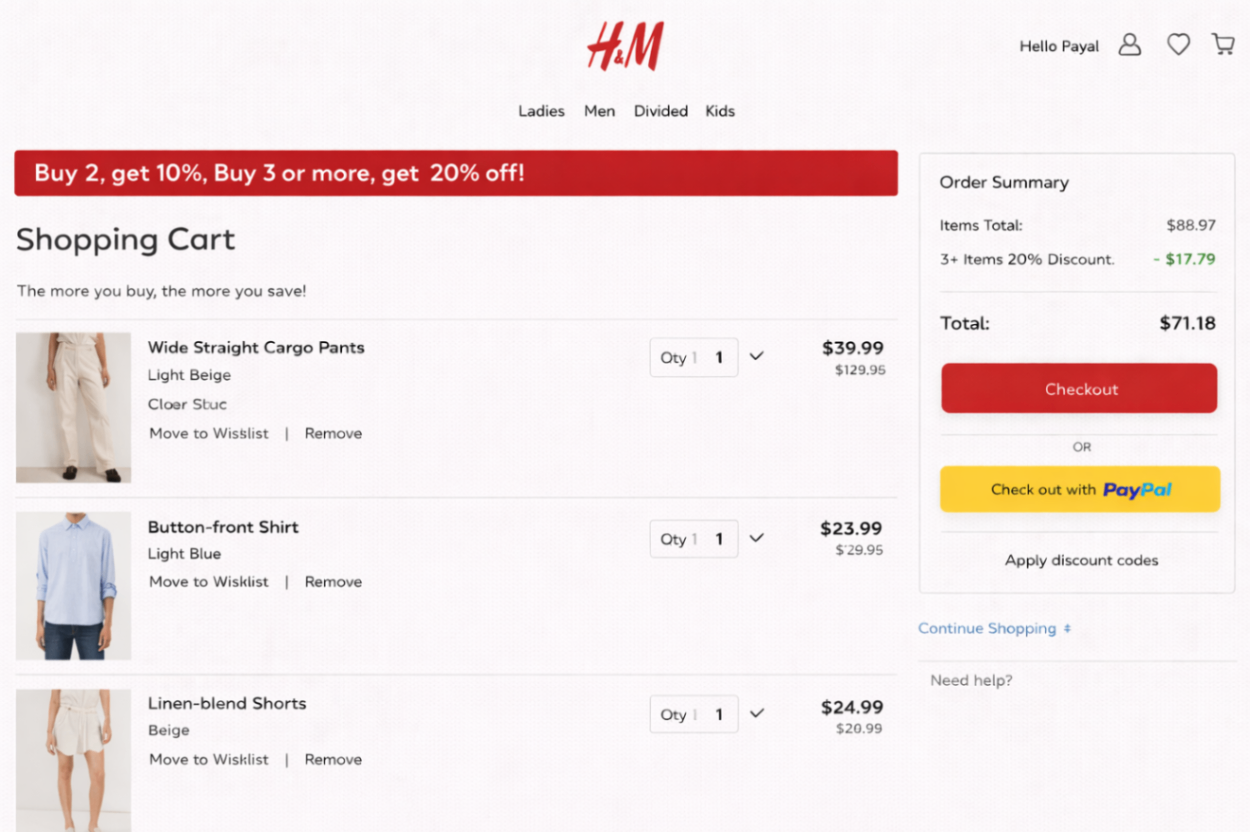
Example: H&M – Tiered Cart Discounts
Source: H&M
H&M offers promotions like “Buy 2 get 10% off, Buy 3 get 20% off.” As customers add more items, the discount percentage increases automatically. This encourages shoppers to reach the next savings tier. It directly drives higher cart values.
Product add-ons allow customers to include complementary products with their main purchase. These small additions improve product value and enhance the customer experience. Add-on bundles help increase conversions and maximize revenue per order.
Add-ons reduce the need for customers to search for related products separately. This bundling strategy works well for accessories, warranties, personalization, and upgrades.
Example: Dell – Add Warranty & Upgrades

Source: Dell
When buying a laptop, Dell allows customers to add an extended warranty, RAM upgrades, or a laptop bag. These add-ons are optional but conveniently displayed before checkout. They enhance product value and increase revenue per order. Customers don’t need to search separately for related items.
Post-purchase bundles offer additional products after a customer completes checkout, encouraging additional purchases without interrupting the buying process. This approach helps maximize revenue and improve customer lifetime value by showing relevant recommendations at the right time.
Since the customer has already made a purchase, they are more likely to accept these offers. It is an effective way to increase revenue without affecting initial conversion rates.
Example: Gymshark – One-Click Post-Purchase Offer

Source: Gymshark
After completing payment, Gymshark shows a limited-time discount on complementary apparel. Customers can accept the offer with a single click because payment details are already saved. This does not disrupt the initial conversion. It increases customer lifetime value without affecting checkout performance.
Buy N discount bundles offer savings on either the cheapest or most expensive item when multiple products are purchased. This bundling strategy encourages customers to add more items to qualify for discounts. It helps increase cart size and improve average order value.
This approach creates a strong incentive for customers to explore additional products. Buy N discount bundles are commonly used in fashion, beauty, and multi-product ecommerce stores.
Example: Zara – Buy 3, Pay for 2

Source: Zara
Zara runs promotions in which customers who add three items receive the cheapest item free. The discount is automatically applied in the cart. This encourages shoppers to add more products to maximize savings. It increases cart size while strategically controlling the impact of discounts.
Also Read: How Puur Scaled Average Order Value via Intelligent Accessory Pairing.
Industry leaders worldwide consistently use product bundles as a cornerstone of their sales strategy. By combining popular products with complementary items, these companies simplify customers' choices and create an irresistible perception of value. This approach is highly effective for increasing sales volume and AOV. In the sections that follow, we will explore specific examples of how major brands have mastered bundling to drive significant growth.
Source: McDonald’s
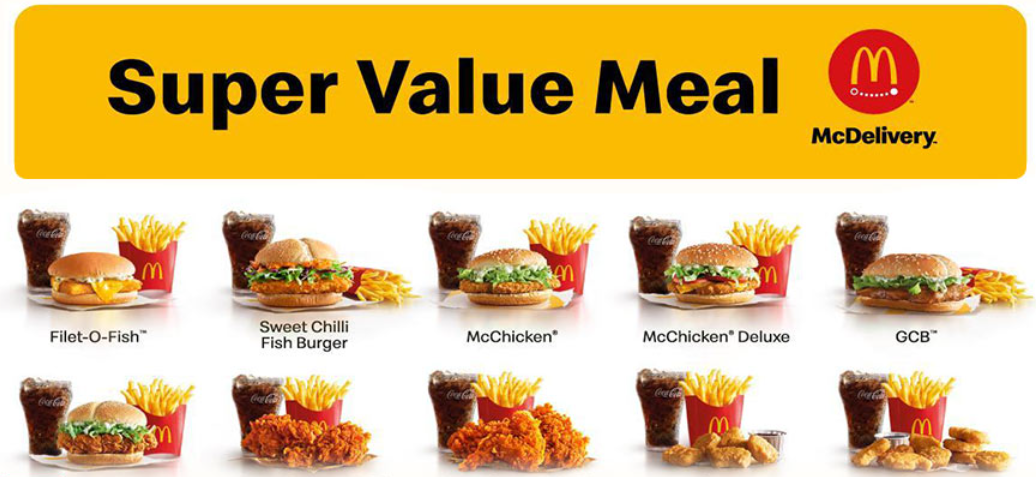
McDonald’s iconic Value Meals are a prime example of a successful mixed bundle pricing strategy. By combining a burger, fries, and a drink at a lower price than if purchased separately, the fast-food giant simplifies the ordering process and offers undeniable convenience. This strategy taps into the customer's desire for a complete, easy meal.
This approach significantly impacts sales volume, as it encourages customers to upgrade from a single item to a full meal, thereby increasing the average transaction value. It creates a win-win: the customer gets a good deal, and McDonald’s boosts its revenue and streamlines kitchen operations.
The success of this strategy is clear:

Source: Subway
Subway’s meal deals provide another compelling real-world case study of how product bundling can significantly increase sales. The brand offers customers the option to bundle a sandwich with chips or a cookie and a drink for a reduced price. This strategy caters directly to customers' needs for a complete, customizable lunch.
Unlike a pure bundling approach, Subway’s mixed bundling allows customers to purchase individual items or opt for the bundle discount. This freedom of choice is crucial, as it empowers customers while subtly nudging them toward a larger purchase. The result is an increased average order value and a more satisfying customer experience.
Key features of Subway's successful bundle include:

Source: Amazon
Amazon’s “Frequently Bought Together” feature is a brilliant example of dynamic, data-driven bundling in eCommerce. Instead of pre-defining bundles, Amazon uses sophisticated algorithms to analyze customer data and suggest related products that are often purchased together. For example, a customer buying a camera might see a recommendation to add a memory card and a case.
This automated approach to creating bundle products is highly effective because it’s personalized and contextually relevant. By anticipating the customer’s needs, Amazon simplifies the shopping process and significantly increases the chances of an upsell. This leads directly to a larger cart size and a higher average order value (AOV).
The operational advantages are noteworthy:
Also Read: How SportsStop Dominated the Diamond and Field with High-Velocity Bundling.
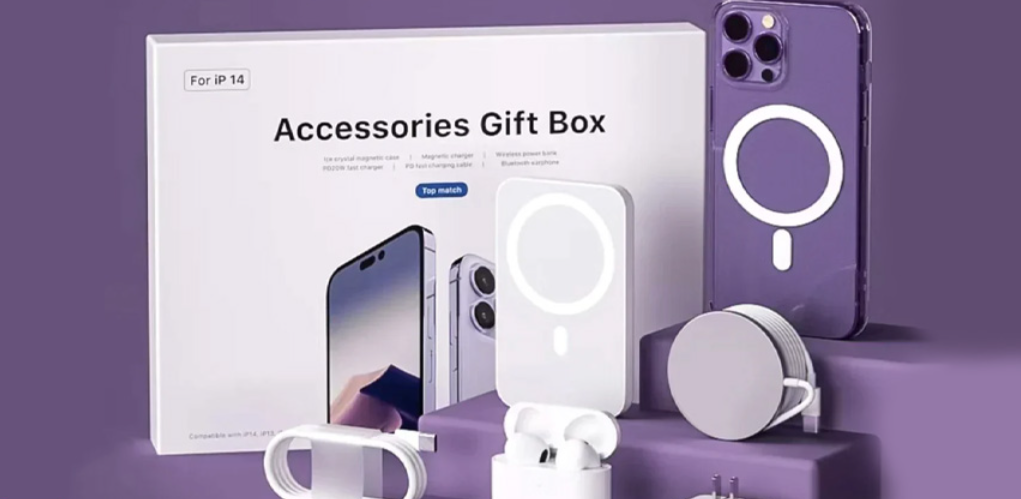
Source: Apple
Apple demonstrates how tech companies can use product bundling to improve revenue by pairing its high-value devices with complementary products. When you buy an iPhone, you are often prompted to add accessories like AirPods or a charger, sometimes with bundle discounts. This strategy encourages larger purchases and seamlessly integrates customers into the Apple ecosystem.
This approach enhances the customer experience by providing a complete solution right from the start. Customers get everything they need for their new device in one transaction, reinforcing the brand's reputation for quality and convenience. This not only boosts immediate revenue but also strengthens long-term customer loyalty.
Apple's bundling success comes from:
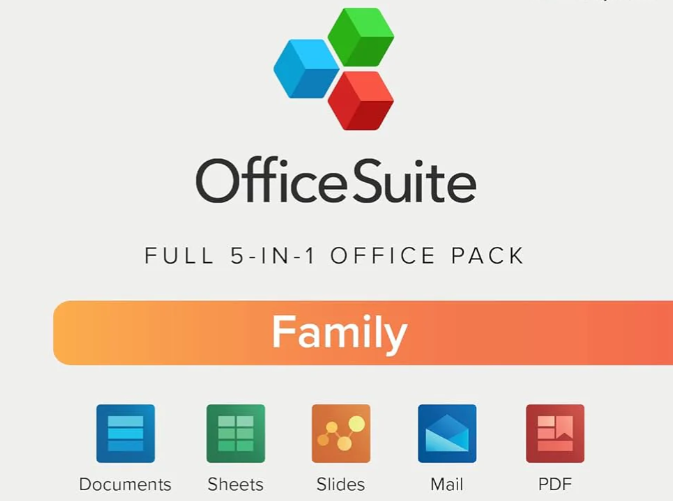
Source: Microsoft Office
Microsoft Office Suite is a classic example of mixed bundling that has generated overwhelmingly positive results. By bundling essential software like Word, Excel, and PowerPoint, Microsoft offers significant added value at a discounted price compared to purchasing each application individually. This makes the suite an indispensable tool for both professionals and students.
The move toward subscription bundles with Microsoft 365 has further solidified its market dominance. This model ensures recurring revenue and provides customers with continuous updates and additional features, such as cloud storage. The bundle pricing is so compelling that most users opt for the full suite rather than individual programs.

Source: Sephora
Sephora masterfully uses product bundling to drive sales and foster customer loyalty in the competitive beauty industry. The brand curates bundles featuring a mix of popular products, often around a theme or a specific skincare routine. These sets allow customers to discover new items at a value, increasing basket size and encouraging experimentation.
A key part of Sephora’s strategy involves seasonal promotions and limited-edition bundles. These create a sense of urgency and excitement, making them highly effective during holidays. One challenge businesses face with this model is managing inventory for limited-time offers, but when done right, it can significantly boost revenue and brand engagement.
Popular bundle types from Sephora include:
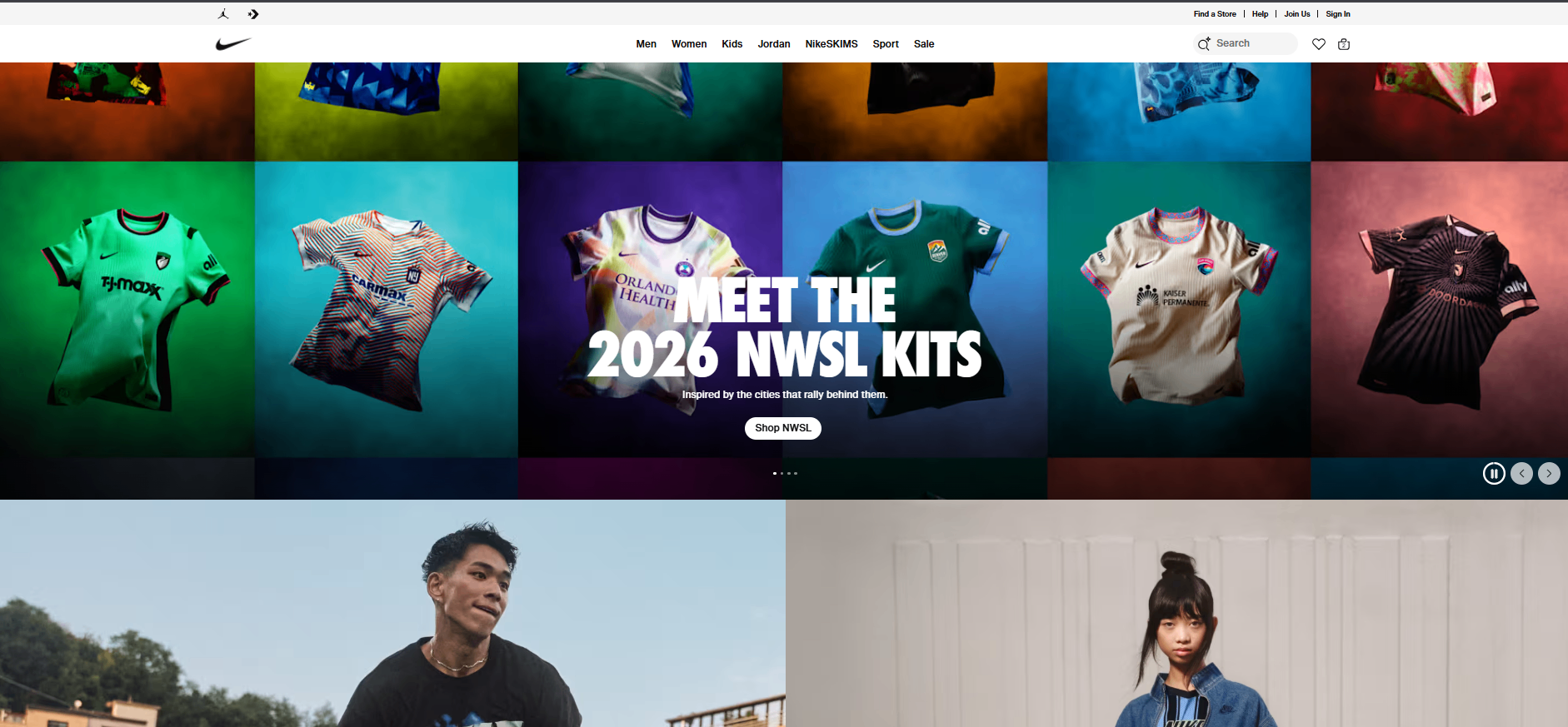
Source: Nike
Nike leverages product bundling to sell entire outfits, transforming a single product search into a full-look purchase. By showcasing complementary items such as shoes, shirts, and shorts, Nike inspires its target audience and simplifies the shopping experience. This is a highly successful retail strategy for upselling related items.
This approach not only boosts the average order value but also strengthens Nike's position as a lifestyle brand. Instead of just selling athletic gear, Nike sells a complete aesthetic. Customers looking for a new pair of running shoes might easily be persuaded to add the matching top and leggings to their shopping cart.
The advantages of Nike's outfit bundles are:
Also Read: How Puur Scaled Average Order Value via Intelligent Accessory Pairing.

Complexity in managing diverse product combinations can lead to potential complications in inventory management and pricing strategy. Customers may perceive a bundled offer as a way to offload less popular items, negatively affecting their perceived value of the main product. Additionally, bundling may limit customer choice, making it challenging for individual items to stand out. Let's discuss a few disadvantages of Product Bundling:
One of the most significant drawbacks of product bundling is the potential for reduced profit margins. The very nature of a bundle often involves offering the collection of items at a lower price than the sum of their individual costs. This discount makes the bundle attractive, but it also means you earn less profit on each item sold in the bundle.
This can become a serious issue if your pricing strategy isn't carefully managed. If the bundle price is too low, you might increase sales volume but see your overall bottom line shrink. It is a delicate balance to strike; the discount needs to be compelling enough to drive sales but not so deep that it makes the transaction unprofitable.
Another potential downside of product bundling is that it can limit customer choice. This is especially true with pure bundling, where customers are forced to buy the entire package and cannot purchase any individual product from the set. If a shopper wants only one of the items, they may feel frustrated and abandoned by the offer.
This lack of flexibility can lead to lost sales. A customer interested in one of your individual products might choose to shop with a competitor who offers it separately rather than be forced to buy a bundle they do not fully want. This can create a negative perception of your brand as being restrictive or overly pushy.
To mitigate this, many businesses opt for mixed bundling, which provides the best of both worlds. It allows customers to enjoy the savings of the bundle products if they wish, but it also gives them the freedom to purchase individual products if that better suits their needs. This flexibility is key to maintaining a positive customer experience.
Product bundling can introduce significant complexities to inventory management. A bundle is only available for sale if all of its component items are in stock. If even one of the related items runs out, the entire bundle becomes unsellable. This can lead to stockouts, lost sales opportunities, and disappointed customers.
This challenge is amplified when you offer many different types of product bundles, each with its own unique combination of SKUs. Keeping track of stock levels for all complementary items and forecasting demand for each bundle requires a sophisticated, accurate inventory management system. Without one, you risk overselling products you do not have or failing to assemble in-demand bundles.
Developing an effective pricing strategy for product bundles can be surprisingly difficult. The goal is to set a bundle price that feels like a great deal to the customer while still ensuring profitability for your business. Finding this sweet spot requires careful analysis of product costs, margins, and perceived value.
One major challenge is accounting for products with vastly different costs and margins within the same bundle. A simple percentage discount might not work for every combination. You must calculate the total cost of all goods and then decide on a reduced price that still leaves a healthy margin on the entire package, not just on a single unit.
A significant risk associated with an aggressive bundle pricing strategy is the potential to devalue your individual products. When customers become accustomed to seeing certain items as part of a discounted bundle, they may begin to perceive their standalone value as being lower. This can make it difficult to sell these products at their full price in the future. This effect is particularly pronounced if a single item is frequently included in various promotions or bundles.
Over time, the discounted price can become the new anchor price in the customer's mind. When the promotion ends, the regular price may seem inflated, leading to sticker shock and reduced sales of the individual products. To mitigate this risk, it is important to use bundling strategically rather than as a constant promotional tool.
Also Read: How The Chosen Cultivated a Community through Curated Merchandise Kits.
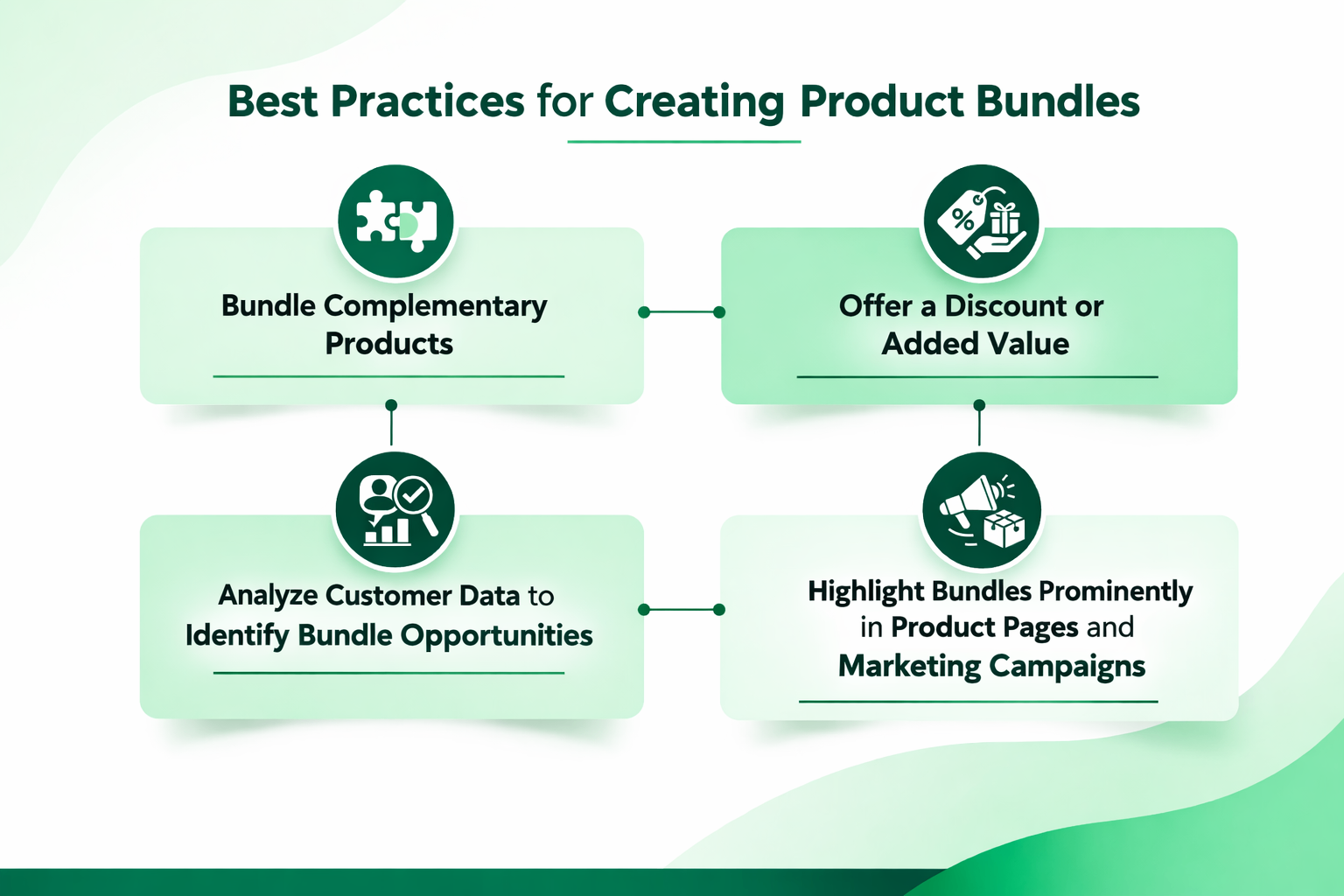
Creating a product bundle that resonates with your customers requires more than just grouping random items. The most successful bundles are born from a deep understanding of customer needs and behaviors. By analyzing customer data and focusing on providing genuine value, you can design offers that not only sell but also enhance customer satisfaction. The following best practices will guide you in building compelling bundle recommendations that boost your bottom line.
One of the most effective retail strategies is to bundle complementary products that naturally go together. When you pair items that enhance each other's utility, you are not just selling products; you are offering a complete solution. Think of a camera with a lens, shampoo with conditioner, or a gaming console with a popular game.
This approach works because it directly addresses customer needs and simplifies their shopping journey. A customer buying a new laptop will likely need a mouse and a case. By bundling these related items, you save them the effort of searching for each one individually, creating a convenient and logical package.
To execute this best practice:
Pricing is a critical component of any successful bundling strategy. To incentivize a purchase, your bundle must offer a clear advantage over buying the items separately. This usually comes in the form of a discount, highlighting the cost savings for the customer. Even a small discount can be enough to persuade a shopper.
Alternatively, you can offer added value instead of a lower price. This could be free shipping, an exclusive gift, or access to a premium service. For example, a makeup bundle might come with a free cosmetic bag. This makes the customer feel they are getting something extra, which can be just as powerful as a discount.
Examples of effective discount strategies include:
Your customer data is a goldmine for identifying powerful bundle opportunities. By analyzing purchasing patterns, you can discover which products your customers frequently buy together. Tech companies like Amazon excel at this, using data to power their "Frequently Bought Together" product recommendations and drive a massive sales volume.
Go beyond just sales data. Look at what items are often viewed together, what’s left in abandoned carts, and what customers are saying in their feedback and reviews. This information provides deep insights into your customers' thought processes and unarticulated needs, helping you create bundles that truly resonate.
To leverage your data effectively:
Even the most thoughtfully created bundle will fail if customers don't know it exists. Visibility is key. Your bundle products should be featured prominently on your product pages, homepage, and at checkout. Make it impossible for shoppers to miss the value you are offering.
Incorporate bundles into your broader marketing strategy. Promote them through email campaigns to subscribers on your email address list, showcase them in social media posts, and create dedicated landing pages that explain the benefits. Unique eCommerce ideas include creating "build your own bundle" pages or offering exclusive bundles to loyal customers.
Effective promotional tactics include:
Also Read: How Calitron Boosted Revenue and AOV with Smart Bundling.
Implementing a sophisticated product bundling strategy has never been easier with tools like the Kefi Product Bundle Builder. Our platform empowers you to create and manage dynamic bundles that directly contribute to a higher average order value (AOV) and an enhanced shopping experience. You can easily set up various types of bundles, from mix-and-match options to fixed packages, all designed to encourage customers to add more to their carts. By presenting relevant, valuable offers at the right moment, you can effectively boost sales.
To leverage a bundle builder in your online store, start by identifying your top-selling products and their complementary items. Use this insight to create compelling bundles within the Kefi platform. Promote these bundles on your homepage and product pages, and use our analytics to track their performance. By testing different combinations and discount levels, you can continuously optimize your strategy to maximize your order value and deliver an exceptional customer journey.
Book a Demo to see how Kefi Product Bundle Builder works.
Product bundling is a powerful strategy that can significantly enhance your business's performance. By understanding the intricacies of bundling and the types available, you can tailor your approach to your target audience effectively. The benefits are clear, ranging from increased average order values to improved customer experiences. However, it is crucial to remain mindful of potential drawbacks, including reduced profit margins and inventory management challenges. By employing best practices and continually optimizing your strategy based on customer feedback and data analysis, you can create compelling bundles that not only attract customers but also contribute to long-term loyalty. If you’re ready to take the next step in implementing product bundling in your business, don't hesitate to reach out for expert guidance and support.
Product bundling is a sales strategy where multiple products are grouped and sold together as a single package, often at a discounted price. This approach helps businesses increase average order value while making it easier for customers to purchase complementary items in a single purchase.
Product bundling pricing refers to the strategy of setting a combined price for a group of products that is lower than the sum of the prices of purchasing each item individually. This pricing method encourages customers to buy more items together, boosting overall revenue and improving the perceived value of the offer.
Product bundling solutions are tools or platforms that help businesses create, manage, and optimize product bundles in their online stores. For Shopify merchants, apps like Kefi Product Bundle Builder make it easy to create bundles, offer discounts, and increase sales through strategic product combinations.
Bundling items means combining two or more related products and selling them together as one package. Businesses use this tactic to simplify purchasing decisions, promote complementary products, and encourage customers to buy more than they originally planned.
Common bundle examples include skincare kits with cleanser, toner, and moisturizer, gaming bundles with a console and accessories, and restaurant meal combos. Ecommerce stores can easily create such bundles using tools like Kefi Product Bundle Builder to boost conversions and average order value.
Many types ofbusinessess benefit from product bundling, but it is especially effective for those that sell complementary products. The main types include beauty and skincare, electronics, food and beverage, and fashion. Any business whose marketing strategy can be enhanced by offering convenient, value-packed solutions to customers can succeed with this approach.
Product bundling is a sales strategy that boosts sales by increasing average order value (AOV). It encourages customers to buy additional products they might not have otherwise. This not only increases revenue per transaction but can also improve customer retention by providing enhanced value and convenience.
.svg)
