.jpg)
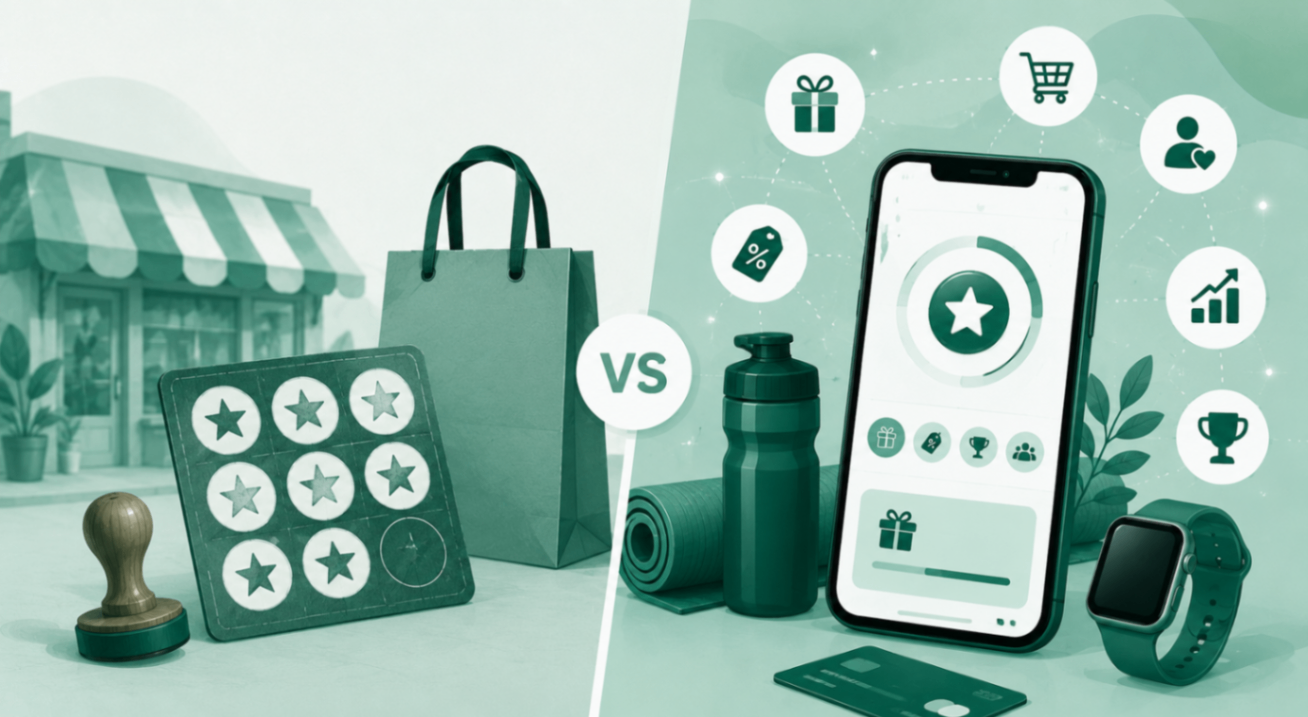
Customer loyalty has changed, but many loyalty programs have not. While rewards still matter, the way customers expect to earn and redeem them has evolved. Paper punch cards and basic points systems are giving way to personalized, digital experiences that work across online and offline channels. Choosing between traditional vs digital loyalty programs has therefore become a business growth decision rather than just a marketing tactic.
Consumer expectations are driving this shift. According to McKinsey, 71% of consumers expect personalized interactions, and 76% become frustrated when businesses fail to deliver them. Digital loyalty programs help meet these expectations by automating rewards, personalizing offers, and giving businesses valuable customer insights that traditional programs often lack.
This guide is designed to help you make the right choice, not just explain the differences. You'll learn when traditional loyalty programs still make sense, when digital loyalty programs become the better investment, how to evaluate their ROI, and what Shopify merchants should consider before deciding.
When comparing digital loyalty programs vs traditional programs, the difference goes beyond how rewards are delivered. It comes down to how effectively a business can engage customers, manage loyalty, and measure results.
Traditional loyalty programs reward customers through paper cards, stamps, or coupons, but they rely on manual processes and offer little insight into customer behavior. Digital loyalty programs automate rewards, track purchases, personalize offers, and provide customer data, helping businesses build stronger relationships and improve retention over time.
Here's a side-by-side comparison of how traditional and digital loyalty programs differ in managing rewards, engaging customers, and measuring results.
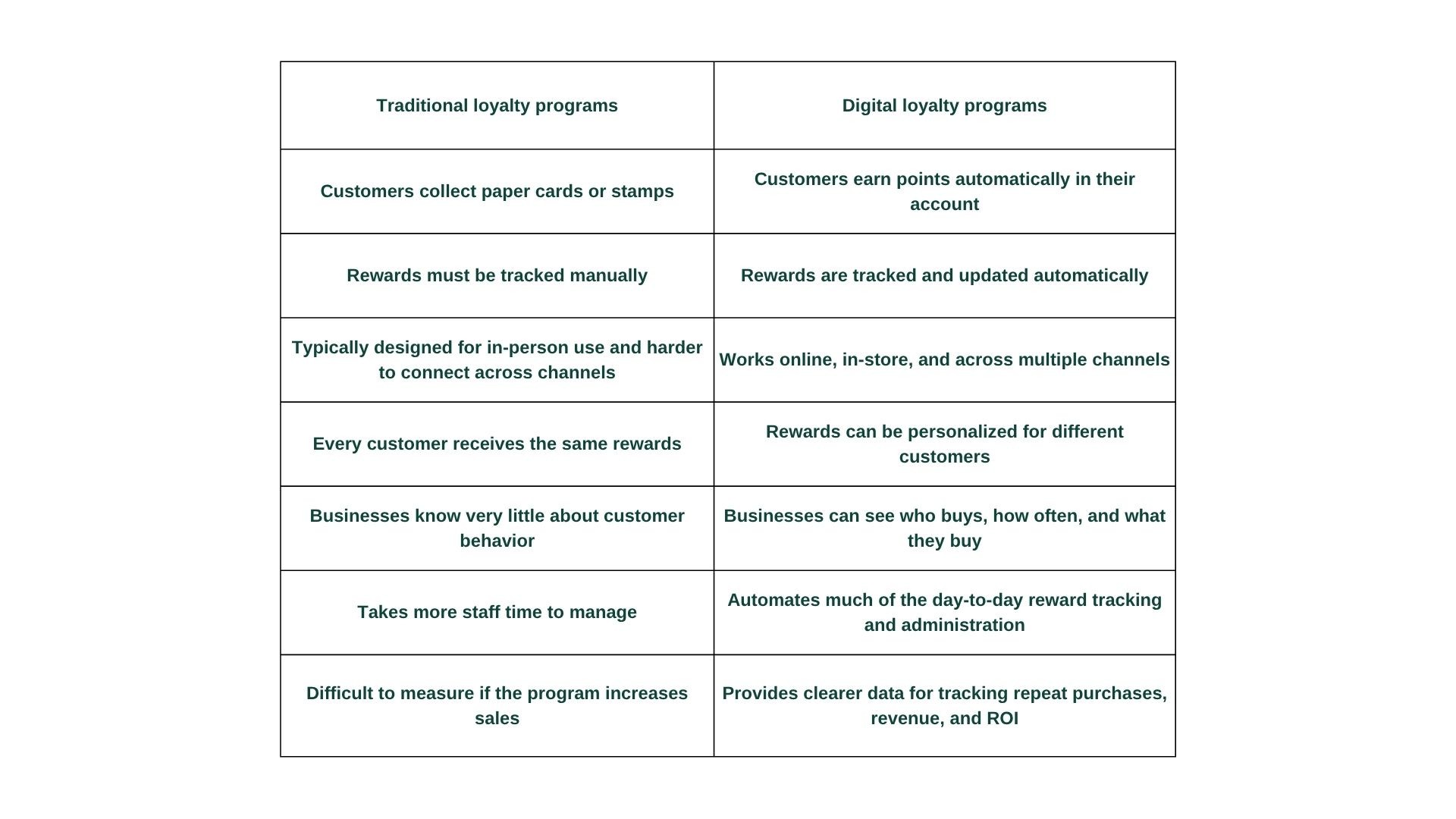
The biggest difference isn't physical versus digital. It's whether your loyalty program generates customer data that helps improve retention and guide better business decisions. Without those insights, it's difficult to identify repeat customers, measure reward performance, or understand what's driving long-term loyalty.
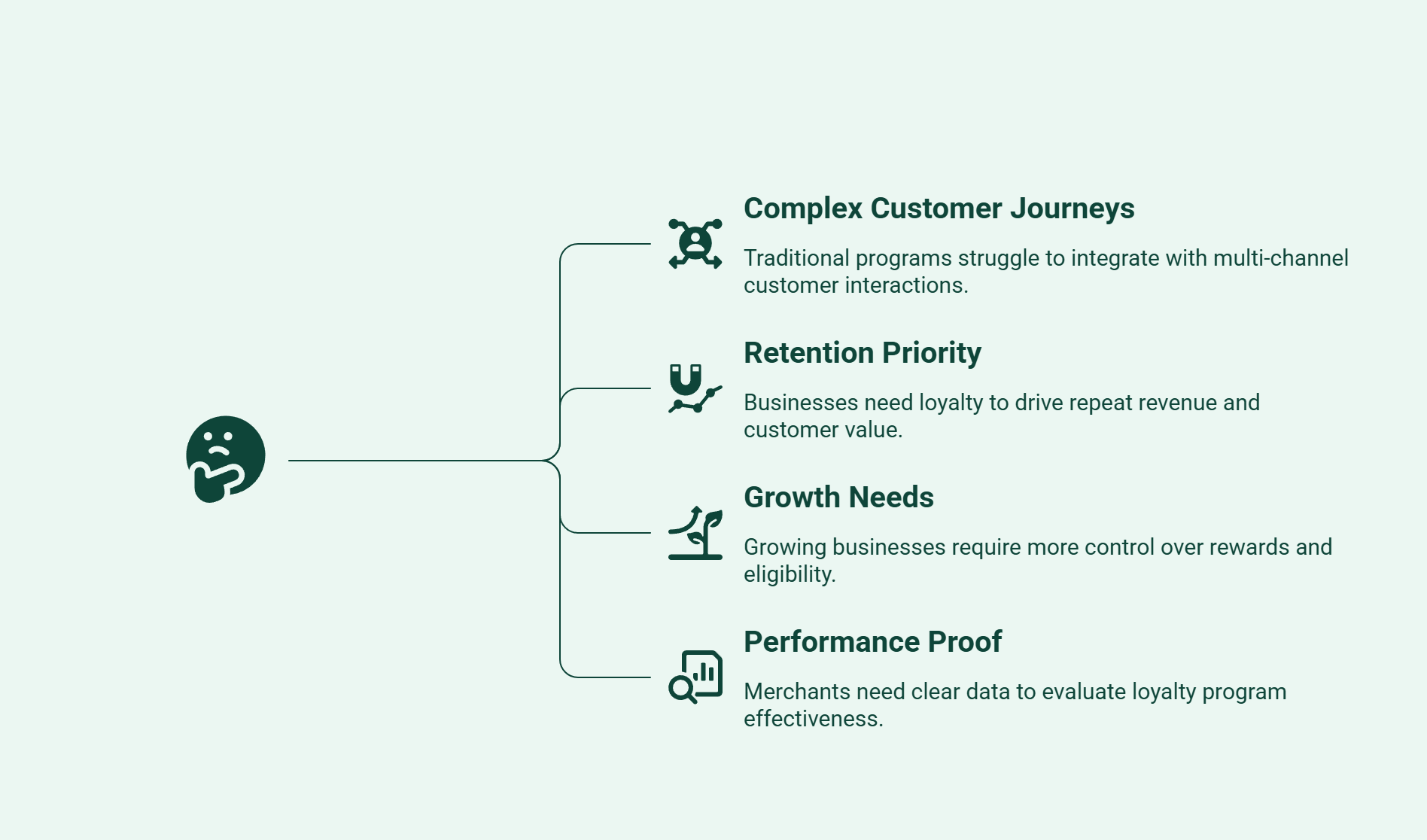
Traditional loyalty programs haven't necessarily stopped working. The bigger issue is that many businesses have become more complex. As brands expand beyond a single store, acquire more customers, and invest more heavily in retention, a simple transaction-based loyalty model may no longer support what they need.
Customers may discover a brand on social media, purchase online, visit a physical store, and return through email or SMS. Loyalty programs built primarily around an in-store transaction can struggle to fit naturally into this broader customer journey.
As acquiring customers becomes more expensive, businesses need loyalty to contribute to repeat revenue rather than simply offer occasional rewards. This puts greater pressure on loyalty programs to demonstrate their impact on purchase frequency, customer value, and retention.
A simple earn-and-redeem structure may be sufficient early on. As a business grows, merchants may want different rewards, eligibility rules, campaigns, and experiences for different customer groups. Traditional models can become restrictive as these requirements increase.
As loyalty budgets grow, merchants need to understand whether their programs are actually influencing customer behavior. Traditional programs can make it difficult to connect loyalty participation with repeat purchases, revenue, and customer value, making performance harder to evaluate.
Traditional loyalty programs still have a place, particularly for businesses with simple in-person customer relationships. The shift often happens when loyalty needs to play a larger role in retention, growth, and the overall customer experience.
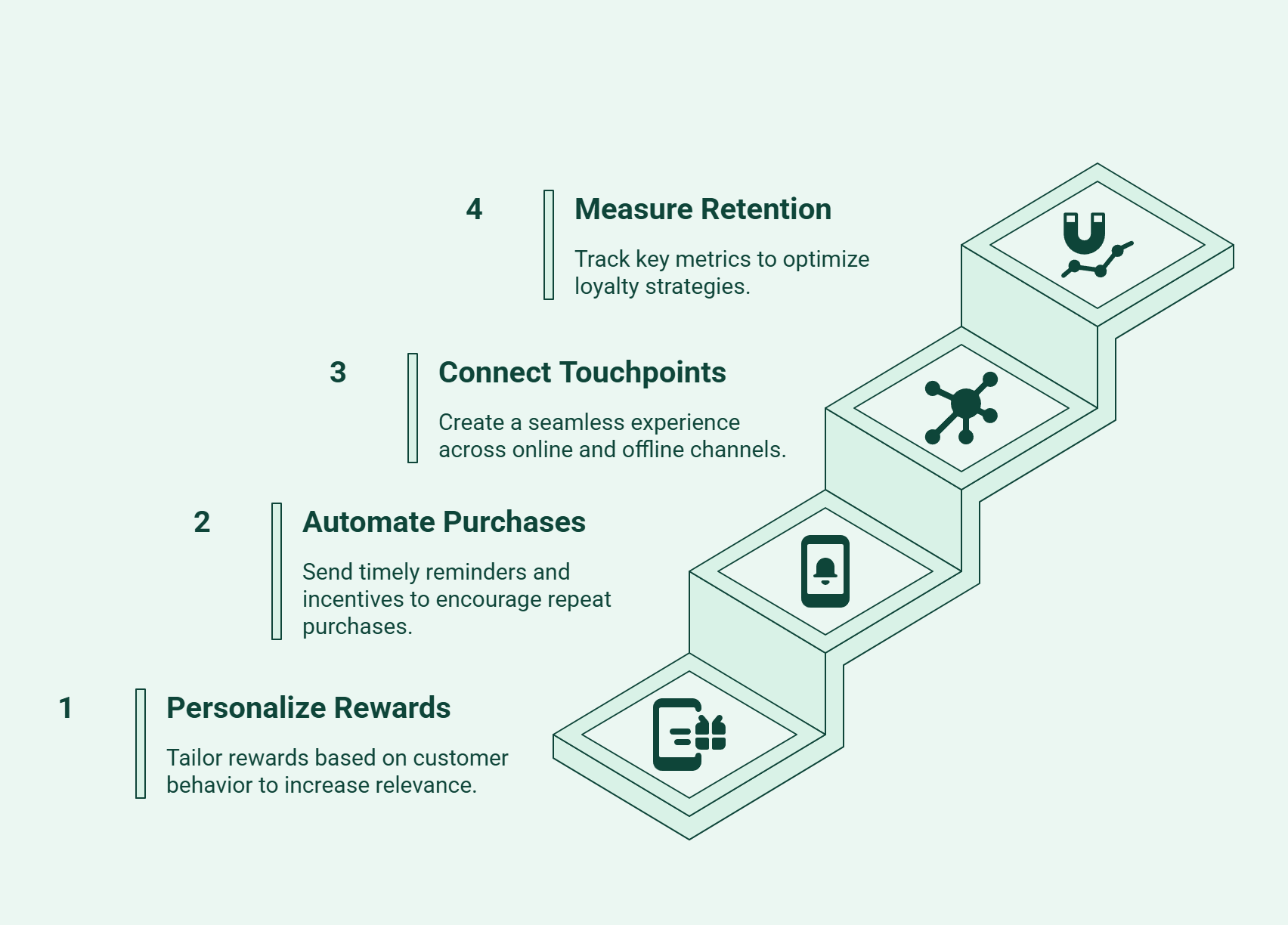
Digital loyalty programs do more than replace paper cards with points. They help businesses build stronger customer relationships by making rewards more relevant, engagement more consistent, and retention easier to measure.
Instead of offering the same incentive to everyone, digital loyalty programs tailor rewards using purchase history, product categories, shopping frequency, and customer behavior. They can also support lifecycle marketing by delivering different rewards to new customers, loyal shoppers, and customers who haven't purchased in a while. This makes rewards more relevant and increases the likelihood of repeat engagement.
Digital loyalty programs keep customers engaged without requiring constant manual effort. Businesses can automatically send points balance reminders, birthday rewards, milestone incentives, win-back offers, and VIP upgrades based on predefined rules. These timely touchpoints encourage customers to return without relying on one-off promotions.
Customers no longer shop through a single channel. Digital loyalty programs create a consistent experience by connecting online stores, mobile devices, physical points of sale (POS), customer accounts, and referral programs. Customers can earn and redeem rewards across channels, making the loyalty experience more convenient and seamless.
Digital loyalty programs give businesses clear visibility into how customers engage with their loyalty strategy. Merchants can track metrics such as repeat purchase rate, redemption rate, customer lifetime value (CLV), average order value (AOV), and referral conversions to understand what's driving loyalty and optimize their retention strategy over time.
Digital loyalty programs don't just reward purchases. They create ongoing engagement, automate retention efforts, and provide measurable insights that help businesses continuously improve customer loyalty.
Ready to turn loyalty into a stronger retention channel? Book a personalized demo with Kefi Commerce and see how you can personalize rewards, automate engagement, and drive more repeat purchases.
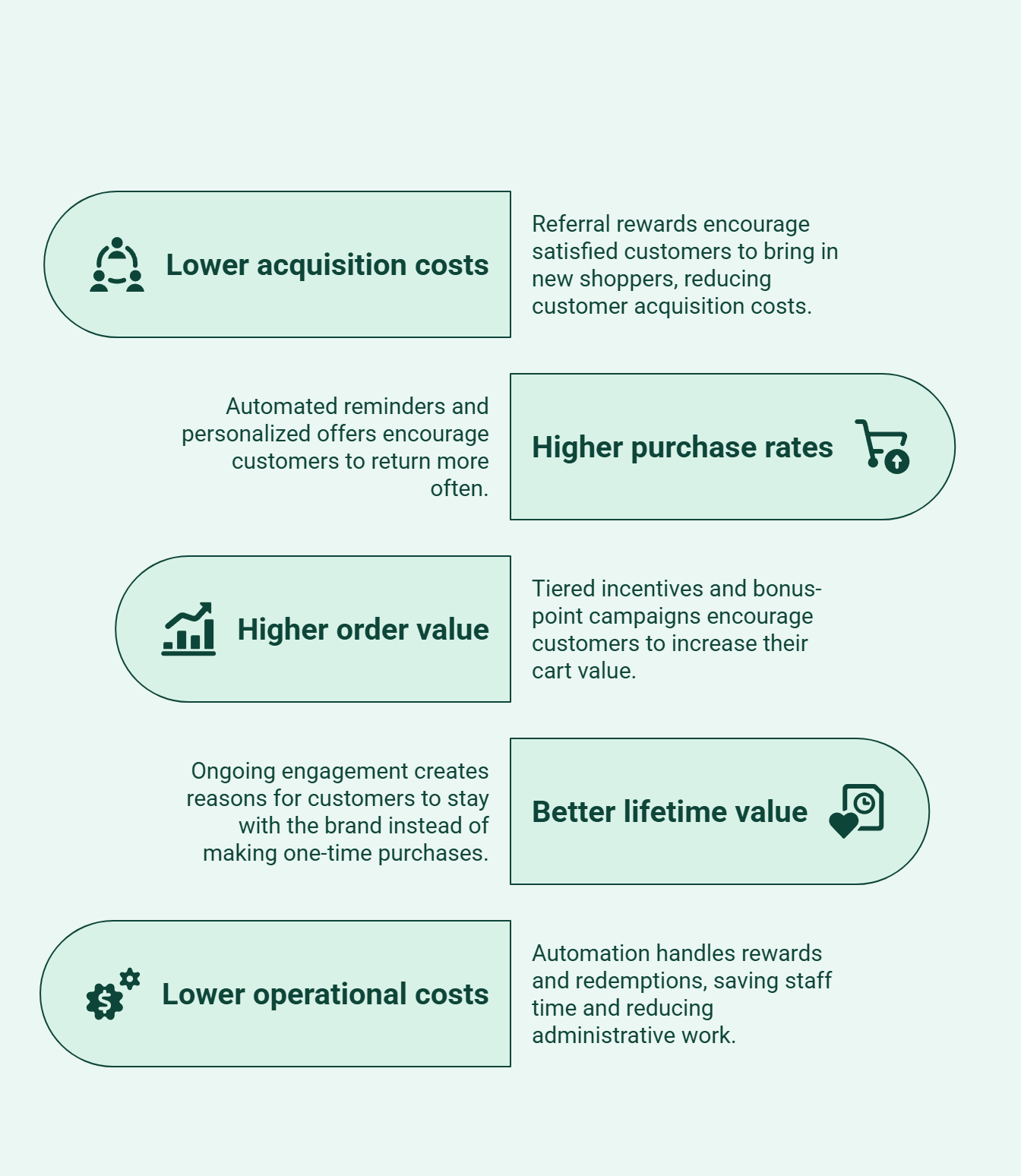
The return on investment (ROI) of a loyalty program isn't determined by how many customers join. It's measured by how effectively the program increases revenue, reduces costs, and strengthens long-term customer relationships. While traditional loyalty programs can encourage repeat visits, digital loyalty programs typically deliver stronger ROI because they improve multiple areas of the business.
Acquiring new customers is often more expensive than retaining existing ones. Many digital loyalty programs include referral rewards that encourage satisfied customers to bring in new shoppers. This helps generate new sales through customer advocacy, reducing customer acquisition costs (CAC).
Digital loyalty programs keep customers engaged between purchases through automated reminders, targeted rewards, and personalized offers. These timely interactions encourage customers to return more often, increasing purchase frequency without relying solely on discounts.
Digital loyalty programs can encourage customers to spend more by rewarding higher-value purchases. Tiered incentives, bonus-point campaigns, and loyalty-linked promotions can give customers a reason to increase their cart value.
Customer retention compounds over time. When customers continue returning and spending consistently, their customer lifetime value (CLV) increases. Digital loyalty programs support this by creating ongoing reasons for customers to stay engaged with the brand instead of making one-time purchases.
Automation reduces the manual effort required to manage a loyalty program. Tasks such as tracking rewards, updating customer balances, and handling redemptions happen automatically, helping businesses save staff time, reduce administrative work, and lower customer support requests.
While traditional loyalty programs can generate repeat business, digital loyalty programs often deliver stronger long-term ROI by lowering acquisition costs, increasing customer value, and improving operational efficiency.
Want to encourage customers to buy more per order? Create product bundles with Kefi Commerce’s Bundle Builder to give shoppers more reasons to add to their cart.
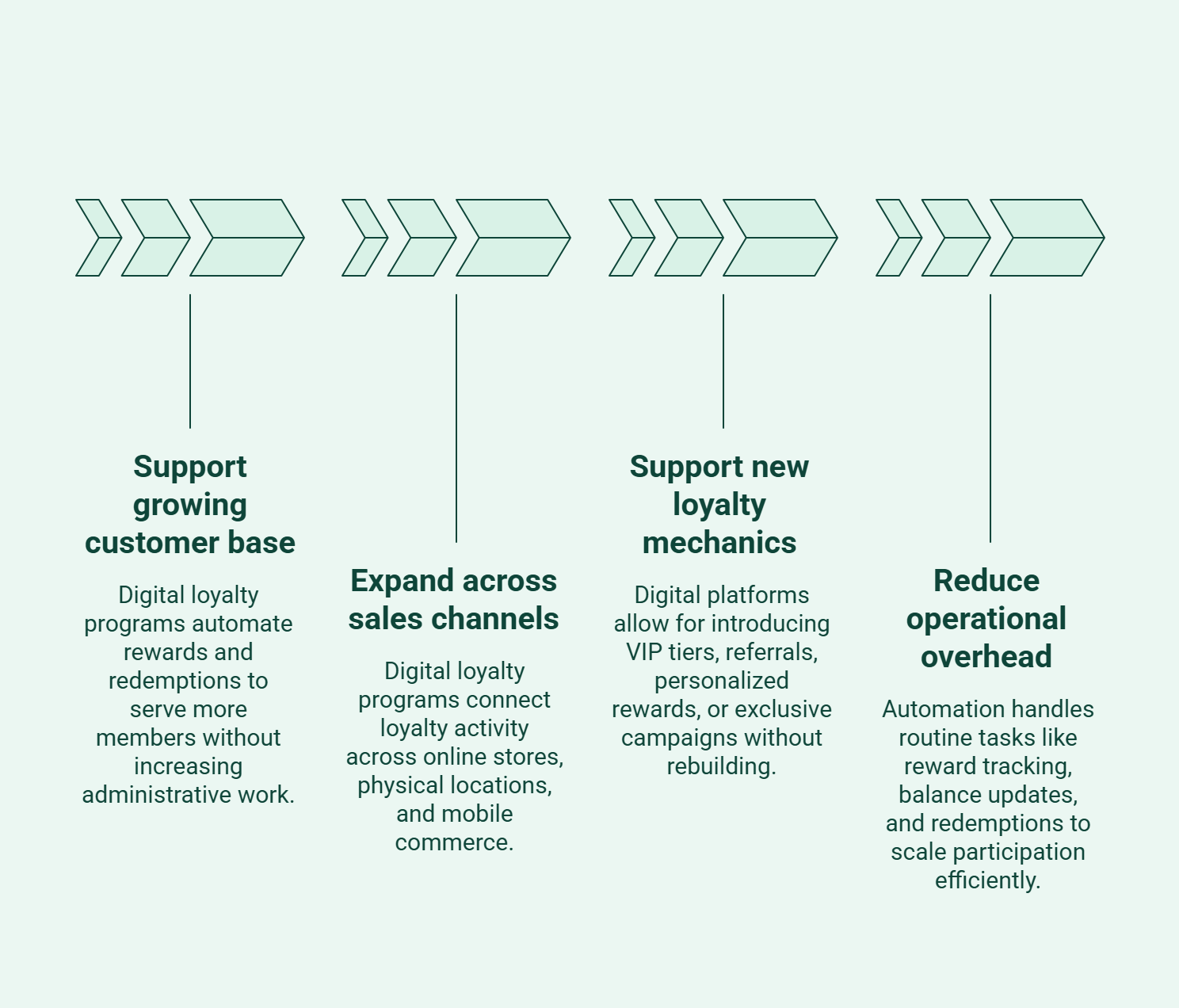
Scalability is about whether your loyalty program can handle growth without adding unnecessary complexity. As customer volume, sales channels, and loyalty requirements increase, digital loyalty programs generally provide more flexibility than traditional models.
As customer numbers increase, manually managing rewards and redemptions becomes harder. Digital loyalty programs automate much of this activity, allowing merchants to serve more loyalty members without a proportional increase in administrative work.
Growth may involve adding an online store, physical locations, or mobile commerce. Digital loyalty programs can connect loyalty activity across supported channels, giving customers a more consistent way to earn and redeem rewards.
As your loyalty strategy evolves, you may want to introduce VIP tiers, referrals, personalized rewards, or exclusive campaigns. Digital platforms make it easier to add these mechanics without rebuilding the entire program.
A larger loyalty program shouldn't require significantly more manual management. Automation can handle routine tasks such as reward tracking, balance updates, and redemptions, helping merchants scale participation more efficiently.
Digital loyalty programs generally scale better because they can accommodate more customers, channels, and loyalty mechanics while keeping day-to-day administration manageable.
Choosing between traditional vs digital loyalty programs for small businesses isn't about following the latest trend. It's about selecting the approach that fits your business model, customer behavior, and growth plans. While digital loyalty programs offer more flexibility, traditional programs can still be effective in certain situations.
Traditional loyalty programs can work for small businesses that operate primarily from a single physical location and rely on straightforward repeat visits. A local café, salon, or similar business with little or no ecommerce activity may not need the capabilities of a digital platform.
For these businesses, a simple stamp or punch-card program may be enough if there is no need for customer segmentation, marketing integrations, or detailed loyalty reporting.
For Shopify and DTC brands, loyalty typically extends beyond a single transaction or location. Customers may discover products through marketing campaigns, purchase online, return through email or SMS, refer friends, and engage with the brand across different digital touchpoints. A digital loyalty program can connect these activities within a broader retention strategy.
Digital loyalty programs are particularly relevant for:
The need for digital loyalty becomes stronger as retention goals become more sophisticated. If you want to segment customers, automate loyalty campaigns, measure repeat purchase behavior, or connect rewards with your wider marketing strategy, a traditional program is unlikely to provide enough flexibility.
For most growing Shopify merchants, the decision is therefore less about whether digital loyalty offers more capabilities and more about which digital loyalty approach best fits their customers, retention goals, and growth stage.
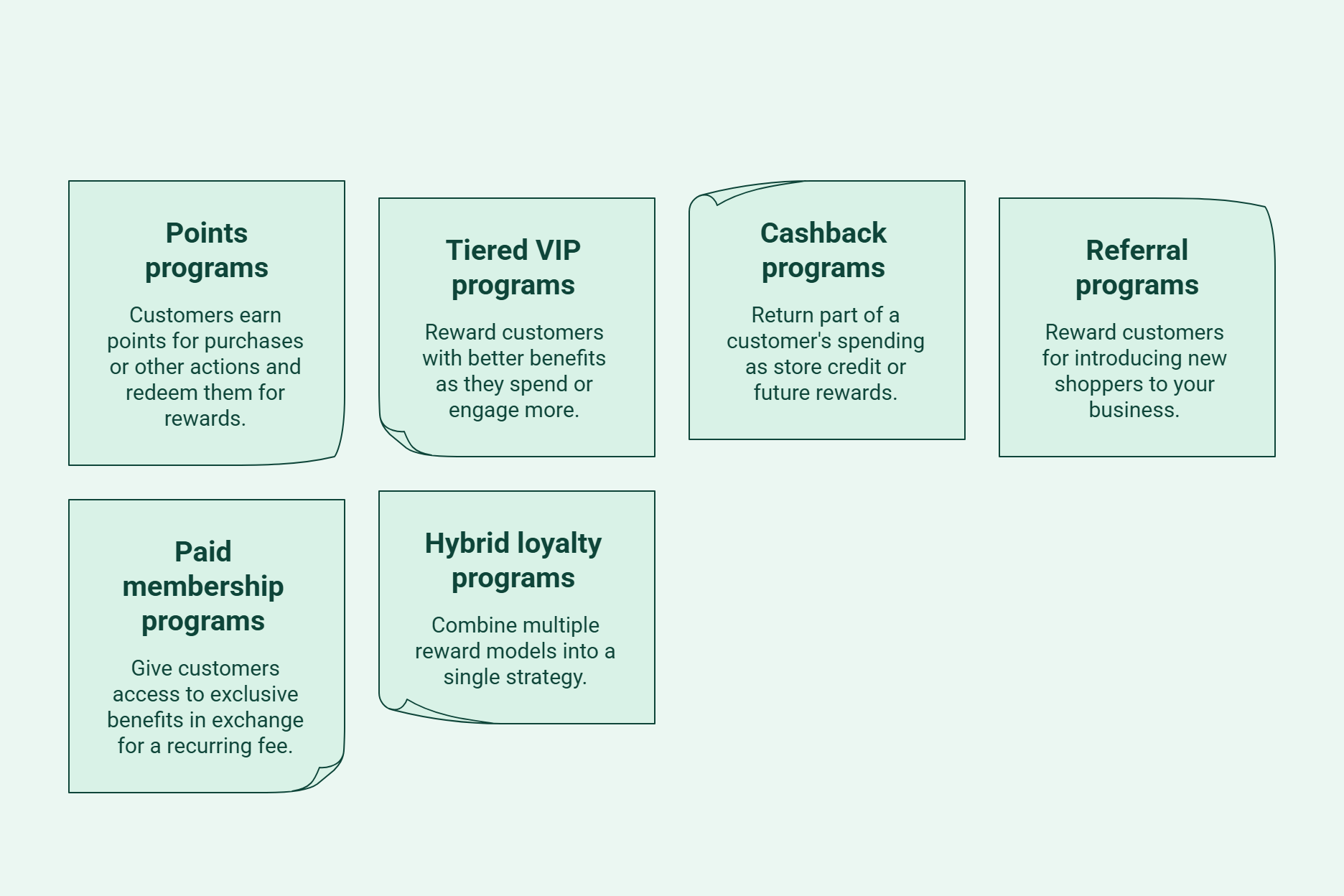
The best digital loyalty program depends on your business goals, customer buying behavior, and retention strategy. Instead of choosing the most popular option, choose the one that supports how your customers shop and how you plan to grow your business.
Points programs are the most common loyalty model because they're simple and familiar. Customers earn points for purchases or other actions and redeem them for rewards, making them an effective way to encourage repeat purchases.
Best for: General ecommerce businesses, brands with broad product catalogs, and businesses launching their first loyalty program.
Pros:
Considerations:
Tiered VIP programs reward customers with better benefits as they spend or engage more. This motivates customers to remain active and unlock higher-value rewards over time.
Best for: Brands with frequent repeat purchases, premium brands, and businesses focused on increasing customer lifetime value.
Pros:
Considerations:
Cashback programs return part of a customer's spending as store credit or future rewards. They provide a straightforward incentive for customers to come back and shop again.
Best for: Businesses with high-frequency purchases, such as grocery, beauty, or consumable product brands.
Pros:
Considerations:
Referral programs reward customers for introducing new shoppers to your business. They help grow your customer base by turning satisfied customers into advocates.
Best for: Businesses looking to acquire new customers through word-of-mouth marketing.
Pros:
Considerations:
Paid membership programs give customers access to exclusive benefits in exchange for a recurring fee. They strengthen loyalty by creating ongoing value beyond individual purchases.
Best for: Established brands, subscription businesses, and companies with a loyal customer base.
Pros:
Considerations:
Hybrid loyalty programs combine multiple reward models, such as points, VIP tiers, referrals, and exclusive offers, into a single strategy. This provides greater flexibility as customer needs and business goals evolve.
Best for: Scaling Shopify stores, growing DTC brands, and businesses with multiple retention objectives.
Pros:
Considerations:
The best digital loyalty program is the one that aligns with your business objectives rather than following industry trends. Consider how your customers shop, what behaviors you want to encourage, and how your loyalty strategy will evolve as your business grows. Choosing the right model now can make it easier to scale your retention efforts later.
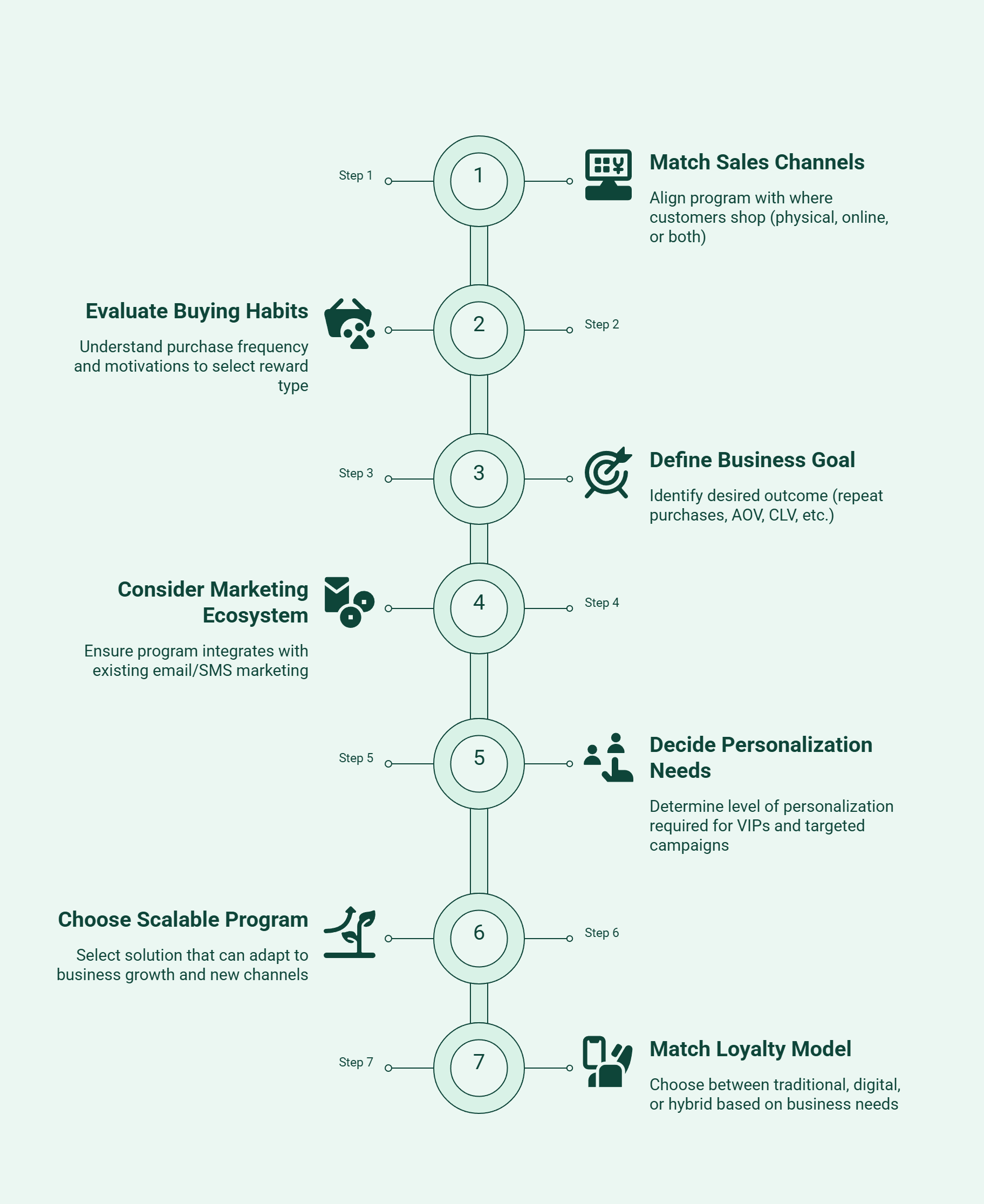
When choosing between traditional vs digital loyalty programs, don't focus only on features. The right approach should align with your business model, customer expectations, and long-term goals. Use the following framework to evaluate which type of loyalty program is the best fit for your business.
Start by considering where your customers shop. If you primarily operate from a single physical location, a traditional loyalty program may be enough to encourage repeat visits. However, if you sell online, across multiple locations, or through both physical and digital channels, a digital loyalty program can provide a more seamless customer experience.
Look at how often customers purchase and what motivates them to return. Businesses with frequent purchases may benefit from points, cashback, or tiered rewards, while businesses with less frequent purchases may achieve better results with referral incentives, memberships, or exclusive rewards.
Before comparing platforms, identify the outcome you want to achieve. Your priority might be increasing repeat purchases, improving average order value, reducing customer acquisition costs, or growing customer lifetime value. Choosing a loyalty program that directly supports these objectives will deliver better long-term results.
Your loyalty program should complement your current marketing efforts. If you already use email or SMS marketing, choose a solution that integrates with those channels so you can automate reward reminders, personalized offers, and post-purchase engagement without creating additional manual work.
As your customer base grows, rewarding every customer the same way becomes less effective. If you want to recognize VIP customers, create targeted campaigns, or reward shoppers based on their purchase history and behavior, look for a loyalty program with strong personalization and customer segmentation capabilities.
Think beyond your current requirements. If you plan to expand your product catalog, grow your customer base, add new sales channels, or launch subscriptions, choose a loyalty program that can adapt as your business evolves. Investing in a scalable solution today can help you avoid switching platforms later.
Choose a loyalty program that fits your business needs. A traditional loyalty program works well for simple, in-store operations, while a digital loyalty program is better suited to businesses selling online and focused on customer retention. If you need multiple reward strategies, a hybrid loyalty program offers the greatest flexibility.
The best loyalty program isn't the one with the most features. It's the one that supports your business goals today while giving you the flexibility to grow and strengthen customer loyalty over time.
Wondering what the right loyalty solution will cost? Explore Kefi Commerce pricing to compare your options and find a plan that fits your Shopify store.
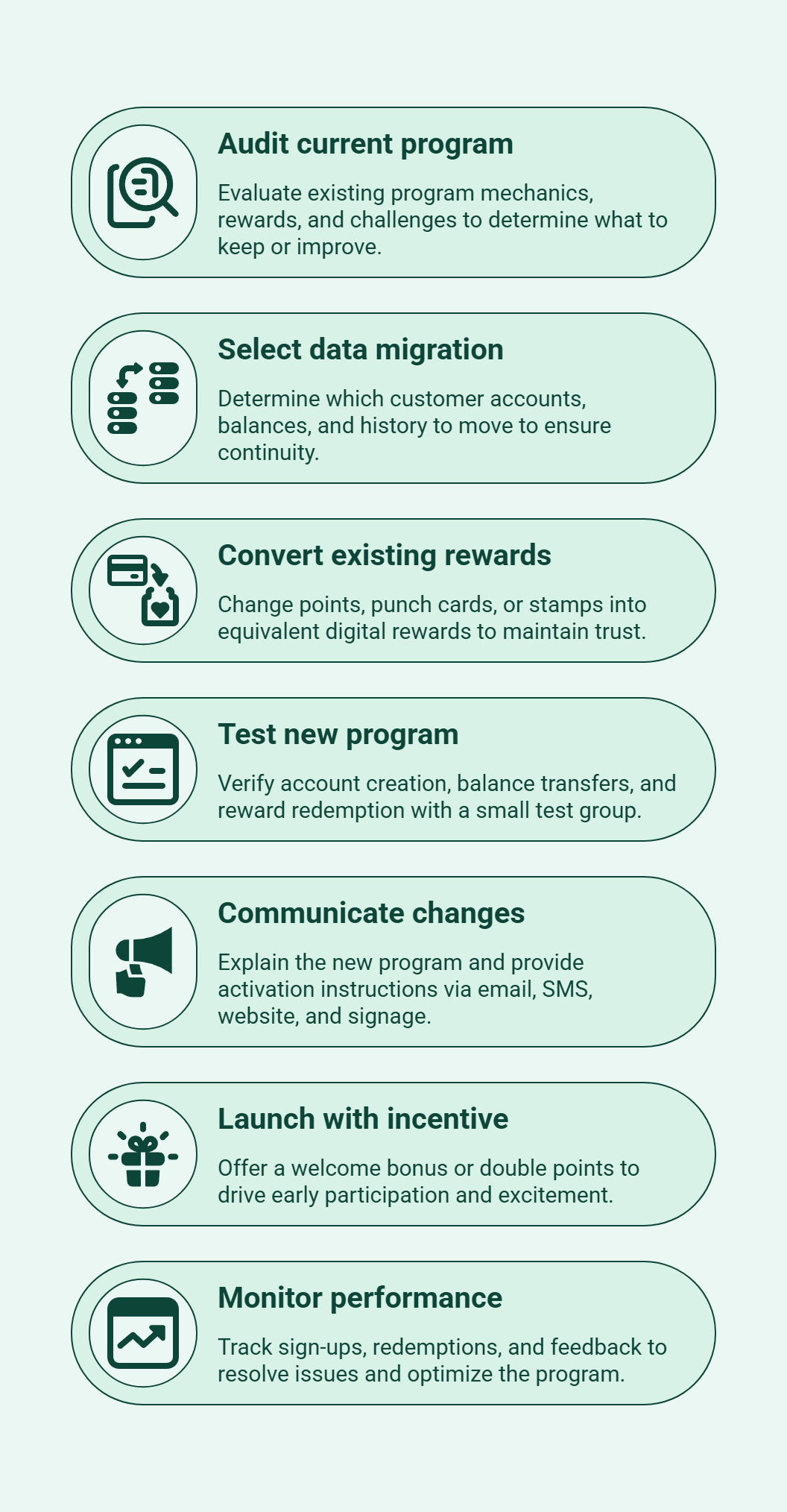
Moving from a traditional loyalty program to a loyalty program digital solution doesn't have to be disruptive. A structured transition helps customers keep the rewards they've earned while making it easier for your business to introduce new features. Follow these steps to ensure a smooth migration.
Start by evaluating how your existing program works. Identify which rewards customers redeem most often, how they earn them, and any challenges with the current process. This will help you decide which elements are worth keeping and which should be improved in the new program.
Next, determine which customer information should move to the digital loyalty program. This may include customer accounts, reward balances, purchase history, membership status, or VIP tiers. Migrating the right data ensures customers can continue their loyalty journey without starting over.
Customers should not lose the value they've already earned. Convert unused points, punch cards, or stamp balances into equivalent digital rewards using a clear and consistent conversion process. This helps maintain trust during the transition.
Before rolling out the program to all customers, test the migration with a small group. Verify that customer accounts are created correctly, balances transfer accurately, and rewards can be earned and redeemed without issues.
Explain what is changing, why you're introducing the new program, and how customers can start using it. Share updates through email, SMS, your website, and in-store signage, and provide simple instructions if customers need to activate their accounts.
Encourage customers to join the new program by offering a limited-time incentive, such as double points on their first purchase, a welcome bonus, or an exclusive launch reward. This can help drive early participation and create excitement around the new experience.
Once the program is live, track customer sign-ups, reward redemptions, account activations, and customer feedback. Monitoring these early indicators allows you to resolve issues quickly and optimize the program based on real customer behavior.
A successful migration isn't just about replacing one loyalty program with another. It's about creating a smoother customer experience while setting your business up for stronger long-term retention.
A successful loyalty strategy doesn't operate in isolation. Loyalty rewards can work alongside other ecommerce strategies to encourage repeat purchases, increase customer value, and create stronger reasons to buy. Kefi Commerce brings loyalty, VIP rewards, referrals, gamification, customer segmentation, and engagement tools together in one platform built for Shopify merchants.
Kefi also enables merchants to connect retention with merchandising strategies such as product bundles, helping you reward loyalty while creating opportunities to increase cart value. Whether you're transitioning from a traditional loyalty program or improving an existing digital one, Kefi gives you the flexibility to build a more connected retention and growth strategy.
Ready to build a smarter loyalty strategy? Try Kefi Commerce for free and discover how an all-in-one retention platform can help you turn first-time buyers into loyal, repeat customers.
Choosing between traditional vs digital loyalty programs comes down to where your business is today and where you want it to go. Traditional programs may suit businesses with simple, in-store operations, while digital loyalty programs offer the automation, flexibility, and insights needed to improve long-term customer retention.
As customer expectations evolve, the right loyalty program should do more than reward purchases. It should help you build stronger customer relationships, increase customer lifetime value, and support sustainable business growth.
In traditional vs digital loyalty programs, traditional methods rely on physical cards, while digital programs automate loyalty points, personalize rewards, provide valuable insights, and support customers across various channels.
Unlike traditional punch cards that require customers and staff to track progress manually, digital loyalty programs automatically record eligible purchases and rewards through customer accounts. This makes earning, tracking, and redeeming online rewards more convenient while reducing manual administration.
Yes. Digital loyalty programs improve retention by delivering personalized rewards, special offers, and exclusive perks based on customer behavior, creating a more engaging experience than traditional reward systems.
When comparing traditional vs digital loyalty programs, consider your sales channels, customer expectations, scalability, reporting needs, and whether your business requires automation, personalization, or omnichannel engagement.
Digital loyalty platforms typically involve software subscription and setup costs, while traditional punch card programs require design, printing, and replacement expenses. A loyalty app may reduce ongoing administrative costs by automating reward tracking and redemptions
Many coffee shops, salons, bakeries, and boutique retailers use digital loyalty programs for small businesses to replace stamp card systems, reward repeat purchases, and improve customer engagement with automated offers.
.svg)
