.jpg)

Every new customer costs time and money to acquire, but many ecommerce brands lose them after the first purchase. When shoppers don't return, acquisition costs keep rising, revenue becomes unpredictable, and growth depends on constantly replacing customers instead of building lasting relationships.
The brands that outperform their competitors focus on what happens after the first order. They create reasons for customers to come back through relevant rewards, personalized experiences, exclusive benefits, and consistent engagement. Loyalty isn't built with bigger discounts. It's earned by making every interaction more valuable than the last.
The most effective customer loyalty strategies strengthen customer relationships while increasing repeat purchases, customer lifetime value, and long-term profitability. Whether you're launching a loyalty program or improving an existing one, every strategy should encourage customers to choose your brand again without relying on constant promotions.
Customer loyalty strategies are the actions businesses use to encourage brand loyalty by giving customers compelling reasons to return, spend more over time, and choose their brand over competitors in the long term. As customer acquisition costs continue to rise, strengthening customer loyalty has become one of the most cost-effective ways for ecommerce businesses to increase repeat purchases and customer lifetime value without relying on constant advertising.
Although customer loyalty and customer retention are closely related, they measure different aspects of customer behavior. Retention tells you whether customers stay, while loyalty explains why they keep choosing your brand.
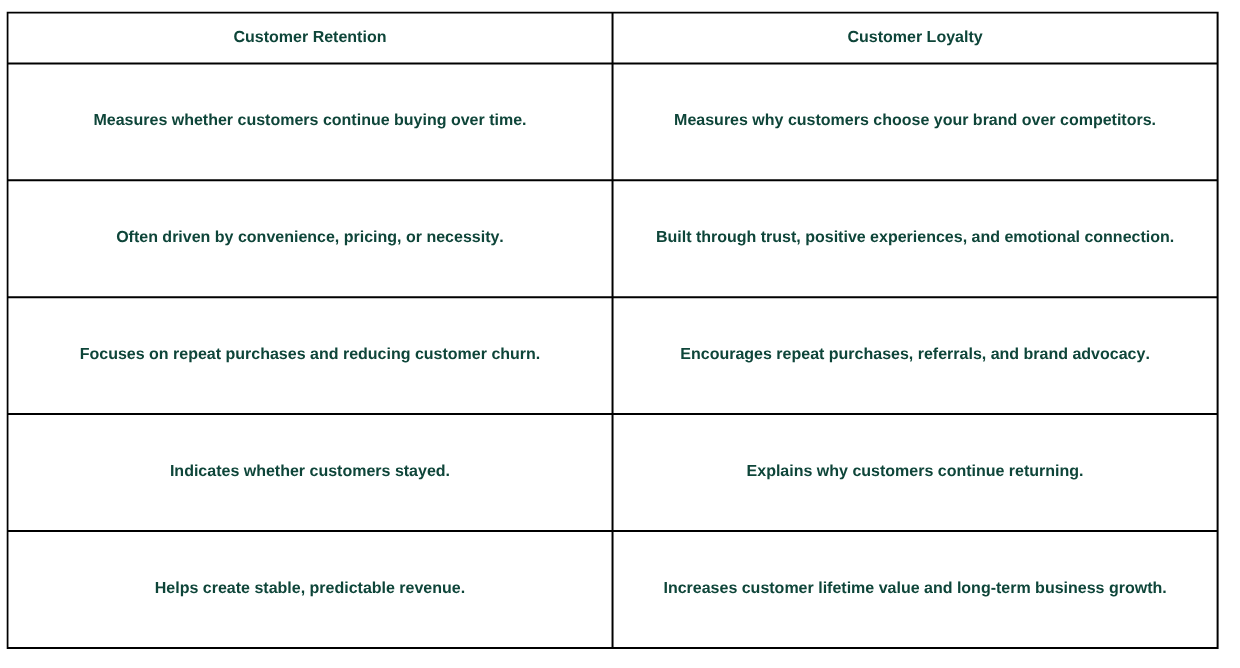
While customer retention helps maintain existing revenue, customer loyalty creates customers who actively choose your brand, recommend it to others, and continue buying even when alternatives are available.
Customer loyalty develops through every stage of the customer journey. From the first visit to post-purchase support, every interaction shapes whether customers feel confident choosing your brand again. While discounts may encourage a single purchase, consistent experiences are what keep customers coming back.
The strongest loyalty programs reinforce experiences customers already value instead of trying to compensate for poor ones. Product quality, customer service, communication, and relevant rewards work together to strengthen long-term relationships.
The biggest factors that influence customer loyalty include:
Customer loyalty doesn't happen by accident. It grows when every interaction gives customers another reason to choose your brand, making the right loyalty strategies the foundation for long-term growth.
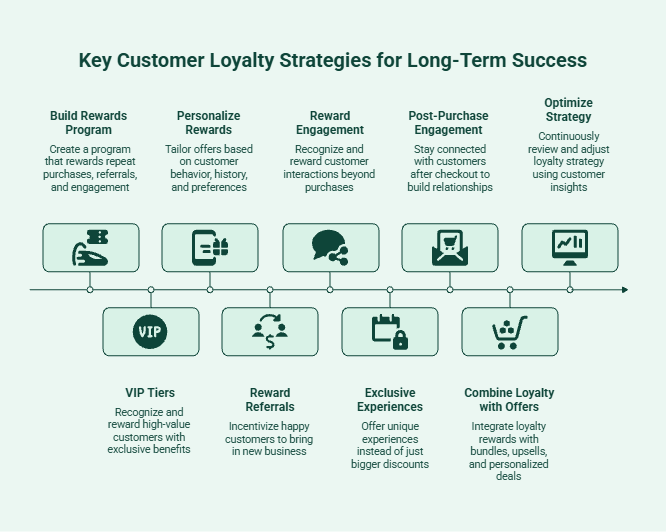
The best customer loyalty strategies keep customers coming back because they create ongoing value, not just one-time savings. Brands that combine meaningful rewards, personalized experiences, and consistent engagement create a seamless experience that builds stronger relationships, increases repeat purchases, and grows customer lifetime value over time.
Many loyalty programs fail because they only reward the purchase, not the decision to come back. A well-designed rewards program serves as a powerful customer acquisition tool by giving customers an ongoing reason to choose your brand instead of starting their next purchase somewhere else.
Instead of rewarding purchases alone, encourage behaviors that strengthen long-term relationships, such as referrals, product reviews, repeat orders, and higher-value purchases. These actions keep customers engaged between orders while creating more opportunities for continuous improvement and to increase customer lifetime value.
Reward actions that strengthen loyalty, such as:
Customers shouldn't have to figure out how your rewards program works. Clear earning rules, visible progress, and simple redemption encourage participation and give shoppers another reason to return. A rewards program creates the habit of coming back. The next step is recognizing your highest-value customers with benefits that make staying loyal even more rewarding.
Not every customer contributes the same value to your business, so rewarding everyone the same way can limit the impact of your loyalty program. VIP tiers recognize your highest-value customers with exclusive benefits while giving other shoppers a clear reason to spend more and unlock the next level.
The most effective tiered programs reward loyalty with benefits customers genuinely value, not just larger discounts. By offering a competitive advantage such as early access to new products, free shipping, exclusive rewards, and priority support, brands create a stronger sense of exclusivity while encouraging customers to stay engaged with your brand over time.
VIP tiers work best once customers reach meaningful spending milestones rather than after only one or two purchases. Loyalty platforms like Kefi Commerce make it easier to automate tier progression and reward customers as they unlock new benefits.
Popular VIP rewards include:
Keep each tier achievable and the benefits easy to understand. If customers can clearly see what they'll gain by reaching the next level, they're more likely to increase their spending and remain engaged with your loyalty program. VIP tiers reward your best customers, but long-term loyalty grows even faster when every reward feels relevant to the individual. That's where personalization makes the biggest difference.
Generic rewards often go unnoticed because they assume every customer values the same incentive. Personalizing rewards based on shopping behavior, purchase history, and preferences makes each offer more relevant, giving customers a stronger reason to engage and return.
Instead of sending the same promotion to everyone, use customer insights to reward behaviors that reflect individual buying patterns. Many ecommerce brands now use AI to analyze customer data, predict shopping preferences, and recommend rewards that are more likely to drive repeat purchases.
For example, a customer who regularly buys skincare replenishments may respond better to bonus points on their favorite products, while a first-time shopper might be encouraged by a welcome reward on their next purchase. Relevant offers feel more valuable because they match what customers already want.
Ways to personalize loyalty rewards include:
Personalization makes customers feel recognized rather than targeted. When rewards reflect individual preferences instead of generic promotions, they're more likely to drive repeat purchases, strengthen customer relationships, and increase customer lifetime value.
Personalized rewards keep existing customers engaged, while referral incentives encourage those satisfied customers to bring new shoppers to your brand.
Your happiest customers can become your most trusted source of new business. Unlike paid ads, referrals and positive online reviews carry built-in credibility because people are far more likely to trust recommendations from friends, family, or other customers.
A referral program gives customers a reason to share those recommendations. Instead of rewarding every referral equally, offer incentives only after a referred customer completes their first purchase. For example, both the referrer and the new customer could receive loyalty points or store credit, creating value for both sides while keeping your program cost-effective. Shopify merchants can also use platforms like Kefi Commerce to automate referral rewards and track successful conversions.
Effective referral incentives include:
The best referral programs don't feel like advertising. They encourage satisfied customers to share experiences they already believe in, helping you acquire new shoppers while strengthening loyalty among existing ones.
Referrals help bring in new customers, but keeping them engaged after their first purchase is what turns them into loyal, long-term customers.
Customers don't stop interacting with your brand after they place an order, so your loyalty program shouldn't stop rewarding them either. Recognizing actions beyond purchases keeps your brand visible between buying cycles and gives customers more reasons to stay connected even when they aren't ready to shop again.
Instead of measuring loyalty only by how much someone spends, reward the behaviors that strengthen long-term relationships. Every review, referral, social interaction, or piece of feedback helps build trust, improves your customer experience, and encourages future shoppers to buy with confidence.
Reward valuable customer actions such as:
Recognizing these contributions transforms loyal shoppers into active brand advocates while keeping your business part of their everyday conversations. When customers stay engaged between purchases, they're more likely to value experiences that go beyond rewards, making exclusivity a powerful way to strengthen long-term loyalty.
Discounts may encourage a purchase, but they rarely give customers a reason to stay loyal. Exclusive experiences create value that competitors can't easily match, making customers feel like they're part of something more than a transaction.
The most effective loyalty programs reward commitment with access rather than lower prices. Early product launches, members-only collections, exclusive events, or priority services make customers feel recognized while protecting your margins. Unlike recurring discounts, these benefits strengthen emotional loyalty without training customers to wait for the next promotion.
Exclusive loyalty experiences can include:
Exclusivity gives customers another reason to choose your brand, even when competitors offer similar products at comparable prices. Once customers feel valued beyond discounts, consistent communication helps maintain that relationship between purchases and keeps your brand top of mind.
The first purchase shouldn't be the last meaningful interaction with your customer. Brands that stay connected after checkout remain part of the customer's buying journey, making it easier to earn the next purchase when the need returns.
Post-purchase engagement should focus on adding value, not sending more promotions. Helpful onboarding experiences, educational content, proactive order updates, personalized product recommendations, and timely reorder reminders reassure customers they've made the right purchase while giving them more reasons to return. Platforms like Kefi Commerce help Shopify merchants automate these post-purchase experiences with personalized recommendations, loyalty rewards, and timely customer communications that keep shoppers engaged beyond checkout.
Keep customers engaged with:
Consistent post-purchase engagement keeps your brand relevant between purchases while creating more opportunities for customers to return naturally. Every valuable interaction after checkout strengthens customer relationships and increases the likelihood of repeat purchases over time.
Loyal customers are often more willing to explore additional products because they've already built confidence in your brand. Combining loyalty rewards with relevant bundles, upsells, and personalized offers increases the value of each purchase while making the shopping experience feel more helpful than promotional.
The key is relevance. Recommend products that naturally complement previous purchases or solve a related customer need. A customer buying a skincare serum may appreciate a discounted moisturizer bundle, while someone purchasing coffee pods might welcome a subscription offer for regular deliveries. Relevant recommendations feel like thoughtful suggestions, not sales tactics.
Use loyalty to support offers such as:
When loyalty rewards and product recommendations work together, customers discover more value in every purchase while your business increases average order value without relying on aggressive promotions. The strongest loyalty strategies continue evolving as customer behavior changes, making ongoing measurement and optimization essential for long-term success.
The strongest loyalty programs aren't built once and left unchanged. Customer preferences, buying habits, and expectations evolve over time, so your loyalty strategy should evolve with them. Regularly reviewing performance helps you identify what's encouraging repeat purchases and what needs to be improved.
Instead of relying on assumptions, use customer data to understand how shoppers interact with your loyalty program. Small adjustments, such as introducing new rewards, simplifying redemption, or refining personalized offers, can significantly improve participation and long-term customer retention.
Track metrics that measure long-term loyalty, such as:
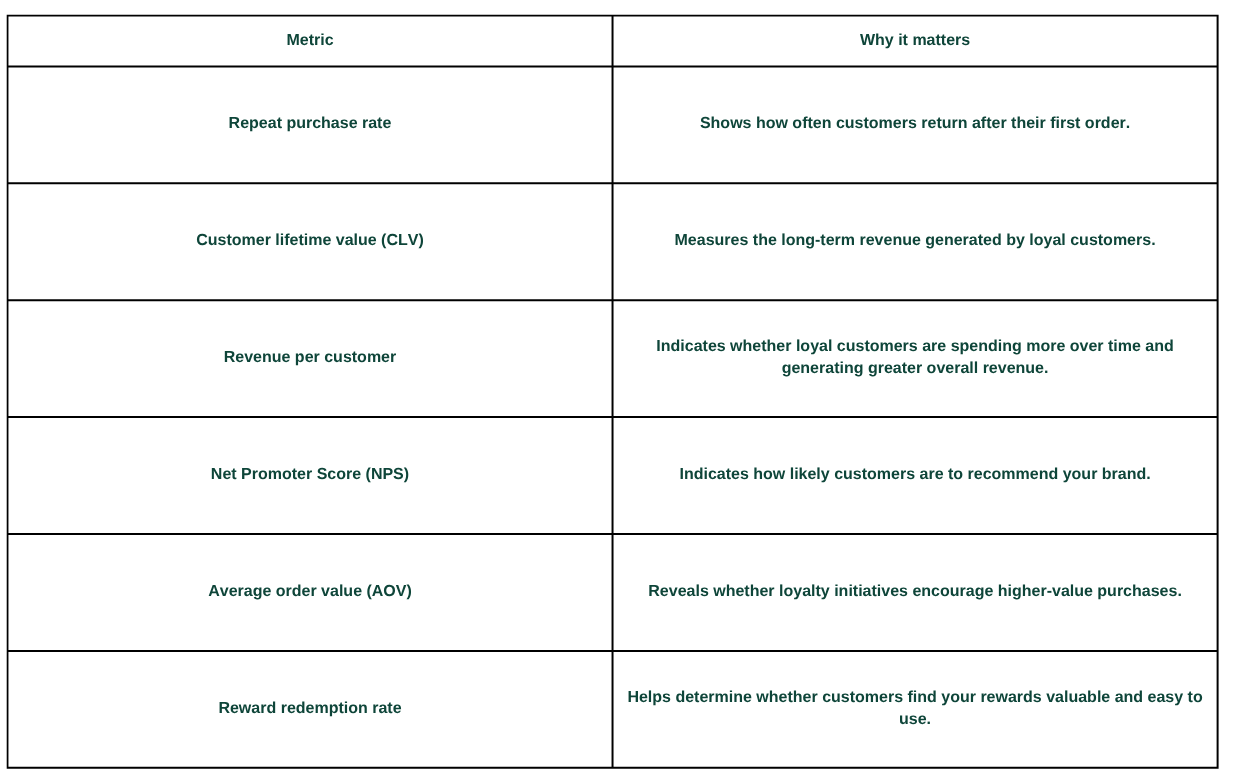
Customer feedback completes the picture. Listening to what customers enjoy, where they lose interest, and which rewards they value most helps you refine your program before engagement starts to decline. Customer loyalty isn't built through a single campaign. It's strengthened by consistently improving every experience that gives customers a reason to come back.
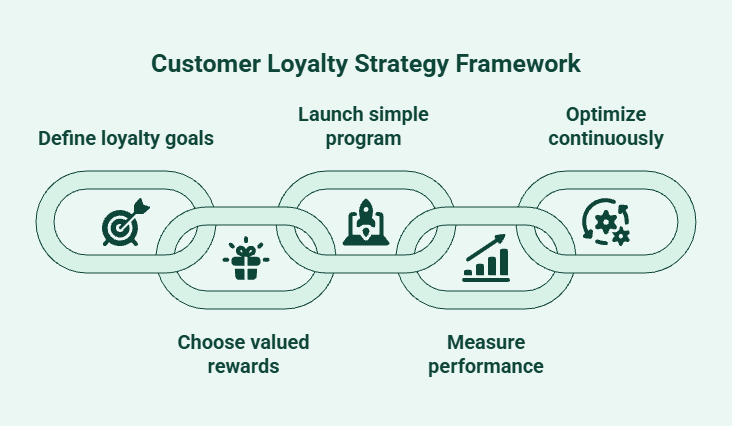
A successful customer loyalty strategy isn't built around rewards alone. It follows a structured process that aligns customer behavior with long-term business goals while creating reasons for customers to keep coming back.
Step 1: Define your loyalty goals
Start by deciding what success looks like. Whether your goal is increasing repeat purchases, improving customer lifetime value, or encouraging referrals, every reward should support a measurable business objective.
Step 2: Choose rewards your customers value
Build your program around customer preferences instead of assumptions. Use purchase history, customer feedback, and shopping behavior to offer rewards that encourage repeat engagement rather than one-time purchases.
Step 3: Launch a simple, easy-to-use program
Make it easy for customers to join, earn, and redeem rewards. Clear rules, visible progress, and a seamless experience encourage higher participation and reduce drop-off.
Step 4: Measure loyalty performance
Track metrics such as repeat purchase rate, customer lifetime value, revenue per customer, and reward redemption to understand how your loyalty program influences both customer behavior and business growth.
Step 5: Optimize continuously
Review customer feedback, test new rewards, and refine your strategy as shopping behaviors change. Small improvements made consistently help your loyalty program remain relevant and effective over time.
Building a customer loyalty strategy isn't a one-time project. Following a structured framework makes it easier to adapt, improve, and create lasting relationships that grow alongside your business.
Even the best customer loyalty strategies can underperform when they reward the wrong behaviors, create unnecessary friction, or fail to evolve with changing customer expectations. Avoiding these common mistakes helps increase participation, strengthen customer relationships, and improve long-term retention.
The most common mistakes include:
The strongest loyalty programs aren't the ones with the most rewards. They're the ones that consistently remove friction, deliver value early, adapt to customer needs, and give shoppers a reason to return long after their first purchase.
Building customer loyalty becomes much easier when your rewards, customer data, and growth campaigns work together. Kefi Commerce helps Shopify merchants create personalized loyalty experiences that encourage repeat purchases, increase customer lifetime value, and strengthen long-term customer relationships from one platform.
Instead of managing separate apps for loyalty, bundles, upsells, and promotions, Kefi Commerce brings revenue-driving strategies into a single workflow. This allows merchants to reward customer behaviors, create targeted offers, and deliver more relevant shopping experiences without adding operational complexity.
With Kefi Commerce, Shopify merchants can:
Customer loyalty grows when every interaction gives shoppers another reason to return. By combining rewards, personalization, and revenue optimization in one platform, Kefi Commerce helps Shopify merchants build stronger customer relationships while supporting sustainable business growth.
Building customer loyalty is about creating consistent value that keeps customers coming back, not relying on one-time incentives or frequent discounts. The most successful ecommerce brands strengthen loyalty by rewarding meaningful customer behaviors, personalizing every interaction, and continuously improving the experience based on customer feedback and performance insights.
Whether you're launching your first loyalty program or refining an existing one, focus on strategies that support long-term customer relationships rather than short-term sales. For Shopify merchants, Kefi makes it easier to bring rewards, personalization, referrals, and revenue growth strategies together, helping you increase repeat purchases, strengthen customer lifetime value, and build sustainable business growth.
Loyalty programs encourage satisfied customers to refer friends, leave reviews, and share their experiences, helping you attract new customers through trusted recommendations rather than relying only on paid marketing.
Customer relationship management (CRM) systems, loyalty platforms, email automation, and analytics tools help personalize rewards, track customer behavior, and improve loyalty programs through data-driven insights.
Loyalty programs help companies acquire new customers by encouraging existing customers to refer friends, share positive experiences, and leave reviews. These trusted recommendations increase brand credibility and attract new shoppers more effectively than relying solely on paid advertising.
The most effective customer loyalty strategies for small businesses include rewards programs, referral incentives, personalized offers, VIP perks, and post-purchase engagement. Simple, easy-to-use programs often deliver stronger long-term results than complex loyalty schemes.
Common challenges include choosing rewards customers value, keeping the program simple, encouraging participation, measuring results, and adapting your strategy as customer expectations and shopping behaviors evolve.
Measure customer loyalty by tracking repeat purchase rate, customer lifetime value, reward redemption rate, average order value, and Net Promoter Score (NPS). These key metrics show how effectively your loyalty strategy encourages long-term customer engagement.
The most effective customer loyalty marketing strategies for retail businesses include rewards programs, VIP tiers, personalized offers, referral incentives, and post-purchase engagement. Together, these strategies encourage repeat purchases, strengthen customer relationships, and increase customer lifetime value.
.svg)
