
Your Shopify store is getting visitors, but sales are not growing the way you expected. Shoppers browse products, add items to their carts, and sometimes leave without completing a purchase. In other cases, they buy once and never return. When this happens, driving more traffic rarely solves the underlying problem.
Many Shopify merchants focus on acquiring new visitors before improving the shopping experience they already offer. Low conversion rates, small order values, abandoned carts, and weak customer retention can all limit revenue growth. If these issues remain unresolved, increasing traffic often means spending more money to get the same results.
The good news is that some of the most effective ways to boost Shopify sales do not require more traffic. Improving product pages, increasing average order value, recovering lost sales, and encouraging repeat purchases can significantly impact revenue. This guide explores practical strategies to help you identify growth opportunities and generate more sales from the traffic you already have.
Shopify sales often stall when stores focus on acquiring more visitors before fixing the revenue opportunities they already have. More traffic can increase visibility, but it does not automatically increase sales. If shoppers are not converting, spending enough, or returning to buy again, growth will eventually slow, no matter how many people visit your store.
The most common reasons Shopify sales stagnate include:
These issues usually point to weaknesses in three areas: conversion, average order value, and customer retention. Improving those areas often delivers faster revenue growth than investing more money into traffic acquisition alone.
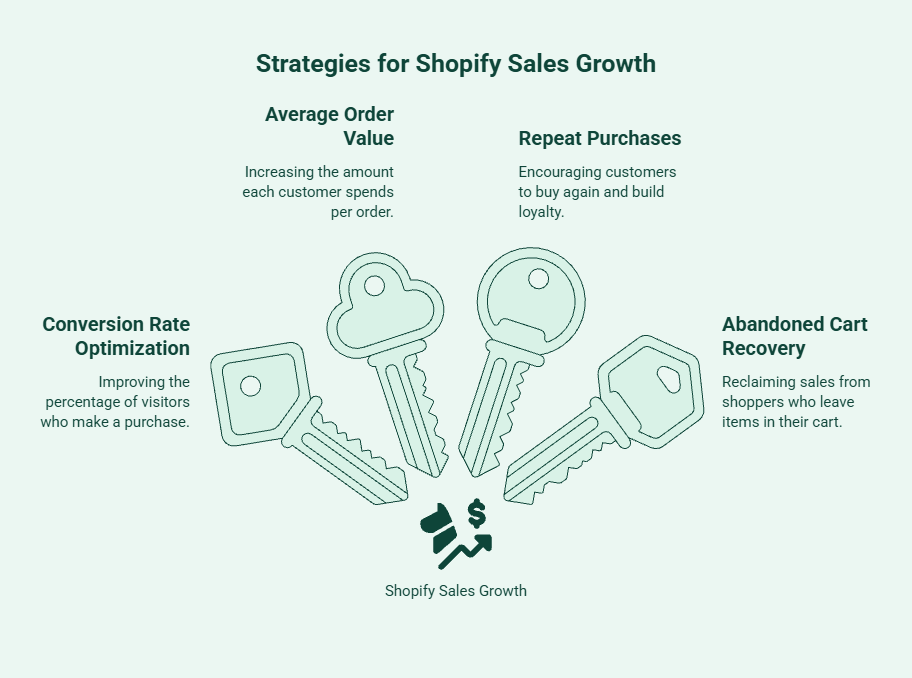
The most effective way to boost Shopify sales is to improve the three factors that directly influence revenue: how many visitors buy, how much they spend per order, and how often they return.
These three growth levers work together. Improving only one can deliver short-term gains, but sustainable growth usually comes from increasing conversions, average order value, and customer retention at the same time. When one area lags behind, it can limit the overall impact of the others.
Focus on:
The following sections explain how to strengthen each growth lever without relying solely on more traffic.
Increasing sales does not always require a larger advertising budget. Many Shopify stores already have untapped revenue opportunities within their existing traffic and customer base. Before investing in more acquisitions, focus on improving conversion rates, increasing order value, encouraging repeat purchases, and recovering lost sales.
If visitors are already reaching your store but not buying, more traffic will only create more missed opportunities. Focus on making it easier for shoppers to make a purchase decision.
Start by:
Acquiring a new customer is often more expensive than generating additional revenue from an existing one. Small improvements in average order value can have a meaningful impact on overall sales.
Consider:
A customer who buys twice is often more valuable than a customer who buys once. Building relationships after the first purchase helps reduce dependence on constant customer acquisition.
Ways to encourage repeat purchases include:
Many shoppers leave after adding products to their carts. Recovering even a portion of those lost sales can increase revenue without attracting additional visitors.
To reduce cart abandonment:
Increasing sales does not always require a larger advertising budget. Many Shopify stores already have untapped revenue opportunities within their existing traffic and customer base. Before investing in more customer acquisition, focus on improving conversion rates, increasing average order value, encouraging repeat purchases, and recovering lost sales. Together, these improvements increase revenue per visitor, allowing your store to generate more revenue from the same traffic.
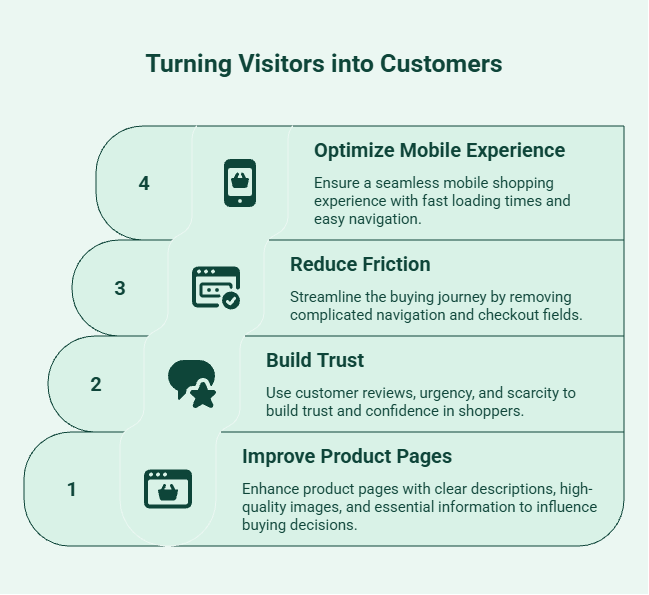
Many Shopify stores do not have a traffic problem. They have a conversion problem. Visitors arrive with interest, browse products, and leave without taking action. The goal is not simply to attract more people to your store. It is to give existing visitors enough confidence to complete a purchase.
A product page should answer the questions shoppers ask before buying. If visitors need to leave your site to find sizing details, compare products, or check reviews elsewhere, conversion rates suffer.
Strong product pages typically include:
Shoppers trust other customers more than marketing copy. Reviews reduce uncertainty, answer common questions, and help buyers feel more confident about their decision.
You can reinforce that confidence by using urgency and scarcity where they genuinely reflect product availability.
For example:
Small frustrations can have a surprisingly large impact on conversions.
Common friction points include:
Removing these barriers helps shoppers move from interest to purchase with fewer interruptions.
A significant share of Shopify purchases now happen on mobile devices. If pages load slowly, buttons are difficult to tap, or product information is hard to read, potential customers often leave before reaching checkout.
Review your store from a customer's perspective:
Even small mobile improvements can have a noticeable impact on conversion rates.
Every order is an opportunity to generate more revenue. Instead of relying on discounts, focus on strategies that naturally encourage customers to buy more complementary products.
Customers usually shop for solutions rather than individual products. Well-designed bundles reduce decision-making, improve convenience, and naturally increase average order value.
Effective bundles should:
Relevant recommendations help customers discover products that add value to their purchase without interrupting the buying journey.
The best opportunities include:
Good merchandising makes it easier for shoppers to discover products they may have otherwise missed.
Improve product discovery by:
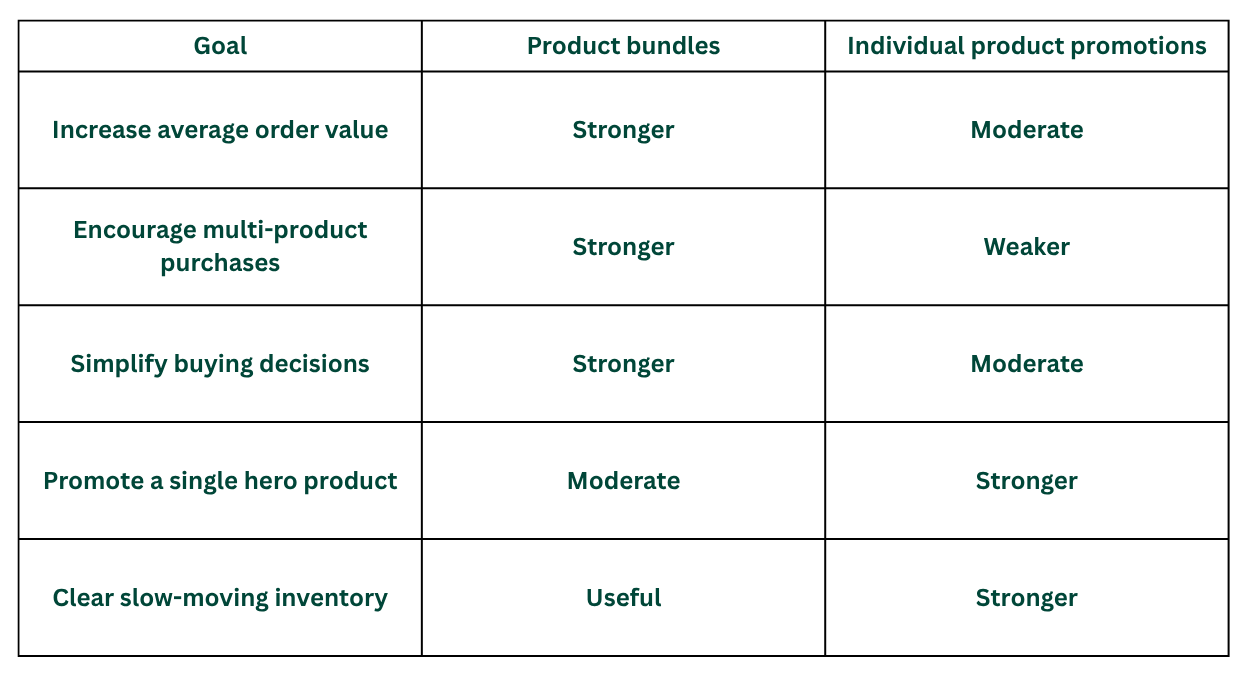
Bundles and individual product promotions solve different business goals.
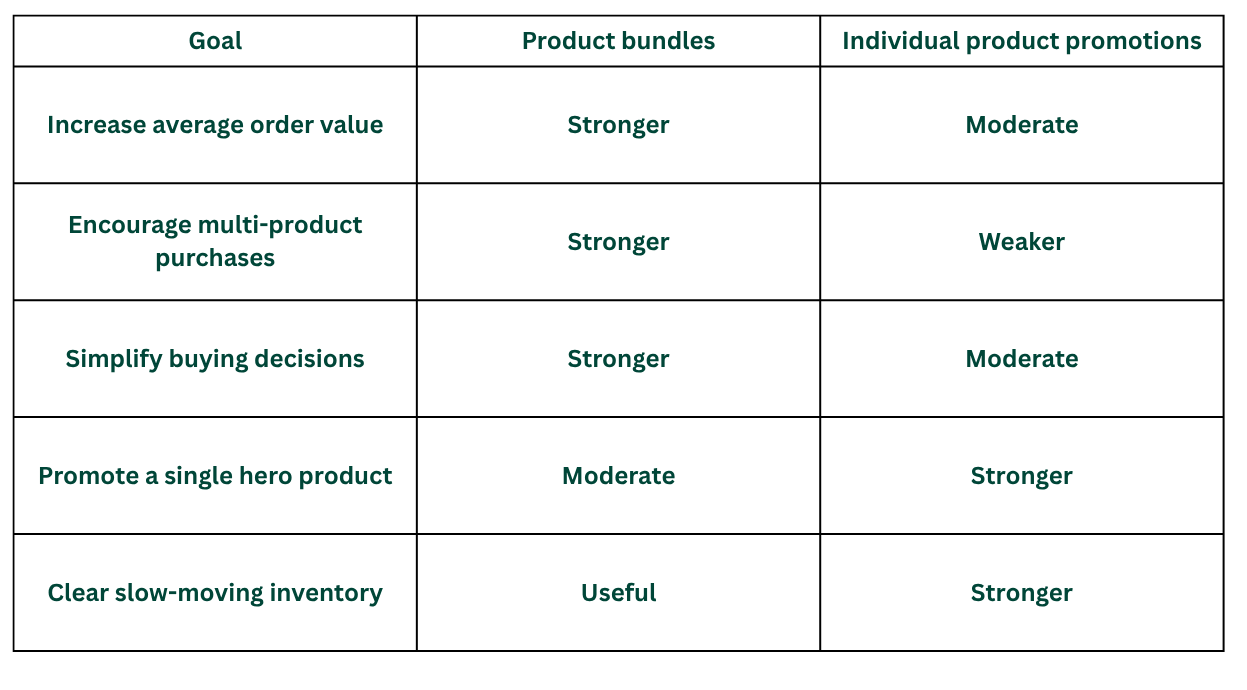
If the goal is to increase revenue from each order, product bundles often outperform individual discounts because they encourage customers to purchase a complete solution rather than a single item.
Increasing traffic usually costs money. Increasing the average order value helps you generate more revenue from existing customers. The goal is not to push shoppers to spend more. It is to make it easier for them to buy a complete solution.
Customers often buy products to solve a problem, not to collect individual items. Bundles work because they reduce decision-making and present a ready-made solution.
Effective bundles:
Cross-selling works when recommendations feel relevant.
The best opportunities usually appear:
Focus on products that naturally complement the original purchase rather than unrelated add-ons.
Small incentives can encourage shoppers to increase their basket size before checkout.
Common examples include:
The most effective incentives feel achievable rather than difficult to reach.

Bundles usually perform better when the goal is to increase average order value and help customers buy a complete solution.
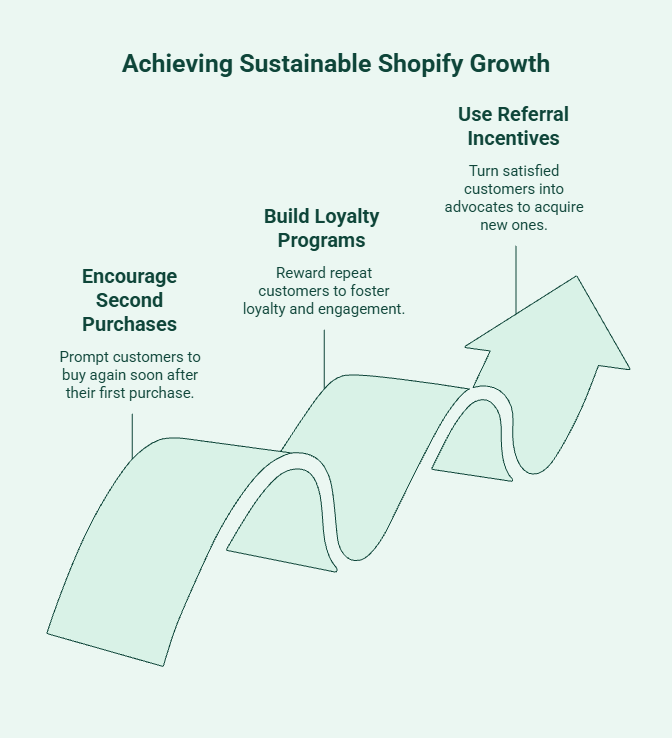
Customer retention helps Shopify stores generate more revenue from existing customers. Encouraging repeat purchases, loyalty, and subscriptions often delivers more sustainable growth than relying solely on new customer acquisition.
The period immediately after a customer's first order is often the best opportunity to encourage another purchase. If too much time passes, customers may forget your brand or switch to competitors.
To stay top of mind:
The goal is to build momentum before the customer relationship becomes inactive.
The best loyalty programs make customers feel rewarded for returning.
Consider offering:
Simple and achievable rewards generally outperform complicated point systems that customers struggle to understand.
Satisfied customers can become one of your most effective acquisition channels. Referral programs help turn positive customer experiences into new sales opportunities.
Strong referral programs usually:
Referral incentives not only attract new customers but also strengthen engagement with existing ones.
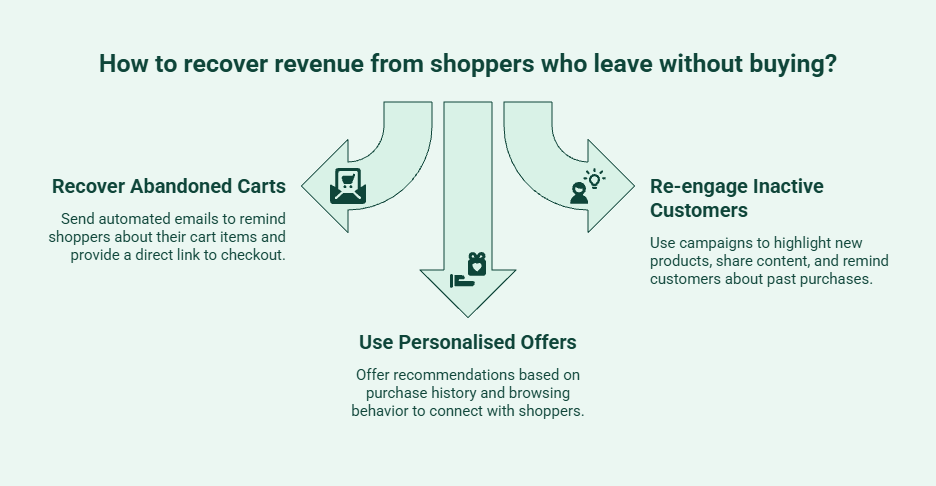
Not every shopper who leaves your store is lost forever. Some abandon their carts, while others simply need more time before making a decision. Revenue recovery focuses on bringing these shoppers back before the opportunity disappears completely.
Cart abandonment signals buying intent. The shopper found a product they wanted, but did not complete the purchase.
Effective abandoned cart emails typically:
The sooner the reminder is sent, the more likely the shopper is to return.
Some customers stop purchasing even though they previously showed interest in your brand. Re-engagement campaigns help bring these customers back into the buying cycle.
Common approaches include:
The goal is to restart the relationship without relying heavily on discounts.
Generic promotions are easy to ignore. Personalised recommendations often perform better because they connect directly to a shopper's interests and purchase history.
Consider:
Relevant messaging helps shoppers see value in returning rather than feeling targeted by another promotion.
Every Shopify store loses revenue for different reasons. Before launching new campaigns or installing more apps, identify where your biggest revenue leak exists. The right priority depends on the metric that is holding your store back—not on the latest growth trend.
Ask yourself these questions first:

Prioritise the problem that has the greatest impact on revenue first. Once that constraint improves, reassess your store before moving on to the next growth opportunity.
Sales metrics help you understand where revenue is being generated and where opportunities are being lost. Instead of focusing only on total sales, track the numbers that explain customer behaviour and purchasing patterns.
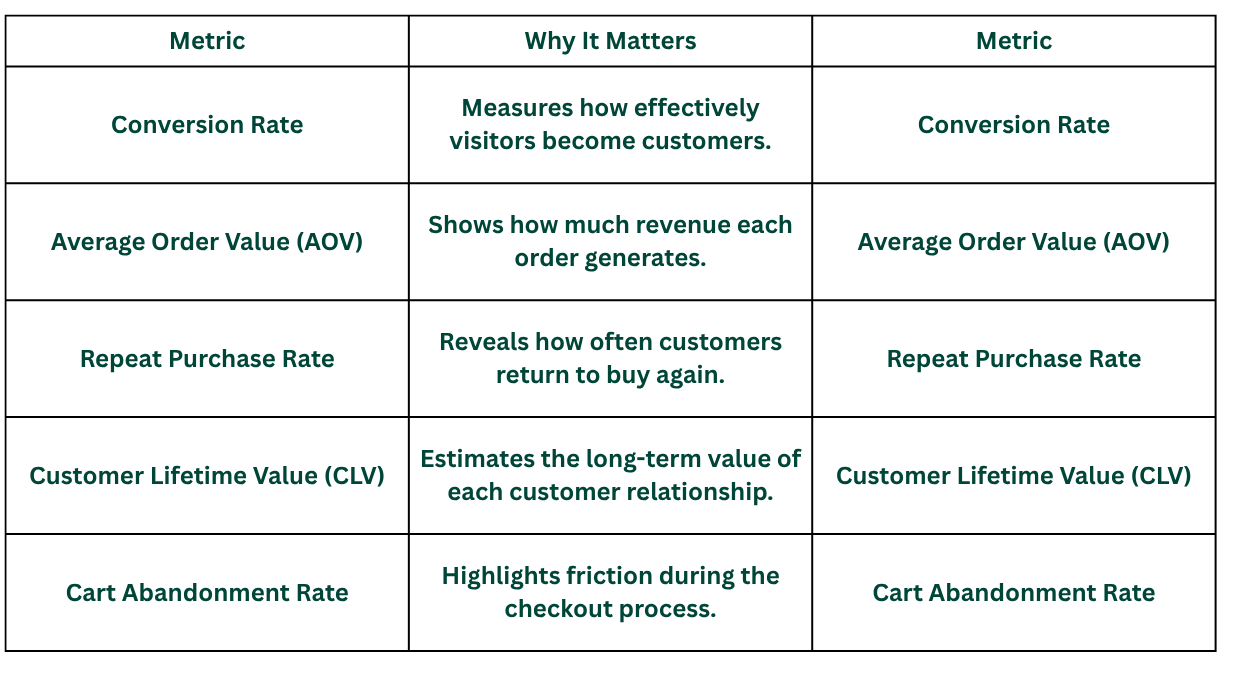
These metrics often reveal the root cause of sales challenges.
For example:
Tracking these metrics consistently makes it easier to identify what is limiting growth and where to focus improvement efforts first.
Some Shopify sales strategies deliver faster results by improving conversion rates, average order value, and customer retention. The quickest wins often come from optimising product pages, using bundles and upsells, running targeted promotions, and recovering lost sales from existing visitors and customers.
Conversion optimisation often delivers the fastest results because it helps more visitors become customers without increasing acquisition costs. Small improvements to product pages, navigation, and checkout can have a meaningful impact on revenue.
One of the most effective ways to improve conversion is A/B testing. Comparing two versions of a headline, product image, page layout, or call to action helps identify which experience encourages more shoppers to complete a purchase. Search engine optimisation also supports conversion by bringing high-intent visitors to relevant product pages.
Start by:
Bundles and upselling usually show results quickly because they increase the value of orders that are already about to happen. You are not creating demand from scratch. You are helping customers complete a fuller purchase.
This works best when bundles feel logical, and product recommendations are relevant. Upselling can point shoppers to a higher-value option, while cross-selling adds useful extras. Both support a stronger average order value without making the experience feel pushy.
Use these tactics for faster gains:
Promotions can move fast because they give hesitant shoppers a reason to act now. A discount code, limited-time bundle, or free shipping threshold can tip a purchase over the line, especially when interest already exists.
Still, the best sales strategies use promotions with purpose. Strong marketing campaigns aim to raise basket size, support launches, or recover indecisive shoppers. Random discounting may create activity, but it does not always create healthy growth.
Use promotions carefully by:
Loyalty programmes can produce quick gains when you already have a customer base, but weak repeat buying. They work by giving past buyers a reason to return sooner and by keeping your brand top of mind between orders.
Good customer engagement is essential here. The rewards must feel easy to understand and worth using. Many of the best Shopify apps support points, referrals, or tiered perks, which help stores launch faster without complex development.
To improve results:
No single strategy works fastest for every Shopify store. The quickest wins usually come from fixing the biggest constraint in your growth path. If visitors are not buying, focus on conversion optimisation. If customers are buying but spending very little, prioritise bundles and upsells. If shoppers hesitate before checkout, targeted promotions may help. If repeat purchases are low, loyalty programs can create longer-term growth.
Many Shopify growth strategies can be implemented manually, but apps often make them faster and easier to manage. Instead of building custom solutions, merchants can use apps to improve conversion rates, increase average order value, and strengthen customer retention.
Common app categories include:

Apps help merchants test and launch growth strategies without the cost and complexity of custom development. They also make it easier to measure performance and refine campaigns over time.
Many Shopify merchants rely on separate apps for bundles, promotions, loyalty programs, referrals, and personalisation. As more tools are added, campaign management becomes more complex, costs increase, and delivering a consistent customer experience becomes harder.
Kefi Commerce brings these growth strategies together in one platform, helping merchants increase average order value, reduce app sprawl, launch campaigns faster, and create a more consistent shopping experience across the customer journey.
With Kefi Commerce, merchants can:
Instead of managing multiple disconnected tools, merchants can test ideas faster, optimise campaigns with greater confidence, and focus on sustainable revenue growth rather than operational complexity.
Ready to simplify your Shopify growth strategy? Explore how Kefi Commerce helps merchants increase average order value, improve customer retention, and launch revenue-driving campaigns from a single platform.
Many Shopify stores struggle to grow because they focus on the wrong activities or overlook opportunities that could generate more revenue from existing traffic and customers.
Common mistakes include:
Avoiding these mistakes helps merchants build a stronger foundation for sustainable Shopify sales growth.
Increasing Shopify sales is not always about attracting more traffic. In many cases, the biggest opportunities come from converting more visitors, increasing average order value, recovering lost sales, and encouraging repeat purchases.
By focusing on these growth levers and measuring the metrics that matter, merchants can generate more revenue from the traffic and customers they already have. The most sustainable growth comes from improving the entire customer journey, not relying on a single tactic or channel.
Improve conversion rates, increase average order value, recover abandoned carts, and encourage repeat purchases. Optimising product pages, using bundles, adding trust signals, and strengthening customer retention often generate faster sales growth than increasing traffic alone.
For beginners, the best Shopify sales booster apps improve conversion, increase average order value, and encourage repeat purchases. Platforms like Kefi Commerce help merchants manage bundles, promotions, loyalty programs, and personalized offers from a single solution.
Display customer reviews on product pages, highlight star ratings near buying decisions, and showcase user-generated content where possible. Reviews reduce uncertainty, build trust, and provide social proof, helping more visitors feel confident enough to complete a purchase.
Buy One Get One (BOGO) offers, Buy More Save More discounts, free shipping thresholds, product bundles, limited-time promotions, and free gift campaigns can increase conversions, encourage larger orders, and create urgency without relying solely on additional traffic.
Drive more traffic by improving SEO, creating valuable content, using social media marketing, running targeted email campaigns, partnering with influencers, and investing in paid advertising. Focus on attracting qualified visitors who are more likely to convert into customers.
Focus on improving conversion rates, increasing average order value with bundles and upsells, recovering abandoned carts, and encouraging repeat purchases through loyalty programs and personalised customer engagement.
.svg)
