
Let's take a closer look.
Getting customers to buy isn't always the hard part. Getting them to spend more once they're ready to purchase is where many Shopify stores leave revenue on the table.
A customer buying a phone may also need a case. Someone purchasing skincare products may benefit from a complementary serum. Yet many merchants miss these opportunities because relevant add-ons never appear at the right moment.
Product add-ons help increase average order value (AOV) by turning a single purchase into a more complete solution. When presented at key decision points throughout the buying journey, they can increase cart value without requiring additional traffic or aggressive discounting.
Product add-ons are additional products or services customers can purchase alongside a primary item. Common examples include a phone case paired with a smartphone, gift wrapping added to a gift purchase, or a protection plan offered with an electronic device.
Unlike standalone products, add-ons are directly connected to the customer's original purchase. Their purpose is to enhance, personalize, protect, or complement the main item, making the purchase more complete and convenient.
Shopify merchants typically present product add-ons on product pages, in the cart, or during checkout, making it easy for customers to include relevant extras before completing their order.
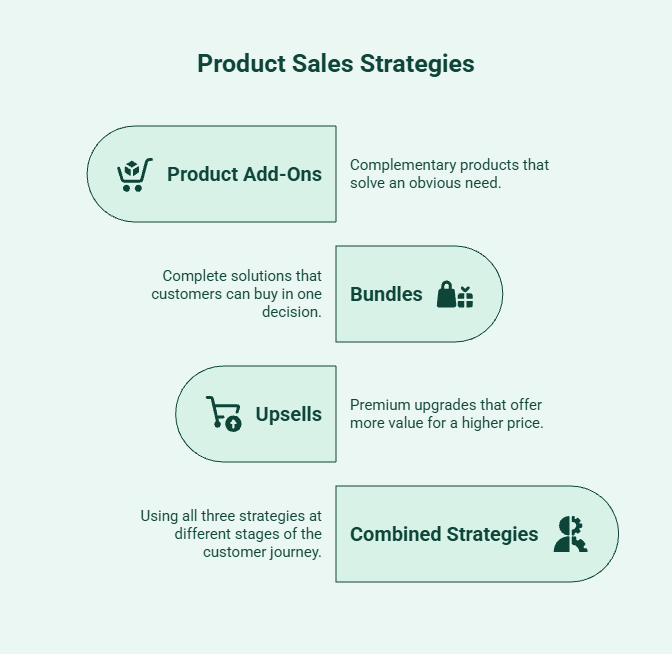
There is no universal winner because each strategy serves a different purpose. Product add-ons typically work best for accessories and low-friction purchases, bundles perform best when customers need multiple products to achieve a specific outcome, and upsells are most effective when shoppers can clearly see the value of upgrading.
For most Shopify stores, the strongest results come from combining all three strategies at different stages of the customer journey rather than relying on a single approach.
Product add-ons work best when customers need a complementary product to get more from their purchase. Customers don't need much convincing when the add-on solves an obvious need connected to what they're already buying.
A customer purchasing a smartphone may also need a screen protector. Someone buying a coffee machine may want pods or a cleaning kit. Because these products support the original purchase, they feel helpful rather than promotional.
This approach is particularly effective for accessories, protection products, gift services, and other low-friction purchases that customers can add without much additional consideration.
Product bundles perform best when customers are trying to achieve a specific outcome rather than purchase a single product.
Instead of selecting multiple items individually, shoppers can buy a complete solution in one decision. This works especially well for categories such as skincare, fitness, home office products, and home décor.
For example, a customer building a skincare routine may prefer a cleanser, serum, and moisturizer packaged together. Many customers would rather buy a complete solution than spend time figuring out which products belong together.
Imagine a customer choosing between a standard leather wallet and a version that includes premium materials and personalization.
They've already decided to buy the wallet. The remaining decision is whether the upgraded version offers enough value to justify the higher price.
That's where upsells perform best. Rather than introducing another product, they improve the one the customer already wants. Premium features, personalization, and enhanced service options often work because shoppers can immediately see what they're getting for the additional spend.
Most high-performing Shopify stores don't rely on a single strategy. They use product add-ons, bundles, and upsells, along with a free shipping bar at different stages of the customer journey.
A typical experience might look like this:
Each strategy plays a different role in the buying journey. Bundles help customers buy complete solutions, upsells improve the core purchase, and add-ons capture related items that shoppers may have overlooked. Customers are far more likely to accept these offers when they feel connected to what they're already trying to buy. When relevance comes first, all three strategies can work together without creating friction in the shopping experience, which is why many merchants also invest in build your own bundle shopify experiences that give customers more flexibility while encouraging larger purchases.
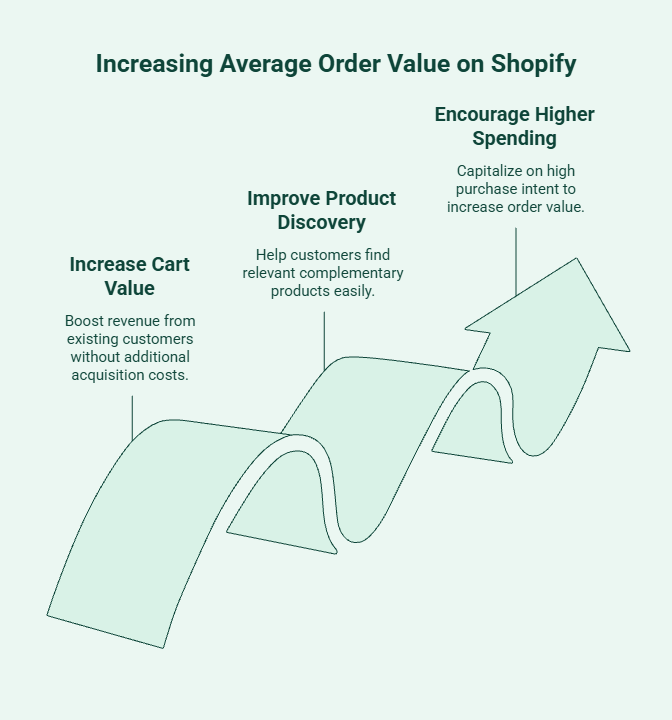
Product add-ons increase average order value by giving customers a relevant reason to spend more before completing a purchase. Instead of relying on shoppers to find additional products on their own, merchants can introduce complementary items, upgrades, or services while purchase intent is already high.
For many Shopify brands, acquiring new customers is the most expensive part of growth. Product add-ons help offset those costs by increasing revenue from shoppers who are already ready to buy. When more customers add an extra item to their order, revenue grows without requiring additional traffic or higher advertising spend.
Customers often arrive with a specific product in mind and overlook related items that could improve their purchase. Product add-ons make those products easier to discover without forcing shoppers to browse additional collections or search through the store. This keeps the purchase process simple while creating more opportunities to increase order value.
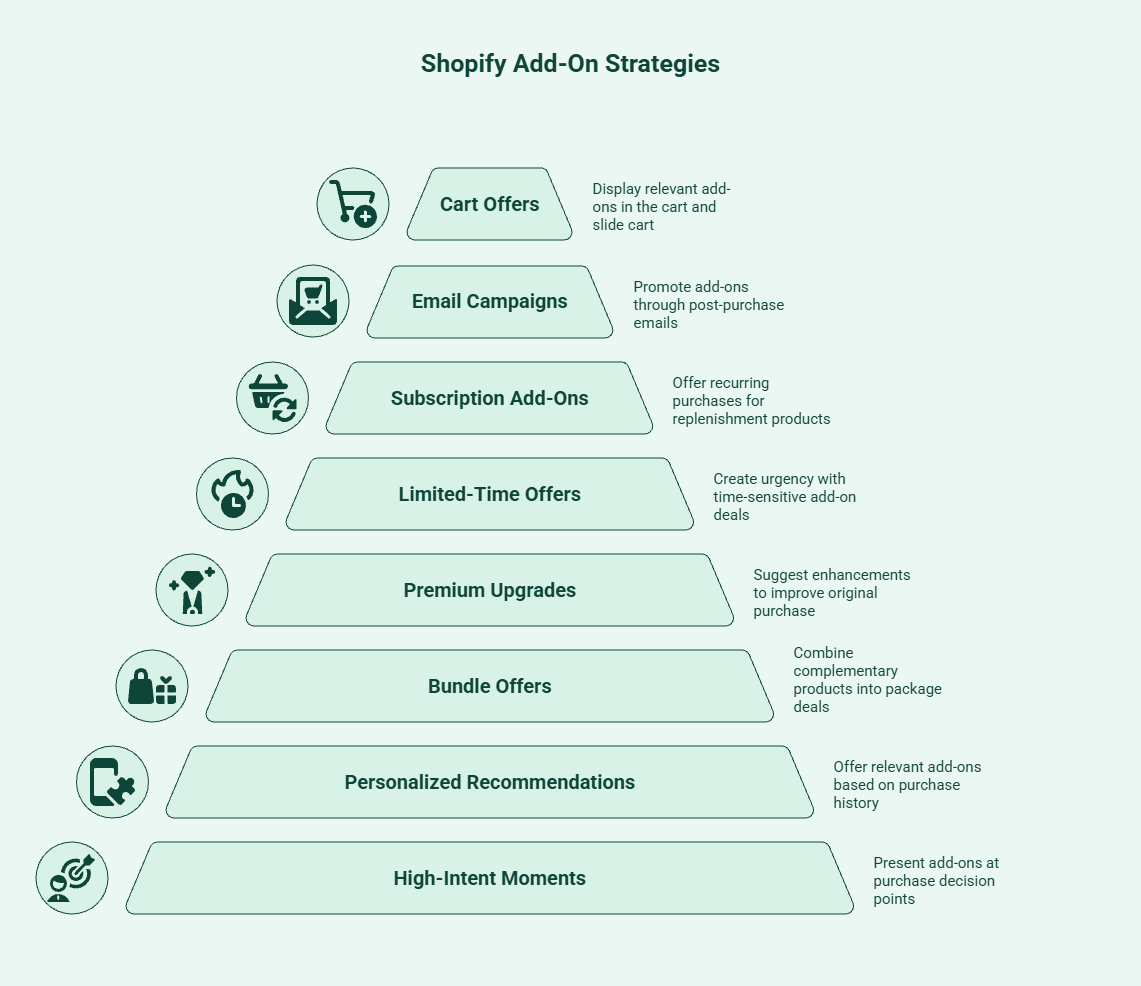
The moment before a customer adds a product to their cart or completes checkout is often the best opportunity to increase order value. At this stage, shoppers have already decided to buy. A relevant accessory, upgrade, or service can feel like a natural addition to the purchase, making customers more likely to increase their order without feeling pressured. Similar buying behavior often drives the success of product bundles, particularly when merchants use the best shopify bundle to manage complementary products efficiently.
Most customers don't visit your store looking for extra products. They come with a specific purchase in mind. The opportunity is helping them discover relevant additions that make the original purchase more useful or complete.
Customers are far more likely to add an extra item when it solves a related need, saves them time, or improves what they're already planning to buy.
A customer casually browsing your store behaves very differently from a customer who is about to make a purchase. Once shoppers have decided they want a product, they're more open to considering complementary items. That's why product pages, cart drawers, and checkout flows consistently outperform general promotional placements.
For example, someone shopping for a yoga mat may ignore accessories on a category page but add a carrying strap when it's presented alongside the product they're already ready to buy. This is why many Shopify merchants use tools like Kefi Commerce to place add-ons, bundles, and promotional offers at key decision points throughout the buying journey, where they're more likely to feel helpful rather than disruptive.
Generic recommendations are easy to ignore because they don't reflect what the customer actually needs.
Effective recommendations often look like this:
The closer the recommendation is to the original purchase, the more likely it is to feel useful rather than promotional.
Customers often need more than one product to get the most value from their purchase. Rather than asking them to search for each item individually, merchants can present complementary products as optional add-ons alongside the main product.
For example, a skincare brand might recommend a moisturizer and cleanser next to a serum, while a gaming retailer could suggest a headset or controller with a console purchase. The customer still chooses which extras to add, but the recommendations help them build a more complete solution.
This approach combines the convenience of a bundled experience with the flexibility of product add-ons, making it easier for customers to add relevant products without changing their original purchase decision.
Imagine a customer buying a leather wallet as a gift. They're already willing to spend money on the product. Adding monogramming or premium gift wrapping feels like an enhancement to the purchase rather than an additional sale.
The same principle applies to:
Customers are often willing to spend more when the upgrade clearly improves what they're already buying.
Customers often postpone small add-on decisions because there's no reason to act immediately. A limited-time offer can help move those decisions forward when the add-on is already relevant to the purchase.
Common examples include:
The urgency should support the offer, not replace relevance. A customer may be more willing to add gift wrapping or personalization when the offer is available for a limited time, but urgency alone won't make an unrelated add-on more appealing.
If customers need to buy the same product again next month, a subscription is often easier to sell than another one-time purchase. This works especially well for products that naturally require replenishment. Coffee, supplements, pet supplies, and skincare products are common examples.
Instead of hoping customers remember to return, subscriptions make repeat purchases part of the buying process from the start.
Not every add-on needs to be presented before checkout. Consider a customer who purchases an espresso machine. At the time of purchase, they may not be thinking about cleaning tablets, storage containers, or replacement filters. A week later, those products become much more relevant to the customer’s total sales.
Post-purchase emails create another opportunity to introduce complementary products when customers are more likely to see their value.
By the time customers reach the cart, they've already decided to buy. The remaining question is whether they need anything else before completing their order.
Keep cart offers simple:
A focused recommendation often performs better than multiple competing offers displayed at the same time. While execution matters, the type of add-on you offer can have an equally significant impact on results, making it important to focus on products that consistently drive higher order values. Merchants often pair cart offers with bundled products to increase purchase value, especially when they know how to create bundle products in Shopify in a way that feels convenient for customers.
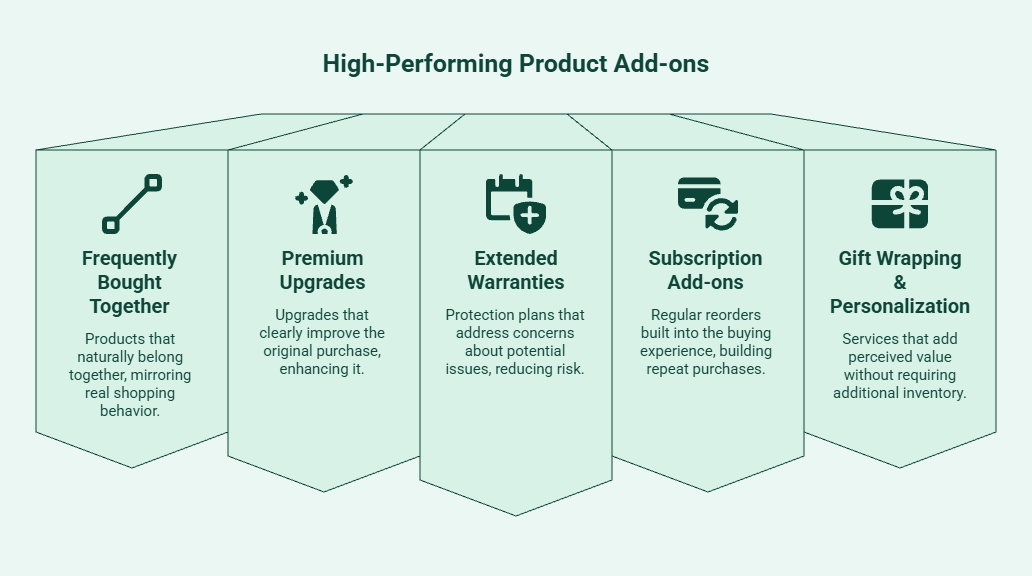
Not all add-ons contribute equally. The highest-performing offers usually have one thing in common: they feel like a natural extension of the original purchase based on customer behavior. When customers can immediately see the value, they're more likely to add the extra item without second-guessing the decision.
Frequently bought together offers work because they mirror real shopping behavior. Instead of asking customers to consider something new, you're showing products that naturally belong together.
Common examples include:
Because these add-ons solve an immediate need, they often feel helpful rather than promotional.
Some customers are willing to spend more when the upgrade clearly improves what they're already buying.
Popular upgrades include:
The best upgrades don't change the customer's purchase decision. They enhance it. A shopper buying a leather wallet may not want another product, but they may happily pay extra for personalization.
Protection plans perform well because they address a common concern: what happens if something goes wrong? This is especially relevant for electronics, appliances, and other higher-ticket purchases where customers want added peace of mind.
Rather than competing on price, these add-ons focus on reducing risk. When positioned as a practical safeguard, they can feel like part of the purchase rather than an optional extra.
If customers regularly reorder a product, subscriptions can be one of the most valuable add-ons to offer.
This approach works particularly well for:
Instead of relying on customers to remember to come back, subscriptions build repeat purchasing into the buying experience from the start.
Gift wrapping and personalization stand out because they add perceived value without requiring additional inventory. Consider a customer shopping for a birthday gift. Adding custom packaging or a personalized message can feel like a small expense compared to the convenience of having everything handled in one place, ultimately helping to increase order size.
These services are often easy to implement, easy for customers to understand, and relevant across multiple product categories. The strongest add-ons aren't necessarily the most expensive. They're the ones that feel most useful, relevant, and closely connected to the purchase already happening.
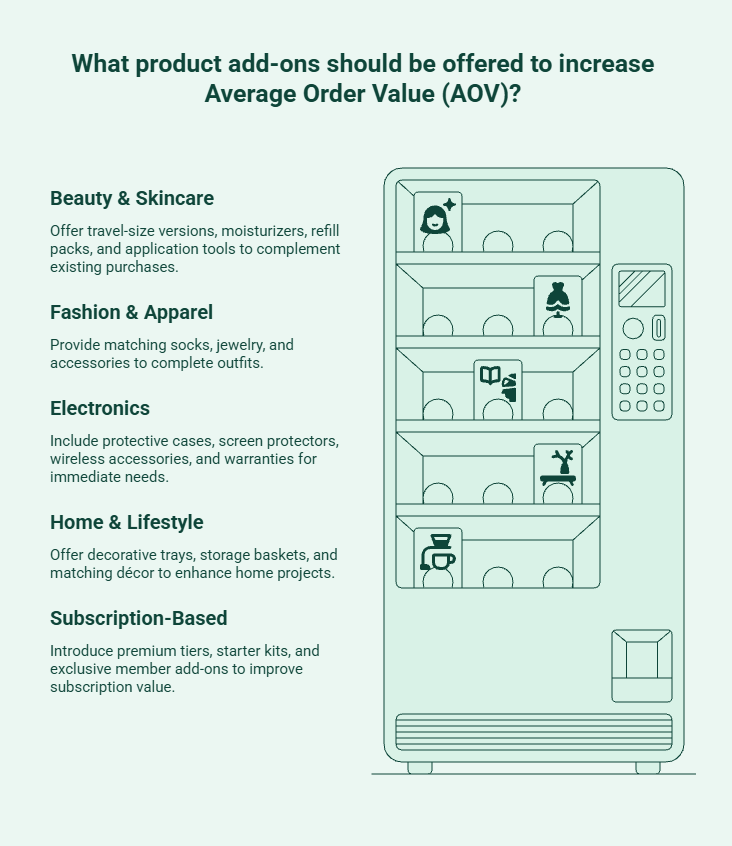
The best product add-ons solve a need that's already connected to the purchase. They don't force customers to consider something completely new. Instead, they help shoppers get more value, convenience, or functionality from the product they're already planning to buy.
Beauty shoppers rarely buy products in isolation. They're often building a routine or trying to achieve a specific result.
Common add-ons include:
For example, a customer buying a vitamin C serum may also be interested in a moisturizer designed to complement it. The add-on feels relevant because it supports the same skincare goal.
Many apparel purchases create natural opportunities for complementary products.
A customer buying formal shoes may also need matching socks. Someone purchasing a dress may be interested in jewelry or accessories that complete the outfit.
The strongest apparel add-ons help customers finish a look rather than introducing unrelated products that compete for attention.
Electronics is one of the easiest categories for product add-ons because customers often need additional items immediately after purchase.
Common examples include:
A customer purchasing a laptop may already be thinking about protection, storage, or productivity accessories. Presenting those options during the buying process feels practical rather than promotional.
Home shoppers are often working toward a larger goal, whether that's decorating a room, organizing a space, or improving everyday routines.
Instead of selling a single item, successful brands use add-ons to help customers complete the project.
For example, a customer purchasing a coffee table may also need decorative trays, storage baskets, or matching décor. When the products naturally work together, the add-on feels like part of the solution.
Subscription brands can increase order value by introducing products that support long-term use.
Examples include:
A customer signing up for a coffee subscription may also purchase a storage container or brewing accessories during their first order. Because these products improve the subscription experience, they feel like a natural addition rather than an extra sale.
Across every industry, the most effective add-ons share the same characteristic: they make the original purchase more useful, more complete, or more convenient for the customer.
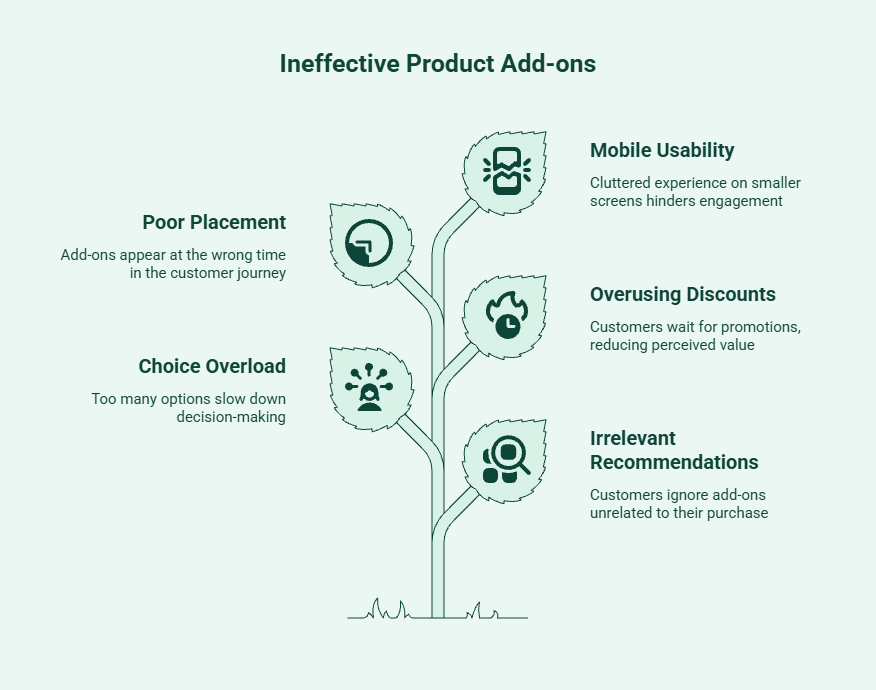
Product add-ons can increase order value, but poorly executed offers can create friction instead. The most common mistakes include irrelevant recommendations, choice overload, poor placement, and mobile usability issues that prevent customers from engaging with add-ons.
Customers can usually tell when a recommendation exists to drive more sales rather than help them complete a purchase. A shopper buying a coffee machine may appreciate coffee pods or a cleaning kit.
The same customer is unlikely to respond to a completely unrelated recommendation that has nothing to do with their purchase. The more closely the add-on supports the original product, the more useful it feels. Relevance should always outweigh quantity.
More options don't always lead to more purchases. When customers are presented with too many add-ons, comparisons become harder and decision-making slows down. Instead of adding products to their cart, some shoppers ignore every recommendation and continue to checkout.
A focused approach usually works better:
Discounts can help generate short-term sales, but they shouldn't become the foundation of your add-on strategy. If customers learn that every add-on eventually goes on sale, they may begin waiting for promotions instead of purchasing immediately.
Over time, this can reduce the perceived value of your products and make it harder to protect margins. Many successful Shopify brands increase order value through convenience, personalization, subscriptions, and premium upgrades rather than relying on constant discounting.
The same add-on can perform very differently depending on where customers see it in their analytics dashboard.
Many merchants focus on finding the right offer but overlook when it appears. A useful recommendation shown too early may be ignored because the shopper hasn't committed to the purchase yet. Show it too late, and the customer may already be focused on completing checkout.
For example, a customer comparing several products is unlikely to stop and evaluate multiple add-ons at the same time. Once they've chosen a product and added it to their cart, they're often much more receptive to a complementary recommendation.
The best-performing add-ons usually appear at high-intent moments, such as:
When placement matches customer intent, add-ons feel like helpful guidance rather than another obstacle to completing the purchase.
Many customers now browse and buy directly from their phones. An add-on experience that works well on a desktop may feel cluttered or difficult to use on a smaller screen.
Common mobile issues include:
If customers have to work harder to understand or add an offer, they're more likely to skip it altogether. When customers immediately understand why an add-on is useful, they're far more likely to include it in their order.
Managing product add-ons is easier when they're part of a broader revenue growth strategy rather than a standalone tactic.
Kefi Commerce helps Shopify merchants increase order value through a combination of product add-ons, bundles, upsells, Buy More Save More offers, BOGO promotions, and gift-with-purchase campaigns. Instead of relying on a single promotion type, merchants can create multiple opportunities for customers to spend more throughout the buying journey.
For example, a shopper might add a complementary product on the product page, unlock a promotional offer in the cart, and respond to an upsell before completing checkout. Each offer supports a different stage of the customer journey while keeping the buying experience simple and relevant.
Want to turn more shoppers into higher-value customers? Explore Kefi Commerce on the Shopify App Store and build a smarter revenue strategy with product add-ons, bundles, BOGO offers, and gift-with-purchase campaigns.
Increasing average order value is often less about convincing customers to spend more and more about helping them discover products that make sense alongside their purchase, including volume discounts that can enhance profit margins, especially with larger orders. Well-placed product add-ons, bundles, and upgrades can improve the shopping experience while creating additional revenue opportunities from the traffic you already have, ultimately increasing customer lifetime value. The most effective offers are relevant, timely, and easy for customers to act on.
As your Shopify store grows, product add-ons work best as part of a broader revenue optimization strategy for e-commerce brands. Combining add-ons with bundles, upsells, Buy More Save More offers, and other promotional campaigns at an appealing price point creates multiple opportunities for AOV improvements to build trust and social proof while increasing order value throughout the customer journey. Platforms like Kefi Commerce help merchants bring these strategies together in a way that feels seamless for customers while supporting long-term revenue growth.
Upselling increases average order value by encouraging customers to choose a higher-priced version, premium upgrade, or enhanced option, allowing merchants to generate more revenue from the same purchase.
Yes. Merchants can increase average order value through product add-ons, bundles, premium upgrades, subscriptions, and personalized recommendations that add value without reducing product prices.
To calculate average order value (AOV), divide your total revenue by the total number of orders during a specific time period. You can also track AOV directly through Shopify Analytics.
Shopify now calculates average order value (AOV) by dividing net sales by total orders on an e-commerce store, so discounts, returns, and certain adjustments can affect the reported figure. As a result, higher AOV factors may cause discrepancies, and AOV may differ from calculations based solely on gross revenue, especially considering that repeat customers can significantly influence these metrics.
There is no universal AOV benchmark for Shopify stores because it varies by industry, product type, and pricing. A better goal is to consistently implement AOV optimization improvements to improve your current AOV and compare performance with similar businesses in your category, ultimately enhancing customer acquisition through effective customer segmentation.
The most effective strategies include product add-ons, product bundling, upsells, personalized recommendations, subscription offers, and cart-based promotions, such as a progress bar. These tactics encourage customers to spend more per order while improving the overall shopping user experience.
.svg)
