.jpg)
Keeping existing customers engaged is often more profitable than constantly acquiring new ones. Yet many e-commerce brands invest heavily in launching a loyalty program only to see participation decline after the initial excitement fades. Without ongoing optimization, personalized rewards, and consistent engagement, even the most well-designed program can struggle to influence repeat purchases.
Effective loyalty program management goes beyond awarding points or offering discounts. It involves continuously refining your rewards strategy, analyzing customer behavior, automating engagement, and delivering incentives that keep shoppers coming back. When managed strategically, a loyalty program becomes a powerful driver of customer retention, lifetime value, and sustainable revenue growth.
This guide explains how to build, manage, and optimize a successful loyalty program using proven strategies. You'll learn why loyalty programs lose momentum, how to keep members engaged, when to invest in loyalty program management software, and what to look for in a solution that helps your business scale customer loyalty effectively.
Loyalty program management is the process of creating, running, and continuously improving a rewards program to increase customer retention, customer lifetime value, and repeat purchases. It involves tracking performance, refining rewards, and using customer insights to keep members engaged as your business grows.
A successful loyalty program isn't something you launch and leave alone. Customer expectations change, buying habits evolve, and rewards that once encouraged repeat purchases can lose their appeal over time.
Managing a loyalty program typically involves:
As your customer base grows, managing these activities manually becomes more difficult. That's why many e-commerce brands use loyalty program management software to automate rewards, personalize customer experiences, and monitor performance from one place.
Managing a strong customer loyalty program means making continuous improvements that keep customers engaged and encourage them to return. Instead of treating rewards as a one-time campaign, successful brands regularly refine their strategy based on customer behavior and business goals.
Key responsibilities include:
The most successful loyalty programs aren't static. They evolve with customer expectations, helping brands keep rewards relevant, strengthen customer relationships, and improve long-term retention.
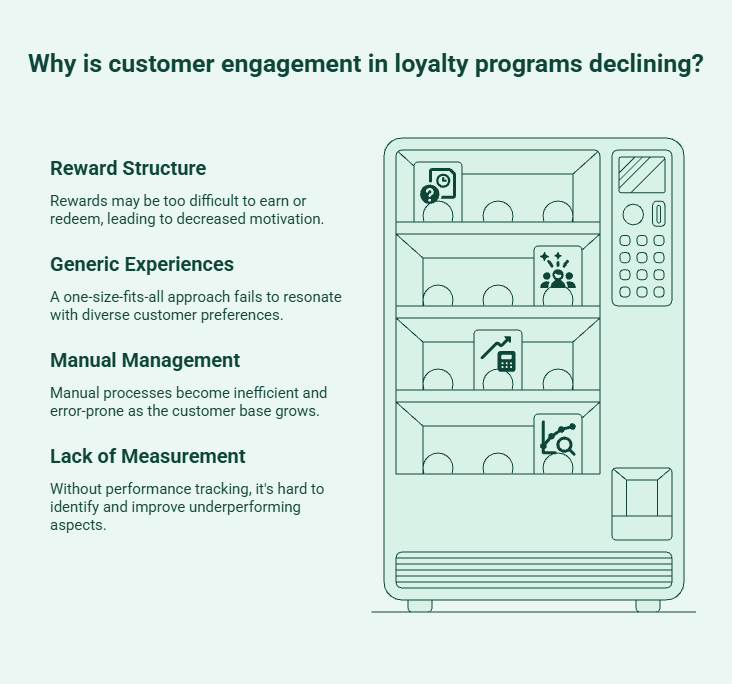
Many loyalty programs, including a brand's loyalty program, lose momentum because they stop giving customers a compelling reason to stay engaged. Rewards become predictable, experiences feel generic, and businesses stop optimizing the program after launch. As participation declines, so do repeat purchases, customer retention, and the overall return on your loyalty investment.
Customers are more likely to participate when rewards feel achievable and worthwhile. If points take too long to earn or redemption rules feel complicated, members lose motivation before they experience any value. Programs that rarely communicate with members can also become easy to forget, reducing participation even when valuable rewards are available.
Signs your reward structure needs attention:
The strongest loyalty programs balance immediate rewards with long-term incentives while staying visible through consistent communication. Regular reminders, personalized offers, and timely reward updates give customers more reasons to return and remain actively engaged.
A one-size-fits-all loyalty program rarely creates meaningful engagement. Customers have different shopping habits, preferences, and motivations, so offering the same rewards to everyone makes the experience feel transactional rather than personal.
Instead, tailor incentives based on customer behavior and audience preferences. For example:
It's also important to recognize that different customer groups value different rewards. Gen Z shoppers may respond to early access or exclusive experiences, families often appreciate practical savings like discounts or free shipping, while B2B buyers may value account credits or volume-based incentives.
Personalized rewards feel more relevant because they reflect what different customers genuinely value, helping strengthen long-term loyalty instead of simply encouraging another purchase.
Managing a small loyalty program, such as punch cards, manually may work initially, but it quickly becomes difficult as your customer base grows. Tracking points, updating rewards, monitoring campaigns, and responding to member activity consumes valuable time that could be spent improving the program.
As membership increases, manual processes often lead to:
Using loyalty program management software helps automate these repetitive tasks, making it easier to scale customer engagement while maintaining a consistent experience.
Launching a loyalty program is only the beginning. Without regular performance reviews, it's difficult to know which rewards encourage repeat purchases and which ones customers simply ignore. Measuring the right data helps you identify what's working, uncover opportunities for improvement, and keep your program aligned with customer expectations.
Track metrics that show how members actually interact with your program, including:
Go beyond overall metrics by using cohort analysis to understand how different groups of customers behave over time. For example, compare new members with long-term members or analyze customers who joined through different campaigns to identify which audiences stay engaged, redeem rewards, and make repeat purchases.
Platforms like Kefi Commerce make this process easier by providing centralized reporting and customer insights that help merchants monitor loyalty performance, identify engagement trends, and refine reward strategies based on real customer behavior.
Regularly reviewing these insights allows you to replace underperforming rewards, improve customer engagement, and continuously optimize your loyalty program using data instead of assumptions.
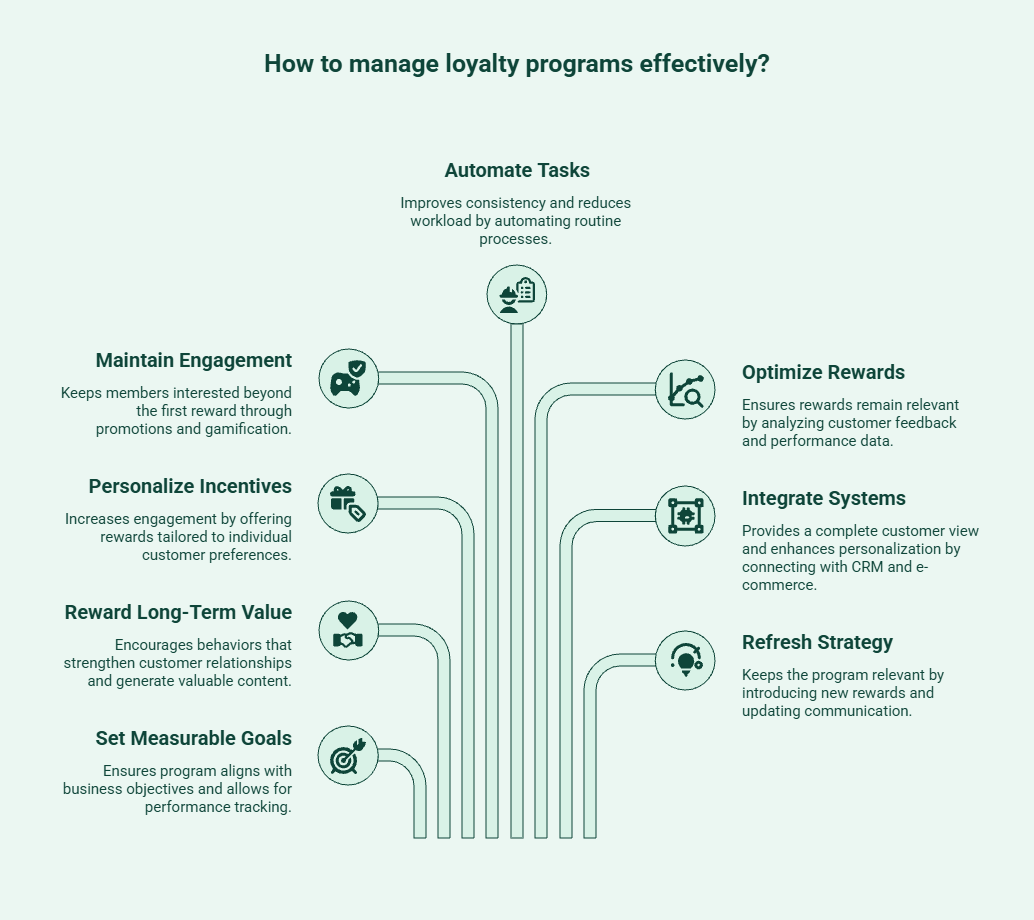
Successful loyalty programs aren't built on rewards alone. They rely on clear goals, relevant incentives, continuous optimization, and understanding customer preferences with the right technology to keep members engaged. These proven methods help you manage your loyalty program strategically, improving customer retention and long-term revenue instead of short-term participation.
Every loyalty program should support a specific business objective. Whether you want to increase repeat purchases, improve customer lifetime value, encourage referrals, or grow average order value, your rewards should reinforce those behaviors.
Before launching, define:
Clear goals and baseline metrics make it easier to evaluate performance, identify what's working, and refine your loyalty strategy as your program evolves.
Purchases are only one part of customer loyalty. Programs become more effective when they reward behaviors that strengthen long-term relationships with your brand, encourage repeat business, and generate valuable customer content.
Consider rewarding customers for:
Recognizing these actions keeps customers engaged while creating valuable insights and authentic user-generated content that builds trust, strengthens your brand, and improves future marketing efforts.
Customers are more likely to engage with rewards that reflect their interests and shopping habits. Instead of offering the same incentive to everyone, use purchase history and customer behavior to create more relevant experiences for your target audience.
Examples include:
Personalized rewards increase participation because they feel timely and meaningful.
Many loyalty programs attract members with an initial reward but struggle to maintain long-term participation. Once customers redeem their first reward, they need new reasons to stay engaged and continue interacting with your brand.
Maintain engagement with:
Gamification gives customers a visible sense of progress and achievement, making participation more rewarding between purchases. Combined with consistent communication, these experiences keep your loyalty program relevant and encourage members to return more frequently.
As your program grows, manual management becomes difficult to scale. Automation helps maintain a consistent customer experience while reducing operational workload.
Automate tasks such as:
By automating routine processes and connecting your e-commerce platform with your CRM, your team can spend less time on administration and more time improving customer engagement, optimizing rewards, and growing your loyalty program.
Customer expectations change, and your loyalty program should evolve with them. Regularly reviewing customer feedback, satisfaction metrics, and performance data helps you identify which rewards drive engagement and which need improvement.
Monitor trends such as:
Customer sentiment is just as valuable as transactional data. If NPS or satisfaction scores decline, it may indicate that rewards no longer feel relevant, valuable, or easy to redeem. Combining these insights with loyalty performance data helps you refine incentives, improve customer experiences, and keep your program aligned with changing customer expectations.
Your loyalty program shouldn't operate in isolation. Integrating it with your CRM, e-commerce platform, and marketing tools gives you a complete view of customer behavior and makes personalization much easier.
Look for a solution that supports:
Connected systems create better customer experiences while reducing manual work.
Even successful loyalty programs need regular updates. Customer expectations, buying habits, and market trends change over time, so your rewards should evolve with them.
Simple improvements include:
Small, continuous improvements keep your loyalty program relevant and encourage members to stay engaged long after joining.
Effective loyalty program management isn't about offering more rewards. It's about creating a program that evolves with your customers, keeps them engaged, and consistently strengthens long-term loyalty and revenue.
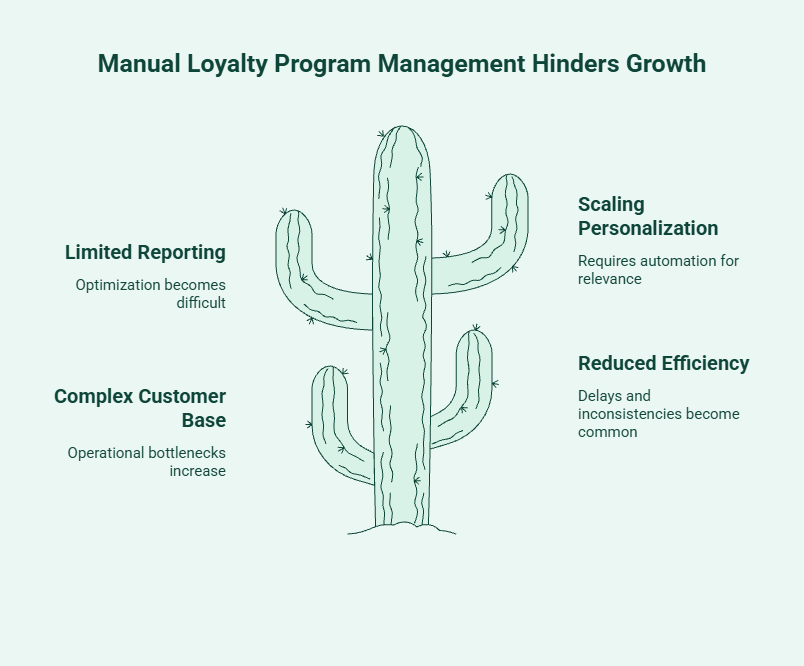
Manual loyalty management works when your program is small, but growth quickly exposes its limitations. As more customers join, managing rewards, campaigns, and customer interactions manually becomes slower, less consistent, and harder to scale. Without automation, your team spends more time maintaining the program than improving it. Many merchants initially rely on spreadsheets to track loyalty activity, but as member data, reward rules, and campaigns grow, these manual systems become increasingly difficult to maintain and more prone to errors.
Growth brings more than additional members. It also increases customer segments, reward redemptions, campaign rules, and support requests. Managing these activities manually creates operational bottlenecks that make it difficult to deliver a consistent loyalty experience.
As your program grows, teams often struggle with:
Scalable loyalty management allows your team to focus on improving customer engagement instead of managing day-to-day administration.
Routine tasks like updating point balances, issuing rewards, and sending campaign notifications become increasingly time-consuming when handled manually. As workloads increase, delays and inconsistencies become more common.
Common challenges include:
Automating these repetitive tasks improves accuracy, creates a more reliable customer experience, and gives your team more time to optimize the program.
Managing a loyalty program without centralized reporting makes it difficult to understand what's driving engagement. While spreadsheets and manual reports provide data, they rarely deliver the real-time insights needed to improve performance, especially when choosing the right loyalty software.
Focus on tracking metrics such as:
Access to reliable reporting helps merchants identify trends earlier, improve reward strategies, and make data-driven decisions with greater confidence.
Personalized loyalty experiences become much harder to deliver as membership grows. Sending relevant rewards, reminders, and exclusive offers to thousands of customers isn't practical through manual processes alone, especially on social media channels.
Automation makes personalization scalable by supporting:
This allows every member to receive timely, relevant experiences without increasing your team's workload.
The bigger your loyalty program becomes, the more important it is to replace manual processes with systems that improve efficiency, maintain consistency, and give your team the flexibility to scale without sacrificing the customer experience.
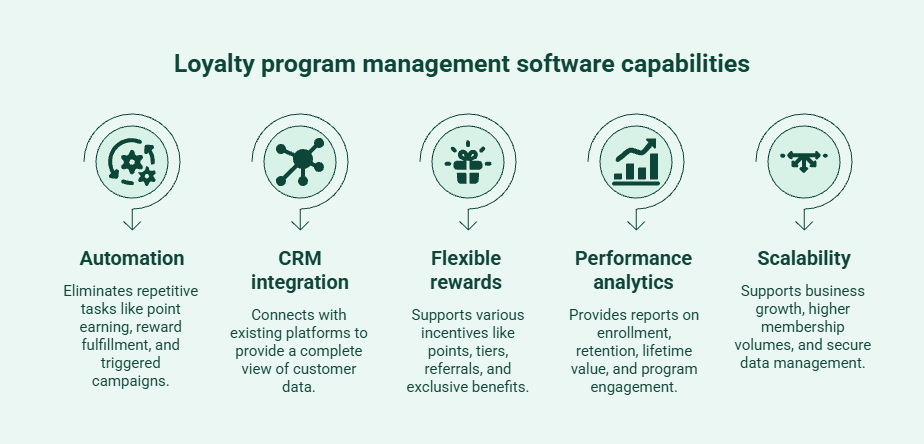
The best loyalty reward program management software should do more than automate rewards. It should help you manage customer relationships more efficiently, personalize loyalty experiences, and support long-term business growth. Instead of comparing long feature lists, focus on the capabilities that solve your biggest operational challenges.
Automation should eliminate repetitive tasks, so your team can focus on improving customer engagement instead of managing daily operations.
Look for software that automates:
The right automation improves consistency, reduces manual errors, and creates a smoother experience for both your team and your customers.
Your loyalty platform should work alongside your CRM software, e-commerce platform, and marketing tools rather than operating in isolation.
A connected system helps you:
Better integrations lead to better customer experiences because every interaction is based on accurate, up-to-date customer data.
Customer expectations change over time, so your software should make it easy to adapt your loyalty strategy without rebuilding the entire program.
Choose a platform that supports:
Greater flexibility allows you to experiment with new reward strategies while keeping your program relevant.
Reports should help you make better decisions, not just display numbers. The most valuable platforms show how your loyalty program influences customer behavior and business performance while helping you identify opportunities to improve engagement and retention.
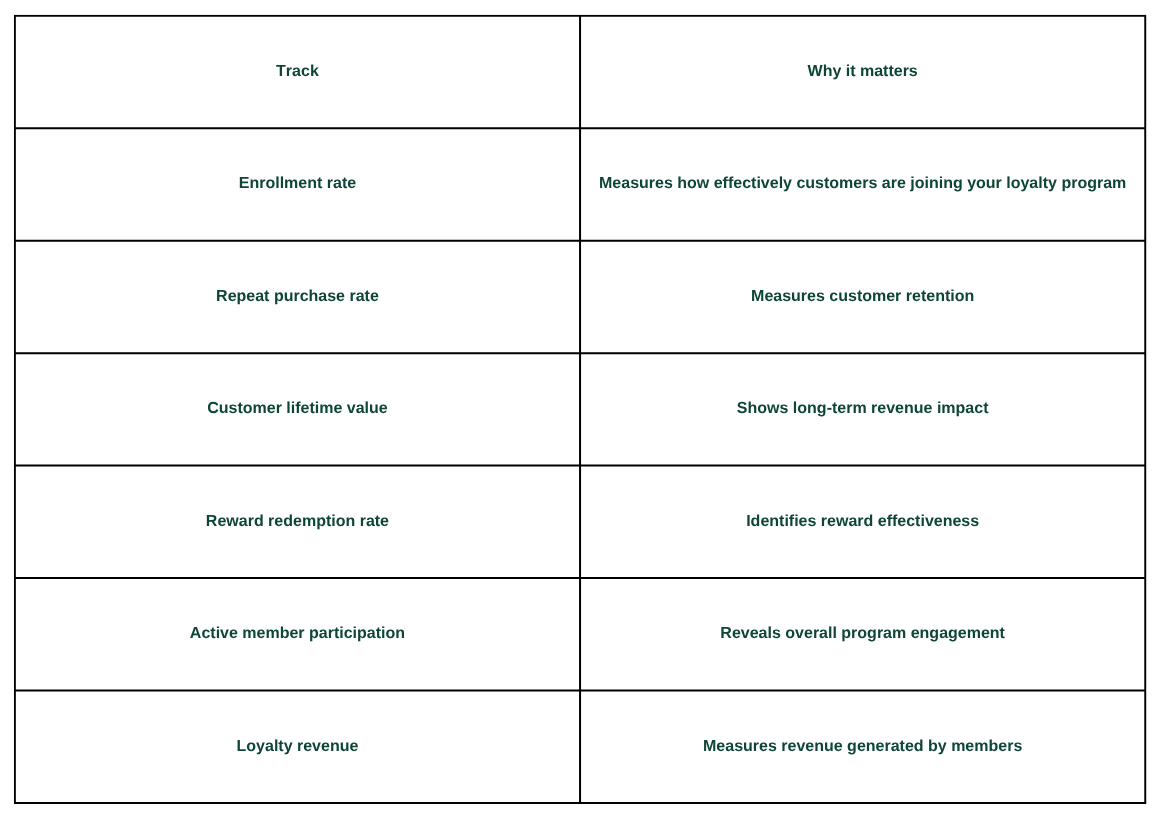
Clear reporting helps you identify opportunities, optimize rewards, and continuously improve program performance.
Your loyalty platform should support where your business is heading, not just where it is today. As your customer base grows, the software should continue delivering reliable performance without adding operational complexity.
Before making a decision, consider whether the platform can:
Because loyalty programs rely on customer data, security and compliance should also be part of your evaluation. Look for software that protects customer information, supports privacy regulations such as GDPR, and provides secure data management as your business grows.
Choosing a scalable and secure solution reduces the need for costly migrations while giving your business the flexibility to grow confidently.
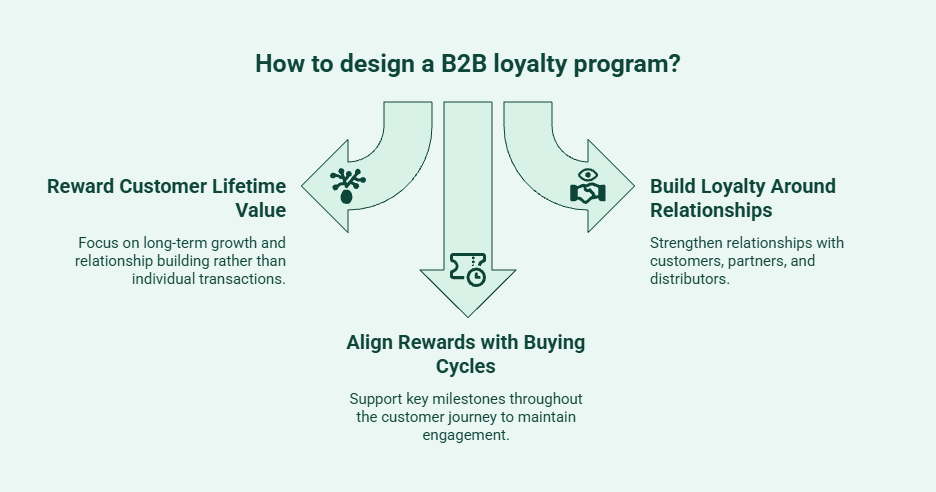
B2B loyalty programs are designed to strengthen long-term business relationships rather than encourage individual purchases. Instead of rewarding frequent transactions alone, they focus on increasing account value, improving retention, supporting renewals, and creating stronger partnerships throughout a longer sales cycle.
Unlike B2C loyalty programs that often reward every purchase, B2B programs should encourage sustained business growth across the entire customer relationship.
Instead of rewarding individual orders, consider incentives for:
This approach encourages customers to deepen their relationship with your business rather than simply place another order.
B2B purchasing decisions often involve multiple stakeholders, making relationship management just as important as rewarding purchases. Beyond direct customers, many B2B businesses also rely on channel partners, distributors, and resellers to drive sales and expand their market reach, making loyalty programs an effective way to strengthen these relationships.
Successful programs frequently include:
These incentives encourage long-term collaboration, strengthen partner relationships, and create more opportunities for account growth across your sales ecosystem.
B2B customers don't purchase on the same schedule as retail shoppers. Rewards should support key milestones throughout the customer journey instead of focusing only on immediate sales.
For example, businesses can reward:
Aligning incentives with the natural buying cycle keeps customers engaged between purchases while reinforcing the value of an ongoing partnership.
While B2B and B2C loyalty programs operate differently, they share one goal: building stronger customer relationships. The right loyalty platform should provide the flexibility to support both models while adapting rewards to the way your customers actually buy.
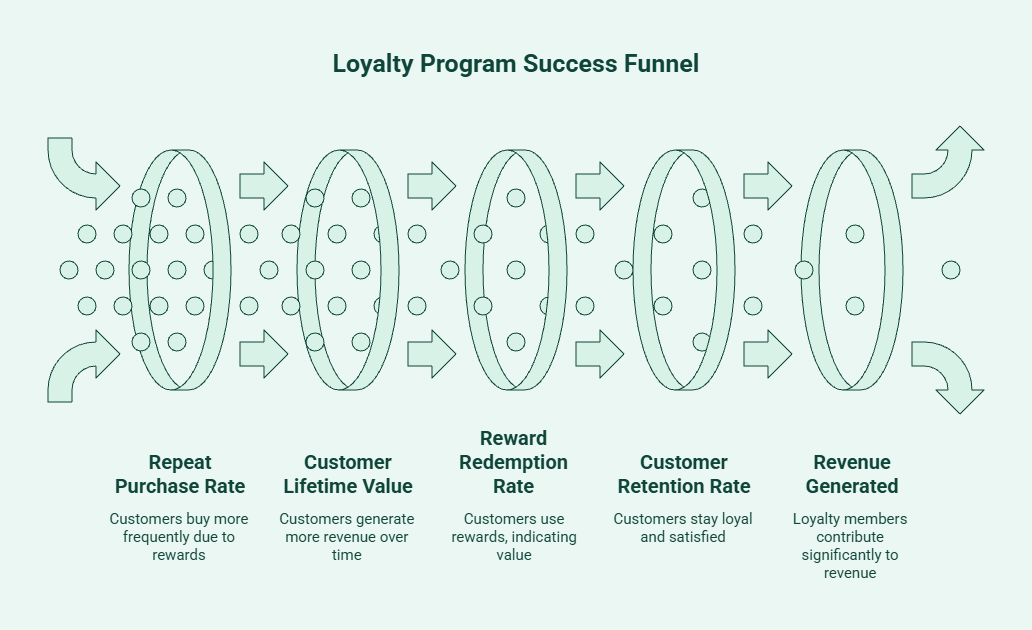
The success of a loyalty program isn't measured by how many people join. It's measured by how customer behavior changes after they join. Tracking the right metrics helps you understand whether your program is improving retention, increasing customer value, and creating sustainable revenue growth.
Repeat purchase rate shows whether members have a reason to return after their first order. If customers continue buying more frequently, your rewards and engagement strategy are encouraging long-term loyalty instead of one-time participation.
A healthy repeat purchase rate usually indicates:
If this metric stops improving, review your reward structure, communication strategy, and member experience.
Customer lifetime value measures how much revenue each customer generates throughout their relationship with your business. Comparing CLV between loyalty members and non-members helps determine whether your program is creating lasting business value.
Monitor how loyalty affects:
An increase in CLV, combined with shorter purchase intervals, shows your loyalty program is encouraging customers to return more often and build stronger long-term relationships.
Reward redemption rate reveals whether members find your incentives valuable enough to use. Low redemption often signals that rewards are difficult to earn, difficult to redeem, or simply not compelling.
Review:
Improving redemption rates often leads to higher engagement and greater participation across the program.
Customer retention measures how successfully your loyalty program keeps members returning over time. While repeat purchase rate tracks buying behavior, retention shows whether customers continue choosing your brand and remain satisfied with their experience.
Strong retention is usually supported by:
When retention or NPS declines, it's often a sign that your rewards, communication, or overall loyalty experience needs to be refreshed.
Ultimately, every loyalty program should contribute to business growth. Measuring revenue generated by loyalty members helps determine whether your investment is producing meaningful financial results.
Compare:
When these metrics improve alongside retention and engagement, your loyalty program is creating measurable business value instead of simply increasing membership numbers.
Managing a loyalty program shouldn't require multiple apps, manual processes, or constant oversight. Kefi Commerce brings loyalty management, customer incentives, and revenue-driving promotions together in one platform, helping Shopify merchants build stronger customer relationships while reducing operational complexity.
Instead of juggling separate tools for rewards, customer data, promotions, and reporting, Kefi gives you a centralized platform to launch campaigns, personalize incentives, and monitor performance from one place. This allows your team to spend less time on administration and more time improving customer retention and lifetime value.
With Kefi Commerce, you can:
More importantly, Kefi Commerce helps transform loyalty from a standalone rewards program into a broader customer retention strategy. By combining personalized incentives, automated engagement, and revenue-focused promotions, merchants can create shopping experiences that encourage repeat purchases and strengthen long-term customer relationships. Book a demo today to see how Kefi Commerce can help you build a loyalty program that keeps customers coming back and supports long-term business growth.
Effective loyalty program management is an ongoing process, not a one-time setup. The most successful programs continue to evolve by adapting rewards, using customer insights, and responding to changing customer expectations. When every decision is guided by clear goals and meaningful performance data, a loyalty program becomes a powerful tool for increasing customer retention, repeat purchases, and long-term business value.
Whether you're launching a new program or improving an existing one, focus on creating experiences that keep customers engaged beyond their first reward. Regularly reviewing performance, refining incentives, and adopting proven management practices will help you build a loyalty program that continues delivering value to both your customers and your business as it grows.
Choose loyalty program software that aligns with your business goals, automates repetitive tasks, integrates with your existing tools, supports personalized rewards, and provides analytics to measure customer engagement, retention, and long-term growth.
Increase customer retention by offering relevant rewards, personalizing incentives, automating engagement, and regularly reviewing program performance. Continuously refining your loyalty strategy based on customer behavior helps keep members engaged and encourages repeat purchases
Examples include Starbucks Rewards, Sephora Beauty Insider, Target Circle, and Nike Membership. These programs succeed by combining personalized rewards, exclusive benefits, and data-driven engagement to encourage repeat purchases and strengthen long-term customer loyalty.
Look for automation, CRM integration, flexible reward management, customer segmentation, real-time analytics, and scalable campaign management. The best loyalty program management tools should simplify operations while helping improve customer engagement, retention, and lifetime value.
Proven practices include setting measurable goals, personalizing rewards, automating routine tasks, using customer data to optimize campaigns, integrating with your CRM, and regularly reviewing performance metrics to improve engagement and customer retention.
.svg)
