

Customer loyalty programs have become a cornerstone for businesses aiming to improve customer engagement and drive sustainable business growth. While they promise to boost retention and increase sales, are they always the right investment? This guide will explore the advantages and disadvantages of implementing a rewards program. By understanding both sides, you can make an informed decision about whether a loyalty strategy is the right move to foster stronger customer relationships and achieve your long-term goals.
At its core, a loyalty program is a marketing strategy designed to reward customers for their repeat business, thereby encouraging them to continue purchasing from a brand. The fundamental goal is to build brand loyalty and improve customer retention. By offering special perks, discounts, or exclusive access, these programs make your customer base feel valued and appreciated. This sense of appreciation is a powerful motivator that can transform a one-time buyer into a long-term advocate for your business.
So, how do loyalty programs work to attract and retain customers? They operate on a simple principle of incentive. A rewards program gives customers a tangible reason to choose your brand over competitors. Whether through earning points for purchases, receiving special offers, or unlocking new benefits, customers are motivated by progress toward a goal. This structured system of rewards not only encourages repeat purchases but also creates an emotional connection, which is crucial for lasting customer loyalty and a strong ecommerce post-purchase experience.

Choosing the right customer loyalty program is crucial to aligning your loyalty strategy with your business goals and customer expectations. There are several types of loyalty programs and proven reward models, each with unique strengths. Understanding these options will help you design a program that effectively incentivizes and retains your customers.
Points-based loyalty programs are among the simplest and most widely used models, in which customers earn points for actions such as making purchases, writing reviews, or referring others. These points can later be redeemed for discounts, free products, or other rewards, making the value easy to understand. The direct connection between spending and earning encourages repeat purchases and can increase average order value. Businesses can also run bonus point campaigns or special promotions to keep customers engaged and drive specific behaviors over time.
Tiered loyalty programs are designed to increase customer engagement by offering different levels of rewards based on spending or activity. As customers move up tiers, they unlock better benefits such as exclusive discounts, early access to products, or bonus rewards. This structure creates a sense of progress and achievement, motivating customers to stay active and spend more to reach higher levels. By aligning rewards with customer preferences, businesses can create a more personalized experience and build stronger, long-term relationships.
Subscription or paid membership programs require customers to pay a recurring fee in exchange for premium benefits and exclusive perks. These may include free shipping, early access to sales, special discounts, or access to exclusive content. Since customers pay upfront, they are more likely to engage more frequently and maximize the value of their membership. This model not only drives repeat purchases but also creates a predictable revenue stream and fosters a highly loyal customer base.
Value-based loyalty programs focus on building emotional connections by aligning with causes or values that matter to customers. Instead of just offering discounts or rewards, these programs may allow customers to donate points to charities or support social initiatives. This approach makes customers feel that their purchases contribute to a greater purpose, strengthening their connection with the brand. By focusing on shared values, businesses can build deeper loyalty that goes beyond transactional relationships.
Hybrid loyalty programs combine elements from multiple program types to create a more flexible and engaging experience. For example, a business might use a points-based system along with tiered rewards to offer both immediate incentives and long-term goals. This approach allows brands to cater to different customer types and provide multiple ways for them to engage. A well-designed hybrid model can stand out from competitors and drive stronger, more sustained customer loyalty.
Also Read: What are the Best Loyalty Apps for Shopify Growth?
The primary benefits of loyalty programs center on fostering stronger, more profitable customer relationships. A well-executed program turns casual shoppers into repeat customers, building brand loyalty that transcends price. By rewarding customers for their continued business, you give them a compelling reason to choose you over competitors, which directly enhances your bottom line. The following sections will examine these advantages in greater detail, exploring how they translate into tangible business growth and a stronger market position.

Source: Starbucks
Case: Starbucks keeps customers coming back through its rewards system that offers free drinks and exclusive perks.
One of the most powerful advantages of a rewards program is its direct impact on customer retention. Retaining existing customers is far more cost-effective than acquiring new ones; research from Harvard Business Review shows it can be 5 to 25 times more expensive to find a new customer. Loyalty programs make your loyal customers feel valued, which is a key driver for encouraging repeat purchases.
A study by Fred Reichheld reinforces this, demonstrating that a mere 5% increase in customer retention can lead to a 25% to 95% increase in profit. This happens because your rewards program gives customers an incentive to return. When they know their continued business earns them discounts or exclusive perks, they are less likely to be swayed by competitors' offers.
This Strategy not only secures repeat business but can also boost average order value. For example, the Turkish pharmaceutical brand Özel Beslenme used a rewards program to encourage repeat purchasing, resulting in a 6% rise in sales and over 500 reward redemptions in a single quarter. This showcases how a well-structured program can deliver measurable financial results.

Source: Amazon Prime
Case: Amazon increases CLV through its Prime membership by encouraging frequent purchases and long-term commitment.
A direct outcome of improved retention is a significant boost in customer lifetime value (CLV). CLV represents the total net profit a business can expect from a single customer over the entire duration of their relationship. Since loyalty programs encourage repeat business, they naturally extend the duration and value of this relationship. The most profit often comes from your dedicated customer base.
Psychologically, customers are more inclined to continue engaging with a brand when they feel they are making progress toward a goal—a phenomenon known as the endowed progress effect. Your loyalty program taps into this by showing customers how close they are to their next reward. This motivates them to make their next purchase with you rather than a competitor.
Existing customers are also more valuable because they tend to spend more and are more willing to try new products. Studies show that existing customers are 50% more likely to try your new offerings and spend 31% more compared to new customers. This makes nurturing your current customer base a highly effective strategy for sustainable growth.

Source: Netflix
Case: Netflix uses user data to personalize recommendations and improve engagement.
Loyalty programs are goldmines for valuable customer data. An Inmar Intelligence study found that 65% of shoppers are willing to share personal information to receive personalized offers. This willingness provides you with a wealth of first-party data to refine your marketing efforts and enhance the post-purchase customer experience.
By analyzing the data collected through your program, you gain deep insights into shopping behaviors. This information allows you to segment your audience and tailor your communications with a high degree of personalization. For example, the data can reveal:
Beauty retailer Sephora excels at this, using customer data from its rewards program to send personalized emails with product recommendations that align with a member's unique beauty profile. This level of personalization makes customers feel understood and valued, strengthening their bond with the brand.

Source: Nike
Case: Nike builds engagement through apps and challenges that create a strong community.
Beyond driving transactions, loyalty programs are powerful tools for boosting customer engagement. This indicates that customers are looking for more than just a good product; they want to feel like part of a community.
A well-designed rewards program can foster this sense of community and turn satisfied customers into passionate brand advocates. When members feel valued through exclusive promotions and special recognition, they are more likely to share their positive experiences on social media and with friends. This organic word-of-mouth marketing is incredibly valuable and trustworthy.
Sephora's Beauty Insider community is a prime example of this Strategy in action. The program encourages brand advocacy by awarding badges and creating leaderboards, making fans feel recognized for their loyalty. By creating these engaging experiences, your program can build an army of brand advocates who champion your business for free.
Also Read: How Minimal Home Redefined Interior Elegance through Strategic Upselling.
While loyalty programs offer compelling benefits, they are not without their challenges. Businesses must consider potential downsides, including impacts on profit margins, ongoing management requirements, and the complexities of data security. If not carefully planned and executed, a program can become a financial drain or even damage customer trust. The following sections explore these disadvantages in detail and offer insights on how to mitigate them.

Source: KFC
Case: KFC invests heavily in maintaining its Circle rewards program and marketing campaigns.
One of the most significant hurdles to implementing a loyalty program is the initial setup costs and the resources required for ongoing management. These expenses can strain a company's budget, particularly for smaller businesses. The costs are not just a one-time investment; they are a continuous commitment.
The financial and operational requirements include several key areas:
These combined costs can eat into your profit margins if the program isn't driving sufficient returns. To mitigate this, consider affordable and user-friendly loyalty software. There are many options available, including platforms like BON Loyalty for Shopify stores, which offer comprehensive features, free trial periods, and transparent pricing. This approach helps control costs while you build and refine your program.
Source: Uber
Case: Uber has faced issues with referral abuse, in which users created fake accounts to earn rewards.
Unfortunately, where there are rewards, there is also the potential for program abuse and fraud. Some loyalty program members may view points as cash and seek to accumulate them dishonestly, rather than through genuine brand loyalty. This can lead to fraudulent activities designed to exploit the system for maximum gain.
Common forms of abuse include creating fake accounts to harvest sign-up bonuses, manipulating transactions to earn bonus points, and exploiting loopholes in referral programs. For instance, a user might refer themselves using multiple email addresses to collect rewards without bringing in new customers. Such actions devalue the program and create unfair advantages.
To combat this, it is essential to choose a loyalty platform with robust, built-in fraud prevention features. For example, some systems can automatically detect and revoke rewards if a referred friend's order is canceled or refunded. Proactive measures like these are critical to protecting your program's integrity and ensuring that rewards go to genuinely loyal customers.
Source: Meta
Case: Meta has faced scrutiny over its handling of user data, highlighting the risks of large-scale data collection.
Loyalty programs collect vast amounts of sensitive customer data, which entails significant responsibilities for data security and privacy. Customers entrust you with their personal information, and any breach can severely damage their trust and your brand's reputation. Navigating the complexities of data management is a major challenge.
Businesses must address several key concerns to protect loyalty data:
The best solution is to select loyalty program software that prioritizes security and complies with data privacy laws. Ensure your platform has strong tracking tools and a clear privacy policy. Being transparent with customers about how their data is used to provide special offers and personalized experiences is crucial for building and maintaining trust.

Source: JCPenney
Case: JCPenney struggled when heavy discounts reduced margins and confused customers.
Offering discounts and rewards is the core of any loyalty program, but it inevitably impacts your profit margins. While the goal is to drive enough incremental business growth to offset these costs, there is always a risk that the program could hurt your net profit if not structured correctly. This is one of the most critical cons to consider.
The key is to find a sustainable balance between the cost of rewards and the benefits they generate. You must design a program that aligns with your business goals and doesn't simply give away margin without encouraging profitable behavior. For example, offering deep discounts to customers who would have purchased anyway can be a waste of resources.
To ensure your program remains profitable, you must regularly measure its performance against key metrics. Track metrics such as redemption rates, customer lifetime value, and purchase frequency to assess the program's ROI. This data will allow you to optimize your Strategy, adjust reward values, and ensure your loyalty initiatives contribute positively to your bottom line.
Also Read: How The Chosen Cultivated a Community through Curated Merchandise Kits.

When a loyalty program fails to deliver results, it is often due to a disconnect between the program's value proposition and the customer experience. Unsuccessful programs typically offer lackluster loyalty rewards, have a confusing structure, or fail to use data to engage members effectively. Fortunately, these challenges can be overcome with a strategic reset. The following sections provide actionable steps to transform an unsuccessful loyalty program into a powerful driver of customer loyalty and business growth.
If your loyalty program is not performing well, the rewards may not be appealing enough to your customers. Offering generic or low-value incentives often fails to create excitement or motivation. Instead, focus on rewards that feel exclusive and meaningful, such as early access to products, special discounts, or unique experiences. When customers see real value in what they are earning, they are more likely to stay engaged and continue choosing your brand over competitors.
A complicated loyalty program can quickly discourage customers from participating. If it is difficult to understand how to earn or redeem rewards, users may lose interest altogether. Simplifying the structure by using clear rules, an easy sign-up process, and a smooth redemption experience can make a big difference. A user-friendly program that works seamlessly across devices ensures customers can easily engage without confusion or frustration.
Many unsuccessful loyalty programs fail because they treat all customers the same. Using customer data to personalize offers and communication can significantly improve engagement. By analyzing purchase behavior and preferences, you can send targeted promotions, recommend relevant products, and create timely interactions, such as birthday rewards. Personalization helps customers feel valued and understood, strengthening their connection with your brand.
A loyalty program needs ongoing attention to remain effective. Regularly tracking performance metrics such as sign-ups, engagement, and reward redemption helps you understand what is working and what needs improvement. Based on these insights, you can refine your strategy by adjusting rewards, updating campaigns, or improving the overall experience. Continuous optimization ensures your program stays relevant and continues to drive long-term growth.
Also Read: How a Premier Portuguese Winery Cultivated a +16.80% AOV Lift.
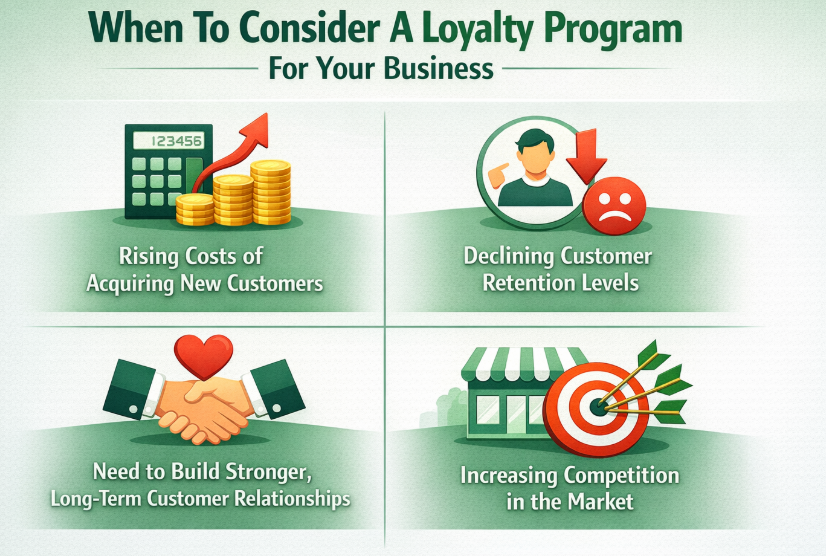
Deciding when to launch a rewards program is a strategic choice that depends on your specific business situation. It is not just about attracting new customers; it is about nurturing the ones you already have to drive sustainable business growth. If your business is facing certain challenges, a loyalty program might be the right solution. The goal is to shift focus toward building long-term relationships with repeat customers. The following sections will explore these specific scenarios in more detail.
When the cost of acquiring new customers continues to increase, it becomes difficult to sustain growth through acquisition alone. Relying heavily on paid marketing without strong repeat purchases can drain your budget quickly. This is when shifting focus to customer retention becomes important. A loyalty program helps you maximize value from existing customers by encouraging repeat purchases and building a more stable and cost-effective revenue stream.
If you notice that customers are not returning after their first purchase, it is a clear sign of declining retention. Frequent customer losses can impact long-term growth and reduce overall profitability. A loyalty program can help address this by giving customers a reason to come back through rewards and incentives. It also shows that you value their continued support, helping rebuild trust and improve long-term engagement.
When your business relies mainly on one-time transactions, it becomes harder to build lasting customer relationships. Building strong relationships requires more than just selling products; it involves creating meaningful interactions and experiences. A loyalty program helps strengthen these relationships by offering personalized rewards, exclusive perks, and a sense of belonging. This deeper connection encourages customers to stay loyal even when alternatives are available.
In a highly competitive market, standing out can be challenging when many businesses offer similar products or pricing. A loyalty program gives you an advantage by adding extra value beyond the purchase itself. Customers are more likely to choose a brand that rewards them for their loyalty with points, perks, or exclusive offers. This differentiation helps you retain customers, reduce price sensitivity, and stay competitive in the long run.
Also Read: How Metalbird drove consistent growth across 8 stores.
Creating a winning loyalty strategy requires more than just offering points; it demands a focus on exclusivity and perceived value. Using a VIP tier within a platform like the Kefi Loyalty Program VIP Tier can be a game-changer. Tiered loyalty programs are highly effective because they motivate customers to increase their spending to unlock greater benefits. A well-defined VIP tier makes your most valuable customers feel truly special, strengthening their brand loyalty.
To design an effective VIP tier, align the loyalty rewards with your business goals and your top customers' desires. Offer exclusive offers that are not available to anyone else, such as early access to sales, personal shopper services, or invitations to special events. The key is to make the benefits of reaching the VIP tier so compelling that it becomes an aspirational goal for all your members. This not only rewards your best customers but also encourages others to strive for that elite status.
Book a Demo to see how Kefi Product Bundle Builder works.
In conclusion, loyalty programs can be a powerful tool for businesses looking to enhance customer retention and deepen relationships with their clientele. While they offer significant advantages, such as increased customer engagement and valuable data collection, it's essential to navigate potential challenges, including setup costs and the risk of abuse. By understanding the intricacies of loyalty programs and implementing strategies to optimize their effectiveness, businesses can reap the benefits while minimizing downsides. If you're ready to take your customer loyalty strategy to the next level, consider exploring our Kefi Loyalty Program with VIP Tier options to create an engaging and rewarding experience for your customers.
Yes, loyalty programs can have negative impacts if poorly designed. They can hurt profit margins if rewards are too generous, attract program abuse by fraudulent customers, and fail to align with business goals. Careful planning is essential to mitigate these risks and ensure the program is profitable.
Unsuccessful programs teach us that a poor customer experience and a weak value proposition are recipes for failure. Lessons include the need for simplicity, desirable rewards, and personalization. Without these elements, loyalty programs fail to engage customers and do not contribute to sustainable business growth.
Yes, the pros and cons differ. For small businesses, setup costs and management resources can be significant cons, but the benefit of building a tight-knit, loyal customer base is immense. Large companies can handle the costs but face the challenge of personalizing their value proposition for a diverse customer base.
The pros and cons of loyalty programs include increased customer retention and repeat purchases, but they can also involve setup costs and ongoing management. If not designed well, they may fail to engage customers or deliver ROI.
The pros and cons of customer loyalty programs include stronger customer relationships and higher lifetime value, but also the risk of offering rewards that cut into profit margins. Success depends on balancing customer value with business sustainability.
The pros and cons of loyalty program pricing models vary by structure, such as free vs. paid programs. Paid models can generate steady revenue but may limit sign-ups, while free programs attract more users but require careful cost management.
The advantages of loyalty programs include improved customer retention, increased purchase frequency, and stronger brand loyalty. They also provide valuable customer data that can be used to personalize marketing efforts.
The advantages and disadvantages of customer loyalty programs include higher engagement and repeat sales on one hand, and potential complexity or low participation on the other. A poorly executed program can fail to deliver expected results.
.svg)
