

Pricing plays a pivotal role in customer decisions. Offer too many options, and buyers may hesitate; set prices too high, and you risk losing sales. This is why many businesses turn to bundle pricing, a popular strategy that combines multiple products into a single, attractive offer. From streaming services to software suites, product bundling is a powerful tool for driving revenue and simplifying the customer journey. This article will explore how this strategy works and how you can implement it for lasting success.
A bundle pricing strategy is a marketing approach in which businesses sell two or more related products together as a single package at a single combined price. This bundle price is typically lower than the total cost of buying each item separately, which increases the perceived value for the customer. The goal is to create an appealing package deal that encourages customers to buy more than they might have initially planned, thereby increasing the average transaction value.
It's important to distinguish bundle pricing from simple discounting. While discounting reduces the price of a single product, bundling items enhances the overall customer experience and increases cart value. Even with a minimal discount, a well-curated bundle offers convenience and clarity of decision, making your customers feel they are getting more for their money. It's a strategic way to present a complete solution in a single package.
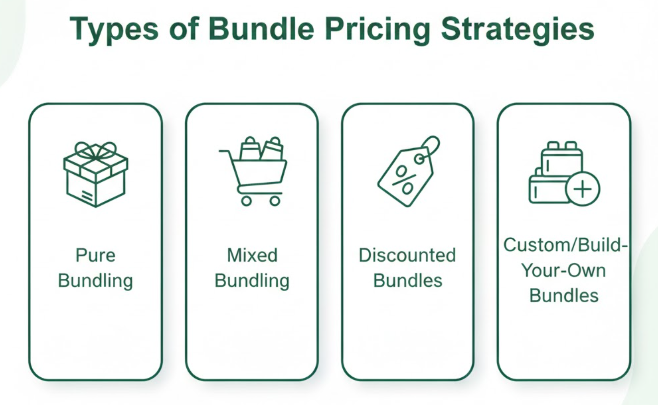
Not all bundles are created equal. Businesses can use different bundle pricing strategies depending on their goals, product types, and customer needs. Understanding these variations allows you to tailor your approach for maximum impact, whether you're selling on Shopify or another platform. Let's examine the definitions and key features of each strategy to see how they can be applied to your business.
Pure bundling is a strategy where products are sold only as part of a package and cannot be purchased separately. It is commonly used for software suites, subscription services, or exclusive sets with closely integrated components.
A classic example is Microsoft Office, where programs like Word, Excel, and PowerPoint were traditionally sold together. This approach simplifies the buying decision by offering a single package and can help move slow-selling items by pairing them with popular ones. However, it may feel restrictive for customers who do not need every product in the bundle, so it works best when the items are truly complementary.
Mixed bundling offers customers the flexibility to buy products either as a bundle or individually. This strategy provides the best of both worlds: it encourages larger purchases with a discounted bundle price while still allowing customers to buy individual items if they prefer. This approach is ideal for e-commerce because it caters to different customer segments.
Some shoppers will be drawn to the bundle's value, while others may only need one specific product. By offering both options, you protect your standalone sales and avoid alienating customers who prefer it. Mixed bundling is a powerful way to increase average order value without forcing a purchase. It gives customers control over their shopping experience, which can lead to greater satisfaction and loyalty.
Also Read: Mixed Bundling vs Pure Bundling: Which Strategy Wins?
Discounted bundles are one of the most common and effective bundling strategies. This approach offers a direct price incentive on a group of products, such as a percentage discount, fixed amount off, or tiered pricing based on quantity. The clear and immediate savings make the value proposition highly compelling. When customers see they can pay less by purchasing the bundle rather than buying items separately, they are more likely to complete the purchase.
Discounted bundles are a great way to boost sales volume for both popular and less popular items. By carefully selecting the products and the discount level, you can drive significant revenue while maintaining healthy profit margins.
Custom or build-your-own bundles allow customers to create personalized package deals from a selected range of products. This customer-focused approach gives shoppers control and ensures they only pay for items they truly want, increasing perceived value.
Because customers curate their own bundles, they often feel more invested, which can lead to a higher average order value. Setting clear rules, such as choosing any three items for a fixed price, keeps the offer simple and effective. This flexibility not only boosts sales but also provides insights into popular product combinations among your audience.
Also Read: How a Premier Portuguese Winery Cultivated a +16.80% AOV Lift by Volume Bundling.
For an e-commerce business, bundle pricing can be a transformative strategy. By offering multiple products together at a lower price, you create compelling deals that attract a wider customer base, including shoppers who may not have intended to make a purchase initially. This product bundling approach not only enhances the value of your offerings but also encourages customers to make larger purchases, directly boosting your overall sales. When done right, it can be a great way to grow your business.
Beyond immediate revenue gains, bundling improves customer satisfaction. Shoppers appreciate stores that offer convenient, valuable options, such as item bundles. This positive experience can turn one-time buyers into repeat customers who recommend your business to others. Furthermore, bundling can help you clear out less popular items by pairing them with best-sellers, leading to more efficient inventory management and reduced storage costs.

A well-executed product bundle pricing strategy can drive significant sales growth, but it's important to approach it with realistic expectations. The following sections will explore the primary benefits, including a higher average order value, better inventory optimization, increased conversions, and improved product visibility.
Bundle pricing increases perceived value by using the psychological principle of anchoring. Customers naturally compare the bundle price to the total cost of buying items separately, creating a high-value reference point. When the bundle appears cheaper than the combined price, it feels like a smart and cost-effective purchase, even if the savings are moderate. This framing positions the offer as a valuable opportunity and makes the package more appealing than individual purchases.
Too many choices can overwhelm customers, leading to decision fatigue. Bundles simplify the buying process by presenting a curated package that meets a specific need, reducing the number of decisions shoppers must make. This streamlined approach reduces friction, speeds up the purchase process, and minimizes cart abandonment. As a result, customers feel more confident and satisfied with their purchase.
Bundle pricing effectively triggers loss aversion and fear of missing out. When customers see clear savings in a bundle, they feel motivated to act rather than risk paying more later. Highlighting the discount frames the offer as a valuable opportunity not to be missed. This urgency encourages quicker decisions and increases the likelihood of conversion.
Bundles make the checkout process faster by allowing customers to add multiple related items to their cart in one step. This reduces friction and simplifies the path to purchase, especially for mobile shoppers who prefer quick transactions. The convenience of buying everything together encourages completion and supports higher-order values.
Also Read: How Lifetime Technologies went from a Single Additive to System Kits.
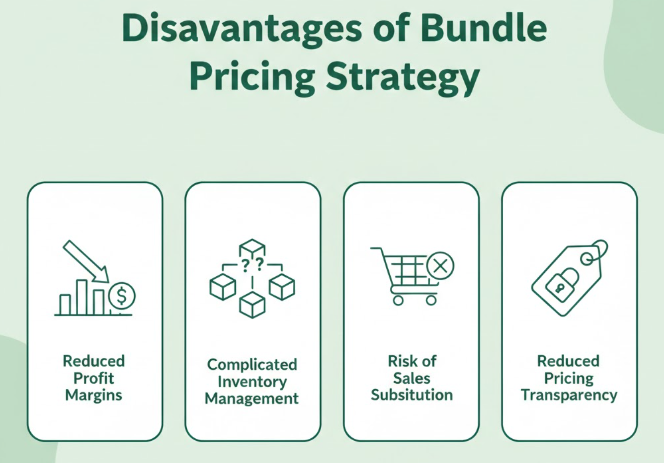
While bundle pricing offers many benefits, it's not without its challenges. Implementing this strategy without careful planning can lead to several drawbacks, such as reduced profit margins or complicated inventory management. The following sections examine the primary disadvantages to consider.
One major risk of bundle pricing is lower profit margins. Offering discounts makes bundles attractive, but aggressive pricing can reduce overall profitability. Careful cost calculation is essential to ensure each bundle remains financially sustainable. The goal is to increase sales volume without sacrificing healthy margins. Finding the right balance between value and profit is key to long-term success.
While bundling can help move stock, it can also complicate inventory tracking. Products sold individually and within multiple bundles require accurate stock monitoring. If a key item runs out, it can disrupt several bundle offers at once. Without proper systems in place, this can lead to overselling and fulfillment delays. A reliable inventory management process is crucial to avoid operational challenges.
Sales substitution occurs when customers choose a discounted bundle over higher-margin individual products. This can reduce overall profitability. If buyers mainly want one hero product and see the rest as bonus add-ons, the bundle may simply lower the price of that primary item. To prevent this, bundles should encourage incremental purchases rather than replace full price sales.
Bundles can sometimes reduce price clarity, as customers may not easily see the individual value of each item. This can create skepticism about the actual savings. If shoppers feel forced to buy unnecessary products, trust may decline. Clear communication of value and savings is essential. Presenting bundles transparently ensures customers feel informed and confident in their purchase decisions.
Also Read: How Metalbird drove consistent growth across 8 stores.

Since bundle pricing can significantly impact your business's success, knowing how to implement it effectively is crucial. A successful strategy goes beyond simply grouping products; it requires careful planning, analysis, and a deep understanding of your customers. The following tips, from offering flexible discounts to tracking performance, will help you create and manage pricing strategies that drive revenue and enhance the customer experience.
Flexibility is key to appealing to a wide range of customer segments. Instead of offering a single, rigid bundle price, consider providing a variety of discount options. This allows customers to choose the deal that best fits their needs and budget, thereby increasing conversions. For example, you could offer optional bundling where customers can add extra products to their cart "at a discounted rate." This approach feels less restrictive and can increase customer loyalty by giving them control over their purchase. Dynamic pricing based on the items selected can also make the offer more personalized.
Here are a few ways to offer flexible discounts:
A successful bundle pricing strategy should align with your broader revenue objectives. Before launching a bundle, clearly define whether your goal is to increase overall revenue, improve margins on specific products, or clear slow-moving inventory. Your objective will shape how you structure and price the bundle, from premium value packs to more aggressive inventory-clearing offers. Setting clear revenue allocation goals ensures your bundling strategy supports long term financial health, not just short term sales gains.
Offering a bundle is not enough; you must clearly communicate its value. Highlight cost savings, convenience, and how the products complement each other across your marketing channels. Show customers how the bundle solves a problem or enhances their experience rather than simply presenting a discounted price. When buyers understand the real benefit behind the offer, perceived value increases and conversions improve.
Mixed bundling allows customers to purchase products individually or as part of a discounted bundle, offering flexibility and choice. This approach prevents frustration that can occur with pure bundling and caters to different buying preferences. By giving customers options, you can increase average order value while still capturing full price individual sales. The flexibility of mixed bundling makes it an effective strategy for maximizing revenue.
Bundle pricing should not remain static. Regularly review performance data, customer feedback, and market trends to ensure your offers stay competitive and relevant. Experiment with different combinations and price points to identify what resonates most with your audience. Continuous optimization keeps your bundles attractive and supports sustained revenue growth.
Consistently tracking key performance metrics is essential to measuring bundle success. Monitor indicators such as Average Order Value, attach rate, bundle profit margin, conversion rate, and refund rate to assess both revenue impact and profitability. Comparing bundled and non-bundled orders reveals real performance insights, while A B testing helps refine your approach. Data-driven evaluation ensures your strategy drives profitable long-term growth rather than temporary sales spikes.
Also Read: How Squaties Scaled Order Volume via Performance Bundling.
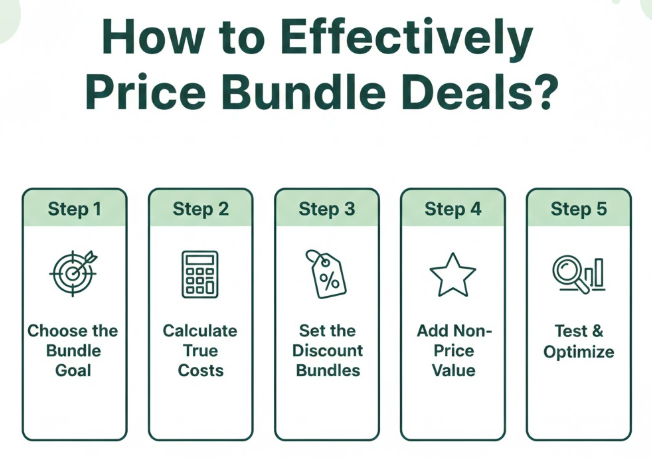
Pricing your bundle deals effectively is both an art and a science. The right price is one that feels like a great deal for the customer while still being profitable for your business. It requires a strategic approach that considers your costs, goals, and the value you're offering. The following step-by-step guide will walk you through how to price your bundle of products for maximum success, from setting goals to adding non-price value.
Before setting a price, define the primary goal of your bundle. Are you aiming to increase AOV, clear slow-moving inventory, or boost conversions with a compelling offer? Your objective will shape product selection, pricing structure, and discount depth. For example, a stock clearance bundle may require a more aggressive discount than one focused on maximizing profit. A clearly defined goal lies at the foundation of a focused and effective pricing strategy.
Profitable bundle pricing starts with understanding your true costs. Beyond the cost of goods sold, factor in shipping, packaging, and handling expenses to get an accurate total. Once you calculate the full cost of the bundle, you can determine your minimum profitable price point. This step protects your margins and ensures your bundle drives revenue without silently reducing profitability.
After defining your goal and costs, determine a discount that makes the bundle attractive without harming standalone product sales. A modest but meaningful discount, often between 5 and 15 percent, is typically effective. Clearly display the original combined price alongside the bundle price to highlight savings. Testing different discount levels can help you strike the right balance between appeal and profitability.
Value does not always have to come from deeper discounts. You can enhance your bundle by adding non-price incentives such as free shipping, exclusive items, or limited-time availability. These additions increase perceived value and create a premium feel without further reducing margins. Scarcity and added perks can be just as powerful as price cuts in driving conversions.
Launching your bundle is only the beginning. Continuously test product combinations, pricing, and messaging to see what resonates best with your audience. Track key metrics like AOV, conversion rate, and sales performance to measure impact. Ongoing optimization ensures your bundles remain competitive and continue driving sustainable growth.
Also Read: How SportsStop Dominated the Diamond and Field with High-Velocity Bundling.
To fully understand how bundle pricing helps businesses, it's helpful to look at real-world examples from well-known companies. These implementations showcase the versatility of the strategy across different industries, from retail to software.
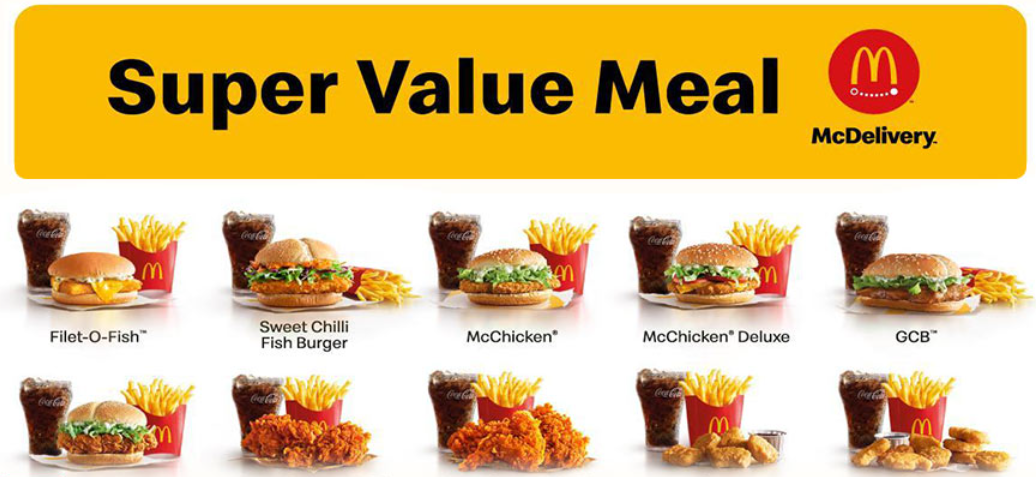
Source: McDonald’s
McDonald’s iconic Value Meals are a prime example of a successful mixed bundle pricing strategy. By combining a burger, fries, and a drink at a lower price than if purchased separately, the fast-food giant simplifies the ordering process and offers undeniable convenience. This strategy taps into the customer's desire for a complete, easy meal.
This approach significantly impacts sales volume, as it encourages customers to upgrade from a single item to a full meal, thereby increasing the average transaction value. It creates a win-win: the customer gets a good deal, and McDonald’s boosts its revenue and streamlines kitchen operations.
The success of this strategy is clear:

Source: Subway
Subway’s meal deals provide another compelling real-world case study of how product bundling can significantly increase sales. The brand offers customers the option to bundle a sandwich with chips or a cookie and a drink for a reduced price. This strategy caters directly to customers' needs for a complete, customizable lunch.
Unlike a pure bundling approach, Subway’s mixed bundling allows customers to purchase individual items or opt for the bundle discount. This freedom of choice is crucial, as it empowers customers while subtly nudging them toward a larger purchase. The result is an increased average order value and a more satisfying customer experience.
Key features of Subway's successful bundle include:

Source: Amazon
Amazon’s “Frequently Bought Together” feature is a brilliant example of dynamic, data-driven bundling in eCommerce. Instead of pre-defining bundles, Amazon uses sophisticated algorithms to analyze customer data and suggest related products that are often purchased together. For example, a customer buying a camera might see a recommendation to add a memory card and a case.
This automated approach to creating bundle products is highly effective because it’s personalized and contextually relevant. By anticipating the customer’s needs, Amazon simplifies the shopping process and significantly increases the chances of an upsell. This leads directly to a larger cart size and a higher average order value (AOV).
The operational advantages are noteworthy:
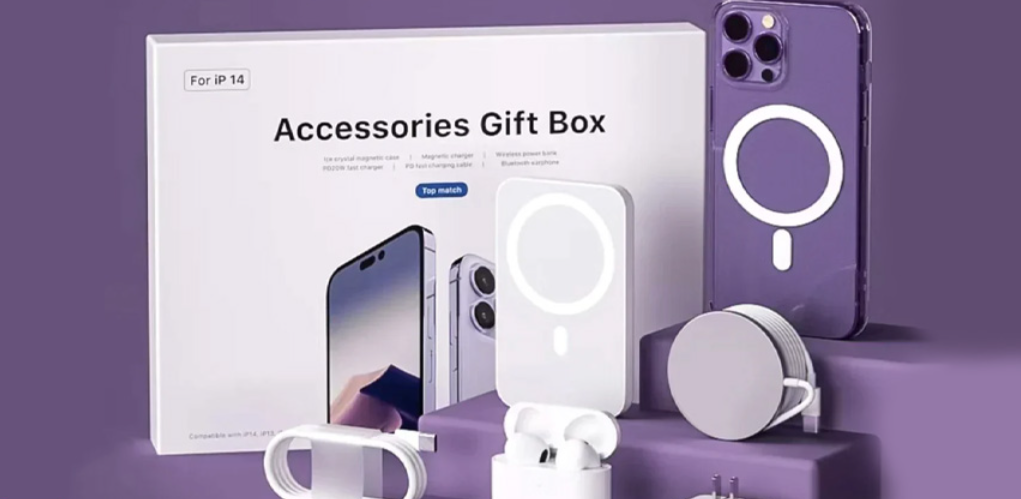
Source: Apple
Apple demonstrates how tech companies can use product bundling to improve revenue by pairing its high-value devices with complementary products. When you buy an iPhone, you are often prompted to add accessories like AirPods or a charger, sometimes with bundle discounts. This strategy encourages larger purchases and seamlessly integrates customers into the Apple ecosystem.
This approach enhances the customer experience by providing a complete solution right from the start. Customers get everything they need for their new device in one transaction, reinforcing the brand's reputation for quality and convenience. This not only boosts immediate revenue but also strengthens long-term customer loyalty.
Apple's bundling success comes from:
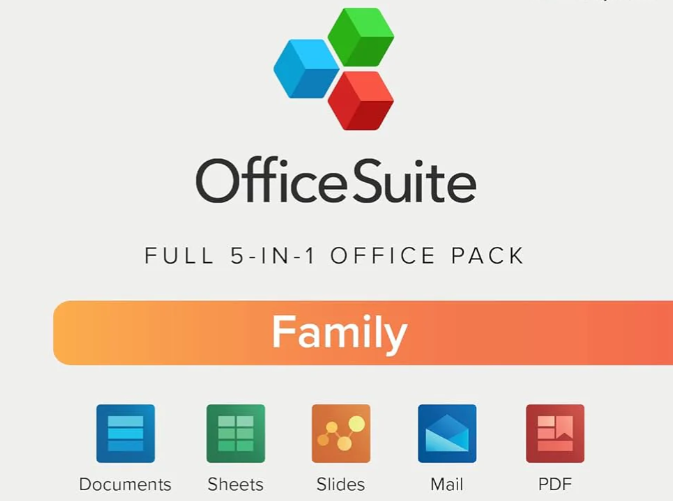
Source: Microsoft Office
Microsoft Office Suite is a classic example of mixed bundling that has generated overwhelmingly positive results. By bundling essential software like Word, Excel, and PowerPoint, Microsoft offers significant added value at a discounted price compared to purchasing each application individually. This makes the suite an indispensable tool for both professionals and students.
The move toward subscription bundles with Microsoft 365 has further solidified its market dominance. This model ensures recurring revenue and provides customers with continuous updates and additional features, such as cloud storage. The bundle pricing is so compelling that most users opt for the full suite rather than individual programs.

Source: Sephora
Sephora masterfully uses product bundling to drive sales and foster customer loyalty in the competitive beauty industry. The brand curates bundles featuring a mix of popular products, often around a theme or a specific skincare routine. These sets allow customers to discover new items at a value, increasing basket size and encouraging experimentation.
A key part of Sephora’s strategy involves seasonal promotions and limited-edition bundles. These create a sense of urgency and excitement, making them highly effective during holidays. One challenge businesses face with this model is managing inventory for limited-time offers, but when done right, it can significantly boost revenue and brand engagement.
Popular bundle types from Sephora include:
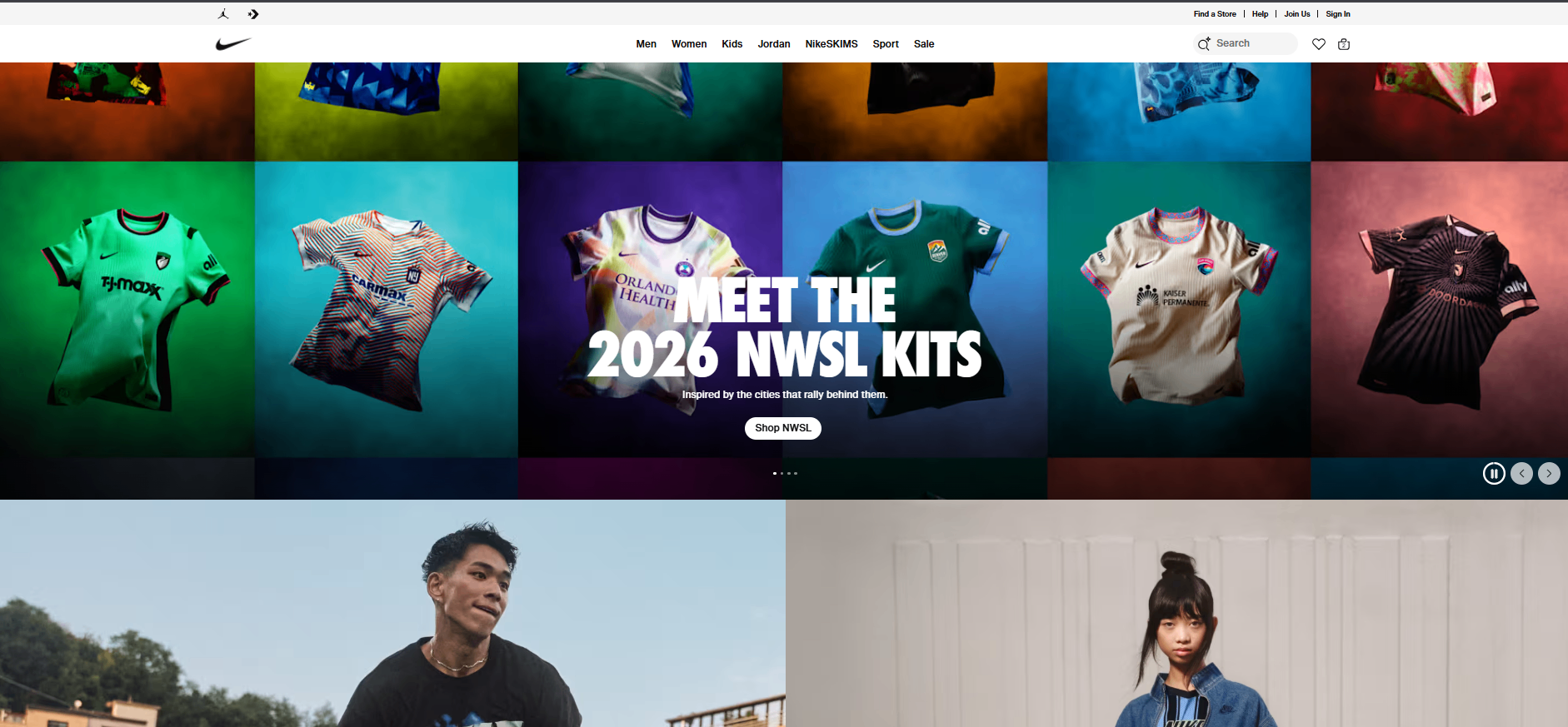
Source: Nike
Nike leverages product bundling to sell entire outfits, transforming a single product search into a full-look purchase. By showcasing complementary items such as shoes, shirts, and shorts, Nike inspires its target audience and simplifies the shopping experience. This is a highly successful retail strategy for upselling related items.
This approach not only boosts the average order value but also strengthens Nike's position as a lifestyle brand. Instead of just selling athletic gear, Nike sells a complete aesthetic. Customers looking for a new pair of running shoes might easily be persuaded to add the matching top and leggings to their shopping cart.
The advantages of Nike's outfit bundles are:
Also Read: How Puur Scaled Average Order Value via Intelligent Accessory Pairing.
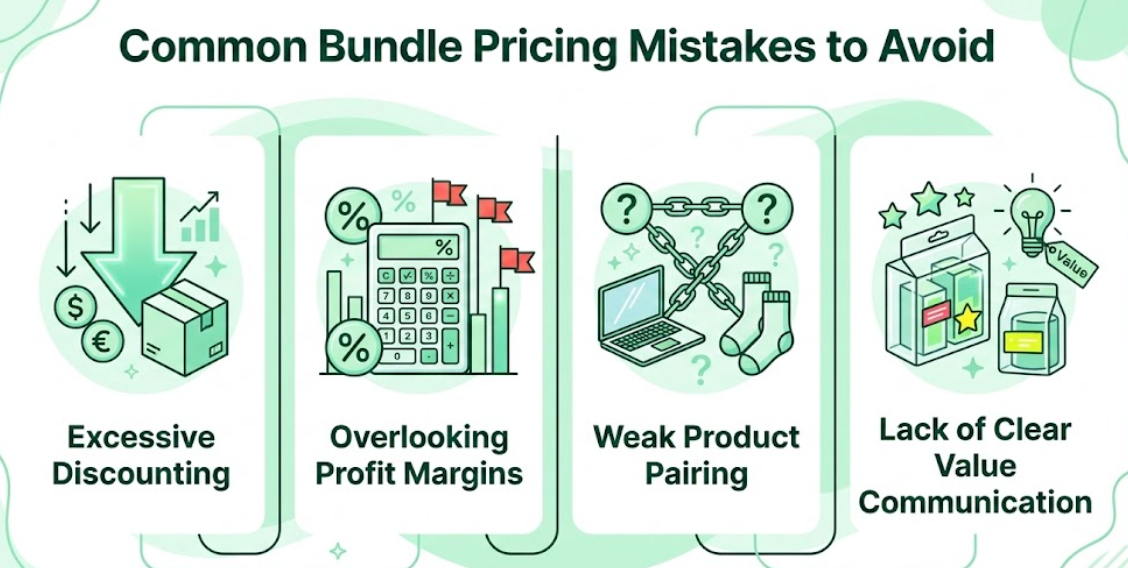
While product bundling can be a powerful strategy, certain mistakes can undermine its effectiveness and even harm your business. It's important to be aware of these common pitfalls so you can avoid them.
One of the most tempting yet risky mistakes in bundle pricing is offering discounts that are too deep. While lower prices may boost short term conversions, they can harm your brand’s perceived value and long term profitability. If customers start associating your products with constant heavy discounts, it becomes difficult to sell at regular prices. The key is to strike a balance between an attractive offer and maintaining healthy profit margins to protect your financial sustainability.
Creating bundles without carefully calculating profit margins is a costly error. Increasing sales volume means little if each package deal delivers minimal or negative returns. Before launching any bundle, analyze the costs of the included products and ensure the final price still contributes positively to your bottom line. Bundling should increase both sales and profitability, not quietly erode your earnings.
The effectiveness of a bundle depends on how well the products complement each other. Pairing unrelated or low-demand items reduces the offer’s appeal and weakens customer interest. Successful bundles solve a complete problem or enhance the user experience, such as combining a camera with useful accessories. Strategic product pairing based on customer behavior and purchase data ensures the bundle delivers genuine value.
Even a well-designed bundle can fail if its value is not clearly explained. Customers need to see exactly why the offer is worthwhile, beyond just a discounted price. Highlight the total individual cost alongside the bundle price and clearly communicate the savings and benefits. Strong value communication builds trust, improves conversions, and increases overall customer satisfaction.
Also Read: How Calitron Boosted Revenue and AOV with Smart Bundling.
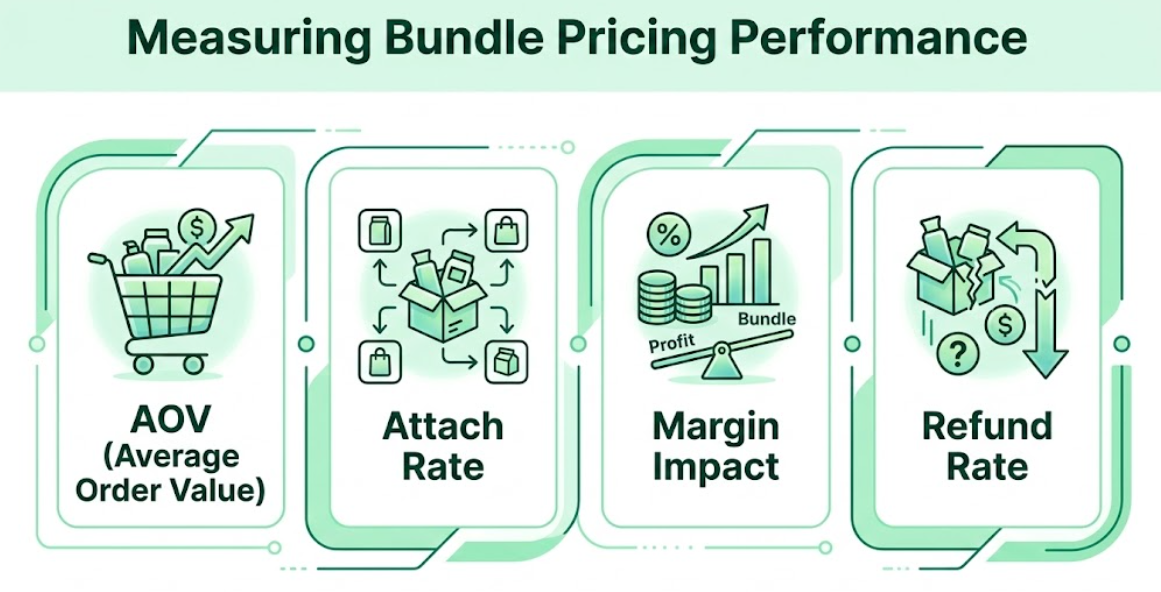
Want to know if your pricing strategy has worked? Measuring the performance of your bundle pricing is essential to understanding its true impact on your business. It takes time, but by keeping a close eye on the right metrics, you can determine what's successful and where you need to make adjustments. The following sections will break down the key metrics to monitor to ensure your bundles drive profitable growth.
Average Order Value (AOV) is one of the most critical metrics for measuring the success of your bundle pricing strategy. AOV is the average amount each customer spends per transaction. The primary goal of bundling is often to increase this figure by encouraging larger purchases.
To measure its impact, compare the AOV of orders that include a bundle to that of orders that do not. A significant increase in AOV for bundled orders is a strong indicator that your strategy is working as intended. A higher AOV directly contributes to increased revenue from the same number of customers.
By tracking this metric, you can quantify how effectively your bundles are incentivizing customers to increase their spending. If the bundle price is set correctly, you should see a healthy lift in your overall AOV and sales volume.
The attach rate is a key metric that measures the percentage of orders that include a specific bundle or bundled add-on after exposure to the offer. It essentially tracks how many customers "attach" the bundle deal to their purchase when given the opportunity.
This metric is particularly useful for evaluating the appeal of your cross-selling efforts. A high attach rate indicates that your bundle of products is compelling and relevant to your customer base. It shows that you are successfully encouraging customers to buy additional products they might not have considered otherwise.
By monitoring the attach rate, you can gauge the effectiveness of different bundle combinations and promotional placements. A low attach rate might signal a need to rethink your product pairings or the value proposition of your bundle deal.
Effective management of profit margins is crucial to a successful bundle pricing strategy. When complementary products are packaged together, the bundled price can be set strategically to enhance perceived value while boosting sales volume. By leveraging leader bundling, businesses can feature popular products at a higher price point, augmenting overall profit margins while benefiting from dynamic pricing adjustments that cater to customer preferences. Moreover, including less popular items in a bundle helps distribute costs more effectively, resulting in a more attractive overall discount. This approach leads to increased customer satisfaction, as customers perceive greater value, ultimately fostering long-term customer loyalty.
A well-executed bundle pricing strategy can significantly influence refund rates. By offering complementary products at a bundled price, perceived value rises, enhancing customer satisfaction. When customers see theyare getting a great deal on a single package, they’re less likely to pursue a return, as their overall buying experience feels more satisfactory. Additionally, addressing customer needs through dynamic pricing can ensure that the bundle resonates with targeted customer segments, ultimately reducing refund requests and promoting loyalty.
Also Read: How The Chosen Cultivated a Community through Curated Merchandise Kits.
Kefi Product Bundle Builder allows you to create frequently bought together offers, volume-based bundles, and mix-and-match packages that encourage larger purchases. With flexible discount rules and easy customization, you can design bundles that match your brand and pricing strategy. The app also enables strategic placement on product and cart pages, ensuring maximum visibility during high-intent moments. By tracking performance metrics within the app, you can continuously refine your bundles to increase average order value and overall store revenue.
Book a Demo to see how Kefi Product Bundle Builder works.
Utilizing a bundle pricing strategy can significantly enhance your overall sales and customer satisfaction. By offering a well-curated suite of products, you not only provide value through reduced prices but also improve the shopping experience for your target audience. Insights from market research can guide you in designing attractive packages, ensuring you effectively meet customer needs and preferences. This approach aligns with your business goals, leading to increased customer loyalty and higher average transaction values.
The best time to introduce bundle pricing is during peak sales periods, product launches, or special events. Also, consider bundling complementary products to enhance perceived value and encourage higher spending among customers. Timing can significantly influence customer interest and sales performance.
Bundle pricing stands out by offering consumers a perceived value through combined products, often leading to increased sales. Unlike standalone pricing strategies, it encourages larger purchases and enhances customer satisfaction, making it a compelling choice for businesses looking to maximize revenue.
Yes, bundling pricing strategies can pose risks, including potential loss of perceived value for standalone products, customer confusion over complex packages, and reduced overall margins if not executed effectively. It’s essential to monitor these factors to maintain profitability and customer satisfaction.
Many businesses utilize bundle pricing to boost sales, such as fast-food chains offering meal deals, software companies providing suite packages at discounted rates, and e-commerce platforms bundling complementary products. These strategies enhance perceived value and encourage larger purchases.
Various industries, including retail, software, and telecommunications, can effectively implement bundle pricing strategies. Companies offering complementary products or services, such as travel packages or subscription services, often see increased sales and enhanced customer satisfaction through this approach.
Bundle pricing can increase sales and profits by encouraging customers to purchase more products together at a perceived discount. This strategy reduces decision fatigue, enhances perceived value, and increases average order value, ultimately driving overall revenue growth for businesses.
.svg)
