
Now, let's deep dive into this!
Running a Shopify store often means relying on apps to unlock features that drive growth. While Shopify provides a strong foundation, many merchants use add-on apps to create product bundles, run upsell campaigns, launch loyalty programs, automate promotions, and improve customer engagement. The right apps can help increase revenue while improving the customer experience.
However, installing apps without a clear strategy can create challenges. As new tools are added over time, stores may face overlapping functionality, higher subscription costs, slower performance, and a more complex tech stack.
The most successful Shopify merchants focus on apps that directly support their business goals. The right add-on apps can increase average order value (AOV), improve customer retention, and create a smoother buying journey without unnecessary complexity. This guide explores the best add-on apps for Shopify, helping merchants choose tools that deliver the greatest impact based on their growth objectives.
Shopify add-on apps are third-party tools that extend your store's functionality beyond Shopify's built-in features. They help merchants add capabilities such as product bundles, upsells, loyalty programs, subscriptions, reviews, and personalized promotions without requiring custom development.
Instead of relying solely on Shopify's native features, merchants can install add-on apps to solve specific business challenges. For example, one app may help increase average order value through bundles, while another may improve customer retention with rewards programs. This flexibility allows stores to create a shopping experience that aligns with their growth goals.
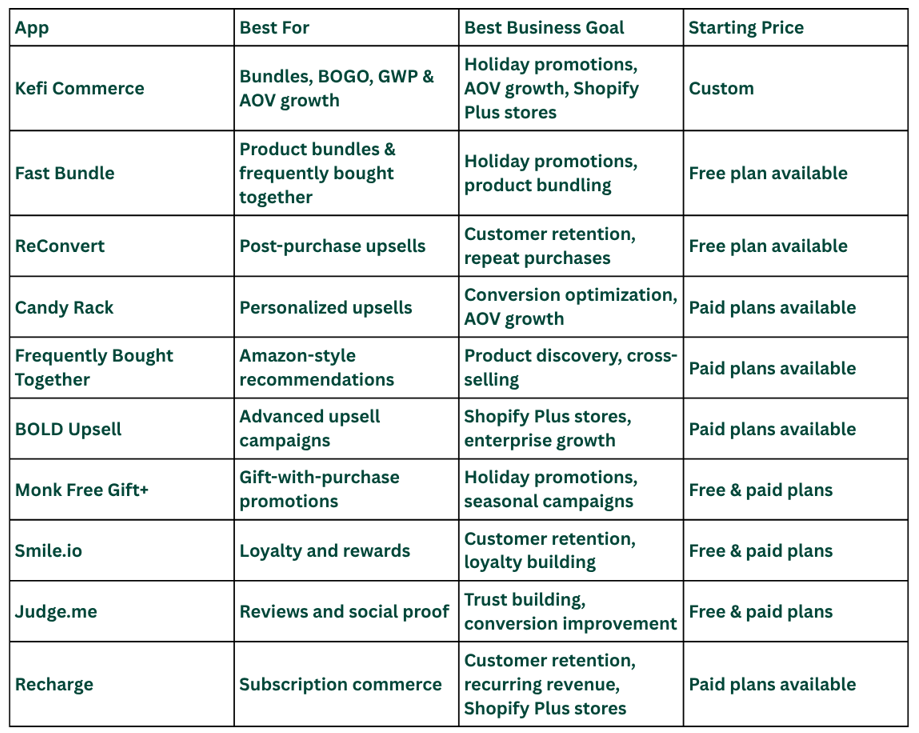
The best add-on apps for Shopify serve different purposes, from increasing average order value to improving customer retention. Understanding the major app categories can help you build a tech stack that supports your growth goals without adding unnecessary complexity.
Bundle apps help merchants group complementary products and offer discounts for purchasing multiple items together. They are commonly used to increase average order value and encourage customers to buy more in a single transaction.
Create smarter product bundles and encourage larger purchases with Kefi Commerce.
Upsell apps and Shopify apps for add-on items encourage customers to upgrade their purchase or add complementary products before or after checkout. These apps help merchants maximize revenue opportunities throughout the customer journey.
Loyalty apps reward customers for purchases, referrals, and engagement. By encouraging repeat business, they help improve customer retention and increase long-term customer lifetime value.
Want better results from your loyalty program? Discover how Kefi Commerce helps create offers customers love to return for.
Review apps collect and display customer ratings, reviews, photos, and testimonials. They build trust, strengthen social proof, and help shoppers make more confident purchasing decisions.
Subscription apps enable recurring purchases and automated reorders. They are particularly valuable for brands that sell consumable products and want to create predictable recurring revenue.
Product recommendation apps use customer behavior and product relationships to suggest relevant items. These personalized recommendations improve product discovery and can significantly increase cart value.
Most successful Shopify stores don't rely on a single app category. Instead, they combine bundle, upsell, loyalty, review, subscription, and recommendation apps to create a seamless shopping experience that drives both immediate sales and long-term customer retention.
As your store evolves, add-on apps provide the flexibility to introduce new features without rebuilding your entire setup. The best add-on apps for Shopify extend what your store can do, making it easier to create a more engaging and efficient shopping experience.
Shopify add-on apps help merchants increase revenue, improve customer experiences, and create more opportunities for growth throughout the buying journey. From boosting average order value to encouraging repeat purchases, the right apps can turn more visitors into loyal customers.
Apps that offer bundles, upsells, cross-sells, and volume discounts encourage customers to spend more in a single transaction. According to Shopify, upselling and cross-selling strategies can contribute significantly to e-commerce revenue when implemented effectively.
Many shoppers never explore your entire catalog on their own. Product recommendation apps, frequently bought together widgets, and personalized merchandising tools help customers discover relevant products they may have otherwise missed.
Promotions such as Buy One Get One (BOGO), gift with purchase, and buy more save more offers give customers a reason to add additional items to their cart. These incentives can increase cart value while creating a stronger perception of value.
Modern shoppers expect relevant recommendations and tailored offers. Add-on apps can personalize product suggestions, promotions, and customer journeys based on browsing behavior, purchase history, and cart activity, making the shopping experience more engaging.
Growth does not stop after the first sale. Loyalty programs, rewards platforms, subscriptions, and post-purchase engagement tools help strengthen customer relationships and encourage repeat purchases. According to Bain & Company, increasing customer retention by just 5% can increase profits by 25% to 95%, highlighting the long-term value of retention-focused strategies.
Together, these benefits show why the best add-on apps for Shopify are more than optional upgrades. The right combination of apps can increase revenue, improve customer experiences, strengthen retention, and help merchants scale more efficiently without adding unnecessary complexity to their stores.
The best add-on apps for Shopify help merchants increase average order value, improve conversions, strengthen customer loyalty, and create better shopping experiences. While there are thousands of options available, the best apps for Shopify are those that align with specific business goals and deliver measurable results.
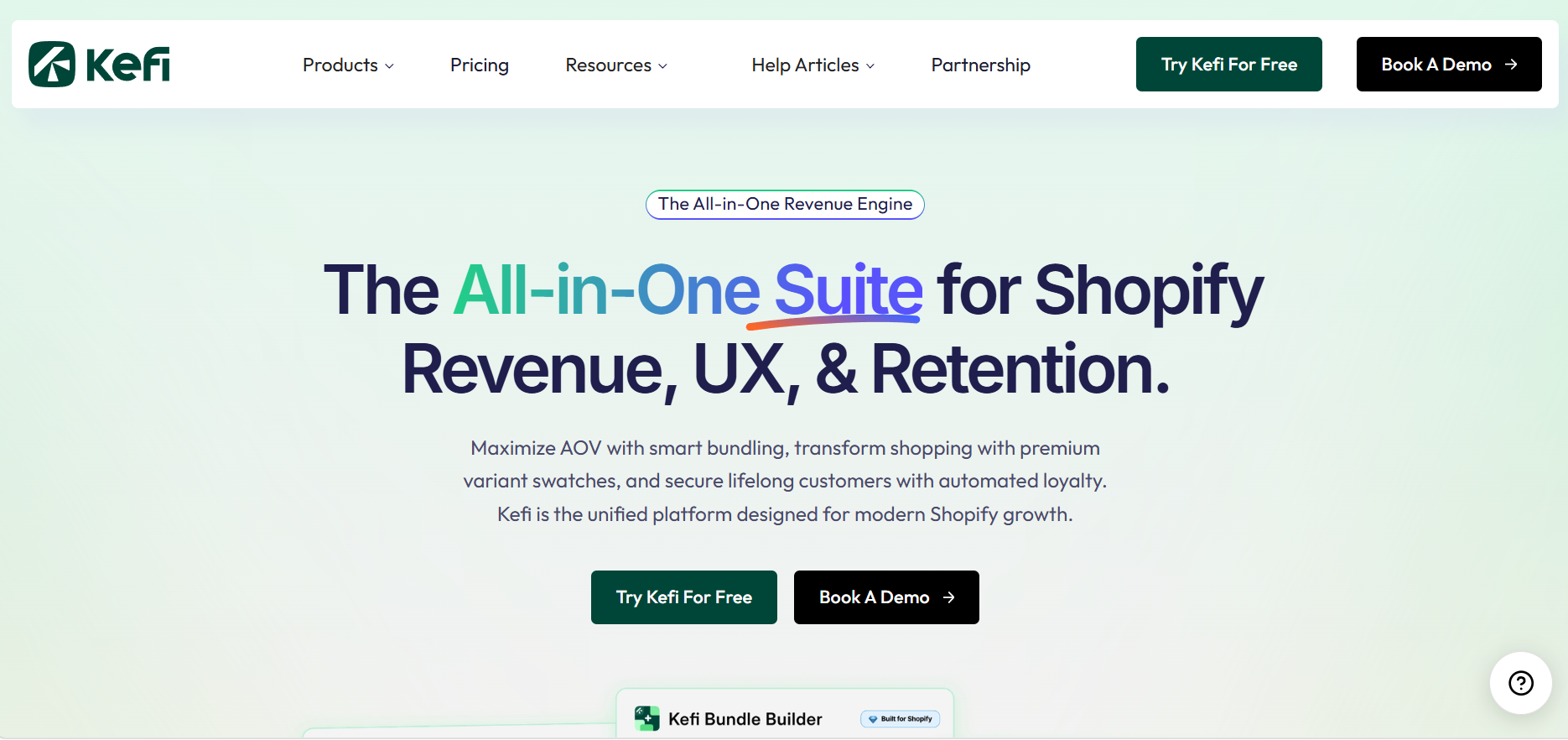
Kefi Commerce is one of the best add-on apps for Shopify, helping merchants increase average order value through bundles, BOGO offers, gift-with-purchase campaigns, volume discounts, upsells, and cross-sells without relying on multiple apps.
Best For: Product bundles, BOGO offers, gift with purchase campaigns, and maximizing average order value
Kefi Commerce offers tiered pricing designed to support merchants at different stages of growth, from new stores testing promotions to high-volume brands looking to maximize revenue.
With affordable entry-level pricing and a comprehensive feature set across all plans, Kefi Commerce delivers strong value for merchants looking to consolidate promotions and scale their Shopify store efficiently.
Ready to get started? Explore Kefi pricing and choose a plan that fits your store.
"Kefi bundles helped us launch ready-to-wear sets styled by our in-house team. Customers loved the ease of shopping full looks while we saw a lift in average order value."
"Kefi’s bundle builder made it possible for customers to mix and match sizes for each family member in one go. It’s so intuitive and helped boost our bundle sales instantly!"
"Bundling has completely redefined our customer journey. We used Kefi to offer build-your-own sets. The flexibility to create mix-and-match bundles gave our styling team creative freedom and helped lift our average order size."
Kefi Commerce is a strong choice for merchants looking to simplify their tech stack while running sophisticated promotions. By combining bundles, upsells, volume discounts, and gift campaigns in one platform, it helps drive revenue growth without adding operational complexity.
Try Kefi Commerce for free and launch bundles, BOGO offers, gift campaigns, and upsells from a single platform.
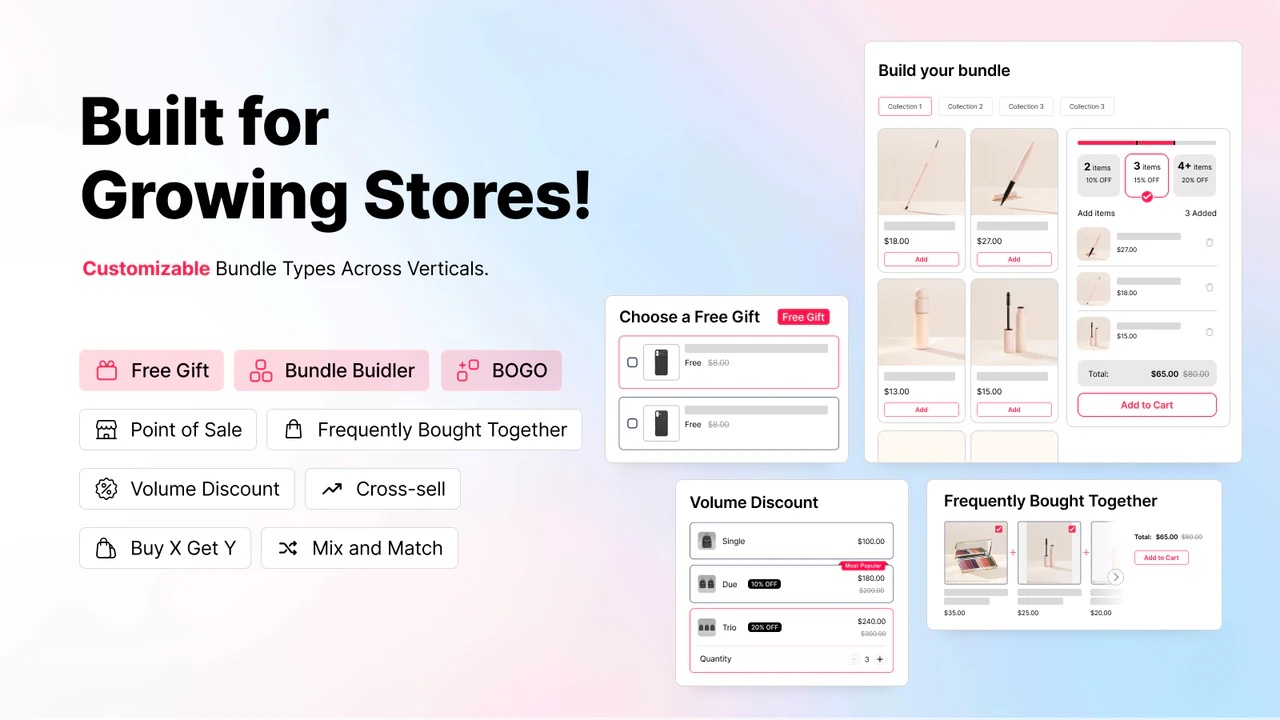
Fast Bundle specializes in product bundling and frequently bought together offers, helping merchants encourage larger purchases through bundled discounts, mix-and-match promotions, and AI-powered product recommendations.
Best For: Product bundles and frequently bought together offers
Pricing includes a free plan, with paid plans available for merchants who need advanced bundle types, automation, and reporting features.
Fast Bundle is ideal for merchants looking to increase cart value through strategic product combinations. Its flexible bundling options make it particularly effective for stores that sell complementary products and want a proven way to boost revenue.
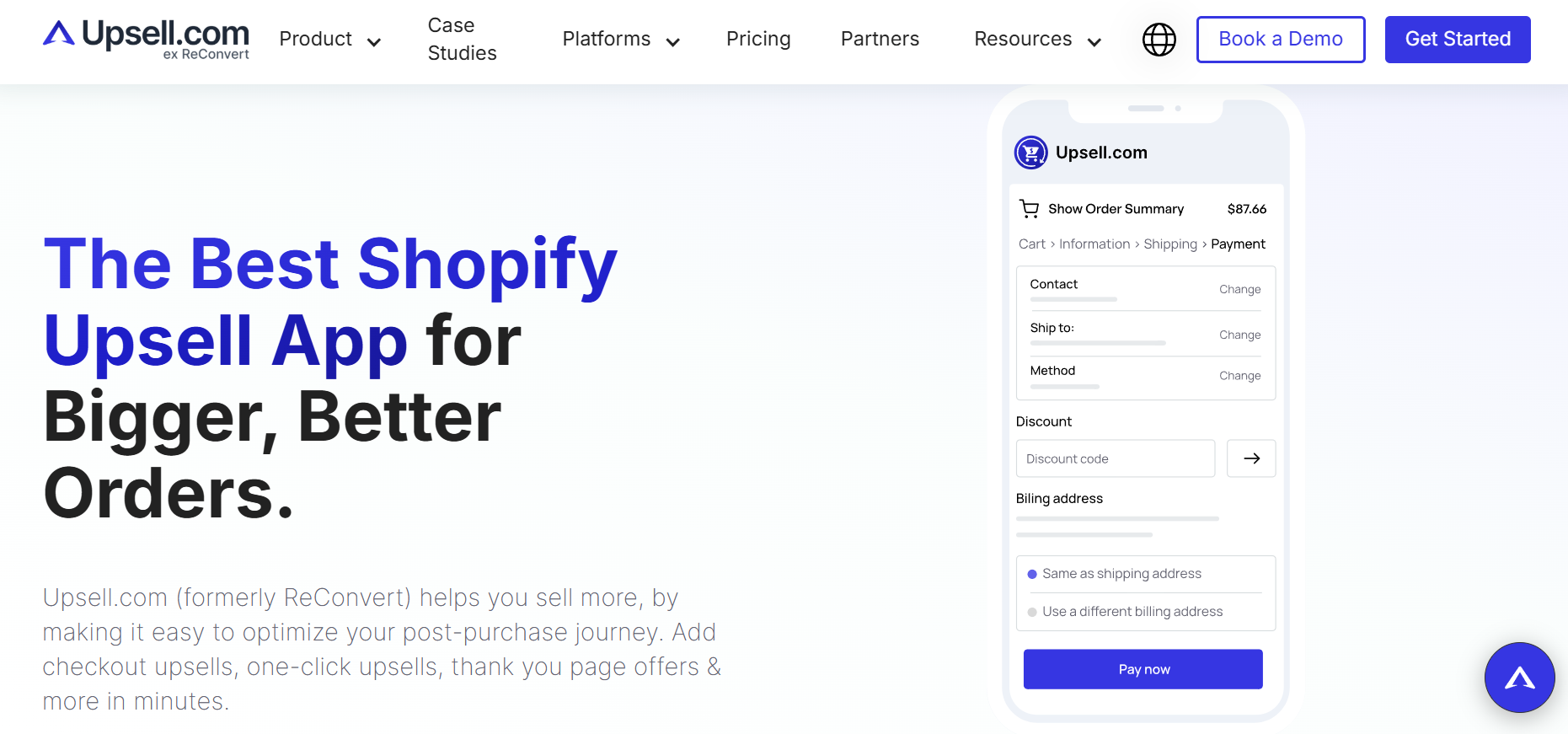
Upsell focuses on post-purchase upsells and thank-you page optimization, helping merchants generate additional revenue after checkout without disrupting the customer's buying experience.
Best For: Post-purchase upsells and thank-you page optimization
Offers a free plan for smaller stores, with paid plans that unlock additional post-purchase upsell, thank-you page, and customization capabilities.
Upsell helps merchants maximize the value of every completed transaction. Turning thank-you pages into revenue-generating touchpoints, it provides an effective way to increase customer spend without adding friction to the checkout process.
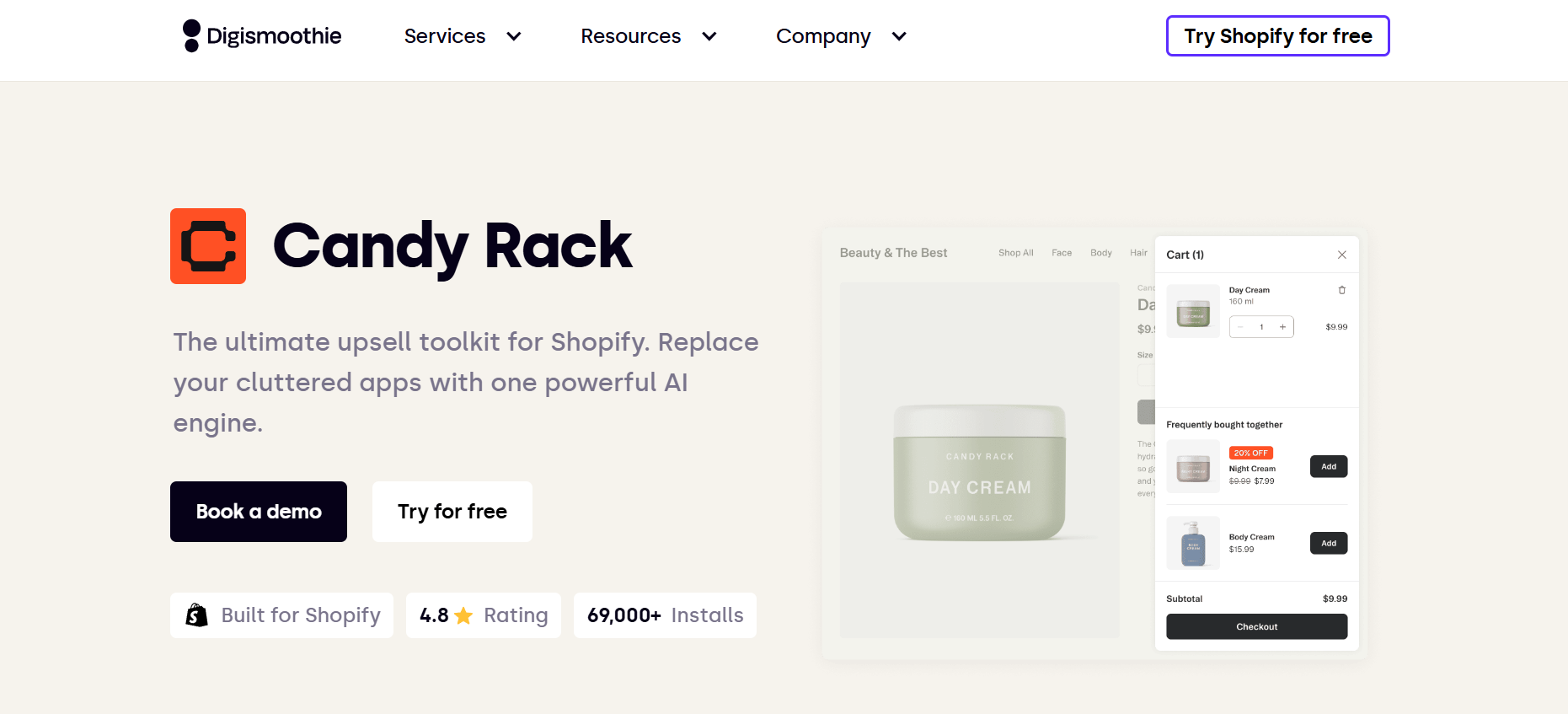
Candy Rack helps merchants deliver personalized upsell offers throughout the shopping journey, using intelligent recommendations to encourage customers to add relevant products before completing their purchase.
Best For: Personalized upsells
Pricing starts with paid plans designed for merchants that want dedicated upsell functionality and more advanced personalization options.
Candy Rack excels at making upsells feel natural and relevant rather than intrusive. Its personalized recommendation engine helps merchants increase average order value while maintaining a smooth shopping experience that aligns with customer intent.

Frequently Bought Together uses recommendation-driven bundles inspired by Amazon's shopping experience to help customers discover complementary products and build larger carts.
Best For: Amazon-style recommendations
Available through paid subscription plans that provide access to AI-powered recommendations, bundle discounts, and customization features.
Frequently Bought Together leverages a proven recommendation model that encourages shoppers to purchase related products together. For merchants looking to improve product discovery and increase basket size, it offers a simple yet effective way to generate additional revenue.

BOLD Upsell is designed for merchants who want advanced upsell and cross-sell strategies across multiple stages of the customer journey. Its targeting capabilities help stores present more relevant offers and maximize revenue opportunities.
Best For: Advanced upsell strategies
Offers paid plans with access to advanced upsell funnels, customer targeting, analytics, and multi-placement offer management.
BOLD Upsell is a strong option for merchants who want greater control over their upsell strategy. Its advanced targeting and funnel-building capabilities make it particularly valuable for brands focused on maximizing revenue at every stage of the buying journey.

Monk Free Gift+ helps merchants create gift-with-purchase campaigns that encourage larger orders and increase perceived value. The platform makes it easy to reward customers based on cart value, product combinations, or promotional rules.
Best For: Gift-with-purchase campaigns
Includes a free plan for development and smaller stores, alongside paid plans with expanded gifting and promotion capabilities.
Monk Free Gift+ is ideal for merchants who frequently run promotional campaigns and want to make offers more compelling. Its gifting capabilities help increase conversions while creating a more rewarding shopping experience for customers.

Smile.io is one of the most widely used loyalty platforms on Shopify, helping merchants reward customer engagement and encourage repeat purchases through points, referrals, and VIP programs.
Best For: Loyalty and rewards programs
Provides a free plan for basic loyalty programs, with premium tiers that add VIP rewards, referrals, and advanced customer engagement tools.
Smile.io is best suited for merchants focused on long-term customer relationships. Its loyalty and rewards features help increase customer lifetime value while creating stronger incentives for shoppers to return and purchase again.
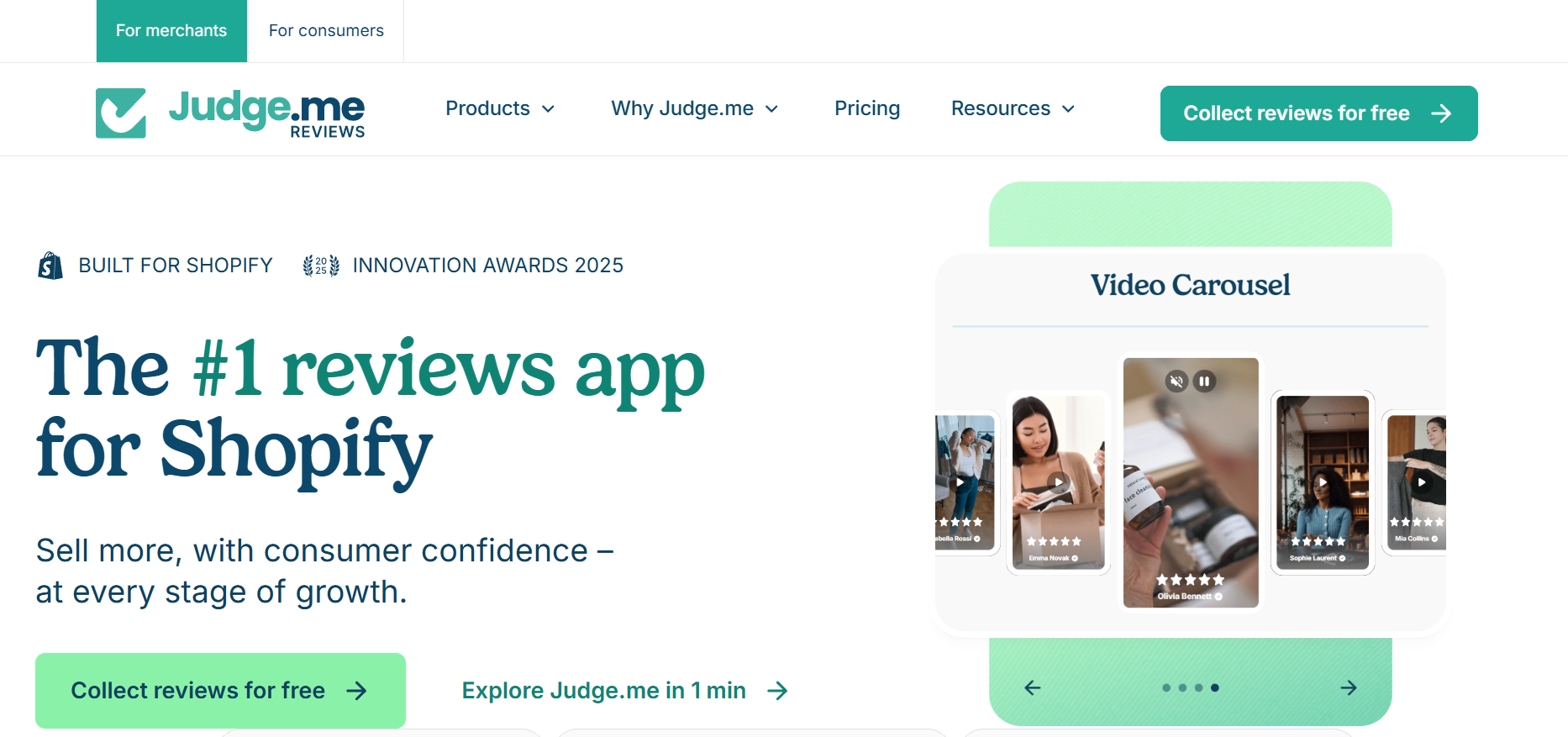
Judge.me helps merchants collect and showcase customer reviews, ratings, photos, and videos that build trust and strengthen social proof throughout the buying journey.
Best For: Reviews and social proof
Offers a generous free plan for collecting and displaying reviews, plus paid plans with enhanced customization and marketing features.
Judge.me remains one of the most effective tools for building credibility and reducing purchase hesitation. Using customer feedback as visible social proof, it helps merchants create more confident buyers and stronger conversion rates.

Recharge enables Shopify merchants to offer subscription products and recurring billing experiences that create predictable revenue streams and improve customer retention.
Best For: Subscription-based stores
Subscription-focused pricing plans are available, with higher tiers providing additional automation, analytics, and customer retention tools.
Recharge is a leading solution for brands building subscription-based revenue models. Its robust subscription management features help merchants create predictable income streams while delivering a convenient purchasing experience that keeps customers coming back.
The best add-on apps for Shopify are not necessarily the ones with the most features. Many of the best Shopify add-on apps succeed because they solve a specific business problem exceptionally well, rather than trying to do everything at once. Before installing any app, evaluate how it will contribute to revenue growth, customer experience, and long-term scalability.
Start by identifying the outcome you want to achieve. For example, bundle apps help increase average order value, loyalty apps improve customer retention, review apps build trust, and upsell apps generate additional revenue throughout the buying journey.
The best Shopify add-ons should integrate smoothly with your existing store setup. Look for apps that are easy to install, work well with your theme, and require minimal technical effort to launch and manage.
Every store has unique promotional strategies. Choose apps that allow you to customize offers, design elements, customer messaging, and campaign rules so they align with your brand and marketing objectives.
Merchant reviews often reveal valuable insights about performance, reliability, and customer support. Look beyond ratings and pay attention to feedback related to ease of use, responsiveness, and long-term results.
An app that works for a small store today should still support your business as it grows. Merchants evaluating the best Shopify Plus apps should pay particular attention to scalability, automation capabilities, customization options, and enterprise-level support.
Strong reporting capabilities help you understand what's working and where improvements are needed. The best apps provide actionable insights into conversions, average order value, customer behavior, and overall revenue performance.
Choosing the best add-on apps for Shopify is ultimately about finding the right fit for your business, not simply selecting the most popular option. By focusing on your growth goals, scalability needs, and expected return on investment, you can build an app stack that drives sustainable growth without adding unnecessary complexity.
Looking for a promotion platform that combines bundles, BOGO offers, upsells, and gifts in one place? Book a demo with Kefi Commerce to discover how Kefi helps Shopify stores grow.
There is no ideal number of Shopify add-on apps for every store. The goal is not to install more apps, but to build a tech stack that supports growth without adding unnecessary complexity. In many cases, a few well-chosen apps deliver better results than a store filled with overlapping tools.
Installing too many apps can negatively affect both store performance and operational efficiency. Common issues include slower page load speeds, conflicting functionality, higher subscription costs, and difficulty identifying which tools are actually driving results. As the app stack grows, managing the store becomes more complex, and customer experiences can become inconsistent.
Many successful Shopify merchants prioritize quality over quantity. Instead of using multiple apps with similar functionality, they select one strong solution for each key business need, such as promotions, reviews, loyalty, subscriptions, or customer support. This approach simplifies management, reduces costs, and creates a more consistent shopping experience.
Every app should serve a clear purpose and contribute to a measurable business outcome. Before installing a new tool, merchants should consider whether it solves a specific problem, overlaps with existing software, can scale with the business, and delivers a clear return on investment. The most successful Shopify stores focus on apps that drive revenue, improve retention, or increase efficiency, while avoiding unnecessary complexity.
The best Shopify stores are rarely the ones with the most apps. Rather than installing every popular tool available, focus on the best add-on apps for Shopify that align with your business goals. By eliminating overlap, focusing on revenue-driving functionality, and choosing tools that align with specific business goals, merchants can create a faster, simpler, and more scalable foundation for growth.
Free Shopify add-on apps are a practical way to test new strategies without increasing costs. Many popular apps offer free plans that help merchants validate ideas, improve store performance, and identify what works before upgrading.
Benefits of free apps:
Limitations of free apps:
As your store grows, these limitations can become more noticeable.
When paid apps make sense:
The best approach is to start with free tools, measure results, and upgrade when the added features can deliver a clear return on investment.
For many merchants, the best part of the best add-on apps for Shopify is all-in-one solutions that combine bundles, upsells, promotions, and customer incentives in a single platform. This approach reduces app overlap, lowers software costs, and simplifies campaign management without adding unnecessary complexity.
Specialized apps are often a better choice when you need advanced functionality in a specific area, such as reviews, subscriptions, or loyalty programs. If each tool serves a distinct purpose, a multi-app approach can work well. However, when functionality overlaps, consolidating tools can improve efficiency and make your tech stack easier to manage and scale.
Choosing the best add-on apps for Shopify is ultimately about building a store that grows efficiently. Focus on apps that directly support your primary goals, whether that's increasing average order value, improving customer retention, strengthening social proof, or scaling promotions. Avoid overlapping tools, prioritize measurable ROI, and regularly review app performance. A lean, purpose-built app stack will deliver better results, lower costs, and a smoother customer experience than simply installing the most popular apps available.
Some of the best add-on apps for Shopify include tools for reviews, email marketing, promotions, and loyalty programs. These apps help store owners build email lists, improve customer satisfaction, and support early marketing efforts.
Many of the best add-on apps for Shopify available through the Shopify App Store let you add recommendations, upsells, and cross-sells. Simply install the app, configure placements, and customize offers to improve your store's user experience.
Yes. Several of the best add-on apps for Shopify offer a free version or free trial with features for reviews, email marketing, live chat, and loyalty programs, making them ideal for testing before upgrading.
Some of the top-rated best apps for Shopify include Judge.me, Smile.io, ReConvert, and Kefi Commerce. Merchants value these tools for their ease of use, strong customer service, and ability to help boost sales.
Apps like Kefi Commerce, Frequently Bought Together, and Candy Rack are popular choices for recommending related products, including product ratings. These Shopify product add-ons help merchants increase average order value by displaying relevant upsell and cross-sell offers during the buying journey.
.svg)
