
Have you ever added fries to your burger order or upgraded to a larger phone screen at the last minute? If so, you've experienced cross-selling and upselling firsthand. These powerful sales strategies are used by businesses worldwide, from fast-food chains to tech giants. While both cross-selling and upselling aim to increase the value of your purchase, they work in different ways. Understanding how they differ can help businesses boost Revenue and improve customer relationships.
Cross-selling is a strategy that recommends complementary products alongside a customer's original purchase, boosting average order value (AOV) and enhancing the customer experience. In the cross sell vs upsell comparison, cross-selling focuses on related items, while upselling promotes a higher-priced or upgraded version of the same product.
For example, if a customer buys a digital camera, cross-selling might include accessories like a memory card, a tripod, or extra batteries to enhance functionality. The difference between cross sell and upsell is that cross-selling adds related products to the cart, while upselling increases the value of the main product.
Understanding the meaning of cross-selling and upselling helps businesses build smarter revenue strategies. The difference between upselling and cross-selling lies in intent: upselling focuses on upgrading, while cross-selling focuses on complementing. Understanding what upselling and cross-selling are enables brands to apply these strategies effectively to boost sales, strengthen trust, and improve long-term customer retention.
Many e-commerce brands use automation platforms like Kefi Product Bundle Builder to streamline their cross sell vs upsell workflows. By enabling smart bundling, personalized product recommendations, cart-based offers, and performance tracking, tools like Kefi help online stores increase average order value without disrupting the customer experience.
Effective sales strategies boost Revenue while improving the customer experience. In a cross-sell vs. upsell comparison, cross-selling adds complementary products, while upselling promotes a higher-value version of the same item. Understanding the cross-sell vs. upsell approach ensures the right offer reaches customers at the right stage, making the cross-sell vs. upsell method a key driver of average order value.
Here's a detailed breakdown of the key differences between cross-selling and upselling:
Cross-selling aims to increase the total number of items in a customer's cart by suggesting products that complement their main purchase. The focus is on expanding the order horizontally by adding relevant items.
Upselling focuses on increasing the value of a single product by guiding customers toward a premium, upgraded, or higher-priced version. Instead of adding more products, it improves the selected item's quality or features.
Cross-selling improves convenience by helping customers discover related products they may need, creating a more complete, seamless solution. It reduces the effort required to search for compatible items separately.
Upselling enhances the overall product experience by offering features such as improved durability, advanced functionality, or superior performance, leading to higher long-term satisfaction.
Cross-selling boosts overall sales volume and increases exposure to a wider product catalog. It helps businesses move complementary inventory and strengthen awareness of the product ecosystem.
Upselling improves profit margins and increases Revenue per transaction by encouraging customers to choose higher-priced options, directly impacting overall profitability.
Cross-selling works best for accessories, complementary products, bundles, and low-cost add-ons that naturally fit with the main purchase. It is especially effective in e-commerce checkout flows and product pages.
Upselling is ideal for products with clear upgrade paths, feature-based tiers, premium editions, or advanced versions, where the added value can be clearly communicated.
Cross-selling increases average order value by adding additional items to a single transaction, thereby increasing cart size. This approach works well when products are logically connected.
Upselling increases average order value by raising the price of the chosen item, improving Revenue without increasing the number of products purchased.
Cross-selling aligns well with customers building a complete solution and are open to exploring related recommendations. It supports decision-making by presenting helpful suggestions.
Upselling aligns with customers who prioritize quality, performance, or long-term value and are willing to invest more for enhanced benefits or advanced features.
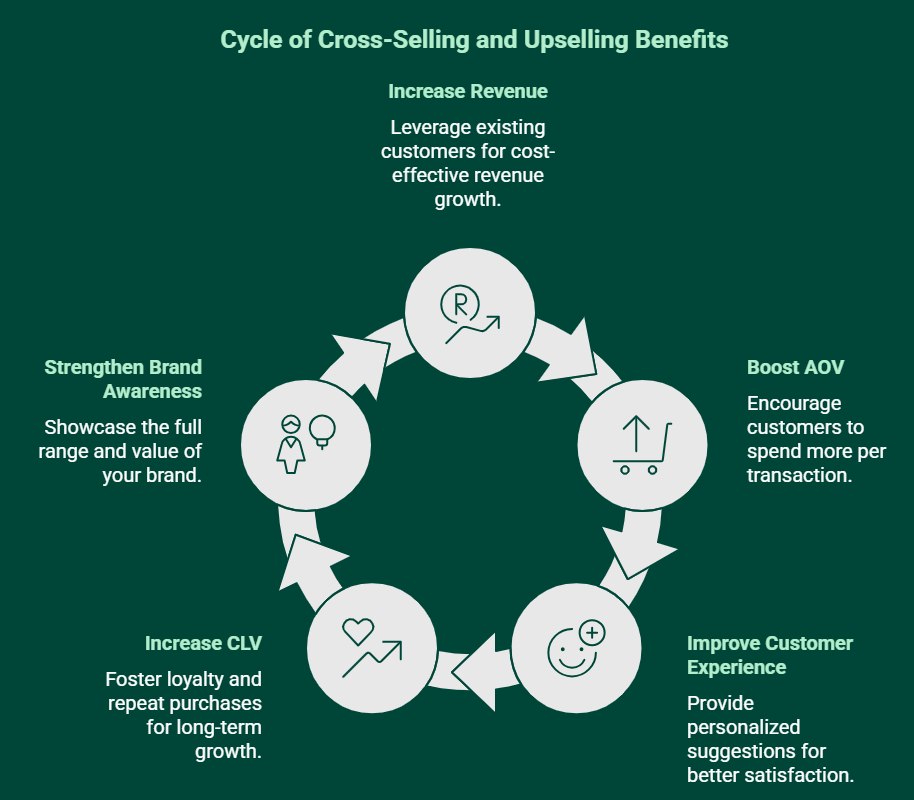
Businesses use cross-selling and upselling to increase Revenue cost-effectively without relying on new customer acquisition. In a cross-sell vs. upsell comparison, both strategies boost average order value, but in different ways. Cross-selling promotes complementary products, while upselling encourages premium or upgraded options. Understanding the cross-sell vs. upsell approach allows businesses to present the right recommendation at the right moment, enhancing the customer experience and building trust. When applied strategically, the cross-sell vs. upsell method not only drives short-term sales but also strengthens relationships, improves retention, and increases customer lifetime value.
Cross-selling and upselling are more cost-effective than acquiring new customers, as existing buyers already trust the brand and show purchase intent. This lowers acquisition costs, boosts profit margins, and creates a more scalable revenue model.
Both strategies boost average order value by increasing spend per transaction. Cross-selling adds complementary products, while upselling promotes premium or upgraded options, helping businesses generate more Revenue and drive long-term e-commerce growth.
When cross-sell and upsell recommendations are personalized and relevant, they enhance the overall shopping experience. Customers appreciate helpful suggestions that make their purchase more complete or improve product performance. Instead of feeling pressured, they feel supported in making informed decisions. This builds stronger trust and increases brand satisfaction.
Cross-selling and upselling enhance customer lifetime value by offering upgrades and complementary products, fostering loyalty, repeat purchases, and referrals, which drive retention and sustainable growth.
Cross-selling broadens product discovery, while upselling showcases premium offerings. Together, they enhance brand perception and highlight the full range of solutions you provide.

Have a look below at how Flaunt cross-sells complementary products on the PDP.
The product viewed is the SQUARE White Marble iPhone Case. On the product detail page, complementary products are strategically displayed under "Complete the Look," including Silver Crystal Camera Lens Protectors and a Premium Tempered Glass Screen Protector. Based on customer purchase behavior and logical product pairing, shoppers buying a phone case are highly likely to also need protection for their screen and camera.
By showcasing these related accessories directly on the PDP, the brand makes it easy for customers to purchase everything they need in one place. This type of cross-selling enhances convenience, increases average order value, and helps customers visualize a fully protected device. When complementary products are presented at the right moment in the buying journey, cross-selling feels helpful rather than pushy, leading to higher conversions and a better overall shopping experience.
Here are some common cross-selling scenarios you'll see:
The key to a successful cross-selling strategy is identifying the right complementary products. Start by analyzing customer data and purchase histories to identify products that are frequently bought together. Put yourself in your customer's shoes, consider what additional items would make their primary purchase more useful or enjoyable. For instance, someone buying a laptop might need a bag, a mouse, or software to get started. Customer feedback through surveys and reviews can provide valuable insights, helping you fine-tune your cross-selling efforts and offer suggestions that genuinely enhance the experience.
Also Read: How Blazzed Fitness unlocks higher AOV and revenue growth with Kefi.
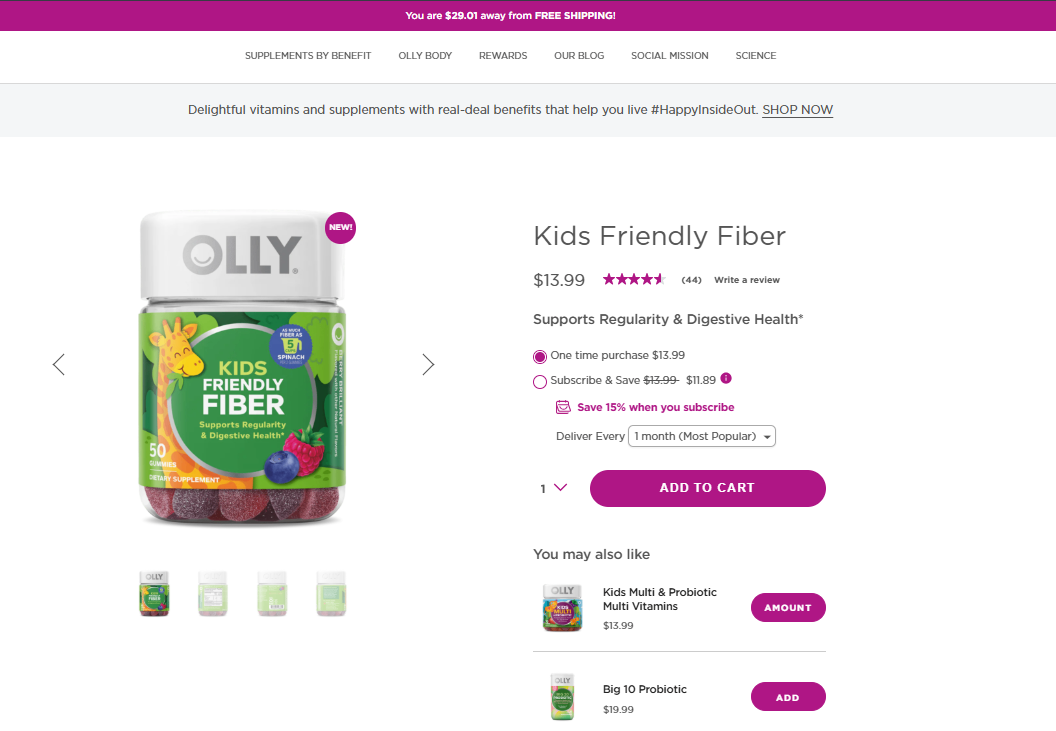
This upselling example from OLLY highlights how the brand increases average order value directly on the product detail page. The product shown is Kids Friendly Fiber, and customers have two purchase options: a one-time purchase or a Subscribe and Save plan with a discount. By clearly presenting the savings and convenience of auto delivery, the brand encourages shoppers to upgrade from a single purchase to a recurring subscription.
The subscription upsell is strategically placed near the add-to-cart button, making it part of the natural buying decision rather than an afterthought. The "Deliver Every" selector further reduces friction by allowing customers to choose their preferred frequency without leaving the page. This type of upselling not only increases immediate Revenue but also drives predictable recurring Revenue while improving customer retention.
Here are a few practical examples of upselling:
Upselling is most effective when a customer is already committed to a purchase. It involves gently guiding them toward a more expensive product or an upgraded version of their original choice. The key is to present the upsell at the right moment in the customer journey, often on the product or checkout page.
For instance, when a customer is booking a standard hotel room, an upsell might offer a suite with a better view for a small additional fee. Similarly, a software company might promote its premium version by highlighting exclusive features not available in the basic plan. The goal is to show clear added value that justifies the higher price. Tools like Kefi Product Bundle Builder make it easy to implement timely, personalized upsell offers that subtly and effectively boost order value.
Also Read: What are the Top Upselling Examples for Retail Success?
Recognizing the right moments for an upsell is crucial. Ideal opportunities include when a customer is comparing product versions, requesting features available only in premium options, or showing interest in high-value categories. Analyzing behavior, such as time spent on product pages, can reveal readiness for an upgrade. Offering a more durable or feature-rich option aligns upselling with customer needs and increases the likelihood of acceptance.

Choosing between cross-selling and upselling depends heavily on the customer journey and your business model. In a cross-sell vs. upsell evaluation, cross-selling is often more effective with new customers or lower-priced items because it requires a smaller commitment and feels like a natural add-on to the purchase. It serves as a gentle way to introduce more of your product range without increasing resistance.
Upselling, on the other hand, works best when a customer has already built trust in your brand or is preparing to make a significant purchase decision. In the context of cross-sell vs. upsell, upselling focuses on maximizing the value of a single transaction by encouraging customers to upgrade to a higher-tier option. Understanding customer intent, budget sensitivity, and buying stage is essential when deciding between a cross-sell and an upsell approach to ensure the strategy feels helpful rather than pushy.
Below are key considerations to help you decide:
In a cross sell vs upsell evaluation, cross-selling is often more effective for first-time buyers. It introduces small, complementary products that feel helpful rather than pushy. Upselling is more effective later in the journey, once trust is established, and customers are more open to premium upgrades.
Understanding intent is critical when deciding between a cross-sell and an upsell. If a customer is exploring options or making a low-commitment purchase, cross-selling adds value without increasing resistance. If they are seeking better performance or advanced features, upselling becomes a stronger strategy.
Repeat customers are prime candidates for a cross-sell vs upsell strategy. Their buying history reveals preferences, making it easier to suggest relevant add-ons or higher-tier products. Loyal customers are generally more receptive to upgrades because they already trust your brand.
If your store offers many complementary items, cross-selling is a natural fit. Businesses with accessories, add-ons, or related products benefit greatly from this approach. In a cross sell vs upsell comparison, upselling works best when you have clear product tiers such as basic, standard, and premium options.
Different models favor different tactics in the cross sell vs upsell debate. Retail brands with diverse inventory often lean toward cross-selling, while SaaS or subscription businesses typically prioritize upselling to higher plans. Many successful businesses combine both strategies to maximize customer lifetime value.
By aligning your cross-sell vs. upsell approach with the customer journey, intent, and product structure, you ensure your recommendations feel strategic, relevant, and customer-focused rather than aggressive.
Also Read: What is the Best Shopify Upsell App to Boost Revenue?
Cross-selling vs upselling are effective strategies to increase Revenue and average order value while improving the customer experience. Cross-selling encourages purchases of related products, and upselling promotes premium or upgraded options. However, irrelevant or pushy recommendations can frustrate customers and reduce trust. Understanding the pros and cons of cross-selling vs. upselling helps ensure your sales tactics drive value, engagement, and long-term loyalty.
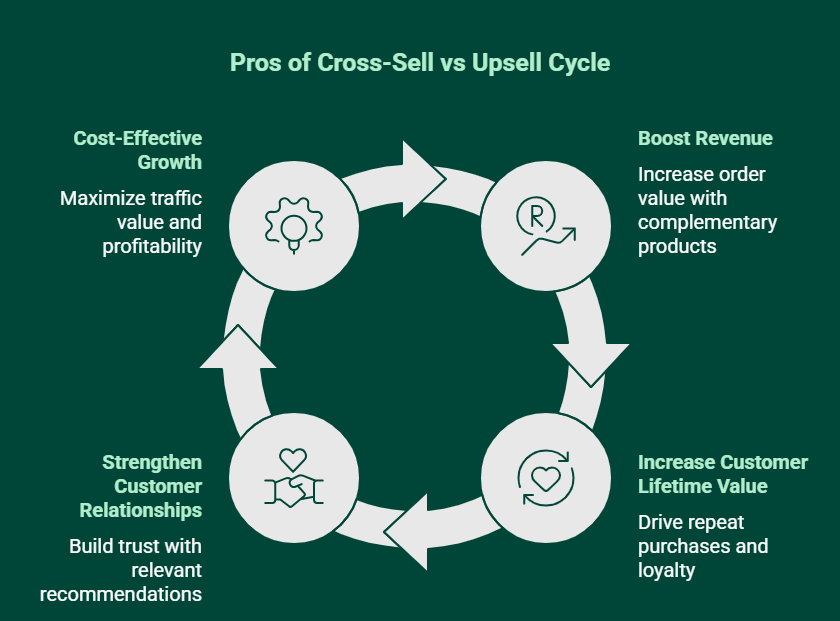
In a cross-sell vs. upsell strategy, both techniques increase the total value of each transaction. Cross-selling adds complementary products to the cart, while upselling encourages customers to upgrade to a higher-priced option. When executed effectively, the cross sell vs upsell approach improves profit margins without increasing acquisition costs.
A well planned cross sell vs upsell strategy introduces customers to more products or enhanced versions that better fit their needs. This deeper engagement often leads to repeat purchases and stronger brand loyalty. Over time, consistent use of cross sell vs upsell supports sustainable revenue growth.
When evaluating cross sell vs upsell, relevance is key. Thoughtful recommendations demonstrate that you understand customer preferences. If the cross-sell or upsell offer genuinely improves the purchase, customers feel supported rather than pressured, strengthening long-term trust.
From a business perspective, cross-selling vs. upselling is a cost-effective way to grow Revenue. Selling more to existing customers is far cheaper than acquiring new ones. Leveraging cross sell vs upsell maximizes the value of current traffic and boosts profitability.

In the cross sell vs upsell debate, poor execution is the biggest risk. Aggressive or irrelevant recommendations can frustrate customers and lead to cart abandonment. A poorly timed cross-sell or upsell attempt may harm the overall shopping experience.
If a cross-sell or upsell strategy pushes unnecessary products, customers may experience buyer's remorse. This can result in returns, negative reviews, and reduced trust. Long-term loyalty depends on using cross sell vs upsell responsibly.
Overusing cross-sell vs upsell can overwhelm customers with too many choices. Instead of increasing Revenue, it may slow down decision-making and reduce conversions. A focused cross-sell vs upsell strategy is more effective than excessive offers.
When cross-sell and upsell tactics are overly aggressive, your brand may appear sales-driven rather than customer-centric. If customers associate your store with constant upselling pressure, loyalty can decline. A balanced cross sell vs upsell approach protects both Revenue and reputation.

Modern technology, especially Artificial Intelligence in e-commerce, has transformed how upselling and cross-selling are practiced. Understanding the meaning of cross-selling and upselling is no longer limited to manual product suggestions. AI-powered algorithms analyze browsing history, past purchases, and on-site behavior in real time to make selling and upselling more personalized and effective.
Instead of generic recommendations, AI-driven engines predict which complementary products or premium upgrades a specific customer is most likely to buy. This makes cross-selling and upselling more targeted, relevant, and conversion-focused. By integrating AI into an e-commerce platform, businesses can automate product recommendations, improve customer experience, and increase average order value.
Platforms such as Kefi Product Bundle Builder help brands apply the true meaning of cross-selling and upselling through data-driven automation. By analyzing buying behavior and optimizing offers, merchants can scale smarter selling and upselling strategies while driving consistent revenue growth.
Book a Demo to see how Kefi Product Bundle Builder works.
To increase e-commerce sales, product offers should be strategic, relevant, and well-timed. Effective cross-selling and upselling present complementary products seamlessly through personalized recommendations, product bundles, or "Frequently Bought Together" sections. Checkout add-ons and post-purchase emails capture additional sales, enhancing the customer experience while boosting conversions, average order value, and long-term Revenue.
E-commerce enablement platforms like Kefi Product Bundle Builder help brands implement these strategies efficiently through dynamic bundles, optimized checkout flows, and automated upsell triggers. This ensures product offers are timely, relevant, and conversion-focused.
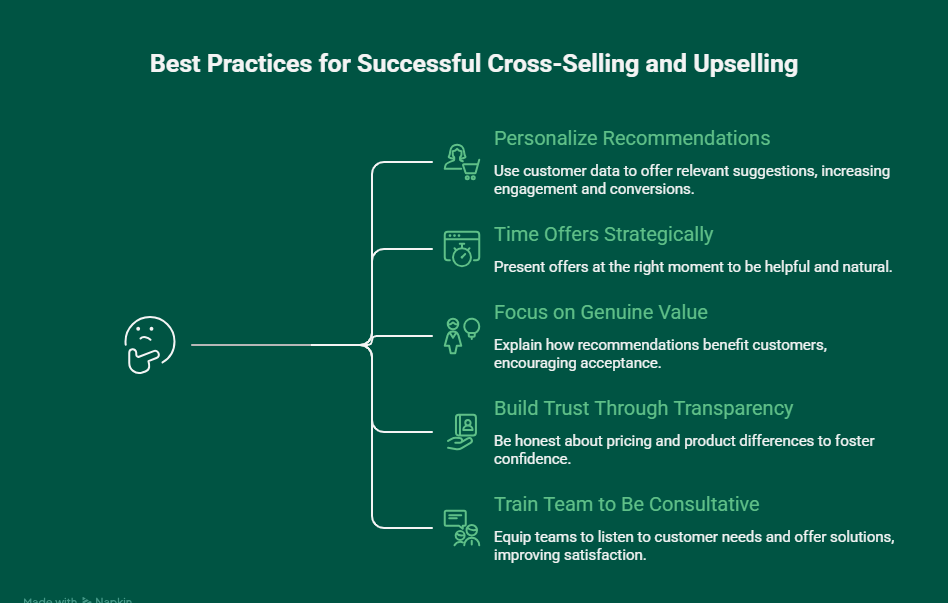
To truly succeed with cross-selling and upselling, your strategy must always prioritize the customer experience. These techniques should feel helpful and relevant, not forced or manipulative. When done correctly, they create additional value for customers while naturally increasing Revenue and average order value.
Here are five essential best practices to follow:
Use customer data such as browsing behavior, purchase history, and preferences to deliver highly relevant product suggestions. Generic offers rarely convert well. When recommendations reflect a customer's actual needs, the customer feels understood and is more likely to engage with additional products or upgrades.
Timing plays a critical role in success. Present cross-sell suggestions on product pages or in the cart when customers are actively evaluating their purchase. Upsell offers often work best when customers are already committed to buying. The right timing makes your offer feel helpful rather than intrusive.
Every recommendation should clearly explain how it benefits the customer. Whether it improves performance, convenience, or longevity, highlight practical advantages instead of pushing higher prices. When customers see real value, they are more open to considering additional products.
Trust is the foundation of effective selling. Be honest about pricing, product differences, and benefits. Avoid pressure tactics and make it easy for customers to decline an offer. When customers believe you have their best interests at heart, they are more receptive to future recommendations.
Your sales team should act as advisors, not closers. Train them to actively listen to customer questions and identify pain points before suggesting complementary products or premium upgrades. Strong product knowledge and empathy help them recommend solutions that genuinely solve problems, leading to higher satisfaction and long-term loyalty.
When personalization, timing, value, trust, and proper training come together, cross-selling and upselling become natural extensions of the buying journey, strengthening relationships and driving sustainable growth.
Also Read: How to Master the Product Recommendation Strategy?
Understanding cross-selling and upselling is key to enhancing customer experience and maximizing Revenue. By using the right techniques and tools, businesses can deliver personalized offers that build loyalty and drive sales. Consider integrating these strategies into your model and reach out for a free consultation to tailor them to your needs.
Also Read: How Minimal Home used Upselling Strategy to increase its Revenue.
A simple cross sell vs upsell example is at a fast-food restaurant: cross-selling adds complementary items like fries or a drink, while upselling offers a larger or premium version of the meal. In a cross sell vs upsell comparison, cross-selling enhances the order with related products, whereas upselling increases the value of the original purchase.
These strategies boost customer lifetime value by increasing the Revenue per sale and fostering loyalty. By delivering greater value, they enhance satisfaction, leading to better customer retention and more repeat purchases over time, and boosting Revenue from your existing customer base.
Yes, the main risks for customers include being pressured to buy something they don't need or want. This can lead to a negative customer experience, buyer's remorse, and decreased customer satisfaction. If executed poorly, these tactics can erode trust and affect long-term customer retention.
Successful cross-sell and upsell techniques appear in everyday shopping. Amazon's "Frequently Bought Together" cross-sells complementary products, while car dealerships upsell higher trim levels for added value. When done correctly, these strategies feel helpful, enhance the customer experience, and increase overall order value.
To effectively implement cross-selling and upselling strategies, businesses should use customer data for personalized recommendations and train teams to listen to feedback. Cross-selling and upselling should focus on relevance and timing rather than pushing products. The goal is to add genuine value, boosting conversions, trust, and long-term loyalty.
Common pitfalls in a cross sell vs upsell strategy include being too pushy, suggesting irrelevant products, or ignoring customer intent. Poorly executed offers can harm the experience and reduce conversions. Success comes from relevant, timely recommendations that add real value and build trust.
Absolutely. Cross-selling and upselling are highly effective in e-commerce stores. An online store can use automated product recommendations to suggest additional products or upgrades on product pages and at checkout, a proven way to increase average order value.
CRM tools improve cross-sell and upsell opportunities by centralizing customer data, analyzing buying behavior, and delivering personalized recommendations. They enable automated, timely campaigns that increase conversion rates and average order value. Over time, CRM-driven strategies enhance customer retention, lifetime value, and overall revenue growth.
The right upsell and cross-sell tools boost e-commerce sales, conversions, and average order value. Platforms like Shopify and BigCommerce simplify product recommendations, while AI-powered tools and CRMs such as HubSpot and Salesforce provide personalized suggestions and analytics. Solutions like Kefi Product Bundle Builder provide smart bundling, automated upsells, and performance tracking to increase AOV and drive revenue growth.
.svg)
