.jpg)
Most ecommerce loyalty programs look successful on the surface. Customers sign up, points accumulate, and rewards get redeemed. Yet many brands see little improvement in customer lifetime value. That matters because Bain & Company found that increasing customer retention by just 5% can increase profits by 25% to 95%, making retention one of the biggest drivers of long-term growth.
The reason is simple. Rewarding purchases is not the same as changing customer behavior. Effective loyalty programs encourage customers to buy more often, spend more over time, engage with your brand between purchases, and choose you over competitors. That shift increases customer lifetime value, not the rewards themselves.
This guide explains how loyalty programs increase customer lifetime value, why some programs consistently outperform others, and the practical strategies ecommerce brands can use to drive measurable business growth rather than short-term transactions.
Customer lifetime value (CLV) measures the total value a customer generates for your business throughout their relationship with your brand. Depending on your business model, this may be measured as total revenue or profit.
Rather than focusing on individual purchases, CLV reflects how often customers buy, how much they spend, how long they stay, and how profitable they are over time. This makes it one of the most important metrics for measuring sustainable ecommerce growth and guiding retention strategies.
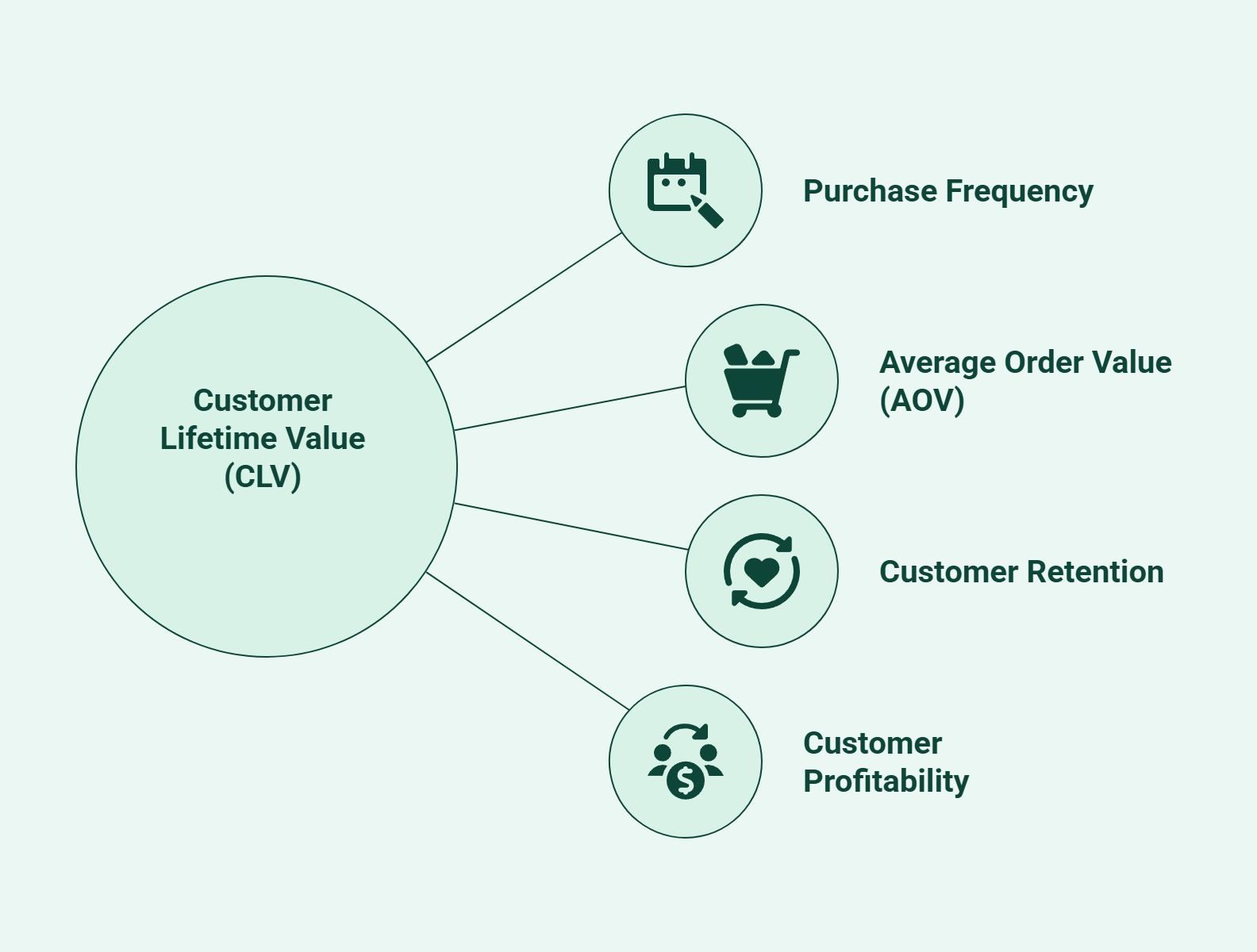
Once you understand what customer lifetime value measures, the next question is what actually increases it. Customer lifetime value grows when customers become more valuable over time through consistent, profitable purchasing behavior. Four factors have the greatest influence on CLV.
Customers who buy more often naturally generate greater lifetime value. Loyalty programs encourage repeat purchases through timely rewards, milestones, and exclusive benefits that motivate customers to return sooner instead of delaying purchases or switching to competitors.
Increasing the amount customers spend on each order raises their lifetime value without requiring more acquisitions. Loyalty programs can achieve this through spend thresholds, bonus rewards, exclusive products, and incentives that encourage larger, more profitable baskets.
The longer customers continue buying from your brand, the more value they create. Loyalty programs improve retention by giving members ongoing reasons to stay engaged, strengthening relationships beyond individual purchases and reducing the likelihood of customer churn.
Revenue alone does not determine customer value. Reward costs, discounts, and returns also affect profitability. Effective loyalty programs encourage behaviours such as repeat purchases, referrals, and higher-value orders while ensuring rewards remain commercially sustainable.
Loyalty programs only increase customer lifetime value when they improve one or more of these four drivers. Otherwise, they simply reward existing behavior instead of creating measurable, long-term business growth.
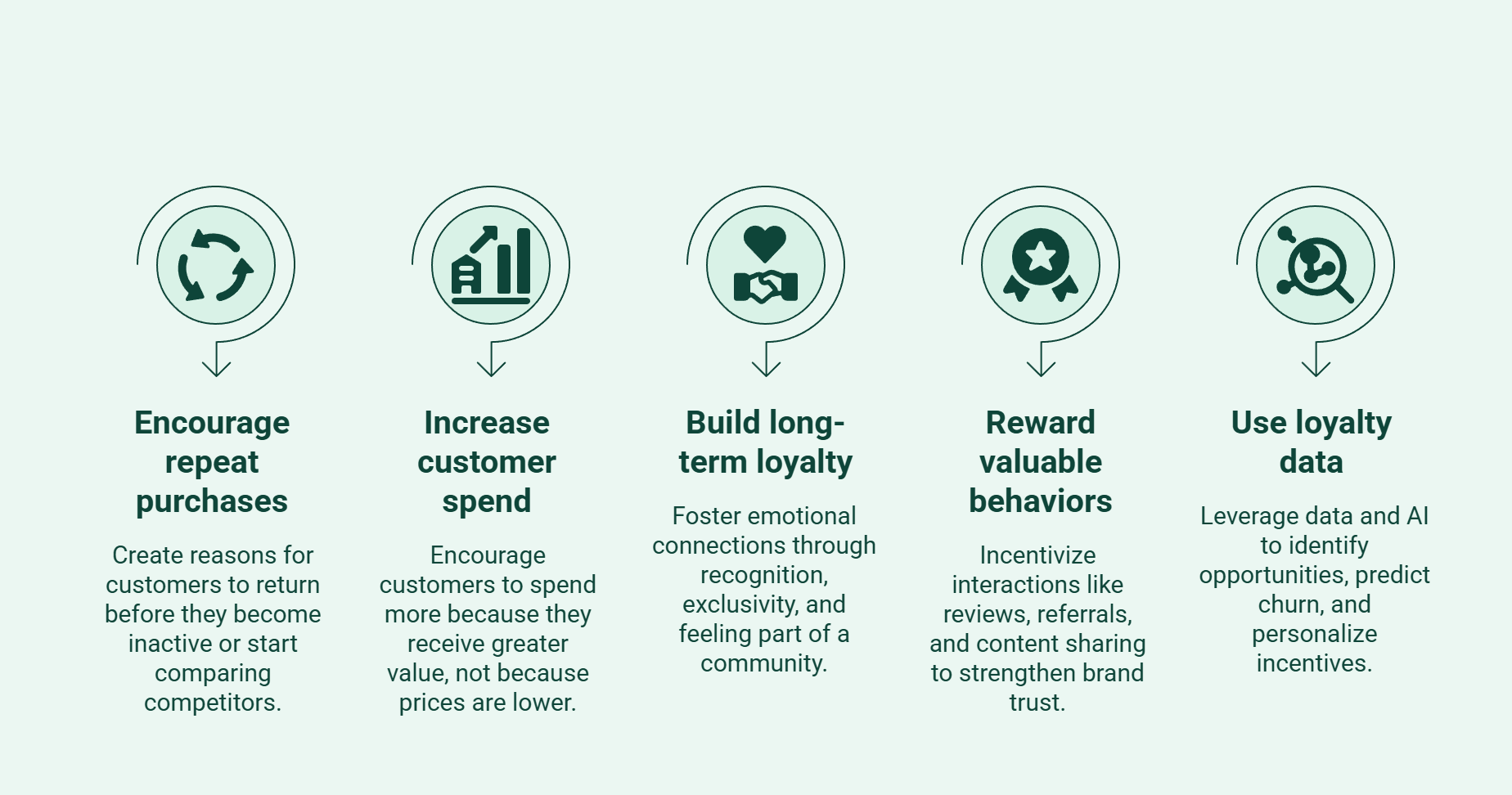
Loyalty programs increase customer lifetime value by influencing customer behavior throughout the relationship, not simply by rewarding purchases. The most effective programs are built around actions that improve retention, spending, and profitability over time.
The first repeat purchase is a major milestone, but the real objective is building a consistent buying habit. Loyalty programs should create reasons for customers to return before they become inactive or start comparing competitors.
This can be achieved by:
A good example is Sephora's Beauty Insider, which uses points, tier progression, and exclusive member benefits to encourage repeat purchases throughout the customer lifecycle instead of rewarding a single transaction.
Higher customer lifetime value comes from increasing order value without relying on continuous discounts. Rewards should encourage customers to spend more because they receive greater value, not because prices are lower.
Effective strategies include:
The goal is to increase perceived value, encouraging customers to spend more while protecting your profit margins.
Long-term loyalty is built on more than rewards. Customers are more likely to stay with a brand when they feel recognized, valued, and part of an exclusive community. This emotional connection strengthens loyalty beyond price and encourages customers to continue choosing your brand over competitors.
Ways to achieve this include:
By combining tangible rewards with recognition and exclusive experiences, loyalty programs create emotional loyalty that keeps customers engaged long after the initial purchase.
Customers create value in many ways beyond making purchases. Rewarding these interactions keeps customers engaged between orders while strengthening brand trust, expanding reach, and generating insights that support long-term growth.
High-value behaviors include:
Recognizing these behaviors encourages ongoing engagement and helps build stronger customer relationships that extend beyond individual transactions.
The best loyalty programs use customer data and AI to identify opportunities before revenue is lost. Rather than rewarding everyone equally, AI can analyze customer behavior, predict churn risk, and personalize incentives based on purchasing patterns and long-term value.
Focus on:
Using AI alongside loyalty data helps brands deliver the right reward to the right customer at the right time, improving retention while maximizing customer lifetime value.
A successful loyalty program is not measured by the number of members or points issued. How loyalty programs increase customer lifetime value is ultimately measured by their ability to encourage repeat purchases, higher spending, stronger retention, and long-term profitability.
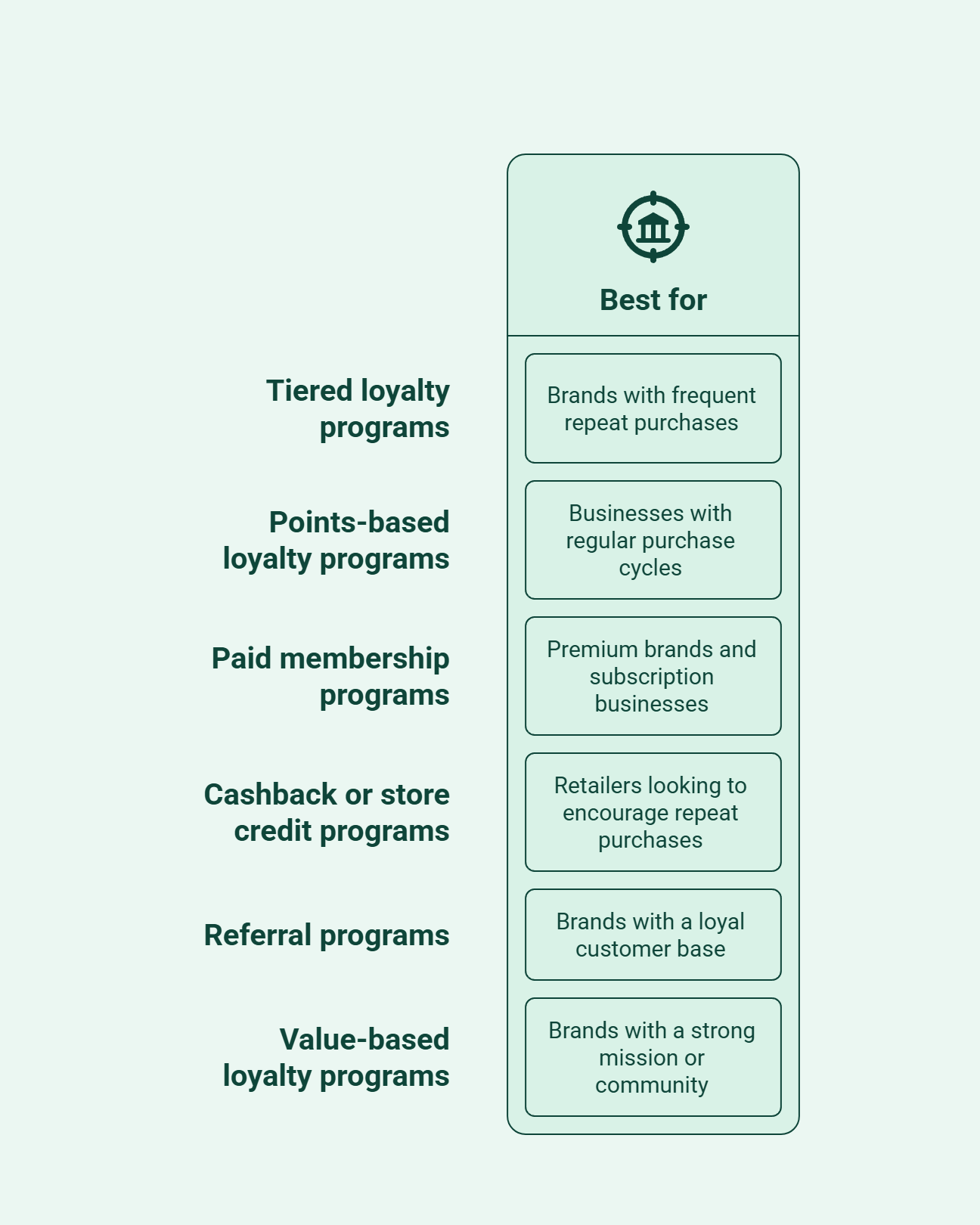
The best customer loyalty programs for maximizing CLV in 2026 are those that encourage profitable customer behaviors rather than simply rewarding purchases. The right program depends on how your customers buy, how often they return, and what motivates them to stay loyal.
Best for: Brands with frequent repeat purchases
Tiered loyalty programs offer increasingly valuable rewards as customers progress through different membership levels. The combination of progression, recognition, and exclusive benefits encourages customers to buy more often, spend more over time, and remain loyal to maintain their status. For most ecommerce brands, this is the most effective model for increasing customer lifetime value.
Best for: Businesses with regular purchase cycles
Customers earn points for purchases or selected actions and redeem them for rewards. This model works well when customers purchase frequently enough to earn meaningful rewards within a reasonable timeframe. Simplicity and easy redemption are key to maintaining engagement.
Best for: Premium brands and subscription businesses
Customers pay a recurring or one-time fee to access exclusive benefits such as free shipping, early product access, or member-only pricing. Because customers have already invested in the membership, they are more likely to increase their spending and continue purchasing from the same brand.
Best for: Retailers looking to encourage repeat purchases
Instead of offering immediate discounts, these programs reward customers with store credit or cashback that can be used on future purchases. This gives customers a clear reason to return while helping brands preserve product value and pricing.
Best for: Brands with a loyal customer base
Referral programs reward existing customers for introducing new shoppers. They strengthen customer lifetime value in two ways: by increasing the value of existing customers through advocacy and by acquiring new customers through trusted recommendations.
Best for: Brands with a strong mission or community
Rather than focusing on financial rewards, these programs connect purchases with charitable donations, sustainability initiatives, or social causes. They help build emotional loyalty among customers who choose brands based on shared values as well as products.
There is no single loyalty program that suits every ecommerce business. The best choice depends on your products, purchase frequency, customer lifecycle, and retention goals. However, if your objective is to maximize customer lifetime value, a tiered loyalty program generally provides the strongest long-term results because it encourages ongoing engagement instead of rewarding one-off transactions.
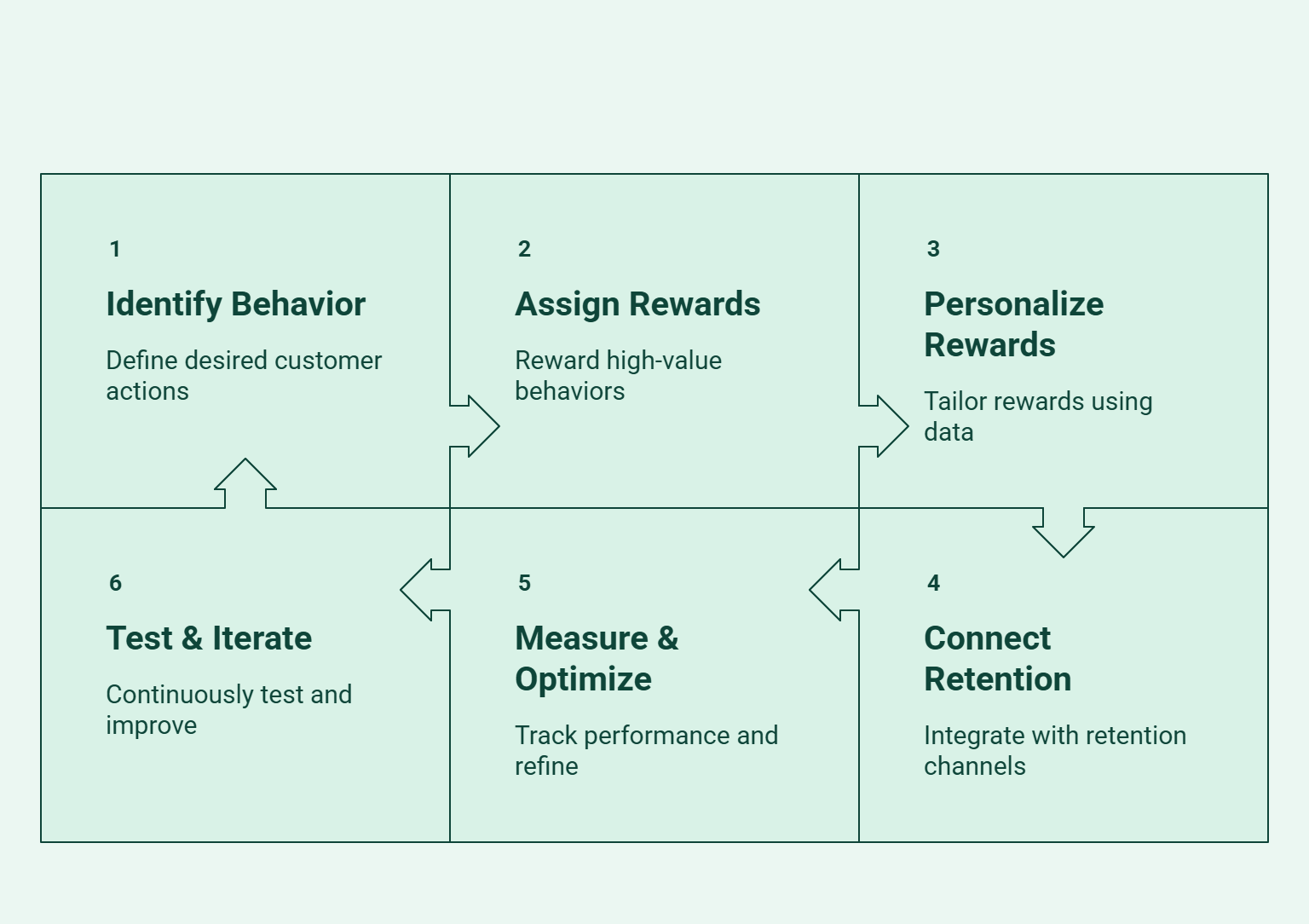
A successful customer lifetime value loyalty program should be built in a clear sequence. Start with the behavior you want to influence, then design rewards, personalize the experience, connect the program with retention channels, and optimize it using customer data.
Start by defining the exact outcome the program should influence. This could be increasing second purchases, reducing the time between orders, raising average order value, improving retention, or encouraging subscription sign-ups. A clear objective prevents the program from becoming a collection of disconnected rewards.
Once the objective is clear, decide which customer actions deserve rewards. Prioritize behaviors that support long-term growth, such as second purchases, higher-value orders, referrals, reviews, and subscription sign-ups. Avoid rewarding actions that would have happened without an incentive.
Use purchase history, browsing behaviour, spending patterns, loyalty status, and product preferences to tailor rewards. A first-time buyer may need an incentive to return, while a high-value customer may respond better to early access, exclusive products, or recognition.
Integrate the program with email, SMS, customer service, personalization tools, and subscription platforms. This allows loyalty data to trigger timely messages, targeted offers, service recovery rewards, renewal reminders, and relevant product recommendations.
Track whether the program changes customer behavior, not just whether rewards are redeemed. Review repeat purchase rate, order frequency, average order value, retention, reward cost, and CLV by customer segment. Remove weak incentives, improve underperforming journeys, and invest more in rewards that generate incremental value.
A loyalty program should evolve as customer behavior and business goals change. Regularly test different reward structures, tier thresholds, campaigns, and personalization strategies to understand what drives the strongest engagement and retention. Use these insights to refine the program over time rather than relying on a one-time launch.
A successful loyalty program is built through continuous improvement, not a one-time launch. Understanding how loyalty programs increase customer lifetime value means focusing on the right customer behaviors, refining rewards with performance data, and continuously optimizing the program to drive long-term growth.
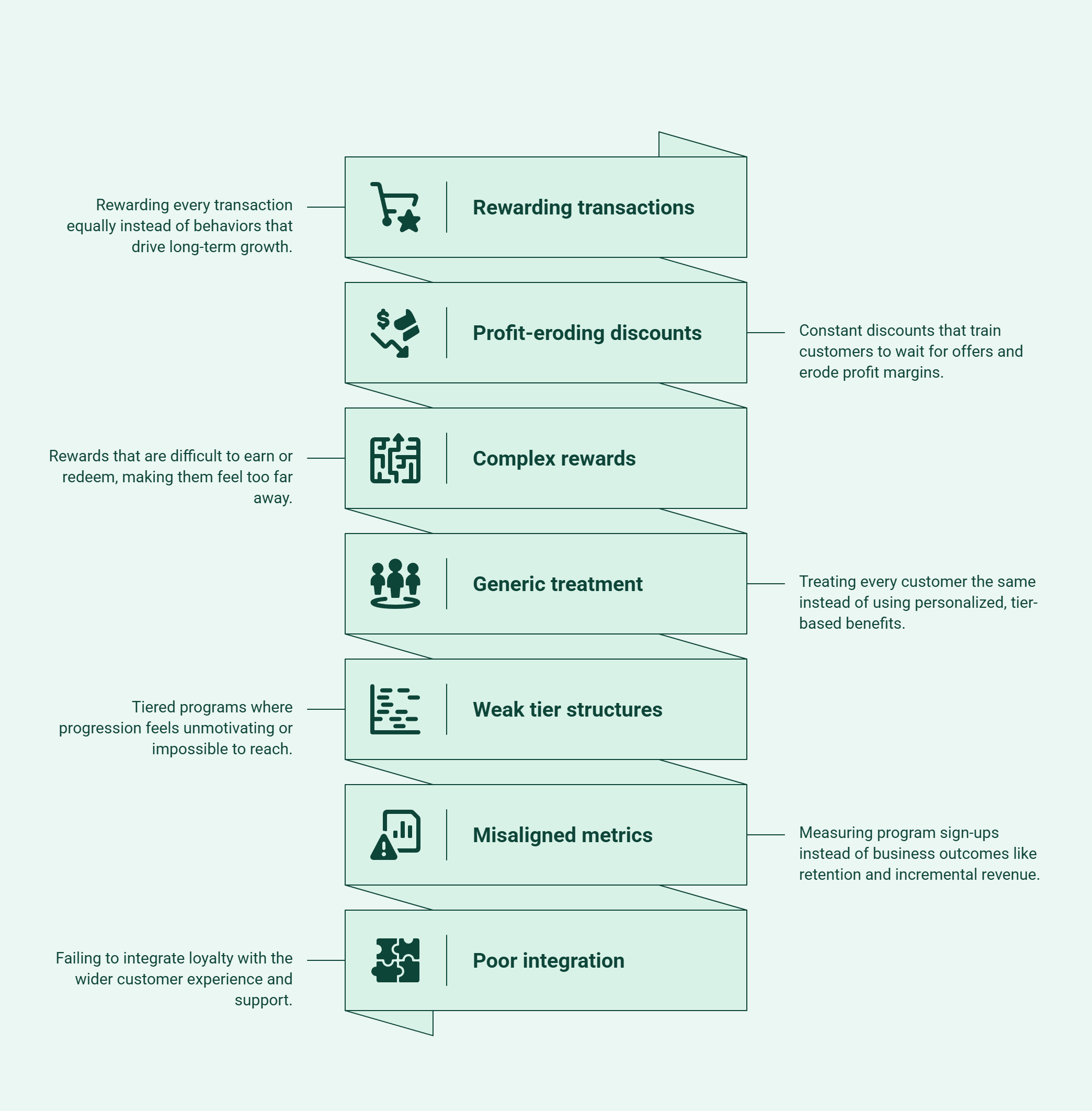
Launching a loyalty program does not guarantee higher customer lifetime value. Many programs attract sign-ups but fail to change customer behavior in ways that improve retention, spending, or profitability. These are some of the most common reasons.
Many programs reward every transaction equally, regardless of its value to the business. Instead, rewards should encourage behaviors that drive long-term growth, such as repeat purchases, referrals, reviews, or subscriptions.
Constant discounts may increase short-term sales, but they can train customers to wait for offers and erode profit margins. A stronger approach is to reward loyalty with exclusive benefits, experiences, or value-added incentives.
Customers lose interest if rewards feel too far away or redemption is complicated. Benefits should be easy to understand, attainable, and provide value early enough to keep customers engaged.
A first-time buyer and a loyal customer should not receive identical rewards. Personalized offers and tier-based benefits recognize different levels of engagement and create stronger reasons to stay loyal.
Tiered programs only work when progression feels worthwhile. If benefits are too similar or the next tier seems impossible to reach, customers have little motivation to engage further.
A growing membership base does not necessarily mean a successful loyalty program. Brands should measure outcomes such as repeat purchase rate, customer lifetime value, retention, and incremental revenue to understand whether the program is delivering real business impact.
Loyalty cannot compensate for poor customer service, irrelevant marketing, or inconsistent shopping experiences. It should work alongside email, SMS, personalization, and customer support to create a seamless retention strategy.
The most successful loyalty programs are designed to influence profitable customer behavior, not simply increase membership numbers or distribute rewards. Avoiding these common mistakes helps ensure your program contributes to sustainable customer lifetime value rather than becoming another promotional expense.
Tiered loyalty programs are highly effective for some businesses but unnecessary for others. Before implementing one, consider how your customers buy, what behaviors you want to encourage, and whether your business can support meaningful progression between reward levels.
Tiered loyalty works best when customers have multiple opportunities to buy throughout the year. Businesses with frequent or replenishable purchases can use tiers to encourage customers to return more often and unlock higher-value rewards. If most customers only make one purchase every few years, a simpler loyalty model may deliver better results.
A tiered program should encourage specific behaviors, not just reward spending. Consider whether you want customers to:
If your goal is to influence long-term engagement, tiered loyalty is often a strong choice.
Customers should feel that every new tier is worth reaching. Each level should introduce benefits that are genuinely more valuable, whether that's exclusive products, early access, free shipping, personalized offers, or VIP support. Without meaningful progression, tiers become labels rather than incentives.
A tiered program should complement your broader retention strategy. It should integrate with your email, SMS, customer service, and personalization efforts so customers receive relevant rewards and communications throughout their lifecycle.
A tiered loyalty program is typically the right choice for ecommerce businesses with frequent repeat purchases, such as fashion, beauty, wellness, pet care, and subscription brands. It also demonstrates how loyalty programs increase customer lifetime value by encouraging customers to buy more often, stay engaged for longer, and progress towards increasingly valuable rewards.
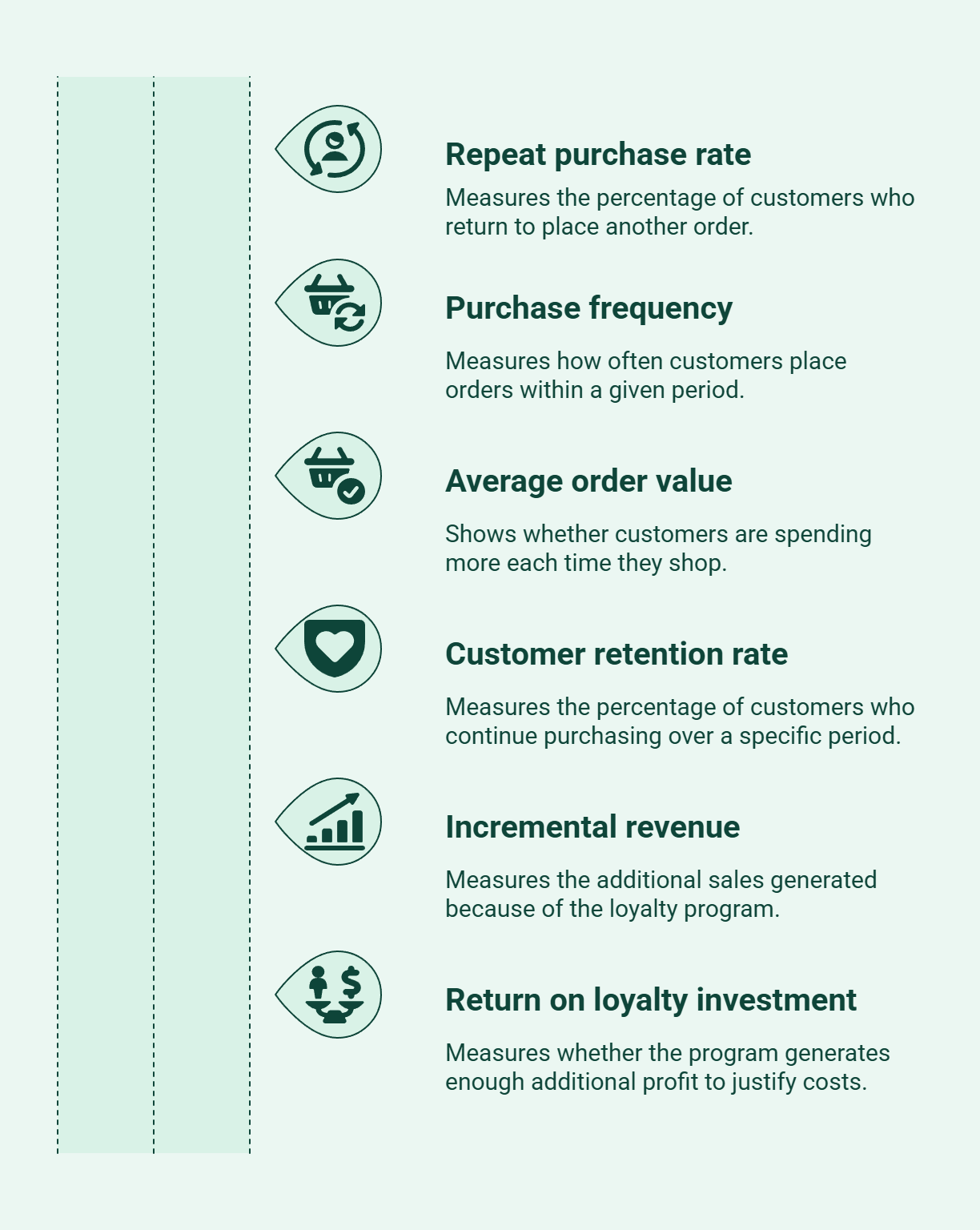
The success of a loyalty program is reflected in changes to customer behavior and business performance. Instead of focusing on vanity metrics such as membership numbers, monitor the metrics below to understand whether your program is contributing to higher customer lifetime value.
Repeat purchase rate measures the percentage of customers who return to place another order. A higher rate among loyalty members indicates that the program is encouraging more customers to buy again instead of remaining one-time purchasers.
Repeat purchase rate = (Customers who made more than one purchase ÷ Total customers) × 100
Purchase frequency measures how often customers place orders within a given period. If loyalty members are purchasing more regularly than before they joined the program, it suggests that loyalty incentives are strengthening long-term buying habits.
Purchase frequency = Total number of orders ÷ Total number of unique customers
Average order value (AOV) shows whether customers are spending more each time they shop. Comparing AOV before and after loyalty enrolment helps determine whether rewards are encouraging larger baskets without relying on excessive discounting.
Average order value = Total revenue ÷ Total number of orders
Customer retention rate measures the percentage of customers who continue purchasing over a specific period. Higher retention extends the customer relationship, giving customers more opportunities to buy and contribute greater lifetime value.
Customer retention rate = ((Customers at the end of a period − New customers acquired during that period) ÷ Customers at the start of the period) × 100
Incremental revenue measures the additional sales generated because of the loyalty program rather than purchases customers would have made anyway. Comparing loyalty members with similar non-members helps identify the program's true commercial impact.
Incremental revenue = Revenue from loyalty members − Expected revenue without the loyalty program
Revenue growth alone does not indicate success if rewards cost more than the value they create. Return on loyalty investment measures whether the program generates enough additional profit to justify its rewards, discounts, and operating costs.
Net program value = Incremental profit − Total loyalty program costs
No single metric proves that a loyalty program is increasing customer lifetime value. Reviewing these metrics together provides a more accurate picture of whether the program is driving stronger customer behavior, sustainable revenue growth, and long-term profitability.
Building a loyalty program that genuinely increases customer lifetime value takes more than offering points or discounts. It requires a clear understanding of customer behavior, personalized engagement, and the ability to continuously optimize your retention strategy based on performance.
Kefi Commerce helps ecommerce brands build and refine loyalty programs that encourage repeat purchases, strengthen customer relationships, and increase long-term revenue. By combining customer insights, behavioral segmentation, automation, and actionable analytics, Kefi enables brands to create loyalty experiences that are both relevant to customers and measurable for the business.
Ready to build a loyalty program that delivers measurable results? Discover how Kefi Commerce can help you improve customer retention, personalize every stage of the customer journey, and maximize customer lifetime value.
Ready to turn loyalty into a measurable growth engine? Whether you're launching your first program or improving an existing one, Kefi Commerce helps you maximise customer lifetime value. Book a personalised demo today to build a loyalty program that drives repeat purchases, improves retention, and delivers measurable growth.
Understanding how loyalty programs increase customer lifetime value is about more than offering points or discounts. The most successful programs encourage profitable customer behaviors, strengthen retention, increase repeat purchases, and build lasting customer relationships.
By choosing the right loyalty model, rewarding meaningful actions, and measuring the metrics that matter, ecommerce businesses can turn loyalty into a sustainable driver of long-term growth. With the right strategy and continuous optimization, a loyalty program becomes an investment in higher customer lifetime value rather than just another marketing initiative.
How loyalty programs increase customer lifetime value comes down to rewarding customer behavior that drives repeat purchases. A well-designed customer lifetime value loyalty program strengthens customer engagement, improves customer satisfaction, and turns satisfied customers into brand advocates.
Include tiered programs, exclusive offers, special offers, referral programs, exclusive access, and educational content. These effective loyalty programs help boost customer retention and increase customer lifetime value with a tiered loyalty program.
Rewards encourage repeat customers by offering better rewards that match customer preferences and create positive experiences. This reflects how do loyalty programs increase customer lifetime value CLV economics by increasing purchase frequency while reducing customer acquisition costs.
Track key metrics such as redemption rates, conversion rates, net promoter score, retention, and revenue. Loyalty programs increase customer lifetime value research consistently shows that stronger loyalty improves the entire relationship with customers.
Combine loyalty program software, mobile app experiences, social media engagement, and acquisition strategies with personalized rewards. The best customer loyalty programs for maximizing CLV 2026 also build emotional connections that reduce churn.
Brands such as Starbucks Rewards demonstrate the benefits of customer loyalty through personalized experiences and loyalty card rewards. They remain one of the best-rated customer loyalty programs for maximizing CLV by strengthening customer retention and advocacy.
.svg)
