

You're already investing in ads, SEO, and marketing to bring shoppers to your Shopify store. The challenge is making every order generate as much revenue as possible. When customers purchase a single item and leave, you're often missing opportunities to increase order value without spending more on acquisition.
That's where upselling becomes valuable. A well-timed offer can encourage shoppers to upgrade a product, add a complementary item, or unlock additional value before completing their purchase. The key is presenting the right offer at the right stage of the customer journey.
Not every upsell delivers the same results. Some offers increase average order value, while others are better at driving repeat purchases or moving slow-selling inventory. Understanding where to place upsells, which strategies to use, and how to optimize them can make the difference between an offer shoppers ignore and one that consistently generates more revenue.
Upselling on Shopify is the practice of encouraging shoppers to choose a higher-value version of a product or accept a relevant upgrade before completing their initial purchase. Instead of relying solely on new customer acquisition, upselling helps merchants generate more value from customers who already intend to buy.
For many Shopify brands, increasing order value is often faster and more cost-effective than finding new customers. If a shopper is already ready to buy, a relevant upsell can increase revenue from the same order without requiring additional ad spend.
Upselling encourages shoppers to spend more on the product they're already considering, while cross-selling recommends related products that complement the purchase.
Examples of Shopify upsell offers
The most effective upsells help customers get more value from a purchase they're already planning to make.
Common examples include:
Customers are more likely to accept an upsell when it improves the purchase they were already planning to make rather than introducing a completely new buying decision. A larger supplement pack, premium software plan, or upgraded product often feels like a natural next step because it aligns with the shopper's original goal.
Acceptance rates tend to be higher when the upgrade feels relevant, the additional value is easy to understand, and the timing makes sense within the buying journey. Customers are also more likely to say yes when the offer saves money compared to buying later, reduces future effort, or clearly improves the outcome they want from the purchase.
Upselling helps Shopify merchants increase order value without relying entirely on more traffic or higher ad spend. By presenting relevant upgrades, bundles, or premium alternatives, merchants can generate more revenue from customers who are already planning to buy.
For example, a customer purchasing a 30-day supplement pack may upgrade to a 90-day supply after seeing the cost savings per serving. When offers align with customer needs and buying intent, upselling helps shoppers discover better-fit options while increasing revenue from the same transaction.
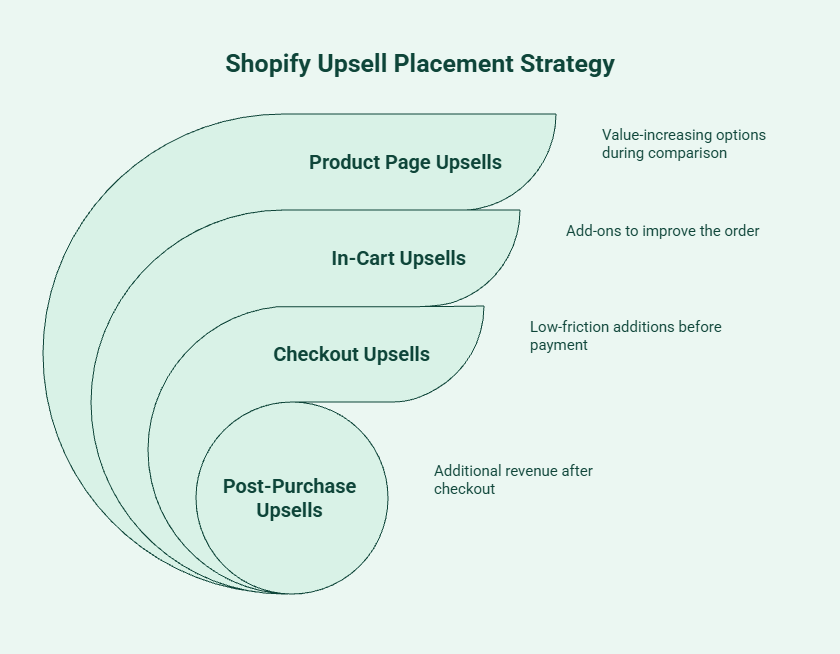
The best upsell placement depends on where customers are in their buying journey. Product pages help shoppers compare options, cart pages encourage larger purchases, and post-purchase offers create additional revenue opportunities after checkout. Matching the offer to customer intent typically yields stronger results than applying the same upsell everywhere.
Product pages are ideal for upselling because shoppers are still comparing options and deciding what best fits their needs. At this stage, merchants can highlight premium versions, larger quantities, or bundled alternatives that increase value without disrupting the buying experience.
The most effective product page upsells help customers make a better version of the same purchase rather than introducing a completely different product.
For example:
Common product page upsells include:
Cart upsells work because purchase intent is already established. Customers have committed to buying, making it easier to recommend add-ons that improve the order or help them unlock additional value.
Simplicity is critical at this stage. Too many recommendations can create friction, while one or two well-matched offers often feel like a natural extension of the purchase.
Common cart upsells include:
Post-purchase upsells appear immediately after payment but before the final order confirmation experience. Thank-you page upsells appear on the order confirmation page after checkout. Both create additional revenue opportunities without affecting the original purchase.
For example, a supplement brand may offer a subscription upgrade after checkout, while a skincare retailer might recommend a refill product or an exclusive discount on the thank-you page.
Common examples include:
Checkout upsells appear during the checkout process before payment is completed. They work best for low-friction additions that are closely related to the original purchase.
For example, a customer buying a laptop may be offered an extended warranty, while a beauty shopper may see gift wrapping or a travel-size add-on before completing their order.
Common checkout upsells include:
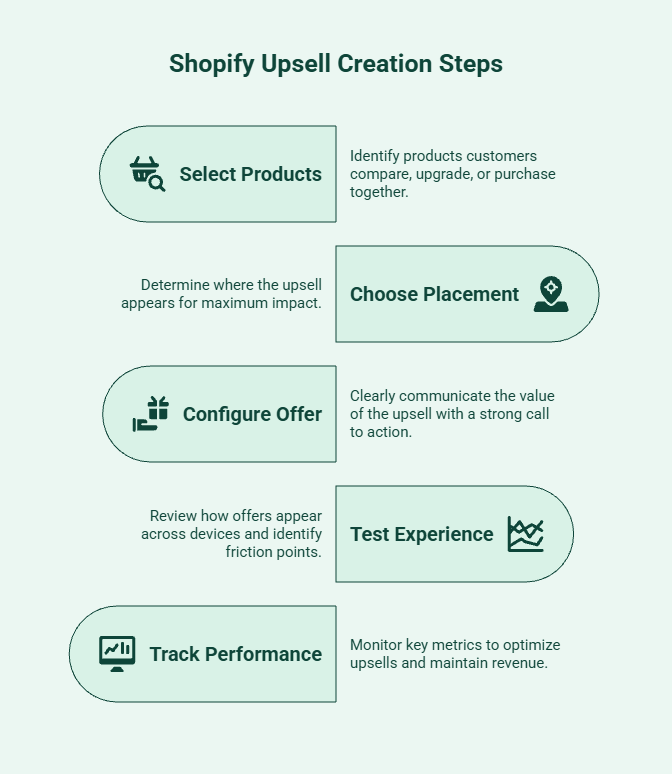
The highest-converting Shopify upsells are usually built around customer intent rather than product promotion. When the product, placement, and offer align with what shoppers already want, upsells feel helpful instead of disruptive. Shopify merchants can create basic upsell experiences using native features, while dedicated upsell apps provide more flexibility for personalization, testing, and post-purchase offers.
Not every product is a strong upsell candidate. The best opportunities usually come from products customers already compare, upgrade, or purchase together.
Start by identifying products that frequently appear in higher-value orders. If shoppers consistently choose larger sizes, premium versions, or bundled options, those patterns often reveal the strongest upsell opportunities. This approach is usually more effective than promoting unrelated products simply because they have a higher price point.
For example, a supplement brand may promote a larger pack size with a lower cost per serving. A skincare brand may encourage shoppers to upgrade from a single product to a complete routine.
Common upsell opportunities include:
Products that align with existing buying behavior often outperform unrelated recommendations, even when the upsell value is lower.
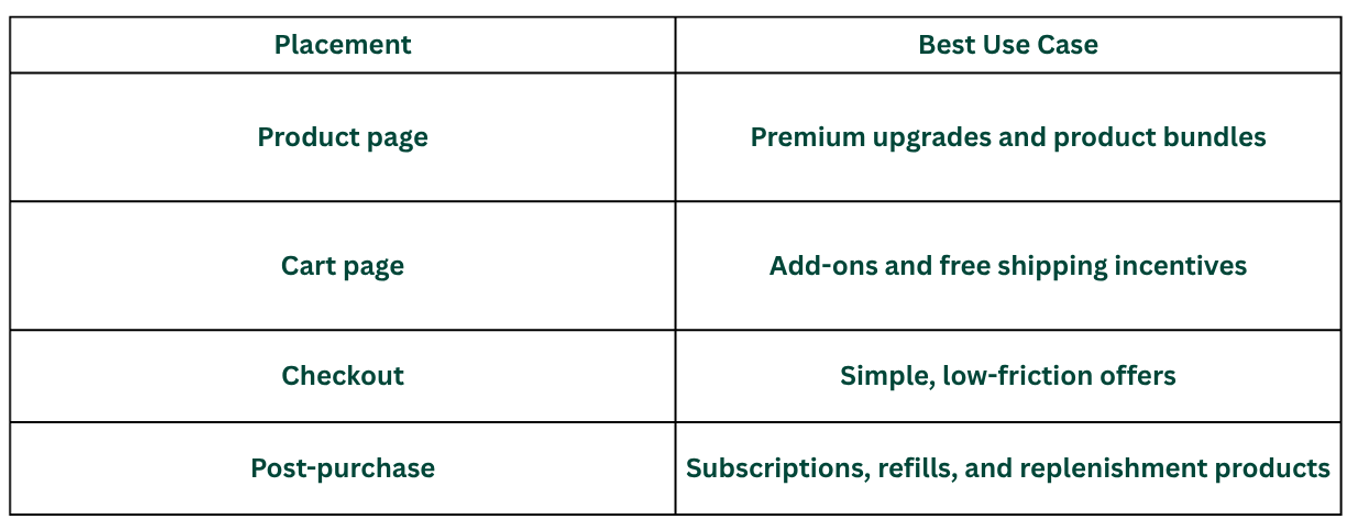
Where an upsell appears can significantly influence performance. Different stages of the customer journey create different opportunities, which is why the same offer may succeed in one location and underperform in another.
Product pages work best for premium upgrades because shoppers are still comparing options. Cart offers are often more effective for add-ons and free shipping incentives because customers have already decided to buy.
Different product categories also respond differently to placement. Consumable products often perform well with post-purchase subscriptions and replenishment offers. Premium products, on the other hand, are more likely to benefit from feature-based upgrades earlier in the buying journey.
Customers should understand the value of an upsell within seconds. If shoppers need to compare multiple benefits or calculate savings on their own, many will ignore the offer and continue with their original purchase.
Focus on a single reason to act. That could be better value, greater convenience, premium features, or long-term savings. Offers built around a single clear outcome are often easier to understand and accept than those that try to communicate several benefits at once.
For example, if a customer adds a basic protein powder to their cart, the upsell could highlight a larger size with a lower cost per serving. Alternatively, it could promote a subscription option that helps customers save on future purchases. Merchants using platforms like Kefi Commerce can also test promotional offers such as free gifts or bundles when customers reach a specific spending threshold.
Strong calls to action are equally important. Examples include:
To improve acceptance rates:
Even relevant offers can underperform if they create friction. Before scaling an upsell campaign, review how offers appear across desktop and mobile devices.
Customers are more likely to accept an upsell when it supports the purchase they are already making instead of interrupting it. Poor timing, unclear messaging, or too many choices can reduce acceptance rates, even when the recommendation itself is relevant.
Testing should focus on one variable at a time. For example, a percentage discount may appeal to price-sensitive shoppers, while a bundle offer may perform better for customers looking for convenience. Isolating individual changes makes it easier to understand what influences customer decisions.
Areas to test include:
Customer behavior changes over time. An upsell that performs well during a holiday campaign may generate different results once buying patterns return to normal.
Acceptance rates often decline when offers become less relevant to changing customer needs. Regular performance reviews help merchants identify these shifts before they affect revenue.
Key metrics include:
Small improvements in targeting, placement, or messaging can compound over time. Regular testing and performance analysis help turn upsells into a consistent source of incremental revenue while maintaining a positive customer experience.
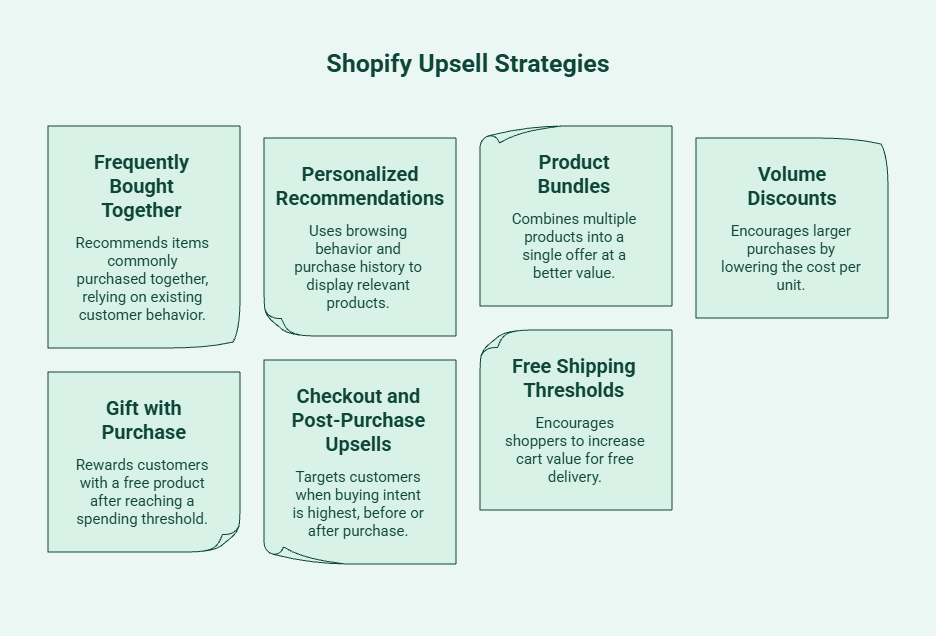
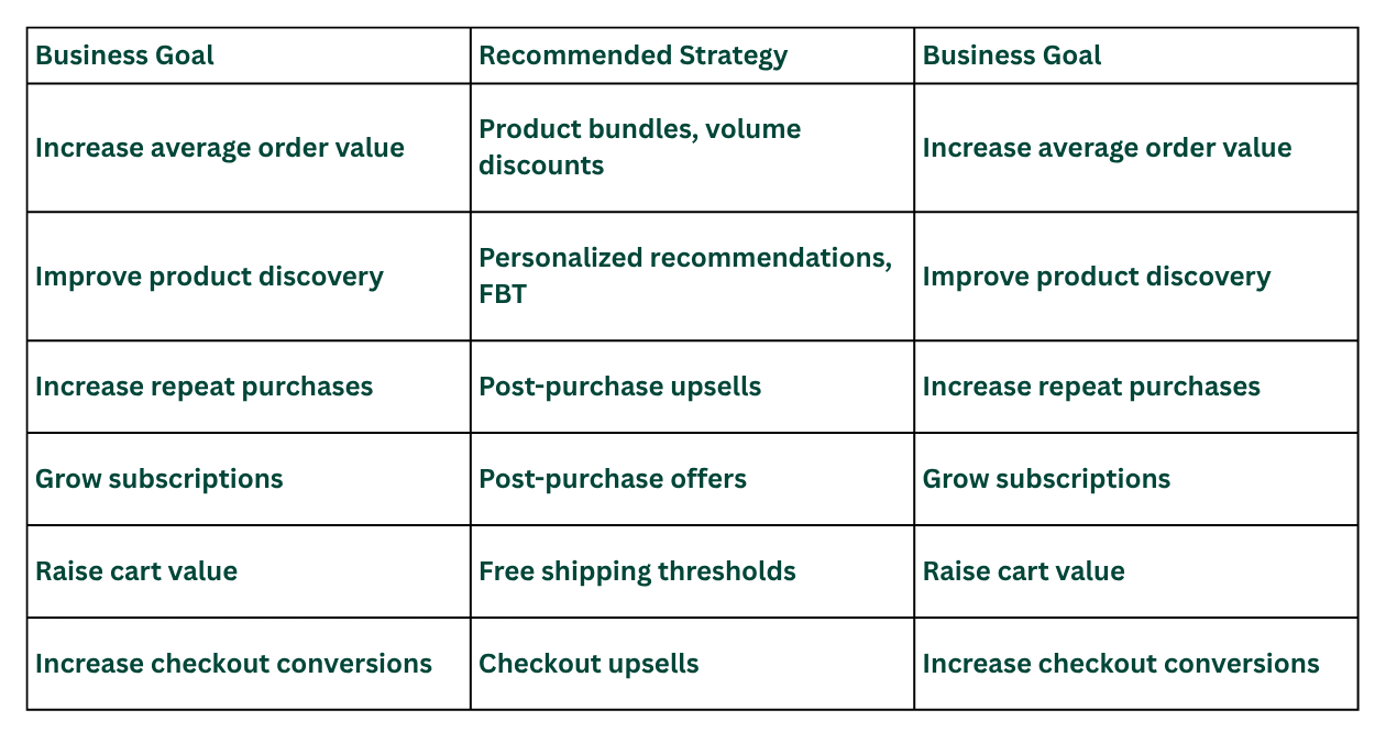
The most effective Shopify upsell strategies help customers spend more by offering additional value at the right moment. Different strategies serve different goals. Some focus on increasing average order value, while others improve product discovery, encourage repeat purchases, or create post-purchase revenue opportunities.
Frequently bought together offers are one of the most widely used Shopify upsell strategies because they rely on existing customer behavior. Instead of introducing a completely new product, they recommend items that shoppers commonly purchase together.
This approach works particularly well for beauty products, supplements, accessories, and other categories where customers often need multiple items to complete their purchase. Because the recommendation feels natural, acceptance rates are often higher than generic product suggestions.
Personalized recommendations use browsing behavior, purchase history, or cart contents to display products that match a shopper's interests.
Rather than showing the same offer to every visitor, merchants can tailor recommendations to individual buying patterns. This often improves engagement because customers are more likely to respond to products that align with their interests and purchase intent.
Bundles combine multiple products into a single offer at a better overall value than purchasing each item separately.
They work best when customers are looking for a complete solution. For example, a skincare routine, coffee starter kit, or fitness package often converts better as a bundle because shoppers can immediately understand the value of buying everything together.
Volume discounts encourage customers to purchase larger quantities by lowering the cost per unit as order size increases.
This strategy is especially effective for consumable products such as supplements, pet supplies, and personal care products. Customers can stock up while saving money, and merchants benefit from larger order values.
Gift with purchase campaigns reward customers with a free product after they reach a specific spending threshold.
Beyond increasing cart value, this strategy can introduce new products and create a more rewarding shopping experience. Many shoppers perceive a free gift as additional value, making it an effective alternative to traditional discounts.
Checkout and post-purchase upsells target customers when buying intent is at its highest. The difference is timing.
Checkout upsells appear before the purchase is completed and work best for simple add-ons or complementary products. Post-purchase upsells appear after payment has been processed, allowing merchants to generate additional revenue without affecting the original conversion.
Post-purchase offers are particularly effective for subscriptions, replenishment products, and one-click add-ons related to the original order.
Free shipping thresholds encourage shoppers to increase their cart value in exchange for free delivery.
Many customers are willing to add another item if they are only a few dollars away from qualifying for free shipping. This makes the strategy effective for increasing average order value while maintaining a positive customer experience.
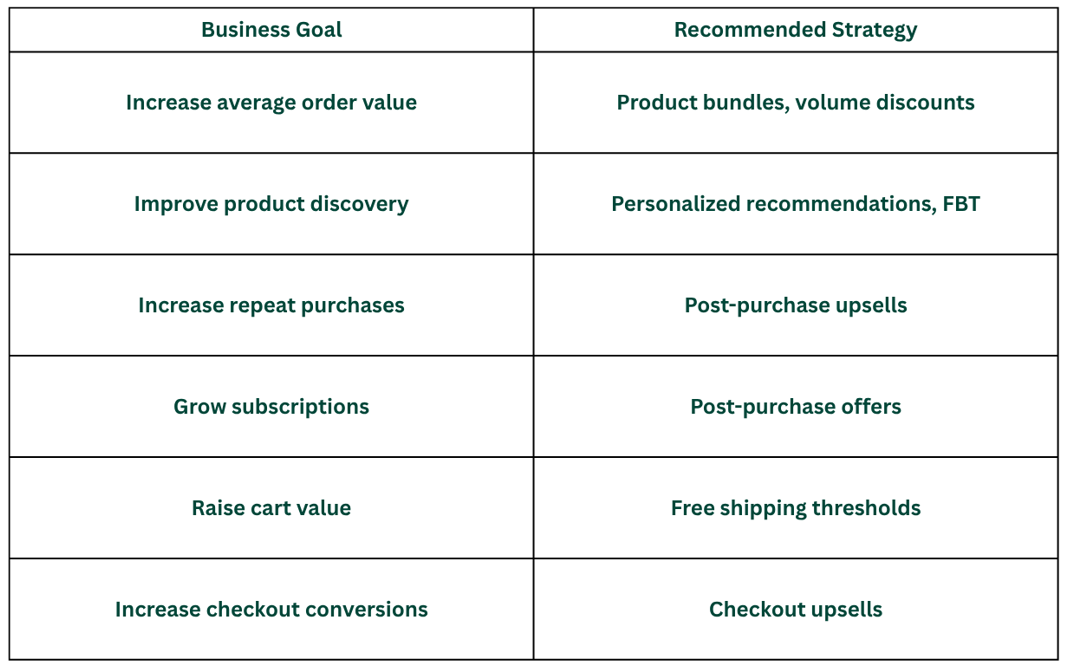
Different strategies solve different challenges. Matching the tactic to your objective typically produces better results than relying on a single upsell method across your store.
Most upselling mistakes happen when offers feel irrelevant, distracting, or poorly timed. Customers are more likely to accept upsells that support the purchase they're already making.
For example, recommending socks to someone buying skincare products is unlikely to convert because the products solve different needs. A better upsell would be to recommend a moisturizer to someone purchasing a cleanser, since the products naturally work together.
Common upselling mistakes include:
The goal of upselling is to improve the purchase, not complicate it. The closer the offer is to the customer's original intent, the more likely it is to convert.
Shopify's native tools can support basic upsell strategies, but growing brands often need more control over targeting, personalization, testing, and post-purchase experiences. An upsell app becomes valuable when manual setups can no longer support the complexity of your customer journey.
For many merchants, native features are enough to test simple product recommendations, bundles, or cart incentives. The challenge comes when different customer segments require different offers. A first-time shopper may respond to a bundle, while a repeat customer may be more likely to accept a subscription or post-purchase upgrade.
As order volume grows, managing these experiences manually becomes difficult. Merchants often need automation to trigger offers based on cart contents, purchase history, or customer behavior. This helps create more relevant experiences without increasing operational workload.
Merchants typically start exploring upsell apps when they need:
Custom development can provide similar flexibility, but it often requires more time, technical resources, and ongoing maintenance. For most Shopify brands, a dedicated upsell app offers a faster path to testing, optimization, and revenue growth. The next step is identifying which upsell app provides the features, flexibility, and scalability your business needs.
Many upsell apps solve a single problem, such as post-purchase offers or thank-you page recommendations. As stores grow, merchants often add separate apps for bundles, free gifts, volume discounts, and other promotions, making campaigns harder to manage and optimize.
Kefi Commerce takes a broader approach by combining multiple AOV strategies in one platform. Instead of relying on separate tools for upsells, bundles, free gifts, and discounts, merchants can manage them from a single dashboard while maintaining a consistent customer experience.
Kefi Commerce supports:
This makes Kefi Commerce particularly useful for merchants looking to consolidate multiple revenue-growth tactics rather than adding another standalone upsell app.
If you want to combine upsells with bundles, free gifts, volume discounts, and other AOV strategies from a single platform, Kefi Commerce offers a broader approach to revenue growth.
Every order is an opportunity to generate more revenue. See how Kefi Commerce combines upsells, bundles, free gifts, loyalty rewards, and volume discounts to help Shopify merchants maximize AOV and customer lifetime value. Schedule a demo today.
Creating high-converting upsell offers on Shopify is not about showing more products. It is about presenting the right offer at the right time to customers who are already ready to buy. When upsells align with customer intent, they can increase average order value, improve product discovery, and positively impact your bottom line while creating a stronger shopping experience.
Start by identifying your highest-potential upsell opportunities, test different placements and strategies, and track performance closely. As your store grows, platforms like Kefi Commerce can help you combine upsells, bundles, volume discounts, and other revenue-driving campaigns into a more scalable growth strategy that supports both short-term revenue and long-term customer value.
The most effective ways to upsell on Shopify include product bundles, frequently bought together offers, volume discounts, free shipping thresholds, checkout upsells, and post-purchase offers that align with customer intent, add clear value to the purchase, and follow a thoughtful approach that incorporates best practices.
Shopify apps can show upsell offers in Shopify Plus stores, in the cart, checkout, or post-purchase flow. They use cart contents and customer behavior to recommend relevant add-ons, bundles, or upgrades that increase order value without disrupting the purchase process.
Post-purchase upsell offers appear after a customer completes their order. Shopify apps present a relevant add-on, upgrade, or subscription that can often be accepted with one click, allowing merchants to increase revenue with their first offer after the original sale without affecting the original purchase.
Shopify merchants can add one-click upsell offers through compatible upsell apps and post-purchase tools, including a drag-and-drop editor. These offers allow customers to accept relevant add-ons or upgrades with a single click, without re-entering payment details, helping boost revenue and increase order value with minimal friction.
Shopify offers several free upsell apps, and many paid apps provide free plans or free trial periods that meet the highest standards for performance on the Shopify app store. These tools allow merchants to test product recommendations, bundles, cart upsells, and post-purchase offers before committing to a paid solution.
To set up an upsell offer on Shopify, choose the product to promote, select where the offer will appear, configure the offer details, test the user experience and customer experience, and track performance metrics such as acceptance rate and average order value (AOV).
Shopify upsell after purchase offers appear on post-purchase pages or thank-you pages and encourage customers to add complementary products, subscriptions, or upgrades with minimal friction.
Yes, Shopify merchants can use compatible apps to display upsell offers after checkout. To do this, they need to have a Shopify account. These offers appear once payment is completed, allowing customers to accept additional products without disrupting the original transaction.
Shopify's thank-you page upsells use the order confirmation page to recommend relevant products or special offers. This helps merchants create additional revenue opportunities while customers remain engaged after purchasing.
.svg)
