

DTC brands have no shortage of tools designed to keep customers engaged and encourage repeat purchases. According to Bain & Company, increasing customer retention by just 5% can increase profits by 25% to 95%. Loyalty platforms, email and SMS automation, customer support software, and analytics tools can all support retention, but adding more software does not automatically mean more customers will stay or buy again.
The real challenge is matching the software to the problem you need to solve. A loyalty program cannot compensate for poor customer service, while email automation will only go so far if your customer segmentation is weak. Even sophisticated churn prediction has limited value if your team cannot turn those signals into timely campaigns, offers, or customer experiences that prevent people from leaving.
The best customer retention software is therefore not necessarily the platform with the most features. It is the one that addresses your specific retention gaps and fits naturally into your existing stack. In this guide, we compare leading platforms based on retention capabilities, proactive features, integrations, ease of use, scalability, and their suitability for different DTC businesses.
Customer retention software helps you keep existing customers engaged, encourage repeat purchases, and reduce churn. It uses customer behavior and purchase data to identify retention opportunities and take timely action.
Customer retention management software can include loyalty programs, segmentation, email and SMS, churn prediction, customer service, subscription retention, personalization, referrals, feedback, and lifecycle automation.
Customer retention software turns customer data into timely actions that help you maintain engagement, strengthen relationships, and encourage customers to continue buying from your brand.
Retention software typically helps you:
Together, these capabilities help you understand customer behavior, respond to retention risks earlier, and focus your efforts on actions that drive measurable repeat revenue.
A CRM primarily stores customer information and manages relationships. Retention software uses customer data to encourage repeat purchases, build loyalty, and reduce churn.
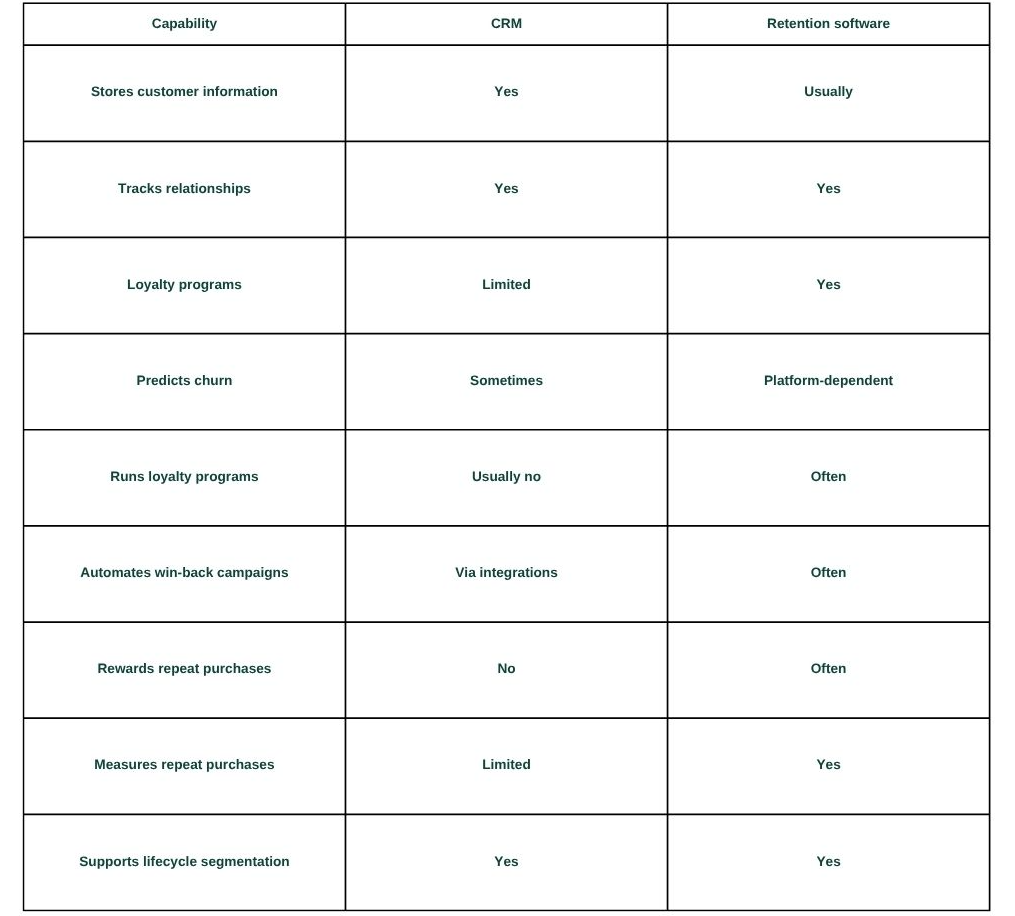
If you already have a CRM, you may not need another system for storing customer information. A specialized retention platform can instead help you turn that existing data into actions that keep customers coming back.
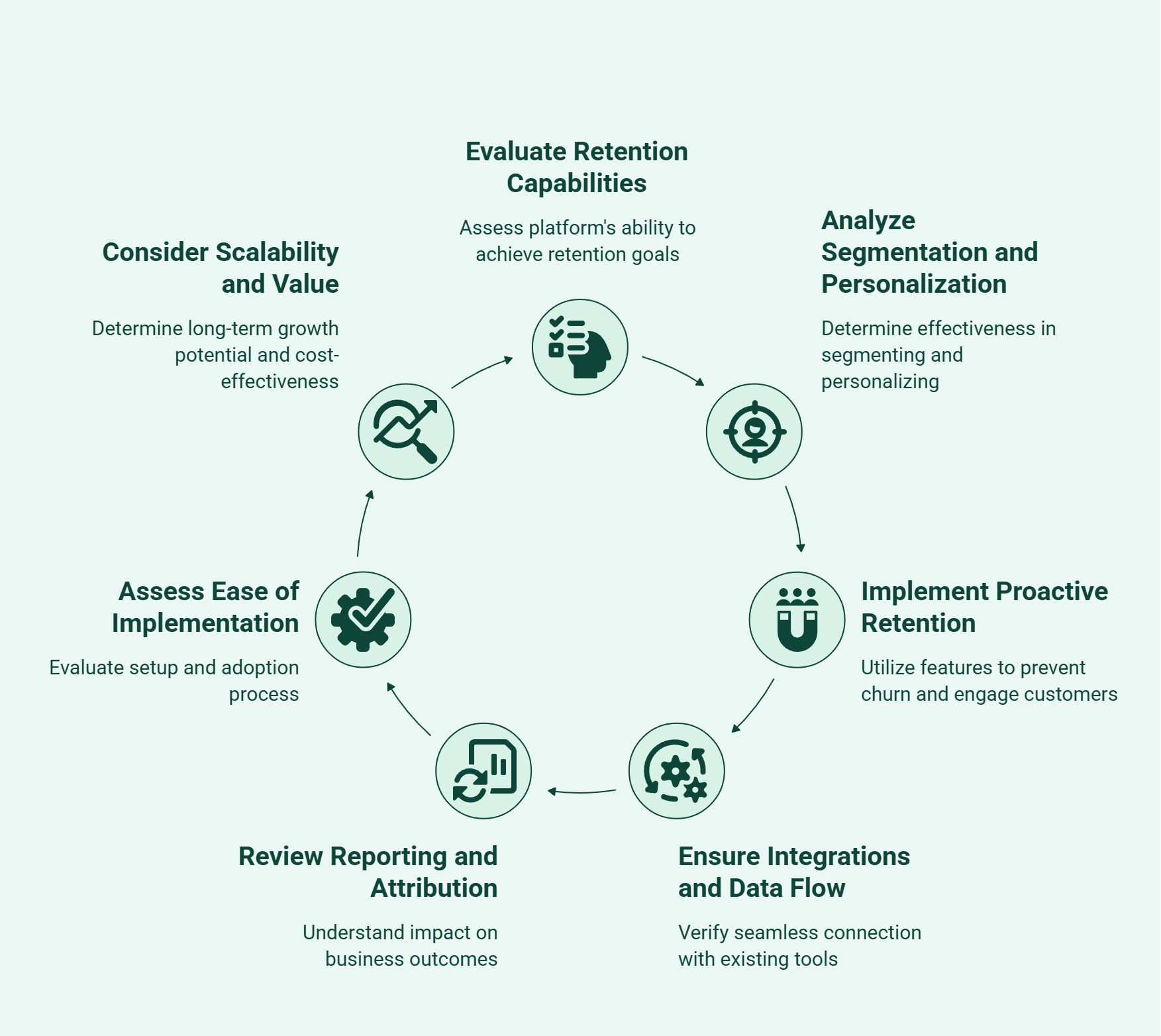
Customer retention software should fit your retention priorities, customer journey, and existing technology stack. Instead of comparing platforms based on feature count alone, consider how well each option can address your specific retention challenges and support long-term growth.
Check whether the platform supports the outcomes that matter to your business. Depending on your goals, this could include increasing repeat purchases, strengthening customer loyalty, reducing churn, improving purchase frequency, or increasing customer lifetime value (CLV).
Assess how precisely you can segment customers using purchase behavior, engagement, loyalty status, value, preferences, and churn risk. More importantly, check whether you can use these segments to personalize rewards, offers, messages, and experiences for different customer groups.
Look for capabilities that help you respond before customers disengage rather than only analyzing churn afterward. The best proactive customer retention software should combine churn alerts, behavioral triggers, win-back flows, loyalty automation, post-purchase engagement, and at-risk customer workflows to make retention efforts more timely and scalable.
Check whether the platform connects smoothly with the tools your business already relies on. For DTC brands, this may include Shopify, email and SMS platforms, helpdesks, subscription apps, analytics software, and review platforms. Reliable data flow can also reduce manual work and fragmented customer profiles.
Look beyond basic metrics such as clicks, opens, or rewards issued. Strong reporting should help you understand whether retention activities are contributing to repeat purchases, lower churn, higher CLV, stronger loyalty performance, and incremental or retained revenue.
Consider how quickly the platform can be deployed and adopted by your team. Review the setup process, learning curve, available onboarding resources, and whether implementation requires technical expertise or developer support.
Consider how easy the software is to implement and manage as your business grows. Review setup requirements, ongoing workload, customer and order limits, pricing changes at higher volumes, and whether the platform can reduce manual processes or the need for additional tools.
Assessing these six areas gives you a clearer basis for comparing customer retention platforms. The strongest option is not necessarily the one with the most features, but the one that addresses your retention priorities without adding unnecessary complexity to your stack.
The best customer retention software depends on your business model, retention goals, and existing technology stack. Some platforms focus on loyalty, while others specialize in automation, churn prediction, or customer engagement. The following tools stand out for their capabilities, integrations, and overall value for DTC brands.
Not every customer retention platform solves the same problem. Some specialize in loyalty programs, while others focus on lifecycle marketing, customer support, subscription management, or AI-driven churn prediction. Use the table below to quickly identify which platform best matches your retention goals.
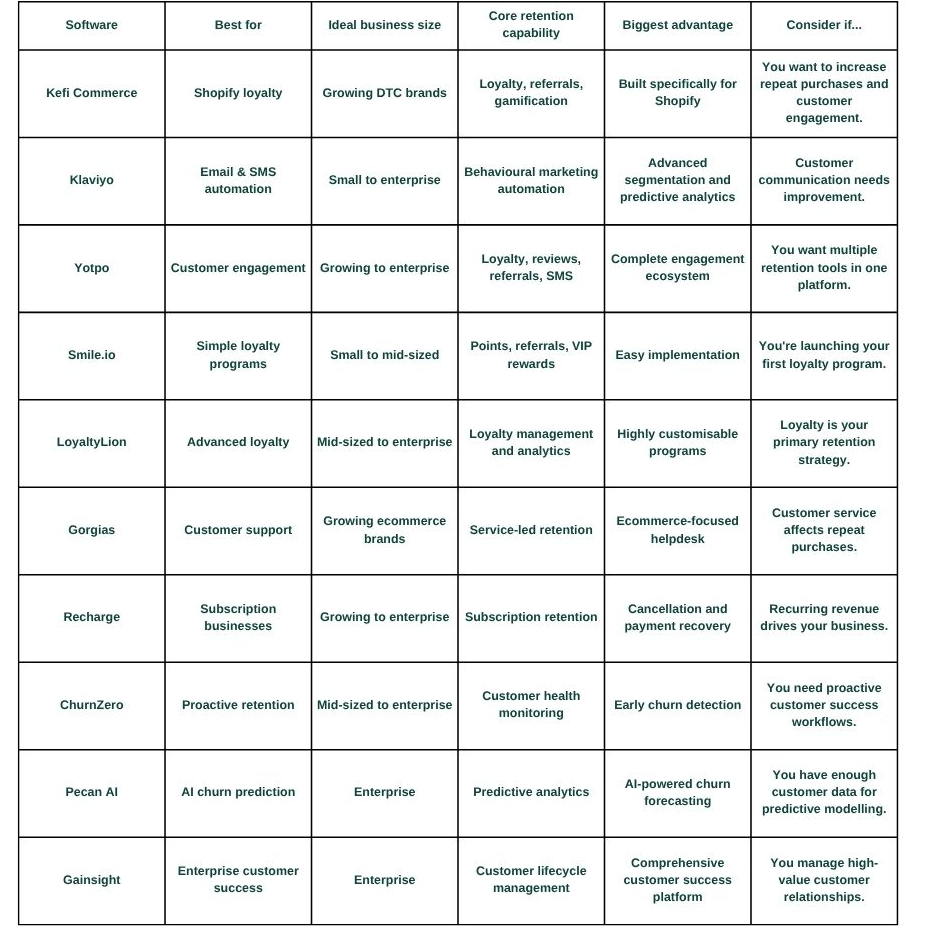
Use this comparison as a starting point rather than a final decision. The best customer retention software is the one that aligns with your retention goals, business model, existing technology stack, and long-term growth strategy.
Kefi Commerce is a Shopify-first customer retention platform that combines loyalty programs, referrals, gamification, and customer segmentation to help brands increase repeat purchases. Rather than adding another standalone marketing tool, it focuses on turning customer behavior into long-term loyalty.
Best for: Shopify brands looking to build loyalty programs and encourage repeat purchases from a single platform.
Key features
Pros
Cons
Kefi Commerce is well-suited to Shopify brands looking to increase repeat purchases through loyalty programs, referrals, gamification, and customer engagement without relying on multiple standalone tools.
Ready to strengthen customer retention? Explore how Kefi Commerce can help you launch loyalty programs, reward repeat customers, and build long-term customer relationships from a single Shopify-first platform. Start your free trial to experience it firsthand.
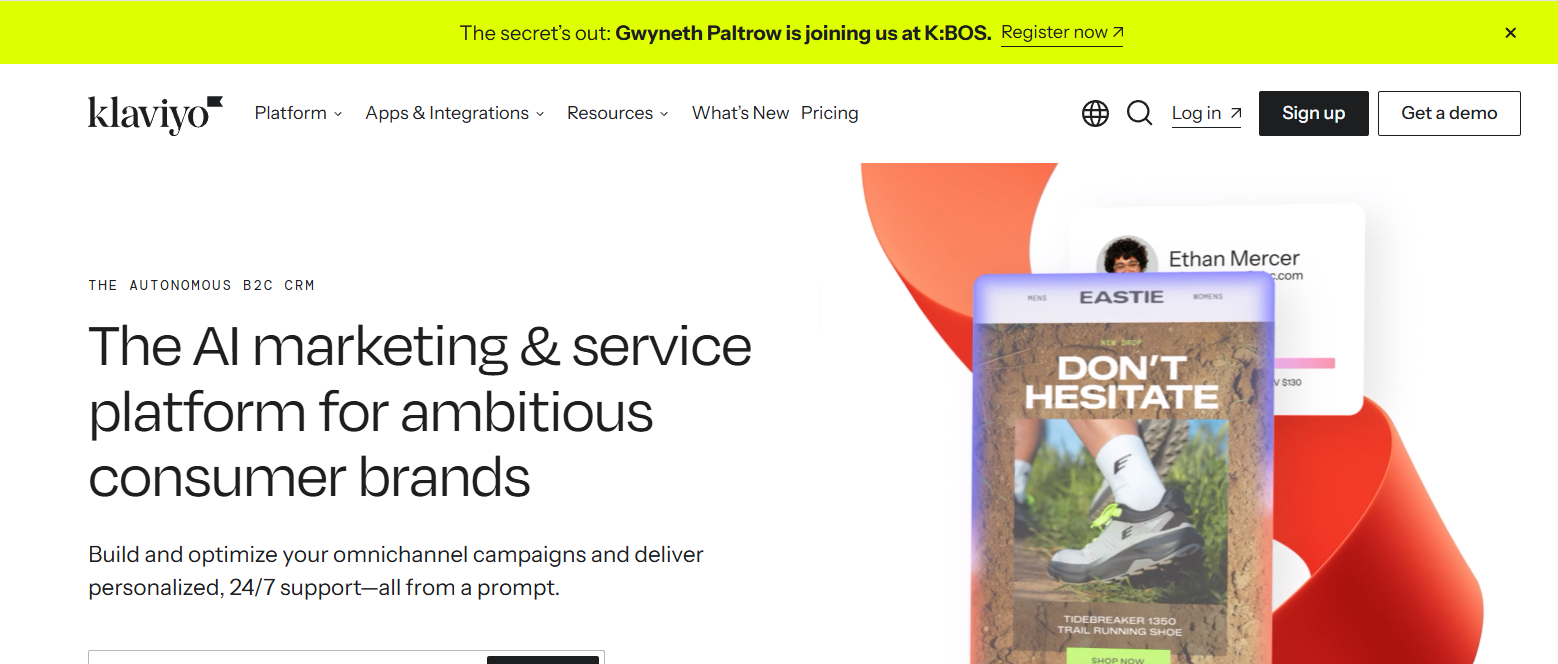
Klaviyo is one of the strongest lifecycle marketing platforms for ecommerce brands. Rather than focusing on loyalty programs, it helps businesses retain customers through personalized email and SMS campaigns powered by customer data and behavioral insights.
Best for: DTC brands that want to improve customer communication through automated email and SMS marketing.
Key features
Pros
Cons
Klaviyo is a strong fit for DTC brands whose biggest retention challenge is improving customer communication through personalized email and SMS automation.
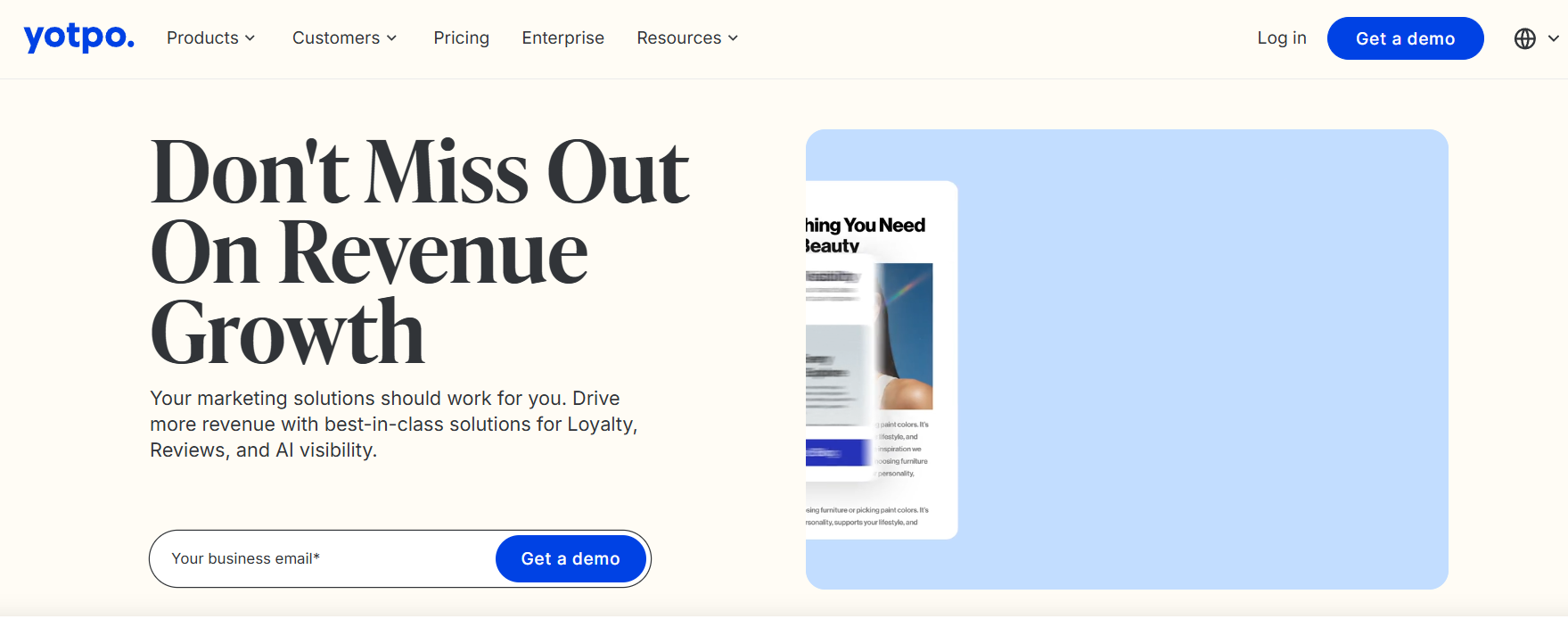
Yotpo is an ecommerce marketing platform that brings together loyalty programs, customer reviews, referrals, SMS marketing, and subscriptions. It helps brands improve customer engagement, encourage repeat purchases, and manage multiple retention activities from a connected ecosystem.
Best for: Growing ecommerce businesses that want loyalty, customer reviews, and engagement tools under one platform.
Key features
Pros
Cons
Yotpo is well suited to brands looking to manage loyalty programs, reviews, referrals, and customer engagement from a connected ecommerce ecosystem.
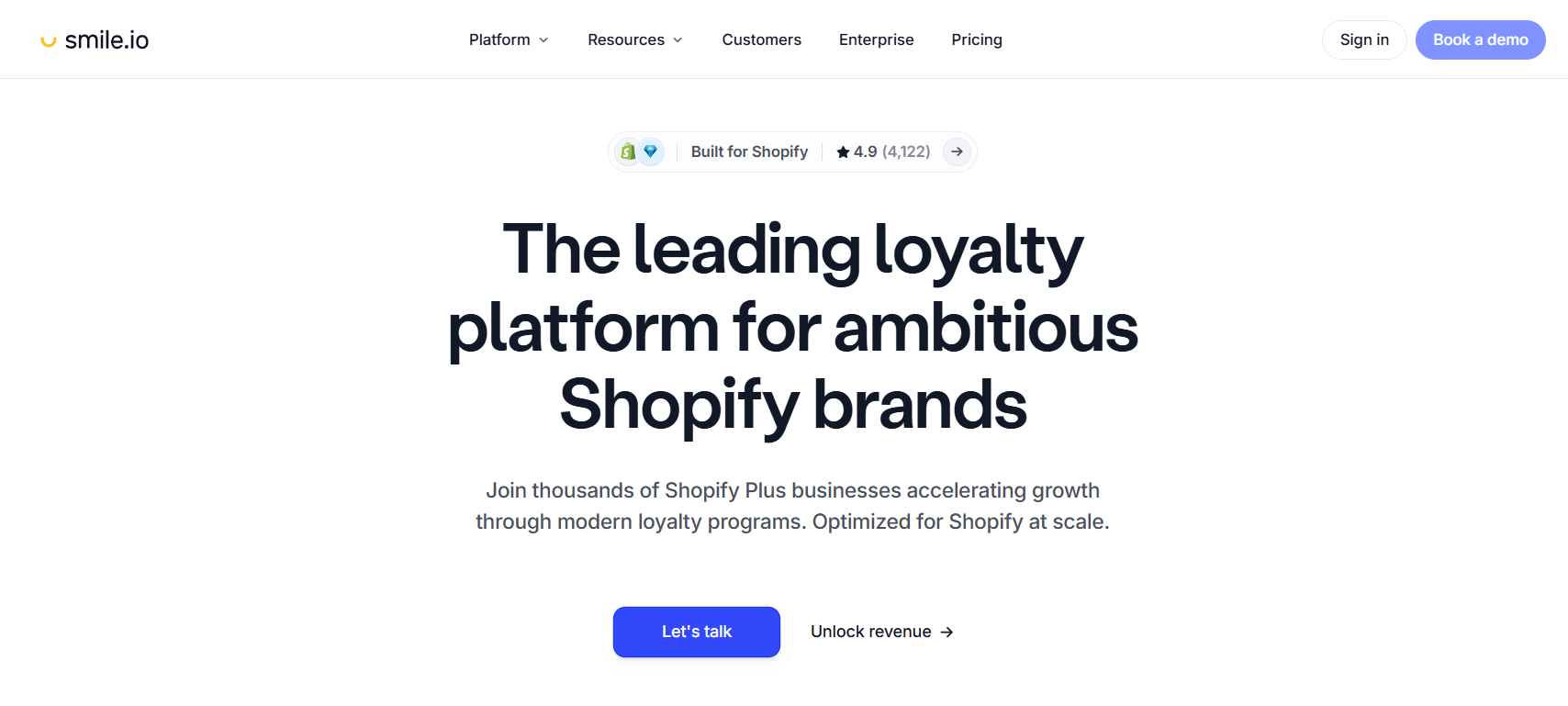
Smile.io is a customer loyalty platform that enables ecommerce businesses to create points-based rewards, referral programs, and VIP tiers. It helps brands encourage repeat purchases and reward loyal customers through a simple, easy-to-manage loyalty program.
Best for: Small to mid-sized DTC brands launching their first loyalty program.
Key features
Pros
Cons
Smile.io is ideal for smaller or growing DTC brands that want to launch a straightforward loyalty program without extensive setup or ongoing management.
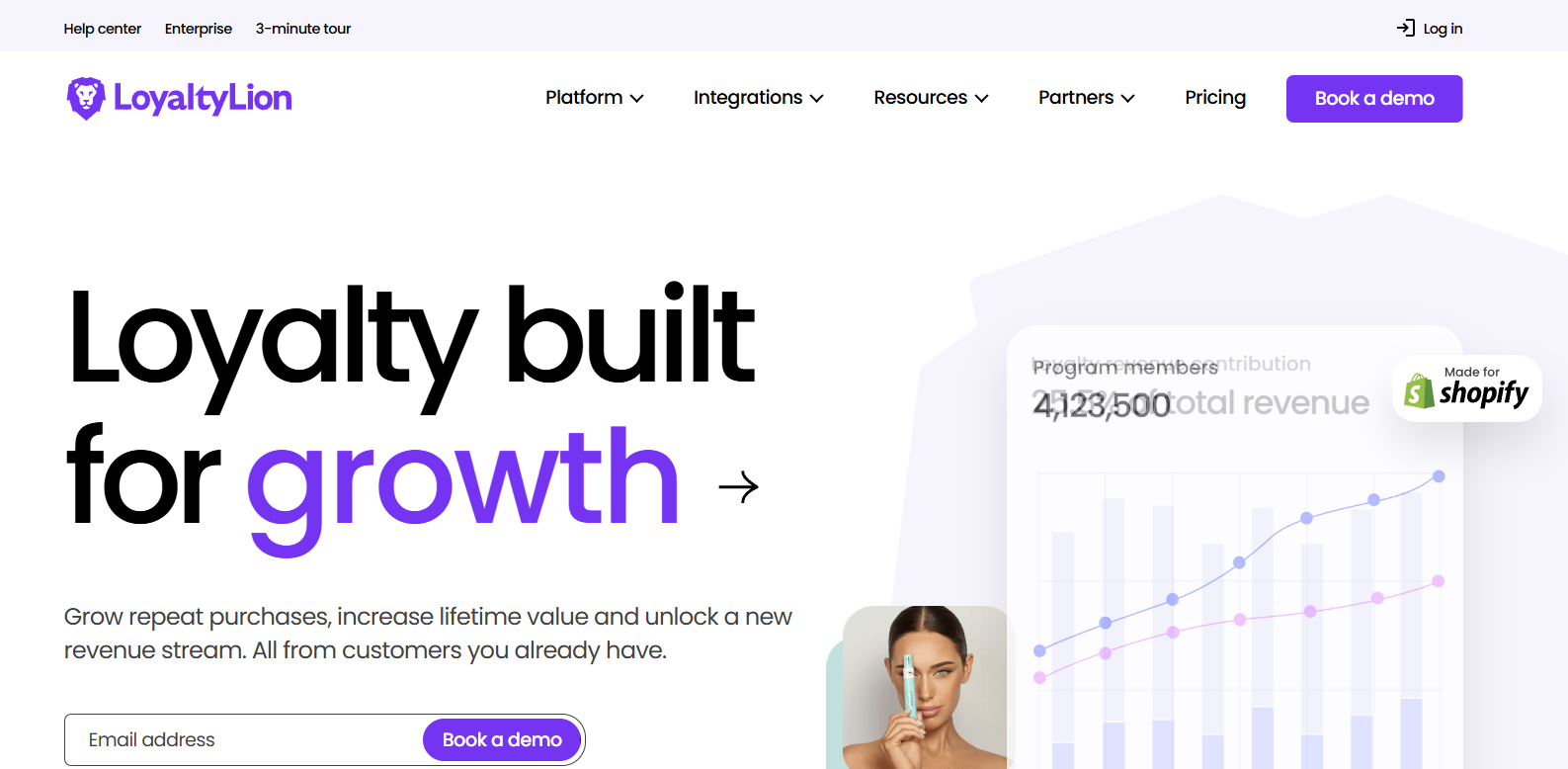
LoyaltyLion is a loyalty platform built for ecommerce brands that want greater control over customer rewards and engagement. It combines advanced loyalty programs, customer segmentation, and analytics to help increase repeat purchases and long-term customer value.
Best for: Established ecommerce brands looking for advanced loyalty program management.
Key features
Pros
Cons
LoyaltyLion is best suited to established ecommerce brands that need greater flexibility, advanced loyalty analytics, and highly customizable reward programs.
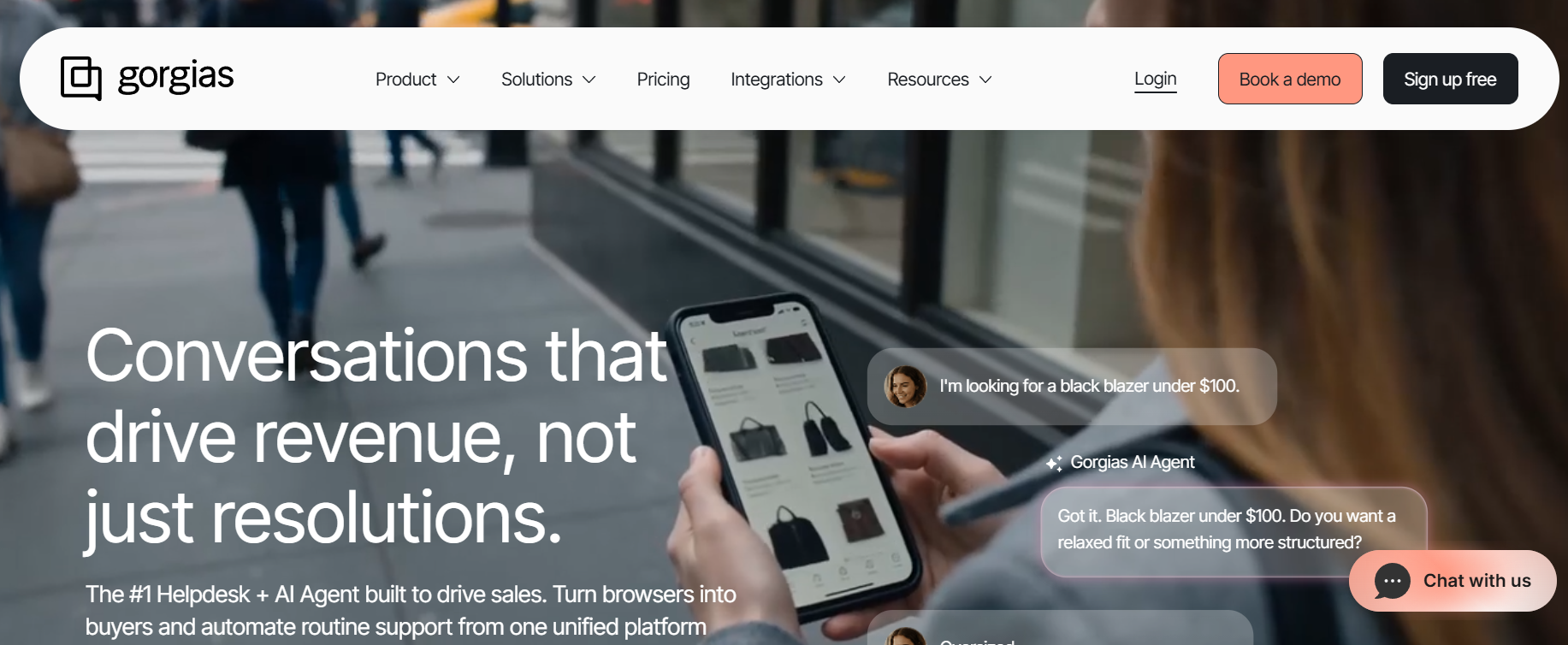
Customer retention is not always a marketing challenge. Poor support experiences can discourage repeat purchases just as much as weak loyalty or promotional campaigns. Gorgias is an ecommerce helpdesk platform that helps brands deliver faster, more personalized customer support to improve retention and the overall customer experience.
Best for: Shopify brands that want to reduce churn by improving customer support.
Key features
Pros
Cons
Gorgias is a good option for businesses where customer support plays a significant role in retention. It helps turn service interactions into opportunities to encourage repeat purchases and strengthen customer relationships.
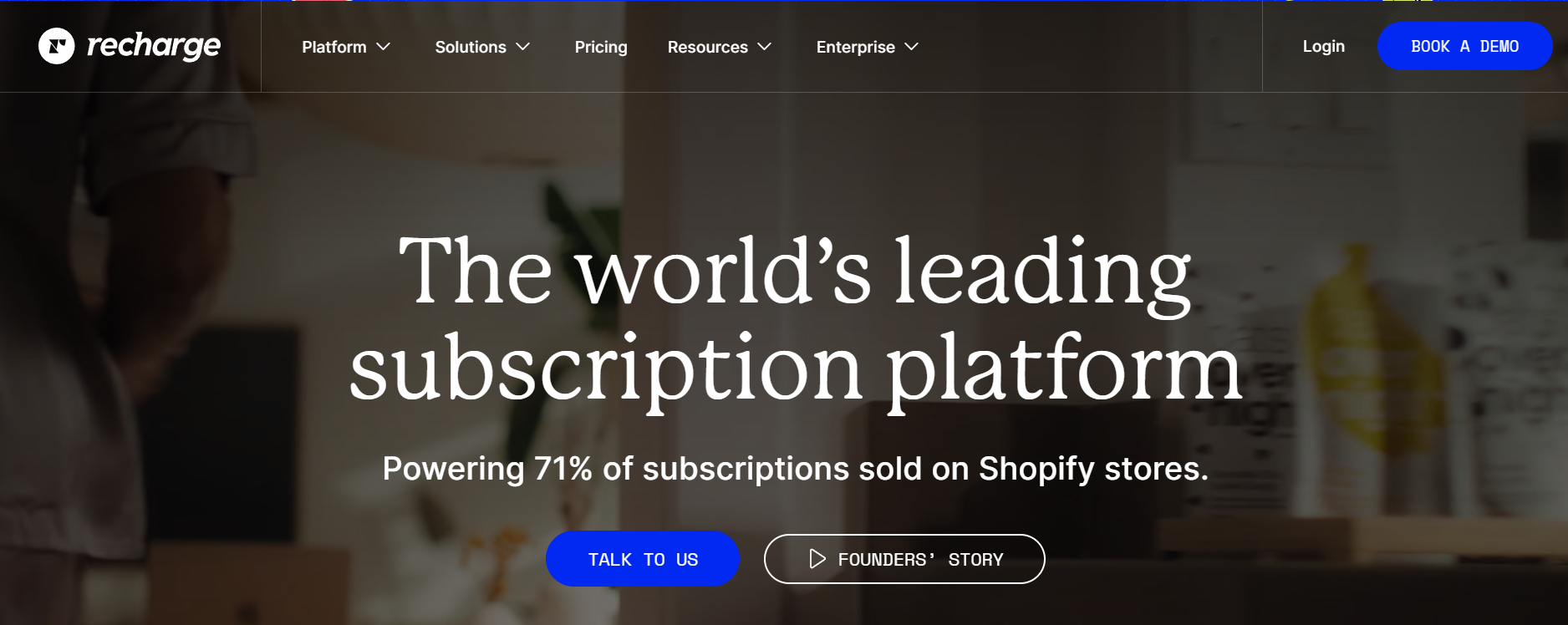
Subscription businesses face different retention challenges than traditional ecommerce stores. Recharge is a subscription management platform that helps ecommerce businesses improve subscriber retention. From flexible billing to cancellation prevention and payment recovery, it supports recurring revenue businesses throughout the customer lifecycle.
Best for: Ecommerce businesses with subscription-based products.
Key features
Pros
Cons
Recharge is a strong choice for subscription-based businesses focused on reducing cancellations, recovering failed payments, and improving subscriber retention.
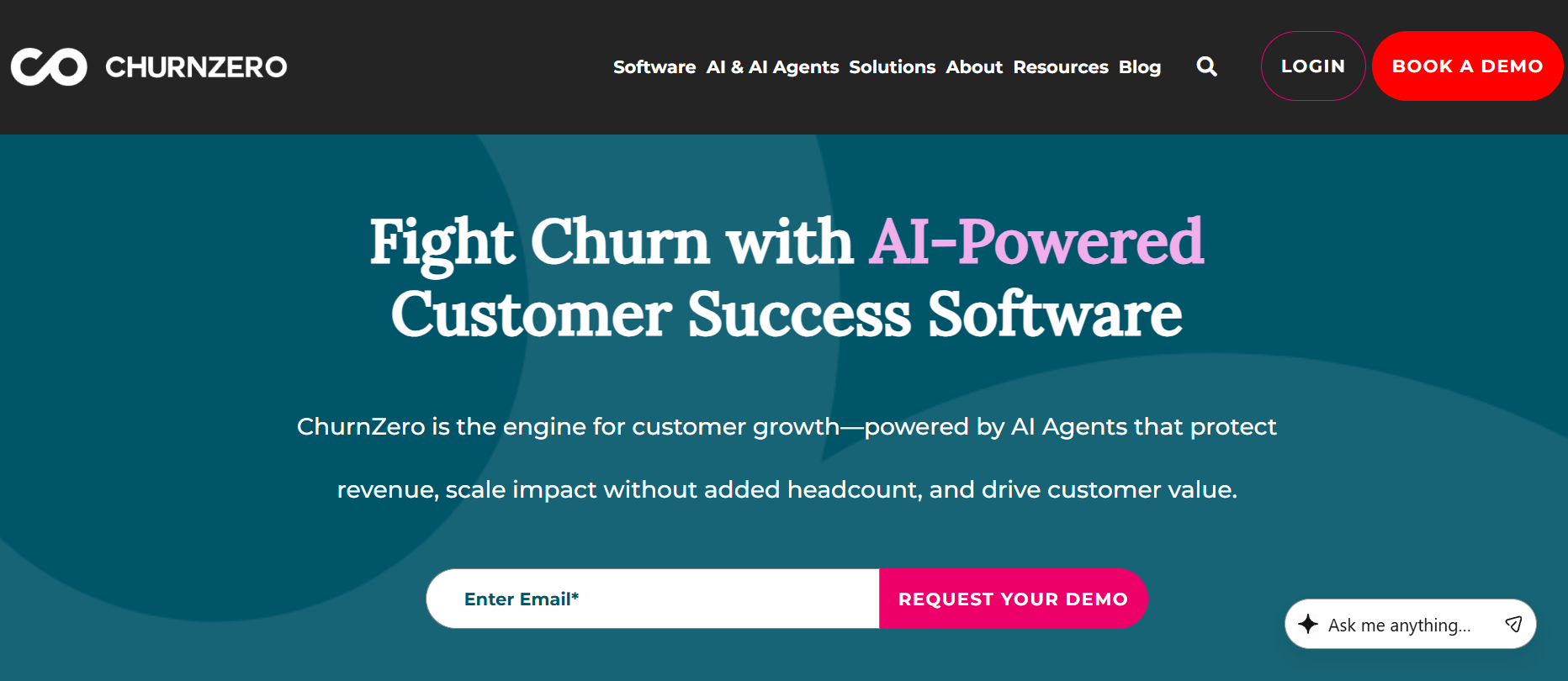
ChurnZero is a customer success platform focused on proactive retention. It helps businesses identify at-risk customers using health scores, behavioral insights, and automated engagement, making it easier to reduce churn before it happens.
Best for: Businesses that want to identify and retain at-risk customers before churn occurs.
Key features
Pros
Cons
ChurnZero is best suited to businesses that want to identify at-risk customers early and proactively reduce churn through customer health monitoring and automated engagement.
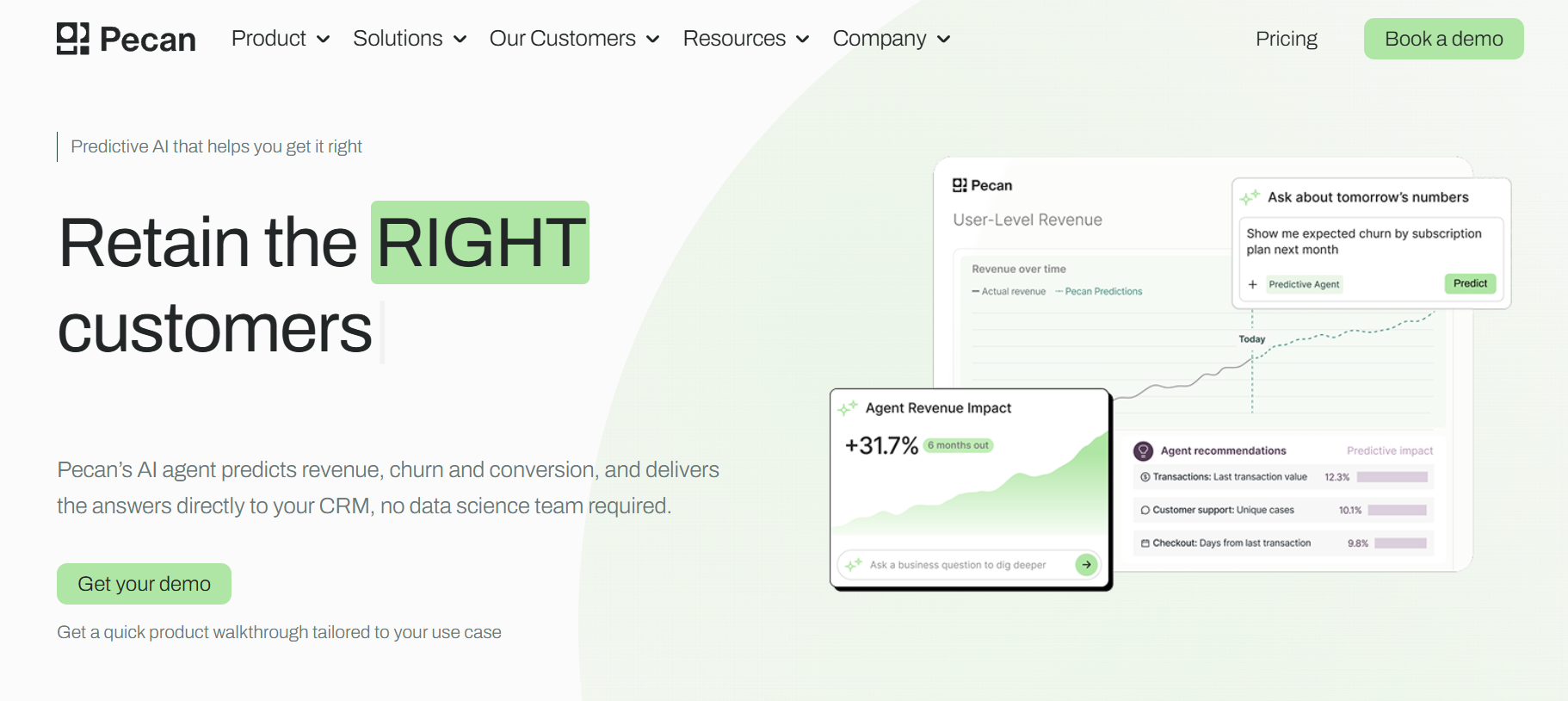
Pecan AI is a predictive analytics platform that helps businesses identify customers most likely to churn before they leave. Using AI-driven forecasting, it enables teams to prioritize retention efforts and make more informed, data-driven decisions.
Best for: Businesses with large customer datasets looking for AI-driven churn prediction.
Key features
Pros
Cons
Pecan AI is ideal for businesses with sufficient customer data that want to use AI-powered churn prediction to identify retention opportunities before customers disengage.
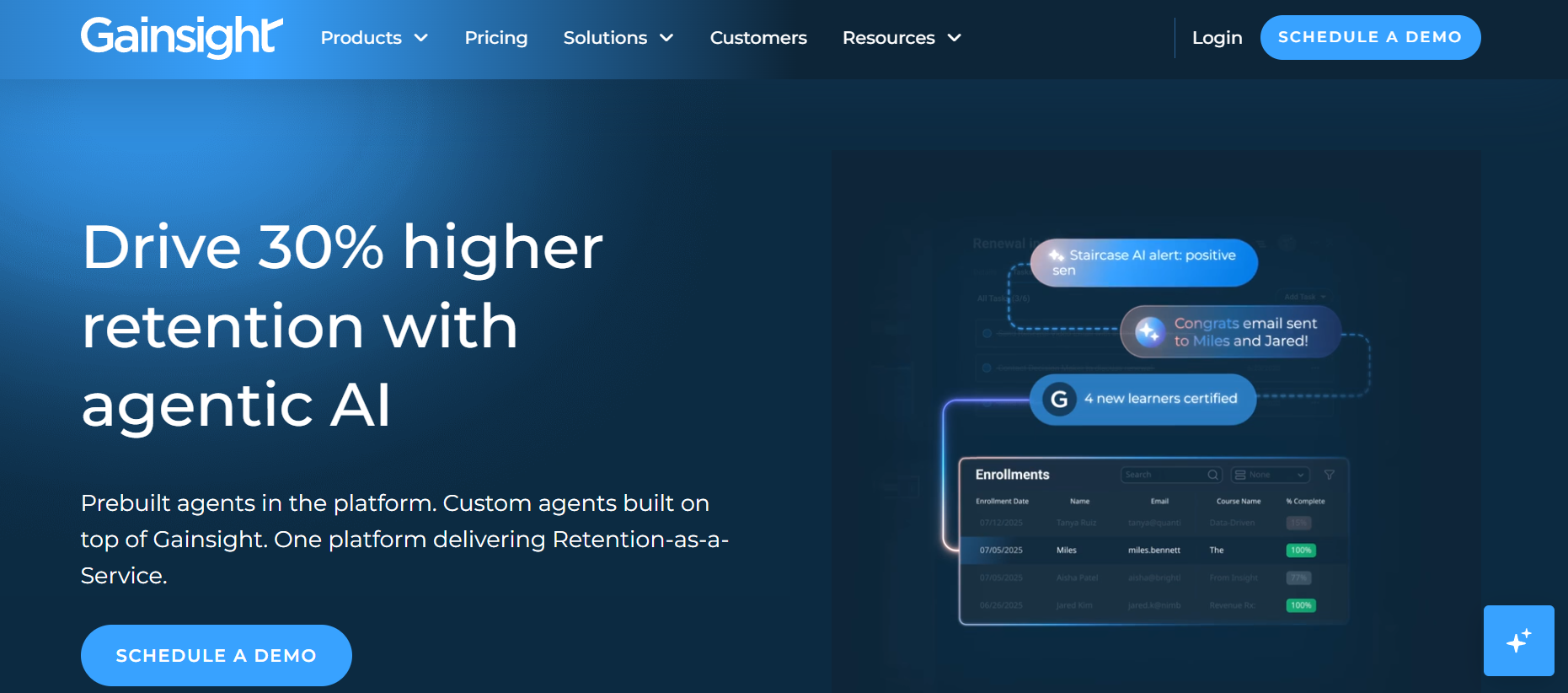
Gainsight is an enterprise customer success platform designed to improve customer retention through health scoring, journey orchestration, and proactive engagement. It helps businesses identify churn risks early and build long-term customer relationships at scale.
Best for: Enterprise businesses with dedicated customer success teams.
Key features
Pros
Cons
Choose Gainsight if your organization needs enterprise-grade customer retention management with advanced customer success capabilities rather than a traditional ecommerce loyalty platform.
The right budget depends on the value of the customers you can retain, not the software's monthly subscription fee. Before comparing costs, estimate how much revenue better retention could generate for your business.
Start by understanding the financial impact of customer retention. Review key metrics such as:
These metrics help establish how much revenue is currently being lost through customer churn and where retention improvements could have the greatest impact.
A simple way to estimate the potential value of better retention is:
Additional retained customers × Expected purchase frequency × Average order value = Potential retained revenue
For example, retaining 100 additional customers who each make two purchases with an average order value of £75 could generate £15,000 in additional revenue.
Monthly subscription fees are only one part of the investment. Also consider implementation time, onboarding, integrations, staff training, and the resources needed to manage the platform. Software that is quicker to deploy and easier to maintain may deliver value sooner and reduce operational costs over time.
Instead of comparing software based solely on its monthly price, evaluate whether it can generate enough incremental retained revenue to justify the overall investment. A platform that delivers measurable improvements in repeat purchases and customer lifetime value often provides greater long-term value than a lower-cost alternative with fewer capabilities.
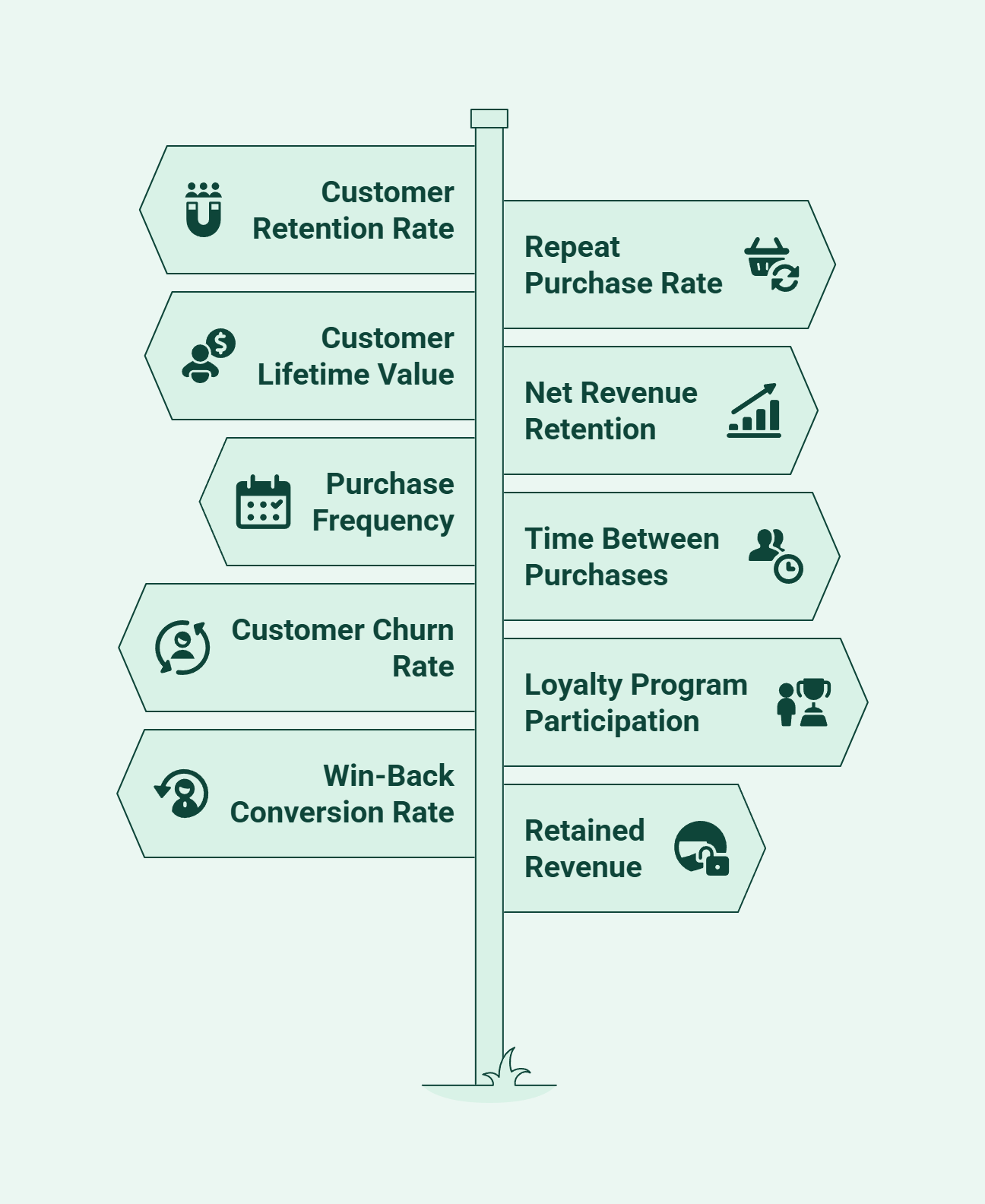
The success of customer retention software should be measured by business outcomes rather than platform activity. Metrics such as emails sent, loyalty points issued, or automated workflows created only matter if they lead to meaningful improvements in customer behavior and revenue.
Customer retention rate measures the percentage of customers who continue buying from your business over a specific period. A strong retention platform should help increase this figure by encouraging customers to return instead of switching to competitors.
Repeat purchase rate tracks how many customers return to make another purchase after their first order. An increase indicates that your loyalty programs, personalized campaigns, or post-purchase experiences are successfully encouraging customers to buy again.
Customer lifetime value measures the total revenue a customer generates throughout their relationship with your business. Effective retention software should help increase CLV by encouraging more frequent purchases, improving customer loyalty, and extending customer relationships.
Net Revenue Retention (NRR) measures how much recurring revenue you retain from existing customers after accounting for expansion, downgrades, and churn. For subscription businesses and larger Shopify Plus brands, a higher NRR indicates stronger customer retention and long-term revenue growth.
Purchase frequency shows how often customers place orders within a given period. If this metric improves after implementing retention software, it suggests that your rewards, personalized offers, or engagement campaigns are successfully encouraging customers to return more often.
This metric measures the average time customers take to place another order. Reducing the gap between purchases often indicates stronger customer engagement and a more effective retention strategy.
Customer churn rate tracks the percentage of customers who stop purchasing over a defined period. One of the primary objectives of customer retention software is to identify at-risk customers early and reduce this figure through timely interventions.
This measures how actively customers earn and redeem loyalty rewards. High participation and redemption rates generally indicate that customers understand the program, find the rewards valuable, and are motivated to continue purchasing.
Win-back conversion rate shows how many inactive or at-risk customers return after receiving personalized offers, targeted campaigns, or other re-engagement initiatives. It helps measure how effectively the platform recovers customers who might otherwise have churned.
Retained revenue measures the revenue generated from customers who continue purchasing over time. It provides one of the clearest indicators of whether your retention strategy is delivering measurable commercial value beyond engagement metrics.
Ultimately, the best customer retention software should improve customer behavior, not just campaign activity. Prioritize platforms that increase repeat purchases, strengthen customer loyalty, reduce churn, and generate higher retained revenue over the long term.
Building a successful retention strategy takes more than sending another email or offering another discount. It requires the right mix of loyalty, referrals, personalized experiences, and customer insights to encourage repeat purchases and build lasting customer relationships.
Kefi Commerce brings these capabilities together in a single platform built for Shopify brands. From loyalty programs and VIP tiers to referrals, gamification, customer segmentation, and engagement tools, it helps businesses reward loyal customers, increase repeat purchases, and simplify their retention strategy without relying on multiple standalone apps.
Whether you are launching a new loyalty program or improving an existing one, Kefi Commerce provides the tools to strengthen customer loyalty, increase customer lifetime value, and support long-term business growth.
See how Kefi Commerce can help you turn first-time buyers into loyal repeat customers. Book a personalized demo today and discover how a smarter loyalty strategy can drive long-term customer retention.
Yes. Several customer retention software tools support mobile apps with push notifications, behavioral analytics, customer behavior tracking, in-app messaging, and workflow automation to improve engagement, retention, and customer satisfaction.
Customer retention management software helps improve loyalty through loyalty programs, email marketing, and personalized engagement. The best churn prediction software with proactive customer retention features uses artificial intelligence, natural language processing, and customer retention metrics to identify customers likely to leave.
The best customer loyalty and retention software depends on your goals. Small businesses often benefit from affordable platforms with customer relationship management, customer feedback, support tools, and communication channels that are easy for small team members to manage.
The best software for DTC customer acquisition and retention tracks purchase history, user behavior, product analytics, and customer feedback in real time. These insights improve user experience, increase repeat purchases, and help convert satisfied customers into brand advocates.
Yes. Most customer retention tools integrate with CRM platforms, allowing support teams to connect live chat, support tickets, customer data, and retention metrics. This creates a unified view of every new customer and existing customer for better decision-making.
Start with clear retention goals, segment customers based on behavior, automate personalized campaigns, monitor customer retention metrics, collect customer feedback, and regularly optimize workflows using performance data instead of relying on one-time campaigns.
.svg)
