

For Shopify store owners, creating an appealing shopping experience is essential for driving sales and building a loyal customer base. A powerful tool in your marketing arsenal is the strategic use of order discounts. Previously, Shopify's platform limited customers to a single discount code per order. However, recent updates have unlocked the ability to combine various discounts, allowing you to create more compelling offers. This means it is now possible to set up a single order with multiple discounts, enhancing both flexibility and value for your customers. This guide explores how to effectively use Shopify's multiple discount code feature to enhance your promotional strategies and delight your customers.
Shopify's multiple discount code stacking refers to the ability for customers to apply multiple discounts to a single order at checkout, combining different types of savings for greater overall value. This can include combinations such as product discounts, order-level discounts, and shipping offers, depending on how they are configured in Shopify. The primary objective of discount stacking is to create more compelling promotions that not only attract customers but also encourage higher spending by making deals feel more rewarding.
In practice, this means a shopper could apply a percentage-off code alongside a free shipping offer or benefit from an automatic discount while also entering a manual promo code. Shopify enables this through its discount “combinations” settings, where merchants can control which types of discounts can be used together. While there are certain limitations, such as restrictions on stacking multiple discounts of the same type, this feature provides businesses with greater flexibility to design strategic, layered promotions that enhance customer experience, increase conversion rates, and boost average order value.

Implementing a strategy that allows for multiple discount codes can significantly boost sales and improve customer satisfaction. When shoppers see they can combine offers, they feel they are getting a better deal, which encourages them to complete their purchase and often make larger purchases than they initially intended. This directly impacts your conversion rates and average order value.
Allowing multiple discount codes significantly improves conversion rates by giving customers a stronger incentive to complete their purchase. When shoppers can stack offers, the perceived value of the deal increases, often acting as the final push for hesitant buyers. This approach reduces cart abandonment and encourages quicker decision-making, especially when combined with well-structured discount combinations and clear eligibility rules within Shopify’s discount settings or through third-party tools.
Stackable discounts are highly effective in increasing average order value by motivating customers to add more items to their cart to unlock greater savings. By combining offers such as percentage discounts, free shipping, or tiered incentives, businesses can strategically influence purchasing behavior. This not only boosts revenue per transaction but also makes customers feel they are maximizing their savings, leading to more satisfying and justified larger purchases.
A flexible discount strategy enhances customer satisfaction by creating a sense of value and reward during the shopping experience. When customers successfully apply multiple discounts, they perceive the brand as more customer-centric and generous. This positive experience builds trust, encourages repeat purchases, and strengthens brand loyalty, while also contributing to favorable reviews and word-of-mouth promotion.
Enabling multiple discount codes allows businesses to design more dynamic and targeted promotional campaigns. Instead of relying on a single offer, merchants can layer discounts to address different objectives such as increasing order size, clearing inventory, or rewarding loyal customers. This flexibility leads to more effective marketing strategies, helping brands stand out while optimizing campaign performance and overall sales impact.
Also Read: How The Chosen Cultivated a Community through Curated Merchandise Kits.
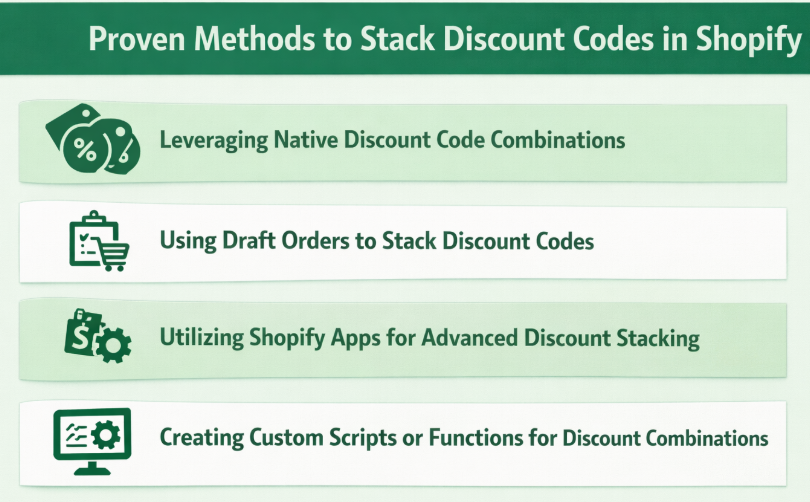
While Shopify has expanded its native capabilities for stackable discounts, several proven methods exist to achieve more complex promotional goals. Each method offers different levels of control and is suited for various scenarios. Whether you need to create a custom order for a VIP customer or want to offer sophisticated, automated stacking rules across your entire store, there is a solution available. The following sections will detail these methods, from using Shopify's native combinations to employing a third-party discount app.
Shopify’s native discount functionality provides a straightforward way to stack multiple discount codes without relying on external tools. Merchants can combine up to five codes per order, provided they are configured correctly within the “Combinations” settings. Typically, one product, one order, and one shipping discount can be applied together, while overlapping discounts of the same type are automatically optimized for the best customer value. This method is ideal for running simple, controlled promotions with minimal setup.
Draft orders offer maximum flexibility by allowing merchants to manually apply multiple discounts that would not normally be possible at checkout. This approach is particularly useful for custom deals, wholesale orders, or customer service scenarios that require tailored pricing. By creating a draft order and applying discounts directly, merchants can generate a unique checkout link with pre-applied savings, ensuring a seamless and personalized purchase experience.
When native capabilities are limited, Shopify apps offer advanced solutions for implementing complex discount-stacking strategies. These apps enable customers to apply multiple codes, automate discount combinations, and set priority rules for how discounts are calculated. They also enhance the shopping experience by displaying savings in real time and offering detailed analytics, making them a powerful option for businesses looking to scale their promotional strategies.
For Shopify Plus merchants, custom scripts or functions unlock complete control over discount logic at checkout. This method allows businesses to define highly specific conditions, combine multiple discount types, and dynamically adjust pricing based on cart behavior. Although it requires technical expertise, it enables the creation of sophisticated and highly targeted promotions that align closely with advanced marketing and revenue goals.
Also Read: How Lifetime Technologies went from a Single Additive to System Kits.
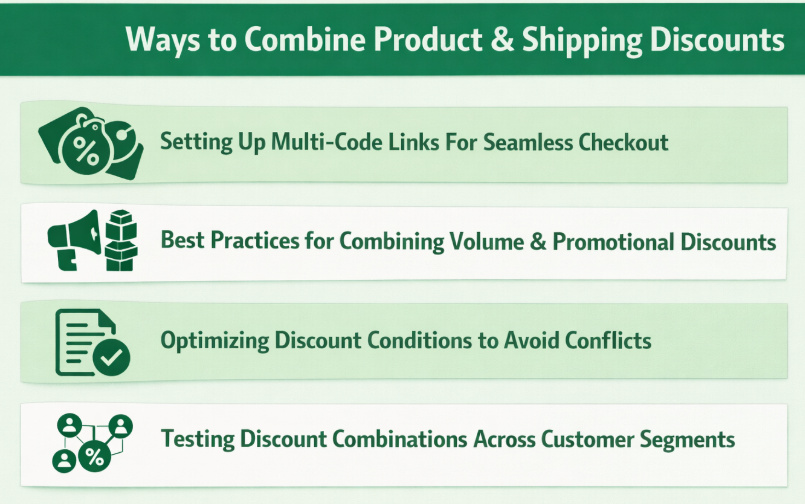
To ensure a smooth shopping experience, it's crucial to set up these combinations correctly and communicate them clearly to your customers. From creating seamless checkout links to optimizing your discount conditions, there are several practical ways to execute this strategy effectively. The following sections will explore best practices for combining these and other types of discounts.
Creating a seamless checkout experience is crucial for maximizing conversions. One way to do this is by using discount links that automatically apply codes, so customers don't have to remember or type them in. This simplifies the checkout process and reduces the chances of a shopper abandoning their cart due to frustration.
How do I add multiple discount codes to a Shopify checkout link? While Shopify's native functionality creates a link for a single discount, some third-party apps specialize in generating a single shareable link that can apply multiple stackable discounts at once. These apps allow you to preload a combination of offers, such as a product discount and free shipping, into a single URL.
When a customer clicks this multi-code link, the discounts are automatically applied to their cart, creating a frictionless path to purchase. This is particularly effective for:
Combining volume discounts (like tiered pricing) with general promotional discounts can be highly effective, but it requires careful planning to protect your profit margins. What limitations exist when stacking volume and promotional discounts on Shopify? The primary limitation is that these offers can quickly erode profitability if not structured correctly. Shopify's native system may also struggle with complex layered logic, often making a third-party app necessary for this strategy.
The best approach is to set clear rules and priorities. For example, you might decide that a 20% off promotional code can only be applied after the volume discount has been calculated. This ensures that the discounts are applied in a controlled sequence and don't stack in an unintended, unprofitable way.
To optimize this combination, consider the following best practices:
To ensure a smooth shopping experience, it's essential to optimize your discount conditions to prevent conflicts. Conflicting discounts can lead to customer frustration and abandoned carts when an expected offer doesn't apply. This often happens when multiple automatic discounts are active or when discount rules overlap.
What are the current rules for combining and stacking discounts in Shopify? The system allows up to five combinable discounts and generally permits one of each class (product, order, shipping) to stack. However, only one automatic discount can apply per order. If a customer's cart qualifies for multiple automatic discounts, Shopify will apply the one that provides the greatest value, which might not be what the customer expected.
To avoid these issues, you should:
Not all customers respond to the same offers. A crucial part of strategic planning is testing different discount combinations across customer segments to see which resonates best. For example, new customers might be motivated by a straightforward percentage-off discount, while repeat customers may prefer an exclusive offer that stacks with their loyalty points.
By segmenting your audience, you can tailor your promotional strategies for maximum impact. How do I enable customers to use multiple discount codes at Shopify checkout for specific groups? You can create discounts available only to specific customer segments you've defined in your Shopify admin. When you set a discount to be combinable, only customers in that segment can stack it with other eligible offers.
To effectively test your combinations, you should:
Also Read: How Volume Discounts Drive Customer Loyalty?
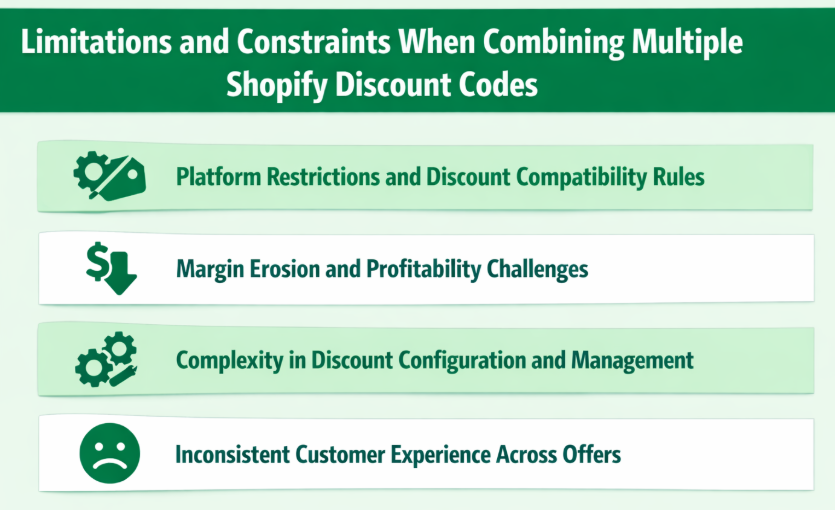
While Shopify's support for multiple discounts is a significant step forward, it's important to be aware of the existing limitations and constraints. Platform restrictions, discount compatibility rules, and the potential impact on your profit margins all need to be considered when developing your discount strategy. The following sections will delve into the specific challenges you might face, from navigating Shopify's compatibility rules to managing the complexity of your promotional campaigns.
Shopify imposes specific rules on how discounts can be combined, which directly impacts your promotional flexibility. Discounts are categorized into product, order, and shipping classes, and typically, only one discount from each category can be applied per order. Multiple discounts of the same type cannot be stacked on a single item, and Shopify will automatically apply the most beneficial one. Additionally, only one automatic discount can be active at a time, and there are limits on the number of active discounts, making it essential to carefully plan and configure combinations to avoid conflicts or unexpected outcomes.
Offering multiple discount codes can significantly impact profitability if not managed strategically. While stacking discounts may boost conversions, it can also lead to excessive price reductions that eat into margins or even result in losses. This risk is particularly high during major sales events when aggressive promotions are common. To maintain financial health, businesses must evaluate the combined impact of discounts, set limits on total reductions, and continuously monitor performance to ensure that increased sales do not come at the cost of profitability.
Managing multiple discounts with varying rules, conditions, and compatibility settings can quickly become complex and difficult to maintain. Shopify’s native system requires individual management of each discount, increasing the risk of configuration errors and inefficiencies. As promotional strategies scale, this complexity can lead to unintended discount behavior or missed opportunities. Implementing clear naming conventions, structured planning, or leveraging third-party tools can simplify management and reduce the chances of operational errors.
Running multiple discount campaigns without a clear structure and communication can lead to an inconsistent and confusing customer experience. When shoppers encounter unclear rules or find that certain discounts cannot be combined as expected, it can create frustration and reduce trust in the brand. Ensuring consistent messaging, transparent terms and conditions, and a seamless checkout experience is essential for maintaining customer confidence and maximizing the effectiveness of promotional efforts.
Also Read: How Puur Scaled Average Order Value via Intelligent Accessory Pairing.
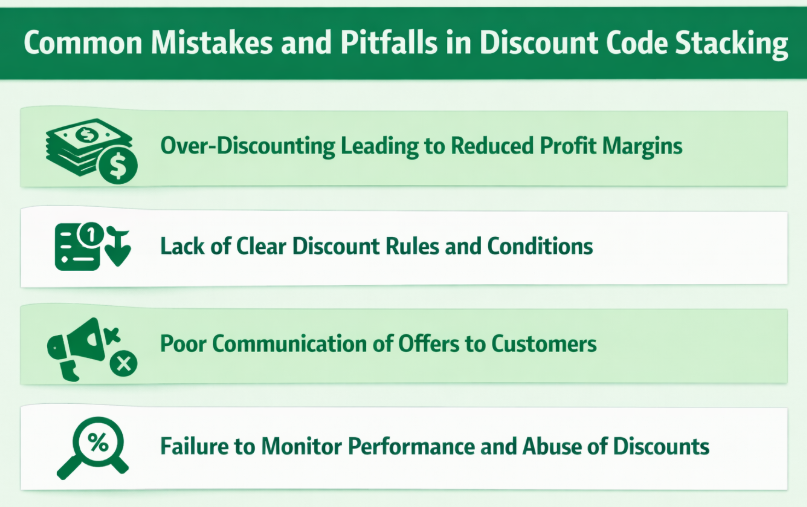
Even with a well-intentioned discount strategy, it's easy to fall into common traps that can harm your business. Mistakes like over-discounting, setting unclear discount rules, or failing to communicate offers effectively can lead to lost profits and poor customer satisfaction. These pitfalls can undermine the very goals your promotions are meant to achieve. The following sections will explore these common mistakes in more detail and provide actionable advice on how to avoid them.
Over-discounting is one of the most critical mistakes in discount code stacking, as it can significantly erode profit margins and even lead to losses. When multiple promotions are combined without proper planning, the total discount can exceed sustainable levels, making sales unprofitable despite higher order volumes. To avoid this, businesses must carefully calculate the cumulative impact of discounts, understand their cost structure, and set clear limits to ensure that every promotion remains financially viable.
Failing to define and communicate clear discount rules can create confusion for both customers and internal teams. When eligibility criteria, exclusions, or stacking conditions are not explicitly stated, customers may struggle to understand why certain discounts are not applied, leading to frustration and increased support queries. Establishing transparent, well-structured rules ensures a smoother shopping experience, helps maintain trust, and reduces operational inefficiencies.
Ineffective communication of discount offers can significantly reduce the impact of even the most well-designed campaigns. If customers are unaware of promotions or do not understand how to apply them, they are less likely to complete a purchase. Clear, consistent messaging across all touchpoints, such as banners, product pages, and checkout, ensures that customers fully understand the value of the offer, leading to higher engagement and improved conversion rates.
Neglecting to track the performance of discount campaigns can result in missed optimization opportunities and unintended financial losses. Without monitoring key metrics, businesses cannot assess the effectiveness of their strategies or identify issues such as excessive discounting or code misuse. Implementing real-time tracking, setting usage limits, and regularly reviewing campaign data helps prevent abuse, optimize performance, and ensure that discount strategies contribute positively to overall business goals.
Also Read: How a Premier Portuguese Winery Cultivated a +16.80% AOV Lift.
As a Shopify store owner, one of the most powerful ways to increase average order value is through product bundles. A product bundle inherently offers a discount, but what if you want to allow customers to apply an additional discount on top of it? This is where a sophisticated discount strategy comes into play. With an advanced discount app, you can create powerful discount combinations that work seamlessly with your bundles.
The Kefi Product Bundle Builder lets you create compelling bundles, and when paired with the right discount management tool, you can enable customers to apply multiple discount codes at Shopify checkout. For example, you can allow a customer to apply a 10% off welcome code to a pre-discounted product bundle. This layered approach provides even greater value to the customer, making the purchase almost irresistible and significantly boosting your conversion rates.
Book a Demo to see how Kefi Product Bundle Builder works.
In. When, effectively using multiple discount codes in Shopify can significantly enhance your sales strategy and customer satisfaction. By understanding the benefits of stacking discounts, you can create compelling offers that drive higher conversion rates and increased average order values. However, it’s crucial to navigate the limitations and common pitfalls associated with discount stacking to maintain profitability and ensure a consistent customer experience. Equip yourself with the right strategies and tools to maximize the impact of your promotional efforts. If you're ready to elevate your Shopify store's discount game, consider reaching out for a free consultation to explore customized solutions tailored to your business needs.
Shopify's multiple discount codes allow customers to apply more than one discount during checkout, as long as the discounts are set to be combinable. The platform automatically validates and applies only the eligible combinations based on predefined rules.
Shopify allows multiple discount codes when merchants enable the “combinations” setting for each discount. The discounts must belong to compatible categories and meet all eligibility criteria defined in their setup.
Shopify discount combinations determine how product, order, and shipping discounts interact. Proper configuration ensures that promotions complement rather than conflict, maximizing their effectiveness.
To add multiple discount codes, merchants need to create each discount and enable combination rules within the settings. Once configured, customers can enter multiple codes at checkout if they qualify.
Customers must enter each discount code individually during checkout. Shopify then evaluates the codes and applies only those that meet the store’s combination rules and conditions.
Yes, Shopify restricts certain combinations, such as applying multiple discounts of the same type to a single product. The system also prioritizes the best available discount when conflicts occur.
A native discount code is created within Shopify’s built-in system and follows platform rules for combinations. Third-party solutions, on the other hand, can extend these capabilities with more advanced stacking logic.
Code stacking enables merchants to create layered promotions that enhance perceived value for customers. This can lead to higher conversion rates, higher average order value, and more flexible marketing campaigns.
A stack discount code is specifically configured to work alongside other discounts, whereas a regular discount code may be restricted to a single use per order. This distinction allows for more dynamic and strategic promotions.
.svg)
