

Have you ever wondered how to get customers to buy more without a huge marketing push? For many e-commerce businesses, the answer is different types of bundles. This strategy involves packaging complementary items together, often for a single, discounted price. It’s a fantastic way not only to increase sales but also to simplify your customers' shopping experience. From combo meals to skincare sets, bundling is everywhere, and this guide will show you how to make it work for your brand.
A bundle is a product packaging strategy where two or more related items are sold together as a single offer, often at a better value. Understanding different types of bundles helps businesses create attractive offers that improve customer satisfaction and increase average order value.
The importance of product bundling lies in its ability to simplify buying decisions while encouraging customers to purchase complementary items. By using the right types of bundles, businesses can improve conversions, enhance the shopping experience, and grow overall sales.
Product bundling is a proven strategy to increase average order value, conversions, and customer satisfaction in e-commerce. Different types of bundles help stores offer better value while encouraging customers to buy more.
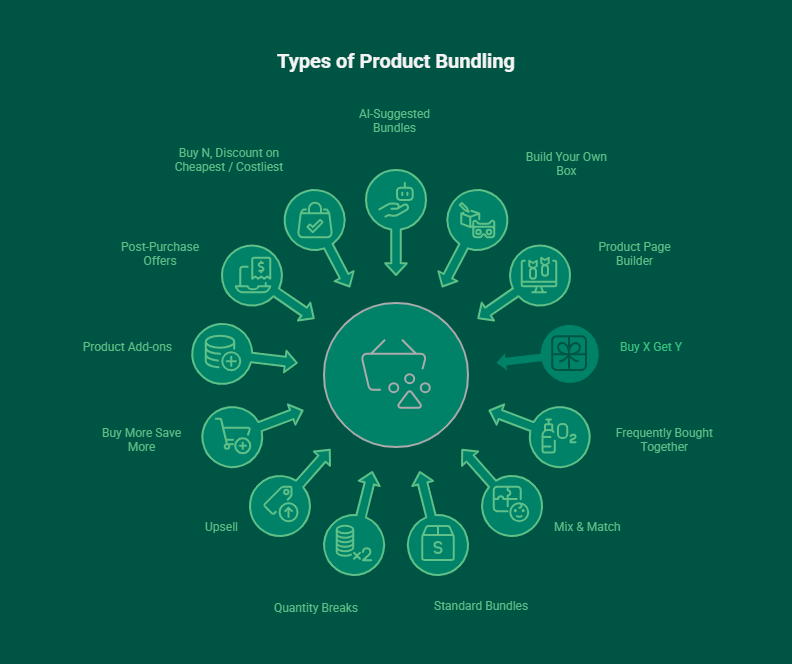
Here’s a quick overview of popular product bundle types that can improve sales and enhance the shopping experience.
AI-suggested product bundles use customer data and shopping behavior to automatically recommend relevant products. Among different types of bundles, AI-driven recommendations improve personalization, increase conversions, and help customers discover complementary items, boosting average order value.
On Shopify, stores commonly use fixed bundles, mix-and-match offers, and AI-suggested recommendations. While fixed options include preset products, mix-and-match allows customer choice, and AI suggestions automatically adapt based on user behavior, helping automate upselling and cross-selling over time.
Example: Amazon – AI-Powered Personalized Recommendations

Source: Amazon
Amazon automatically suggests bundles like a laptop, mouse, and laptop sleeve based on browsing history and past purchases. The system analyzes millions of transactions to identify patterns and show dynamic recommendations such as “Customers who bought this also bought.” These bundles are not fixed — they change for every user. This helps increase conversions and average order value through intelligent automation.
Build-your-own-box bundles allow customers to create custom product bundles based on their preferences. This personalized shopping experience increases engagement and encourages customers to purchase more items. Custom types of bundles are effective for improving conversions and increasing average order value. This bundling strategy gives customers greater control over their purchases, thereby improving satisfaction and loyalty. Build-your-own bundles are especially popular for gift boxes, subscription boxes, and specialty product stores.
Example: Function of Beauty – Custom Haircare Bundle
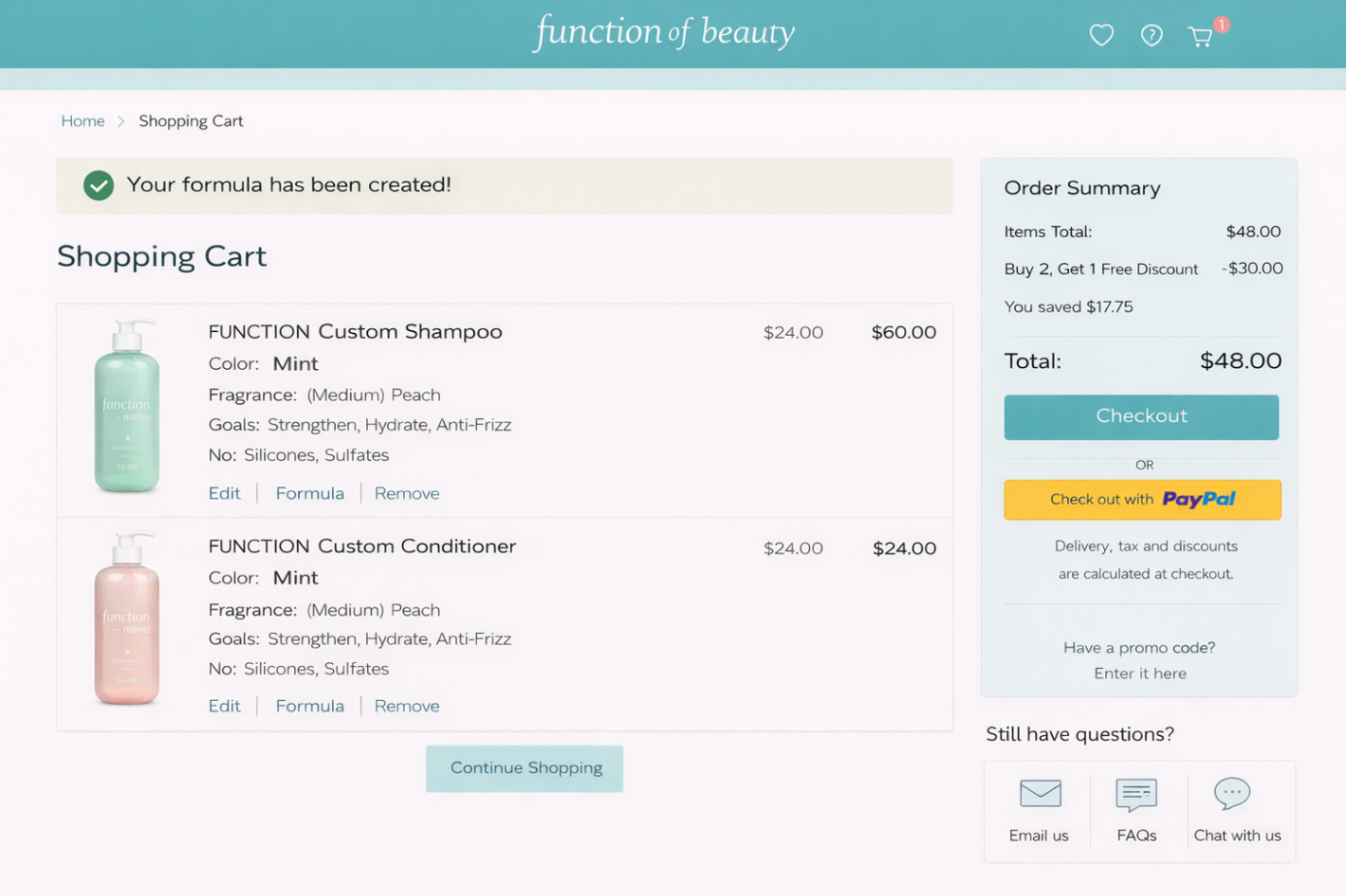
Source: Function of Beauty
Function of Beauty allows customers to complete a hair quiz and build a personalized shampoo and conditioner set. Shoppers choose fragrance, hair goals, and ingredients before checkout. The final bundle is uniquely customized for each customer. This increases engagement and improves customer loyalty through personalization.
Product page bundle builders allow customers to select multiple related products directly from a product page. This bundling method simplifies the buying process and encourages customers to purchase complementary items. Product page bundles help improve conversions and increase average order value.
Showing types of bundles on a product page reduces decision friction and helps customers complete their purchase faster. This approach works especially well for electronics, fashion, and beauty ecommerce stores. In e-commerce, a bundle typically refers to a group of related products offered together at a combined price, unlike dictionary definitions, which define a bundle as any collection of items or things grouped together for a purpose. Example: Sephora – “Complete the Routine” Builder.
Example: Sephora – “Complete the Routine” Builder

Source: Sephora
On a moisturizer product page, Sephora displays matching cleanser, toner, and serum options under “Complete the Routine.” Customers can add all items to their cart from one place. This reduces friction and encourages buying a full skincare routine rather than a single product. It improves both convenience and order value.
Buy X Get Y bundles encourage customers to purchase specific products to receive an additional item at a discount or for free. This type of product bundling increases order size and motivates customers to explore more products. It is a proven strategy for boosting sales and improving customer retention.
These types of bundles create a strong sense of value, encouraging customers to buy more than they originally planned. Buy X Get Y offers are commonly used during promotions and seasonal sales campaigns.
Example: Nike – Buy 2 Get 1 Free Campaign
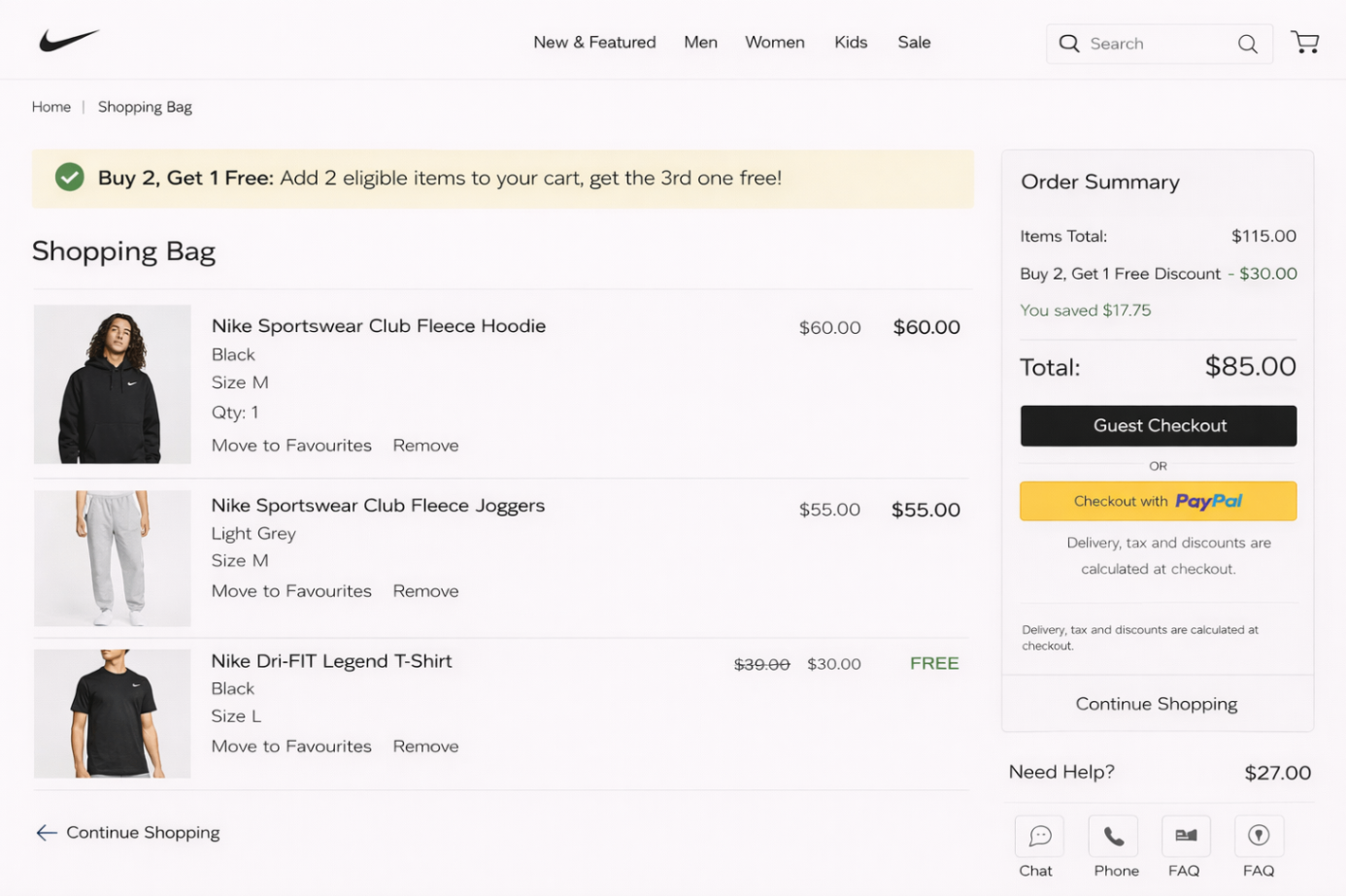
Source: Nike
Nike runs promotions where customers who add two eligible products receive a third item free. The discount automatically applies at checkout. This motivates shoppers to add extra products to unlock savings. It increases cart size while creating a strong value perception.
Frequently bought together bundles recommend products that customers commonly purchase together, making it easier to find complementary items and complete purchases faster. This approach helps improve conversions and increase average order value.
Data-driven recommendations help customers feel more confident in their decisions. It is widely used in e-commerce stores to improve product discovery and grow revenue.
Example: Amazon - Frequently Bought Together Section
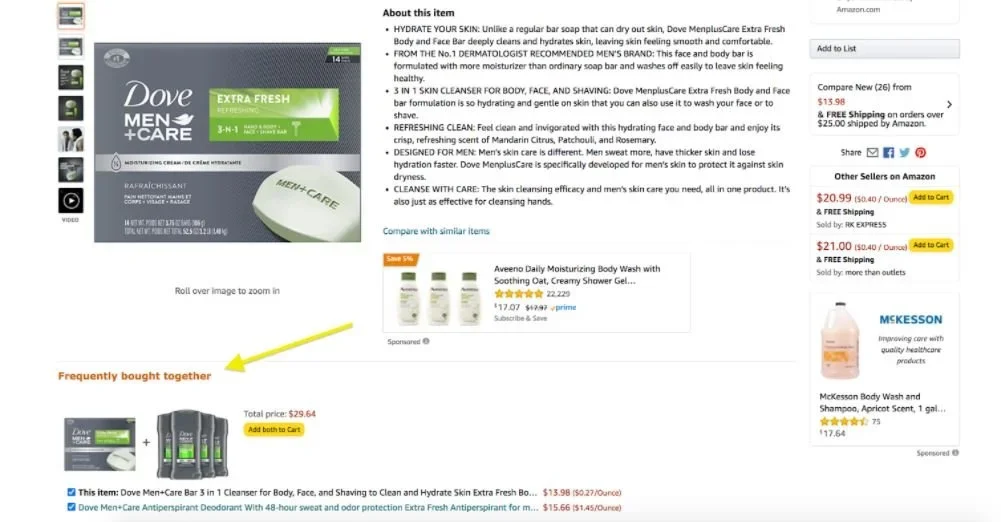
Source: Amazon
When viewing a camera, Amazon suggests a tripod and memory card under “Frequently Bought Together.” Customers can add all items with one click. These bundles are based on real customer purchase data. It simplifies product discovery and increases customer confidence in buying complementary items.
Mix-and-match bundles let customers choose different products within a single offer, helping them create personalized combinations that meet their needs. This flexible approach improves customer satisfaction and encourages larger purchases.
Customers appreciate the freedom to choose items rather than buy fixed sets. It works especially well for clothing, cosmetics, food products, and lifestyle items.
Example: Bath & Body Works – Choose Any 5 for $X

Source: Batch & Body Works
Bath & Body Works allows customers to pick any five items from selected categories at a special price. Shoppers can mix different fragrances and product types. The flexibility increases personalization and perceived value. It encourages bulk purchases without restricting choice.
Also Read: Mica: Painting Stories on Nursery Walls through Mix & Match Magic
Standard bundles combine multiple complementary products into one discounted package, simplifying the shopping experience and providing better value to customers. This approach helps increase average order value and improve overall sales performance.
Predefined sets reduce decision-making time and make shopping more convenient. They are commonly used for starter kits, gift sets, and product collections.
Example: Apple - MacBook + AirPods Back-to-School Bundle

Source: Apple
Apple offers fixed bundles during promotional seasons, such as a MacBook paired with free or discounted AirPods. Customers purchase a ready-made package instead of separate products. This simplifies decision-making and enhances perceived savings. It works well for starter kits and ecosystem-based products.
Quantity break bundles offer discounts when customers purchase products in larger quantities, encouraging bulk buying and helping increase average order value. This approach is especially effective for repeat customers and wholesale buyers.
Customers are more motivated to buy when they see clear savings per unit. Quantity discounts work particularly well for consumable products such as supplements, groceries, and office supplies.
Example: Costco – Bulk Pack Discounts

Source: Costco
Costco offers lower per-unit pricing when customers buy products in bulk packs. The more units purchased, the better the value per item. This motivates customers to stock up on frequently used goods. It increases overall purchase volume and average order value.
Also Read: How a Premier Portuguese Winery Cultivated a +16.80% AOV Lift.
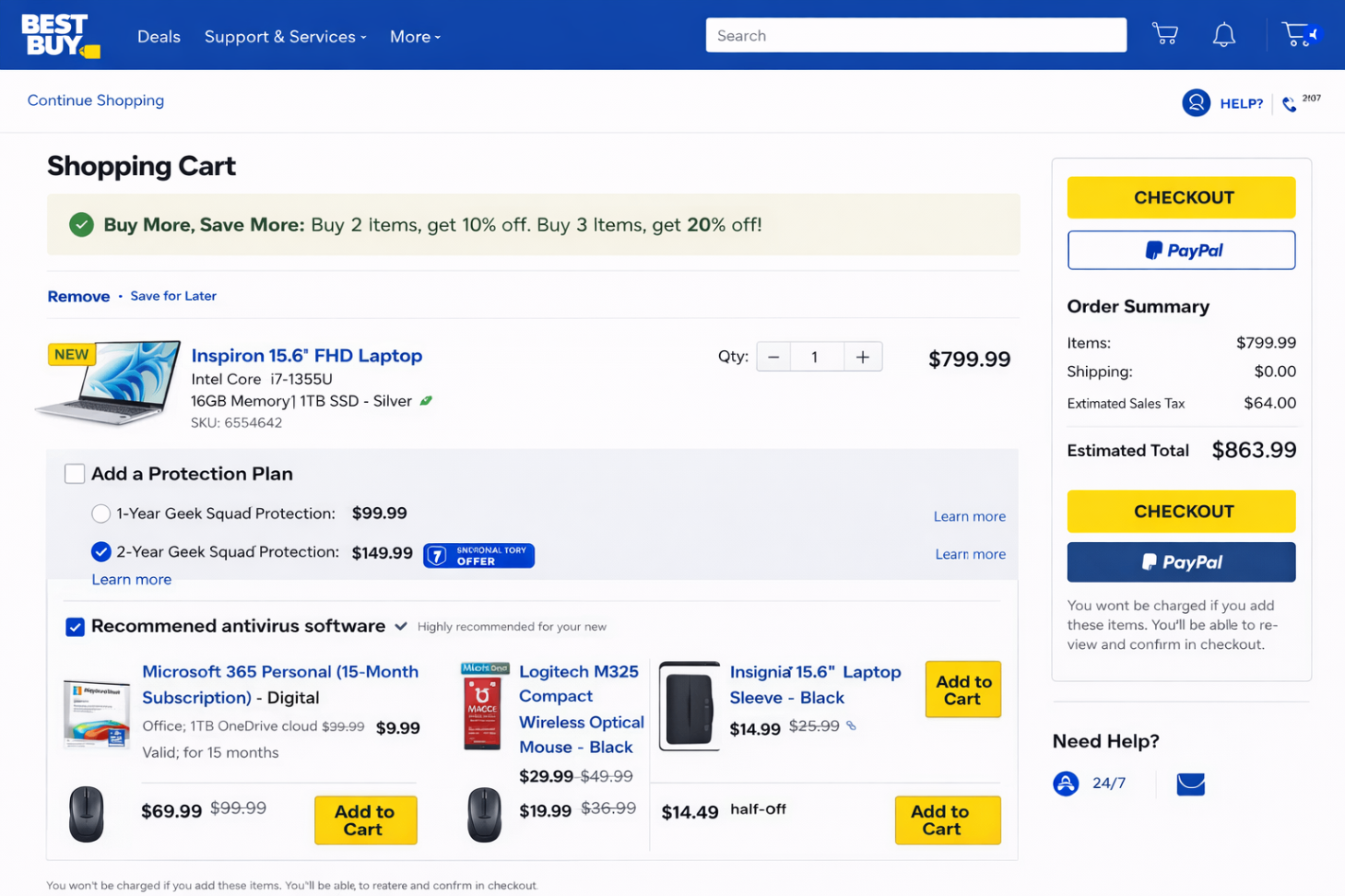
Upsell bundles offer additional or upgraded products related to a customer's main purchase, encouraging customers to spend more by highlighting useful complementary items. This approach improves revenue while enhancing the overall shopping experience.
Strategic upselling helps customers discover premium options and useful accessories. It is one of the most effective ways to increase revenue without increasing traffic.
Example: Best Buy – Add Protection Plan & Accessories
Source: Best Buy
When purchasing a laptop, Best Buy suggests adding an extended warranty, antivirus software, or accessories. These upsell bundles appear before checkout. They encourage customers to enhance their main purchase. This increases revenue while improving the overall product experience.
Also Read: How Minimal Home Redefined Interior Elegance through Strategic Upselling.
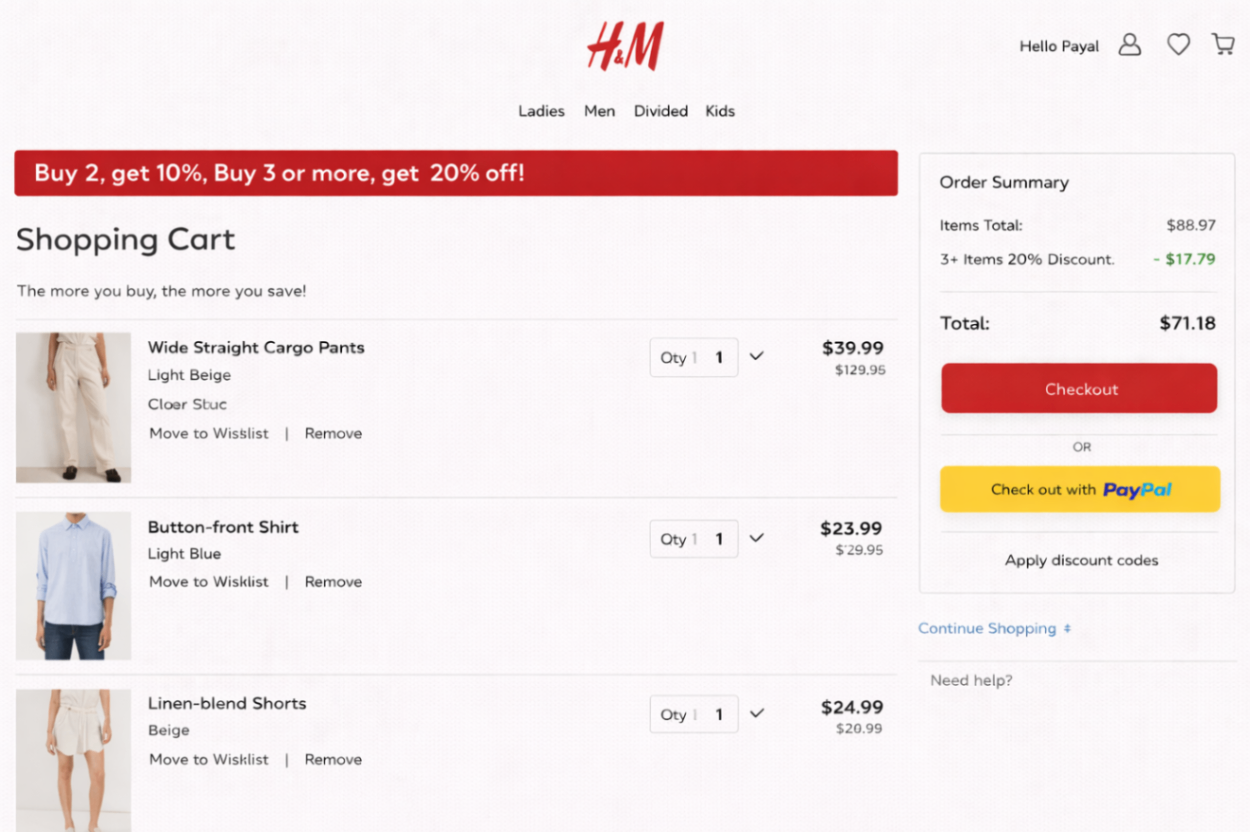
Buy more, save more bundles offer tiered discounts based on the number of items purchased, giving customers better pricing as they add more products to their cart. This approach encourages larger orders and helps increase average order value.
Clear pricing tiers motivate customers to reach the next discount level. It is commonly used to increase cart value and improve conversion rates.
Example: H&M – Tiered Cart Discounts
Source: H&M
H&M offers promotions like “Buy 2 get 10% off, Buy 3 get 20% off.” As customers add more items, the discount percentage increases automatically. This encourages shoppers to reach the next savings tier. It directly drives higher cart values.
Product add-ons allow customers to include complementary products with their main purchase. These small additions improve product value and enhance the customer experience. Add-on bundles help increase conversions and maximize revenue per order.
Add-ons reduce the need for customers to search for related products separately. This bundling strategy works well for accessories, warranties, personalization, and upgrades.
Example: Dell – Add Warranty & Upgrades

Source: Dell
When buying a laptop, Dell allows customers to add an extended warranty, RAM upgrades, or a laptop bag. These add-ons are optional but conveniently displayed before checkout. They enhance product value and increase revenue per order. Customers don’t need to search separately for related items.
Post-purchase bundles offer additional products after a customer completes checkout, encouraging additional purchases without interrupting the buying process. This approach helps maximize revenue and improve customer lifetime value by showing relevant recommendations at the right time.
Since the customer has already made a purchase, they are more likely to accept these offers. It is an effective way to increase revenue without affecting initial conversion rates.
Example: Gymshark – One-Click Post-Purchase Offer

Source: Gymshark
After completing payment, Gymshark shows a limited-time discount on complementary apparel. Customers can accept the offer with one click since payment details are already saved. This does not disrupt the initial conversion. It increases customer lifetime value without affecting checkout performance.
Buy N discount bundles offer savings on either the cheapest or most expensive item when multiple products are purchased. This bundling strategy encourages customers to add more items to qualify for discounts. It helps increase cart size and improve average order value.
This approach creates a strong incentive for customers to explore additional products. Buy N discount bundles are commonly used in fashion, beauty, and multi-product ecommerce stores.
Example: Zara – Buy 3, Pay for 2

Source: Zara
Zara runs promotions where customers who add three items receive the cheapest one free. The discount is automatically applied in the cart. This encourages shoppers to add more products to maximize savings. It increases cart size while strategically controlling the impact of discounts.
Also Read: How to Bundle Products on Shopify to Boost Sales?
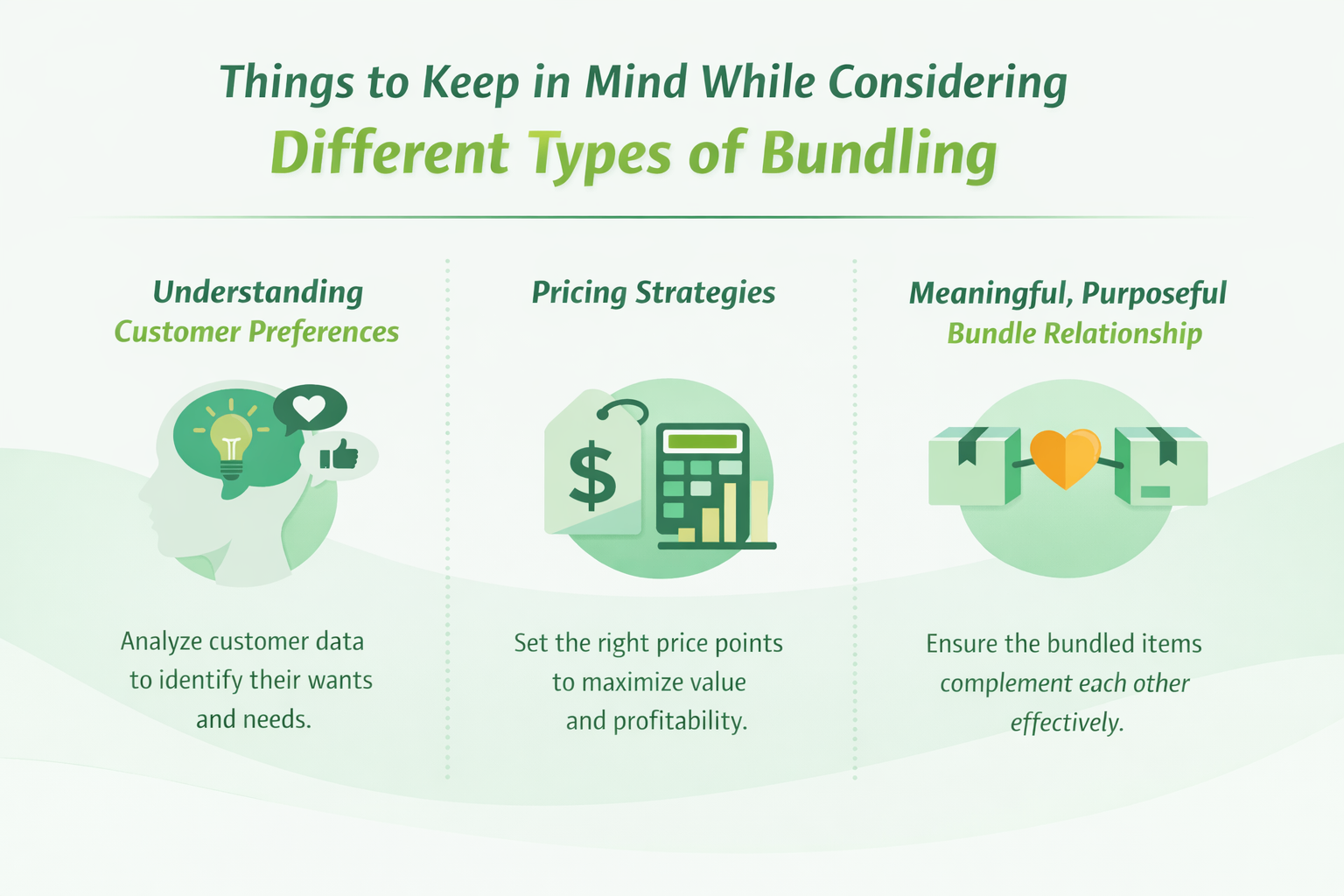
For effective bundling, it's not enough to just throw a few products together. The most successful product bundling strategies are rooted in a deep understanding of what your customers truly need and value. You need to think about which products logically go together and how the bundle will solve a problem or enhance the shopper's experience.
Considering customer preferences is at the heart of effective bundling. By aligning your bundles with their needs, you create offers that feel authentic and helpful. This approach is far more powerful than simply moving inventory.
To create types of bundles that truly resonate, you must first understand your customers' preferences. Analyzing customer data is one of the best practices for identifying which products pair best. Look at their buying journey and see what they are naturally purchasing in the same order or in subsequent visits.
Data analysis can uncover powerful insights for your product bundling strategies. If you notice a pattern in which 20-25% of customers who buy one item also buy another, that’s a strong signal of a bundling opportunity. Don't just guess what customers want; use data to inform your decisions. Some ways to gather these insights include:
By rooting your bundles in real behavior, you’ll create offers that are more relevant, appealing, and successful.
Your pricing strategies can make or break your bundles. The most common approach is to offer the types of bundles at a price lower than the sum of their parts. This simple discount immediately shows customers the value they're getting and encourages them to opt for the bundle. However, it's crucial to carefully calculate your profit margins to ensure the deal is beneficial to your business.
Beyond a simple discount, consider the psychology of pricing. For example, you can create a sense of urgency by marketing your bundle as a limited-time offer. This can prompt customers to make a quick decision before the deal expires. Another strategy is to highlight the savings clearly on the product page, showing the original total price crossed out next to the new, lower bundle price.
Ultimately, effective pricing is about finding the sweet spot where the customer feels they're getting a great deal and you're still achieving your business goals. Test different price points and offers to see what resonates most with your audience while protecting your profit margins.
The most successful types of bundles are built on a meaningful and purposeful relationship between the products. Instead of just grouping random items, focus on creating combinations that offer a complete solution or enhance the overall shopping experience. When complementary products are bundled, they provide added value beyond a simple discount.
This approach positions your brand as a problem-solver rather than just a retailer. You're not just selling products; you're helping customers achieve their goals, whether it's a "Better Sleep Bundle" with tea and a sleep mask or a skincare kit with products that work best together. This is how bundling can improve customer satisfaction and increase sales. Meaningful bundling can be achieved by focusing on:
When a bundle makes sense, it feels less like an upsell and more like a helpful suggestion.
Using Kefi’s Product Bundle Builder is an effective way to strengthen your e-commerce strategy. By creating customized bundles that match customer preferences, you can increase average order value (AOV) and drive more sales. The tool allows seamless integration of complementary products, making the shopping experience smoother and encouraging larger purchases. It also helps improve customer satisfaction and build brand loyalty, making it a valuable addition to any online store.
Book a Demo to see how Kefi Product Bundle Builder works.
Also Read: How Calitron Boosted Revenue and AOV with Smart Bundling
Combining related products into a single offer is a strategic approach that benefits both businesses and shoppers. By understanding different bundle types, such as AI-suggested recommendations or mix-and-match options, you can better align your offers with customer preferences and increase sales. Thoughtful pricing and well-matched product combinations help improve perceived value and enhance the overall shopping experience. To make implementing these strategies easier, consider using Kefi Product Bundle Builder to streamline setup and increase your average order value.
A product bundle is a group of two or more related products sold together as a single package, often at a discounted price. Bundling helps businesses increase average order value and conversions while giving customers better value and convenience. It is a common eCommerce strategy used for upselling and cross-selling complementary products.
The best types of bundles for boosting sales often involve pairing popular products with complementary, lesser-known items. "Frequently Bought Together" product bundles are highly effective because they are based on actual customer behaviour Following best practices for your bundling strategy will ensure your offers are both relevant and appealing to shoppers.
Effective pricing strategies include offering a discounted price below the cost of individual items, highlighting the overall value. It's crucial to balance the lower price with your profit margins. Tiered discounts for buying more can also be a very effective approach.
The benefits are numerous: bundles boost sales and average order value, increase customer satisfaction by offering convenience and added value, and encourage repeat purchases. They can also help you move slow-selling inventory and introduce customers to new products, fostering brand loyalty.
The best types of bundles for small businesses include standard packages, mix-and-match offers, buy X, get Y promotions, and product add-ons, as they are easy to set up and require minimal technical effort. These strategies help increase average order value, conversions, and customer engagement while keeping costs manageable.
Bundling improves customer satisfaction by simplifying the shopping experience and offering curated solutions. This positive experience, combined with a smart sales strategy that leverages complementary products, naturally drives increased sales. Effective product bundling strategies make customers feel understood and valued, which builds loyalty and encourages larger purchases.
The best types of bundles to increase average order value (AOV) include frequently bought together offers, upsell combinations, and buy more, save more promotions. These approaches encourage customers to add additional products to their cart while providing better value. They help increase revenue without requiring more traffic.
Absolutely. Successful product bundling often involves tailoring product combinations to specific customer preferences or to special occasions, such as holidays. Offering different types of bundles with new products for a limited time is a great way to target different segments and create excitement around your brand.
.svg)
