%20(1).jpg)
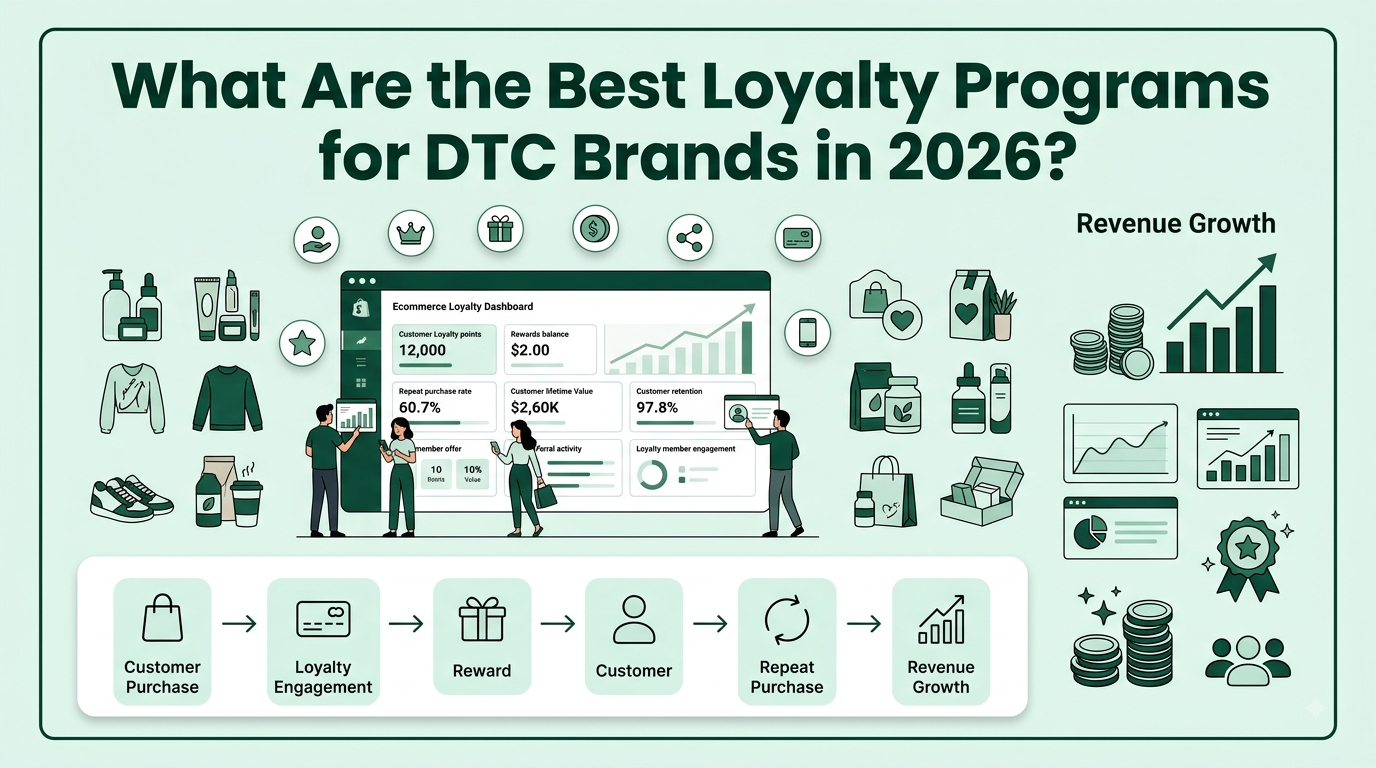
Getting customers to make that second purchase is becoming harder for DTC brands. Rising acquisition costs, crowded markets, and low repeat purchase rates mean brands can spend heavily to win customers who never return. Retaining customers can cost up to five times less than acquiring new ones, while a 5% increase in retention could increase profits by 25–95%.
The right loyalty program can give customers more reasons to return through points, VIP tiers, referrals, personalized rewards, and exclusive experiences. But with so many loyalty platforms available for Shopify stores, choosing one that fits your goals, budget, and customer journey can be difficult.
This guide covers loyalty program types, common pitfalls, software selection, ROI measurement, and how Kefi Commerce can help DTC brands turn returning customer visits into revenue growth through personalized offers, bundles, upsells, and promotions.
Loyalty programs reward customers for repeat purchases and engagement, helping DTC brands increase retention and customer lifetime value. The best loyalty program software for direct-to-consumer brands makes it easier to manage rewards, personalize experiences, and encourage customers to return.
An effective loyalty program combines simple rewards with incentives that keep customers engaged.
DTC brands should choose these components based on purchase frequency, profit margins, and the customer behaviors they want to encourage. A subscription brand may prioritize repeat purchases, while a higher-margin brand may have more flexibility with exclusive perks or product rewards.
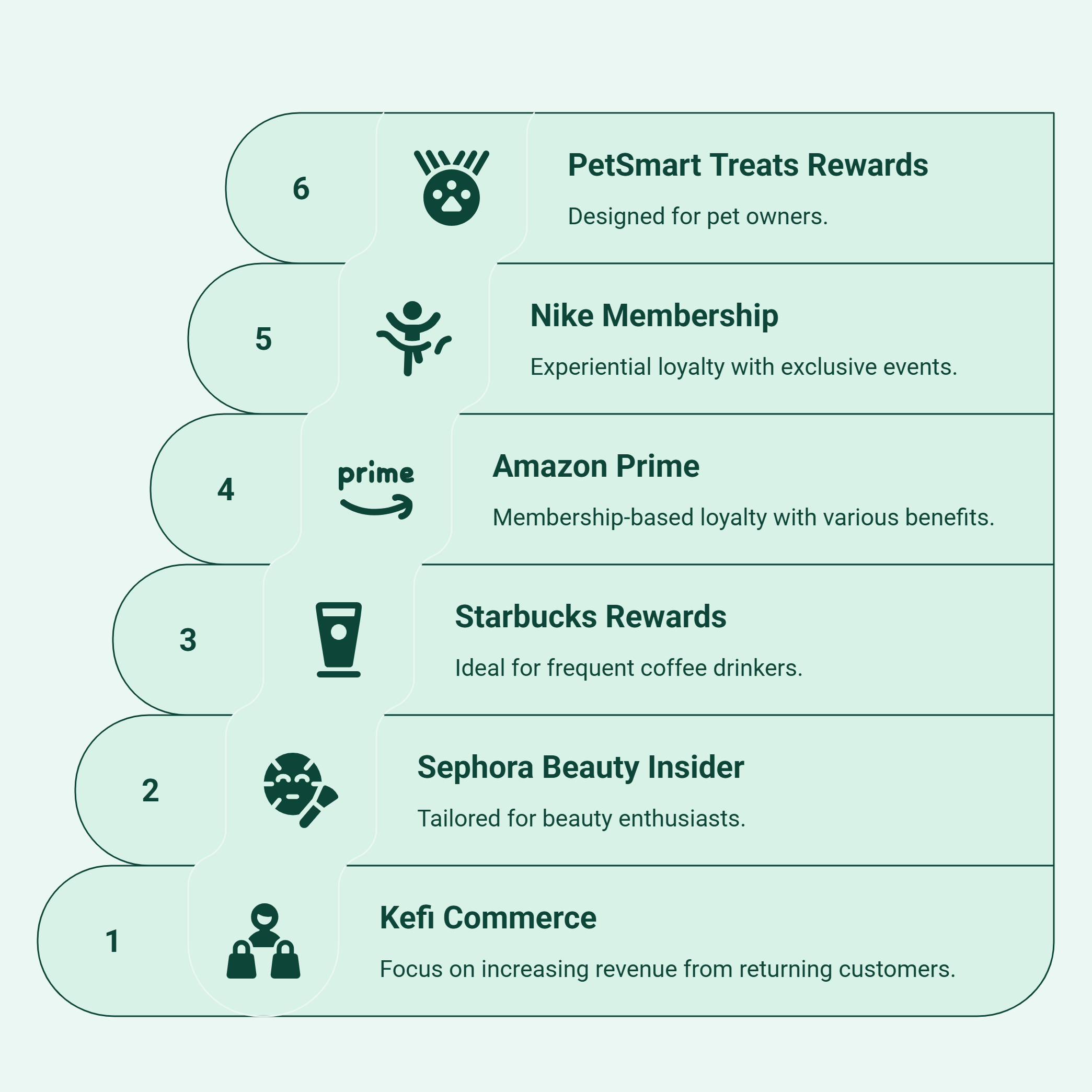
The best loyalty programs for DTC brands depend on the customer journey, purchase frequency, and business goals. In 2026, merchants should compare programs based on reward flexibility, Shopify compatibility, personalization, customer engagement, and measurable revenue impact.
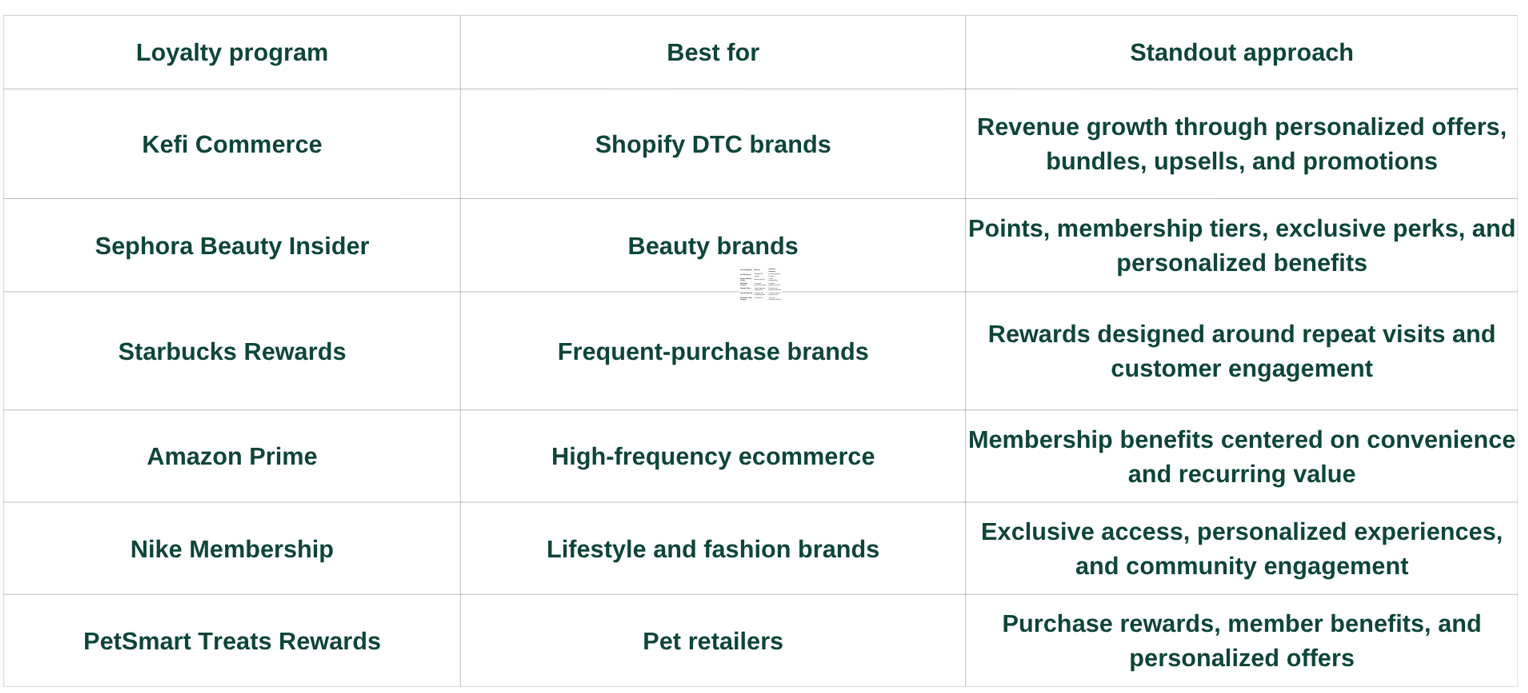
Kefi Commerce is an all-in-one revenue platform built exclusively for modern Shopify stores. It complements loyalty and retention strategies by helping merchants increase the commercial value of returning customer visits through personalized offers, product bundles, upsells, and promotions.
For example, a DTC beauty brand can use personalized product recommendations and bundles to encourage a returning customer to add complementary products to their cart. Merchants can also use upsells and promotions to increase order value without relying solely on discounts.
Kefi is not positioned here as the loyalty program itself. Instead, it works alongside a brand's existing loyalty strategy to create more revenue opportunities from customers who are already engaged and returning.
Sephora's Beauty Insider program combines points, membership tiers, exclusive benefits, and personalized experiences. Its structure gives beauty shoppers multiple reasons to remain engaged while providing different benefits as members progress through the program.
Starbucks Rewards is designed around frequent customer visits. Members can earn rewards through purchases and access personalized benefits, making the program particularly relevant for businesses where customers naturally buy products on a regular basis.
Amazon Prime uses a paid membership model built around a broad range of benefits, including shipping and access to entertainment and other services. The model demonstrates how brands can use convenience and ongoing value to make membership worthwhile beyond individual purchase discounts.
Nike Membership combines shopping benefits with content, experiences, product access, and community-focused engagement. This approach shows how DTC brands can build loyalty by offering value beyond traditional discounts and points.
PetSmart Treats Rewards connects purchases with rewards and personalized member benefits. For pet retailers, this type of program can encourage repeat purchases around products customers need regularly.
These examples show that there is no single best loyalty model for every DTC brand. Merchants should evaluate how each approach fits their customer behavior, margins, purchase frequency, and broader retention and revenue strategy.
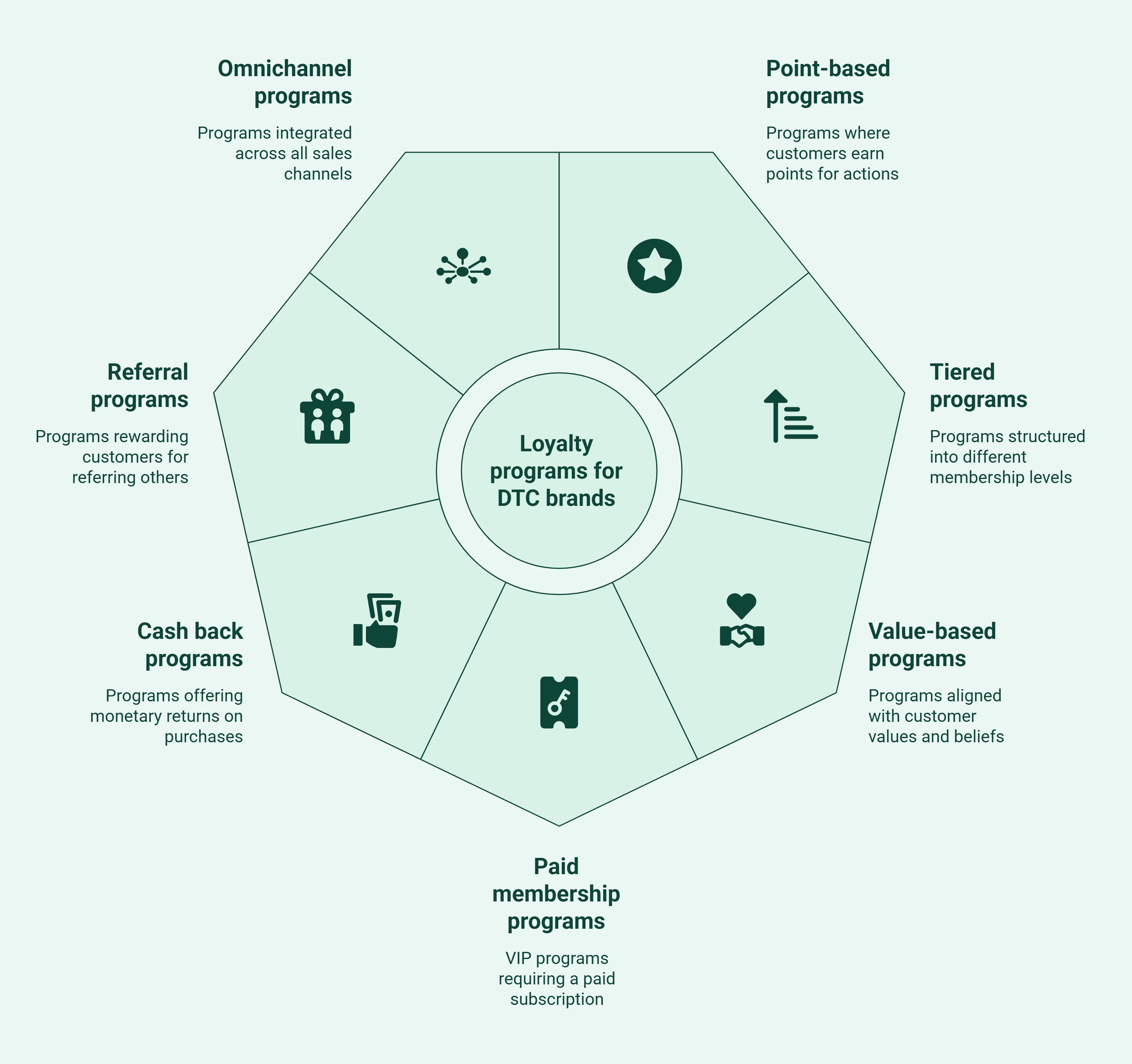
DTC brands can choose from several loyalty program models based on their customers, products, and business goals. Each model encourages different customer behaviors, from repeat purchases and higher spending to referrals and engagement. The best option depends on customer preferences, margins, purchase frequency, and the business goals behind the program.
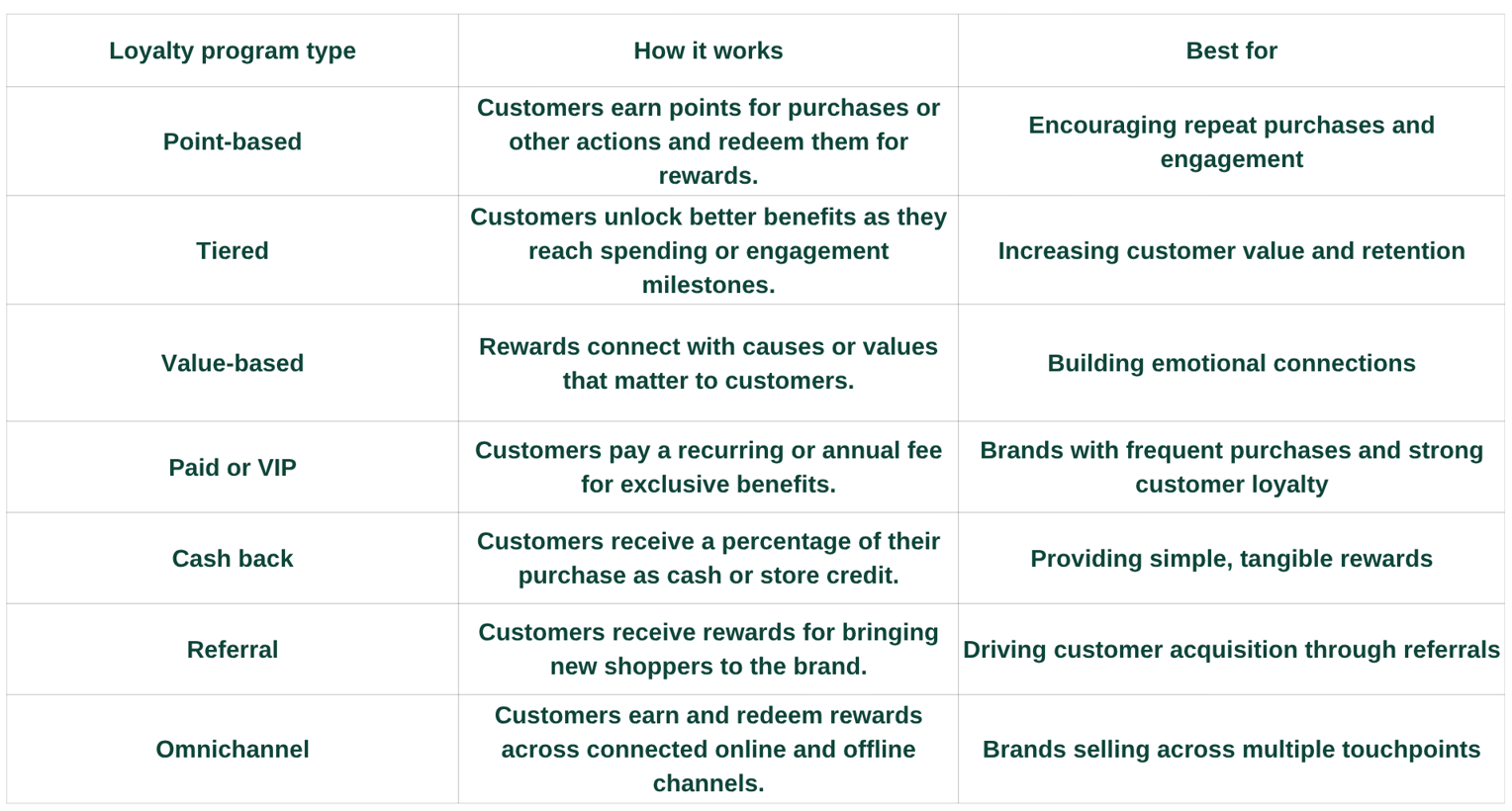
Point-based programs let customers earn points for purchases and other actions, which they can later redeem for rewards. For example, a skincare brand could offer 1 point for every $1 spent and 100 points for a product review. This simple structure gives customers a clear reason to return and engage with the brand.
For Shopify brands using a points-based loyalty program, Kefi Commerce can complement the strategy by turning returning visits into revenue opportunities. Its personalized offers, product bundles, upsells, and promotions can help brands recommend relevant products and increase order value without positioning Kefi as the platform that manages loyalty points.
Tiered programs offer better rewards as customers reach higher spending or engagement levels. A fashion brand could create Silver, Gold, and VIP tiers, with benefits such as early access, free shipping, or exclusive products. This model encourages customers to spend more to unlock the next level.
Value-based programs connect rewards to causes or values that matter to customers instead of focusing only on discounts. For example, a sustainable DTC brand could donate to an environmental cause when customers reach a certain points milestone. This approach can strengthen emotional connections with the brand.
Paid or VIP programs charge customers a recurring or annual fee in exchange for exclusive benefits. These can include free shipping, special discounts, early product access, or members-only products. According to Forbes, 46% of U.S. consumers are willing to pay more for companies with good loyalty programs. For DTC brands, the model works best when the benefits clearly outweigh the membership cost.
Cash back programs give customers a percentage of their purchase back as store credit or cash. For example, a DTC apparel brand could offer 5% back on every order that customers can use toward a future purchase. This provides an easy-to-understand reward and can encourage customers to shop again.
Referral programs reward existing customers for bringing new shoppers to the brand. A DTC brand could give a customer $10 off after a friend makes their first purchase through a referral link. This turns satisfied customers into brand advocates while helping the business acquire new shoppers.
Omnichannel programs connect loyalty rewards across online stores, mobile apps, social channels, and physical locations. For example, a customer could earn points from a Shopify purchase and redeem them in-store. This creates a consistent experience across touchpoints and gives brands a clearer view of customer engagement.
Choosing the right loyalty model depends on your customer behavior, business goals, and the type of value you want to provide.
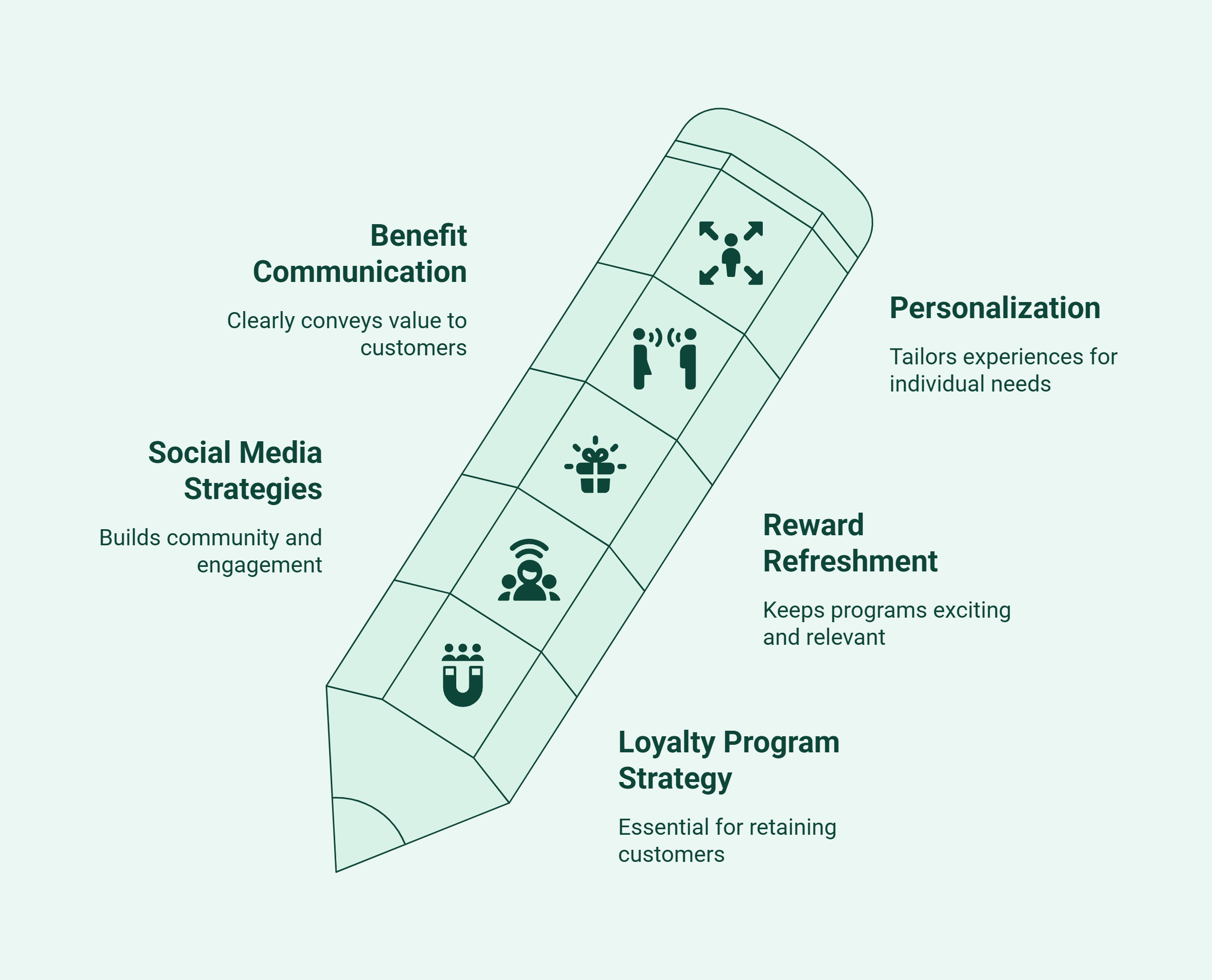
A loyalty program does not automatically create loyal customers. Its impact depends on how well the program is designed, communicated, personalized, and managed. DTC brands need a strategy that makes rewards valuable enough to influence behavior while keeping program costs sustainable.
Social media gives DTC brands more ways to build relationships with customers between purchases. Brands can promote loyalty rewards, encourage user-generated content (UGC), create referral campaigns, announce member-only product launches, and invite customers to participate in challenges or community events.
For example, a beauty brand could give loyalty members early access to a new product and encourage them to share unboxing videos or product reviews. A fashion brand could reward customers for posting outfit photos, referring friends, or participating in a social media challenge.
Brands can also feature customer stories and UGC on their social channels to make members feel recognized and encourage others to join. These activities keep customers engaged beyond transactions while giving DTC brands more opportunities to strengthen relationships and drive repeat purchases.
DTC brands can start by reviewing loyalty rewards every quarter, then adjust the timing based on program performance and customer behavior. Look at redemption rates, engagement, repeat purchases, and revenue to identify which rewards are working and which need improvement.
Brands can refresh rewards when the data shows an opportunity, rather than changing them simply for novelty. For example, a clothing brand could offer double points during a new collection launch if similar promotions have previously increased purchases or engagement.
Seasonal rewards, personalized offers, and limited-time bonuses can also help when they match customer interests and support business goals. Regular performance reviews help brands keep effective rewards while improving those that are not delivering results.
Customers need to understand what they can earn, how they can earn it, and why the rewards are worth pursuing. Use email, SMS, website messaging, and post-purchase communication to explain benefits at relevant points in the customer journey.
For example, a brand could remind customers that they are close to unlocking a reward after checkout or send a personalized message when they have enough points for a product they regularly purchase.
Clear, timely communication can make the difference between customers ignoring a loyalty program and actively participating in it.
Personalization helps DTC brands make rewards more relevant to individual customers. Instead of giving every shopper the same incentive, brands can use purchase history, engagement, loyalty tier, and preferences to determine which rewards or offers to show.
A skincare brand, for example, could recommend complementary products based on previous purchases, while a subscription brand could offer benefits based on renewal behavior.
Relevant rewards are more likely to influence customer decisions while helping brands avoid unnecessary discounts. The goal is to personalize incentives without making the program difficult to understand or manage.
Loyalty programs should be treated as an ongoing growth strategy rather than a set-and-forget campaign. Monitor repeat purchase rate, redemption, customer lifetime value, incremental revenue, and profit to understand whether the program is changing customer behavior.
Compare results across customer groups and, where possible, use holdout groups or controlled tests to identify incremental impact. This helps distinguish customers who were already likely to return from customers whose behavior changed because of the program.
Continuous testing allows DTC brands to improve reward economics, communication, personalization, and program design based on evidence rather than assumptions.
Loyalty programs can drive repeat purchases, but poor planning can make them difficult to use and expensive to maintain. DTC brands should avoid common mistakes such as complicated rewards, weak incentives, poor communication, and failing to measure program performance.
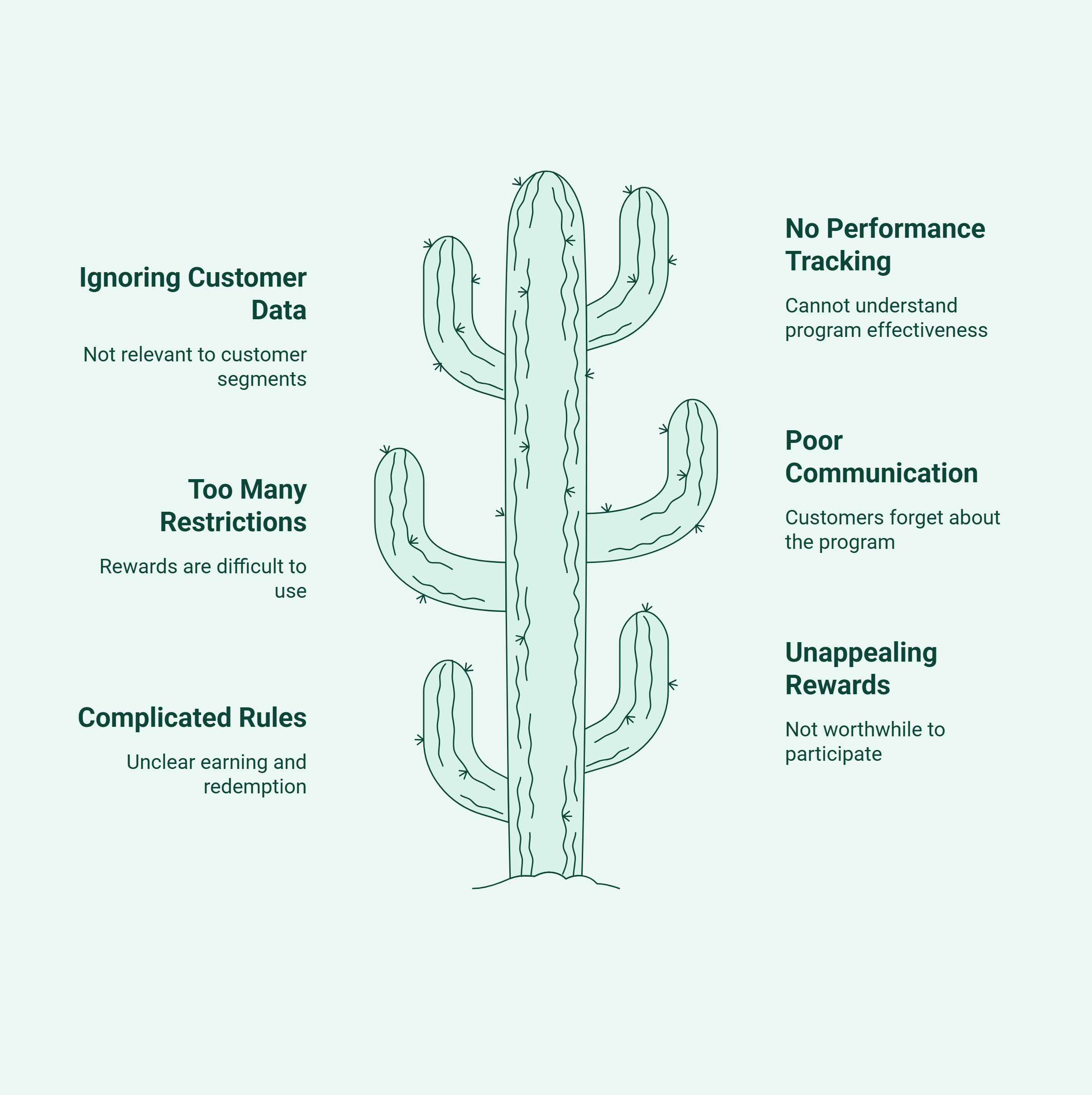
A loyalty program can lose customers when the experience feels confusing, restrictive, or irrelevant. DTC brands should watch for these common pitfalls:
Avoiding these mistakes helps DTC brands build loyalty programs that are simple, valuable, and easier for customers to use consistently.
Check out our guide on Essential Customer Retention Metrics to learn which KPIs matter most and how to use them to improve retention, loyalty, and revenue.
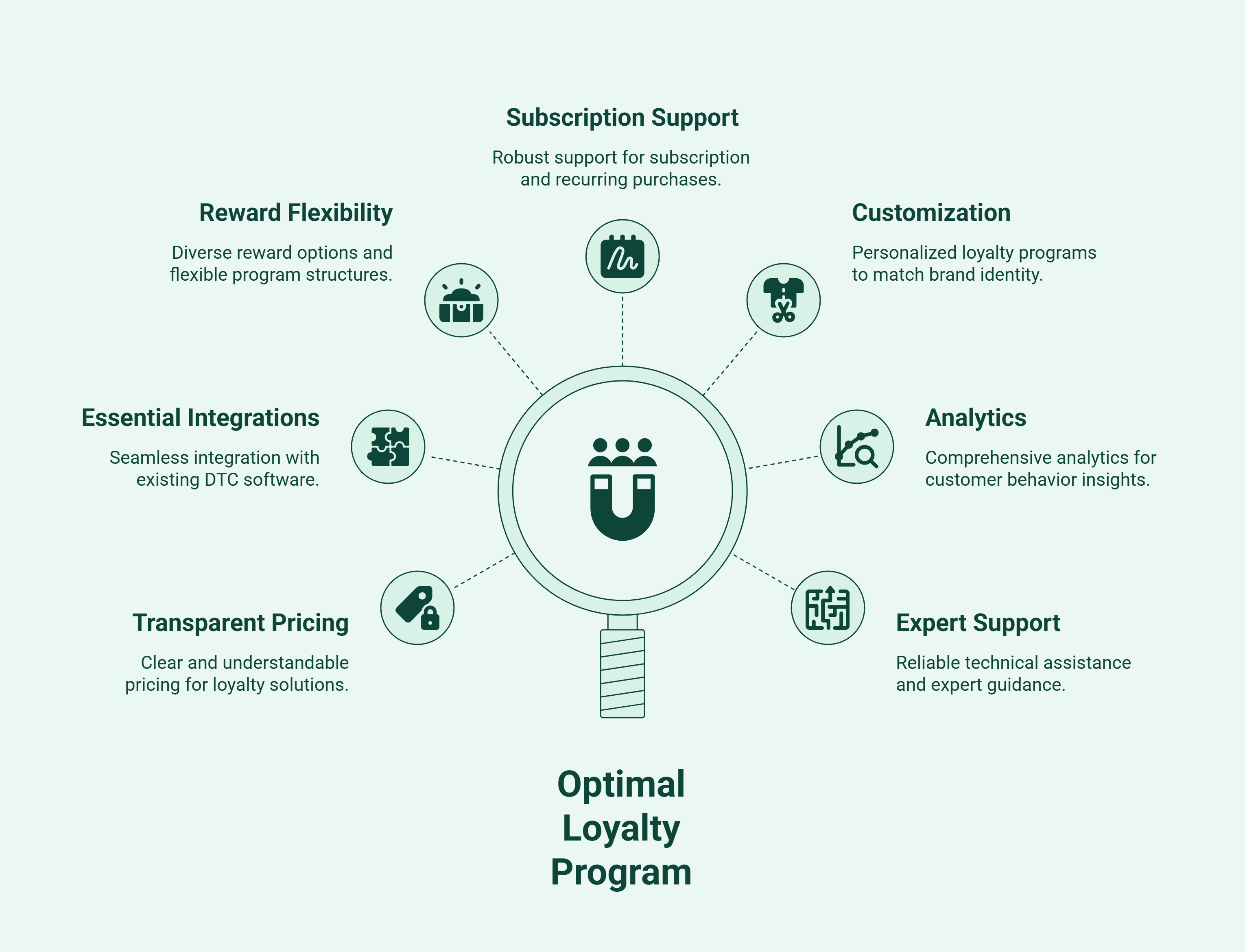
Choosing loyalty software involves more than comparing features. DTC brands should consider pricing, integrations, support, customization, and how well the platform fits their customer journey. This is especially important when evaluating the best customer loyalty apps for DTC subscription e-commerce brands or the best Shopify loyalty rewards apps for 2026 DTC brands.
Transparent pricing helps DTC brands understand the real cost of running a loyalty program as their customer base grows. Look beyond the starting subscription price and check for transaction fees, member limits, implementation costs, and charges for premium features.
A clear pricing structure makes it easier to estimate your return on investment and avoid unexpected costs. Brands should also consider whether the platform can scale as they gain new loyalty members.
Choose a solution with predictable pricing that supports growth without making your rewards program unnecessarily expensive.
A loyalty platform should work smoothly with the tools your DTC brand already uses. Start by reviewing your actual tech stack, including Shopify, email and SMS platforms, subscription tools, customer service systems, analytics platforms, and customer data tools.
Strong integrations allow loyalty data to move between systems and support a more consistent customer experience. For example, a subscription brand could connect loyalty rewards with subscription renewals, while email and SMS integrations can trigger personalized reward reminders or member offers.
Before choosing a platform, check which integrations are available, how data is synced, and whether additional setup or fees are required. The right connections should fit your existing workflow rather than forcing you to replace tools that already work well.
Different DTC brands need different ways to reward customers. Compare whether each platform supports points, referral rewards, VIP or loyalty tiers, birthday rewards, purchase-based incentives, and non-purchase actions such as reviews or social engagement.
Also check how easily you can change earning rules, redemption thresholds, reward values, and expiration dates. Subscription brands may need additional flexibility to reward recurring purchases without making the program too expensive to operate.
The best platform should let you build a rewards structure around your customers and margins instead of forcing you into a fixed model.
If your DTC brand sells subscriptions, loyalty software should account for recurring customer behavior. Check whether the platform can recognize subscription purchases, renewals, upgrades, and cancellations when calculating rewards.
For example, a supplement brand could award points when a customer renews a monthly subscription and offer additional benefits after several successful renewals. This can give subscribers more reasons to stay while supporting retention.
Make sure the loyalty platform works with your subscription technology and does not create duplicate rewards or confusing customer experiences.
Look for platforms that let you customize the loyalty experience to match your brand identity. Compare options for branded loyalty pages, earning rules, rewards, tiers, customer segments, and personalized offers.
Personalization can make rewards more relevant. A beauty brand might offer rewards based on previous purchases, while a fashion brand could provide early access to new collections for higher-tier members.
Choose a platform that gives you enough control to create a loyalty experience that feels specific to your customers rather than a standard program used by every brand.
Flexible customization allows brands to create loyalty experiences that feel relevant to their customers rather than relying on a one-size-fits-all rewards program.
A loyalty platform should give you enough data to measure whether the program is creating incremental value. Compare reporting for repeat purchase rate, customer lifetime value, average order value, redemption rate, member revenue, and loyalty program costs.
Also check whether you can segment members by purchase behavior, loyalty tier, subscription status, or engagement level. This can help you identify which rewards drive results and where the program needs improvement.
Strong analytics make it easier to optimize the program based on customer behavior rather than assumptions.
Consider the level of support available during setup and after launch. Look for responsive customer service, onboarding assistance, documentation, integration support, and technical help when issues arise.
This matters even more for Shopify and subscription DTC brands using several connected tools. Ask how quickly support responds, whether technical assistance is included in your plan, and who handles integration issues.
Choose a provider that can support your program as it becomes more complex and your customer base grows.
Measuring loyalty program ROI helps DTC brands determine whether the program is generating enough incremental profit to justify its cost. Track member and non-member performance, measure changes over time, and use controlled tests where possible to identify the program’s true financial impact.
DTC brands should track repeat purchase rate, customer lifetime value, average order value, redemption rate, member revenue, and incremental profit. A simple ROI formula is:
Loyalty Program ROI = (Incremental Profit − Program Costs) ÷ Program Costs × 100
Program costs can include software fees, rewards, discounts, free products, shipping benefits, marketing expenses, and program management costs.
Comparing loyalty members with non-members can provide useful context, but higher member spending does not automatically prove that the program caused the increase. Members may already be more engaged customers. To measure incrementality, brands can compare customers before and after enrollment, use holdout groups, or run controlled experiments where possible.
Regular measurement helps brands identify which rewards generate incremental value and where program spending can be reduced.
Customers can show loyalty without making a purchase, so DTC brands can reward actions that build engagement and long-term relationships. These can include writing reviews, referring friends, following social accounts, completing a profile, sharing user-generated content, or participating in community events.
For example, a skincare brand could give points for submitting a product review or referring a new customer. These actions can increase engagement while providing useful loyalty data and creating more opportunities for future purchases.
Rewarding meaningful non-purchase actions can strengthen customer relationships while keeping customers engaged between purchases.
Mobile wallet passes make loyalty programs easier to access by keeping rewards, points, or membership information on a customer's phone. Brands can also send timely notifications about available rewards, promotions, or loyalty benefits.
For example, a coffee brand could let customers view their rewards through a mobile wallet and receive a notification when they have earned a free coffee. This makes rewards easier to find without requiring customers to open a separate app or search through emails.
Mobile wallet integration can keep loyalty programs visible and create more opportunities for customers to engage with rewards.
Loyalty programs give customers reasons to return. Kefi Commerce helps Shopify merchants increase the commercial value of those returning visits through relevant offers, bundles, upsells, and promotions from one revenue growth platform.
With Kefi Commerce, DTC brands can:
Whether you're growing a DTC brand or running an established Shopify store, Kefi Commerce helps turn returning customer visits into higher-value purchases while complementing your broader retention strategy.
Ready to get more revenue from returning customers? Start your Kefi Commerce 14-day risk-free trial and explore revenue tools built for modern Shopify stores.
Begin by identifying where your current loyalty strategy is underperforming. Review your repeat purchase rate, customer engagement, reward redemptions, and program costs to uncover the biggest opportunity.
Next, choose a loyalty model that fits how your customers shop. Keep the rewards simple, make benefits easy to understand, and refresh them when engagement starts to drop.
If you run a Shopify store, connect loyalty with the rest of your revenue strategy. Use personalized offers, bundles, upsells, and promotions to give returning customers more reasons to buy.
After launch, measure your repeat purchase rate, reward redemption rate, customer lifetime value (CLV), and incremental profit. Compare these metrics before and after launch to see whether your loyalty strategy is driving profitable growth.
Offer meaningful rewards, personalize customer experiences, provide excellent service, encourage referrals, and engage customers through social media. Consistent communication and exclusive benefits can also strengthen relationships and encourage repeat purchases.
The 7 C's are content, community, conversation, consistency, creativity, connection, and customer focus. Together, they help brands create useful content, build relationships, encourage engagement, and maintain a recognizable social media presence.
The 3-7-27 rule suggests that customers form impressions through three seconds, seven seconds, and 27 seconds of exposure. It highlights the importance of making a strong first impression and communicating brand value quickly.
The 70:20:10 rule recommends using 70% of posts for valuable content, 20% for curated or community content, and 10% for promotional content. This balance keeps social feeds useful while supporting sales.
Examples include Glossier, Fabletics, and Bombas. Their programs use rewards, member benefits, referrals, and personalized experiences to encourage repeat purchases. Successful DTC programs keep rewards simple, relevant, and valuable.
Make every purchase easy and rewarding. Offer personalized recommendations, simple loyalty rewards, fast customer service, exclusive perks, referral incentives, and useful content. Track customer behavior regularly to improve your offers and give shoppers more reasons to return.
Successful loyalty programs include Amazon Prime, Starbucks Rewards, Sephora Beauty Insider, and Nike Membership. They combine valuable rewards, personalized experiences, exclusive perks, and convenient benefits that encourage repeat purchases and strengthen long-term customer relationships.
The best rewards include discounts, free products, free shipping, early access, exclusive products, VIP perks, and personalized offers. Effective rewards feel valuable to customers while encouraging repeat purchases and long-term engagement with the brand.
.svg)
