

The customer journey doesn’t conclude when a transaction is complete; in many ways, it’s just beginning. The actions and feelings a customer has after they buy from you, known as post-purchase behavior, are critical. A positive purchase experience at this stage can transform a single sale into long-term loyalty. By understanding this final, crucial part of the customer journey, you can refine your strategies to boost customer satisfaction, encourage repeat business, and build a stronger, more profitable brand.
Post-purchase behavior encompasses all the actions, thoughts, and feelings a customer experiences after making a purchase. This phase of the customer journey includes everything from their initial product use and satisfaction level to whether they contact customer support, leave a review, return an item, or recommend your brand to others. It is a critical period where a customer's perception of your brand is either solidified or questioned, directly influencing their future decisions.
Understanding this aspect of consumer behavior is vital for businesses because it directly impacts customer retention and profitability. A smooth and supportive purchase experience reassures customers that they made the right choice, fostering a positive customer relationship. Neglecting this stage can lead to dissatisfaction, returns, and negative word-of-mouth, which can damage your brand. By focusing on post-purchase actions, you can better meet customer needs and build a loyal base of repeat buyers.
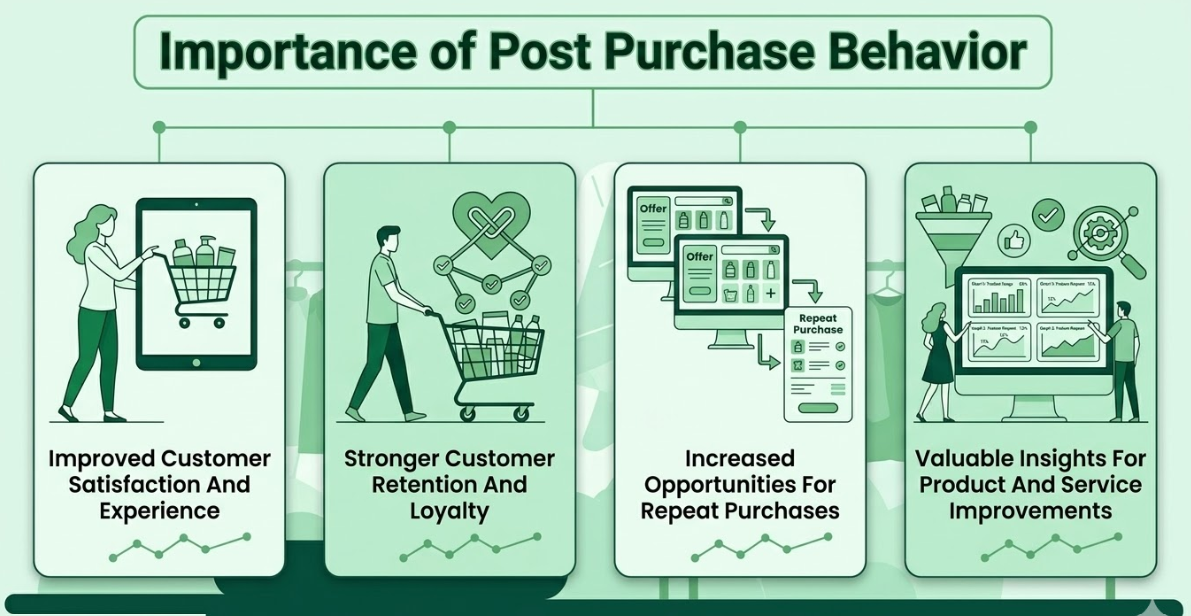
Analyzing what customers do after buying is not just an academic exercise; it's a strategic imperative for sustainable growth. It directly influences customer retention, shapes your brand reputation, and builds lasting customer loyalty. This section will explore the key benefits, starting with how it elevates customer satisfaction.
The period after a sale is your opportunity to confirm that the customer made a great decision. A positive experience during this time, from unboxing the product to first use, is fundamental to customer satisfaction. When the product quality and delivery experience meet or exceed expectations, it validates their choice and reinforces their trust in your brand.
Conversely, a poor purchase experience can quickly lead to frustration and dissatisfaction. If a product is defective, arrives late, or doesn't match its description, it creates a negative impression that can result in returns and damage your reputation. A customer’s feelings in this stage are a direct reflection of their overall customer experience.
By proactively managing this phase with clear communication and support, you can address potential issues before they escalate. This focus on delivering a seamless post-checkout journey significantly reduces the likelihood of product returns. It ensures a high level of satisfaction, encouraging them to buy from you again.
Engaged and well-supported customers are far more likely to become loyal customers. The post-purchase phase is when you can build an emotional connection that transforms a transactional relationship into genuine customer loyalty. Thoughtful touches, like proactive shipping updates or a hassle-free returns process, show that you care about their experience beyond the sale.
This focus on nurturing the customer after the purchase is a direct driver of customer retention. When people feel valued, they have a compelling reason to choose your brand for future purchases over competitors. This repeat business is the bedrock of sustainable revenue and long-term success.
Neglecting this crucial stage, on the other hand, can quickly erode trust and push customers away. By consistently delivering value after the checkout, you create enthusiastic brand advocates who not only return for more but also spread positive word-of-mouth, helping you attract new customers while solidifying your existing base.
A satisfied customer is the most likely candidate to become a repeat customer. The post-purchase period is the perfect time to encourage repeat purchases by demonstrating your brand's value and reliability. When a customer has a positive first experience, they are naturally more open to buying from you again.
Businesses can influence this behavior by using the initial purchase as a starting point for a longer conversation. For instance, you can analyze a customer's purchase history to send them personalized follow-up emails with relevant product recommendations or tips on how to get the most out of their purchase.
These targeted communications keep your brand top of mind and show that you understand their needs. By offering value beyond the first transaction, such as exclusive discounts for repeat buyers or early access to new products, you create powerful incentives that turn one-time shoppers into lifelong fans who contribute significantly to your revenue.
Your customers' actions after a purchase are a goldmine of valuable information. By analyzing customer feedback, you gain direct insight into what they love, what frustrates them, and where your business can improve. This information is crucial for refining your products, services, and overall customer journey.
Negative feedback and critical product reviews, while sometimes difficult to hear, are especially useful for identifying specific pain points. Are customers consistently complaining about a particular feature? Is the delivery process causing frustration? These comments highlight areas that need immediate attention to prevent future dissatisfaction.
Businesses should implement a systematic approach to analyze this data. This involves tracking reviews, monitoring social media comments, and sending out post-purchase surveys. Using data analytics to spot trends in this feedback allows you to make informed decisions, address issues proactively, and continuously enhance your offerings to meet customer expectations better.
Also Read: How a Premier Portuguese Winery Cultivated a +16.80% AOV Lift.
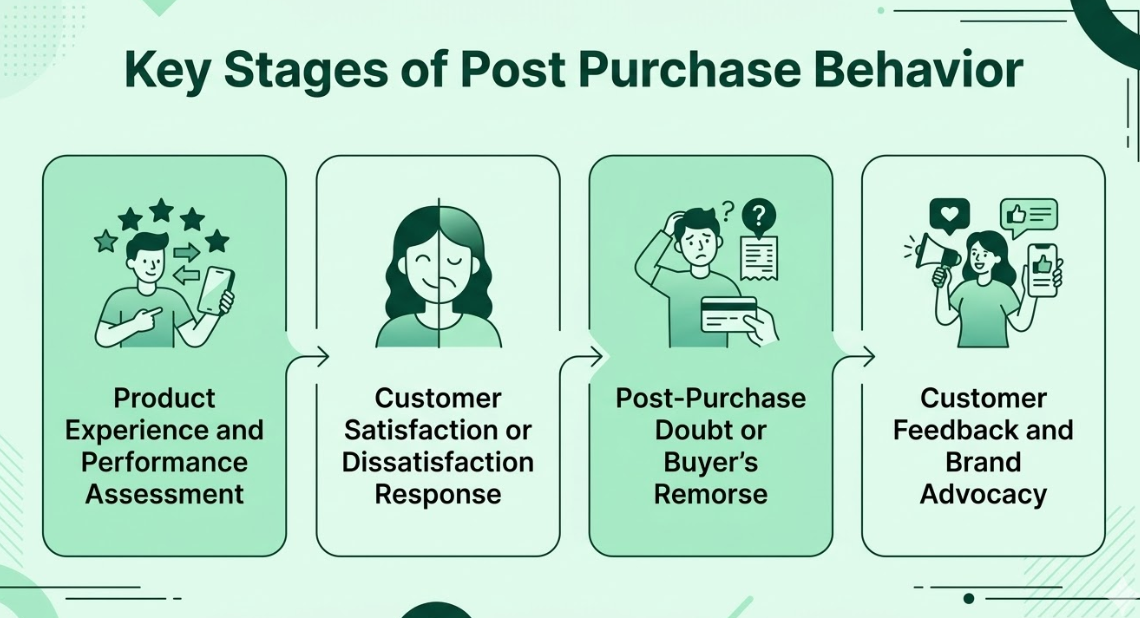
After a customer clicks "buy," they enter a multi-stage journey that shapes their final opinion of your brand. This process begins the moment they receive their order confirmation and continues through their use of the product. From the initial purchase experience to seeking customer support, understanding these phases helps you proactively guide your customers toward satisfaction and loyalty. Let's explore these stages in more detail.
The first critical stage begins immediately after checkout, with the initial purchase experience. A well-crafted confirmation email that includes a thank-you message and clear order details helps validate the purchase and builds excitement. This is your first chance to reassure the customer that they made a good choice.
Next comes the delivery experience. In an era of fast shipping, delays or a lack of communication can cause anxiety. Providing customers with accurate order tracking and proactive shipping updates is essential for maintaining trust. Transparency is key; if a delay occurs, an open and honest notification can preserve a positive perception.
Once the product arrives, its quality and performance are evaluated against the expectations set by your marketing and product descriptions. If the product meets or exceeds these expectations, it solidifies satisfaction. This is also an opportune moment to offer helpful tips or product recommendations to enhance their experience.
After a customer has had time to use your product, their experience will lead to a response of either satisfaction or dissatisfaction. This reaction is a pivotal moment that determines their next actions. A positive experience often results in quiet contentment or, ideally, enthusiastic brand advocacy.
If the customer is satisfied, they may become a repeat buyer, leave positive customer reviews, or recommend your brand to friends and family. This outcome is the ultimate goal, as it drives both retention and new customer acquisition. Customer satisfaction is the foundation upon which loyalty is built.
However, a negative experience can lead to customer complaints, returns, and damaging online feedback. How your brand handles this dissatisfaction is crucial. A prompt, empathetic response that offers a real solution can sometimes turn a negative situation into a positive one, demonstrating your commitment to customer care and potentially salvaging the relationship.
It is natural for customers to second-guess a purchase, especially a significant one. This feeling of doubt or regret is known as buyer's remorse or cognitive dissonance. It occurs when a customer worries they spent too much, wonders if a competitor's product was a better option, or feels a disconnect between their expectations and reality.
Several factors can intensify this psychological response. Unrealistic expectations set by marketing, a long wait for the product to arrive, or a lack of immediate results can all contribute to this feeling of uncertainty. These doubts can lead to returns or prevent future purchases if left unaddressed.
Proactive post-purchase engagement is a powerful tool to combat cognitive dissonance. Sending follow-up emails that reinforce the value of the purchase, providing user guides, or showcasing testimonials from happy customers can help validate their decision. By reassuring them that they made the right choice and are supported, you can build a stronger emotional connection and turn potential regret into confidence.
The final stage of post-purchase behavior is when customers share their opinions, either privately or publicly. This customer feedback is a direct result of their overall experience and can significantly impact your brand reputation. Whether through reviews, social media posts, or word-of-mouth conversations, their voice becomes a powerful marketing tool.
When customers are delighted, they may become brand advocates. These are the individuals who leave glowing positive reviews, share their experiences on social media, and actively recommend your products to their networks. Encouraging and showcasing this user-generated content is an effective marketing tactic that builds trust and authenticity.
Conversely, dissatisfied customers may share their negative experiences, which can deter potential buyers. The key is to actively manage this feedback. Promptly and professionally responding to all reviews, both positive and negative, shows that you value customer opinions. This engagement fosters a sense of community and demonstrates your commitment to satisfaction, which can strengthen loyalty even in the face of criticism.
Also Read: How to Enhance Your Post Purchase Experience for Loyalty?
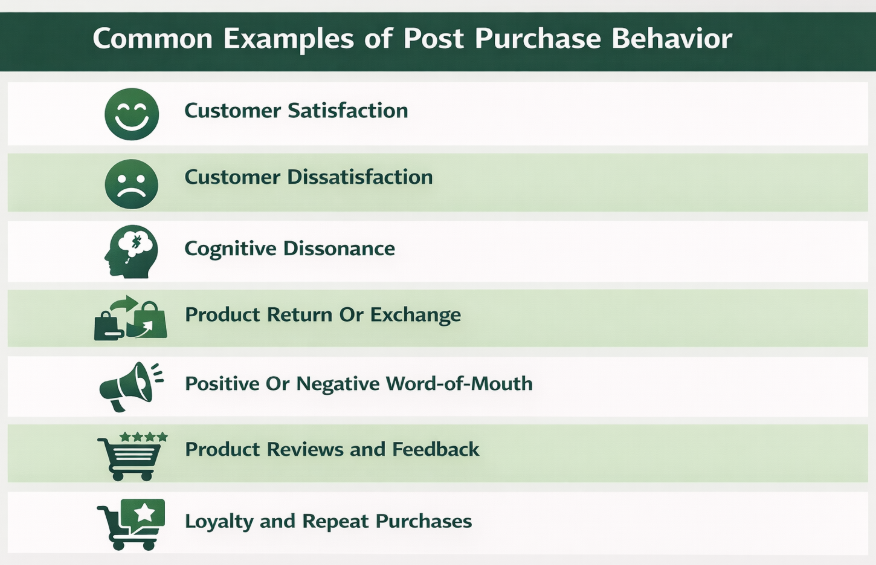
After a purchase decision is made, customers exhibit a wide range of behaviors that reflect their experience. These actions can range from deep satisfaction to cognitive dissonance and regret. Common examples include leaving detailed customer feedback, returning an item, or eagerly signing up for a loyalty program.
Each of these behaviors provides a clear signal about the customer's level of satisfaction and their potential for future engagement. Understanding these common reactions helps you identify patterns, predict outcomes like return rates, and refine your strategies to guide customers toward positive actions.
Customer satisfaction is the ideal outcome of any transaction and is demonstrated when a customer feels their purchase has met or exceeded their expectations. This positive feeling is often the result of a seamless purchase experience, high product quality, and excellent customer service. When achieved, it forms the basis for a lasting customer relationship.
This overall satisfaction can manifest in several ways that benefit your business. Instead of just quietly enjoying their product, satisfied customers often take actions that signal their contentment and contribute to your brand's growth. Their positive feedback becomes a valuable asset.
Common behaviors indicating customer satisfaction include:
Customer dissatisfaction arises when a product or service fails to meet expectations, leading to a negative experience. This can stem from various issues, such as poor product quality, late delivery, or unhelpful customer support. It represents a critical moment where the customer relationship is at risk.
This feeling of disappointment often motivates customers to take action, and these behaviors can be detrimental to your brand if not handled properly. Understanding these reactions is the first step toward identifying recurring pain points and addressing the root causes. It's an opportunity to listen to customer needs and make necessary improvements.
Typical actions from a dissatisfied customer include:
Cognitive dissonance, or buyer's remorse, is the feeling of tension or regret a customer experiences after making a purchase decision. It's the nagging thought that perhaps they didn't make the right choice. This is especially common with expensive or emotionally significant purchases where the stakes are higher.
This internal conflict can arise for many reasons. The customer might find a better price elsewhere after buying, feel overwhelmed by too many options, or simply worry about the financial commitment they've made. If this feeling is not addressed, it can lead to returns or a reluctance to purchase from your brand again.
Behaviors that may indicate a customer is experiencing cognitive dissonance include:
A product return or exchange is one of the most direct forms of post-purchase behavior, signaling that the item did not meet the customer's needs or expectations. While high return rates can be a concern, how a business handles this process can significantly impact future loyalty.
A complicated or restrictive return policy can turn a dissatisfied customer into a frustrated one who will never buy from you again. In contrast, a simple and transparent return process can actually build trust. By making returns easy, you reduce the perceived risk of purchasing and show that you stand behind your products.
Common scenarios leading to a return or exchange include:
Word-of-mouth is one of the most powerful outcomes of post-purchase behavior, as it involves customers sharing their experiences with others. This can happen offline in conversations with friends and family or online through social media, forums, and review sites. It directly shapes your brand reputation.
Positive word-of-mouth occurs when a customer is so pleased with their experience that they become a source of brand advocacy. They willingly promote your business for free, and their recommendations are often seen as more trustworthy than traditional advertising. This is a clear sign of a successful customer journey.
Examples of word-of-mouth behavior include:
Leaving product reviews and feedback is a common post-purchase action that provides immense value to businesses. These customer reviews serve as social proof for future buyers and offer direct insights into the strengths and weaknesses of your offerings. Whether the feedback is positive or negative, it is a rich source of data.
Positive reviews act as powerful testimonials that build credibility and can influence purchasing decisions. Many shoppers actively seek out reviews before committing to a purchase. Encouraging happy customers to share their thoughts can significantly boost conversions and build trust with new audiences.
Examples of this behavior include:
Loyalty is the ultimate goal of a successful post-purchase strategy, demonstrated through repeat purchases and sustained engagement with your brand. When customers consistently choose your business over competitors, it's a clear sign that you have earned their trust and built strong brand loyalty.
These loyal customers are your most valuable asset. They not only provide a stable source of revenue but are also more likely to try your new products and be more forgiving of occasional mistakes. Nurturing this group is essential for long-term, sustainable growth, and a well-designed loyalty program can be an effective tool.
Behaviors that exemplify customer loyalty include:
Also Read: How Metalbird drove consistent growth across 8 stores.
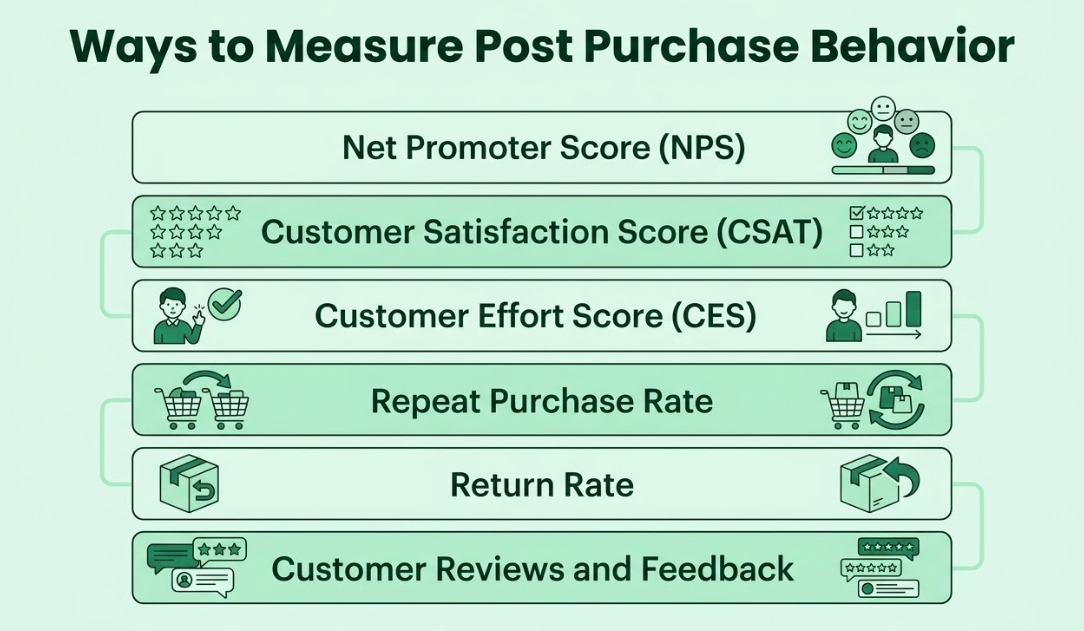
To improve your post-purchase strategy, you first need to measure it effectively. Tracking key metrics allows you to understand what's working and what's not, providing a clear picture of customer satisfaction and loyalty. This section will explore the most important metrics for measuring post-purchase behavior, starting with the widely used Net Promoter Score.
The Net Promoter Score (NPS) is a widely used metric for measuring customer loyalty and predicting long term business growth. It is based on a simple question: “On a scale of 0 to 10, how likely are you to recommend our brand or product to a friend or colleague?” This question helps businesses understand how satisfied customers are and whether they are willing to promote the brand to others.
Based on their responses, customers are grouped into three categories: Promoters, Passives, and Detractors. Promoters score 9–10 and are loyal customers who are likely to recommend the brand. Passives score 7–8 and are generally satisfied but not enthusiastic enough to actively promote the business. Detractors score 0–6 and are dissatisfied customers who may share negative feedback about the brand.
The NPS is calculated by subtracting the percentage of Detractors from the percentage of Promoters. A higher score indicates stronger customer loyalty and a greater likelihood of positive word-of-mouth. By tracking NPS regularly, businesses can evaluate the impact of their post-purchase strategies and make data-driven improvements to enhance the overall customer experience.
The Customer Satisfaction Score (CSAT) is a straightforward metric used to measure a customer's satisfaction with a specific interaction, product, or the overall experience. It is typically captured by asking a question such as "How satisfied were you with your recent purchase?" and responding on a scale (e.g., 1-5, from "Very Unsatisfied" to "Very Satisfied").
CSAT surveys are valuable because they provide immediate, contextual feedback. You can deploy them at various touchpoints in the post purchase journey, such as after a delivery is completed or following an interaction with customer support. This allows you to pinpoint specific areas of friction or success.
Tracking your CSAT score helps you understand if you are meeting customer expectations. A high score indicates that your customers are happy, while a low score signals that improvements are needed. Analyzing the positive feedback from satisfied customers can reveal what you are doing right, while negative scores highlight urgent problems to address to improve overall satisfaction.
Customer Effort Score (CES) measures how much effort a customer had to expend to resolve an issue, fulfill a request, or purchase a product. The premise is simple: customers are more loyal to brands that are easy to do business with. CES is typically measured by asking customers to agree or disagree with a statement like, "The company made it easy for me to handle my issue."
This metric is particularly useful for evaluating the efficiency of your processes, such as the checkout process, finding information on your website, or returning an item. A low-effort experience is a strong driver of customer loyalty, while a high-effort experience can lead to frustration and churn, even if the outcome is positive.
By focusing on reducing customer effort, you can significantly improve the post-purchase journey. Striving for easy returns, providing proactive updates, and offering accessible customer support are all ways to improve your CES. A good score indicates that your processes are smooth and customer-friendly, contributing to a better overall experience.
The Repeat Purchase Rate (RPR) is a key metric that measures the percentage of customers who have made more than one purchase from your business. It is a direct indicator of customer loyalty and the effectiveness of your retention strategies. A high RPR means that customers trust your brand enough to come back for more.
To calculate this rate, you divide the number of customers who have purchased more than once by the total number of unique customers over a specific period. This metric provides a clear view of how well you are turning one-time buyers into repeat buyers.
Analyzing your RPR alongside purchase history can reveal valuable insights. For example, you might discover that customers who buy a certain product are more likely to return. A rising RPR is a strong signal that your post-purchase efforts are succeeding, leading to higher customer lifetime value and more predictable revenue for your business.
Return rate measures the percentage of products sold that customers return. While some returns are inevitable in retail and ecommerce, a high or increasing return rate can be a red flag, indicating a problem with your products or processes. It is a direct reflection of customer dissatisfaction.
Monitoring this metric is crucial for identifying underlying issues. For example, a high return rate for a specific item may indicate a quality control issue or an inaccurate product description. Similarly, if returns spike after a change in your shipping provider, it could signal issues with the delivery process.
While the goal is to keep return rates low, it is also important to remember that a flexible return policy can actually boost customer confidence. The key is to analyze the reasons for returns to address the root causes. By doing so, you can reduce the frequency of returns over time and prevent the negative experience that often accompanies them.
Customer reviews and feedback play a crucial role in shaping the overall customer journey. Encouraging customers to share their experiences can provide valuable insights into their satisfaction with the purchase and highlight areas for improvement. Positive reviews enhance brand reputation and foster emotional connections, while negative feedback presents opportunities to proactively address pain points.
Engaging with social media reviews and responding promptly can foster customer loyalty and drive repeat purchases, ultimately leading to a higher net promoter score and increased customer lifetime value. Implementing a systematic approach for collecting and analyzing customer feedback is essential.
This may include follow-up emails after purchase confirmation and incentives, such as discounts on future purchases. By actively involving customers in the review process, brands can create a sense of community and ensure they meet the evolving expectations of their audience. A commitment to addressing feedback effectively not only improves customer service perception but also cultivates brand advocates who drive repeat business and long-term loyalty.
Also Read: How Calitron Boosted Revenue and AOV with Smart Bundling.

Improving post-purchase behavior requires a deliberate, strategic approach focused on building trust and exceeding expectations. By implementing proactive communication, providing exceptional customer support, and creating a seamless overall experience, you can nurture the customer relationship long after the initial sale. These efforts are key to encouraging repeat purchases.
A strong post purchase strategy not only enhances customer satisfaction but also fortifies your brand reputation. The following sections will detail actionable strategies you can implement to turn your buyers into loyal advocates, starting with the foundational element of product quality.
The most significant factor influencing post purchase behavior is the quality of the product itself. No amount of excellent customer service can make up for a product that fails to perform as promised. Ensuring consistent product quality is the cornerstone of a positive purchase experience and long-term customer satisfaction.
From the moment a customer receives their confirmation email, they begin to form expectations. Your product must meet or, ideally, exceed these customer expectations. This means prioritizing quality control throughout your supply chain, from manufacturing to packaging, to prevent defects and ensure every item is up to standard.
To deliver on quality consistently, focus on these key areas:
When a customer has a question or an issue after their purchase, the quality of your customer support can make or break the relationship. Providing responsive, empathetic, and effective support shows customers that you are there for them even after they have given you their money. It's a critical component of a positive post-purchase journey.
Offering multiple support channels, such as email, phone, and live chat, ensures customers can reach you in the way that is most convenient for them. The goal is to make it as easy as possible for them to get the help they need, whether it's a question about their order or assistance with a complex return process.
To elevate your customer support, consider these strategies:
Actively seeking out customer feedback and reviews is a powerful strategy for improving the post-purchase journey. It shows your customers that you value their opinions and are committed to continuous improvement. This feedback is a crucial source of insights that can help you enhance your products, services, and overall customer experience.
Make it easy for customers to share their thoughts. You can prompt them with a follow-up email a week or two after their purchase, asking for a review. Incentivizing this action with a small discount on a future order can also increase participation rates.
Here are some effective ways to encourage and manage feedback:
Post-purchase engagement involves staying in touch with your customers in a meaningful way after their transaction is complete. These strategies are designed to reinforce their purchase decision, build a lasting relationship, and encourage future loyalty. Proactive communication is key to making customers feel valued.
Instead of disappearing after the sale, reach out with content that adds value. This could be a guide to using their new product, styling tips, or personalized recommendations for complementary items. These thoughtful touchpoints help reduce buyer's remorse and keep your brand top of mind.
Consider implementing these engagement strategies:
Also Read: What are the Best Checkout Page Examples to Boost Sales?
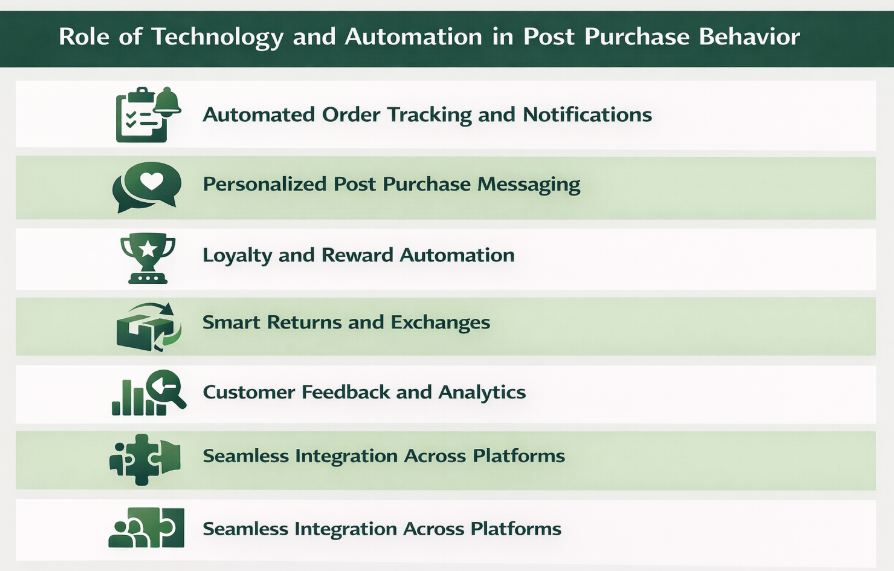
In today's fast-paced ecommerce business landscape, technology and automation are indispensable for creating a seamless and scalable post purchase journey. These tools enable you to deliver personalized, timely, and efficient experiences that would be impossible to manage manually. The following sections will explore how specific technologies can transform your post-purchase strategy.
One of the biggest sources of anxiety for online shoppers is waiting for their order to arrive. Automated order tracking and notifications are essential for alleviating this concern and providing a transparent delivery experience. From the moment the purchase is made, technology can keep the customer informed every step of the way.
It starts with an instant confirmation email and continues with proactive updates as the order is processed, shipped, and out for delivery. These automated shipping updates prevent customers from having to manually check their order status and reduce the number of "Where is my order?" inquiries to your support team.
Key benefits of automated tracking include:
Generic, one-size-fits-all communication no longer cuts it. Technology enables you to send personalized post-purchase messaging tailored to each customer's specific purchase and history. This level of personalization makes customers feel seen and understood, strengthening the customer relationship.
Using automation, you can trigger messages based on the products a customer bought. For example, if someone purchases a coffee machine, you can send them an email a week later with brewing tips or a discount on coffee beans. This type of proactive communication adds value beyond the initial transaction.
To implement personalized messaging effectively, focus on:
Automating your loyalty and rewards program is a highly effective way to encourage repeat business and build lasting brand loyalty. Reward automation technology can track customer purchases, points, and milestones without any manual effort, ensuring a seamless experience for both you and your customers.
These systems can automatically issue rewards when a customer reaches a certain spending threshold, send reminders about expiring points, and even deliver surprise perks on a customer's birthday. This creates a consistently engaging experience that keeps customers coming back.
Key aspects of loyalty automation include:
A complicated return process can quickly sour an otherwise positive customer experience. Technology can transform returns and exchanges into a "smart," self-service process that is fast, easy, and convenient for the customer. This can turn a potential point of friction into a competitive advantage.
Smart returns platforms allow customers to initiate a return or exchange through an online portal, select their return reason, and instantly receive a shipping label or QR code. This automated system reduces the workload on your customer support team and empowers customers to manage the process at their convenience.
Benefits of a smart returns system include:
Technology and automation are crucial for collecting and analyzing customer feedback at scale. Automated tools can send out surveys at optimal times, scrape customer reviews from across the web, and even use sentiment analysis to gauge the overall mood of your customer base. This provides a wealth of data for understanding post-purchase behavior.
Data analytics platforms can then consolidate this feedback from various sources, such as surveys, support tickets, and social media, into a single dashboard. This allows you to spot trends, identify recurring pain points, and measure the impact of changes you make to your products or services.
To leverage this technology effectively, businesses should:
For a modern ecommerce business, the customer journey is not confined to a single channel. Customers interact with your brand across your website, social media, email, and live chat. Technology that enables seamless integration across these platforms is essential for providing a cohesive and consistent shopping experience.
When your systems are integrated, customer data flows freely between them. This means a support agent on live chat can see a customer's recent order history, and your email marketing platform knows not to send a promotional offer for a product the customer just returned. This prevents disjointed and frustrating experiences.
Key benefits of seamless integration include:
Also Read: How Lifetime Technologies went from a Single Additive to System Kits.
Enhancing the post purchase experience often starts with the purchase itself. The Kefi Product Bundle Builder can play a unique role in shaping positive post-purchase behavior by empowering customers from the very beginning. By allowing shoppers to create their own custom bundles, you give them a sense of ownership and ensure they get exactly what they want, which can significantly reduce the risk of dissatisfaction or buyer's remorse later. This initial positive purchase experience sets a strong foundation for loyalty.
Furthermore, the data gathered on how customers build their bundles provides invaluable insights into post-purchase engagement. You can use this information to send highly personalized follow-up content and product recommendations that perfectly align with their demonstrated preferences. For example, if a customer frequently bundles certain items, you can notify them when related products are launched. This targeted approach not only enhances their experience but also drives repeat purchases and increases customer lifetime value.
Book a Demo to see how Kefi Product Bundle Builder works.
Mastering post-purchase behavior is essential for enhancing customer retention and loyalty. By understanding the stages your customers go through after a purchase, from satisfaction to feedback, businesses can develop targeted strategies that enhance the customer experience and drive repeat purchases. Leveraging technology and automation further amplifies these efforts, ensuring seamless communication and support. If you're ready to elevate your post-purchase strategy and see tangible results, don't hesitate to reach out for a free consultation. Your customers' journey doesn't end at checkout; it’s just the beginning of building lasting relationships.
Understanding what post-purchase behavior is helps businesses analyze customer reactions after a purchase. This insight allows companies to improve product quality, customer service, and marketing strategies to increase retention and loyalty.
Post-purchase behavior refers to the actions and reactions of customers after they have bought and used a product. It includes their evaluation of the purchase, satisfaction level, feedback, and future decisions, such as whether to make repeat purchases or recommend the brand.
A common post-purchase behavior example occurs when a customer buys a product online, receives it, and then evaluates whether it meets their expectations. Based on their experience, they may leave a review, request a return, or recommend the product to others.
Post-purchase behavior marketing focuses on engaging customers after a purchase through follow-up emails, loyalty programs, and personalized offers. These strategies help businesses improve customer satisfaction and encourage repeat purchases.
The post-purchase behavior process usually includes product use, satisfaction or dissatisfaction evaluation, cognitive dissonance, and feedback or advocacy. These stages determine whether a customer becomes loyal to the brand or decides not to purchase again.
Post-purchase satisfaction reflects how happy customers are after using a product or service. High satisfaction levels lead to repeat purchases, positive reviews, and stronger brand loyalty, which are essential for sustainable business growth.
An effective post purchase strategy includes follow-up communication, personalized recommendations, loyalty rewards, and strong customer support. These efforts help maintain customer engagement and increase the likelihood of future purchases.
The importance of post-purchase behavior lies in understanding how customers feel after buying a product. It helps businesses identify areas for improvement, enhance the customer experience, and build long-term relationships with their audience.
Define post purchase dissonance as the feeling of doubt or discomfort a customer experiences after making a purchase. It often occurs when customers question whether they made the right decision, especially for expensive or high-involvement products.
.svg)
