
Unlocking a potent sales strategy for your Shopify store begins with product bundling. This proven method for increasing your Average Order Value (AOV) and delighting customers is more than just a discount; it's a strategic merchandising approach. By grouping complementary items, you not only simplify the shopping journey but also enhance perceived value. This guide will explore how to create compelling product bundles, a tactic that can significantly improve your conversion rates and drive substantial revenue growth for your online business.
At its core, product bundling is the practice of combining several individual products into a single, enticing package sold at a single bundle price. Imagine selling a camera, a memory card, and a protective case as a complete photography starter kit. This sales strategy isn't just about pushing more units; it's about creating convenience and exceptional value for your customers. By offering curated collections, you encourage larger purchases while making the shopping process easier and more appealing.
This approach transforms how customers perceive your offerings. Instead of just selling individual items, you are providing a comprehensive solution. Whether you pair seasonal items for a holiday promotion or create "essentials" packs for daily use, bundling is a versatile strategy that can be adapted to any store. Done right, it enhances the overall shopping experience and encourages customers to see your brand as a thoughtful curator of products that meet their specific needs.

Bundling products is more than just a sales tactic; it is a strategic move that delivers significant advantages for both merchants and shoppers. When you bundle products effectively, you can turn casual browsers into committed buyers and one-time purchasers into loyal advocates for your brand. Let's explore the specific benefits this strategy can bring to your ecommerce store.
One of the biggest advantages of product bundling is its ability to increase average order value. By grouping complementary products, businesses encourage customers to purchase multiple items in a single transaction, thereby naturally increasing the total purchase amount. For example, a customer searching for one skincare product may choose a routine bundle that includes a cleanser, serum, and moisturizer, ultimately increasing the overall order value and contributing to higher revenue.
Product bundling improves customer convenience by simplifying the buying process. Instead of searching for multiple related items separately, customers can purchase everything they need in a single package, reducing the time and effort required to make purchasing decisions. For instance, a home office bundle that includes a desk lamp, charging station, and desk organizer provides a complete solution and makes shopping faster and easier.
Product bundling is also useful for managing slow-moving inventory. Businesses can combine products that sell slowly with popular items to make the overall offering more attractive and increase the chances of selling them. For example, last season’s accessories can be bundled with a bestselling apparel item, helping clear older stock while still creating value for customers.
Bundling products increases the perceived value of an offer because customers often feel they are getting a better deal when multiple items are offered together for a single price. Presenting the bundle as a complete solution or special offer makes it more appealing and encourages purchase decisions. Even a small discount can make the bundle feel more worthwhile to customers.
Product bundling naturally supports cross-selling by combining related products into one offer. Instead of recommending additional items separately, businesses can include complementary products directly in the bundle to create a more practical package. For example, a laptop bundle that includes a wireless mouse and a laptop sleeve helps increase the number of products sold per order while also improving the customer experience.
Also Read: How SportsStop Dominated the Diamond and Field with High-Velocity Bundling.
Product bundling is a proven strategy to increase average order value, conversions, and customer satisfaction in e-commerce. Different types of bundles help stores offer better value while encouraging customers to buy more.
Here’s a quick overview of popular product bundle types that can improve sales and enhance the shopping experience.
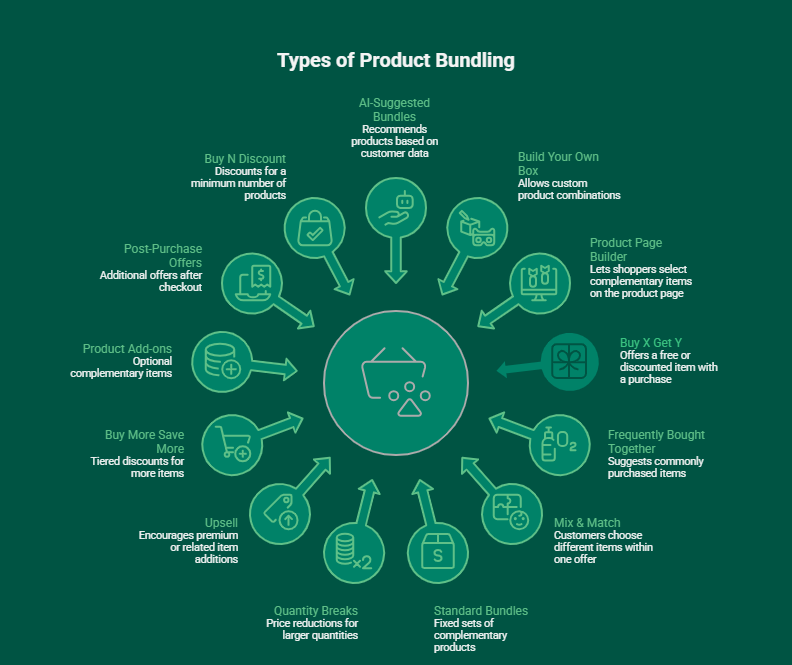
AI-suggested product bundles use customer data and shopping behavior to automatically recommend relevant products. Among different types of bundles, AI-driven recommendations improve personalization, increase conversions, and help customers discover complementary items, boosting average order value. In Minecraft, bundles are special items introduced to help players manage inventory by allowing them to group multiple item types into a single storage slot. These in-game bundles make it easier to organize and carry various resources and differ from other bundle types, such as themed content or DLC packs, which often combine textures, skins, or other in-game resources for players.
On Shopify, stores commonly use fixed bundles, mix-and-match offers, and AI-suggested recommendations. While fixed options include preset products, mix-and-match allows customers to choose, and AI suggestions automatically adapt to user behavior, helping automate upselling and cross-selling over time.
Example: Amazon – AI-Powered Personalized Recommendations

Source: Amazon
Amazon automatically suggests bundles such as a laptop, a mouse, and a laptop sleeve based on browsing history and past purchases. The system analyzes millions of transactions to identify patterns and show dynamic recommendations such as “Customers who bought this also bought.” These bundles are not fixed; they change for every user. This helps increase conversions and average order value through intelligent automation.
Build-your-own-box bundles allow customers to create custom product bundles based on their preferences. This personalized shopping experience increases engagement and encourages customers to purchase more items. Custom bundle types are effective for improving conversions and increasing average order value. This bundling strategy gives customers greater control over their purchases, thereby improving satisfaction and loyalty. Build-your-own bundles are especially popular for gift boxes, subscription boxes, and specialty product stores.
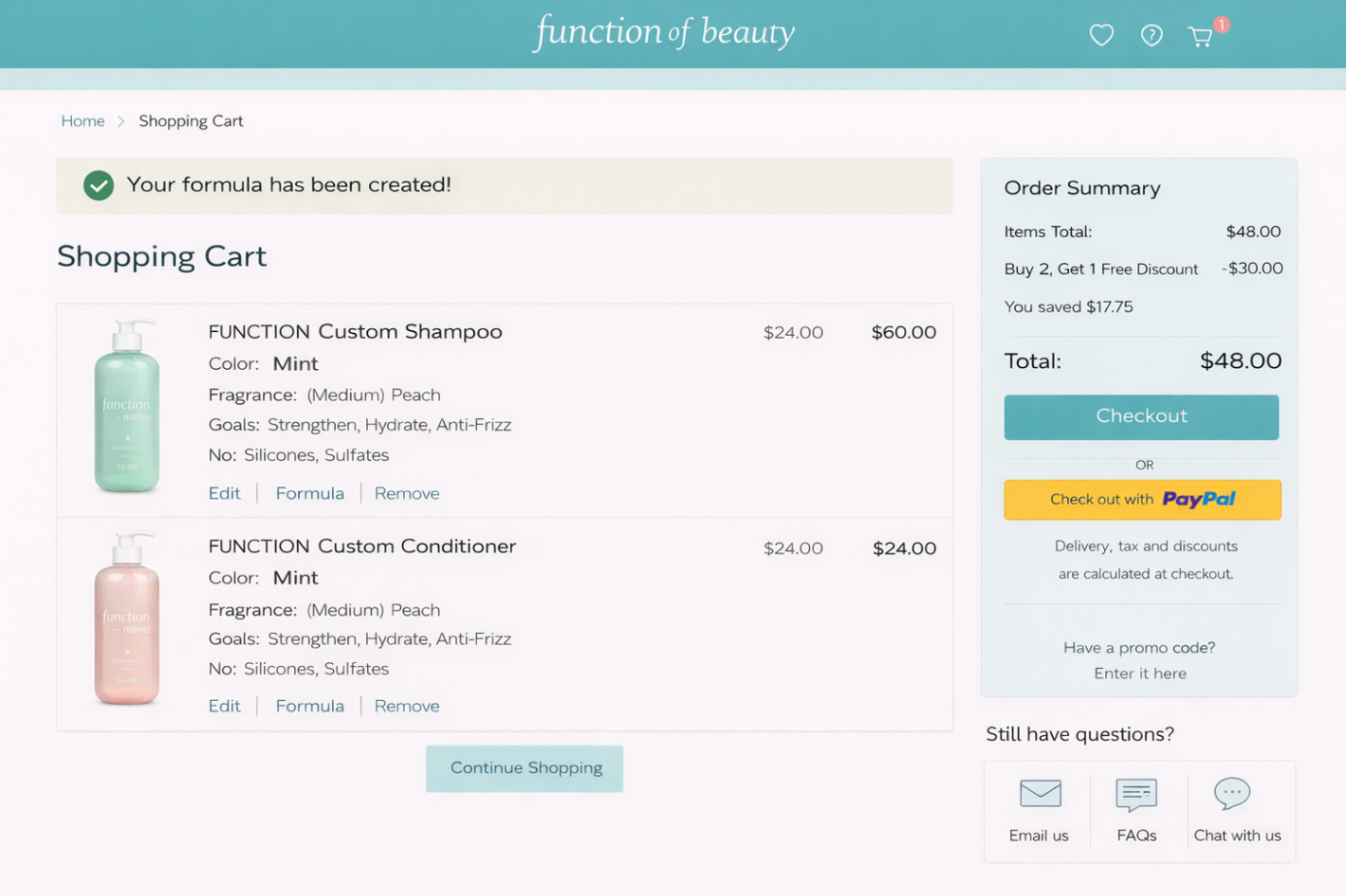
Example: Function of Beauty – Custom Haircare Bundle
Source: Function of Beauty
Function of Beauty allows customers to complete a hair quiz and build a personalized shampoo-and-conditioner set. Shoppers choose fragrance, hair goals, and ingredients before checkout. The final bundle is uniquely customized for each customer. This increases engagement and improves customer loyalty through personalization.
Product page bundle builders allow customers to select multiple related products directly from a product page. This bundling method simplifies the buying process and encourages customers to purchase complementary items. Product page bundles help improve conversions and increase average order value.
Showing bundle types on a product page reduces decision-making friction and helps customers complete their purchase faster. This approach works especially well for electronics, fashion, and beauty ecommerce stores. In e-commerce, a bundle typically refers to a group of related products offered together at a combined price, unlike dictionary definitions, which define a bundle as any collection of items or things grouped together for a purpose.
Example: Sephora – “Complete the Routine” Builder

Source: Sephora
On a moisturizer product page, Sephora displays matching cleanser, toner, and serum options under “Complete the Routine.” Customers can add all items to their cart from one place. This reduces friction and encourages buying a full skincare routine rather than a single product. It improves both convenience and order value.
Buy X Get Y bundles encourage customers to purchase specific products to receive an additional item at a discount or for free. This type of product bundling increases order size and motivates customers to explore more products. It is a proven strategy for boosting sales and improving customer retention.
These types of bundles create a strong sense of value, encouraging customers to buy more than they originally planned. Buy X Get Y offers are commonly used during promotions and seasonal sales campaigns.
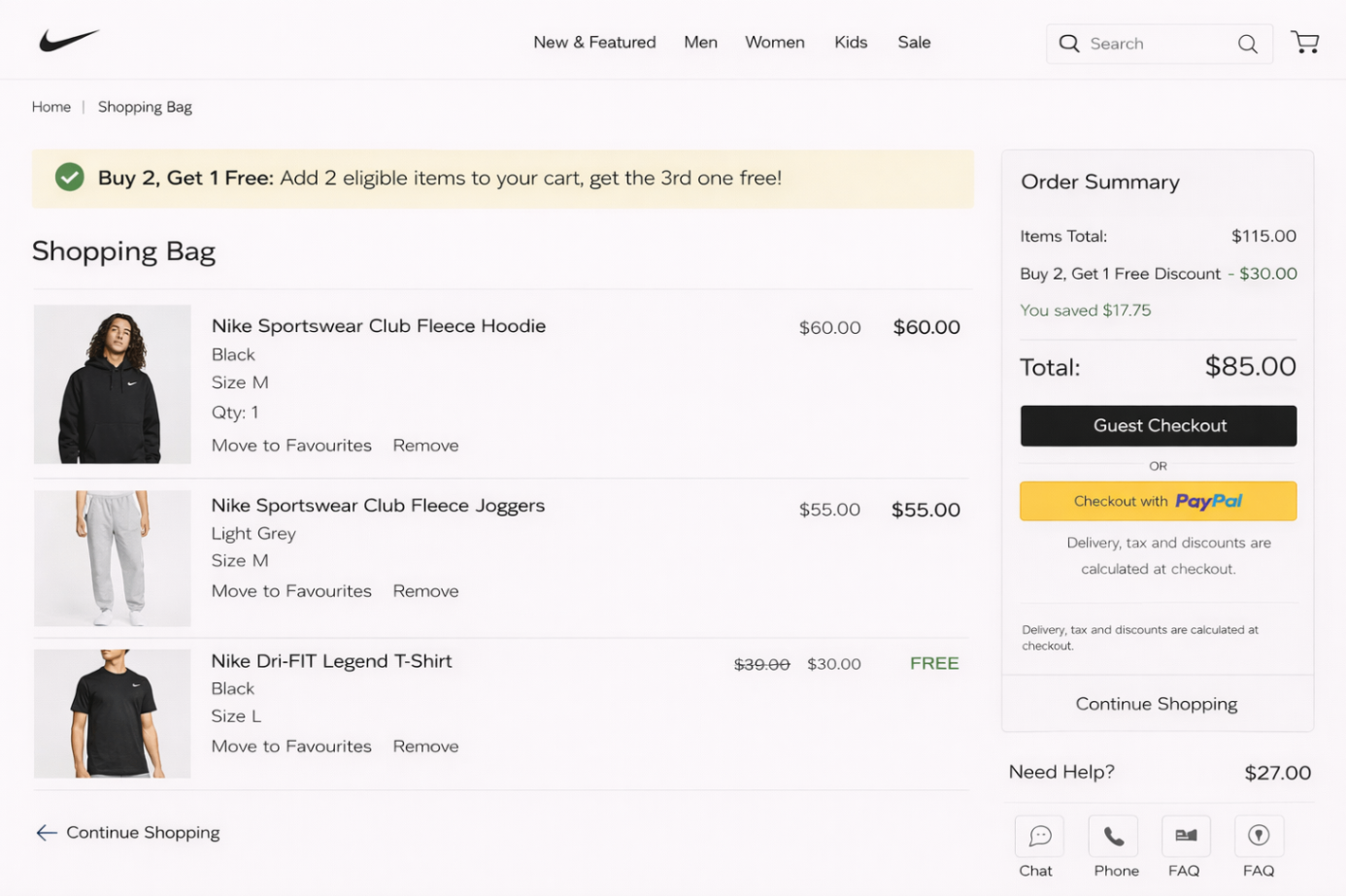
Example: Nike – Buy 2 Get 1 Free Campaign
Source: Nike
Nike runs promotions where customers who add two eligible products receive a third item free. The discount automatically applies at checkout. This motivates shoppers to add extra products to unlock savings. It increases cart size while creating a strong perception of value.
Frequently bought together bundles recommend products that customers commonly purchase together, making it easier to find complementary items and complete purchases faster. This approach helps improve conversions and increase average order value.
Data-driven recommendations help customers feel more confident in their decisions. It is widely used in e-commerce stores to improve product discovery and grow revenue.
Example: Amazon - Frequently Bought Together Section
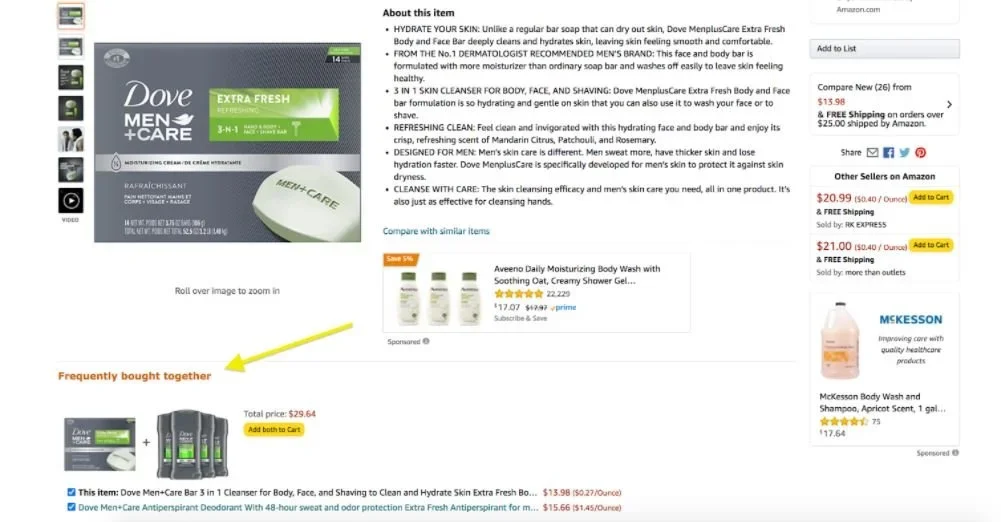
Source: Amazon
When viewing a camera, Amazon suggests a tripod and memory card under “Frequently Bought Together.” Customers can add all items with one click. These bundles are based on real customer purchase data. It simplifies product discovery and increases customer confidence in buying complementary items.
Mix-and-match bundles let customers choose different products within a single offer, helping them create personalized combinations that meet their needs. This flexible approach improves customer satisfaction and encourages larger purchases.
Customers appreciate the freedom to choose items rather than buy fixed sets. It works especially well for clothing, cosmetics, food products, and lifestyle items.
Example: Bath & Body Works – Choose Any 5 for $X

Source: Batch & Body Works
Bath & Body Works allows customers to pick any five items from selected categories at a special price. Shoppers can mix different fragrances and product types. The flexibility increases personalization and perceived value. It encourages bulk purchases without restricting choice.
Standard bundles combine multiple complementary products into one discounted package, simplifying the shopping experience and providing better value to customers. This approach helps increase average order value and improve overall sales performance.
Predefined sets reduce decision-making time and make shopping more convenient. They are commonly used for starter kits, gift sets, and product collections.
Example: Apple - MacBook + AirPods Back-to-School Bundle

Source: Apple
Apple offers fixed bundles during promotional seasons, such as a MacBook paired with free or discounted AirPods. Customers purchase a ready-made package instead of separate products. This simplifies decision-making and enhances perceived savings. It works well for starter kits and ecosystem-based products.
Quantity break bundles offer discounts when customers purchase products in larger quantities, encouraging bulk buying and helping increase average order value. This approach is especially effective for repeat customers and wholesale buyers.
Customers are more motivated to buy when they see clear per-unit savings. Quantity discounts work particularly well for consumable products such as supplements, groceries, and office supplies.
Example: Costco – Bulk Pack Discounts

Source: Costco
Costco offers lower per-unit pricing when customers buy products in bulk packs. The more units purchased, the better the value per item. This motivates customers to stock up on frequently used goods. It increases overall purchase volume and average order value.
Upsell bundles offer additional or upgraded products related to a customer's main purchase, encouraging customers to spend more by highlighting useful complementary items. This approach improves revenue while enhancing the overall shopping experience.
Strategic upselling helps customers discover premium options and useful accessories. It is one of the most effective ways to increase revenue without increasing traffic.
Example: Best Buy – Add Protection Plan & Accessories
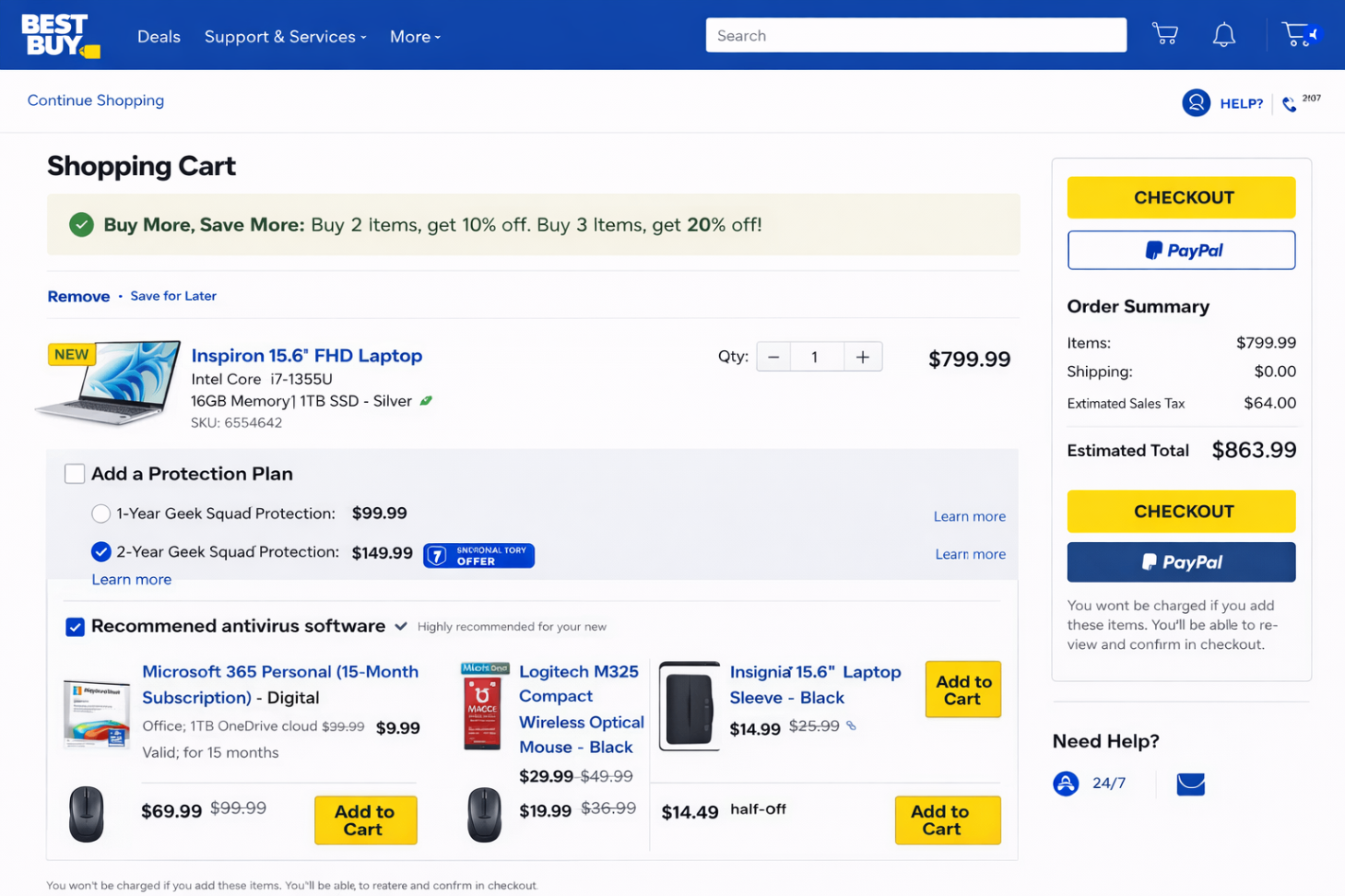
Source: Best Buy
When purchasing a laptop, Best Buy suggests adding an extended warranty, antivirus software, or accessories. These upsell bundles appear before checkout. They encourage customers to enhance their main purchase. This increases revenue while improving the overall product experience.
Buy more, save more bundles offer tiered discounts based on the number of items purchased, giving customers better pricing as they add more products to their cart. This approach encourages larger orders and helps increase average order value.
Clear pricing tiers motivate customers to reach the next discount level. It is commonly used to increase cart value and improve conversion rates.
Example: H&M – Tiered Cart Discounts
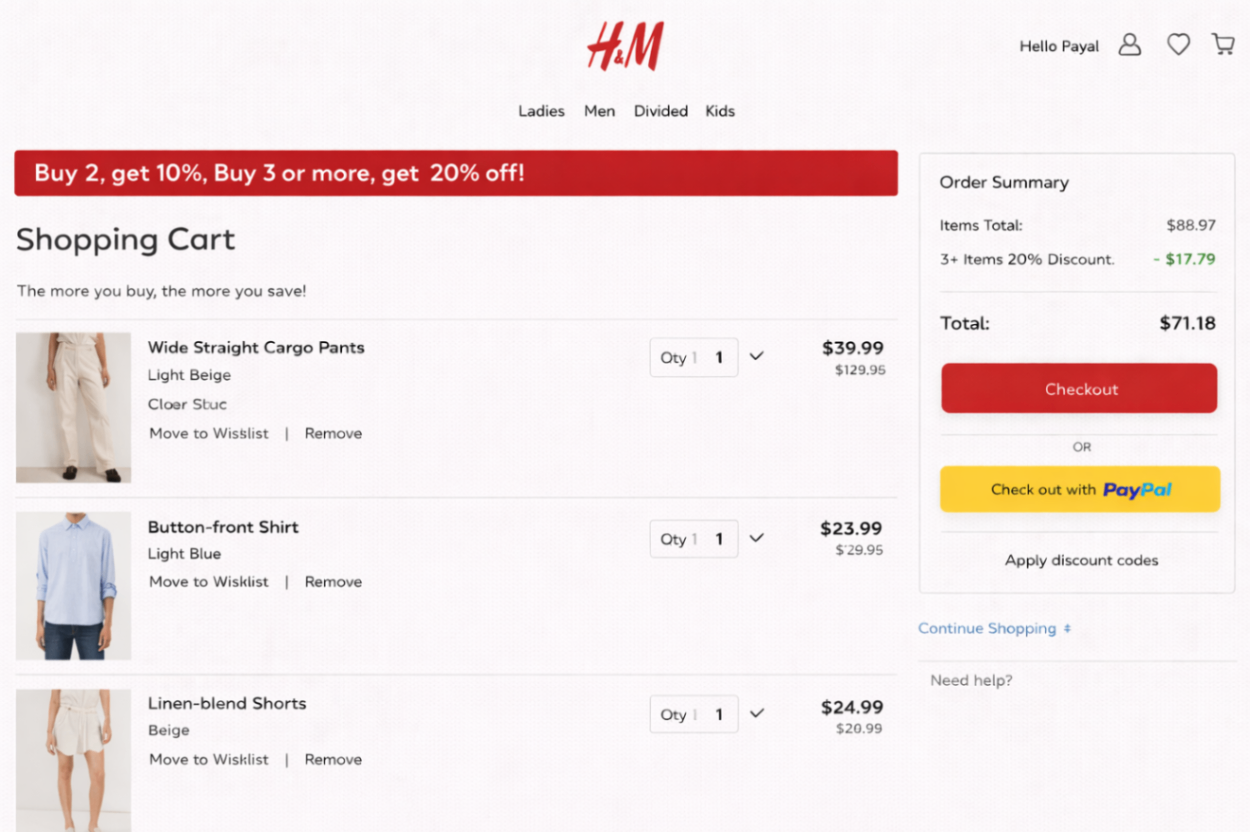
Source: H&M
H&M offers promotions like “Buy 2 get 10% off, Buy 3 get 20% off.” As customers add more items, the discount percentage increases automatically. This encourages shoppers to reach the next savings tier. It directly drives higher cart values.
Product add-ons allow customers to include complementary products with their main purchase. These small additions improve product value and enhance the customer experience. Add-on bundles help increase conversions and maximize revenue per order.
Add-ons reduce the need for customers to search for related products separately. This bundling strategy works well for accessories, warranties, personalization, and upgrades.
Example: Dell – Add Warranty & Upgrades

Source: Dell
When buying a laptop, Dell allows customers to add an extended warranty, RAM upgrades, or a laptop bag. These add-ons are optional but conveniently displayed before checkout. They enhance product value and increase revenue per order. Customers don’t need to search separately for related items.
Post-purchase bundles offer additional products after a customer completes checkout, encouraging additional purchases without interrupting the buying process. This approach helps maximize revenue and improve customer lifetime value by showing relevant recommendations at the right time.
Since the customer has already made a purchase, they are more likely to accept these offers. It is an effective way to increase revenue without affecting initial conversion rates.
Example: Gymshark – One-Click Post-Purchase Offer

Source: Gymshark
After completing payment, Gymshark shows a limited-time discount on complementary apparel. Customers can accept the offer with one click since payment details are already saved. This does not disrupt the initial conversion. It increases customer lifetime value without affecting checkout performance.
Also Read: How to Master Post Purchase Behavior to Retain Customers?
Buy N discount bundles offer savings on either the cheapest or most expensive item when multiple products are purchased. This bundling strategy encourages customers to add more items to qualify for discounts. It helps increase cart size and improve average order value.
This approach creates a strong incentive for customers to explore additional products. Buy N discount bundles are commonly used in fashion, beauty, and multi-product ecommerce stores.
Example: Zara – Buy 3, Pay for 2

Source: Zara
Zara runs promotions in which customers who add three items receive the cheapest item free. The discount is automatically applied in the cart. This encourages shoppers to add more products to maximize savings. It increases cart size while strategically controlling the impact of discounts.
Also Read: Top Bundles and Discount Strategies to Boost Sales?
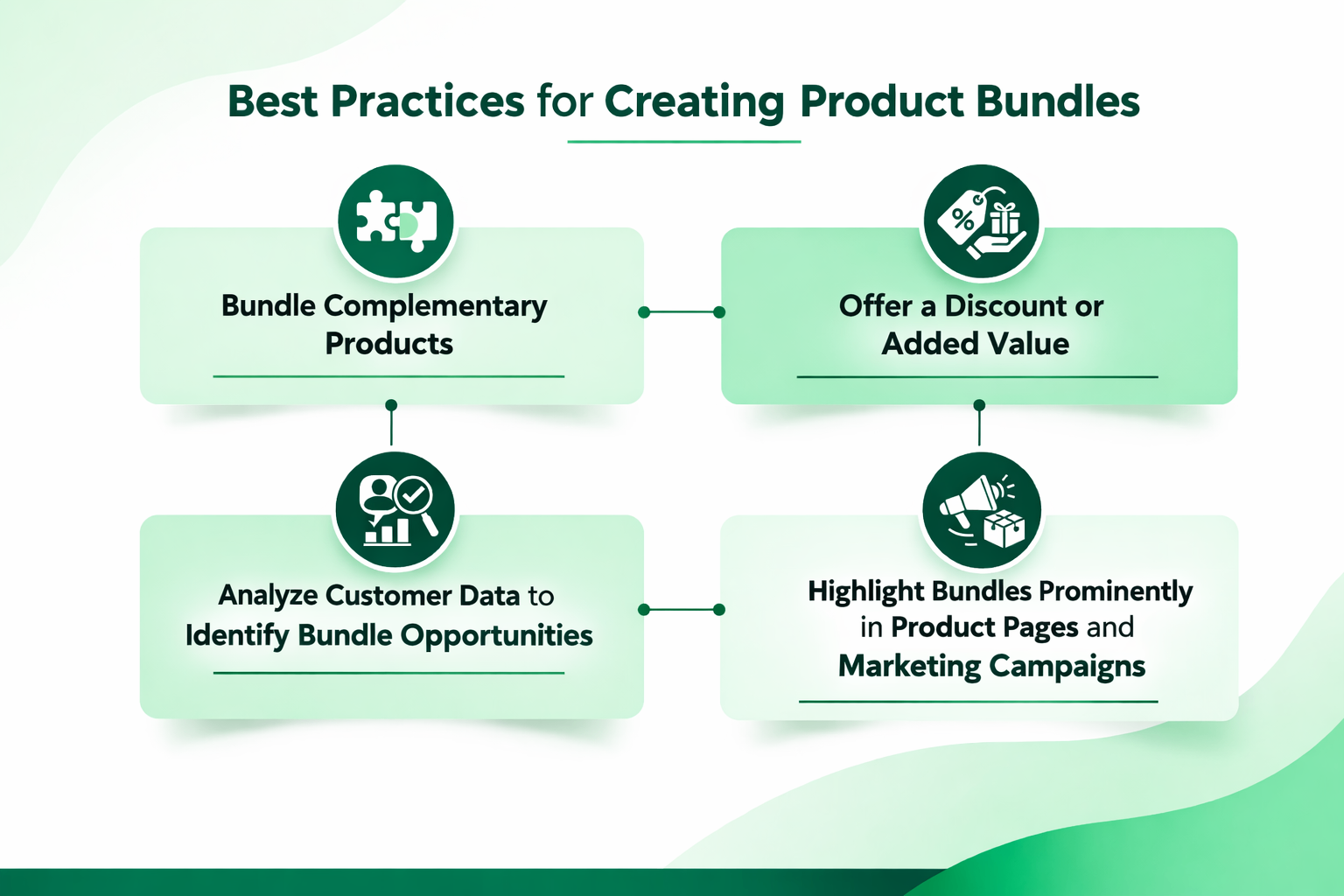
Creating a product bundle that resonates with your customers requires more than just grouping random items. The most successful bundles are born from a deep understanding of customer needs and behaviors. By analyzing customer data and focusing on providing genuine value, you can design offers that not only sell but also enhance customer satisfaction. The following best practices will guide you in building compelling bundle recommendations that boost your bottom line.
One of the most effective retail strategies is to bundle complementary products that naturally go together. When items enhance each other's utility, the bundle becomes a complete solution rather than just a group of products. For example, pairing a camera with a lens or a laptop with a mouse and case simplifies the shopping experience for customers. By grouping related items, you reduce the effort customers spend searching for additional products while presenting a convenient, logical package.
Pricing plays a major role in the success of any bundling strategy. To motivate customers to purchase, the bundle should clearly provide more value than buying items separately, often through a visible discount. Alternatively, you can add value rather than lowering the price by offering benefits such as free shipping, exclusive gifts, or premium add-ons. These extras make the bundle feel more rewarding and increase the perceived value of the purchase.
Customer data provides valuable insights for identifying strong bundling opportunities. By analyzing purchasing patterns, you can determine which products are frequently bought together and create bundles that reflect real customer behavior. In addition to sales data, reviewing browsing patterns, abandoned carts, and customer feedback can reveal useful insights. This information helps you design bundles that align with customer needs and improve overall shopping satisfaction.
Even the most well-designed bundle will not perform well if customers cannot easily find it. Bundles should be clearly displayed across your website, including product pages, the homepage, and the checkout process. Promoting bundles through marketing channels such as email campaigns, social media, and dedicated landing pages further increases visibility. Strong promotion ensures that customers recognize the value and convenience your bundles provide.
Also Read: What are the Best Checkout Page Examples to Boost Sales?

While bundling can be a powerful sales driver, it's not without its risks. When poorly executed, these strategies can backfire, leading to margin erosion, customer confusion, and even lower conversion rates. It’s important to approach bundling with a clear strategy to avoid these common pitfalls.
Understanding the potential mistakes will help you design more effective and profitable campaigns for your e-commerce site. From over-discounting to failing to track performance, awareness of these errors is the first step toward avoiding them.
One of the most common mistakes in bundling strategies is overusing discounts, which can erode margins over time. When businesses frequently offer steep bundle discounts, customers may begin to expect lower prices and delay purchases until a promotion appears. This behavior can reduce perceived product value and significantly impact profitability. To avoid this issue, businesses should plan bundle discounts carefully and ensure the pricing still supports healthy profit margins while maintaining the brand’s value.
Creating bundles with products that do not logically fit together is another major mistake. If customers cannot easily understand why the products are grouped together, the bundle will appear confusing and offer little value. Successful bundles typically include items that complement each other or are commonly used together. For example, bundling a laptop with a wireless mouse and a sleeve makes sense because these items naturally enhance the laptop’s use.
Many businesses launch bundles but fail to track their performance, which prevents them from understanding whether the strategy is working. Without analyzing metrics such as sales volume, average order value, and profit margins, it becomes difficult to identify which bundles are effective. Monitoring performance through analytics tools helps businesses refine their strategies, adjust product combinations, and optimize discounts to improve results over time.
Another common mistake is creating bundles that are too complicated for customers to understand. If the offer involves confusing pricing rules, too many options, or complicated instructions, customers may abandon the purchase altogether. Bundling should simplify the buying decision rather than create additional friction. Clear messaging, transparent pricing, and a small number of well-curated bundle options make it easier for customers to understand the value and complete their purchase.
Also Read: How Metalbird drove consistent growth across 8 stores.
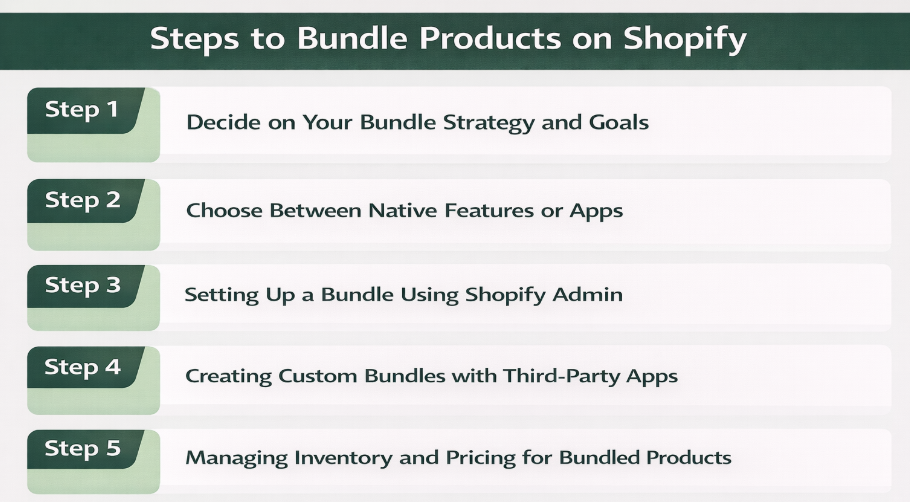
Creating compelling bundle offers for your Shopify store involves a series of strategic steps, from initial planning to final setup in your Shopify admin. This process ensures your bundle creation aligns with business goals. Whether you're using Shopify's tools or a third-party app, following a structured guide will help you launch effective bundles that drive sales and enhance the customer experience. Here is a step-by-step walkthrough to get you started.
Before creating a bundle, you need to clearly define your bundling strategy. Ask yourself what your primary objective is. Are you trying to increase average order value, clear slow-moving inventory, or introduce new products to customers? Your goal will determine the type of bundle you create and how it should be structured.
Next, focus on the perceived value for customers. A successful bundle should not simply group random items; it should provide a useful combination that addresses a specific need. For example, bundling a camera with a lens and a protective case creates a convenient starter kit for buyers.
Finally, determine the bundle pricing. The discount should be attractive enough to encourage purchases while still protecting your profit margins. Carefully review your product costs and set a price that clearly shows the savings compared to buying items individually.
The next step is selecting the right tool to create your bundles. You can either use Shopify’s native features or install a third-party bundling app. The best option depends on your store’s needs, your budget, and the type of bundles you want to create.
For simple bundles, Shopify’s built-in options can work well. You can also create a bundle manually as a new product in your Shopify admin. This approach allows you to test basic bundling strategies, although it requires manual inventory management.
If you want to create more advanced bundles, such as mix-and-match offers, tiered pricing, or customizable kits, a dedicated Shopify bundling app is usually the better option. Apps like Kefi Product Bundle Builder allow merchants to easily create flexible bundle offers, automate pricing rules, and manage bundle inventory more efficiently.
To create a simple bundle without using any apps, you can set it up directly in the Shopify admin as a new product. This is one of the easiest ways to create bundle offers for basic product combinations.
Start by going to Products in your Shopify admin, then click Add product. Then enter a clear product title for the bundle, such as “Summer Glow Kit,” and write a detailed description that lists all the items included. Make sure the description highlights the value and benefits of buying the bundle.
Next, upload high-quality images that show the products together. Finally, set a single price for the bundle that reflects the discount compared to buying the products individually. With this method, you will need to manually manage inventory levels for each item included in the bundle.
If you want to create more dynamic bundle offers, third-party Shopify apps can provide advanced functionality. These apps allow you to build different types of bundles, such as mix-and-match bundles, volume discounts, or fixed-product bundles.
After installing a bundling app from the Shopify App Store, you can usually create bundles from the app dashboard. Most apps include a Create Bundle option that guides you through selecting products and defining bundle rules.
You can then configure the pricing structure, such as percentage discounts, fixed bundle pricing, or tiered discounts. Many apps also generate widgets that display bundle offers directly on product pages. Apps such as Kefi Product Bundle Builder also offer features like mix-and-match bundles and frequently bought-together suggestions to help increase conversions.
Managing inventory correctly is essential when selling bundled products. The main challenge is ensuring that stock levels for individual products are updated when a bundle is sold. This prevents overselling and keeps your inventory records accurate.
If you create bundles manually in Shopify, you will need to update each product's inventory level whenever a bundle purchase occurs. While this method works for smaller stores, it can become time-consuming as sales grow.
Many Shopify bundling apps solve this issue by automatically syncing inventory levels. When a bundle is purchased, the app adjusts the stock count for each included product. Tools like Kefi Product Bundle Builder automate inventory syncing and bundle management, helping merchants scale their bundling strategy while keeping stock levels accurate.
Also Read: How Calitron Boosted Revenue and AOV with Smart Bundling.
Implementing a sophisticated product bundling strategy has never been easier with tools like the Kefi Product Bundle Builder. Our platform empowers you to create and manage dynamic bundles that directly contribute to a higher average order value (AOV) and an enhanced shopping experience. You can easily set up various types of bundles, from mix-and-match options to fixed packages, all designed to encourage customers to add more to their carts. By presenting relevant, valuable offers at the right moment, you can effectively boost sales.
To leverage a bundle builder in your online store, start by identifying your top-selling products and their complementary items. Use this insight to create compelling bundles within the Kefi platform. Promote these bundles on your homepage and product pages, and use our analytics to track their performance. By testing different combinations and discount levels, you can continuously optimize your strategy to maximize your order value and deliver an exceptional customer journey.
Book a Demo to see how Kefi Product Bundle Builder works.
Effectively bundling products on Shopify not only enhances the shopping experience but also significantly boosts your store's revenue potential. By understanding the different types of bundles, utilizing essential tools, and following best practices for promotion, you can create compelling offers that attract customers and encourage repeat purchases. As you implement these strategies, remember to continually analyze your results, allowing you to fine-tune your approach for maximum effectiveness. The world of product bundling is vast, and with the right knowledge and tools, you can position your Shopify store for sustainable growth. If you're ready to take your revenue to the next level, explore the benefits of product bundling today!
The best way to manage inventory for product bundles is to use a bundle builder app that automates the process. These apps prevent sync issues by automatically updating the stock levels of individual components in your Shopify store whenever a bundle is sold, ensuring your inventory counts remain accurate.
To bundle products on Shopify, merchants can group related items and sell them together as a single offer. This can be done by creating a dedicated product listing for the bundle or by using apps that automatically combine products and apply discounts. Tools like Kefi can help display bundle offers and improve conversions.
If you want to know how to add a bundle product in Shopify, you can create a new product page that lists multiple items in a single package. Merchants often list all included products in the description and set a combined price. Using bundling apps can make it easier to manage products and apply automatic bundle discounts.
Knowing how to make bundle products in Shopify helps merchants offer curated product packages that encourage larger purchases. Store owners can manually group products on a bundle page or use apps that allow dynamic bundling. This strategy improves upselling opportunities and enhances the shopping experience.
When exploring how to create bundles on Shopify, merchants typically select related products and package them together at a special price. This can be done through manual listings or by using apps designed for bundling. Such tools help merchants manage bundle offers and improve sales performance.
Yes, merchants can create bundle products in Shopify by combining several products into one offer and listing them on a dedicated product page. Many Shopify apps make this process simple by allowing store owners to set bundle discounts and automatically sync inventory.
Merchants choose Kefi Product Bundle Builder because it helps create flexible bundle offers, such as mix-and-match bundles and volume discounts, to increase average order value. It's simple, no-code setup and automated recommendations make it easy for merchants to quickly launch effective bundle strategies.
.svg)
