
Let's take a closer look
Getting customers to spend more in a single order is often easier than convincing new customers to buy for the first time. Yet many Shopify stores still rely on single-item purchases, even when shoppers would be willing to buy more if the value were clear enough.
Volume pricing gives customers a reason to increase their order size without relying on sitewide discounts. Whether it's a quantity break, a fixed-pack bundle, or a spend-based offer, the goal is the same: make buying more feel like the smarter choice. When done well, volume pricing can increase average order value, move inventory faster, and create stronger buying habits over time.
The challenge is that not every volume pricing strategy works equally well. Some offers encourage larger purchases naturally, while others can reduce margins without changing customer behaviour. Looking at how successful brands structure their pricing can reveal what drives larger orders, which volume pricing models perform best, and how Shopify merchants can apply those lessons to their own stores.
Volume pricing is a pricing strategy that rewards customers for buying larger quantities by offering better value as order size increases. Instead of encouraging shoppers to purchase a single item, it creates a clear incentive to add more products to their cart in exchange for a lower per-unit cost or a larger overall discount.
The structure can take different forms, including quantity discounts, fixed-pack bundles, spend-based offers, subscriptions, and wholesale pricing. For example, a customer may pay full price for one product, unlock a discount when purchasing three units, and receive a better rate when purchasing five units. Because the savings are tied to a specific action, customers can easily see the benefit of increasing their order size.
For Shopify merchants, volume pricing is often used to increase average order value without relying on blanket discounts that reduce margins across every purchase. When the offer aligns with customer buying behaviour, it can encourage larger orders, improve cash flow and inventory movement, and create stronger repeat-purchase habits. The goal is not simply to sell more units but to make larger purchases feel like the most valuable option for the customer.
Volume pricing gives customers a reason to buy more in a single order. Instead of relying on sitewide discounts, merchants reward larger purchases with better value, making it easier to increase average order value while protecting margins.
Most customers are not looking to spend more money. They are looking for better value. When savings become visible at a specific quantity threshold, buying an extra item often feels like a smarter decision rather than a bigger expense.
This works because shoppers focus on the value they unlock, not just the amount they spend. A "Buy 3, Save 15%" offer can make an additional purchase feel justified, especially when the savings are easy to understand. Instead of feeling pushed toward a larger order, customers feel rewarded for making one.
Volume pricing works best when discounts are easy to understand and still support profitability. Poorly chosen thresholds or aggressive discounts can reduce margins without changing customer behavior.
Before setting discount thresholds, merchants need to understand which volume pricing model aligns with their products, margins, and growth goals.
Not every volume pricing strategy works for every store. The right model depends on how customers buy, how often they purchase, and what motivates them to increase order size. Some models encourage shoppers to buy more of the same product, while others reward higher spending across multiple products. Understanding when to use each approach can help you choose a strategy that increases AOV without sacrificing profitability.
Quantity-based pricing works best when customers regularly buy multiple units of the same product. Instead of discounting every order, merchants reward shoppers for increasing quantity through offers like "Buy 3, Save 10%" or "Buy 5, Save 20%."
This model is commonly used for supplements, skincare, pet products, and household essentials because customers naturally replenish these items. If repeat buyers already purchase the same SKU multiple times, quantity-based pricing can be one of the simplest ways to increase units per order.
Spend-based pricing rewards customers for reaching a target cart value rather than purchasing a specific quantity. Shoppers can mix products while still working toward a discount rate, making this model ideal for stores with broad catalogs and varied price points.
It often works well for beauty, fashion, and lifestyle brands where customers are more likely to build a cart from multiple products than buy larger quantities of a single item. The goal is to increase cart value without limiting customers to a specific product.
Bundle pricing increases order value by grouping related products into a single offer. Instead of encouraging customers to buy more of the same item, it helps them purchase a complete solution.
This model works particularly well when products naturally complement each other. A skincare routine, supplement stack, or grooming kit can feel more valuable as a bundle because customers gain convenience alongside savings.
Wholesale pricing is designed for buyers who purchase in larger quantities. The more units ordered, the lower the cost per unit becomes.
This approach is commonly used by B2B merchants, distributors, and suppliers that want to encourage larger purchases while building long-term customer relationships. If larger orders improve operational efficiency and margins remain healthy, wholesale pricing can create predictable revenue from repeat buyers.
Subscription pricing rewards customers who commit to recurring purchases. Instead of focusing only on a single transaction, the model uses better pricing to encourage long-term retention.
It is particularly effective for consumable products such as supplements, coffee, pet supplies, and personal care items where customers replenish inventory regularly. The result is stronger customer lifetime value and more predictable revenue.
Some merchants combine multiple pricing strategies instead of relying on a single approach. For example, a brand may offer quantity discounts alongside bundles or pair subscription savings with volume discounts.
Hybrid pricing works best when customer buying behavior varies across products or customer segments. The key is keeping offers simple enough for shoppers to understand while creating multiple paths to a higher-value order.
The best volume pricing model depends on your products, margins, and customer behavior. Seeing how successful Shopify brands apply these models in practice can make it easier to identify which approach fits your store.
Tiered pricing and volume pricing both reward customers for larger purchases, but they use different pricing structures to achieve that goal.
With tiered pricing, different quantity ranges are charged at different rates. For example, the first five units may be priced at one rate, while additional units receive a lower rate.
With volume pricing, customers unlock a better price once they reach a specific quantity threshold. That lower price can then apply to the entire order, making the savings easier to understand and more appealing to shoppers.
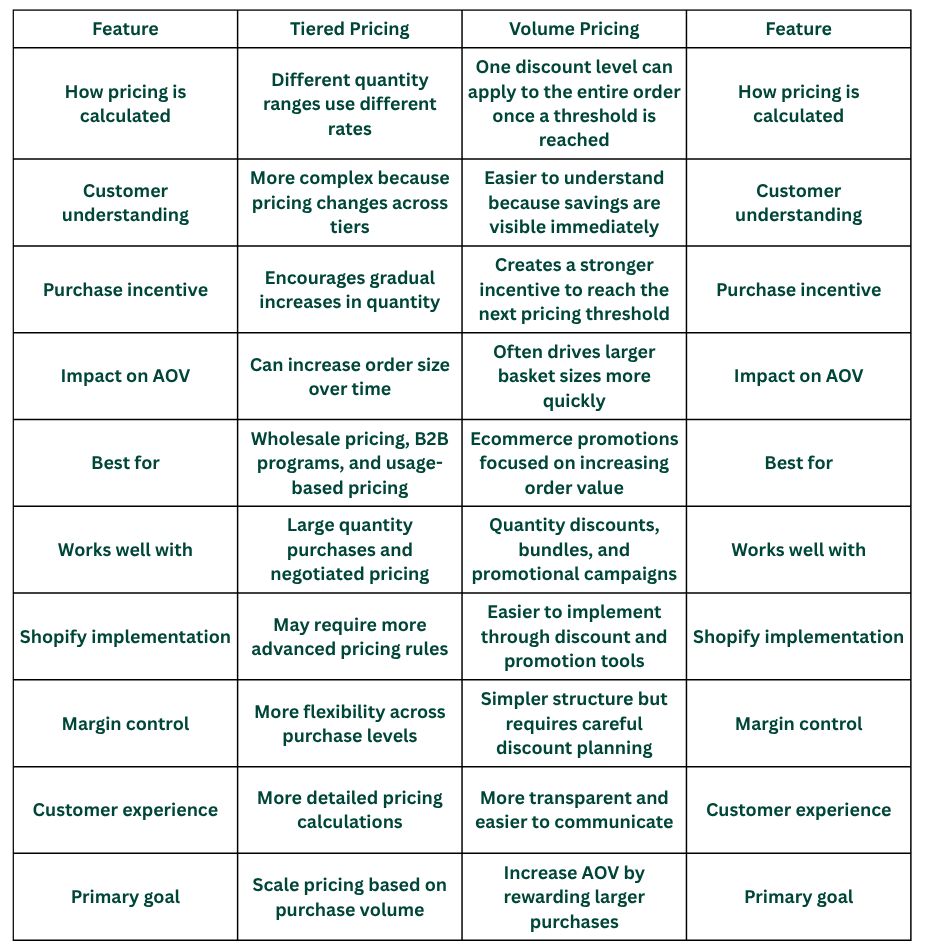
For most Shopify merchants, volume pricing is often the more practical choice when the goal is to increase average order value. Customers can immediately see how much they save by adding more items, which makes larger purchases easier to justify.
Tiered pricing is often a better fit for wholesale programs or businesses that need pricing to scale across different purchase levels. The right choice depends on your products, customer buying behavior, and the outcome you want to drive.
Understanding volume pricing is one thing. Seeing how real stores apply it is where the strategy becomes easier to replicate. The examples below use different volume pricing models, from quantity-based tiers and fixed-pack bundles to spend-based discounts and wholesale pricing.
As you review each example, focus on how the offer is presented, what customer behavior it encourages, and what lesson Shopify merchants can apply to their own stores. Often, the success of a volume pricing offer depends as much on how the savings are communicated as the discount itself.
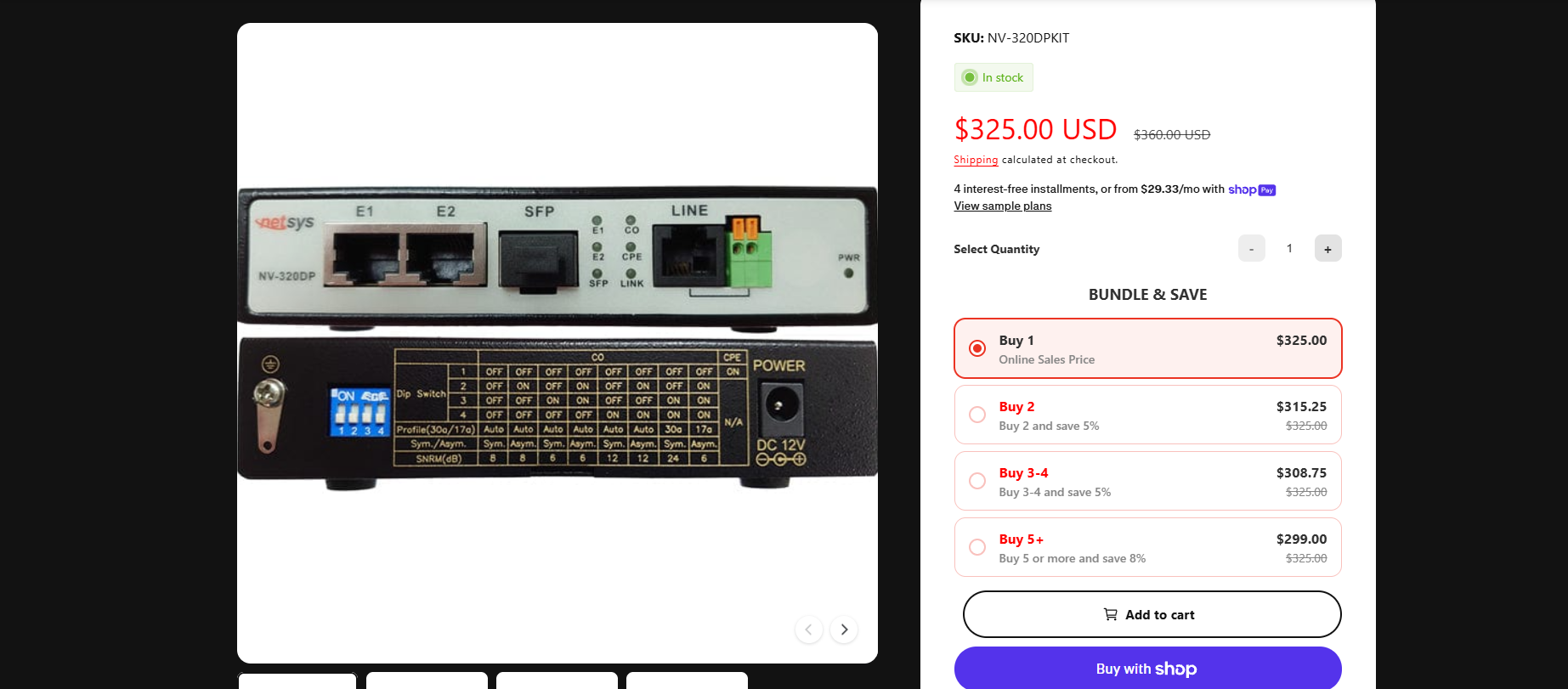
Netsys Direct uses a visible "Bundle & Save" pricing ladder on its NV-320DP Ethernet Extender product page. Instead of hiding discounts in the cart, customers can see how the per-unit price changes as quantity increases directly beside the quantity selector and Add to Cart button.
What stands out
Why it works
Merchant takeaway
Quantity-based pricing works best when customers naturally buy multiple units and already have a target quantity in mind. Displaying pricing tiers directly on the product page can reduce purchase friction and make larger orders easier to justify.
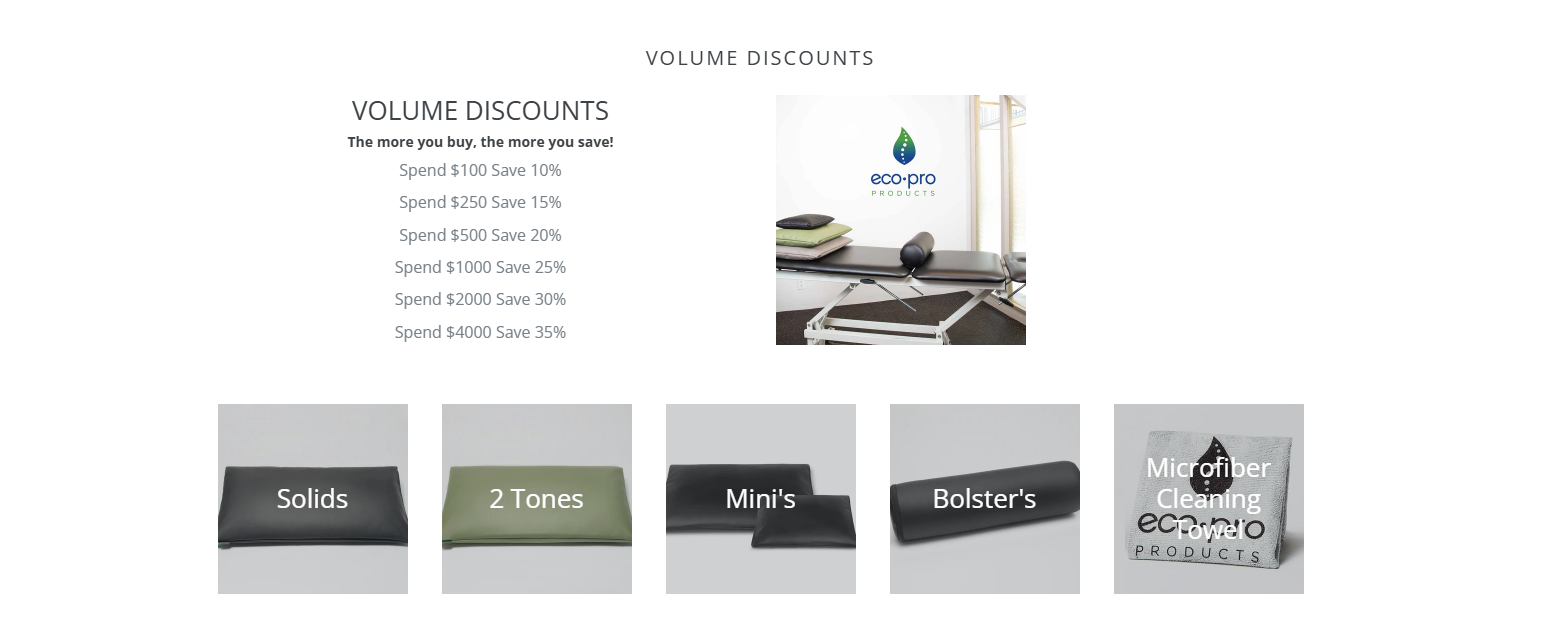
EcoPro Products uses a catalog-wide spend-based discount structure that rewards customers as their cart value increases. Instead of offering discounts on specific products, the promotion applies across the store, allowing shoppers to combine different items while working toward a higher savings threshold.
What stands out
Why it works
Merchant takeaway
Spend-based volume pricing works best when customers build carts across multiple products or categories. If shoppers rarely buy large quantities of a single SKU but regularly place mixed-product orders, rewarding total spend can increase AOV without restricting purchase choices.
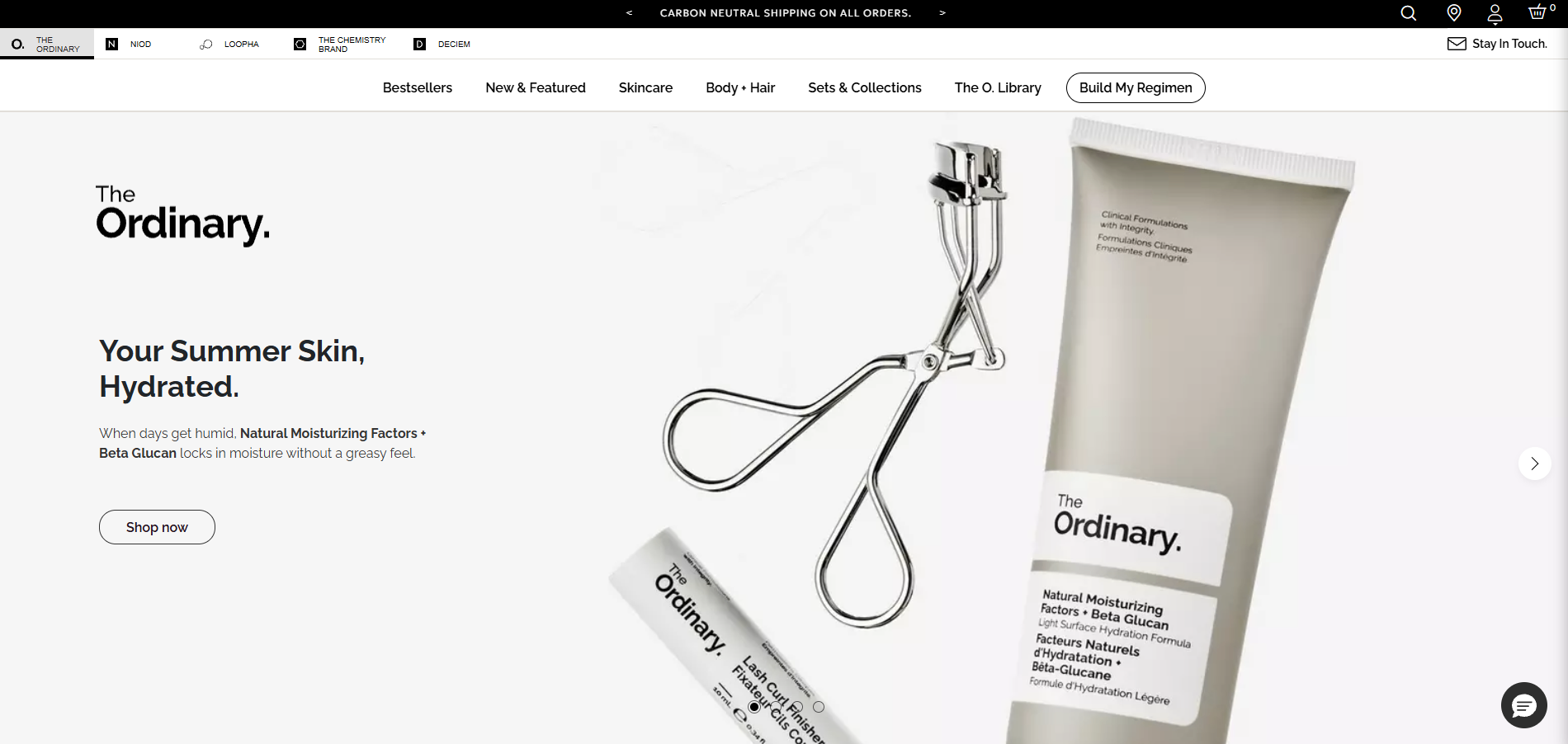
Beauty brands often use volume pricing to encourage customers to purchase complete skincare routines rather than individual products. Instead of focusing on a single item, they create incentives for shoppers to add complementary products to their cart.
What stands out
Customers can combine cleansers, serums, moisturizers, and sunscreens to qualify for larger discounts. The promotion rewards routine-building purchases while increasing the overall value of each order.
Why it works
Beauty shoppers rarely purchase products in isolation. Someone buying a vitamin C serum may also need a cleanser, moisturizer, or sunscreen to complete their routine. Volume pricing makes these additional purchases feel more valuable while helping customers achieve better results from their skincare regimen.
By encouraging routine-based purchasing, beauty brands increase average order value while improving product discovery across their catalog.
Merchant takeaway
Beauty brands can use volume pricing to promote complementary products and increase cart value. When customers naturally use multiple products together, routine-based discounts often outperform promotions focused on individual SKUs.
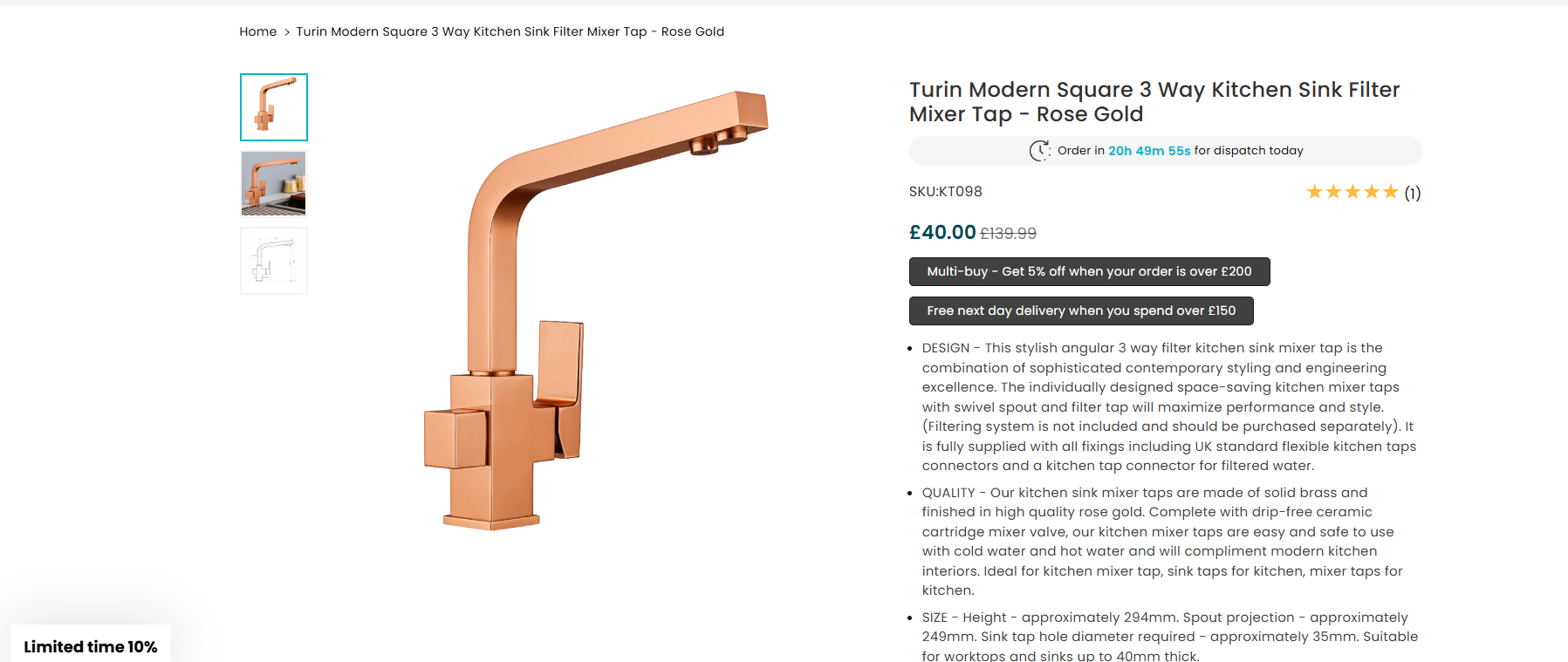
House of Enki combines spend-based and quantity-based discounts on the same product page. Near the product price, shoppers see a simple multi-buy message offering savings on larger orders, while a dedicated trade section introduces deeper quantity discounts for customers purchasing multiple units.
What stands out
Why it works
Merchant takeaway
If your store serves both retail and trade customers, one discount strategy may not fit every buyer. Layering volume offers around different customer needs can help increase order value without making the pricing experience feel confusing or overly promotional.
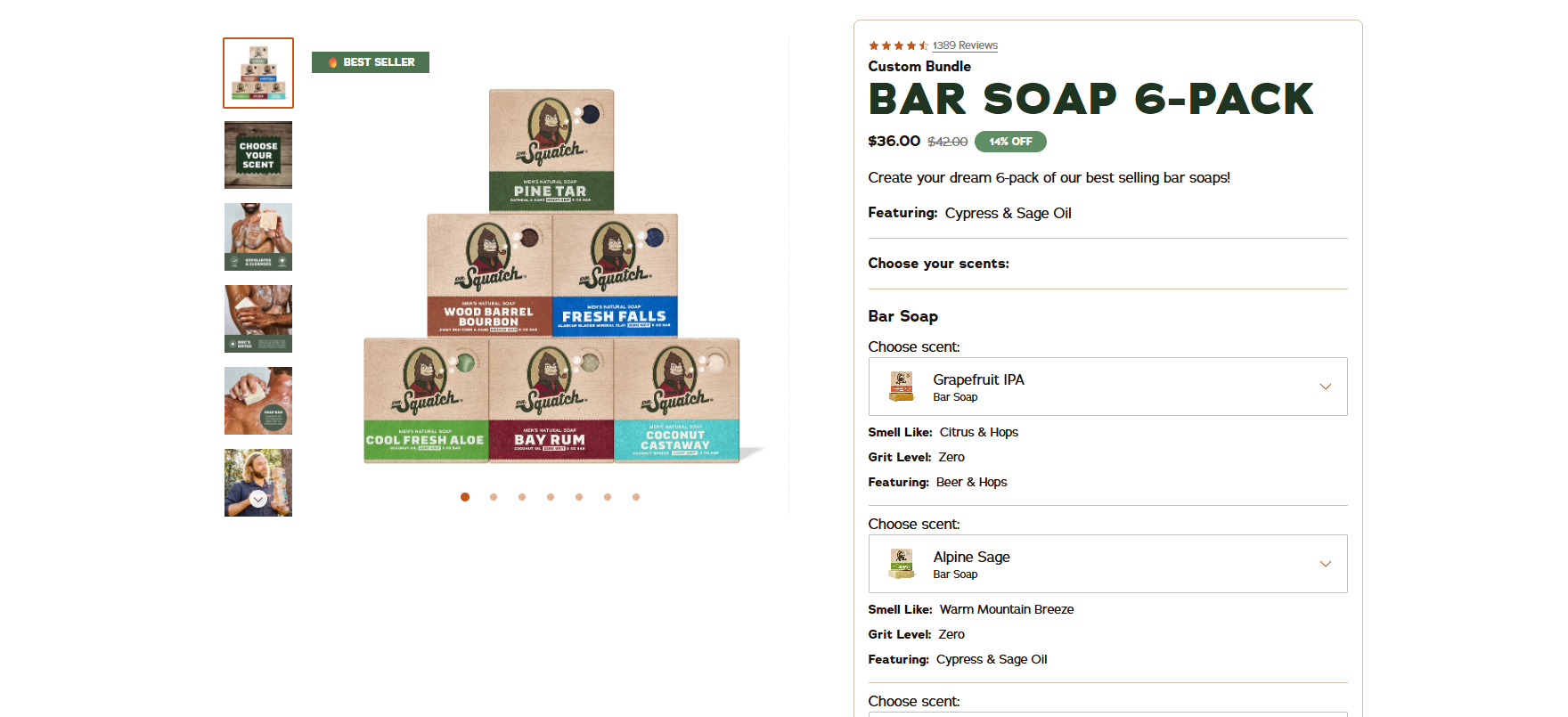
Dr. Squatch sells a six-pack soap bundle, but customers are not locked into a pre-selected set of products. Instead, shoppers can build their own bundle by choosing individual scents, combining favorites with new options while still receiving the bundle discount.
What stands out
Why it works
Merchant takeaway
Fixed-pack bundles do not have to be rigid. If customers value variety or personalization, allowing them to choose items within a bundle can increase order size while maintaining the flexibility shoppers expect from individual product purchases.
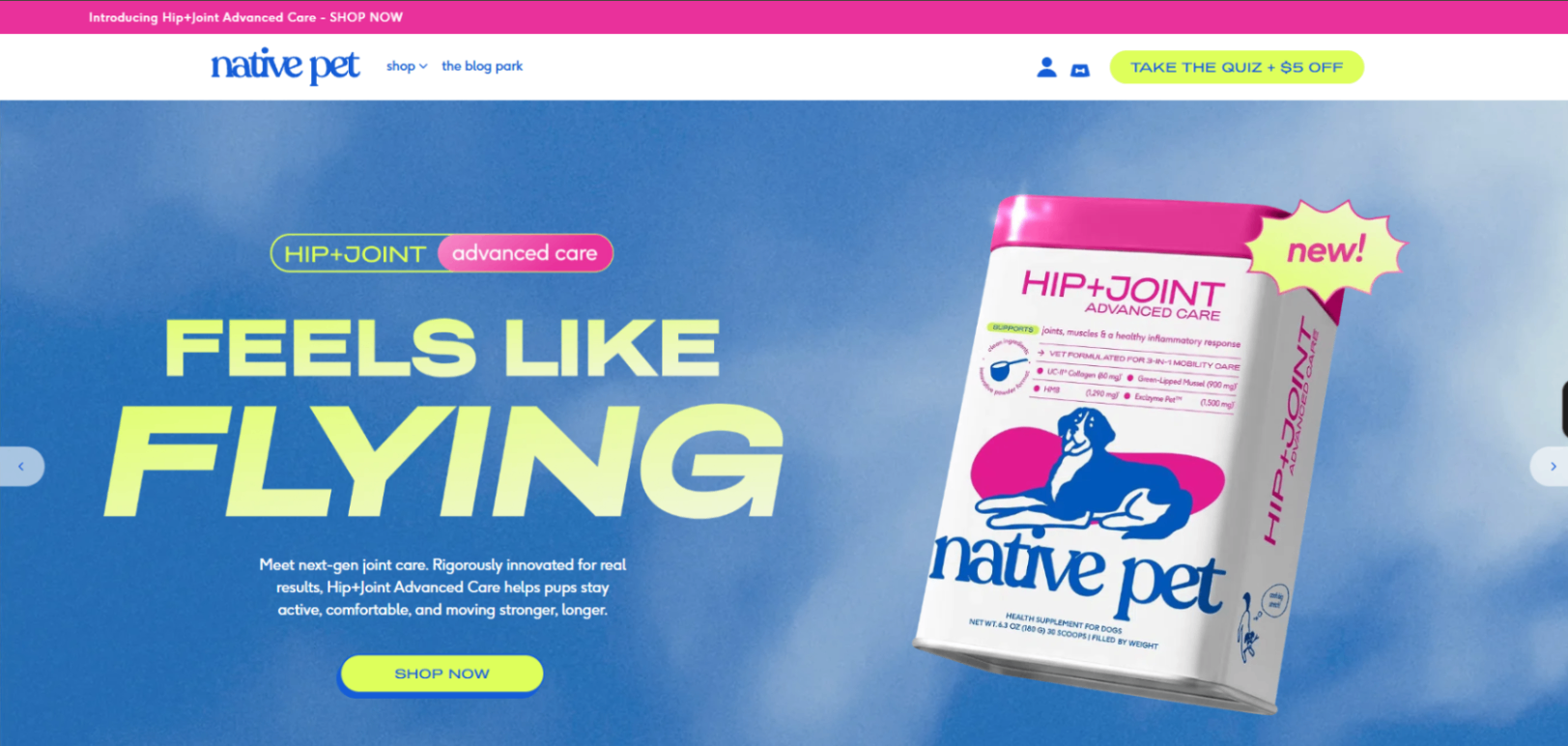
Pet brands frequently use volume pricing on products that customers purchase repeatedly, such as treats, supplements, grooming products, and food toppers. These products fit naturally into bulk-purchase promotions because customers know they will need them again.
What stands out
Customers receive larger discounts when purchasing multiple packs or combining replenishable pet products within the same order. The promotion rewards stock-up purchases without requiring deep discounts.
Why it works
Pet owners often prefer buying several weeks or months of supplies at once. Volume pricing aligns with this purchasing behavior by making larger orders feel more economical and convenient. Instead of returning frequently to reorder, customers can purchase everything they need in a single transaction.
This approach helps merchants increase order value while improving inventory movement across frequently purchased products.
Merchant takeaway
Pet brands can use volume pricing to encourage stock-up purchases and larger baskets. Products with predictable consumption cycles are particularly well suited for quantity-based discounts because customers already expect to repurchase them regularly.
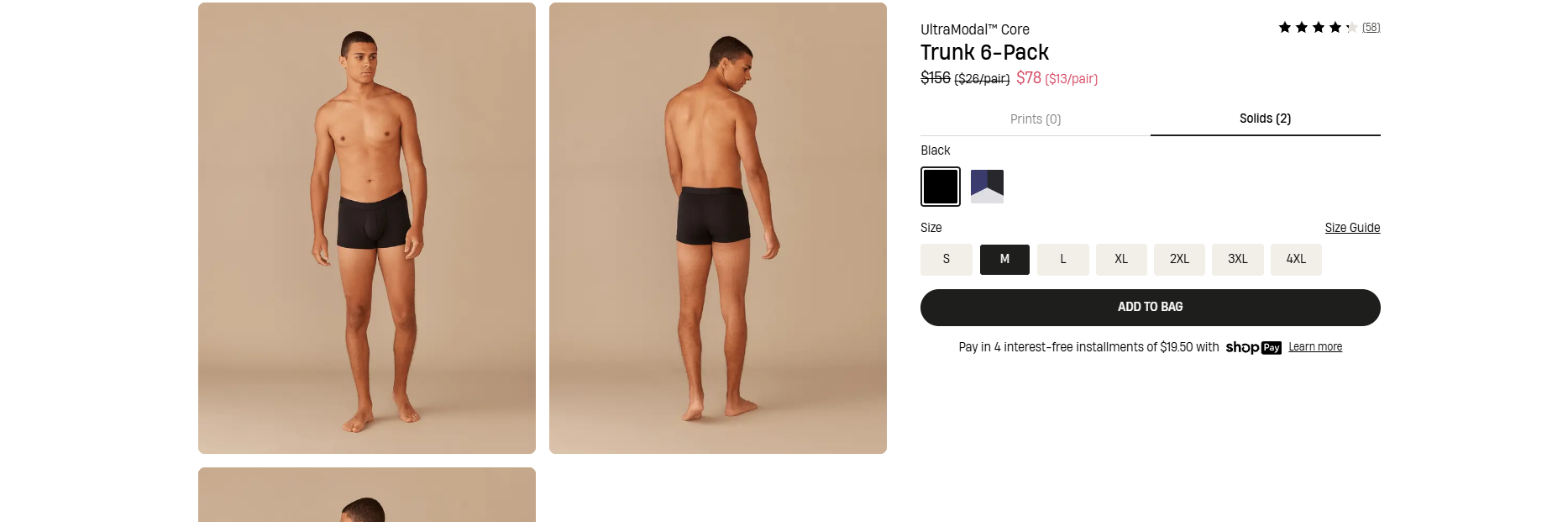
MeUndies uses multiple bundle sizes for its underwear packs, allowing customers to choose between different quantities while clearly displaying the cost per pair. Instead of focusing only on the total discount, the page highlights the per-unit value, making comparisons easier.
What stands out
Why it works
Merchant takeaway
Volume pricing can influence which bundle customers choose, not just whether they buy one. If you have a preferred bundle size, adjusting the value gap between tiers can make that option feel like the smartest choice without forcing customers into a specific purchase.

Goli Nutrition sells a Complete Goli Gummies 6-Pack that combines multiple wellness products into a single purchase. Rather than asking customers to choose individual products or build their own bundle, the brand presents one curated package containing different formulas from across its product range.
What stands out
Why it works
Merchant takeaway
Fixed-pack bundles can do more than increase order value. If customers face too many product choices, a curated bundle can simplify decision-making while introducing them to a broader range of products. Sometimes the best volume pricing strategy is reducing purchase friction rather than increasing discount depth.
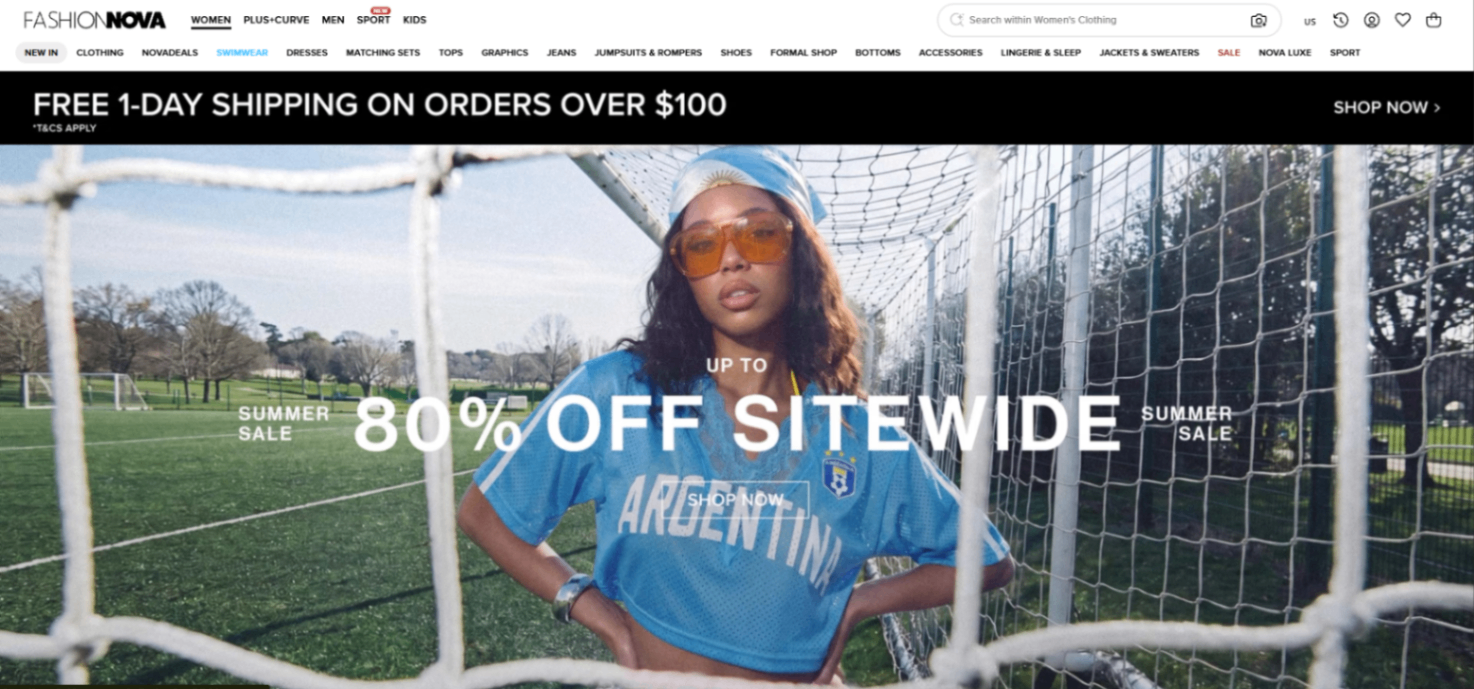
Fashion retailers frequently use volume pricing to encourage shoppers to purchase multiple items during a single session. Instead of discounting individual products heavily, they reward customers for building larger carts.
What stands out
Why it works
Fashion shoppers rarely buy in isolation. Someone purchasing a dress may also add accessories, tops, or additional color variations before checkout. Volume pricing aligns with this natural shopping behavior by making larger purchases feel more valuable.
Unlike fixed discounts on individual products, multi-item promotions encourage exploration across the catalog. Customers focus on unlocking the next savings threshold rather than evaluating each item independently.
Many apparel brands also use volume pricing to move seasonal inventory without reducing prices across an entire collection.
Merchant takeaway
Fashion brands can use volume pricing to increase units per order while preserving flexibility for shoppers. When customers naturally browse multiple products, rewarding larger carts often feels more compelling than discounting individual items.
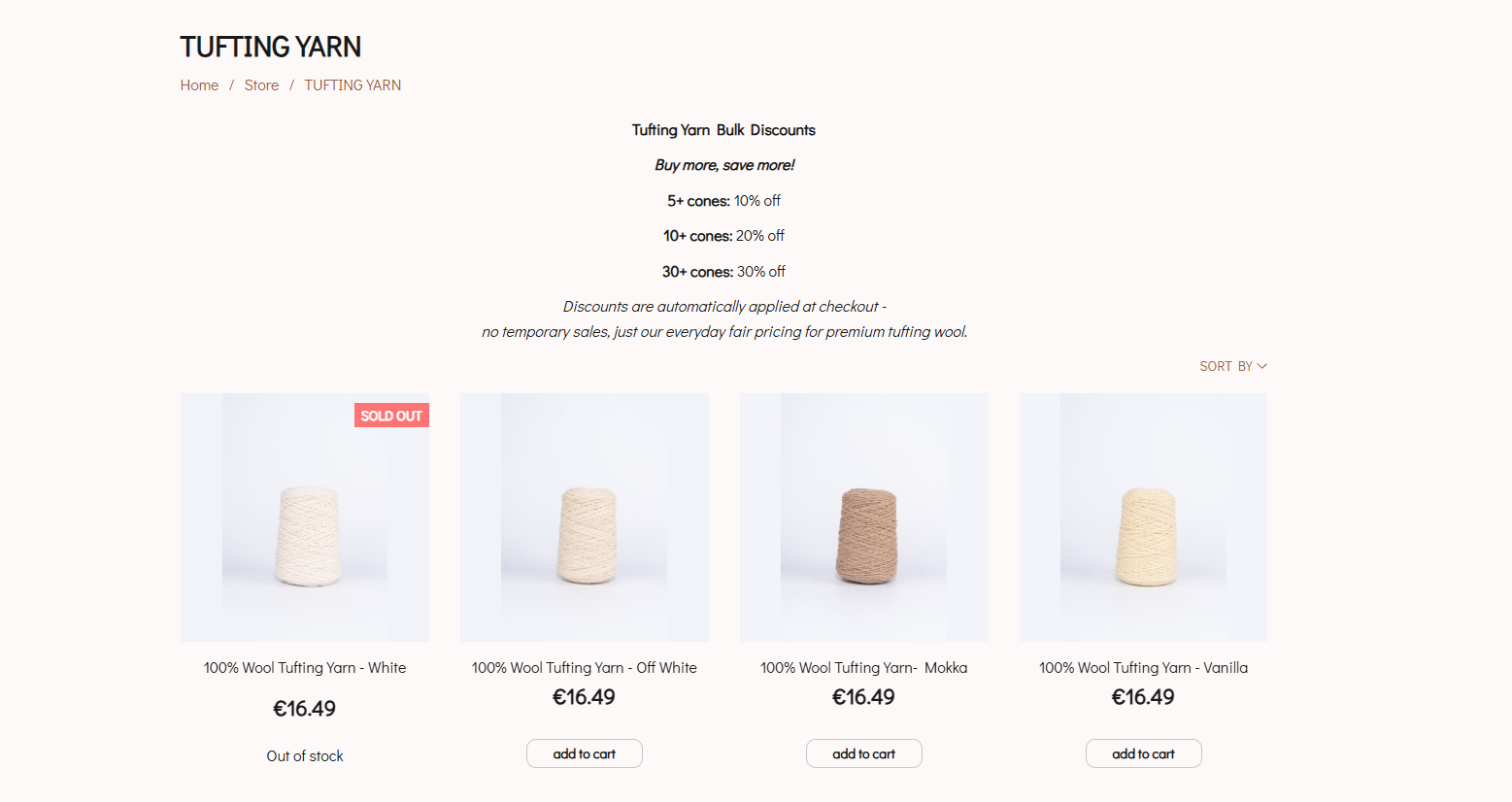
TUFTING STUFF promotes its quantity discounts directly on the tufting yarn collection page rather than waiting until shoppers reach an individual product. Customers can immediately see that purchasing 5+, 10+, or 30+ cones unlocks larger discounts, with savings automatically applied at checkout.
What stands out
Why it works
Merchant takeaway
If customers commonly buy across multiple variants or products within a category, collection-page discounts can be more effective than product-page offers. Showing volume savings earlier in the shopping journey helps customers build larger carts before they begin adding products.
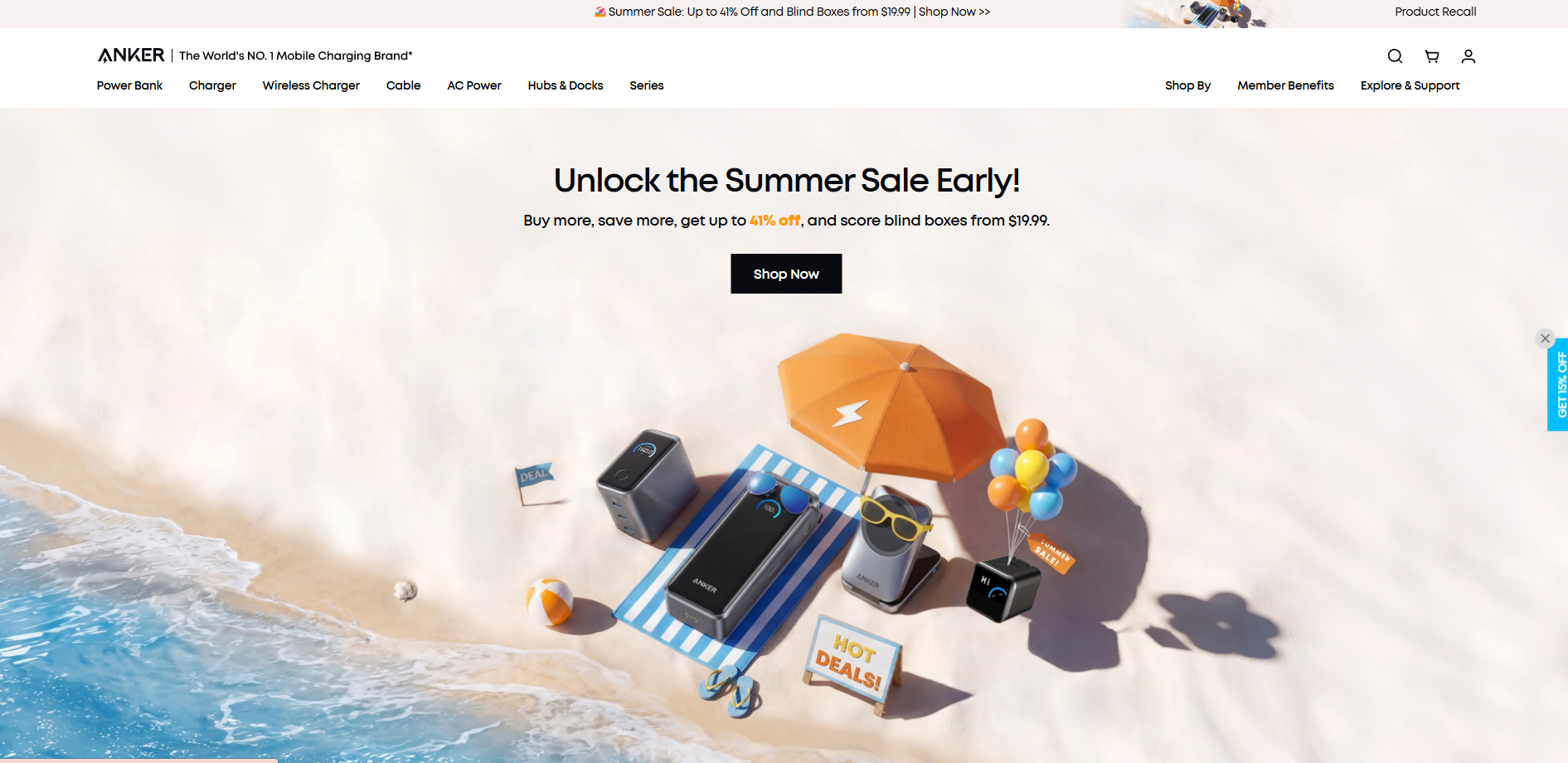
Electronics brands often use volume pricing on accessories rather than flagship products. Products such as charging cables, power adapters, screen protectors, and portable chargers are frequently purchased together, making them ideal candidates for multi-buy offers.
What stands out
Customers can combine complementary accessories within the same order to unlock better pricing. Rather than discounting a single high-value product, the promotion encourages shoppers to add related items that improve the overall purchase experience.
Why it works
Many electronics shoppers already need multiple accessories when purchasing a new device. A customer buying a charging cable may also need a wall adapter, power bank, or car charger. Volume pricing reduces purchase hesitation by making these add-ons feel like a better value when bought together.
This approach also increases attachment rates, helping merchants grow cart value without relying on deep discounts for premium products.
Merchant takeaway
Electronics stores can use volume pricing to encourage accessory purchases and increase average order value. Products that naturally complement one another often perform better than applying discounts to standalone devices, especially when customers are already shopping for a complete setup.
Across fashion, beauty, pet, and electronics brands, the most effective volume pricing strategies align discounts with how customers naturally shop, making it easier to increase cart value without relying on aggressive price cuts.
One pattern stands out across these examples: the best-performing volume pricing strategies match how customers already buy.
For example, Netsys Direct and TUFTING STUFF use quantity-based tiers because customers often know how many units, materials, or supplies they need before they start shopping. In these cases, showing discounts early helps customers plan larger purchases from the outset.
Consumer brands take a different approach. Goli Nutrition, MeUndies, and Dr Squatch use bundles and multi-pack offers because shoppers are comparing options rather than calculating quantities. Instead of asking customers to buy more of the same product, these brands increase perceived value by grouping products together.
The same pattern appears across other industries. Fashion brands encourage larger wardrobes, beauty brands promote complete routines, pet brands drive stock-up purchases, and electronics retailers increase accessory attachment rates through multi-buy offers.
The lesson is not that one volume pricing model works better than another. The strongest examples succeed because they align discounts with customer intent. Before choosing a pricing structure, merchants should look at how shoppers naturally purchase products in their category and build offers around that behavior.
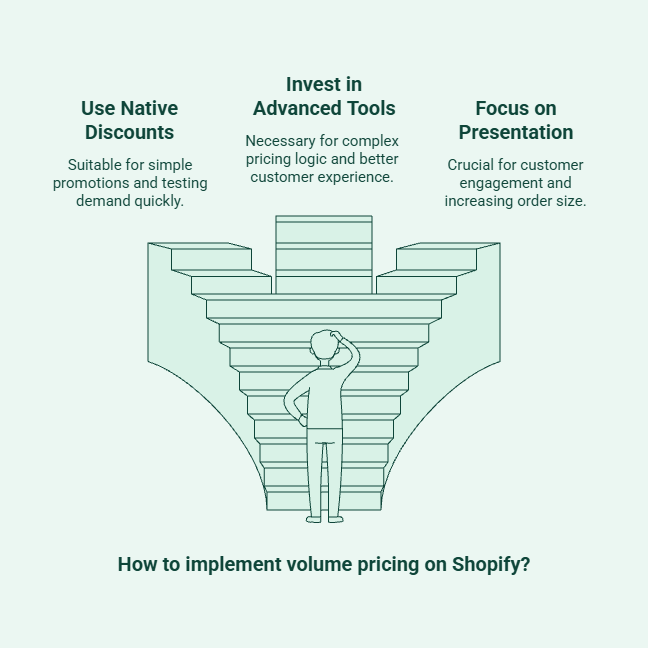
The hardest part of volume pricing is not creating the discount. It is presenting the offer in a way that customers notice and understand before they reach checkout.
Many of the examples above succeed because the pricing is visible at the moment customers make a purchase decision. Netsys Direct places quantity tiers beside the Add to Cart button, TUFTING STUFF promotes discounts on collection pages, and Dr. Squatch builds savings directly into bundle options. The implementation is just as important as the discount itself.
Shopify's native discount tools can work well for straightforward promotions.
They are often enough when you want to:
For many merchants, this is the fastest way to validate demand before investing in a more advanced setup.
The challenge starts when customers need to see the offer before checkout.
For example:
These experiences are difficult to build using native discounts alone because they require pricing logic and merchandising to work together.
A 15% discount hidden at checkout often performs worse than a 10% discount customers can see throughout the buying journey.
The strongest volume pricing strategies make the next step obvious:
When customers can immediately see the benefit, they are more likely to increase order size without feeling pushed into a promotion.
Many volume pricing strategies fail not because the discount is too small, but because the offer does not match customer buying behavior or support profitability.
Common mistakes include:
The strongest volume pricing strategies do more than increase order size. Whether through quantity tiers, spend-based discounts, or bundles, the best examples align promotions with customer buying behavior while maintaining healthy profit margins.
The goal is not simply to offer a discount. It is to create a buying experience where larger purchases feel like the most valuable choice. Many Shopify merchants rely on separate apps for discounts, bundles, upsells, and free gifts. While these tools can work individually, managing multiple apps often creates unnecessary complexity and a disconnected customer experience.
Instead of using separate solutions, Kefi Commerce brings multiple revenue-driving strategies into one platform.
With Kefi, merchants can manage:
Why merchants choose Kefi instead of multiple apps:
A Shopify merchant, Reshma Beauty, praised Kefi for helping customers create personalized skincare routines:
"Customers love creating their own regimen. The multi-step builder allows them to mix and match serums, oils, and masks effortlessly."
For example, a merchant can combine volume discounts with bundle offers or free gift incentives, creating multiple reasons for customers to increase their order value without relying on deeper discounts alone.
The result is a simpler promotional stack for merchants and a smoother shopping experience for customers.
A volume pricing strategy is successful when it changes buying behavior, not just when it generates discounted sales. The goal is to understand whether customers are purchasing more products, increasing order value, and helping grow revenue without hurting profitability.
Look for a combination of the following:
The strongest volume pricing strategies create a noticeable shift in purchasing behavior. Customers buy more because the offer feels valuable, not because the discount is overly aggressive.
Volume pricing is one of the most effective ways to increase AOV when the offer matches how customers naturally buy. Whether you use a tiered pricing strategy with quantity tiers, spend-based discounts, bundles, or subscriptions, the goal is the same: give shoppers a clear reason to add more value to their order and widen your customer base, aligning with your business goals.
For Shopify merchants, success comes from choosing the right pricing model, making the cost savings visible, and continuously refining the offer based on customer behavior and thorough market research to adapt to market changes. When done well, volume pricing can increase order value, improve the shopping experience, and drive sustainable revenue growth.
Volume discount pricing rewards customers with better pricing through volume discounting as the order quantity or cart value increases. Implementing this strategy can provide businesses with a competitive advantage when larger orders improve AOV, inventory movement, or customer retention without significantly reducing profit margins.
Common volume-based pricing models include quantity-based pricing (Netsys Direct), spend-based pricing (EcoPro Products), bundle pricing (Dr. Squatch), subscription pricing, and wholesale pricing with different tiers that also account for set quantity levels. Each rewards customers for purchasing more through discounts or added value, ultimately impacting the total cost.
Yes, volume pricing is especially popular in industries such as fashion, beauty, pet supplies, electronics, wholesale, and supplements, where customers often purchase multiple items, replenish products regularly, or buy complementary products together, ultimately helping to increase the business’s market share.
Volume pricing for large orders is typically set up by defining quantity or usage thresholds and analyzing the cost structure to assign pricing rules to each level. Platforms such as Salesforce, CPQ, and billing systems automate these calculations, ensuring customers receive the correct pricing in real time as purchase volume or product usage increases.
Volume pricing is a broad strategy that rewards larger purchases, while tiered pricing is a specific type of volume pricing where discounts increase at predefined quantities or spending thresholds.
Common tools that support volume pricing include Shopify apps like Kefi Commerce, different price discount and bundle apps, wholesale pricing tools, and ecommerce platforms that offer quantity breaks, tiered discounts, and automated promotional campaigns.
.svg)
