

In today's competitive landscape, simply generating revenue isn't enough. Businesses must actively work to maximize their income potential to ensure longevity and success. Implementing effective revenue optimization strategies is the key to unlocking sustainable growth. This process moves beyond guesswork, employing a data-driven framework to align every aspect of your business from pricing to marketing with the singular goal of increasing profitability. By understanding and applying these principles, you can transform your revenue streams and build a more resilient, profitable enterprise.
Revenue optimization is a cohesive process that businesses use to manage pricing structures, inventory levels, customer demand, and distribution channels to boost long-term revenue growth. It's about more than just increasing sales; it's about selling more profitably. The core of this discipline is using data-driven strategies, such as analyzing customer behavior and market demand, to deliver the right products to the right customers at the ideal price. This ensures you are not just growing your top line but also enhancing the bottom line.
For modern businesses, this means moving beyond traditional revenue management, which often focuses solely on price. Revenue optimization takes a more holistic approach, considering costs and profitability to drive a business forward. It involves finding the delicate balance between increasing sales volume and extracting the maximum value from each transaction. By turning data into actionable insights, companies can refine their marketing strategies and make smarter decisions that lead to sustainable financial health and a strong competitive edge.

Embracing revenue optimization strategies is crucial for any business aiming for sustainable growth. It moves the focus from short-term sales spikes to long-term profitability and stability. By analyzing data and refining your approach, you can enhance your bottom line, improve operational efficiency, and ensure you meet customer needs effectively. Let's examine the specific benefits in more detail.
One of the most significant benefits of revenue optimization is its direct impact on profitability. By identifying and correcting inefficiencies, such as underpriced products, excessive discounts, or poor inventory management, you can stop revenue leakage and ensure every sale contributes positively to your revenue goals. This approach looks beyond top-line revenue to consider the costs associated with each transaction.
Effective resource allocation is another way optimization boosts profits. Knowing which products or services drive the most profit helps you invest wisely and direct your efforts where they will yield the highest returns. For example, data might reveal that a specific customer segment is highly profitable, allowing you to focus marketing spend on acquiring more customers like them. This focus on both revenue growth and cost control ensures your business is not just growing, but growing in a healthy, sustainable way. When it comes to customer revenue optimization, some of the best tools or software include Salesforce, HubSpot, Optimove, and Gainsight. These platforms help businesses analyze customer data, target high-value segments, personalize marketing efforts, and streamline the customer journey to maximize overall profitability.
Revenue optimization empowers you to move beyond static pricing and adopt more sophisticated pricing strategies. It involves a deep understanding of market demand, competition, and the perceived value of your products to your customers. This allows you to implement a pricing model that maximizes revenue without alienating your customer base.
A key component of this is dynamic pricing, in which prices are adjusted in real time based on fluctuating market conditions. For instance, you can increase prices during peak demand periods to capture additional revenue, or offer targeted discounts during slower periods to maintain sales volume. This flexibility ensures your pricing is always aligned with the current market landscape.
A core principle of revenue optimization is to enhance customer value. When customers feel they are receiving fair value for their money, their satisfaction and loyalty increase. Optimization helps you understand what your customers truly care about, whether it's product quality, convenience, or exceptional service, allowing you to tailor your offerings accordingly.
This focus on value translates into an improved customer experience. By analyzing customer data, you can identify pain points in the customer journey and make targeted improvements. A seamless and positive experience encourages repeat business and turns satisfied customers into brand ambassadors. This is where initiatives like loyalty programs can play a powerful role in fostering strong customer relationships. By consistently delivering unparalleled value, you create a loyal customer base that provides a stable, growing revenue stream.
Revenue optimization is fundamentally a data-driven process. Modern businesses generate vast amounts of customer data from CRM software, websites, and marketing channels. By leveraging data analytics, you can transform this raw information into actionable insights that guide strategic decisions and positively impact your bottom line.
Through careful data analysis, businesses can uncover nuanced insights into their target market. Analyzing purchase patterns can reveal which products are most popular with specific customer segments, informing everything from marketing efforts to product development. This evidence-based approach removes guesswork and ensures that every decision is informed by real-world behavior.
In crowded markets, a strong revenue optimization strategy provides a significant competitive advantage. It allows you to be more agile and responsive than competitors who are not leveraging their data as effectively. For example, you can adjust pricing faster in response to market trends or identify and cater to underserved customer segments before others do.
This strategic agility helps with differentiation. By deeply understanding customer preferences, you can tailor your offerings and marketing messages to resonate more strongly with your target audience. This creates a unique brand identity and value proposition that is difficult for competitors to replicate, helping you capture and retain market share.
Also Read: How Calitron Boosted Revenue and AOV with Smart Bundling.
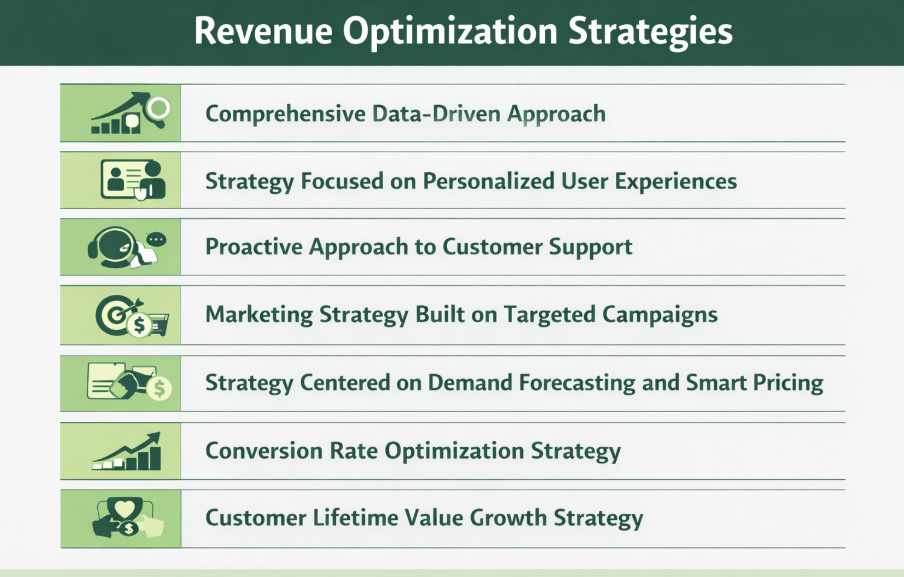
To truly transform your ecommerce business, you need to implement a set of interconnected revenue optimization strategies. Running a successful online store requires more than a great product lineup; every decision, from website layout to customer service, influences your bottom line. The goal is to maximize revenue from your existing customer base, not just attract new traffic. The following strategies provide a comprehensive framework for boosting profitability and ensuring your ecommerce business thrives.

The first step in your journey to maximize revenue is establishing a strong, data-driven foundation. Without accurate data analysis, you’re left guessing which products resonate with your audience and which marketing efforts are profitable. Data provides the clarity and direction needed to ensure every decision is informed by actionable insights rather than assumptions.
By focusing on historical data and relevant metrics, you can build a clear picture of your store’s performance. This evidence-based approach helps you pinpoint where customers drop off, which campaigns work best, and how to optimize your product lineup to encourage more frequent purchases. Key metrics to track include:
These data points act as a guide, helping you systematically maximize revenue at every touchpoint. Tracking metrics such as product discovery rates, site engagement, and cart abandonment patterns lets you see which steps lead customers to complete a purchase and which ones push them away.
Once you have a strong data foundation, you can create personalized user experiences that delight your customers. Personalization is more than just suggesting products; it's about making each visitor feel understood and valued throughout their journey. Research shows that most consumers spend more with companies that personalize the experience.
By leveraging shopper data and predictive analytics, you can tailor product recommendations, promotional messages, and even page layouts to match individual preferences based on their customer behavior. Building detailed buyer personas for different customer segments helps you understand their unique needs and tailor customer interactions accordingly. When every touchpoint is relevant and helpful, customers are more engaged, more likely to convert, and more inclined to become loyal, repeat buyers.
Effective customer support shouldn't just be about reacting to problems; it should anticipate customer needs and create a smoother journey. A proactive approach to customer service can significantly boost customer satisfaction and, in turn, drive revenue. Positive service experiences increase the likelihood that a consumer will make another purchase.
Proactive strategies involve using data to anticipate questions and offer solutions before problems arise. This could mean notifying customers of potential shipping delays, offering alternatives for out-of-stock items, or using live chat to assist shoppers who seem to be struggling. This approach reduces frustration and reflects positively on your brand, fostering customer success. Investing in your customer support team is an investment in long-term growth.

A targeted marketing strategy is about personalizing your campaigns and messages for specific audiences. By attracting potential customers with the right offers, you get one step closer to a sale. Just like your website, your marketing strategy should be data-driven and personalized. Start by clarifying your customer base and grouping them into segments based on behavior and demographics.
With these segments defined, you can develop targeted campaigns that resonate with each group. This precision targeting ensures your marketing efforts are efficient and effective. Examples of targeted marketing strategies include:
Using marketing automation tools can help you deliver these personalized messages at exactly the right time. This ensures you are reaching the right people with the right message, maximizing the return on your marketing spend.
Also Read: How The Chosen Cultivated a Community through Curated Merchandise Kits.
Demand forecasting, which uses data to predict future consumer demand, is another critical revenue optimization strategy. When you can accurately forecast market demand, you can make smarter decisions about inventory management and pricing, reducing financial risk and maximizing revenue opportunities.
The process involves monitoring market trends, tracking competitor pricing, and even listening to conversations on social media. Once you have a handle on demand, you can develop a dynamic pricing strategy. This allows you to set flexible prices based on current market conditions, avoiding overinflated prices that lead to excess inventory or underpricing that leaves money on the table.
Conversion rate optimization (CRO) is the process of refining your website and sales process to increase the percentage of visitors who complete a desired action, such as making a purchase. It involves a continuous cycle of testing and refinement based on data and customer feedback.
A key tool in CRO is A/B testing, which allows you to compare two versions of an element, such as a webpage layout, product image, or call-to-action button, to determine which performs better. This method removes guesswork and lets data drive your design decisions. Even small tweaks discovered through A/B testing can have a monumental impact on your conversion rates.
To effectively optimize, you should focus on several areas.
Focusing on customer lifetime value (CLV) shifts your perspective from single transactions to the long-term value of your customer relationships. A strategy centered on CLV growth prioritizes customer retention and encourages repeat purchases, creating more stable and predictable revenue streams.
Building a base of loyal customers is far more cost-effective than constantly acquiring new ones. These customers tend to spend more over time and can become powerful brand advocates. Strategies to increase lifetime value include personalized follow-up communication, exclusive offers for returning customers, and loyalty programs that reward repeat business.
The post-purchase phase is a prime opportunity to build long-term loyalty. By continuing the conversation beyond the initial transaction with things like product care tips or sneak peeks of new collections, you reinforce your brand’s value. This keeps the door open for future sales and maximizes the total revenue generated from each customer.
Artificial intelligence is revolutionizing revenue management by automating complex decision-making processes. AI algorithms can analyze vast amounts of data in real time, identifying patterns and trends that would be impossible for humans to detect. This capability allows businesses to make faster, more accurate, and more informed decisions regarding pricing, inventory, and marketing.
For example, AI can automate dynamic pricing by continuously adjusting prices based on market demand, competitor activity, and inventory levels. This automation ensures that your pricing is always optimized to maximize revenue without requiring constant manual oversight. It improves operational efficiency and frees up your team to focus on more strategic initiatives.
Ultimately, integrating artificial intelligence into revenue management leads to more agile and responsive business operations. By automating routine decisions, you not only reduce the risk of human error but also enhance your ability to capitalize on market opportunities as they arise.
Also Read: How Lifetime Technologies went from a Single Additive to System Kits.
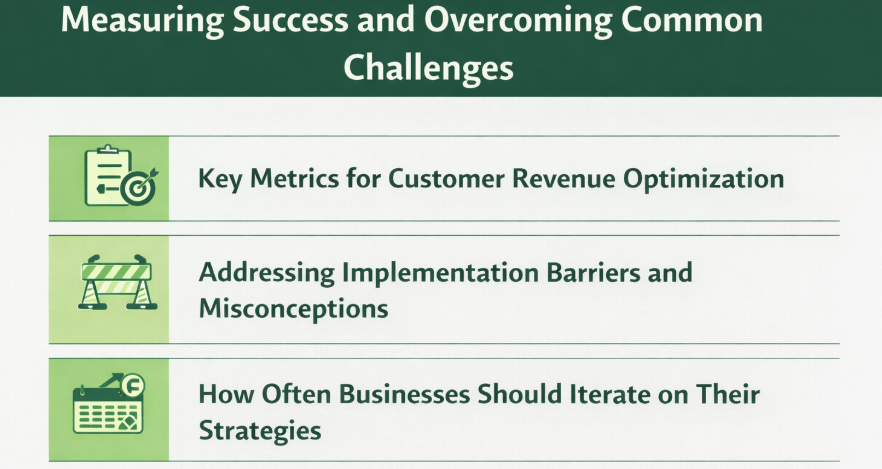
Implementing a revenue optimization strategy is an ongoing process that requires careful measurement and adaptation. To gauge success, you must track the right success metrics and use data analytics to understand performance. However, businesses often face challenges, such as implementation barriers or internal resistance, that can hinder progress.
Overcoming these common hurdles is just as important as implementing best practices. By understanding potential pitfalls and establishing clear key performance indicators (KPIs), you can ensure your optimization efforts are effective and sustainable. The following sections will detail how to measure success and navigate the typical challenges.
To measure the success of your revenue optimization strategy, you must track key metrics that provide a holistic view of your performance. These KPIs go beyond simple sales figures to reflect profitability, customer loyalty, and efficiency. Regularly monitoring these metrics through data analytics will help you understand what's working and where adjustments are needed.
Key metrics include both customer acquisition and customer retention indicators. While it's important to attract new customers, retaining existing ones is often more profitable. Therefore, metrics like Customer Lifetime Value (CLV) and churn rate are critical. Other important indicators include Average Order Value (AOV), which shows how much customers spend per transaction, and conversion rate, which measures the effectiveness of your sales funnel.
One of the most common challenges in customer revenue optimization is overcoming implementation barriers. These can range from a lack of the right technology to internal resistance to change. A common misconception is that optimization is a one-time project, when in reality it is an ongoing process that requires a cultural shift.
Another significant hurdle is data-related. Many companies struggle with data silos, where different departments do not share information, making it impossible to get a complete view of potential customers. Others may wait for "perfect" data before starting, which can lead to stagnation. It’s better to initiate optimization with the data you have and make iterative improvements.
To overcome these challenges, focus on a few best practices:
Revenue optimization is not a "set it and forget it" strategy. The market landscape is constantly evolving, with new market trends, competitor actions, and shifts in customer preferences. To remain effective, businesses must commit to continuous strategy iteration and refinement. What worked yesterday might not work tomorrow.
The ideal frequency for reviewing your strategies depends on your industry and market volatility. However, a good rule of thumb is to conduct regular reviews, monthly or quarterly, to analyze performance data and identify areas for improvement. This allows for timely adjustments, ensuring your strategies remain relevant and effective.
This ongoing process of analysis and adjustment is crucial for sustainable growth. By regularly turning data into actionable insights, you can stay agile and responsive. Adopting this mindset of continuous improvement ensures that your revenue optimization efforts are not only effective in the short term but also drive long-term profitability and resilience.
Also Read: How Metalbird drove consistent growth across 8 stores.
One of the most direct ways to boost revenue is by increasing the average order value, and product bundling is a proven strategy for achieving this. Kefi's Product Bundle Builder empowers ecommerce businesses to create and manage compelling bundles that encourage customers to purchase more. By intelligently grouping complementary products, you can enhance the customer experience while driving revenue growth. Our tool makes it easy to implement dynamic bundles that appeal to different customer segments.
Kefi provides the actionable insights you need to optimize your bundling and upselling strategies. You can test different combinations, analyze performance, and refine your offers to maximize conversion rates. Instead of static, one-size-fits-all bundles, you can create dynamic offers that adapt to customer behavior. This level of personalization makes your recommendations feel more like a helpful service than a sales pitch, fostering trust and encouraging larger purchases.
Book a Demo to see how Kefi Product Bundle Builder works.
In conclusion, mastering revenue optimization strategies is essential for modern businesses seeking sustainable growth and competitive advantage. By focusing on data-driven decision-making, dynamic pricing, and personalized recommendations, you can create a robust plan that addresses revenue drivers and potential bottlenecks. Implementing effective tactics across your sales funnel and leveraging AI tools will enhance your ability to adapt and thrive in an ever-evolving market. As we’ve seen through numerous real-world examples, the right approach to revenue optimization not only boosts financial performance but also fosters customer loyalty. If you’re ready to take your business to the next level, consider exploring tailored revenue optimization solutions to unlock your full potential.
Common mistakes include relying on static pricing, ignoring customer feedback, and making decisions without data. Many companies also fail to adapt to changing market conditions or overlook operational efficiency, leading to missed revenue opportunities and eroded profit margins.
Pricing directly impacts revenue optimization by determining the profitability of each sale. Strategies like dynamic pricing allow businesses to set the right price based on market demand and consumer behavior, maximizing revenue growth. An effective pricing strategy balances competitiveness with profitability.
Revenue optimization pricing focuses on adjusting product prices based on demand, customer behavior, and market conditions. This strategy helps businesses set competitive prices while maximizing profit margins and improving overall sales performance.
Revenue optimization payments involve offering flexible, convenient options that make it easier for customers to complete purchases. By reducing friction during checkout, businesses can increase conversions and generate higher revenue.
Common revenue optimization techniques include dynamic pricing, personalized offers, upselling, cross-selling, and data-driven marketing strategies. These methods help businesses increase revenue by maximizing the value of each customer interaction.
Pricing and revenue optimization strategies combine smart pricing models with data insights to maximize profitability. By analyzing demand patterns, customer segments, and competitor pricing, businesses can make better decisions that increase revenue while staying competitive.
Customer revenue optimization focuses on increasing the value generated by each customer through strategies such as personalized offers, loyalty programs, and targeted promotions. The goal is to improve customer lifetime value while maintaining strong relationships.
AI business revenue optimization uses artificial intelligence to analyze large volumes of data and identify patterns in customer behavior, pricing trends, and sales performance. This allows businesses to make faster and more accurate decisions to maximize revenue.
AI-driven revenue optimization helps companies predict demand, automatically adjust pricing, and recommend the best offers for different customer segments. By using data-driven insights, businesses can optimize their revenue strategies and improve overall profitability.
.svg)
