

In the competitive landscape of online retail, turning a one-time shopper into a lifelong advocate is the ultimate goal. An Ecommerce loyalty program is a powerful marketing strategy designed to achieve just that. By rewarding repeat business, you not only boost retention but also cultivate a community of loyal customers who feel valued and connected to your brand. This guide will explore how to design, implement, and optimize a loyalty program that drives sustained growth and strengthens customer relationships.
An Ecommerce loyalty program is a marketing system designed to reward returning customers and encourage repeat purchases. These rewards programs are structured to offer incentives like discounts, points, or exclusive access in exchange for continued business. The primary objective is to build a stronger, more lasting relationship with your customer base, transforming casual online shopping into a more engaging and rewarding customer experience. By making customers feel appreciated, you give them a compelling reason to choose your brand over competitors.
To be successful, a loyalty program must be seamlessly integrated into the customer journey. Key features include a simple, easy-to-understand structure, mobile-friendly accessibility, and personalized rewards that resonate with individual shoppers. Whether it's a points-based system where every dollar spent earns a reward or a tiered program with escalating benefits, the goal is to provide tangible value. This approach not only incentivizes loyal customers to spend more but also provides you with valuable data to refine your marketing efforts.

E-commerce loyalty programs enhance customer retention by rewarding repeat purchases, fostering emotional connections, and increasing customer lifetime value. They can also provide valuable insights into customer behavior, allowing for personalized marketing strategies that further engage shoppers and encourage brand loyalty.
A primary advantage of a loyalty program is its strong impact on customer retention. Many consumers are more likely to continue purchasing from brands that offer rewards or loyalty benefits because these programs make them feel valued beyond individual transactions. By providing incentives for repeat purchases, businesses encourage customers to return rather than explore competitors, gradually turning occasional buyers into long-term loyal customers.
Loyalty programs are highly effective at increasing customer lifetime value because members tend to purchase more frequently and spend more over time. Customers are often motivated to reach reward milestones or unlock exclusive benefits, which encourages continued spending. This approach helps businesses build stronger long-term relationships while generating higher overall revenue from each customer.
Ecommerce loyalty programs improve customer engagement by creating more opportunities for interaction beyond the initial purchase. Customers can earn rewards for actions such as writing reviews, referring friends, or sharing content on social media, which keeps them actively involved with the brand. These interactions strengthen the connection between the customer and the business while keeping the brand top of mind.
A well-designed loyalty program encourages customers to spend more by offering rewards tied to spending thresholds or exclusive benefits. For example, bonus points, free shipping, or special perks after reaching a certain cart value can motivate shoppers to add more items to their orders. Customers are often willing to increase their purchase size when they see that spending slightly more can unlock better rewards. Over time, these incentives help increase average order value while encouraging consistent repeat purchases from loyal customers.
Also Read: How Metalbird drove consistent growth across 8 stores.

A successful loyalty program is built on a foundation of clarity, accessibility, and value. The program structure must be simple enough for customers to understand how to earn loyalty points and which exclusive perks they can redeem. Leveraging customer data to offer personalized rewards adds another layer of sophistication, making members feel uniquely valued.
One of the most important features of a successful loyalty program is a simple and clear structure. Customers should easily understand how to earn loyalty points and redeem them for rewards. When the rules are transparent and straightforward, customers are more likely to participate and remain engaged with the program. Clearly explaining how many points customers earn on purchases and which rewards they can unlock helps create a smooth, trustworthy experience that encourages long-term participation.
Mobile accessibility is essential for modern ecommerce loyalty programs because many customers shop using smartphones. A successful program should be optimized for mobile devices and integrated directly into the store's website or mobile app. Customers should be able to check their points balance, view rewards, and redeem benefits without leaving the shopping experience. This seamless integration makes participation easier and ensures the loyalty program enhances the overall customer journey.
Personalization plays a major role in making loyalty programs more engaging and relevant for customers. By analyzing customer data such as purchase history and preferences, businesses can offer personalized rewards, targeted discounts, or exclusive offers that match individual interests. Even small personalized gestures like birthday rewards or early access to products can make customers feel valued. These tailored experiences help strengthen emotional connections with the brand and increase long-term loyalty.
An effective ecommerce loyalty program should support omnichannel engagement, allowing customers to interact with the brand across multiple platforms, including websites, mobile apps, physical stores, and social media. Customers should be able to earn and redeem rewards regardless of where they shop, ensuring a consistent experience across all touchpoints. This unified approach makes the program more convenient and helps brands maintain stronger relationships with customers throughout their entire shopping journey.
Also Read: How The Chosen Cultivated a Community through Curated Merchandise Kits.

Choosing the right customer loyalty program is crucial to aligning your loyalty strategy with your business goals and customer expectations. There are several proven models for rewards programs, each with unique strengths. Understanding these options will help you design a program that effectively incentivizes and retains your customers.
Points-based loyalty programs are one of the most common and straightforward reward programs. Customers earn loyalty points for specific actions, primarily making purchases, but also for activities like writing reviews or referring friends. These points act as a form of currency that can be redeemed for discounts, free products, or other rewards.
The simplicity of this model is its greatest strength. Customers can easily understand the value proposition: spend more to earn more. This direct link between spending and rewards effectively encourages repeat purchases and can increase average order value.
To keep the program exciting, you can offer bonus points during promotional periods or for purchasing specific items. This flexibility allows you to drive specific behaviors and keep customers engaged over the long term.
A tiered-based loyalty program effectively cultivates brand loyalty by incentivizing customers to ascend through various levels of status and rewards. By offering exclusive perks such as early access to new products, bonus points on purchases, or deeper discounts at higher tiers, these programs foster deeper customer engagement. This approach not only increases the average order value but also encourages repeat purchases, as members strive to unlock further benefits, thereby enhancing overall customer retention and lifetime value.
To maximize the impact of tiered loyalty strategies, businesses should meticulously analyze customer behavior and preferences. Tailoring rewards to reflect the unique demographics of program members allows for a more personalized shopping experience, fostering emotional connections.
The structured progression from entry-level to higher tiers creates excitement and motivates participation, driving sustained relationships with the most loyal customers while simultaneously elevating sales performance.
Subscription or paid membership programs require customers to pay a recurring fee, either monthly or annually, in exchange for instant access to a suite of exclusive perks. Giants like Amazon Prime and Walmart+ exemplify this model. The key is to offer benefits so valuable that the membership fee feels like a bargain.
Common perks include free and fast shipping, exclusive discounts, early access to sales, and access to premium content or services. By paying an upfront fee, customers make a conscious commitment to your brand, which significantly increases their likelihood of repeat purchases and maximizes the value of their membership.
This model is particularly effective for businesses with a broad product range and a large customer base. It creates a predictable revenue stream and fosters an incredibly loyal customer base deeply integrated into your brand's ecosystem.
Value-based loyalty programs go beyond transactional rewards to build a deeper, emotional connection with customers. These initiatives align your brand with a cause or value that resonates with your target audience. Instead of redeeming points for discounts, customers might have the option to donate their rewards to a charity.
This approach fosters loyalty by appealing to customers' values and sense of purpose. When shoppers feel that their purchases contribute to a greater good, their relationship with the brand becomes more meaningful. The Body Shop's charity-based rewards are a great example of this strategy in practice.
While programs like Sephora's Beauty Insider focus on product-related perks, a value-based model builds brand love on a different level. By creating a shared sense of mission, you can cultivate a community of loyal customers who are connected to your brand for reasons that transcend price and product.
A hybrid loyalty program combines elements from two or more different program types to create a customized solution. For example, a program might feature a points-based system within a tiered structure, allowing members to earn points on purchases as they strive to unlock the exclusive benefits of higher tiers.
This approach offers maximum flexibility, enabling you to tailor the program to your specific business goals and customer preferences. You can create a multi-faceted experience that appeals to a broader range of customers, from casual shoppers to your most dedicated fans.
By carefully blending different mechanics, you can design a unique program that stands out from the competition. A well-executed hybrid model can deepen customer relationships and provide multiple avenues for engagement, creating a powerful engine for long-term business growth.
Also Read: How to Create a Loyalty Program on Shopify for Growth?
Studying successful loyalty programs from leading brands provides valuable insights into what drives customer engagement and retention. Companies like Sephora, Amazon, and Starbucks have mastered the art of creating rewards systems that not only offer tangible value but also foster a strong sense of community and brand allegiance.
By examining their strategies, we can identify common threads: simplicity, personalization, and a compelling mix of rewards. These programs excel because they understand their customers' motivations and continuously refine their offerings to exceed expectations, leading to impressive results in key metrics like repeat purchase rates and customer lifetime value.

Source: Sephora
Sephora's Beauty Insider program is a well-known example of a successful tiered loyalty program that encourages repeat purchases through progressive rewards. The program divides customers into three tiers, Insider, VIB, and Rouge, based on their annual spending, creating a gamified shopping experience that motivates customers to spend more to unlock better benefits. Members earn one point for every dollar spent, which can be redeemed for products through the Rewards Bazaar.
As customers move up the tiers, they receive additional perks, including seasonal savings events, more sample options, free shipping, early access to new products, exclusive gifts, and special events. This tier-based structure makes customers feel recognized at every level while clearly rewarding higher loyalty with more valuable benefits.

Source: Amazon Prime
Amazon Prime is the definitive example of a successful paid membership program. For an annual fee, members gain access to an extensive suite of benefits, with free two-day (and often faster) shipping being the cornerstone. This single perk fundamentally changes shopping behavior, removing a major friction point and encouraging impulse buys.
Beyond shipping, Prime offers a vast ecosystem of value, including the Prime Video streaming service, Prime Music, and exclusive deals during events like Prime Day. This multi-faceted approach ensures that the membership provides value far beyond just online shopping, deeply integrating Amazon into the daily lives of its subscribers.
The program works because the perceived value of the benefits far exceeds the cost of the membership. This creates an incredibly sticky ecosystem where members are highly motivated to consolidate their purchases with Amazon to maximize their investment, turning them into highly loyal repeat customers.

Source: Starbucks
The Starbucks Rewards program is a prime example of a loyalty system that leverages a mobile app to create a seamless and engaging customer experience. Members earn "Stars" for every purchase made through the app, which can then be redeemed for free drinks and food. The program is designed to encourage frequent purchases and mobile ordering.
The integration with the Starbucks mobile app is key to its success. The app makes it incredibly easy to order ahead, pay, and track rewards, enhancing convenience and driving adoption. The gamified nature of earning Stars, combined with personalized offers and bonus Star challenges, keeps customers consistently engaged.
This customer loyalty program excels at turning daily habits into a rewarding experience. By making the process of earning and redeeming rewards effortless and fun, Starbucks has built one of the most successful loyalty programs in the world, fostering a massive community of devoted fans who choose Starbucks day after day.

Source: Zappos VIP
The Zappos VIP program is a free loyalty program that focuses on enhancing the brand's legendary customer service. Instead of a complex, tiered structure, Zappos offers a simple, accessible VIP program in which all members receive the same top-tier privileges. This creates a sense of inclusivity and makes every customer feel valued.
Members earn points for purchases, which can be redeemed for VIP Codes (discounts). However, the standout exclusive benefits are service-oriented, such as free expedited shipping with no minimum order and "rapid refunds," in which the return process is initiated as soon as the courier scans the package. These perks directly address common pain points in online shopping.
Zappos VIP works because it doubles down on what the brand is already known for: exceptional customer service. By rewarding its loyal customers with even better service, Zappos strengthens its core value proposition and builds deep, lasting relationships based on trust and convenience.

Source: Walmart+
Walmart+ is a paid membership program designed to compete directly with Amazon Prime by blending online and in-store benefits. For a monthly or annual fee, members receive perks such as free shipping with no minimum order on items from Walmart.com and free same-day delivery on groceries from their local store.
The program's strength lies in its hybrid approach, catering to both online shoppers and those who frequent Walmart's physical stores. Additional benefits include fuel discounts at Walmart and partner gas stations, as well as early access to major sales events and new products. This comprehensive suite of benefits is designed to save members both time and money.
Walmart+ is effective because it leverages Walmart's massive physical retail footprint to offer a unique value proposition that pure-play eCommerce retailers cannot match. By providing compelling, exclusive offers and conveniences for everyday needs, Walmart+ aims to become an indispensable part of its members' lives.

Launching a loyalty program is only the first step. To truly boost customer retention, you need to manage and optimize it actively. Proven strategies involve creating a sense of progression, personalizing the experience, and making your members feel special. The goal is to reward customers in ways that are meaningful to them. By consistently demonstrating value and appreciation, you can transform your loyalty program into a powerful engine for building lasting customer relationships.
A tiered loyalty program is one of the most effective ways to encourage repeat purchases because it gives customers clear goals to work toward. By creating levels such as Bronze, Silver, and Gold, businesses motivate shoppers to increase their spending in order to unlock better rewards and exclusive perks. This structure makes the shopping experience more engaging while recognizing loyal customers with benefits like free shipping, early access to products, or special discounts. When customers see a clear path to better rewards, they are more likely to return and continue purchasing from the same brand.
Personalizing loyalty rewards based on customer purchase behavior helps make the program more relevant and valuable. By analyzing data such as buying patterns, product preferences, and browsing activity, businesses can send targeted offers that match each customer's interests. For example, shoppers who frequently buy from a certain category can receive special discounts or early access to similar products. This level of personalization shows customers that the brand understands their needs and preferences, thereby strengthening emotional connections and encouraging long-term loyalty.
Offering exclusive discounts and perks specifically for loyalty members helps create a sense of exclusivity and appreciation. These benefits may include early access to major sales, member-only flash deals, or special access to limited edition products. When customers feel that they are receiving unique advantages that regular shoppers cannot access, they are more motivated to remain active in the loyalty program. This approach not only improves retention but also encourages customers to engage more frequently with the brand.
Customer data collected through a loyalty program can provide valuable insights into purchasing behavior and engagement patterns. Businesses can analyze this information to understand which rewards customers prefer and which incentives encourage repeat purchases. Using these insights, companies can continuously refine their loyalty programs by offering more relevant rewards and targeted promotions. Personalized communication based on this data also improves customer relationships and ensures the program remains effective over time.
Recognizing important customer milestones helps make loyalty programs feel more personal and rewarding. Brands can celebrate events such as birthdays, membership anniversaries, or spending milestones by offering bonus points, exclusive discounts, or small gifts. These gestures show appreciation and make customers feel valued beyond their purchases. By acknowledging these special moments, businesses can strengthen emotional connections with customers and increase long-term engagement with their loyalty programs.
Encouraging social engagement through loyalty programs is a powerful way to increase brand visibility and customer interaction. Businesses can reward customers with points for activities such as following social media accounts, sharing posts, or writing product reviews. Incentivizing user-generated content like photos, testimonials, or detailed reviews also helps build trust among potential buyers. When customers feel rewarded for promoting or engaging with the brand, they become active participants in the brand community while helping attract new customers.
Also Read: How a Premier Portuguese Winery Cultivated a +16.80% AOV Lift.
Choosing the right eCommerce reward app is critical to successfully implementing your loyalty strategy. The best platforms integrate seamlessly with your online store, offer robust customization options, and provide detailed analytics to help you measure and optimize your loyalty program.
These tools handle the technical heavy lifting, from tracking points and managing tiers to automating rewards and communication. Whether you're looking to build a simple points-based system or a complex, multi-tiered program, there is an app designed to meet your needs and help you grow your business.
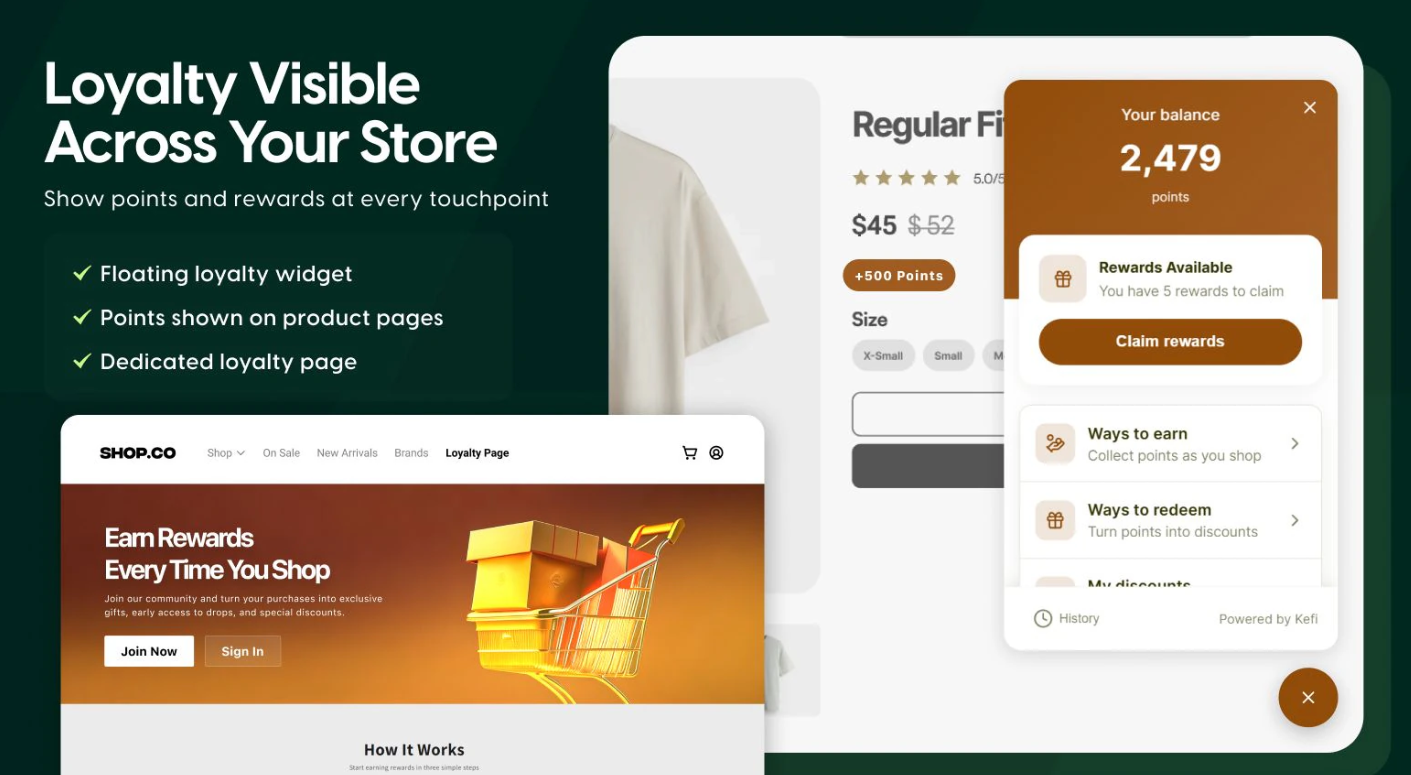
Source: Kefi Loyalty Program, VIP Tier
Kefi's loyalty rewards system strengthens eCommerce engagement by giving merchants flexible ways to reward customers for their actions and purchases. Through the Kefi Loyalty Program, businesses can offer points-based rewards, discounts, free products, or special perks that customers can redeem after completing actions such as purchases, sign-ups, or other engagement activities. These rewards create a clear incentive for customers to continue interacting with the store and make repeat purchases.
By combining loyalty rewards with personalized offers and curated incentives, merchants can make the shopping experience more engaging while encouraging higher spending and stronger brand relationships. This approach not only improves customer retention but also helps increase overall revenue by motivating shoppers to stay active in the loyalty ecosystem and redeem rewards over time

Source: LoyaltyLion Rewards & Referral
LoyaltyLion offers a powerful rewards and referral solution designed to enhance customer relationships through customizable loyalty programs. This platform enables eCommerce stores to reward customers not only for purchases but also for engagement activities, such as sharing on social media or leaving product reviews. By creating tiered loyalty structures, businesses can motivate repeat purchases and foster brand loyalty. Furthermore, LoyaltyLion's referral feature incentivizes loyal customers to refer new clientele, enriching the customer base and enhancing lifetime value and retention through exclusive perks and bonuses.

Source: Rise.ai: Gift Cards & Store Credit
Rise.ai specializes in re-engagement solutions, focusing on gift cards, store credit, and loyalty programs. The platform's unique angle is its ability to proactively issue rewards and store credit to customers, which can be a powerful tool for winning back at-risk shoppers or rewarding your loyal customer base.
Instead of a traditional points system, Rise.ai lets you send cashback rewards as store credit directly to customer accounts. This simplifies the redemption process and encourages immediate repeat purchases. The platform's workflow automation makes it easy to send rewards for birthdays, after a certain number of purchases, or as part of a win-back campaign.
Rise.ai is an excellent choice for businesses that want to use store credit as a primary loyalty mechanic. Its focus on proactive rewards and easy-to-use gift card solutions makes it a versatile tool for building a modern loyalty program.

Source: Kash: Cashback & Store Credits
Kash is a loyalty and rewards platform that focuses on cashback and gift card-based incentives. It enables eCommerce businesses to reward customers with store credit after a purchase, which they can use on future orders. This cashback model is simple for customers to understand and highly effective at driving repeat business.
The platform enables automated reward delivery, so customers receive their cashback or gift card with no manual effort on your part. You can set up rules to trigger rewards based on order value, specific products purchased, or customer-specific events, such as birthdays.
In the competitive eCommerce industry, providing tangible value is key. Kash's focus on cashback provides a straightforward incentive that directly impacts a customer's wallet. This makes it a compelling option for brands looking for a simple yet powerful way to offer special offers and build loyalty.
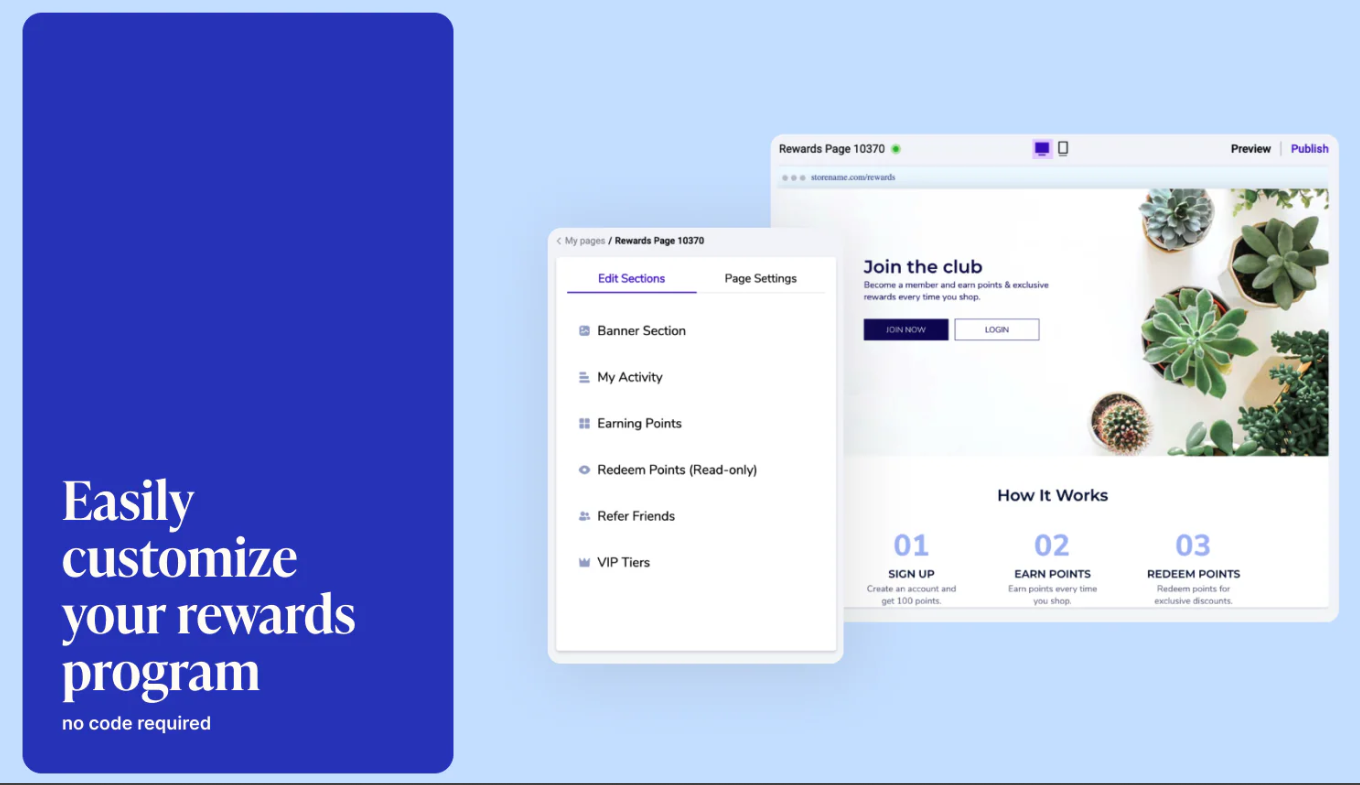
Source: Yotpo Loyalty & Referrals
Yotpo Loyalty & Referrals is part of a larger eCommerce marketing platform that includes solutions for product reviews, visual UGC, and SMS marketing. This integration is Yotpo's biggest strength, allowing you to create a cohesive loyalty strategy that rewards customers for a wide range of engagement activities.
With Yotpo, you can build a customized program with over 14 unique campaigns that reward customers for everything from purchases and referrals to writing product reviews and following you on social media. You can design points-based or tiered programs that are fully branded to match your store's look and feel.
By combining loyalty with other marketing functions like reviews and SMS, Yotpo helps you create a powerful, synergistic ecosystem. This holistic approach enables you to build a comprehensive loyalty strategy that drives retention, builds community, and accelerates growth.
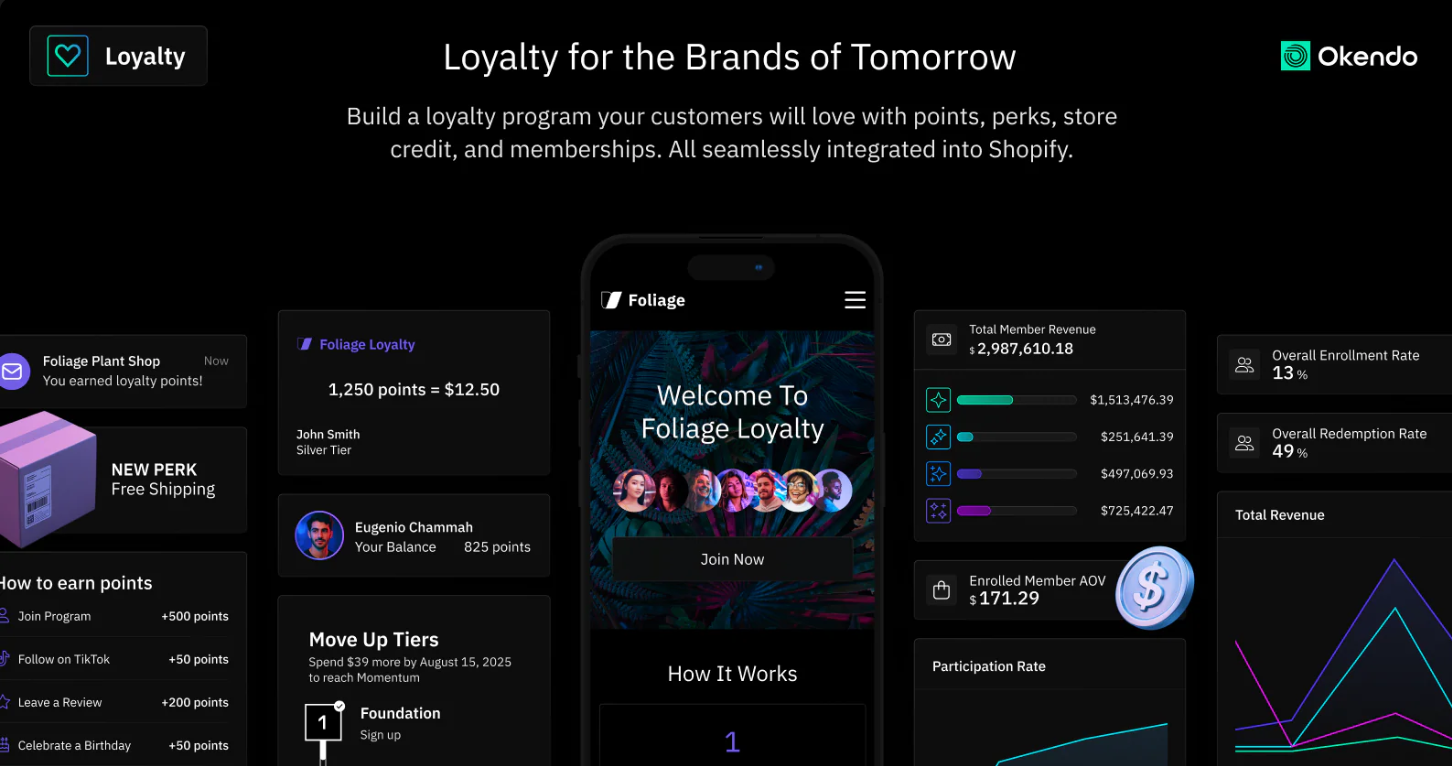
Source: Okendo: Reviews & Loyalty
Okendo is a customer marketing platform best known for its advanced product reviews capabilities, but it also offers a robust loyalty module. This combination makes it an excellent choice for brands that want to heavily incentivize the collection of high-quality user-generated content, including reviews, photos, and videos.
Using Okendo, you can reward loyal customers with points for submitting reviews and other forms of UGC. The platform's "review request" emails can be customized to highlight the loyalty points customers will earn, increasing submission rates. This UGC then serves as powerful social proof, helping to convert new shoppers.
Okendo's loyalty features are designed to work in concert with its review engine, creating a virtuous cycle: loyal customers generate content, which attracts new customers, who can then be enrolled in the loyalty program. This focus on customer engagement makes it a strategic tool for building both trust and retention.

Source: Joy Loyalty Program & Rewards
Joy is a user-friendly loyalty and rewards platform that aims to make it simple and accessible to create rewards programs for merchants of all sizes. It offers a free plan to get started, with paid tiers that unlock more advanced features. The platform focuses on creating a delightful experience for loyalty program members.
With Joy, you can easily set up a points-based program where customers earn points for purchases and other engagement actions. These points can be redeemed for discounts, free shipping, or exclusive rewards. The app provides a clean, customizable on-site interface for members to track their points and rewards.
Joy's approach is to deliver happiness to both merchants and customers. By providing an easy-to-manage system and a pleasant user experience, it helps businesses foster positive relationships with their customers, turning one-time buyers into joyful, repeat shoppers.
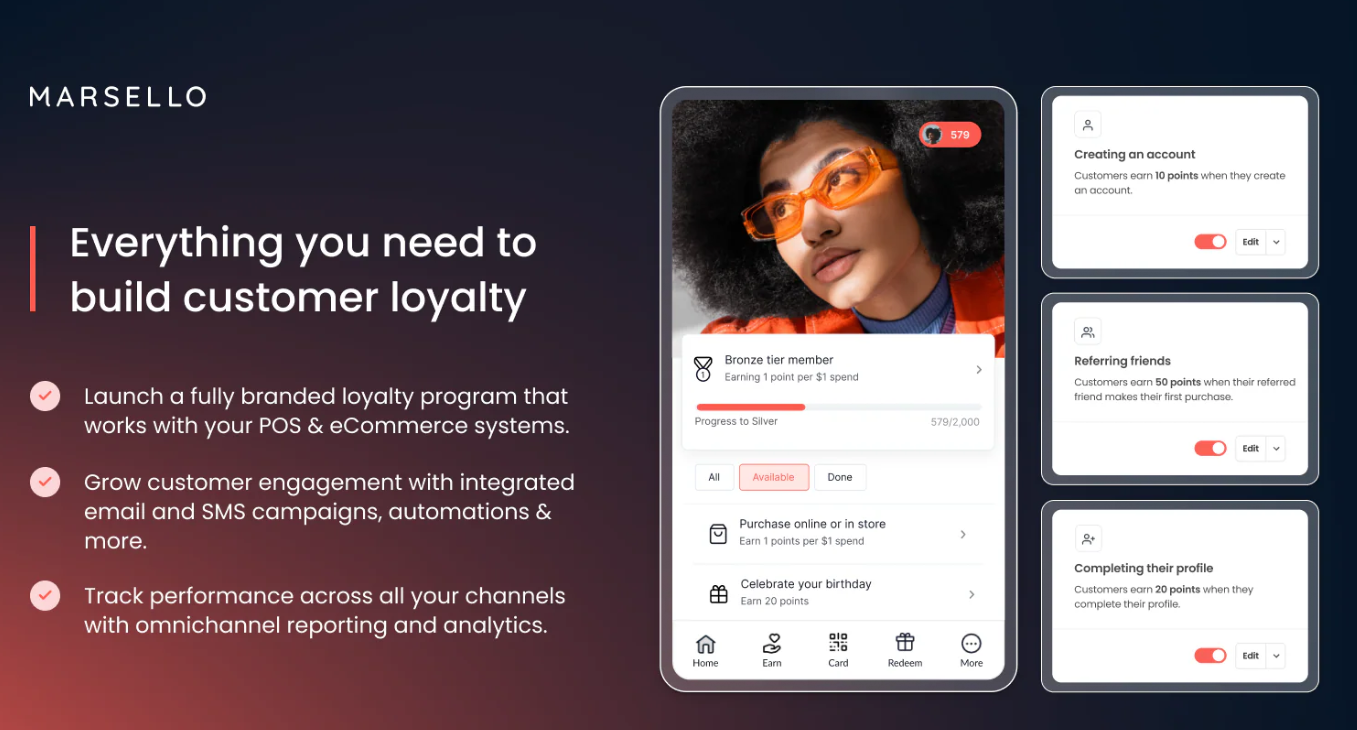
Source: Marsello
Marsello combines a loyalty program with email and SMS marketing automation, positioning itself as an all-in-one platform for customer retention. It is designed for omnichannel retailers, seamlessly connecting online and in-store customer data and loyalty activity.
The platform allows you to create a customized loyalty program with points and tiers that reward customers for purchases and engagement. Where Marsello shines is in its ability to use loyalty data to trigger automated marketing campaigns. For example, you can send an email to a customer who is close to reaching the next loyalty tier, encouraging them to make another purchase.
By integrating loyalty with marketing automation, Marsello helps you proactively engage your customers and drive repeat business. This data-driven approach allows you to send highly targeted and timely communications that enhance the customer experience and boost sales.
Also Read: How Lifetime Technologies went from a Single Additive to System Kits.
Winning with an Ecommerce loyalty program using the Kefi Loyalty Program VIP Tier involves rewarding your most valuable customers with exclusive benefits that encourage continued engagement and repeat purchases. By creating multiple VIP tiers, merchants can motivate customers to spend more in order to unlock better rewards, special perks, and premium experiences. This tier-based structure adds a sense of progression and recognition, making loyal customers feel appreciated as they move to higher levels.
With the Kefi Loyalty Program VIP Tier, businesses can offer exclusive discounts, early access to new products, special rewards, or members-only offers to higher-tier customers. These incentives not only strengthen customer relationships but also encourage shoppers to increase their spending to maintain or upgrade their tier status. By rewarding loyalty with meaningful perks, merchants can boost customer retention, increase average order value, and build a more engaged customer community using the Kefi Loyalty Program.
Book a Demo to see how Kefi Product Bundle Builder works.
Implementing an eCommerce loyalty program can significantly enhance customer retention and engagement. By understanding the diverse types of loyalty programs and their essential features, businesses can tailor their approach to meet customer needs effectively. From tiered reward systems to personalized offers, there are numerous strategies to foster a loyal customer base. The examples of successful brands showcase the potential impact of a well-structured loyalty program. As you embark on this journey, remember to leverage customer data and feedback to refine your strategy continually. Don't miss out on the opportunity to cultivate lasting relationships with your customers. Let's take your eCommerce business to new heights.
Avoid creating a program with a complicated program structure that confuses customers. A poor customer experience, where rewards are hard to earn or redeem, is another major pitfall. A lack of careful planning and poor customer support can also undermine the effectiveness of your Ecommerce loyalty program.
An ecommerce loyalty program rewards customers for repeat purchases and engagement, encouraging them to return to the same store rather than competitors'. By offering points, discounts, or exclusive perks, businesses can build stronger relationships and increase long-term customer value.
Popular ecommerce loyalty program ideas include point-based rewards, VIP tiers, referral bonuses, birthday rewards, and early access to sales. These ideas help keep customers engaged while motivating them to make repeat purchases.
Ecommerce customer loyalty helps businesses build long term relationships with shoppers who repeatedly purchase from the same brand. Loyal customers often spend more, trust the brand, and are more likely to recommend the store to others.
The best ecommerce loyalty programs often combine points-based rewards, tiered memberships, and exclusive perks for loyal customers. These programs focus on rewarding repeat purchases while creating a more engaging and personalized shopping experience.
A loyalty program for ecommerce motivates customers to return by offering rewards such as points, discounts, or exclusive offers for each purchase. Over time, these incentives encourage shoppers to continue buying from the same brand.
Loyalty programs for ecommerce business growth help brands retain existing customers while increasing engagement and repeat sales. By rewarding loyal shoppers, businesses can reduce customer acquisition costs and build stronger long-term relationships.
Some major benefits of ecommerce loyalty program strategies include improved customer retention, higher average order value, stronger brand loyalty, and better customer engagement. These programs also provide valuable insights into customer behavior.
Examples of ecommerce loyalty programs include point-based rewards, VIP tier systems, referral reward programs, and membership-based perks. These programs encourage customers to stay engaged while rewarding them for ongoing support.
E-commerce membership programs offer exclusive benefits such as special discounts, free shipping, or early access to products for subscribed members. These perks create a sense of exclusivity that encourages customers to remain loyal to the brand.
.svg)
