
In the world of online shopping, getting a customer to add an item to their cart is a significant step. However, a large percentage of these potential sales are never completed. This phenomenon, known as shopping cart abandonment, is one of the most persistent challenges for ecommerce businesses. The good news is that these lost sales are not gone forever. By implementing targeted cart recovery strategies, you can re-engage these high-intent shoppers, guide them back to their purchase, and significantly boost your revenue.
Abandoned cart recovery refers to the set of tactics and strategies online retailers use to persuade customers who have added items to their shopping cart but left the site without purchasing. The goal is to recover abandoned carts and convert them into completed sales. This process involves reaching out to these potential buyers through various channels, reminding them of the items they left behind, and encouraging them to finalize their order. It's a critical part of optimizing the customer journey and minimizing lost opportunities. Businesses that implement abandoned cart recovery methods have seen real results, such as significant increases in recovered sales, higher conversion rates, and improved overall revenue. Many online retailers report that sending timely reminders or offering incentives can help recover up to 10-20% of otherwise lost sales, demonstrating the effectiveness of these strategies.
These recovery campaigns often involve automated workflows. For example, abandoned cart recovery emails are automatically sent to shoppers after a set period. Best practices for these emails include a compelling subject line, images of the cart items, a clear call-to-action, and, sometimes, an incentive such as a discount. By systematically addressing the high cart abandonment rate, businesses can turn a point of friction into a powerful revenue-generating channel, demonstrating a commitment to their customers and improving the overall shopping experience.
Also Read: What is Shopping Cart Optimization?
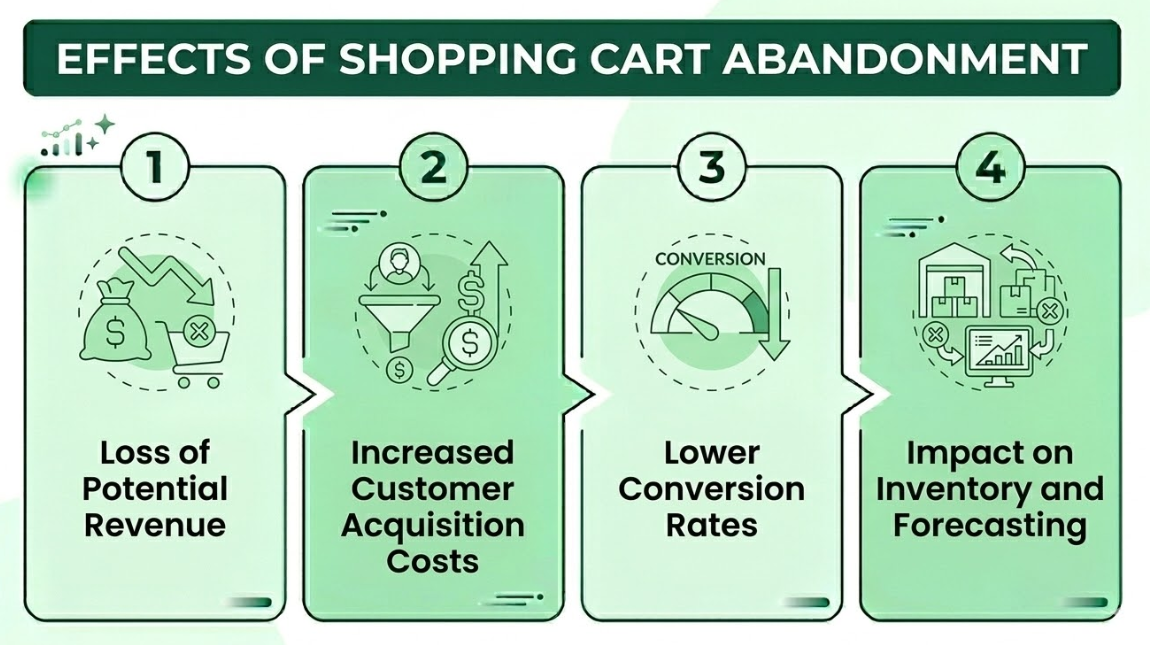
The impact of cart abandonment extends far beyond a single lost sale. It directly affects an ecommerce site's key performance indicators, from conversion rates to customer acquisition costs. Understanding these negative effects is crucial for prioritizing the strategies needed to optimize your checkout experience and secure long-term success. The following points will explore these consequences in greater detail.
The most direct effect of cart abandonment is the immediate loss of potential revenue. With average abandonment rates around 70%, businesses lose a substantial portion of possible sales. Each abandoned cart represents a missed opportunity not only for immediate revenue but also for cultivating repeat customers and increasing lifetime value. Recovering even a fraction of these lost sales can significantly boost overall revenue and business growth.
For WordPress stores, there are proven cart recovery strategies that can help address this loss. Popular tactics include using cart recovery plugins, sending automated email reminders to encourage customers to complete their purchase, and implementing targeted pop-ups or exit-intent offers. These strategies can effectively help reclaim lost revenue and are widely used by successful WordPress businesses.
Cart abandonment increases customer acquisition costs (CAC) because businesses invest heavily in attracting visitors who then leave without making a purchase. Marketing efforts, advertising, and content creation become less efficient when potential customers abandon carts at checkout. Reducing abandonment helps convert more of the traffic you already attract, lowering CAC and improving the return on marketing investment. To maximize sales, abandoned cart recovery messages should typically be sent in a sequence starting with the first message within an hour after abandonment, followed by one or two additional reminders over the next 24 to 48 hours. This approach helps recover potentially lost revenue without overwhelming prospective buyers.
High cart abandonment negatively impacts conversion rates, a key metric for online stores. When many visitors leave without completing a purchase, it signals friction in the user experience, such as complicated checkout processes or unexpected barriers. Optimizing the checkout journey reduces abandonment, improves conversion rates, and ensures more visitors become paying customers.
Cart abandonment can disrupt inventory management and demand forecasting. Items left in abandoned carts may temporarily appear unavailable to other buyers, creating a false sense of demand and inaccurate stock data. Reducing abandonment leads to cleaner sales data, more accurate forecasting, and better inventory management for your ecommerce business.
Also Read: How to Increase Average Order Value?
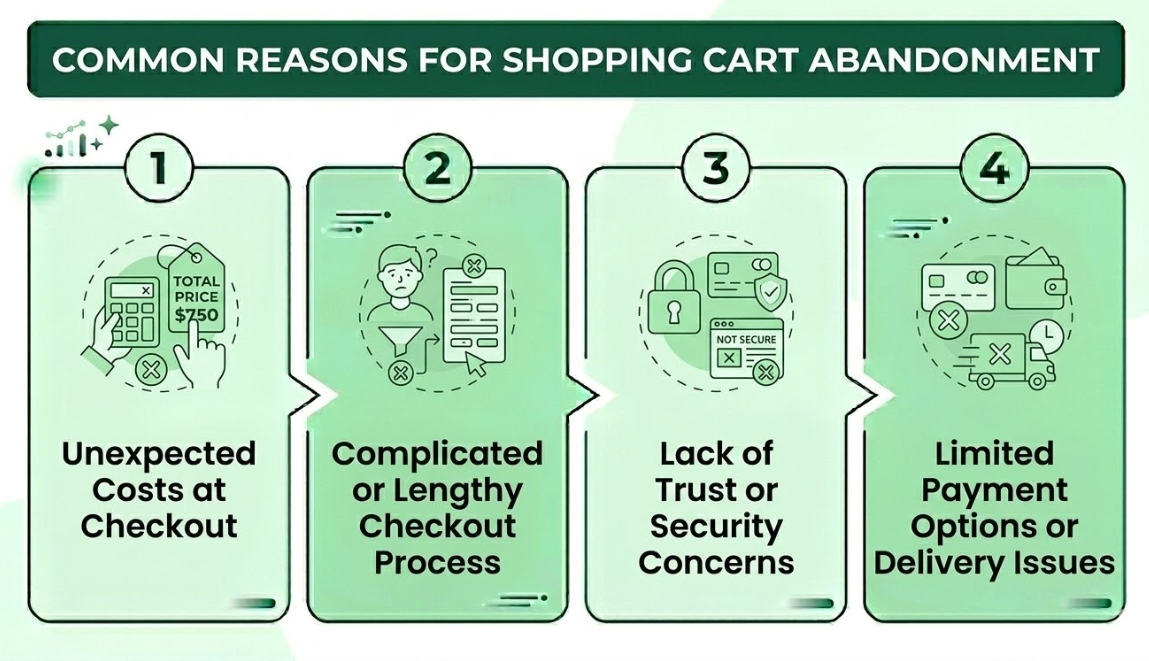
Shoppers abandon their carts for numerous reasons, often due to issues with the user experience during the final stages of a purchase. Identifying these common pain points is critical for any online business looking to improve its conversion rates. Understanding these specific barriers allows you to implement targeted solutions. The following sections will explore the most prevalent causes in detail.
One of the biggest reasons shoppers abandon carts is encountering unexpected fees at checkout. High shipping charges, taxes, or other hidden costs can make customers feel misled and prompt them to leave, either to find a better deal elsewhere or buy in-store. This breaks trust and causes hesitation, as the final price seems higher than anticipated. To prevent this, display all costs up front, offer a shipping calculator, and consider free-shipping thresholds to remove cost barriers and improve the user experience.
A long or confusing checkout process creates friction that drives customers away. Multiple steps, unnecessary form fields, and account-creation requirements can frustrate shoppers, disrupting their purchasing momentum. Simplifying checkout boosts confidence and conversion rates. To streamline the process, reduce form fields to essentials, provide a guest checkout option, and implement single-page checkouts to minimize clicks and make the journey seamless.
Security concerns are a major reason for cart abandonment, as customers hesitate to share payment information on sites they perceive as untrustworthy. Missing security logos, a lack of SSL, or an unprofessional design can trigger doubts. Building trust is critical, especially during checkout. Displaying recognizable trust badges, using SSL certificates with visible padlock icons, and incorporating customer reviews and testimonials can reassure shoppers and encourage them to complete the purchase.
Shoppers expect flexibility in payment and delivery options. If their preferred payment method credit card, a digital wallet, or a buy-now-pay-later option, is unavailable, they may abandon the cart. Similarly, slow or unclear delivery timelines create uncertainty. To address this, offer a variety of payment methods, clearly communicate shipping options and estimated delivery dates, and consider expedited shipping for customers needing faster fulfillment.
Also Read: How SportsStop Dominated the Diamond and Field with High-Velocity Bundling.
Reducing cart abandonment in ecommerce requires a multi-faceted approach that addresses every potential point of friction in the shopping journey. By implementing a series of best practices, you can create a seamless and trustworthy checkout experience that encourages customers to complete their purchases. The following sections provide a comprehensive list of actionable tactics to optimize your site and convert more browsers into buyers.
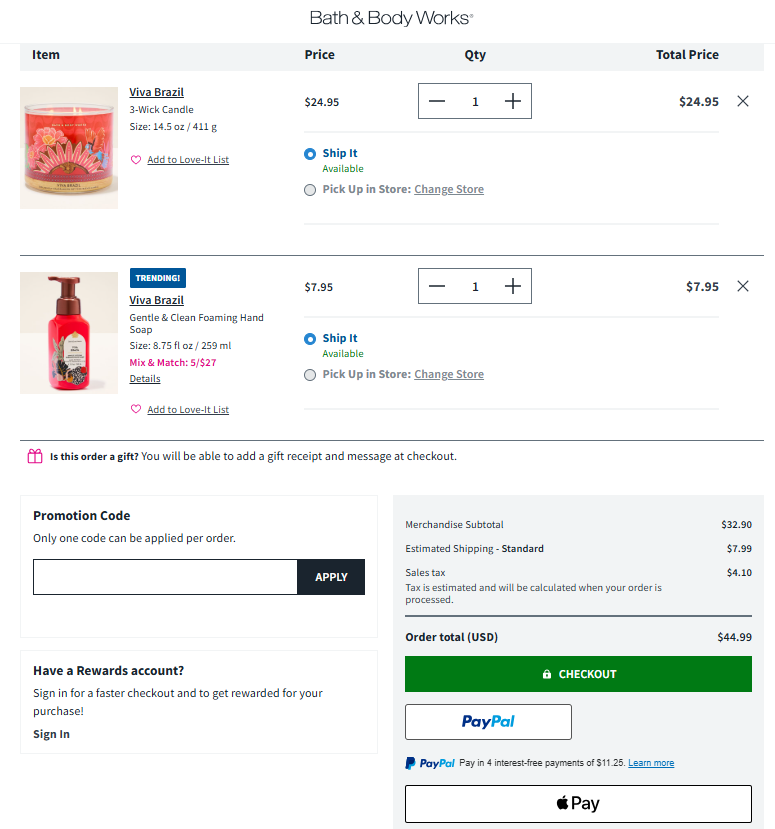
Source: Bath & Body Works
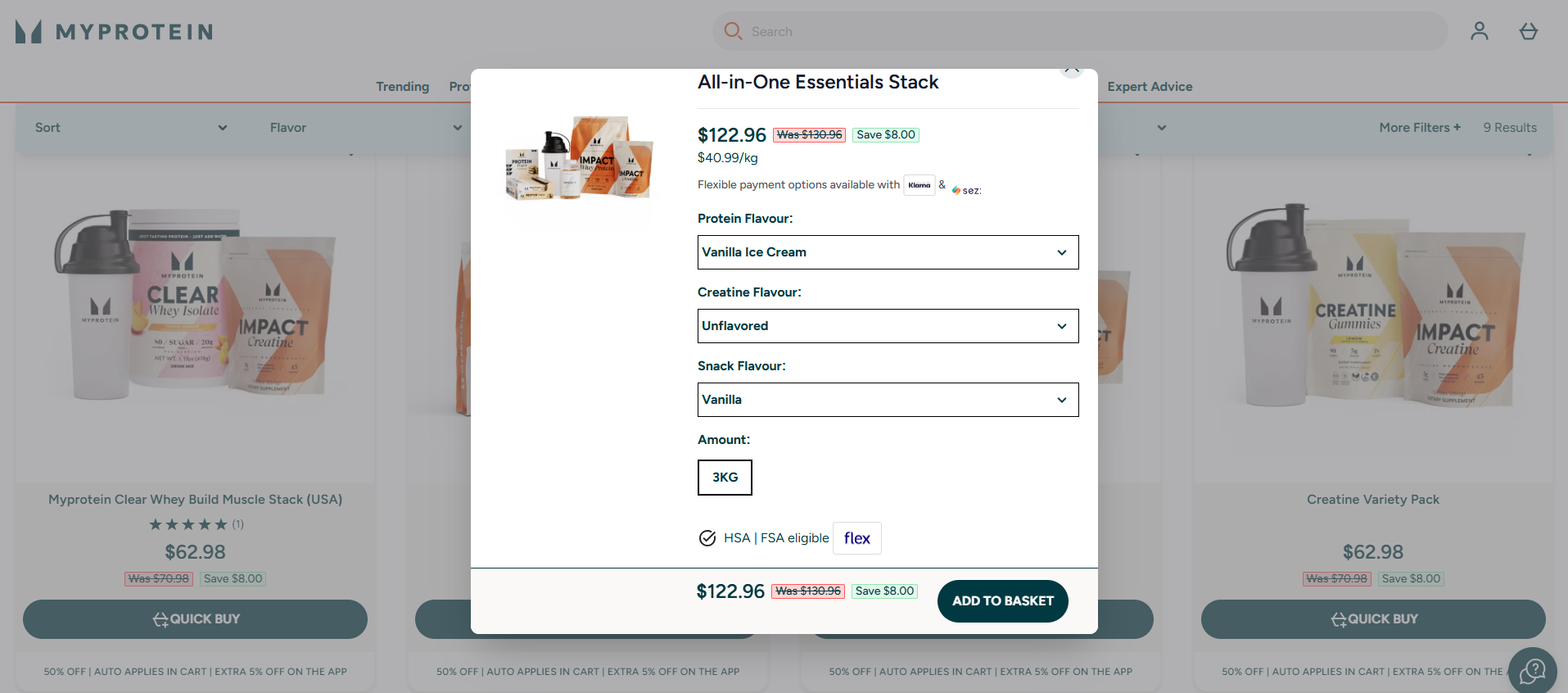
No one likes surprises when it comes to money. Unexpected costs, such as high shipping fees or last-minute taxes, are the leading cause of cart abandonment. To build trust and keep customers on the path to purchase, your pricing must be completely transparent from the very beginning.
When a customer adds an item to their cart, they have a certain price in mind. If the total cost at checkout is significantly higher, it creates a sense of being deceived and immediately erodes trust. Being upfront about all costs helps manage customer expectations and prevents this negative reaction.
To ensure transparent pricing, you should:
Source: Myprotein
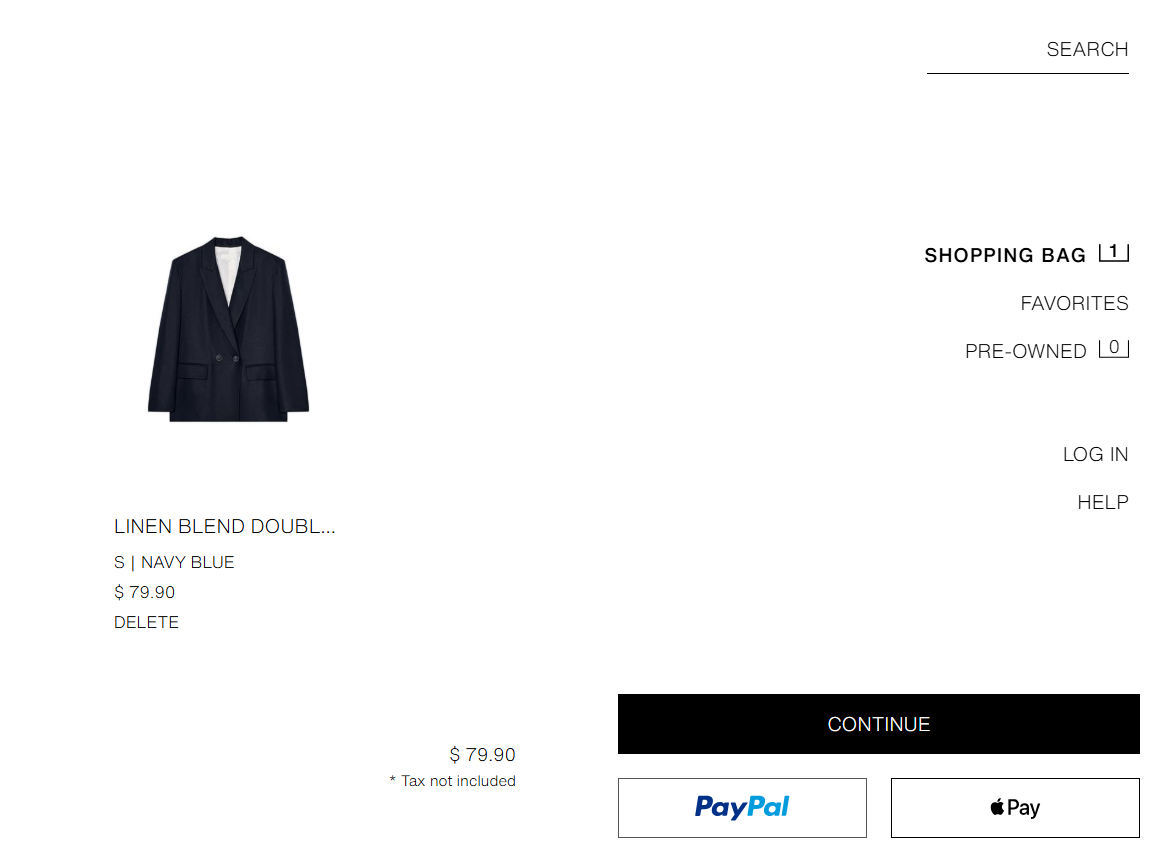
In today's digital world, customers expect to pay using their preferred method. If your online store offers limited payment options, you risk losing sales from shoppers who can't or won't use the methods you provide. To cater to a diverse customer base, it's essential to offer a wide range of payment solutions.
This includes standard options like major credit cards, as well as popular digital wallets such as PayPal, Apple Pay, and Google Pay. These wallet options often provide a faster and more secure checkout experience, as customers don't need to enter their card details manually. Offering "buy now, pay later" services can also make higher-priced items more accessible.
To maximize conversions, you should:
Source: Estee Lauder
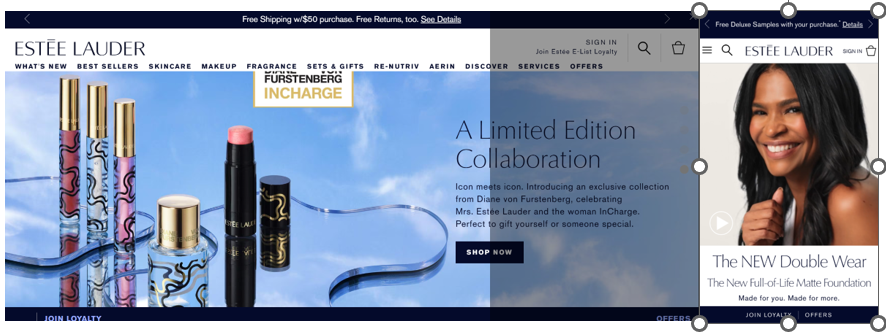
A significant portion of online shopping now happens on mobile devices. If your online store is not optimized for a seamless mobile experience, you are likely losing a large number of sales. A clunky, slow, or difficult-to-navigate mobile site will frustrate users and lead directly to cart abandonment. The user experience on a phone should be just as smooth as it is on a desktop.
Mobile optimization goes beyond just having a responsive design. It means ensuring fast load times, easy-to-tap buttons, and simplified forms that are easy to fill out on a small screen. Any technical glitches or performance issues will quickly lead shoppers to abandon their carts.
To optimize your mobile shopping experience, focus on:
Source: Zara
A long checkout process can feel endless to a customer if they don't know where they are in the sequence. Progress indicators, or progress bars, are a simple but effective tool for managing customer expectations and reducing anxiety during checkout. By showing shoppers how many steps remain, you give them a clear sense of momentum and encourage them to complete the process.
This simple design element improves the user experience by making the checkout flow feel more organized and less daunting. When customers can see the finish line, they are more likely to stick with it. This transparency helps build confidence and can lead to higher conversion rates.
A typical progress indicator might show steps like:
Source: Amazon
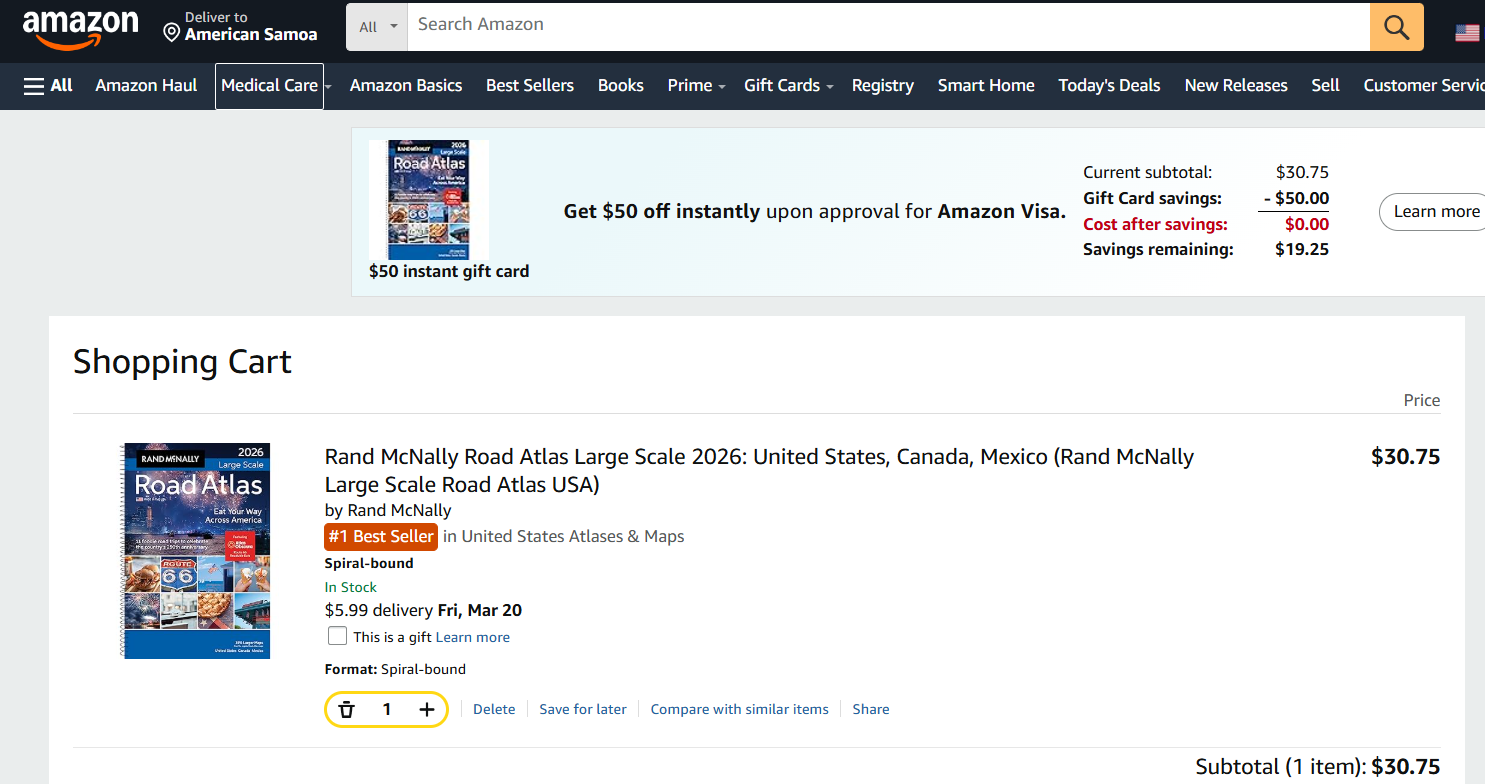
Ambiguity around shipping is a major driver of cart abandonment. Beyond just the cost, customers want to know when they can expect to receive their orders. Slow delivery times or unclear shipping options can cause shoppers to seek out a competitor that offers faster, more reliable service. Transparency about both costs and timelines is essential for a good user experience.
Don't make your customers wait until the final step of checkout to learn about shipping. Provide this information as early as possible, ideally on the product page or in the cart itself. This manages expectations and prevents last-minute surprises or disappointment.
To improve shipping communication, you should:
Source: McAfee
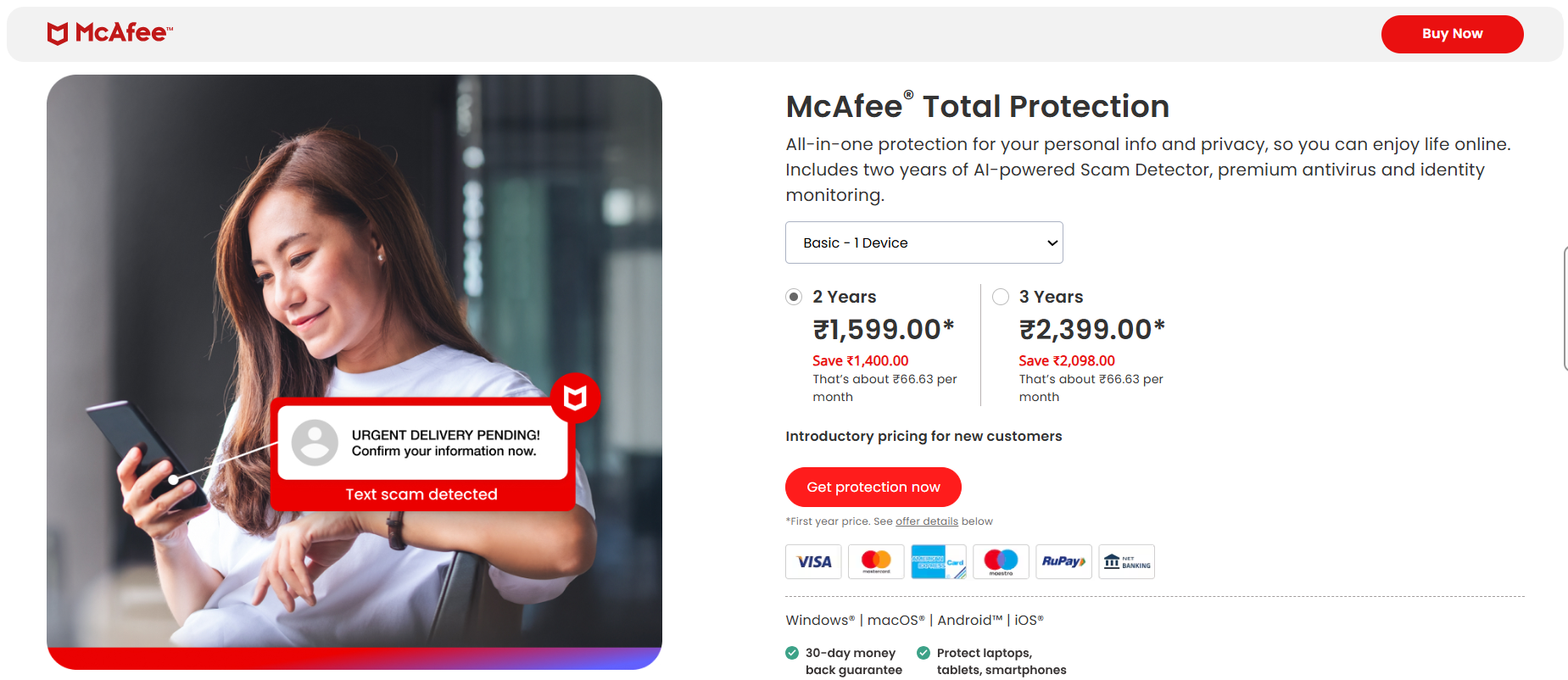
In an era of data breaches, customers need to feel that their personal and payment information is safe. Displaying trust badges and other security assurances is a powerful way to build confidence and reduce cart abandonment due to security concerns. These visual cues act as trust signals, reassuring shoppers that your checkout process is secure and their data is protected.
Place these badges prominently on your checkout page, where customers are about to enter their most sensitive information. Familiar logos from security companies like Norton, McAfee, or the Better Business Bureau can significantly boost a customer's confidence in your brand.
Key trust signals to include are:
Source: Sephora
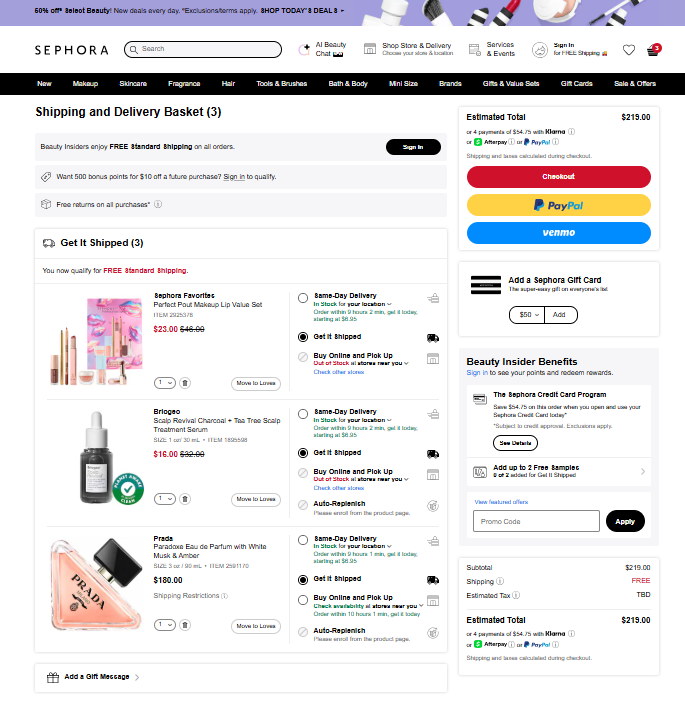
During a multi-step checkout flow, it's easy for customers to forget the exact details of the items they've added to their cart. Displaying product thumbnails or small product images throughout the checkout process provides a constant visual reminder of what they are buying. This simple feature helps reinforce their purchase decision and ensures accuracy.
Seeing the products keeps the items tangible in the shopper's mind and reduces the chance they will second-guess their choices. It also helps them verify that they have the correct sizes, colors, and quantities before finalizing the purchase, thereby improving the overall shopping experience and reducing returns.
To effectively use product thumbnails, you can:
Source: Necessaire
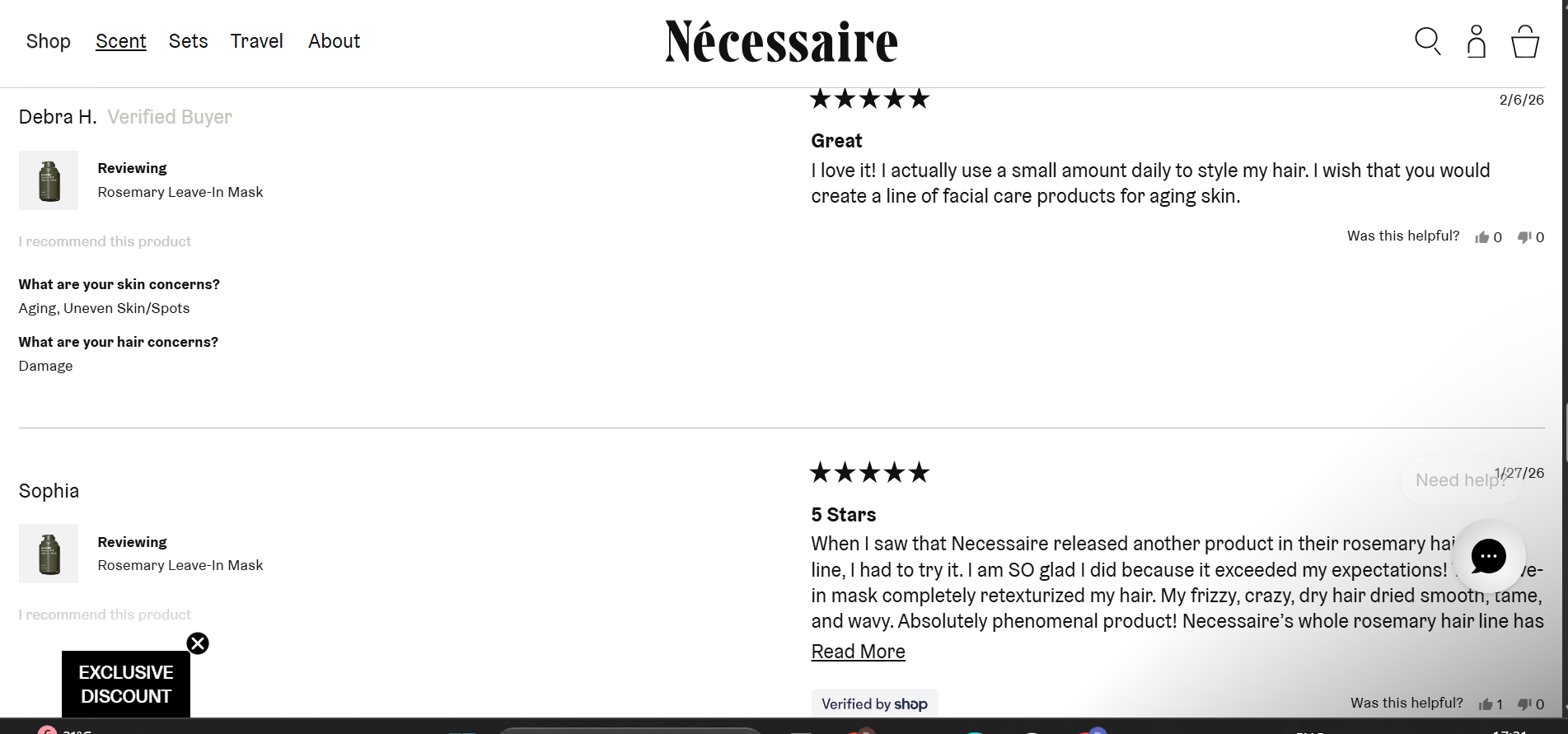
Social proof is a powerful psychological tool that can influence purchasing decisions. When online shoppers see that others have had a positive experience with a product, it builds trust and gives them the confidence to buy. Including customer reviews and ratings directly on your product pages, and even in the cart, can be a highly effective way to reduce last-minute hesitation.
Positive reviews and peer recommendations, which are often more trusted than brand advertising. For high-value items, seeing a strong star rating or a glowing testimonial can be the final push a customer needs to overcome their uncertainty. These trust signals reassure them that they are making a good choice.
To leverage social proof, you should:
Source: H&M
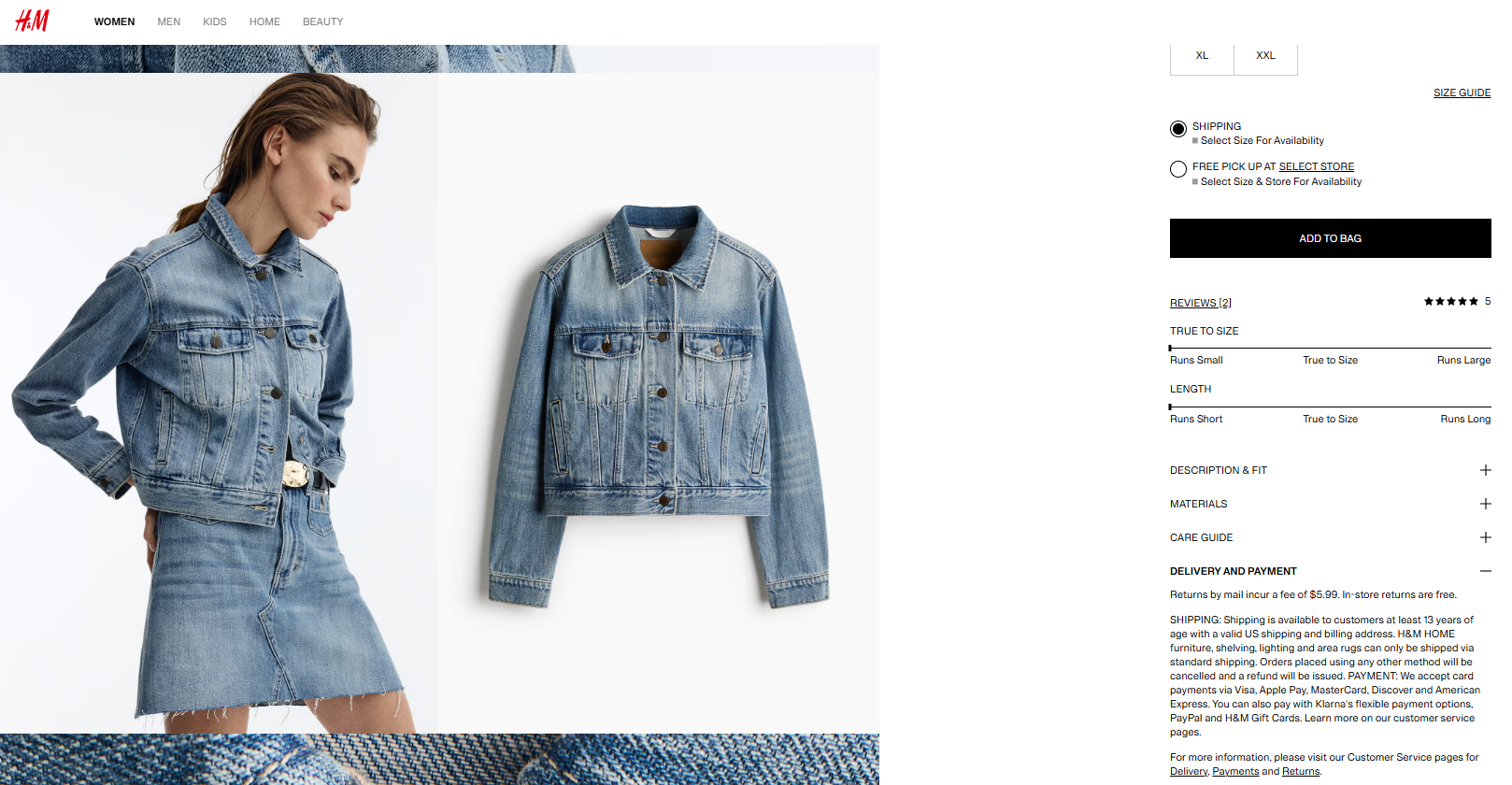
An unclear or unfavorable return policy can be a significant barrier to purchase. Customers, especially when buying from an online store for the first time, want the assurance that they can return an item if it doesn't meet their expectations. If your return and refund policies are difficult to find or seem restrictive, it can create enough doubt to cause cart abandonment.
Make your policies as customer-friendly as possible and display them clearly. A prominent link to your return policy on the cart and checkout pages can act as a powerful trust signal. Offering free returns is an even stronger incentive that can significantly improve the customer experience and boost conversion rates.
To build confidence with your policies, you should:
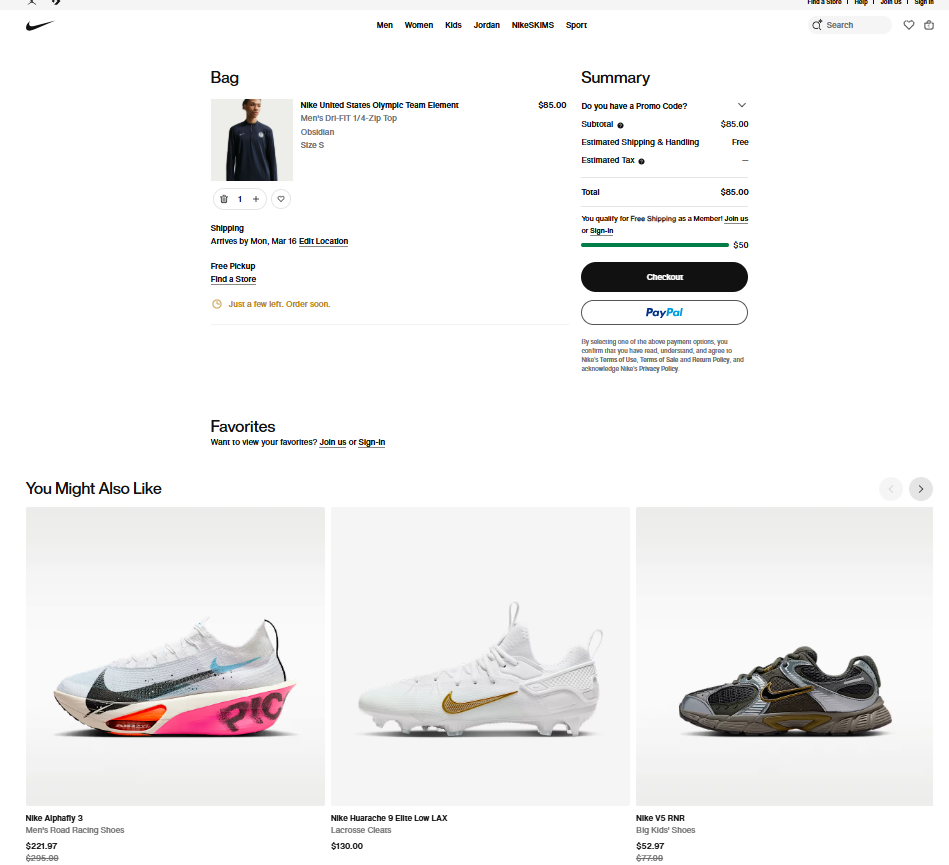
Source: Nike
Personalization can significantly enhance the user experience and increase the average order value. By providing personalized recommendations directly within the shopping cart, you can show customers that you understand their needs and preferences. This can include suggesting complementary items, accessories, or products that other customers with similar tastes have purchased.
These product recommendations can be a powerful tool to prevent cart abandonment. Instead of just upselling, they can help the customer feel more confident in their purchase by showing them how to get the most out of it. For example, if a customer has a camera in their cart, you could recommend a compatible memory card or lens.
Effective in-cart recommendations can:
Source: Myntra
Sometimes, a customer has a last-minute question or concern that is preventing them from completing their purchase. Providing live chat or easily accessible support during the checkout experience can be the solution that saves the sale. This gives shoppers a real-time channel to get answers about products, shipping, or payment, reducing uncertainty and building trust.
A proactive live chat that pops up to offer help can make the customer feel supported. Even if they don't use it, the mere presence of a support option enhances the customer experience and shows that your online store is committed to helping them. This can be particularly valuable for complex or high-value purchases.
To effectively use live chat for support, you should:
Also Read: How Metalbird drove consistent growth across 8 stores.
While many tools focus on recovering abandoned carts, a proactive approach can prevent abandonment in the first place by increasing the perceived value of the purchase. Kefi Product Bundle Builder empowers your online store to do just that. By allowing customers to create their own product bundle, you offer a personalized and engaging shopping experience that inherently boosts commitment to the purchase.
This strategy enhances your other cart recovery strategies. A customer who has invested time in creating a custom bundle is more likely to have a higher cart value and a stronger intent to buy. Should they abandon their cart, your recovery emails can remind them of the unique bundle they created. Kefi's seamless integration with your ecommerce platform makes it easy to implement this powerful tool. By offering attractive bundles, you can increase your average order value and reduce abandonment before it even happens.
Book a Demo to see how Kefi Product Bundle Builder works.
Mastering abandoned cart recovery is essential for any e-commerce business aiming to maximize revenue and enhance customer loyalty. By understanding the reasons behind cart abandonment and implementing effective strategies, from simplifying checkout processes to utilizing automated recovery emails, you can significantly boost your conversion rates. Remember that a tailored approach, such as personalized messaging and leveraging AI for product recommendations, can set you apart from competitors. Don't let potential sales slip away; instead, take proactive steps to engage with your customers and recover those lost opportunities. For a more hands-on solution, consider trying out our Kefi Product Bundle Builder to optimize your recovery efforts. Start transforming your abandoned carts into completed purchases today!
Abandoned cart recovery is the process of re-engaging customers who leave items in their shopping cart without completing the purchase. Implementing this strategy can significantly boost conversions and recover lost revenue.
Best practices include sending timely reminder emails, using personalized messages, offering incentives like discounts, and optimizing checkout flows to reduce friction for customers.
Solutions like automated email campaigns, SMS reminders, push notifications, and AI-powered tools can help recover lost sales and increase conversion rates.
Cart abandonment recovery strategies engage customers after they leave, reminding them of their intended purchase and often encouraging completion through discounts, urgency, or personalized messaging.
Factors include unexpected shipping costs, complicated checkout processes, limited payment options, and customers browsing without an immediate intent to purchase. Understanding these helps in designing recovery strategies.
Kefi Product Bundle Builder helps recover abandoned carts by leveraging smart product bundles. By suggesting complementary products or curated bundles at checkout, Kefi increases average order value and encourages customers to complete their purchases, turning potential lost carts into successful sales.
I can predict which customers are likely to abandon their cart, trigger timely pop-ups, offer personalized discounts, and optimize checkout experience to encourage completion.
Simplifying checkout, showing clear shipping costs, offering multiple payment options, sending reminders, and using personalized incentives are effective ways to reduce cart abandonment.
.svg)
