%20MAIN.png)

Attracting new customers is a major achievement, but what happens after the initial sale? True sustainable growth is built on your ability to turn one-time buyers into repeat customers. Focusing on improving your customer retention rate is not just about preventing people from leaving; it's about optimizing the entire customer journey to foster loyalty. By nurturing your existing customer base, you create a predictable revenue stream and a community of brand advocates, laying a solid foundation for long-term success.
The "customer retention myth" refers to the various misconceptions and outdated beliefs businesses hold about what truly fosters customer loyalty. Many companies pour resources into strategies that seem logical on the surface but fail to build a genuinely loyal customer base. These myths can range from believing that a simple points program is enough to secure loyalty, to underestimating the impact of personalized interactions or proactive customer service.
Debunking these myths is crucial for building strong customer relationships. It requires a shift from transactional thinking to a more relational approach that prioritizes understanding customer needs and delivering consistent value. Effective customer retention is not about a single tactic but a comprehensive strategy that proves to your customers that you are invested in their success, encouraging them to stay with your brand for the long haul. In 2024, the average customer retention rate for businesses varies by industry but generally ranges from 70% to 80%. Achieving a rate within or above this range indicates that your customer retention strategies are competitive and on track with market trends.
The primary benefit of a strong customer retention program is the ability to maximize revenue per customer over their lifetime. This focus on long-term value translates directly into increased profitability and sustainable business growth. The following sections will explore the numerous advantages of prioritizing your existing customer relationships.
Source: Coca Cola
Customer Lifetime Value (CLV) represents the total revenue a business can reasonably expect from a single customer throughout their entire relationship with the brand. A robust customer retention strategy is one of the most direct ways to increase this critical metric.
When you achieve high retention, customers are more likely to return. They purchase more frequently and continue shopping with you for a longer period. Studies have shown that customers with a strong emotional connection to a brand remain customers for significantly longer than average, directly boosting their lifetime value. Interestingly, customer retention rates tend to differ between B2B and B2C companies. B2B companies often experience higher retention rates, sometimes exceeding 80%, due to longer-term contracts and deeper business relationships. In contrast, B2C companies typically have lower retention rates, as individual consumers generally have more choices and are less likely to be locked into long-term commitments.
This sustained relationship contributes positively to your bottom line. Retained customers are often less price-sensitive and more open to trying new products, which can lead to larger average order values. By focusing on keeping your customers happy and engaged, you naturally extend the duration and value of their patronage, maximizing the return on your initial acquisition investment.

Source: Amazon
A direct outcome of successful customer retention is a higher rate of repeat purchases. Loyal, repeat customers form the foundation of a stable business because their buying habits are more predictable and consistent than those of new shoppers.
Once a customer has had a positive experience, the friction in their customer journey is significantly reduced. They already trust your brand and understand the value of your products. This familiarity makes them more inclined to return for another purchase, especially when their purchase history is used to provide personalized recommendations and relevant offers.
Businesses gain immense advantages from this loyalty. Repeat customers tend to spend more over time and are more likely to buy again compared to convincing a new prospect. This consistent stream of transactions from your loyal customer base provides a reliable revenue stream, enabling more accurate financial forecasting and strategic planning.

Source: Apple
One of the most valuable benefits of customer retention is the access it provides to deeper customer insights. Long-term customers generate a wealth of customer data through their extended purchase history and interactions with your brand. Analyzing this information offers valuable insights into their preferences, behaviors, and motivations.
Your loyal customers are also more likely to provide honest and constructive feedback. Because they are invested in your brand's success, they are often willing to participate in surveys or offer suggestions for improvement. This feedback is product development gold, as it comes from people who genuinely know and use your products. These insights help you refine your offerings and perfect the customer journey.
This continuous stream of data helps you:
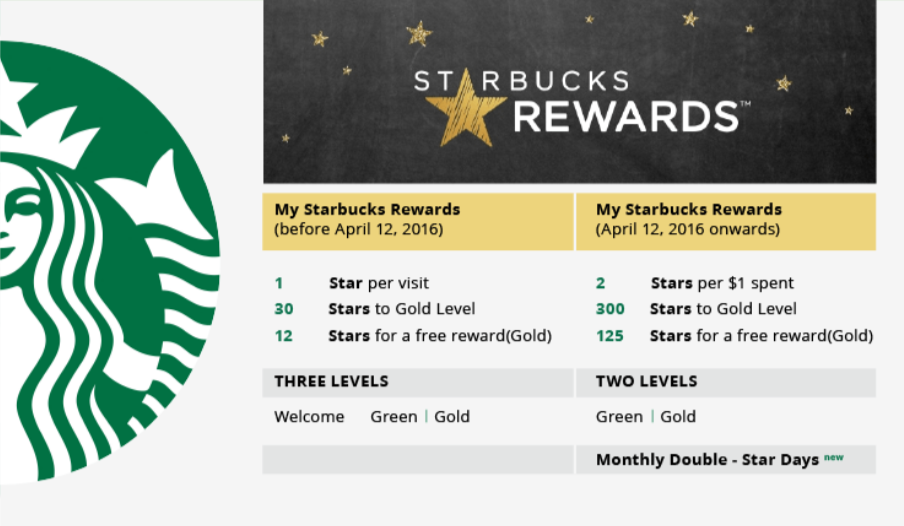
Source: Starbucks
Customer retention plays a pivotal role in building brand loyalty. Every repeat purchase is an opportunity to reinforce a customer's trust in your brand. Consistently delivering excellent products and experiences pays off, as research indicates that a majority of consumers consider themselves loyal to a brand after just three purchases.
This enhanced brand loyalty creates a stable and dedicated customer base. These loyal customers are less likely to be swayed by competitors' offers and more likely to forgive occasional missteps, such as a shipping delay. This resilience lowers your customer churn rate, as satisfied customers are more likely to give your brand another chance rather than switch immediately.
Ultimately, a focus on retention transforms transactional relationships into emotional connections. As you nurture your loyal customer base, they evolve into brand advocates. This deep-seated customer loyalty provides a powerful competitive advantage that is difficult for other companies to replicate, ensuring your brand remains a preferred choice.

Source: Fiverr
One of the most powerful and often overlooked benefits of customer retention is generating positive word-of-mouth referrals. Happy, loyal customers naturally become brand advocates, sharing their positive experiences with friends, family, and social networks. This organic marketing is incredibly effective because recommendations from trusted sources are far more trusted than traditional advertising.
High customer satisfaction is the engine behind these referrals. When a customer has a great experience, they are highly likely to tell others about it. This turns your customer base into a volunteer marketing force, expanding your reach without additional ad spend. These new customers acquired through referrals often come with a higher level of initial trust, making them more likely to become loyal customers themselves.
This cycle creates compounding growth fueled by your existing customers. Key benefits include:
Also Read: How Metalbird drove consistent growth across 8 stores.
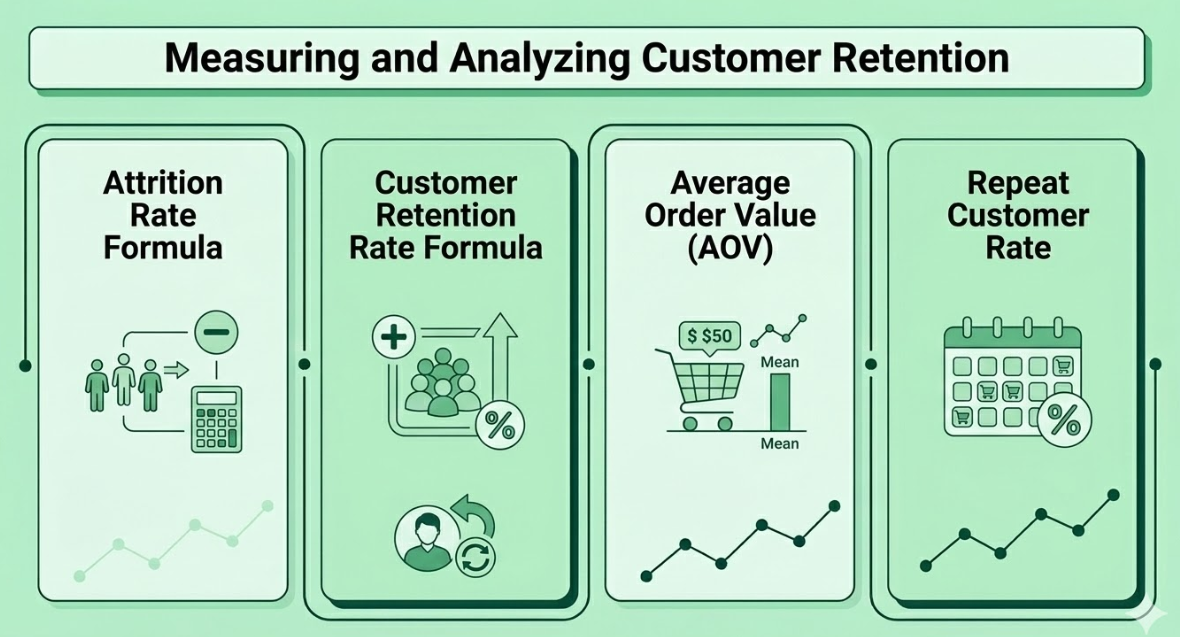
Determining the effectiveness of retention strategies involves closely measuring and analyzing customer retention metrics. By understanding these metrics, businesses can cultivate a loyal customer base, utilize targeted marketing campaigns, and improve overall customer experience to enhance retention and reduce acquisition costs.
The attrition rate, more commonly known as the churn rate, measures the percentage of customers who stop doing business with a company over a specific period. It is one of the most important customer metrics for understanding how many customers a business is losing and how that loss affects overall profitability. A high attrition rate often indicates issues with customer satisfaction, product value, pricing, or the overall customer experience.
To calculate the attrition rate, divide the number of customers lost during a given period by the total number of customers the company had at the beginning of that period, then multiply the result by 100 to get a percentage. For example, if a business starts a quarter with 2,000 customers and loses 700 by the end of the quarter, the attrition rate is calculated as (700 ÷ 2,000) × 100, which equals 35%. This means that 35% of the original customer base stopped doing business with the company during that period. Attrition rate is essentially the opposite of the customer retention rate, and monitoring it regularly helps businesses identify problems early and implement strategies to retain more customers.
The customer retention rate is the percentage of existing customers a company retains over a specific period. This metric is fundamental to understanding your customer base's loyalty and the effectiveness of your retention efforts. A high retention rate is a strong indicator of customer satisfaction and long-term business health.
To calculate your customer retention rate, first determine the number of customers at the end of a period. From this total, subtract the number of new customers acquired during that same period. Then, divide that result by the number of customers you had at the start of the period and multiply by 100 to get a percentage.
For example, if you start a quarter with 2,000 customers, end with 1,300, and acquire 400 new customers, your calculation would be: ((1,300 - 400) / 2,000) * 100 = 45%. This means you successfully retained 45% of your original customer base during that quarter. Tracking this figure is essential to realizing the main benefits of customer retention.
Average Order Value (AOV) measures the average amount spent per order on your website or in your store. While not a direct retention metric, it is closely linked to the profitability of your customer base and is often higher for repeat customers.
To calculate AOV, you simply divide your total revenue by the number of orders placed during the same period. For example, if your company generated $1,000,000 in revenue from 100,000 orders in a year, your AOV would be $10. Tracking this metric helps you understand your customers' purchasing habits.
AOV contributes directly to customer lifetime value. When loyal customers return, they tend to trust the brand more and become comfortable spending more per transaction. By analyzing the purchase history of your retained customers, you can identify strategies to increase AOV, such as product bundling or free-shipping thresholds, which, in turn, boost overall CLV.
The repeat customer rate measures the percentage of your customer base that has made more than one purchase. This metric is a straightforward way to gauge how well your retention strategies are converting one-time buyers into loyal, repeat customers. A high repeat customer rate signals that your products and customer experience are compelling enough to bring people back.
To calculate this rate, divide the number of customers who have purchased more than once by the total number of unique customers. For example, if 4,000 out of 7,500 unique customers made a repeat purchase in a given month, your repeat customer rate would be 53%.
This metric highlights why retaining existing customers is so cost-effective. Every customer who moves from a one-time buyer to a repeat purchaser represents a win for your retention efforts, adding value to your existing customer base without the high costs associated with new customer acquisition. Focusing on increasing this rate is a practical way to boost profitability.
Also Read: How to Master Customer Revenue Optimization Strategies?
Effective customer retention is often clouded by myths that lead businesses down the wrong path. Many companies invest in tactics like a basic loyalty program or collecting customer feedback without a plan, expecting brand loyalty to appear magically. The truth is that genuine retention comes from a deeper understanding of your customers.
Let's dissect some of the most pervasive myths and replace them with facts. From the true role of personalization to the real influence of customer reviews on social media, separating myth from reality is the first step toward building a strategy that actually works.
The answer is an unequivocal fact. In today's market, personalization isn't just a bonus; it's a critical component of any successful retention strategy. Customers have come to expect a tailored customer experience that acknowledges their unique needs and purchase history. Generic, one-size-fits-all communication makes customers feel like a number rather than a valued partner.
Effective personalization goes beyond simply using a customer's first name in an email. It involves using data to provide relevant product recommendations, customized offers, and content that speaks directly to their interests. This level of attention demonstrates that you understand your customers, which builds trust and significantly increases your retention rate.
When customers feel understood, they are more likely to remain loyal and become powerful advocates for your brand. This positive experience fuels word-of-mouth marketing, turning your investment in personalization into a source of both retention and acquisition. Neglecting personalization is no longer an option if you want to compete.
This is a common myth. While a loyalty program can be a powerful tool, simply offering points for purchases does not automatically create loyal customers. Many points-based programs are transactional in nature and fail to build a true emotional connection with the brand. If the rewards aren't valuable or the program is too complicated, it won't prevent customer churn.
A loyalty program is only effective when it provides genuine value and makes customers feel special. This means going beyond simple discounts. Successful programs often incorporate tiered rewards, exclusive access to new products, personalized offers, and experiential benefits that competitors can't replicate.
The goal should be to use the loyalty program to reward and encourage repeat business, not just to bribe it. When a program is thoughtfully designed to enhance the overall customer experience, it can be a highly effective part of your strategy. But a poorly executed program is just an added cost that won't move the needle on building a loyal customer base.
This is a fact, and their influence is growing. Customer feedback, whether in the form of direct surveys, online reviews, or comments on social media, is a powerful force in shaping brand perception and driving purchase decisions. Nearly 55% of online shoppers read at least four reviews before making a purchase, proving that social proof is a critical trust signal.
Reviews and feedback are not just for attracting new customers; they are essential for retention. Actively listening to customer feedback helps you identify pain points, understand customer needs, and improve your products and services. Responding to both positive and negative reviews shows that you are engaged and committed to providing excellent customer service.
Ignoring feedback is a surefire way to lose customers. To leverage this influence effectively, you should:
Also Read: How The Chosen Cultivated a Community through Curated Merchandise Kits.
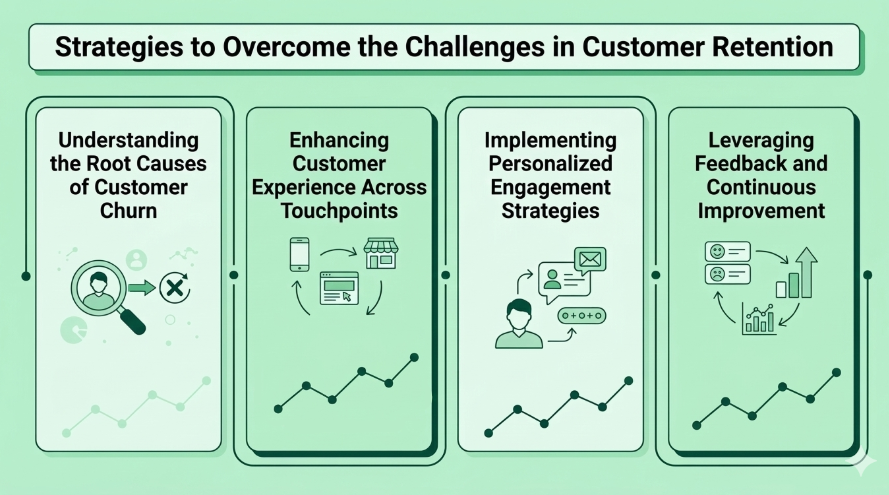
While the benefits of customer retention are clear, implementing effective strategies is challenging. Businesses often struggle to identify the root causes of customer churn and address customer pain points before they lead to lost business. Overcoming these hurdles requires a proactive and customer-centric approach. The following sections offer actionable advice for tackling these common challenges.
The first step in reducing customer churn is understanding why customers leave. A high churn rate often indicates deeper issues such as poor customer experience, lack of perceived value, or friction in the buying process. Identifying these pain points is essential for building effective customer retention strategies.
Actively collecting customer feedback can help uncover these issues. Surveys, interviews, and review analysis allow businesses to understand customer concerns and expectations. Mapping the customer journey can also reveal where customers drop off and why. By identifying the root causes, businesses can take targeted action to resolve them. Common causes of churn include poor customer service, product issues, or a complicated buying process.
A strong customer experience is essential for improving customer retention. Every interaction with your brand, from browsing your website to contacting support, should be smooth and consistent to build trust and loyalty. Businesses should analyze all customer touchpoints, such as website usability, checkout experience, shipping, and post-purchase communication.
Removing friction in these areas, such as simplifying checkout or improving page speed, can significantly increase satisfaction. Providing reliable and responsive customer support also plays a major role. A helpful support interaction can resolve issues quickly and strengthen the customer relationship.
Personalized engagement plays a key role in strengthening customer retention. Today’s customers expect brands to understand their preferences and provide relevant communication rather than generic messages. By analyzing purchase history, browsing behavior, and customer data, businesses can create targeted campaigns and personalized recommendations. This helps deliver content and offers that match individual interests.
When customers feel understood and valued, they are more likely to stay loyal and make repeat purchases. Personalization, therefore, helps increase retention and overall customer lifetime value.
Using customer feedback is essential for improving customer retention over time. Customers often provide valuable insights about what works well and what needs improvement. Businesses should create multiple channels to gather feedback, such as surveys, reviews, or direct communication. Acting on this feedback shows customers that their opinions are valued.
When businesses continuously improve based on customer insights, it strengthens trust and satisfaction. This ongoing improvement helps build long-term loyalty and supports sustainable business growth.
Also Read: What are the Essential Ecommerce Optimization Strategies?
Enhancing the customer experience with strategic tools is a great way to boost customer retention. The Kefi Product Bundle Builder empowers you to create curated product collections that add immediate value and encourage higher spending. By allowing customers to build their own bundles or offering pre-made kits, you can guide them toward discovering new products that complement their interests. This is an effective form of upselling that feels helpful rather than pushy.
This approach not only increases average order value but also deepens customer engagement. When you create bundles based on customer data and purchase trends, you show customers that you understand their needs. This personalized experience makes shopping more convenient and exciting, turning a simple transaction into a delightful discovery. By using tools like Kefi to innovate your offerings, you can create a memorable customer experience that strengthens loyalty and keeps customers coming back.
Book a Demo to see how Kefi Product Bundle Builder works.
In conclusion, understanding and addressing the customer retention myth is crucial for any business aiming to thrive in today's competitive market. By recognizing the true implications of losing customers and debunking common misconceptions, companies can implement strategies that genuinely foster loyalty and improve retention rates. Using key performance metrics, along with innovative customer engagement approaches, can significantly enhance your retention outcomes. As you navigate this landscape, remember that every effort you invest in retaining customers not only impacts your bottom line but also helps build lasting relationships. For further insights and tailored advice on improving your customer retention strategies, reach out to our team for a consultation today.
Customers often stop doing business due to a poor customer experience, such as slow or ineffective support. A high churn rate can also result from the company failing to meet customer expectations or to understand their evolving needs. Low customer satisfaction is a clear signal that something in the journey is broken.
To measure your retention rate accurately, take the number of customers at the end of a period, subtract the new customers acquired during that time, divide by the number of customers you had at the start, and multiply by 100. This isolates your existing loyal customers from new acquisitions.
Increasing your customer retention rate boosts profitability by generating predictable revenue from repeat customers. Since retained customers have higher customer lifetime value and cost less to acquire than new ones, a higher retention rate directly improves your margins and financial stability, leading to greater overall profitability.
It is five to seven times more expensive to acquire a new customer than to retain an existing one. Focusing on improving your retention rate lowers acquisition costs and increases the lifetime value of your current customer base, making it a more efficient way to grow total revenue.
Customer retention management focuses on strategies and processes that encourage existing customers to continue purchasing from a brand. By improving the customer experience, offering loyalty incentives, and maintaining consistent communication, businesses can build stronger long-term relationships.
Customer retention marketing tactics include personalized email campaigns, loyalty programs, targeted discounts, and post-purchase follow-ups. These tactics help keep customers engaged with the brand and encourage repeat purchases over time.
Businesses can improve customer retention by focusing on excellent customer service, personalized communication, and rewarding loyal customers through loyalty programs or exclusive offers. Consistently delivering value and positive experiences encourages customers to continue choosing the same brand.
Customer retention marketing includes tactics such as personalized email campaigns, loyalty programs, targeted offers, and post purchase engagement. These strategies aim to keep customers interested in the brand and encourage repeat purchases over time.
Customer retention management helps businesses reduce acquisition costs and increase customer lifetime value. When brands focus on keeping existing customers satisfied, they often generate more consistent revenue and stronger brand loyalty.
Customer retention facts show that retaining existing customers is often more cost-effective than acquiring new ones. Loyal customers also tend to spend more, purchase more frequently, and are more likely to recommend the brand to others.
.svg)
